Showing posts with label OPCW. Show all posts

Tuesday, March 4, 2014

Report: Libya Intercepts Syria-Bound Mustard Agent

Libyan authorities allegedly intercepted a cache of mustard blister agent being smuggled to opposition forces in Syria, Arutz Sheva 7 reports.

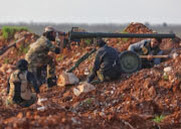
Syrian Rebel Fighters

A separate Israeli news report quotes a Libyan military officer asserting that his country's armed forces had stopped a group of Islamic militants in possession of a container holding the deadly chemical, the news station said on Sunday. The military personnel took custody of the caustic substance, Libyan Col. Mansour al-Mazini added in the report by Israel's Channel 2.

The press claim did not cite the timing of the alleged incident. Libya finished destroying its mustard agent stockpile with international assistance in January, but hundreds of tons of chemical-arms ingredients are still awaiting destruction in the North African country.

Syrian President Bashar Assad's regime agreed to surrender its arsenal of mustard agent and other warfare chemicals in the aftermath of an August nerve gas strike. The government blamed its opponents for the incident, and Moscow has joined its Damascus ally in holding rebel forces responsible for the attack on opposition-controlled territory.

The Syrian government also has placed blame on its opponents for slower-than-expected progress in the disarmament operation, which was to have removed the regime's entire chemical arsenal from the country by early last month.

Norway's military released footage of a transport vessel removing the first batch of Syrian chemical-warfare materials in January as part of the disarmament operation, the Washington Post reported on Friday. More


Sunday, December 15, 2013

Syria: Whose Sarin?

In his nationally televised speech about Syria on 10 September, Obama laid the blame for the nerve gas attack on the rebel-held suburb of Eastern Ghouta firmly on Assad’s government, and made it clear he was prepared to back up his earlier public warnings that any use of chemical weapons would cross a ‘red line’: ‘Assad’s government gassed to death over a thousand people,’ he said. ‘We know the Assad regime was responsible … And that is why, after careful deliberation, I determined that it is in the national security interests of the United States to respond to the Assad regime’s use of chemical weapons through a targeted military strike.’ Obama was going to war to back up a public threat, but he was doing so without knowing for sure who did what in the early morning of 21 August.

He cited a list of what appeared to be hard-won evidence of Assad’s culpability: ‘In the days leading up to August 21st, we know that Assad’s chemical weapons personnel prepared for an attack near an area where they mix sarin gas. They distributed gas masks to their troops. Then they fired rockets from a regime-controlled area into 11 neighbourhoods that the regime has been trying to wipe clear of opposition forces.’ Obama’s certainty was echoed at the time by Denis McDonough, his chief of staff, who told the New York Times: ‘No one with whom I’ve spoken doubts the intelligence’ directly linking Assad and his regime to the sarin attacks.

But in recent interviews with intelligence and military officers and consultants past and present, I found intense concern, and on occasion anger, over what was repeatedly seen as the deliberate manipulation of intelligence. One high-level intelligence officer, in an email to a colleague, called the administration’s assurances of Assad’s responsibility a ‘ruse’. The attack ‘was not the result of the current regime’, he wrote. A former senior intelligence official told me that the Obama administration had altered the available information – in terms of its timing and sequence – to enable the president and his advisers to make intelligence retrieved days after the attack look as if it had been picked up and analysed in real time, as the attack was happening. The distortion, he said, reminded him of the 1964 Gulf of Tonkin incident, when the Johnson administration reversed the sequence of National Security Agency intercepts to justify one of the early bombings of North Vietnam. The same official said there was immense frustration inside the military and intelligence bureaucracy: ‘The guys are throwing their hands in the air and saying, “How can we help this guy” – Obama – “when he and his cronies in the White House make up the intelligence as they go along?”’

The complaints focus on what Washington did not have: any advance warning from the assumed source of the attack. The military intelligence community has for years produced a highly classified early morning intelligence summary, known as the Morning Report, for the secretary of defence and the chairman of the Joint Chiefs of Staff; a copy also goes to the national security adviser and the director of national intelligence. The Morning Report includes no political or economic information, but provides a summary of important military events around the world, with all available intelligence about them. A senior intelligence consultant told me that some time after the attack he reviewed the reports for 20 August through 23 August. For two days – 20 and 21 August – there was no mention of Syria. On 22 August the lead item in the Morning Report dealt with Egypt; a subsequent item discussed an internal change in the command structure of one of the rebel groups in Syria. Nothing was noted about the use of nerve gas in Damascus that day. It was not until 23 August that the use of sarin became a dominant issue, although hundreds of photographs and videos of the massacre had gone viral within hours on YouTube, Facebook and other social media sites. At this point, the administration knew no more than the public.

Obama left Washington early on 21 August for a hectic two-day speaking tour in New York and Pennsylvania; according to the White House press office, he was briefed later that day on the attack, and the growing public and media furore. The lack of any immediate inside intelligence was made clear on 22 August, when Jen Psaki, a spokesperson for the State Department, told reporters: ‘We are unable to conclusively determine [chemical weapons] use. But we are focused every minute of every day since these events happened … on doing everything possible within our power to nail down the facts.’ The administration’s tone had hardened by 27 August, when Jay Carney, Obama’s press secretary, told reporters – without providing any specific information – that any suggestions that the Syrian government was not responsible ‘are as preposterous as suggestions that the attack itself didn’t occur’.

The absence of immediate alarm inside the American intelligence community demonstrates that there was no intelligence about Syrian intentions in the days before the attack. And there are at least two ways the US could have known about it in advance: both were touched on in one of the top secret American intelligence documents that have been made public in recent months by Edward Snowden, the former NSA contractor.

On 29 August, the Washington Post, the Obama administration has never claimed to have specific information connecting Assad himself to the attack.) published excerpts from the annual budget for all national intelligence programmes, agency by agency, provided by Snowden. In consultation with the Obama administration, the newspaper chose to publish only a slim portion of the 178-page document, which has a classification higher than top secret, but it summarised and published a section dealing with problem areas. One problem area was the gap in coverage targeting Assad’s office. The document said that the NSA’s worldwide electronic eavesdropping facilities had been ‘able to monitor unencrypted communications among senior military officials at the outset of the civil war there’. But it was ‘a vulnerability that President Bashar al-Assad’s forces apparently later recognised’. In other words, the NSA no longer had access to the conversations of the top military leadership in Syria, which would have included crucial communications from Assad, such as orders for a nerve gas attack. (In its public statements since 21 August More


Monday, September 23, 2013

OPCW Course on Assistance and Protection Against Chemical Weapons Held in Finland

“Working together for a world free of chemical weapons”

OPCW News 51/2013

The Hague, 23 September 2013

Course on Assistance and Protection Against Chemical Weapons Held in Finland


The Government of Finland and the OPCW jointly organised a course on Assistance and Protection Against Chemical Weapons in Kuopio from 9 to 13 September 2013 for 18 participants from 16 States Parties.*

The course relates to Article X of the Chemical Weapons Convention and offered training in the use of protective equipment and in monitoring, detection, and decontamination techniques that are used in response to attacks with chemical warfare agents. Participants were also familiarised with chemical emergency responses by the CBRNE-2013 Exercise, organised by the South Savo Regional Rescue Department in Mikkeli.

The course facilitated exchange of information and experience regarding Article X implementation and provided a forum to discuss future cooperation among participating Member States.

*Armenia, Bangladesh, Belarus, Chile, India, Jordan, Libya, Pakistan, Peru, Philippines, Romania, Saudi Arabia, South Africa, Tanzania, Ukraine and Yemen.

Saturday, September 14, 2013

“Working together for a world free of chemical weapons”


OPCW Press Release 11/2013

The Hague, 14 September 2013


OPCW Director-General Welcomes Agreement on Syrian Chemical Weapons


The Director-General of the Organisation for the Prohibition of Chemical Weapons (OPCW),Ambassador Ahmet Üzümcü, has welcomed the agreement on chemical weapons in Syria that wasannounced today following talks held in Geneva between the Foreign Minister of Russia, Sergey V. Lavrov, and U.S. Secretary of State John Kerry.

The Director-General hopes that these agreements will facilitate the fulfilment of obligations by Syria deriving from the Chemical Weapons Convention, which it has decided to join. Following decisions that are proposed to be taken by the Executive Council of the OPCW, necessary measures will be adopted to implement an accelerated programme to verify the complete destruction of Syria's chemical weapons stockpiles, production facilities and other relevant capabilities.

The Director-General envisages that this significant step will be fully supported by States Parties to the Chemical Weapons Convention (CWC) and the wider international community. The CWC represents the sole multilateral mechanism to rid the world of chemical weapons and the OPCW,with over 16 years of experience, possesses the necessary skills and capacities to undertake such missions. OPCW experts are already at work preparing a roadmap that anticipates the various undertakings and missions in Syria. Nine OPCW experts recently participated in the UN investigation of alleged use of chemical weapons in Syria.

These matters are expected to be discussed by the OPCW Executive Council in the coming week. More


Friday, July 26, 2013

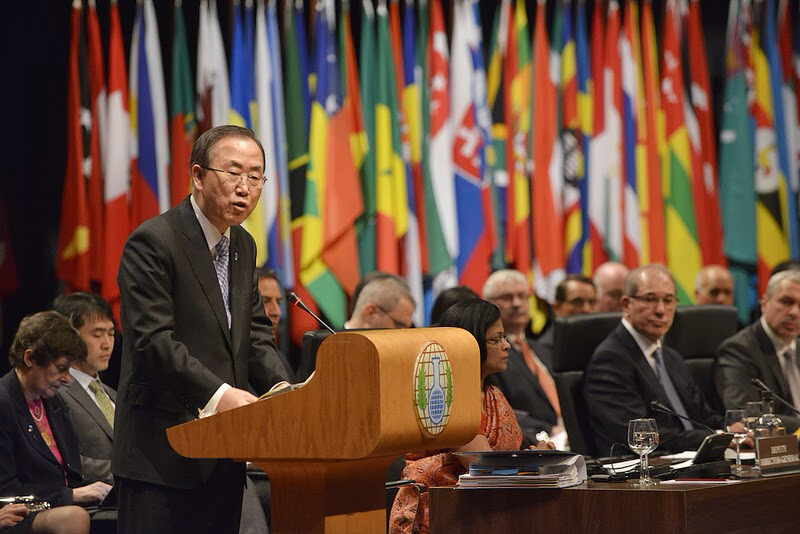
UN Secretary-General at OPCW 3rd. Review Conference

Nothing can justify the possession of this heinous category of weapons of mass destruction. Nothing.

Download OPCW Today Large PDF.


Wednesday, June 19, 2013

Terry Long underwater munitions expert subject of European documentary

Terry Long known around the world for his expertise on sea-dumped munitions is now the focus of a documentary destined for a European audience.

Terry Long, second from left, works with a film crew

Terry Long of Leitches Creek, a retired military engineer trained in munitions disposal, is being filmed by the Deadly Depths production company regarding his drive to clean up underwater munitions around the world.

Long says the problem of sea-dumped munitions has been known to occur in every ocean, including sites on East Coast and West Coast of Canada. There are also unexploded munitions in waters off Cape Breton, such as the area commonly known as the Sydney Bight, located between Gabarus and Wreck Cove.

In the Sydney Bight fishing area 4VN, there are more than 80,000 tonnes of unexploded chemical munitions, said Long.

Most of these munitions started after the First World War and carried throughout the Second World War and the Cold War.

This practice continued up to the 1970s, when world governments began to understand the impact the dumps created on environment and marine ecosystems.

“The first major impact is being felt in the Baltic Sea from these munitions, and from the mustard gas we have a dead zone now from one end of the Baltic to the other,” said Long. “And in our fish studies we’ve been finding cancerous tumours, and these are the actually fish that people consume.”

As part of his work to remove munitions from world oceans, Long formed the International Dialogue on Underwater Munitions, a non-governmental organization that provides a platform for industry, politicians and stakeholders to explore the issue.

Film director Eric Nadler said filming wrapped in Cape Breton on Thursday.

“It’s an important topic and Terry is an extremely active guy — if not the most active guy on the planet on this issue — and thus he’s a great subject for a documentary.”

Nadler said the topic has become quite timely as studies have shown there are hazardous effects of allowing leaking munitions to seep into marine environments.

Long said the documentary, set to be released in early 2014, will be broadcast to 23 European States.

It is one of three documentaries Long has recently been asked to be a part of.


Saturday, May 11, 2013

Rethinking ‘Red Lines’ by Richard Falk

The Wrong ‘Red Line’ (expanded and revised Al-Jazeera opinion piece)

Richard Falk

There are widespread reports circulating in the media that President Obama had not fully appreciated the political consequences of responding to a question at an August press conference that asked about the consequences of a possible future use of chemical weapons by the Assad regime. Obama replied that such a use, should it occur, would be to cross ‘a red line.’ Such an assertion was widely understood to be a threat by Obama either to launch air strikes or to provide rebel forces with major direct military assistance, including weaponry. There have been sketchy reports that Syria did make some use chemical weapons, as well as allegations that the reported use was ‘a false flag’ operation, designed to call Obama’s bluff. As the New York Times notes in a frontpage story on May 7th, Obama “finds himself in a geopolitical box, his credibility at stake with frustratingly few good options.” Such a policy dilemma raised tactical issues for the U.S. Government about how to intervene in the Syrian civil war without risking a costly and uncertain involvement in yet another Middle Eastern war. Not responding also raises delicate questions of presidential leadership in a highly polarized domestic political atmosphere, already shamelessly exploited by belligerent Republican lawmakers backed by a feverish media that always seem to be pushing Obama to pursue a more muscular foreign policy in support of alleged America’s global interests, as if hard power geopolitics still is the key to global security.

UN HQ - New York

What is missing from the debate on Syria, and generally from the challenge to American foreign policy, is a more fundamental red line that the United States at another time and place took the lead in formulating—namely, the unconditional prohibition of the use of international force by states other than in cases of self-defense against a prior armed attack. This prohibition was the core idea embodied in the United Nations Charter, embedded in contemporary international law, and it was also a natural sequel to the prosecution and punishment of surviving German and Japanese leaders afterWorld War II for their commission of Crimes against Peace, which was the international crime associated with engaging in aggressive warfare. The only lawful exception to this prohibition was a use of force consistent with the terms of a prior authorization given by theUN Security Council. The key hope for world peace was this consensus among the winners in World War II that in the future aggressive war and any acquisition of territory by force, even acquired in the exercise of self-defense, must be outlawed without exceptions. Such authorizations by the Security Council were obtained by the West in the Gulf War of 1991 and again in the NATO Libya War of 2011, but in each instance the actual undertaking became controversial as a result of the scope and intensity of the military operations far exceeding the UN mandate. As a consequence, there was a loss of trust on the part of China and Russia in endorsing limited uses of force under UN auspices, which became evident in the course of the gridlocked debate about what to do in response to the regionally dangerous violence in Syria that combined internal strife with external proxy involvements threatening the expansion of the war zone in a variety of menacing ways.

UN Logo

Actually the Charter red line has been surprisingly well respected over the period since 1945, at least in clear instances of border-crossing sustained violence. The UN authorized the defense of South Korea in response to an armed attack by North Korea in 1950. The UN, with surprising U.S. support, even exerted effective pressure in 1956 on the United Kingdom, France, and Israel to withdraw from territory seized after their attack on Egypt, which was the sole prominent example of law prevailing over geopolitics. In 1991 the UN successfully authorized force that followed sanctions, and succeeded in restoring the sovereignty of Kuwait after Iraq’s aggressive occupation and annexation of the country in the previous year. The UN red line held up reasonably well until the end of the last century, although all along its interpretation was subject to geopolitical manipulations by reference to a variety of loopholes and evasions associated with claims of humanitarian intervention, as well as a variety of strategically motivated covert interventions (e.g. Iran 1953, Guatemala 1954). This pattern of evasion was a prominent feature of the Cold War as both sides intervened in foreign states or in their respective spheres of influence (e.g. South Vietnam, Eastern Europe, Afghanistan) to uphold by force of arms an ideological alignment with one or the other superpower. Such uses of international force by rival superpowers without engaging the UN framework definitely eroded the authority of the anti-aggression red line and its stature in international law, but it did not lead political actors to call for its abandonment in view of the behavior of leading states. It is true that some anti-legalist international law specialists who subscribed to a realist worldview felt that patterns of state practice overrode the claims of international law and the UN Charter, and that, in effect, the red line had been erased, at least for the top tier of sovereign states. Although not made explicit, the American position was increasingly exhibiting the psychological characteristics of geopolitical bipolarity: no red line for American foreign policy, while maintaining a bright red line for others, especially for adversary states.

What weakened this red line even more decisively was undoubtedly the American led ‘coalition of the willing’ attack on Iraq in 2003 after an American plea for UN permission to use force had been rebuffed by the Security Council despite a concerted effort to convince its members that Iraq’s supposed possession of weapons of mass destruction was such a great menace to world peace as to justify what amounted to a ‘preventive war’. This undisguised defiance of this most fundamental red line of international law by the United States also defied world public opinion that had expressed itself in the most massive anti-war demonstrations in all of history held in some 80 countries on February 15, 2003, a little more than a month before the ‘shock and awe’ start of the Iraq War. Richard Perle, often touted as the most astute of the neocon intellectuals who fashioned American strategic policy during the Bush years, was exultant about this seemingly definitive breach of the red line, celebrating American aggression against Iraq in a Guardian article aptly headlined, “Thank God for the Death of the UN.” [March 20, 2003] Although the authority of the UN was definitely flouted by the invasion and occupation of Iraq, the UN is far from dead as an Organization in its manifold efforts to address the concerns of the world, and even its red line, although covered with dust, has not yet been erased. Maybe we should really thank God that the collective global consciousness is so forgetful!

What is baffling about the Obama approach is that it purports to be very mindful of the importance of exhibiting respect for international law. Just last September in a speech to the General Assembly Obama said, “We know from painful experience that the path to security prosperity does not lie outside the boundaries of international law..” In his Second Inaugural Obama repeated the sentiment: “We will defend our people and uphold values through strength of arms and rule of law.” And in arguing on behalf of taking collective action against states that violate international law told the Nobel Peace Prize audience in Stockholm, “[t]hose that claim respect for international law cannot avert their eyes when those laws are flouted.”
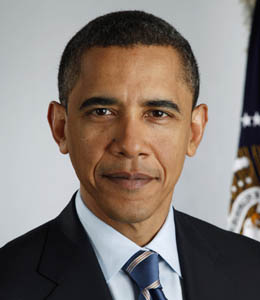
Barak Obama

And yet, when reflecting on intervening in Syria or resort to a military option in relation to Iran’s nuclear program, Obama is silent about the relevance of international law, although neither instance of contemplated uses of force can be remotely claimed to be justified as either individual or collective self-defense. And for obvious reasons, there is also no mention of circumventing the red line by failing to seek authorization for a contemplated used of force from the Security Council. Presumably since approval would not be forthcoming due to the anticipated opposition of Russia and China it was not even worth considering as a public tactic. It is true that the Clinton presidency in participating via NATO in the Kosovo War proceeded also to embark on a non-defensive war without seeking prior authorization for somewhat similar reasons as any resolution on Kosovo proposing use of force was sure to be vetoed by Russia and China. The Kosovo precedent generated worries about non-defensive military undertakings lacking a legal foundation. These were offset in the belief that a humanitarian catastrophe had been averted. The Kosovo undertaking was convincingly justified at the time on credible moral grounds of imminent genocide, on political grounds as enjoying support from almost all of Kosovo’s European neighbors, and on practical grounds as a military intervention that was feasible. In effect, the legitimacy of the was allowed to offset its illegality. As it turned out the military undertaking and political follow up was more difficult than anticipated, but still achieved at a reasonable cost, within a relatively short period, and productive of zero casualties among the intervening forces.

The question raised is whether from an overall perspective, the red line of international law at stake in Syria is more like Iraq or Kosovo/Libya. It is unlike Iraq in the sense that there is an ongoing unresolved civil war in Syria that is actively destabilizing the region and already spilling over national borders to cause unrest in neighboring countries. Syria is also the scene of severe Crimes Against Humanity that are being mainly committed by the regime. Finally, at present, there is no end of the violence is in sight give the relative strength of the two sides. It is, however, unlike Kosovo/Libya as there are proxy states acting as participants on both sides, the Damascus regime despite its behavior maintains considerable internal support while the opposition is widely viewed with deep suspicion and fear as to its democratic credentials, its lack of inclusiveness, and its uncertain respect for non-Sunni minorities. In a sense it is essential that each conflict be assessed within its own distinctive context, which should raise for discussion whether the red lines of international law and UN authority should be crossed in this instance on behalf of the blue lines of legitimacy (saving a vulnerable people from a humanitarian catastrophe) and white lines of feasibility (likelihood of success with minimum loss of life and high probability of positive net effects).

What is strange in all this is that Obama talks the talk, but seems unwilling to walk the walk. Such a disjunction invites cynicism about law and morality, and induces despair on the part of those of us who believe the world we inhabit badly needs red lines, but the right red lines.

Finally, it has been argued that the changing nature of conflict has made the red line embedded in the UN Charter obsolete or at least in need of a drastically modified interpretation. The rationale for rethinking the Charter approach to the use of force is associated with the global security situation that has resulted from terrorist attacks since 9/11 leading to the global war on terror being waged on a battlefield without national limits and increasingly doing the killing via reliance on robotic warfare on the one side and very primitive forms of disruptive violence by political extremists on the other side. Traditional ideas of deterrence, containment, and territorial defense seem almost irrelevant in relation to global security regimes when the perceived assailants are individuals who cannot be deterred, and are operating in non-territorial networks and exhibiting a readiness to die to complete their mission. As matters are proceeding the policy about force is being formulated without bothering with the red lines of international law and the UN, regressively producing once again a world of unregulated sovereign states and extremist non-states essentially deciding on their own when war is permissible. The recent Israeli air strikes on Syrian targets is illustrative: unprovoked and non-defensive, yet eliciting scant criticism in the media or even commentary about the dangers of unilateralism with respect to uses of international force. Such normative chaos in a world where already nine countries possess nuclear weapons seems like a prescription for eventual species suicide, an impression reinforced by the failure to take precautionary steps with respect to the menace of global warming. Never has the world more needed red lines that are drawn by major states, and upheld by them out of the realization that the national interest has also merged with the global interest. Arguably the red lines of the Charter need to be modified in light of the rise of non-state actors and the advent of non-territorial warfare, but such an undertaking is no where on the agenda of major states, and so the world drifts back to the pre-World War I era of unrestricted warfare, at least on the level of geopolitics. More