Showing posts with label Barak Obama. Show all posts

Monday, December 30, 2013

Why Saudi Arabia and the U.S. don’t see eye to eye in the Middle East

Give credit to Vladimir Putin and his New York Times op-ed on Syria for sparking a new tactic for foreign leaders hoping to influence American public opinion. In recent weeks, Saudi Arabian political elites have followed Putin’s lead, using American outlets to express their distaste with the West’s foreign policy, particularly with regard to Syria and Iran.

In comments to the Wall Street Journal, prominent Saudi Prince Turki al-Faisal decried the United States for cutting a preliminary deal with Iran on its nuclear program without giving the Saudis a seat at the table, and for Washington’s unwillingness to oppose Assad in the wake of the atrocities he’s committed. Saudi Arabia’s ambassador to Britain followed with an op-ed in the New York Times entitled “Saudi Arabia Will Go It Alone.” The Saudis are clearly upholding the vow made by intelligence chief Bandar bin Sultan back in October to undergo a “major shift” away from the United States.

In light of the recent actions of the Obama administration, many allies are also frustrated and confused, and even hedging their bets in reaction to the United States’ increasingly unpredictable foreign policy. But of all the disappointed countries, none is more so than Saudi Arabia — and with good reason. That’s because the two countries have shared interests historically — but not core values — and those interests have recently diverged.

First, America’s track record in the Middle East in recent years has sowed distrust. The relationship began to deteriorate with the United States’ initial response to the Arab Spring, where its perceived pro-democratic stance stood at odds with the Saudi ruling elite. After Washington stood behind the elections that installed a Muslim Brotherhood government in Egypt and then spoke out against the Egyptian army’s attempt to remove President Mohammad Morsi, the Saudi royals were left to wonder where Washington would stand if similar unrest broke out on their soil.

Ian Bremmer

Second, while the oil trade has historically aligned U.S.-Saudi interests, the unconventional energy breakthrough in North America is calling this into question. The United States and Canada are utilizing hydraulic fracturing and horizontal drilling techniques, leading to a surge in domestic energy production. That development leaves America significantly less dependent on oil from the Middle East, and contributes to the U.S.’ shifting interests and increasing disengagement in the region. Not only does Saudi Arabia lose influence in Washington — many of the top American executives in the oil industry were their best conduits — but it also puts the Saudis on the wrong end of this long-term trend toward increasing global energy supply.

To say that oil is an integral part of Saudi Arabia’s economy is a gross understatement. Oil still accounts for 45 percent of Saudi GDP, 80 percent of budget revenue, and 90 percent of exports. In the months ahead, new oil supply is expected to outstrip new demand, largely on the back of improvements in output in Iraq and Libya. By the end of the first quarter of 2014, Saudi Arabia will likely have to reduce production to keep prices stable. And the trend toward more supply doesn’t take into account the potential for a comprehensive Iranian nuclear deal that would begin to ease sanctions and allow more Iranian crude to reach global markets.

It is this ongoing nuclear negotiation with Iran that poses the principal threat to an aligned United States and Saudi Arabia. An Iranian deal would undercut Saudi Arabia’s leadership over fellow Gulf States, as other Gulf Cooperation Council (GCC) members like Kuwait and the UAE would welcome resurgent trade with Iran. At the same time, Iran would emerge over the longer term as the chief competitor for influence across the broader region, serving as the nexus of Shi’ite power. The Saudis would find themselves most directly threatened by this Shi’ite resurgence within neighboring Bahrain, a majority Shi’ite state ruled by a Sunni regime that is backstopped by the Saudi royals.

The bottom line: the Saudis are actively competing with Iran for influence throughout the Middle East. That’s why the Saudis have the most at stake from any easing of sanctions on Iran, any normalization of relations with the West, or any nuclear breakthrough that gives Iran the ultimate security bargaining chip. The Saudis have reaped the benefits of an economically weak Iran — and they are not prepared to relinquish that advantage. Ultimately, any deal that exchanges Iranian economic security for delays in Iran’s nuclear program is a fundamental problem for Saudi Arabia — as is any failed deal that allows sanctions to unravel.

For all of these reasons, even though the United States will be buying Saudi oil for years to come and will still sell the Saudis weapons, American policy in the Middle East has now made the United States more hostile to Saudi interests than any other major country outside the region. That’s why the Saudis have been so vocal about the United States’ perceived policy failures.

But to say Obama has messed up the Middle East is a serious overstatement. What he has tried to do is avoid getting too involved in a messed up Middle East. Obama ended the war in Iraq. In Libya, he did everything possible to remain on the sidelines, not engaging until the GCC and Arab League beseeched him to — and even then, only in a role of “leading from behind” the French and the British.

Call the Obama policy “engaging to disengage.” In Syria, Obama did everything possible to stay out despite the damage to his international credibility. When the prospect for a chemical weapons agreement arose, he leapt at the chance to point to a tangible achievement that could justify the U.S. remaining a spectator to the broader civil war. In Iran, a key goal of Obama’s diplomatic engagement will be to avoid the use of military force down the road. It hasn’t always been pretty, but Obama has at least been trying to act in the best interests of the United States — interests that are diverging from Saudi Arabia’s. More


Sunday, December 15, 2013

Syria: Whose Sarin?

In his nationally televised speech about Syria on 10 September, Obama laid the blame for the nerve gas attack on the rebel-held suburb of Eastern Ghouta firmly on Assad’s government, and made it clear he was prepared to back up his earlier public warnings that any use of chemical weapons would cross a ‘red line’: ‘Assad’s government gassed to death over a thousand people,’ he said. ‘We know the Assad regime was responsible … And that is why, after careful deliberation, I determined that it is in the national security interests of the United States to respond to the Assad regime’s use of chemical weapons through a targeted military strike.’ Obama was going to war to back up a public threat, but he was doing so without knowing for sure who did what in the early morning of 21 August.

He cited a list of what appeared to be hard-won evidence of Assad’s culpability: ‘In the days leading up to August 21st, we know that Assad’s chemical weapons personnel prepared for an attack near an area where they mix sarin gas. They distributed gas masks to their troops. Then they fired rockets from a regime-controlled area into 11 neighbourhoods that the regime has been trying to wipe clear of opposition forces.’ Obama’s certainty was echoed at the time by Denis McDonough, his chief of staff, who told the New York Times: ‘No one with whom I’ve spoken doubts the intelligence’ directly linking Assad and his regime to the sarin attacks.

But in recent interviews with intelligence and military officers and consultants past and present, I found intense concern, and on occasion anger, over what was repeatedly seen as the deliberate manipulation of intelligence. One high-level intelligence officer, in an email to a colleague, called the administration’s assurances of Assad’s responsibility a ‘ruse’. The attack ‘was not the result of the current regime’, he wrote. A former senior intelligence official told me that the Obama administration had altered the available information – in terms of its timing and sequence – to enable the president and his advisers to make intelligence retrieved days after the attack look as if it had been picked up and analysed in real time, as the attack was happening. The distortion, he said, reminded him of the 1964 Gulf of Tonkin incident, when the Johnson administration reversed the sequence of National Security Agency intercepts to justify one of the early bombings of North Vietnam. The same official said there was immense frustration inside the military and intelligence bureaucracy: ‘The guys are throwing their hands in the air and saying, “How can we help this guy” – Obama – “when he and his cronies in the White House make up the intelligence as they go along?”’

The complaints focus on what Washington did not have: any advance warning from the assumed source of the attack. The military intelligence community has for years produced a highly classified early morning intelligence summary, known as the Morning Report, for the secretary of defence and the chairman of the Joint Chiefs of Staff; a copy also goes to the national security adviser and the director of national intelligence. The Morning Report includes no political or economic information, but provides a summary of important military events around the world, with all available intelligence about them. A senior intelligence consultant told me that some time after the attack he reviewed the reports for 20 August through 23 August. For two days – 20 and 21 August – there was no mention of Syria. On 22 August the lead item in the Morning Report dealt with Egypt; a subsequent item discussed an internal change in the command structure of one of the rebel groups in Syria. Nothing was noted about the use of nerve gas in Damascus that day. It was not until 23 August that the use of sarin became a dominant issue, although hundreds of photographs and videos of the massacre had gone viral within hours on YouTube, Facebook and other social media sites. At this point, the administration knew no more than the public.

Obama left Washington early on 21 August for a hectic two-day speaking tour in New York and Pennsylvania; according to the White House press office, he was briefed later that day on the attack, and the growing public and media furore. The lack of any immediate inside intelligence was made clear on 22 August, when Jen Psaki, a spokesperson for the State Department, told reporters: ‘We are unable to conclusively determine [chemical weapons] use. But we are focused every minute of every day since these events happened … on doing everything possible within our power to nail down the facts.’ The administration’s tone had hardened by 27 August, when Jay Carney, Obama’s press secretary, told reporters – without providing any specific information – that any suggestions that the Syrian government was not responsible ‘are as preposterous as suggestions that the attack itself didn’t occur’.

The absence of immediate alarm inside the American intelligence community demonstrates that there was no intelligence about Syrian intentions in the days before the attack. And there are at least two ways the US could have known about it in advance: both were touched on in one of the top secret American intelligence documents that have been made public in recent months by Edward Snowden, the former NSA contractor.

On 29 August, the Washington Post, the Obama administration has never claimed to have specific information connecting Assad himself to the attack.) published excerpts from the annual budget for all national intelligence programmes, agency by agency, provided by Snowden. In consultation with the Obama administration, the newspaper chose to publish only a slim portion of the 178-page document, which has a classification higher than top secret, but it summarised and published a section dealing with problem areas. One problem area was the gap in coverage targeting Assad’s office. The document said that the NSA’s worldwide electronic eavesdropping facilities had been ‘able to monitor unencrypted communications among senior military officials at the outset of the civil war there’. But it was ‘a vulnerability that President Bashar al-Assad’s forces apparently later recognised’. In other words, the NSA no longer had access to the conversations of the top military leadership in Syria, which would have included crucial communications from Assad, such as orders for a nerve gas attack. (In its public statements since 21 August More


Friday, June 21, 2013

John Brennan dismisses drone 'critics' who dismiss him right back

In his first media interview this year, CIA Director John Brennan dismissed civilian critics of his agency's drone program who "talk about these issues very callously" and "are not part of it." But what about drone critics inside the administration?

John Brennan

In its July issue, GQ magazine asked Brennan if the CIA's drone program is creating more terrorists than it's killing off. It mentioned that some view the program as "mowing the lawn," a quote that was relayed to the magazine by the Brookings Institution's Peter Singer (who, full disclosure, works with FP's Noah Shachtman in his capacity as a non-resident fellow at the think tank).

In response, Brennan dismissed the notion of "mowing the lawn" and where it was coming from. "There are a lot of people who talk about these issues very callously, on the outside. Because they're not a part of it," he said. "If we don't arrest the growth of Al Qaeda in a Yemen, or a Mali, or a Somalia, or whatever else, that cancer is going to overtake the body politic in the country, and then we're going to have a situation that we're not going to be able to address."

Responding to the charge that he's an outsider and therefore can't understand the nature of the program, Singer tells Killer Apps that the "mowing the lawn" quote doesn't even come from him.

"The quote on ‘mowing the lawn' is not me but Bruce Riedel, a 30 year veteran of the CIA, who served on the NSC for 4 presidents and led Obama's first Afghanistan-Pakistan policy review," Singer said. It is here. I've referenced it a number of times, as Bruce encapsulates it well, but I can't take credit for it."

"I very much understand the perspective of the ‘outside-inside' dynamic that is referenced, but in this case it is not only ‘outsiders' who have expressed concerns about the risk of an over reliance on targeted killing becoming ‘self-perpetuating, yielding undeniable short-term results that may obscure long-term costs,'" he said. He went on to list a who's who of official statements from national security insiders.

"Among the ‘insiders' who have expressed the very same concerns are the President of the United States (Obama in his 2013 NDU speech), the highest ranking US Military officer (Admiral Mullen speech at 2012 Aspen Ideas Festival), the former US Military commander in Afghanistan (General McChrystal's January 2013 interview with Reuters), the former Director of National Intelligence (Dennis Blair's 2011 New York Times op-ed on the topic," he said. "The list could go on and on."

Just a little food for thought the next time someone dismisses the remarks of drone critic "outsiders."

(As an aside, Singer emphasized that he himself isn't a critic of targeted killings, but has been concerned by how the drone program has been conducted on transparency and legal grounds.)

"I've been calling for a more strategic, more long-term, and more transparent approach. That course correction is now taking place -- and the irony is that Mr. Brennan played a key role in that shift." More

Thursday, June 20, 2013

Global Nuclear Policy Leadership Networks Meet in Singapore to Focus on Urgent Nuclear Dangers

More than 30 high-profile global leaders and experts from 18 countries on five continents will gather in Singapore on June 25 and 26 to address urgent global nuclear threats and outline key steps to reduce dangers around the world.

Former Senator Sam Nunn, former
Secretary of State George P. Shultz,
former Secretary of State
Henry A. Kissinger and former
Secretary of Defense William J. Perry.

The meeting brings together members of five regional leadership networks—from the Asia Pacific, Europe, Latin America and the United States—that are part of a major effort to galvanize global action and build support for reducing reliance on nuclear weapons, ultimately ending them as a threat. The Nuclear Security Project, coordinated by the Nuclear Threat Initiative in partnership with the Hoover Institution, is sponsoring the gathering.

“This meeting is historic—demonstrating in thought and action how nuclear weapons and proliferation issues must be tackled seriously and cooperatively by countries around the world,” said former U.S. Secretary of State George Shultz, a convener of the gathering.

“We have a short window of time to pull back from a nuclear precipice. Asia is an important backdrop for this discussion, as a nuclear-armed North Korea threatens regional stability and could spark a new wave of proliferation,” said former U.S. Secretary of Defense Bill Perry, also a host of the meeting.

The Singapore meeting signals the broad global momentum of the vision of working toward a world without nuclear weapons and steps to achieve it, advanced by Shultz, Perry, former U.S. Secretary of State Henry Kissinger and former U.S. Senator Sam Nunn, the principals of the Nuclear Security Project.

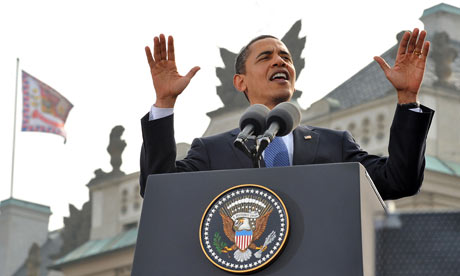
In a series of op-eds in The Wall Street Journal, these Cold Warrior statesmen called for a global effort to reduce reliance on nuclear weapons, prevent their spread, and ultimately end them as a threat to the world. Their approach was echoed in President Obama’s 2009 Prague speech and embraced by the UN Security Council in a resolution at a head of government meeting later that year.

The work of the four principals also inspired the creation of regional networks, led by Des Browne, Gareth Evans, and Irma Arguello, that bring together high-level former political, military, and diplomatic leaders committed to engaging wide-reaching audiences in an ongoing discussion about today’s nuclear threats and increased public awareness and understanding of the consequences of inaction.

“When a large and growing number of nuclear-armed adversaries confront multiple perceived threats, the risk that deterrence will fail and that nuclear weapons will be used increases dramatically,” said Kissinger.

“These regional networks, working together, can bring needed urgency and focus to nuclear issues in their regions and globally. They also can play a key role in developing and proposing to governments new approaches to regional conflicts that fuel threats in Asia and around the world,” said Nunn.

Shultz, Perry, Nunn, Browne, Evans and Arguello are participating in the meeting. The Foreign Minister of Singapore, the Honorable K Shanmugam, will open the meeting with remarks on June 25 at 9:30 a.m. A press availability with key participants will be held on June 26 at 11:30 a.m. at the Mandarin Oriental Hotel.

The regional networks participating in the meeting are:

Asia Pacific Leadership Network (APLN): A network of 30 current and former political, military, and diplomatic leaders in the Asia Pacific region—including from nuclear weapons-possessing states of China, India and Pakistan—working to improve public understanding, shape public opinion, and influence political decision-making and diplomatic activity on issues concerning nuclear nonproliferation and disarmament. The APLN is convened by former Australian Foreign Minister Gareth Evans.

European Leadership Network (ELN): A network of more than 100 senior European political, military and diplomatic figures working to build a more coordinated European policy community, define strategic objectives and feed analysis and viewpoints into the policy-making process for nuclear nonproliferation and disarmament issues. Former UK Defense Secretary Des Browne is Chair of the Executive Board of ELN.

UK Top Level Group (TLG): A cross-party group of senior British parliamentarians who share the belief that multilateral nuclear disarmament, nonproliferation and nuclear security are critical global issues; the group includes almost all of the former British Foreign and Defense Secretaries over the last two decades, former Chiefs of the Defense Staff and prominent British diplomats who also served during the same period. TLG is convened by Des Browne.

Latin American Leadership Network (LALN): A network of 14 senior political, military, and diplomatic leaders in Latin America and the Caribbean working to promote constructive engagement on nuclear issues and to create an enhanced security environment to help reduce global nuclear risks. The LALN is currently led by Irma Arguello, founder and chair of Argentina-based NPSGlobal.

The Nuclear Security Leadership Council: A newly formed Council, based in the United States, brings together 21 influential leaders from North America from diverse backgrounds. The Council is led by interim co-chairs Ambassador Brooke Anderson and Admiral Gary Roughead (USN-Ret).

The Nuclear Threat Initiative is a nonprofit, nonpartisan organization working to reduce threats from nuclear, biological and chemical weapons. NTI is governed by a prestigious, international board of directors and is co-chaired by founders Sam Nunn and Ted Turner. NTI’s activities are directed by Nunn and President Joan Rohlfing. For more information, visit www.nti.org. For more information about the Nuclear Security Project, visit www.NuclearSecurityProject.org. More


Thursday, October 4, 2012

Extrajudicial Drone Assassinations

Unnecessary and Disproportional: The Killings of Anwar and Abdul Rahman al-Awlaki

One year since the assassination of Anwar al-Awlaki CagePrisoners publishes a report which reveals what role he really played in the Al-Qaeda leadership

“As for my husband who was assassinated by a US drone exactly one year from today, I believe strongly that his killing has nothing to do with the allegations by the US that he has links to terrorist attacks, but rather to silence him because of his influence on Muslims in the Western world as a Muslim scholar and preacher…the drone programme is wrong and illegal because it kills a lot more civilians than so called [high] valuable targets.”– Gihan Mohsen Baker, wife of Anwar al-Awlaki

Exactly a year ago, American citizen Anwar al-Awlaki was killed in a drone strike carried out by the US in Northern Yemen – only one of scores that are dying as part of a programme of extrajudicial killings.

On the anniversary of his killing, CagePrisoners releases its report “Unnecessary and Disproportional: The Killing of Anwar and Abdul-Rahman al-Awlaki”.

This report analyses and challenges the narrative developed by various governments and media outlets to justify the assassination of the Muslim cleric, presenting him as a leader of al-Qaeda in the Arabian Peninsula (AQAP) and the mastermind behind several attacks against the USA. The report also highlights how dangerous such a narrative can be as it extends to include the targeting and killing of Awlaki’s 16 year old son, also an American citizen, a few days later.

With only a few weeks left until Election Day, most people will be focused on the election campaigns of President Obama – few will remember that it is under Obama’s leadership that the policy of targeted killings has intensified and expanded.

This report will throw light on the legal and moral inconsistencies that appear as a Nobel Peace Prize winning President continues developing his drone programme enabling him to carry out extra-judicial killings across the globe, picking off targets on a ‘kill list’ once a week.

Through the case study of Anwar and Abdur Rahman al-Awlaki, questions are also raised about the UK’s involvement in targeted killings as more evidence emerges of British citizens that have been killed in drone attacks including evidence to suggest that British authorities actively assist the CIA in its drone programme.

CagePrisoners demands complete transparency in relation to the process by which individuals are placed on President Obama’s ‘kill list’, independent investigations into civilian deaths and injuries during drone strikes and the end to British complicity and the complicity of any other States, with US drone strikes. More


Download full report here


Monday, October 1, 2012

A dangerous new world of drones - Peter Bergen

Washington (CNN) -- A decade ago, the United States had a virtual monopoly on drones.

Not anymore. According to data compiled by the New America Foundation, more than 70 countries now own some type of drone, though just a small number of those nations possess armed drone aircraft.

The explosion in drone technology promises to change the way nations conduct war and threatens to begin a new arms race as governments scramble to counterbalance their adversaries.

Late last month, China announced that it would use surveillance drones to monitor a group of uninhabited islands in the South China Sea that are controlled by Japan but claimed by China and Taiwan.

In August 2010, Iran unveiled what it claimed was its first armed drone. And on Tuesday, the country's military chief, Gen. Amir Ali Hajizadeh, disclosed details of a new long-range drone that he said can fly 2,000 kilometers (1,250 miles), which puts Tel Aviv easily in range.

Study: Drone strikes kill, maim and traumatize too many civilians

But without an international framework governing the use of drone attacks, the United States is setting a dangerous precedent for other nations with its aggressive and secretive drone programs in Pakistan and Yemen, which are aimed at suspected members of al Qaeda and their allies.

There has been virtually no substantive public discussion about drone attacks among policymakers at the international level.

Just as the U.S. government justifies its drone strikes with the argument that it is at war with al Qaeda and its affiliates, one could imagine that India in the not too distant future might launch such attacks against suspected terrorists in Kashmir, or China might strike Uighur separatists in western China, or Iran might attack Baluchi nationalists along its border with Pakistan.

This moment may almost be here. China took the United States by surprise in November 2010 at the Zhuhai Air Show, where it unveiled 25 drone models, some of which were outfitted with the capability to fire missiles.

It remains unclear just how many of China's drones are operational and how many of them are still in development, but China is intent on catching up with the United States' rapidly expanding drone arsenal.

Drones in Action Obama reflects on drone warfare use 'Drones completely counterproductive' Barack Obama's 'lethal presidency'

When President George W. Bush declared a "War on Terror" 11 years ago, the Pentagon had fewer than 50 drones.

Now, it has around 7,500. More


Sunday, July 22, 2012

The Hypocrisy Of Our Kill List President And Murder In Aurora

Obama Calls Shooting People "Evil Senseless"

July 22, 2012 "Information Clearing House" -- While reading the Text of Obama Statement on Shootings in Colorado - Associated Press 7/20/2012, one line struck this writer as quite astounding:

"We may never understand what leads anybody to terrorize their fellow human beings like this. Such violence, such evil is senseless. It's beyond reason."

The President may have realized afterward that since he has been ordering the shooting of thousands in a half-dozen countries, the words "evil, senseless, beyond reason" could easily reflect back on himself. A later Obama statement on the massacre in a Colorado movie house did not contain the words 'evil, senseless, violence beyond reason.'

In any case, history books, in some future, probably not to distant, day will deplore Obama's pathetic 9/11 excuse for increasing and extending a ten year old military occupation war in dirt poor Afghanistan, killing, and killing easily, young and old Afghani, who are fighting invaders of their nation as they have always done. And perhaps one day independent investigative journalism will reveal whose instructions Obama was following from within that "financial element" that FDR confided "has owned the government since the days of Andrew Jackson. "*

Historians will denounce his shameful exceeding of his executive powers under the Constitution, to have assassinated even American citizens without trial, and ridicule the pack of lies he offered in sick defense of his frightening Hellfire and Predator drones murdering intentionally and collaterally while menacing all citizens in some of the most poverty-stricken populations on earth. Historians will judge his character by his once infamous joking about using a drone on his daughters boyfriends- "they'll never know what hit them." More


Thursday, June 21, 2012

Is Barack Obama Morphing Into Dick Cheney?

Four Ways the President Is Pursuing Cheney’s Geopolitics of Global Energy

As details of his administration’s global war against terrorists, insurgents, and hostile warlords have become more widely known -- a war that involves a mélange of drone attacks, covert operations, and presidentially selected assassinations -- President Obama has been compared to President George W. Bush in his appetite for military action. “As shown through his stepped-up drone campaign,” Aaron David Miller, an advisor to six secretaries of state, wrote at Foreign Policy, “Barack Obama has become George W. Bush on steroids.”

When it comes to international energy politics, however, it is not Bush but his vice president, Dick Cheney, who has been providing the role model for the president. As recent events have demonstrated, Obama’s energy policies globally bear an eerie likeness to Cheney’s, especially in the way he has engaged in the geopolitics of oil as part of an American global struggle for future dominance among the major powers.

More than any of the other top officials of the Bush administration -- many with oil-company backgrounds -- Cheney focused on the role of energy in global power politics. From 1995 to 2000, he served as chairman of the board and chief executive officer of Halliburton, a major supplier of services to the oil industry. Soon after taking office as vice president he was asked by Bush to devise a new national energy strategy that has largely governed U.S. policy ever since.

Early on, Cheney concluded that the global supply of energy was not growing fast enough to satisfy rising world demand, and that securing control over the world’s remaining oil and natural gas supplies would therefore be an essential task for any state seeking to acquire or retain a paramount position globally. He similarly grasped that a nation’s rise to prominence could be thwarted by being denied access to essential energy supplies. As coal was to the architects of the British empire, oil was for Cheney -- a critical resource over which it would sometimes be necessary to go to war. More


Monday, April 30, 2012

The Obama Contradiction: Is this a sustainable way forward?

Weakling at Home, Imperial President Abroad


By Tom Engelhardt

He has few constraints (except those he’s internalized). No one can stop him or countermand his orders. He has a bevy of lawyers at his beck and call to explain the “legality” of his actions. And if he cares to, he can send a robot assassin to kill you, whoever you are, no matter where you may be on planet Earth.

He sounds like a typical villain from a James Bond novel. You know, the kind who captures Bond, tells him his fiendish plan for dominating the planet, ties him up for some no less fiendish torture, and then leaves him behind to gum up the works.

As it happens, though, he’s the president of the United State, a nice guy with a charismatic wife and two lovely kids.

How could this be?

Crash-and-Burn Dreams and One That Came to Be

Sometimes to understand where you are, you need to ransack the past. In this case, to grasp just how this country’s first African-American-constitutional-law-professor-liberal Oval Office holder became the most imperial of all recent imperial presidents, it’s necessary to look back to the early years of George W. Bush’s presidency. Who today even remembers that time, when it was common to speak of the U.S. as the globe’s “sole superpower” or even “hyperpower,” the only “sheriff” on planet Earth, and the neocons were boasting of an empire-to-come greater than the British and Roman ones rolled together?

Read more »


Drone strikes: Pakistan may boycott Chicago summit

Pakistan may boycott the upcoming Nato summit in Chicago and delay its decision to reopen Nato supply routes in retaliation for the latest US drone attack in North Waziristan Agency, officials said.This was the first such attack since parliament last month approved new guidelines on relations with the United States, which included a call for an end to drone strikes in Pakistani territory.

A statement issued by the Foreign Office denounced the latest strike as “a violation of Pakistan’s sovereignty”.

“Such attacks are in total contravention of international law and established norms of interstate relations,” it added. The matter would be taken up through diplomatic channels both in Islamabad and Washington.

A senior government official told The Express Tribune that Pakistan was contemplating a number of options to convey a strong message on drone strikes to the US. One such option includes pulling out of the Chicago summit scheduled for May. It was, however, not clear whether Islamabad was formally invited to the gathering of nearly 50 heads of states and governments.

US Special Representative for Afghanistan and Pakistan Marc Grossman did request the Pakistani leadership during his recent trip to attend the summit, said the official. “The latest drone attack clearly is an attempt to discredit democracy in Pakistan,” added the official, who was part of recent negotiations between Islamabad and Washington. More


Monday, May 3, 2010

Obama administration discloses size of U.S. nuclear arsenal


Tuesday, May 4, 2010 - UNITED NATIONS -- Shattering a taboo dating from the Cold War, the Obama administration revealed Monday the size of the American nuclear arsenal -- 5,113 weapons -- as it embarked on a campaign for tougher measures against countries with hidden nuclear programs.

The figure was in line with previous estimates by arms-control groups. But Secretary of State Hillary Rodham Clinton emphasized that it was the very disclosure of the long-held secret that was important.

"We think it is in our national security interest to be as transparent as we can about the nuclear program of the United States," she told reporters at a high-level nuclear conference in New York, where she announced the change in policy. "We think that builds confidence."

Shortly after Clinton's speech, the Pentagon issued a fact sheet saying that the number of working U.S. nuclear warheads had plummeted from a peak of 31,255 in 1967. In addition to the functioning weapons, thousands more have been retired and await dismantlement, the Pentagon said. Analysts estimate that number at about 4,500.

The Obama administration had debated for months whether to release the arsenal numbers, with some intelligence officials worrying they could give clues to would-be bombmakers about how much plutonium was required for a weapon. But Clinton noted that reliable private estimates of the stockpile were readily available.

The disclosures came on a day when Iran and the United States squared off over U.S.-led efforts to strengthen the nuclear Non-Proliferation Treaty. The Iranian president, Mahmoud Ahmadinejad, used the meeting to lash out at the United States and accuse nuclear nations of trying to unfairly deny much of the world the possibility to pursue nuclear energy programs.

But Ahmadinejad was greeted with a public scolding about his country's secretive nuclear program from the United Nations' top leadership. More >>>


T

Monday, March 1, 2010

US plans 'dramatic reductions' in nuclear weapons


President Obama speaking in Prague 5 April 2009 (file photo)
Mr Obama outlined his vision of a world free of nuclear weapons last April.

US President Barack Obama is planning "dramatic reductions" in the country's nuclear arsenal, a senior US administration official has said.

This would come as part of a sweeping policy review designed to prevent the spread of atomic weapons, he said.

He added that the new strategy will point to a greater role for conventional weapons.

Mr Obama is holding a meeting with his Defence Secretary Robert Gates to discuss the new nuclear strategy. More >>>

Sunday, February 28, 2010

Barack Obama orders new nuclear review amid growing feud


President's hopes for reform create bitter tensions with National Security Council and Department of Defense

President Barack Obama has ordered the rewriting of the draft new US Nuclear Posture Review (NPR), amid frustration in the White House that the document fails to reflect his aspirations for a nuclear-weapons-free world and an end to "cold war thinking".

The review, drawn up by each administration, sets the doctrine justifying both the retention of nuclear weapons and the circumstances in which they might be used. It also determines more practical issues, including nuclear force readiness, targeting and war planning. More >>>

Friday, October 23, 2009

Military 'In War Against The White House'


Sy Hersh: Military 'In War Against The White House'


October 20, 2009 "
Crooks and Liars" -- So many of the saner people were driven out of the military during the Bush administration, it doesn't surprise me that the people left include a lot of the right-wing, racist fringe elements. Still, it's shocking to hear this:

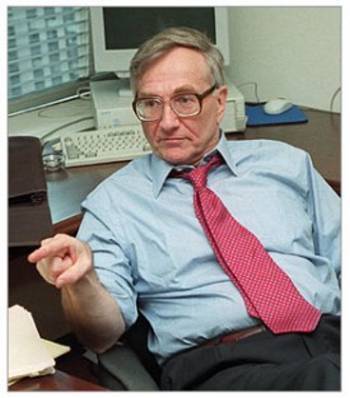
DURHAM — The U.S. military is not just fighting wars in Iraq and Afghanistan, America’s most renowned investigative journalist says. The army is also “in a war against the White House — and they feel they have Obama boxed in,” Pulitzer Prize-winning reporter Seymour Hersh told several hundred people in Duke University’s Page Auditorium on Tuesday night. “They think he’s weak and the wrong color. Yes, there’s racism in the Pentagon. We may not like to think that, but it’s true and we all know it.” In a speech on Obama’s foreign policy, Hersh, who uncovered the My Lai massacre during the Vietnam War and torture at Abu Ghraib prison during the Iraqi war, said many military leaders want Obama to fail. “A lot of people in the Pentagon would like to see him get into trouble,” he said. By leaking information that the commanding officer in Afghanistan, Gen. Stanley McChrystal, says the war would be lost without an additional 40,000 American troops, top brass have put Obama in a no-win situation, Hersh contended.
“If he gives them the extra troops they’re asking for, he loses politically,” Hersh said. “And if he doesn’t give them the troops, he also loses politically.” The journalist criticized the president for “letting the military do that,” and suggested the only way out was for Obama to stand up to them.
“He’s either going to let the Pentagon run him or he has to run the Pentagon,” Hersh said. If he doesn’t, “this stuff is going to be the ruin of his presidency.” Hersh called the “Af-Pak” situation — the spreading conflict in Afghanistan and Pakistan — Obama’s main challenge. The only way for the U.S. to extricate itself from the conflict, Hersh said, is to negotiate with the Taliban. “It’s the only way out,” he said. “I know that there’s a lot of discussion in the White House about this now. More >>>