Showing posts with label nuclear policy. Show all posts

Friday, May 22, 2015

Book Review "The Path To Zero: Dialogues On Nuclear Dangers" By Richard Falk And David Krieger

This book ought to be required reading for college students everywhere in the world, and also for decision-makers.

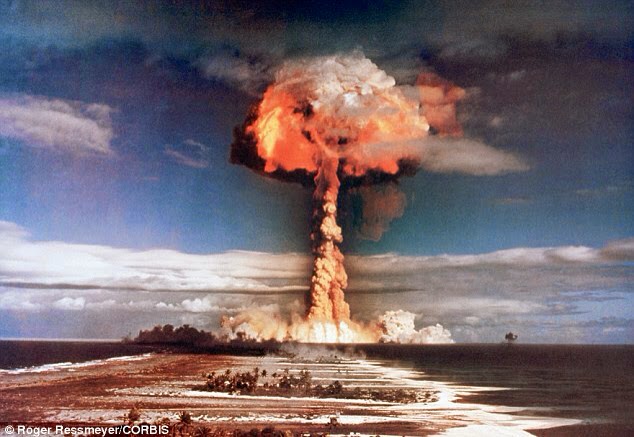
Mushroom cloud from the atomic bombing of Nagasaki on August 9, 1945

It shakes us out of our complacency and makes us realize that widespread, immediate and dedicated public action is urgently needed if we are to save human civilization and the biosphere from a thermonuclear catastrophe. The book is published by Paradigm Publishers, 2845 Wilderness Place, Boulder, CO 80301, USA. (www.paradigmpublishers.com) On the back cover there are endorsements, with which I entirely agree, by Archbishop Desmond Tutu and David Ellsberg.

“We are greatly privileged, like flies on the wall, to join this conversation between two remarkable stalwarts. Richard Falk and David Krieger, in the campaign for a nuclear-free world. It is unconscionable that so many of us seem to accept the prospect of our 'mutually assured destruction', the immoral massacre of millions of civilians, and to view with equanimity such a gross violation of international law. Falk and Krieger discuss persuasively and cogently the folly of reliance on nuclear weapons that can cause apocalyptic devastation. If we want to survive in a habitable world, then we have no choice: we must heed, and do so urgently, these lovers of mankind.” Archbishop Desmond Tutu, Nobel Peace Laureate

“In 'The Path to Zero', Falk and Krieger engage in a stunningly eloquent dialogue on a range of nuclear dangers, and our common responsibility to put an end to them. This is urgent reading for citizens, scientists, policy-makers and political leaders, actually for anyone who cares about the future of civilization and life on earth”, Daniel Ellsberg, Whistleblower

Other enthusiastic endorsements come from Jonathan Schell, Commander Robert Green and Maude Barlow.

The book has ten chapters: 1 The Nuclear Age; 2 Nuclear Deterrence; 3 Nuclear Proliferation; 4 Nuclear Arms Control and Nuclear Disarmament; 5 Nuclear Weapons and Militarism; 6 Nuclear Weapons and Nuclear Energy; 7 Nuclear Weapons and International Law; 8 Nuclear Weapons, Culture and Morality; 9 Nuclear Weapons and Democracy; 10 The Path to Zero.

The two authors

Richard Falk is Albert G. Milbank Professor of International Law and Practice Emeritus at Princeton, where he was a member of the faculty for 40 years. Since 2002 he has been a research professor at the University of California-Santa Barbara. He has been Special Rapporteur on Occupied Palestine for the UN Human Rights Council since 2008, and served on a panel of experts appointed by the President of the UN General Assembly, 2008-2009. He is the author or editor of numerous books, including “Legality and Legitimacy in Global Affairs” (Oxford 2012).

David Krieger is a Founder of the Nuclear Age Peace Foundation, and has served as President of the Foundation since 1982. Under his leadership, the Foundation has initiated many innovative projects for building peace, strengthening international law, abolishing nuclear weapons, and empowering peace leaders. Among other leadership positions, he is one of 50 Councilors from around the world on the World Future Council. He is the author and editor of numerous books and articles related to achieving peace in the Nuclear Age. A graduate of Occidental College, he holds MA and PhD degrees in political science from the University of Hawaii.

Flaws in the concept of nuclear deterrence

In discussing the concept of nuclear deterrence, the two authors emphasize the fact that it violates the fundamental ethical principles of every major religion. Dr. Krieger comments:

Krieger: “Who are we? What kind of culture would be content to base its security on threatening to murder hundreds of millions of innocent people? ”

The two authors also point out that the idea of deterrence is an unproved theory, based on the assumption that accidents will not happen, and that leaders are always rational. In fact, we know historically that the world has come extremely near to accidental nuclear war on very numerous occasions, and there are also many historical instances of irrational behavior by leaders. This cannot continue indefinitely without a catastrophe. See:http://www.cadmusjournal.org/article/issue-4/flaws-concept-nuclear-deterrance

The illegality of nuclear weapons

As Dr. Krieger and Prof. Falk point out, the threat or use of nuclear weapons violates international law. The fact that planning an aggressive war or conducting one is a crime according to the Nuremberg Principles is discussed. The two authors also review in detail the 1996 Advisory Opinion of the International Court of Justice, which was asked by the UN General Assembly and the World Health Organization to rule on the legality of the threat or use of nuclear weapons. The ICJ ruled that under almost all circumstances, the threat or use of nuclear weapons would be illegal. The only possible exception was the case where a country might be under attack and its very survival threatened. The Court gave no ruling on this extreme case. Finally, the ICJ ruled unanimously that states possessing nuclear weapons have an obligation to get rid of them within a short time-frame.

Falk: “It may be time for the General Assembly to put this question to the ICJ: What legal consequences arise from the persistent failure of the nuclear weapon states to fulfill their obligations under Article VI of the NPT. In my view, the nonnuclear states have also been irresponsible in not insisting on on mutuality of respect in the nonproliferation setting. It may be up to civil society actors to bring wider attention to this disrespect for the vital norms of international law...”

http://www.icj-cij.org/docket/files/93/7407.pdfhttp://www.currentconcerns.ch/index.php?id=711https://www.wagingpeace.org/author/john-avery/http://human-wrongs-watch.net/2015/03/27/tactical-nuclear-weapons-in-europe-the-dangers-are-very-great-today/http://www.countercurrents.org/avery250514.htm

Colonialism and exceptionalism

Falk: “We need to remember that the expansion of Europe at the expense of the non-Western world rested on violence and the superiority of European weaponry and strategic logistics, including naval power. This link between Western militarism and historical ascendancy is, in my view, one of the deep reasons why there is such an irrational attachment to nuclear weaponry, making it very diffiicult to renounce as the supreme expression of political violence.”

Krieger: “I would like to add that there is a general orientation in much of Western society to subordinate international law to geopolitical desire, in other words, not to allow international law to be a limiting factor in seeking geopolitical advantage. International law is thus applied when useful and ignored when self-interest and convenience dictate. This is a striking manifestation of the double standards that have served the interests of the powerful in both the colonial and postcolonial worlds.”

http://www.informationclearinghouse.info/article41866.htmhttp://www.informationclearinghouse.info/article36494.htm

The Nuclear Non-Proliferation Treaty

In discussing the Nuclear Non-Proliferation Treaty, Prof. Falk and Dr. Krieger point out that that it has several serious flaws: It is unsymmetrical, giving a special status to the nuclear weapons states, and forbidding all others to possess these weapons. The treaty encourages the “peaceful” use of nuclear energy, which in practice opens the door to acquisition of nuclear weapons by many nations and which exposes the world to radioactive fallout from accidents like Chernobyl and Fukushima, and very long-term dangers from radioactive wastes. Finally, membership in the NPT is not universal. Here are some comments by the two authors:

Falk: “In my view, the failure of the nuclear weapon states to pursue nuclear disarmament over a period of more than forty years, despite the injunction to do so by the International Court of Justice, is a material breach of the NPT that would give any party the option of pronouncing the treaty void.”

Krieger: “It would be wonderful to see a strong and concerted effort by non-nuclear-weapon states to challenge the nuclear weapons club. I think that the most effective thing that such states could do would be to start the process of negotiating a nuclear weapons convention and, if necessary, to do it without the nuclear weapon states.”

Falk: “My proposal is a two-year ultimatum by as many nonnuclear states as possible, threatening to withdraw from the NPT unless serious nuclear disarmament negotiations get underway.”

Dr. Krieger is not in complete agreement with Prof. Falk regarding such an ultimatum. He feels that even though it is flawed in many ways, it is still so valuable that its continuation ought not to be threatened.

Krieger: “One of the great problems with the NPT is that it encourages the peaceful use of nuclear energy, which actually opens the door to nuclear weapons proliferation. It ends up making the treaty work against itself. Of course, Israel is not a party to the treaty, nor are India and Pakistan. This demonstrates a fundamental weakness of international law, that is, the exemption of nations that do not sign a treaty from the law. This would be unworkable in domestic law, and it is equally so in international law.”

Krieger: “The nuclear plant operators are willing to downplay for short-term gain the catastrophic risks that are involved in the use of nuclear reactors to boil water. They are wiling to generate wastes that will adversely affect the health and well-being of of untold generations to follow us on the planet. ¡K The tragedy is that governments embrace and support this industry, demonstrating that they also do not place the interests of their people and the future at the forefront of their planning and decision making.”

http://www.baselpeaceoffice.org/article/global-wave-2015-and-peace-planet-un-nuclear-non-proliferation-conference

No first use; no hair-trigger alerted missiles

In their concluding chapter, the two authors agree that a No First Use declaration could be a useful first step. Prof. Falk comments:

Falk: “What conceivable justification, consistent with a deterrence rationale for the retention of nuclear weapons, is there for not assuring other governments that the United States will only use such weaponry in retaliation a prior attack with nuclear weaponry? It is rather clear that such a declaration, especially if backed up by non-nuclear deployments, would both give the United States some new claim to leadership with respect to the weaponry and exert enormous psychological pressure on other nuclear weapon states to follow the American lead.”

This, of course, could be linked to taking all nuclear weapons systems off hair-trigger alert, which is probably the most important first step towards avoiding the catastrophe of an accidental nuclear war. Dr Krieger comments:

Krieger: “Those responsible for maintaining nuclear arsenals on hair-trigger alert are delusional if they think that it can be maintained indefinitely without dire consequences.”

Developments since the publication of the book

Since the publication of Prof. Falk and Dr. Krieger's book in 2012, several events have taken place which the authors probably would have discussed if they had occurred earlier. For example, on 2 April, 2013, the Arms Trade Treaty was passed by a massive majority by a direct vote in the UN General Assembly. The ATT had remained blocked for more than 10 years in the consensus-bound Conference on Disarmament in Geneva. Its passage gives us hope that a Nuclear Weapons Convention can similarly be passed by a direct vote in the UN General Assembly, where the vast majority of nations are in favor of the complete abolition of nuclear weapons. Even if bitterly opposed by the nuclear weapons states, a Nuclear Weapons Convention would have great normative value.http://www.cadmusjournal.org/article/issue-6/arms-trade-treaty-opens-new-possibilities-un

Another development which Prof. Falk and Dr. Krieger would certainly have discussed, had it occurred earlier, is an heroic law suit by the Republic of the Marshall Islands, suing the nuclear weapons states for violation of Article VI of the Nuclear Non-Proliferation Treaty. In fact Dr. Krieger and his organization, the Nuclear Age Peace Foundation, are actively supporting the Marshall Islands in this David-versus-Goliath-like law suit. http://www.wagingpeace.org/tag/marshall-islands/

Finally, the two authors would probably have discussed the hubris of Washington's power-holders in threatening war with both Russia and China. The effect of this colossally misguided US action has been to firmly unite China and Russia. In fact the BRICS countries, with their vast resources, are now moving away from using the dollar as a reserve currency for international trade. The probable effect will be the collapse of the already-strained US economy, and as a consequence, the fall of the US Empire. Prof. Falk and Dr. Krieger both wonder whether they have been too America-centric in their discussions of nuclear abolition. The probable fall of the United States from its present position of global hegemony may mean that US leadership will not, in the future, be the key to nuclear abolition.http://www.countercurrents.org/roberts110515.htmhttp://www.truth-out.org/opinion/item/19734-hubris-versus-wisdomhttp://beforeitsnews.com/alternative/2014/04/wolfowitz-doctrine-us-plans-for-russia-2945824.html

Some conclusions

When the Cold War ended in 1991, many people heaved a sigh of relief and concluded that they no longer had to worry about the threat of a nuclear Armageddon. Prof. Falk and Dr. Krieger show us that this comforting belief is entirely false, that the dangers are greater than ever before, and that it is vital to bring this fact to the urgent attention of today's young people, who were born long after the tragic nuclear destruction of Hiroshima and Nagasaki, or perhaps even born after the end of the Cold War.

Ultimately, the complete abolition of nuclear weapons is linked with a change of heart, the replacement of narrow nationalism by loyalty to humanity as a whole, and the replacement of militarism by a just and enforcible system of international law.

John Avery received a B.Sc. in theoretical physics from MIT and an M.Sc. from the University of Chicago. He later studied theoretical chemistry at the University of London, and was awarded a Ph.D. there in 1965. He is now Lektor Emeritus, Associate Professor, at the Department of Chemistry, University of Copenhagen. Fellowships, memberships in societies: Since 1990 he has been the Contact Person in Denmark for Pugwash Conferences on Science and World Affairs. In 1995, this group received the Nobel Peace Prize for their efforts. He was the Member of the Danish Peace Commission of 1998. Technical Advisor, World Health Organization, Regional Office for Europe (1988- 1997). Chairman of the Danish Peace Academy, April 2004. http://www.fredsakademiet.dk/ordbog/aord/a220.htm. He can be reached at avery.john.s@gmail.com

Suggestions for further reading:

Ban Ki-moon. “The United Nations and security in a nuclear-weapon-free world.” Address to the East-West Institute, October 24, 2008. http://www.un.org/apps/news/infocus/sgspeeches/search_full.asp?statID=351

Green, Robert, “Breaking Free from Nuclear Deterrence.” Santa Barbara: Nuclear Age Peace Foundation, 10th Annual Frank K. Kelly Lecture on Humanity's Future, 2011, http://www.wagingpeace.org/wp-content/uploads/2013/06/2011_kelly_lecture.pdf

“Legality of the Threat or Use of Nuclear Weapons.” Advisory Opinion of the International Court of Justice, The Hague, July 8, 1996. http://www.icj-cij.org/docket/files/93/7407.pdf

McCloy-Zorin Accords. “Joint Statement of Agreed Principles for Disarmament Negotiations,” signed on September 20, 1961, unanimously adopted by the United Nations General Assembly on December 20, 1961. http://www.nuclearfiles.org/menu/key-issues/nuclear-weapons/issues/arms-control-disarmament/mccloy-zorin-accords_1961-09-20.htm

Model Nuclear Weapons Convention. “Convention on the Prohibition of the Development, Testing, Production, Stockpiling, Transfer, Use and Threat of Use of Nuclear Weapons and their Elimination, April 2007.” http://www.inesap.org/publications/nuclear-weapons-convention

Obama, Barak, Remarks of President Barak Obama, Hradcany Square, Prague, Czech Republic, April 5, 2009. http://prague.usembassy.gov/obama.html

Rotblat, Joseph, “Remember Your Humanity”, Nobel Lecture, Oslo, Norway, December 10, 1995, http://www.nobelprize.org/nobel_prizes/peace/laureates/1995/rotblat-lecture.html

Russell-Einstein Manifesto, issued in London, July 9, 1955, http://www.pugwash.org/about/manifesto.htm

Santa Barbara Declaration, “Reject Nuclear Deterrence: An Urgent Call to Action,” http://www.wagingpeace.org/santa-barbara-declaration-reject-nuclear-deterrence-an-urgent-call-to-action/

Treaty on the Non-Proliferation of Nuclear Weapons, entered into force on March 5, 1970.http://www.state.gov/www/global/arms/treaties/npt1.html

Vancouver Declaration. “Law's Imperative for the Urgent Achievement of a Nuclear-Weapon-Free World,” Vancouver, Canada, March 21, 2011. http://www.lcnp.org/wcourt/Feb2011VancouverConference/vancouverdeclaration.pdf


Saturday, December 20, 2014

Pakistan's growing need for Energy: options of coal, gas & nuclear energy

Pakistan's growing need for Energy: options of coal, gas & nuclear energy and renewables by Dr Maria Sultan, Director General, South Asian Strategic Stability Institute, Pakistan. Published on Dec 19, 2014

www.sassi.org


Monday, November 24, 2014

Iran Nuclear Negotiations: Looking Ahead

Carnegie Endowment for International Peace
Dear Colleague,

With talks set to continue between Iran and the world powers to strike a deal on Tehran’s nuclear program, I want to draw your attention to recent commentary and analysis by Carnegie’s scholars.

In recent testimony to the House Committee on Foreign Affairs, Karim Sadjadpour warned about the risk of premature sanctions and said the intent of U.S. policy should be to deter Iran’s nuclear advancement, not provoke it.

In a groundbreaking op-ed, James Acton encourages policymakers to switch focus from an Iranian nuclear breakout to the possibility of an atomic “sneak-out.” Acton offers ideas for how America can rethink its strategy for preventing Tehran from getting the Bomb.

Finally, in an article that looks at dynamics in Tehran, Cornelius Adebahr suggests that if the United States were to increase sanctions, Iran would likely continue research and development on new centrifuges as a sign of defiance as much as an effort to build a stockpile for the future.

I very much hope that you’ll take a look.

Sincerely,

George Perkovich
Vice President for Studies
Nuclear Policy Program

Carnegie Endowment for International Peace
George PerkovichGeorge Perkovich
Toby DaltonToby Dalton
James M. ActonJames M. Acton
Togzhan KassenovaTogzhan Kassenova
WASHINGTON, DC
Nicholas WrightNicholas
Wright

WASHINGTON, DC
Ariel LeviteAriel Levite
TEL AVIV
Li BinLi Bin
WASHINGTON, DC, AND BEIJING
Tomoko KurokawaTomoko Kurokawa
TOKYO
Duyeon KimDuyeon Kim
WASHINGTON, DC, AND SEOUL
Alexei ArbatovAlexei
Arbatov

MOSCOW
Petr TopychkanovPetr Topychkanov
MOSCOW
Sinan ÜlgenSinan Ülgen
ISTANBUL
Mark HibbsMark Hibbs
BERLIN
Shahram ChubinShahram Chubin
GENEVA
Pierre GoldschmidtPierre Goldschmidt
BRUSSELS
Paul SchultePaul Schulte
LONDON
Tong ZhaoTong Zhao
BEIJING
Paul SchulteWilliam Norris
CarnegieEndowment.orgBEIJINGBEIRUTBRUSSELSMOSCOWWASHINGTON


Tuesday, September 16, 2014

India-Japan proliferation: delinquency or a crime? By Mobeen Tariq

The ongoing India-Japan negotiations on a civil nuclear agreement were the hallmark of Indian Premier Modi’s recent visit to Japan.


Modi could not achieve the breakthrough on the much sought after civil nuclear deal. There are issues in the prospective Japan-India Nuclear Cooperation Agreement that can have multiple, deplorable implications. India possesses nuclear weapons and has tested these several times. It is not a signatory of the Nuclear Nonproliferation Treaty (NPT). If nonproliferation norms and Japanese traditional championing of these were to be followed, Tokyo cannot enter into nuclear trade with New Delhi.

Nuclear technology is the key to Japan’s energy sector and affects its industrial output. Overblown safety fears after the Fukushima nuclear power plant accident in 2011 affected the public’s sentiment against nuclear energy but the economic realities have changed the government’s and public’s behaviour. Japan is one of the major traders of nuclear technology for peaceful purposes and a member of the Nuclear Suppliers Group (NSG) that was founded in 1975 after India tested a nuclear weapons device using fissile material diverted from fuel provided for nuclear power generation.

India claims to have a huge energy deficit and not having enough uranium to fuel its existing and upcoming nuclear power plants that will add millions of volts to its impoverished energy mix. New Delhi boasts a fat purse and exerts sufficient political influence to woo some nuclear supplier states in foregoing their domestic and international nonproliferation commitments to trade with India. That is why the US arm-twisted the members of the NSG in giving India an exceptional waiver to trade with that country. Japan was also part of that Faustian bargain but Tokyo could not be charmed into becoming the 12th capital with which India could trade in nuclear materials. Giving a NSG waiver was delinquency but nuclear trading or allowing New Delhi to become a member of the group would be a crime. That is perhaps why Japan has demurred from signing a nuclear deal with India.

For its own sake, Japan is gearing up to start a massive nuclear fuel reprocessing plant that can produce nine tonnes of weapons usable plutonium annually, enough for 2,000 atomic bombs!

For its own sake, Japan is gearing up to start a massive nuclear fuel reprocessing plant that can produce nine tonnes of weapons usable plutonium annually, enough for 2,000 atomic bombs! This is in spite of the fact that 150,000 of its people remain homeless and that the nuclear disaster has cost almost $ 100 billion. Japan is a rational state and has reverted to nuclear energy because it is considered a safe and inexhaustible source of energy and a panacea against its dependence on hydrocarbon imports from the Middle East and elsewhere. The South China Sea is gradually becoming a powder keg due to US and Chinese competition, forcing Japan to hedge its bets on safer energy production alternatives to fossil fuels.

Indian negotiations for a civil nuclear deal with Japan started in Tokyo in June 2010. Two consecutive rounds followed in October 2010 and November 2010 in New Delhi and Tokyo. However, India slowed the pace of negotiations in the wake of the Fukushima disaster in March 2011. The last round of talks was held in November 2013. Japanese companies such as specialist reactor vessel manufacturer JSW are keen on signing a nuclear deal but the government has insisted that India agree to more stringent inspections than those required under nuclear cooperation pacts with other countries. In the longer run, Japan will have to make a choice between its trade and geopolitical interests against non-proliferation commitments.

Another hold up in the nuclear deal has been India’s refusal to accept limited liability for commercial operators who supply equipment. The Indian Civil Liability for Nuclear Damage Act of 2010 is only acceptable to states where their governments provide a financial cushion to the nuclear industry in taking the huge liability enforced by India. The prospective Japan-India Nuclear Cooperation Agreement would be a de facto legitimisation of India’s nuclear weapons status. Every gram of nuclear fuel that India would import from Japan would allow its indigenous uranium to be used for nuclear weapons production. If Japan enters a deal with India it joins a dozen others in effectively participating in New Delhi’s burgeoning nuclear weapons production.

India has invested heavily in nuclear technology for prestige and power. In his recent book The Power of Promise: Examining Nuclear Energy in India, Ramana explains how India’s Department of Aatomic Energy first acquired its present political clout, and how the Atomic Energy Commission, which reports directly to the Prime Minister, achieved its immunity to public scrutiny despite repeated failures to meet India’s nuclear energy needs. This domestic dynamic complements Indian global power ambition and some states happily let this happen for their short-term economic and geopolitical interests. It is just a matter of time that Faust will do what he is best at: having bought souls, he will ultimately challenge his hosts.

The writer is a freelance columnist


Tuesday, August 5, 2014

Noam Chomsky, Why National Security Has Nothing to Do With Security

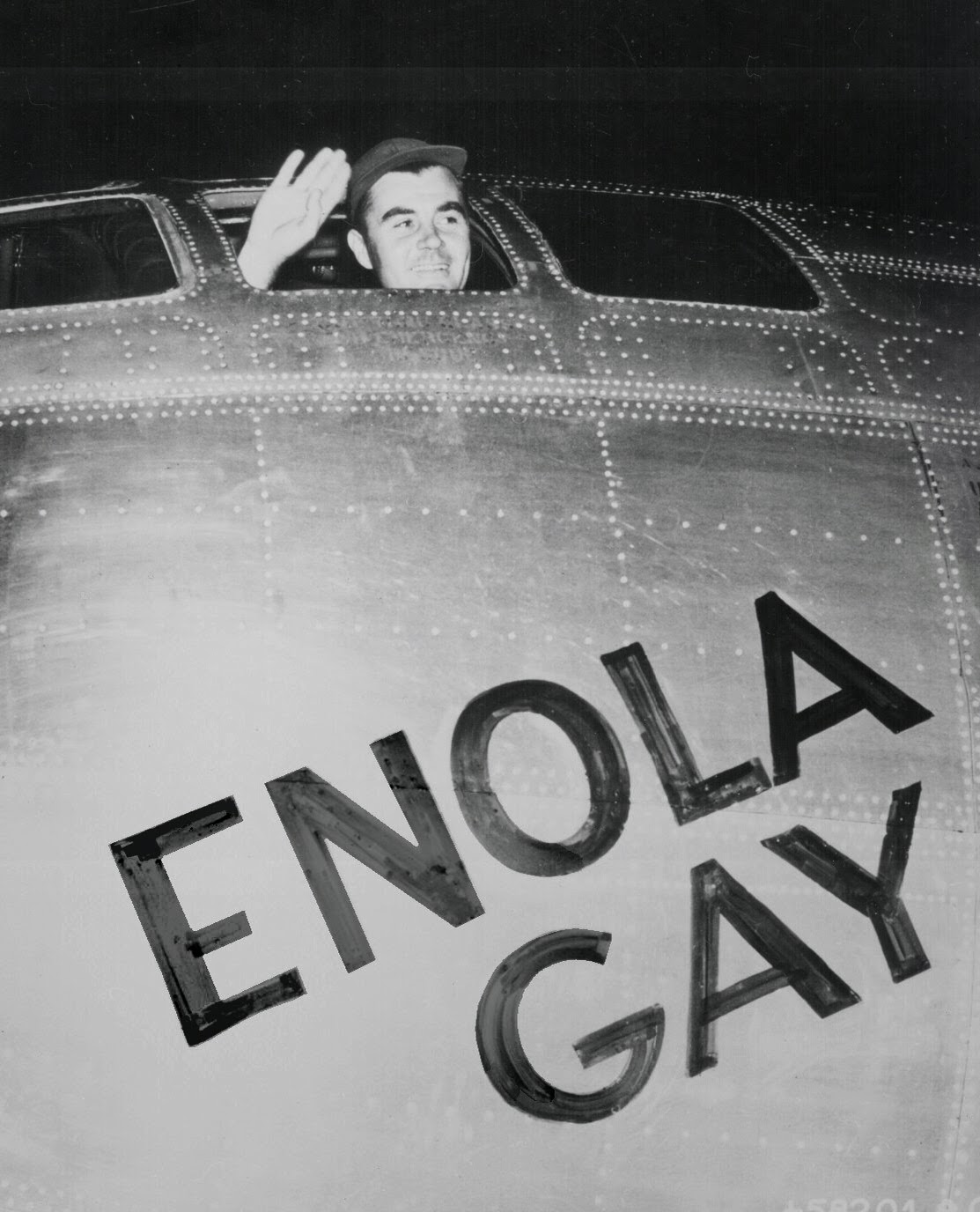
Think of it as the true end of the beginning. Last week, Theodore "Dutch" Van Kirk, the final member of the 12-man crew of the Enola Gay, the plane (named after its pilot’s supportive mother) that dropped the atomic bomb on Hiroshima, died at age 93.

Paul Tibbetts, Jr. in cockpit

When that first A-bomb left its bomb bay at 8:15 on the morning of August 6, 1945, and began its descent toward its target, the Aioli (“Live Together”) Bridge, it was inscribed with a series of American messages, some obscene, including “Greetings to the Emperor from the men of the Indianapolis.” (That ship had delivered to the Pacific island of Tinian parts of the very bomb that would turn Hiroshima into an inferno of smoke and fire -- “that awful cloud,” Paul Tibbetts, Jr., theEnola Gay's pilot, would call it -- and afterward was torpedoed by a Japanese submarine with the loss of hundreds of sailors.)

The bomb, dubbed Little Boy, that had gestated in the belly of the Enola Gay represented not only the near endpoint of a bitter global war of almost unimaginable destruction, but the birthing of something new. The way for its use had been paved by an evolution in warfare: the increasing targeting of civilian populations from the air (something that can be seen again today in the carnage of Gaza). The history of that grim development extends from German airship bombings of London (1915) by way of Guernica (1937), Shanghai (1937), and Coventry (1940), to the fire bombings of Dresden (1945) and Tokyo (1945) in the last year of World War II. It even had an evolutionary history in the human imagination, where for decades writers (among others) had dreamed of the unparalleled release of previously unknown forms of energy for military purposes.

On August 7, 1945, a previous age was ending and a new one was dawning. In the nuclear era, city-busting weapons would be a dime a dozen and would spread from the superpowers to many other countries, including Great Britain, China, India, Pakistan, North Korea, and Israel. Targeted by the planet’s major nuclear arsenals would be the civilian inhabitants not just of single cities but of scores and scores of cities, even of the planet itself. On August 6th, 70 years ago, the possibility of the apocalypse passed out of the hands of God or the gods and into human hands, which meant a new kind of history had begun whose endpoint is unknowable, though we do know that even a “modest” exchange of nuclear weapons between India and Pakistan would not only devastate South Asia, but thanks to the phenomenon of nuclear winter also cause widespread famine on a planetary scale.

In other words, 70 years later, the apocalypse is us. Yet in the United States, the only nuclear bomb you're likely to read about is Iran’s (even though that country possesses no such weapon). For a serious discussion of the U.S. nuclear arsenal, those more than 4,800 increasingly ill-kept weapons that could incinerate several Earth-sized planets, you need to look not to the country’s major newspapers or news programs but to comic John Oliver -- or TomDispatch regular Noam Chomsky. Tom

How Many Minutes to Midnight?
Hiroshima Day 2014

If some extraterrestrial species were compiling a history of Homo sapiens, they might well break their calendar into two eras: BNW (before nuclear weapons) and NWE (the nuclear weapons era). The latter era, of course, opened on August 6, 1945, the first day of the countdown to what may be the inglorious end of this strange species, which attained the intelligence to discover the effective means to destroy itself, but -- so the evidence suggests -- not the moral and intellectual capacity to control its worst instincts.

Day one of the NWE was marked by the “success” of Little Boy, a simple atomic bomb. On day four, Nagasaki experienced the technological triumph of Fat Man, a more sophisticated design. Five days later came what the official Air Force history calls the “grand finale,” a 1,000-plane raid -- no mean logistical achievement -- attacking Japan’s cities and killing many thousands of people, with leaflets falling among the bombs reading “Japan has surrendered.” Truman announced that surrender before the last B-29 returned to its base.

Those were the auspicious opening days of the NWE. As we now enter its 70th year, we should be contemplating with wonder that we have survived. We can only guess how many years remain.

Some reflections on these grim prospects were offered by General Lee Butler, former head of the U.S. Strategic Command (STRATCOM), which controls nuclear weapons and strategy. Twenty years ago, he wrote that we had so far survived the NWE “by some combination of skill, luck, and divine intervention, and I suspect the latter in greatest proportion.”

Reflecting on his long career in developing nuclear weapons strategies and organizing the forces to implement them efficiently, he described himself ruefully as having been “among the most avid of these keepers of the faith in nuclear weapons.” But, he continued, he had come to realize that it was now his “burden to declare with all of the conviction I can muster that in my judgment they served us extremely ill.” And he asked, “By what authority do succeeding generations of leaders in the nuclear-weapons states usurp the power to dictate the odds of continued life on our planet? Most urgently, why does such breathtaking audacity persist at a moment when we should stand trembling in the face of our folly and united in our commitment to abolish its most deadly manifestations?”

He termed the U.S. strategic plan of 1960 that called for an automated all-out strike on the Communist world “the single most absurd and irresponsible document I have ever reviewed in my life.” Its Soviet counterpart was probably even more insane. But it is important to bear in mind that there are competitors, not least among them the easy acceptance of extraordinary threats to survival.

Survival in the Early Cold War Years

According to received doctrine in scholarship and general intellectual discourse, the prime goal of state policy is “national security.” There is ample evidence, however, that the doctrine of national security does not encompass the security of the population. The record reveals that, for instance, the threat of instant destruction by nuclear weapons has not ranked high among the concerns of planners. That much was demonstrated early on, and remains true to the present moment.

In the early days of the NWE, the U.S. was overwhelmingly powerful and enjoyed remarkable security: it controlled the hemisphere, the Atlantic and Pacific oceans, and the opposite sides of those oceans as well. Long before World War II, it had already become by far the richest country in the world, with incomparable advantages. Its economy boomed during the war, while other industrial societies were devastated or severely weakened. By the opening of the new era, the U.S. possessed about half of total world wealth and an even greater percentage of its manufacturing capacity.

There was, however, a potential threat: intercontinental ballistic missiles with nuclear warheads. That threat was discussed in the standard scholarly study of nuclear policies, carried out with access to high-level sources -- Danger and Survival: Choices About the Bomb in the First Fifty Years by McGeorge Bundy, national security adviser during the Kennedy and Johnson presidencies.

Bundy wrote that “the timely development of ballistic missiles during the Eisenhower administration is one of the best achievements of those eight years. Yet it is well to begin with a recognition that both the United States and the Soviet Union might be in much less nuclear danger today if [those] missiles had never been developed.” He then added an instructive comment: “I am aware of no serious contemporary proposal, in or out of either government, that ballistic missiles should somehow be banned by agreement.” In short, there was apparently no thought of trying to prevent the sole serious threat to the U.S., the threat of utter destruction in a nuclear war with the Soviet Union.

Could that threat have been taken off the table? We cannot, of course, be sure, but it was hardly inconceivable. The Russians, far behind in industrial development and technological sophistication, were in a far more threatening environment. Hence, they were significantly more vulnerable to such weapons systems than the U.S. There might have been opportunities to explore these possibilities, but in the extraordinary hysteria of the day they could hardly have even been perceived. And that hysteria was indeed extraordinary. An examination of the rhetoric of central official documents of that moment like National Security Council Paper NSC-68 remains quite shocking, even discounting Secretary of State Dean Acheson’s injunction that it is necessary to be “clearer than truth.” Read More


Monday, July 21, 2014

Life after a nuclear war revealed: Computer models reveal Earth would suffer a 20-year-long winter and worldwide famine

The terrible fate of Earth after a nuclear war has been mapped out using computer models for the first time.

Worldwide famine, deadly frosts, global ozone losses of up to 50 per cent and more would greet any inhabitants of the planet still remaining after a nuclear conflict.

And the researchers hope their study of what they call a relatively 'small' nuclear war will serve as a deterrent against such weapons being used by any nation in the future.

THE AFTERMATH OF NUCLEAR WAR ACCORDING TO THE STUDY

Year 0

Five megatons of black carbon released into the atmosphere, which absorbs sunlight and begins to cool the planet. Black carbon rain also kills millions.

Year 1

Average surface temperature drops by 1°C (2°F).

Year 2

Crop growing season is shortened by 10 to 40 days.

Year 5

Earth is an average of 1.5°C (3°F) colder than the present day, colder than it has been in 1,000 years. There is also nine per cent less rainfall. The ozone is also up to 25 per cent thinner, increasing UV rays on Earth.

Year 10

Ozone recovers slightly to just 8 per cent less than modern day.

Year 20

Planet warms slightly to 0.5°C (1°F) lower than the present day.

Year 26

Rainfall increases to about 4.5 per cent less than today.

In it the researchers looked at the outcome of a ‘limited, regional nuclear war between India and Pakistan in which each side detonates 50 15-kiloton weapons.’

They then used computer models to examine the impact on the planet and its environment - and it makes for grim reading.

The immediate result of 100 nuclear weapons roughly the size of those dropped on Hiroshima and Nagasaki being detonated would be the release of five megatons of black carbon into the atmosphere.

Black carbon, not too dissimilar to soot, would block out the sun and can also be fatal to humans.

Following a spell of black carbon rain, a deadly weather front that would devastate what remained of humanity following the nuclear war, the temperature of Earth would begin to drop.

After a year the temperature would fall by 1°C (2°F), while after five it would be 1.5°C (3°F) cooler than it is now.

About 20 years after the conflict it would warm again to just 0.5°C (1°F) below today’s temperature.

Accompanying what the researchers call ‘the coldest average surface temperatures in the last 1,000 years’ would be a huge loss in ozone levels. They say that global ozone losses of 20 to 50 per cent would occur over populated areas, ‘levels unprecedented in human history

The drop in temperature would produce ‘killing frosts’ that reduce the world’s growing season by 10 to 40 days.

Meanwhile the eradication of up to half of the ozone would increase UV rays in some locations by as much as 80 per cent, raising the chance of developing skin cancer for large swathes of humanity.

Combined with the global cooling, this ‘would put significant pressures on global food supplies and could trigger a global nuclear famine.’

The planet’s falling temperature would also decrease the amount of rainfall.

Five years after the conflict Earth would see 9 per cent less rain, while 26 years after the war there would still be 4.5 per cent less rain.

The result of all this would be devastation and ultimately death for hundreds of millions, and perhaps billions.

But the researchers hope that their example of a relatively small nuclear war between two modestly armed nuclear nations, India and Pakistan, will encourage superpowers such as the U.S. and Russia to discuss nuclear disarmament.

‘Knowledge of the impacts of 100 small nuclear weapons should motivate the elimination of more than 17,000 nuclear weapons that exist today,’ they write. More

Above: US Missile Control Centre

Friday, July 4, 2014

US may recognize Iran's right to produce fuel for nuclear power plants under certain conditions

However, until the Islamic Republic does not prove that its nuclear program is exclusively peaceful, enriching facilities should be cut, stated Washington, reports Itar-Tass.

Iran and the six world powers resumed talks on Thursday aimed at clinching a long-term deal later this month on the scope of Tehran's contested nuclear program. The cost of failure could be high. If diplomacy falls short, the risk of Israeli air strikes on Iranian nuclear sites could rise, and with it the threat of a wider Middle East conflict, Reuters reports.

After informal contacts on Wednesday, chief negotiators from Iran, the United States, France, Germany, China, Russia and Britain began a full plenary.

There are less than three weeks to try to agree on the future dimensions of Iran's uranium enrichment program and other issues if they are to meet a self-imposed July 20 deadline for a deal. Western officials privately acknowledge that additional talks might be needed.

Washington and some of its allies have imposed sanctions on Iran over suspicions that its nuclear program is designed to produce weapons - a charge denied by Iran, which says it is only interested in producing electricity and other peaceful projects.

US, Iran expected to continue P5+1 nuclear talks in Vienna

US Deputy Secretary of State Bill Burns is expected to attend talks between Iran and the six powers in Vienna this week that aim to strike a nuclear deal by July 20, Reuters reports. The new round of talks starts today and will continue until at least July 15. The presence of the American diplomat who led secret negotiations between Iran and the United States would open up the possibility of bilateral talks between the two diplomatic rivals.

Burns has met the Iranians two times during the last month, first in Geneva for bilateral talks and later in Vienna, where the wider nuclear talks are to be held.

During the latter talks, he broached the possibility of US and Iran's cooperation to stabilize Iraq against an onslaught by Sunni militants.

The primary disagreement between the United States and Iran is over the Iranian nuclear program, which Washington and some of its allies suspect is designed to produce atomic weapons. Iran denies this, saying the program is for peaceful purposes.

The United States along with Britain, China, France, Russia, Germany (the P5+1) and Iran reached an interim pact on Nov. 24 under which Iran won some relief from the economic sanctions in return for reducing some of its nuclear facilities.

Their target is to reach a comprehensive nuclear agreement that would lay to rest Western concerns about the Iranian program and comprehensively ease sanctions on Tehran by July 20, but outside analysts and diplomats are deeply skeptical they can achieve this.

Western officials have said very little progress has been made after five rounds of talks since February toward striking a deal that could end years of hostility and defuse the risk of a new war and a nuclear arms race in the Middle East.

Both sides have said their goal is to have a deal by July 20 and avoid a difficult extension of the interim accord which expires then. Privately, Western diplomats say they would be willing to consider extending the interim deal and continuing talks beyond July 20 only if an agreement was clearly in sight. More