Showing posts with label energy. Show all posts

Friday, October 9, 2015

Report finds many nuclear power plant systems “insecure by design”

A study of the information security measures at civilian nuclear energy facilities around the world found a wide range of problems at many facilities that could leave them vulnerable to attacks on industrial control systems—potentially causing interruptions in electrical power or even damage to the reactors themselves.

The study, undertaken by Caroline Baylon, David Livingstone, and Roger Brunt of the UK international affairs think tank Chatham House, found that many nuclear power plants’ systems were “insecure by design” and vulnerable to attacks that could have wide-ranging impacts in the physical world—including the disruption of the electrical power grid and the release of “significant quantities of ionizing radiation.” It would not require an attack with the sophistication of Stuxnet to do significant damage, the researchers suggested, based on the poor security present at many plants and the track record of incidents already caused by software.

The researchers found that many nuclear power plant systems were not “air gapped” from the Internet and that they had virtual private network access that operators were “sometimes unaware of.” And in facilities that did have physical partitioning from the Internet, those measures could be circumvented with a flash drive or other portable media introduced into their onsite network—something that would be entirely too simple given the security posture of many civilian nuclear operators. The use of personal devices on plant networks and other gaps in security could easily introduce malware into nuclear plants’ networks, the researchers warned.
The security strategies of many operators examined in the report were “reactive rather than proactive,” the Chatham House researchers noted, meaning that there was little in the way of monitoring of systems for anomalies that might warn of a cyber-attack on a facility. An attack could be well underway before it was detected. And because of poor training around information security, the people responsible for operating the plants would likely not know what to do.

That problem is heightened by what the researchers characterized as a “communication breakdown” between IT security professionals and the plant operations staff, and a simple lack of awareness among plant operations people about the potential dangers of cyber-attacks. Cultural differences between IT and nuclear engineering culture cause friction at some facilities, in fact—making it difficult for IT and security staff to get across the problem with the poor security practices in the plants.

Unfortunately, there’s no way to tell how bad the problem really is, because the nuclear industry doesn’t talk about breaches.

“The infrequency of cyber security incident disclosure at nuclear facilities makes it difficult to assess the true extent of the problem and may lead nuclear industry personnel to believe that there are few incidents,” the researchers wrote in their summary. ”Moreover, limited collaboration with other industries or information-sharing means that the nuclear industry tends not to learn from other industries that are more advanced in this field.”

These issues, combined with a lack of regulation, may lead to an underestimation of risk by nuclear operators and result in a lack of budgeting or planning for reducing the risk of attack. More


Friday, November 14, 2014

Signs of stress must not be ignored, IEA warns in its new World Energy Outlook

Energy sector must tackle longer-term pressure points before they reach breaking point

Events of the last year have increased many of the long-term uncertainties facing the global energy sector, says the International Energy Agency’s (IEA) World Energy Outlook 2014 (WEO-2014). It warns against the risk that current events distract decision makers from recognising and tackling the longer-term signs of stress that are emerging in the energy system.

In the central scenario of WEO-2014, world primary energy demand is 37% higher in 2040, putting more pressure on the global energy system. But this pressure would be even greater if not for efficiency measures that play a vital role in holding back global demand growth. The scenario shows that world demand for two out of the three fossil fuels – coal and oil – essentially reaches a plateau by 2040, although, for both fuels, this global outcome is a result of very different trends across countries. At the same time, renewable energy technologies gain ground rapidly, helped by falling costs and subsidies (estimated at $120 billion in 2013). By 2040, world energy supply is divided into four almost equal parts: low-carbon sources (nuclear and renewables), oil, natural gas and coal.

In an in-depth focus on nuclear power, WEO-2014 sees installed capacity grow by 60% to 2040 in the central scenario, with the increase concentrated heavily in just four countries (China, India, Korea and Russia). Despite this, the share of nuclear power in the global power mix remains well below its historic peak. Nuclear power plays an important strategic role in enhancing energy security for some countries. It also avoids almost four years’ worth of global energy-related carbon-dioxide (CO2) emissions by 2040. However, nuclear power faces major challenges in competitive markets where there are significant market and regulatory risks, and public acceptance remains a critical issue worldwide. Many countries must also make important decisions regarding the almost 200 nuclear reactors due to be retired by 2040, and how to manage the growing volumes of spent nuclear fuel in the absence of permanent disposal facilities.

“As our global energy system grows and transforms, signs of stress continue to emerge,” said IEA Executive Director Maria van der Hoeven. “But renewables are expected to go from strength to strength, and it is incredible that we can now see a point where they become the world’s number one source of electricity generation.”

The report sees a positive outlook for renewables, as they are expected to account for nearly half of the global increase in power generation to 2040, and overtake coal as the leading source of electricity. Wind power accounts for the largest share of growth in renewables-based generation, followed by hydropower and solar technologies. However, as the share of wind and solar PV in the world’s power mix quadruples, their integration becomes more challenging both from a technical and market perspective.

World oil supply rises to 104 million barrels per day (mb/d) in 2040, but hinges critically on investments in the Middle East. As tight oil output in the United States levels off, and non-OPEC supply falls back in the 2020s, the Middle East becomes the major source of supply growth. Growth in world oil demand slows to a near halt by 2040: demand in many of today’s largest consumers either already being in long-term decline by 2040 (the United States, European Union and Japan) or having essentially reached a plateau (China, Russia and Brazil). China overtakes the United States as the largest oil consumer around 2030 but, as its demand growth slows, India emerges as a key driver of growth, as do sub-Saharan Africa, the Middle East and Southeast Asia.

“A well-supplied oil market in the short-term should not disguise the challenges that lie ahead, as the world is set to rely more heavily on a relatively small number of producing countries,” said IEA Chief Economist Fatih Birol. “The apparent breathing space provided by rising output in the Americas over the next decade provides little reassurance, given the long lead times of new upstream projects.”

Demand for gas is more than 50% higher in 2040, and it is the only fossil fuel still growing significantly at that time. The United States remains the largest global gas producer, although production levels off in the late-2030s as shale gas output starts to recede. East Africa emerges alongside Qatar, Australia, North America and others as an important source of liquefied natural gas (LNG), which is an increasingly important tool for gas security. A key uncertainty for gas outside of North America is whether it can be made available at prices that are low enough to be attractive for consumers and yet high enough to incentivise large investments in supply.

While coal is abundant and its supply relatively secure, its future use is constrained by measures to improve efficiency, tackle local pollution and reduce CO2 emissions. Coal demand is 15% higher in 2040 but growth slows to a near halt in the 2020s. Regional trends vary, with demand reaching a peak in China, dropping by one-third in the United States, but continuing to grow in India.

The global energy system continues to face a major energy poverty crisis. In sub-Saharan Africa (the regional focus of WEO-2014), two out of every three people do not have access to electricity, and this is acting as a severe constraint on economic and social development. Meanwhile, costly fossil-fuel consumption subsidies (estimated at $550 billion in 2013) are often intended to help increase energy access, but fail to help those that need it most and discourage investment in efficiency and renewables.

A critical “sign of stress” is the failure to transform the energy system quickly enough to stem the rise in energy-related CO2 emissions (which grow by one-fifth to 2040) and put the world on a path consistent with a long-term global temperature increase of 2°C. In the central scenario, the entire carbon budget allowed under a 2°C climate trajectory is consumed by 2040, highlighting the need for a comprehensive and ambitious agreement at the COP21 meeting in Paris in 2015.

The World Energy Outlook is for sale at the IEA bookshop. Journalists who would like more information should contact ieapressoffice@iea.org.

Download the following resources:

About the IEA

The International Energy Agency is an autonomous organisation that works to ensure reliable, affordable and clean energy for its 29 member countries and beyond. Founded in response to the 1973/4 oil crisis, the IEA’s initial role was to help countries co-ordinate a collective response to major disruptions in oil supply. While this remains a key aspect of its work, the IEA has evolved and expanded. It is at the heart of global dialogue on energy, providing authoritative research, statistics, analysis and recommendations.

Alternative Download


Thursday, June 26, 2014

Is the UN turning its back on the human right to water?

One of the biggest threats to economic and social development is that the world's freshwater supplies are rapidly becoming scarce and polluted. A new set of actors are now engaging in the global development arena to define and write the rules ofaccess to water to ensure people's needs are protected.

It is alarming to see that the human right to water and sanitation continues to be marginalised in UN policy discussions. The exclusion of this right to water in the most recent draft of the sustainable development goals reveals policy more conducive to promoting water security for economic growth than ensuring the preservation of watersheds and the equitable distribution of scarce water supplies.

When the UN general assembly passed a resolution in 2010 affirming water and sanitation as a human right, it was celebrated as a victory for communities dealing with the health impacts of polluted water, the indignity of not having access to clean drinking water and sanitation or the inability to produce food owing to water shortages. Social movements saw the human right to water and sanitation as a tool in the fight against a global water crisis produced by inequality, social exclusion and abuse of the water commons.

The global water crisis is also a big concern for industries seeking secure access to water supplies to sustain and expand operations in a never-ending quest for economic growth. The extractive industries, large drinks companies, big banks investing in water stocks, and companies involved in providing water and sanitation services have positioned themselves as stakeholders within global water policy discussions and as being able to provide solutions to the crisis.

The latest trend in global and national water policy is for corporations to participate in decision-making bodies and promote corporate-driven solutions through public-private partnerships. Over the past decade or so, the efforts of corporations such as Nestlé and Unilever to engage in global water policy discussions has shifted the debate from one of injustice and inequality to a depoliticised discussion of scarcity solved by technological fixes. These are offered by multinational corporations and market mechanisms that further deregulate water resource allocation.

When global policymakers – including the working group on sustainable development goals (SDGs) – focus simply on improving "water efficiency" for these ever-expanding industries without anchoring discussions of access to water as a right, they are ignoring communities that are challenging the very presence of the industries that are destroying watersheds.

The human right to water and sanitation holds promise for these communities. It has been invoked in Plachimada, in south India, to challenge Coca Cola's accessto aquifers; by anti-mining activists throughout Latin America; and, more recently, by the Kalahari Bushmen in a struggle to access traditional water sources on land coveted by industries such as tourism, diamond mining and fracking.

It has also been used to democratise water and sanitation services. In Uruguay, recognition of the human right to water led to the ban of private water services. When a recent ruling by a top Greek court blocked the privatisation of the country's largest water utility, in Athens, it was a victory for activists across Europe who had condemned forced privatisation through loan conditions in bailout packages for Greece, Portugal and Italy.

So it is deeply troubling that the human right to water continues to be contested at the UN. For those living without access to adequate drinking water and sanitation, the SDG on water focuses on universal access. As special rapporteur on the human right to safe drinking water and sanitation, Catarina de Albuquerque arguesthat an emphasis on universality alone fails to eliminate inequality.

At the very minimum, the human right to water calls for the elimination of discrimination and the adoption of special measures for marginalised communities. Social movements pursuing public control over water supplies, and democratic and participatory governance models, are also drawn to the elements of public participation in decision-making, accountability and access to justice underscored by the human right to water.

While this right is hardly the silver bullet for all global water woes, it goes a long way towards balancing unequal power relationships. More


Tuesday, May 13, 2014

Pakistan’s First Solar Project Is One Of The World’s Largest

Last week Pakistan’s Prime Minister Nawaz Sharif inaugurated Pakistan’s first solar power park, which will start generating 100 megawatts of energy by the end of the year and a total of 1,000 megawatts by 2016.

Solar Farm in Bahawalpur, Pakistan

The Quaid-e-Azam Solar Park project has 400,000 solar panels, with a total cost of around $131 million. When complete the plant will produce about 2.5 times the power coming from the 392 megawatt Ivanpah solar thermal plant in California’s Mojave Desert, making it one of the largest solar parks in the world.

“If you come here after one and a half years, you will see a river of solar panels, residential buildings and offices — it will be a new world,” said site engineer Muhammad Sajid, pointing towards the surrounding desert.

This is big news for a country suffering from chronic energy shortages that leave people without power for large chunks of the day on a regular basis. And then there’s the nearly half of the households that aren’t even connected to the grid,according to a World Bank study. When temperatures soar in the summer, electricity demand can fall short by around 4,000 megawatts.

At the inauguration, the prime minister said “the dearth of electricity has pushed the country backwards and its entire industry and agriculture sector have suffered immensely.”

Pakistan is one of the most vulnerable countries in the world to the impacts of climate change due to its location, population, and environmental degradation. A recent study in the journal Nature Climate Change found that people are already migrating out of the Pakistan for climate-related reasons such as flooding and heat stress, which have negative effects on agriculture and can prove very costly.

“We need energy badly and we need clean energy, this is a sustainable solution for years to come,” Imran Sikandar Baluch, head of the Bahawalpur district administration in Punjab where the plant is located, told the AFP. “Pakistan is a place where you have a lot of solar potential. In Bahawalpur, with very little rain and a lot of sunshine, it makes the project feasible and more economical.”

At a meeting shortly after the inauguration, Sharif approved expanding the project from from 10,000 acres to 15,000 acres and increasing the capacity from 1,000 megawatts to 1,500 megawatts. More


Monday, May 12, 2014

Thorium: the wonder fuel that wasn't

“Thorium-Fueled Automobile Engine Needs Refueling Once a Century,” reads the headline of an October 2013 story in an online trade publication. This fantastic promise is just one part of a modern boomlet in enthusiasm about the energy potential of thorium, a radioactive element that is far more abundant than uranium.

Thorium promoters consistently extol its supposed advantages over uranium. News outlets periodically foresee the possibility of "a cheaper, more efficient, and safer form of nuclear power that produces less nuclear waste than today's uranium-based technology."

Actually, though, the United States has tried to develop thorium as an energy source for some 50 years and is still struggling to deal with the legacy of those attempts. In addition to the billions of dollars it spent, mostly fruitlessly, to develop thorium fuels, the US government will have to spend billions more, at numerous federal nuclear sites, to deal with the wastes produced by those efforts. And America’s energy-from-thorium quest now faces an ignominious conclusion: The US Energy Department appears to have lost track of 96 kilograms of uranium 233, a fissile material made from thorium that can be fashioned into a bomb, and is battling the state of Nevada over the proposed dumping of nearly a ton of left-over fissile materials in a government landfill, in apparent violation of international standards.

Early thorium optimism. The energy potential of the element thorium was discovered in 1940 at the University of California at Berkeley, during the very early days of the US nuclear weapons program. Although thorium atoms do not split, researchers found that they will absorb neutrons when irradiated. After that a small fraction of the thorium then transmutes into a fissionable material—uranium 233—that does undergo fission and can therefore be used in a reactor or bomb.

By the early 1960’s, the US Atomic Energy Commission (AEC) had established a major thorium fuel research and development program, spurring utilities to build thorium-fueled reactors. Back then, the AEC was projecting that some 1,000 nuclear power reactors would dot the American landscape by the end of the 20th century, with a similar nuclear capacity abroad. As a result, the official reasoning held, world uranium supplies would be rapidly exhausted, and reactors that ran on the more-plentiful thorium would be needed.

With the strong endorsement of a congressionally created body, the Joint Committee on Atomic Energy, the United States began a major effort in the early 1960s to fund a two-track research and development effort for a new generation of reactors that would make any uranium shortage irrelevant by producing more fissile material fuel than they consumed.

The first track was development of plutonium-fueled “breeder” reactors, which held the promise of producing electricity and 30 percent more fuel than they consumed. This effort collapsed in the United States in the early 1980’s because of cost and proliferation concerns and technological problems. (The plutonium “fast” reactor program has been able to stay alive and still receives hefty sums as part of the Energy Department's nuclear research and development portfolio.)

The second track—now largely forgotten—was based on thorium-fueled reactors. This option was attractive because thorium is far more abundant than uranium and holds the potential for producing an even larger amount of uranium 233 in reactors designed specifically for that purpose. In pursuing this track, the government produced a large amount of uranium 233, mainly at weapons production reactors. Approximately two tons of uranium 233 was produced, at an estimated total cost of $5.5 to $11 billion (2012 dollars), including associated cleanup costs.

The federal government established research and development projects to demonstrate the viability of uranium 233 breeder reactors in Minnesota, Tennessee, and Pennsylvania. By 1977, however, the government abandoned pursuit of the thorium fuel cycle in favor of plutonium-fueled breeders, leading to dissent in the ranks of the AEC. Alvin Weinberg, the long-time director of the Oak Ridge National Laboratory, was, in large part, fired because of his support of thorium over plutonium fuel.

By the late 1980’s, after several failed attempts to use it commercially, the US nuclear power industry also walked away from thorium. The first commercial nuclear plant to use thorium was Indian Point Unit I, a pressurized water reactor near New York City that began operation in 1962. Attempts to recover uranium 233 from its irradiated thorium fuel were described, however, as a “financial disaster.” The last serious attempt to use thorium in a commercial reactor was at the Fort St. Vrain plant in Colorado, which closed in 1989 after 10 years and hundreds of equipment failures, leaks, and fuel failures. There were four failed commercial thorium ventures; prior agreement makes the US government responsible for their wastes.

Where is the missing uranium 233? As it turned out, of course, the Atomic Energy Commission’s prediction of future nuclear capacity was off by an order of magnitude—the US nuclear fleet topped out at about 100, rather than 1,000 reactors—and the predicted uranium shortage never occurred. America’s experience with thorium fuels faded from public memory until 1996. Then, an Energy Department safety investigation found a national repository for uranium 233 in a building constructed in 1943 at the Oak Ridge National Laboratory. The repository was in dreadful condition; investigators reported an environmental release from a large fraction of the 1,100 containers “could be expected to occur within the next five years in that some of the packages are approaching 30 years of age and have not been regularly inspected.” The Energy Department later concluded that the building had “deteriorated beyond cost-effective repair. Significant annual costs would be incurred to satisfy current DOE storage standards, and to provide continued protection against potential nuclear criticality accidents or theft of the material.” More


Monday, April 28, 2014

Japan's 25-year plan to have space solar power

Solar energy experts have long known that the best place to collect the sun's rays is in space. A solar farm in orbit could collect energy all the time, whereas ground-based arrays sit idle during the night.

And huge chunks of real estate are easier to come by in space, where solar collectors can be as enormous as they need to be. But the problems with turning solar energy in space into useable energy on Earth have kept space solar stuck in the land of science fiction since the 1960s.

Yet Japan's version of NASA, the Japan Aerospace Exploration Agency, is optimistic. JAXA recently unveiled a technology roadmap that says it can make solar arrays in orbit a reality by the 2030s, and that plant could supply 1 gigawatt of energy, the equivalent of one of the country's nuclear plants. Susumu Sasaki reports for IEEE Spectrum.

Microwaves are key to JAXA's plans. Some space solar concepts have proposed using lasers to beam the energy in orbit down to collectors on the surface, but the water molecules in the clouds can scatter laser light. That means you'd lose some of the energy on anything less than a perfectly clear day. Microwaves don't have that problem. So JAXA has designed multiple concepts in which the DC (direct current) power generated in orbit would be transformed into microwaves and then beamed to Earth's surface, where a farm of antennas would collect the microwaves and transform them back into DC electricity. JAXA says it can now perform these transformations with at least 80 percent efficiency on each end.

Another major hurdle for space solar is keeping the collectors pointed at the sun at all times so they can collect energy continuously. JAXA released one design that features a square panel measuring 2 kilometers (1.2 miles) on each side. But the panel's orientation is fixed, meaning the amount of energy it can produce varies. Another JAXA design solves this problem by incorporating two enormous mirrors that reflect sunlight onto photovoltaic panels positioned between them.

More hurdles: If a space solar array had to burn fuel to adjust its position, for example, that would add millions of dollars to the cost. So Japan is trying to design its components in such a way that they naturally counterbalance Earth's gravity and stay in position without adjustment. In the case of the two-mirror design, all those pieces would need to fly in careful, precise formation, something that has not been tried on so grand a scale.

In the transmission phase, more than a billion tiny antennas affixed to moveable panels would be required to receive the microwave energy coming from space. Those panels must constantly adjust their orientation to maximize how much energy they receive. JAXA plans to help them by sending a pilot signal from the ground to the satellite that would tell the satellite how to adjust the beam.

Despite these and more challenges, JAXA has rolled out an ambitious timeline: It plans to unveil a ground-based demonstration this year, then reveal progressively larger experimental satellites in 2017, 2021, and 2024. The major goal would come to fruition in the following decade: A 1-GW power station in 2031, and then one power station launched per year by the late 2030s.

Within a quarter-century, then, perhaps Japan's energy will come not from nuclear plants -- which are vulnerable to earthquakes, tsunamis, and planetary outbursts -- but from solar arrays that aren't even on the planet. More


Sunday, March 23, 2014

How NASA Can Save Us Billions of Gallons of Water

Here’s something to add to your doomsday list of natural resources that people need to survive but are threatened by climate change: snow.

It’s a key source of freshwater for more than 1 billion people across the globe, slaking thirst, irrigating croplands, and driving turbines that generate electricity. Conveniently, in much of the world, snow also acts as a natural reservoir, storing water during wet seasons, then rationing it out slowly during drier summer months. But today, growing populations, warming temperatures, and changing weather patterns are straining that supply like never before. “June is the new July,” says Auden Schendler, vice president of sustainability at Aspen Skiing Company in Colorado. “Snowmelt comes earlier than it used to, and it all happens in one big flood.”

Which means that knowing exactly how much snow is in the highlands—and when it’s coming down to lower elevations to feed rivers, aqueducts, and irrigation channels—is ever more important. But how do you measure something that’s spread over thousands of miles of steep, rugged, alpine terrain?

Tom Painter, a research scientist at NASA’s Jet Propulsion Laboratory, has an answer: by measuring snow from thousands of feet in the air. Using sophisticated, aircraft-borne sensors that gauge snow’s depth and the amount of light it reflects, Painter and his team are assembling the most accurate measurement ever made of just how much water the mountains hold.

This is welcome news in California, where the water content of accumulated snow is at historically low levels. Runoff from the Sierra Nevada mountains provides about a third of the entire state’s water, and up to 80 percent in some areas, supplying tens of millions of people and almost 1 million acres of farmland.

Painter can’t make it snow, but he can provide more and better data to water managers, who need to plan how to most efficiently fill their reservoirs; farmers deciding which crops to plant and when; and cities trying to figure out if they’ll have enough water to supply their residents—or will need to start rationing. “The demand for knowledge about water resources is at an all-time high,” says Painter, a gregarious, athletically built 46-year-old.

For decades, state water officials have estimated the snowpack’s water content by a straightforward method that will appeal to steampunk aficionados: They clamber into the mountains on snowshoes and stick aluminum tubes into the snow. The tubes indicate depth while collecting a sample revealing water volume. More recently, California has added a network of tabletop-size scales scattered through the mountains that electronically transmit the weight of snow that has fallen on them.

Both systems yield reliable measurements but only of the snow where the measurement is taken; extrapolating out from that to a whole basin, or a whole mountain range, is better than guesswork but less than precise. What’s more, both the scales and the human surveyors are concentrated at lower elevations, leaving scientists to wonder what lies farther uphill. “The old system worked OK historically because there was always enough water,” says Painter. “But now it’s all been allocated out, and demand is starting to exceed supply.” More


Friday, January 3, 2014

AREVA, EDF sign accords for Saudi nuclear program

RIYADH - EDF and AREVA signed two sets of agreements aimed at supporting the Saudi nuclear energy program on Monday, coinciding with the visit of French President François Hollande's to Riyadh. The two companies have signed Memorandums of Understanding (MoUs) with 5 Saudi industrial partners - Zamil Steel, Bahra Cables, Riyadh Cables, Saudi Pumps, Descon Olayan.

The agreements aim to develop the industrial and technical skills of local companies. They reflect AREVA and EDF's desire to build an extended network of Saudi suppliers for future nuclear projects in the country.

A second series of agreements signed with 4 Saudi universities - King Saud University in Riyadh, Dar Al Hekma College and Effat University in Jeddah and finally Prince Mohammed bin Fahd University in Al-Khobar - are intended to contribute to the development of nuclear expertise in the Kingdom.

These agreements follow on from the previous operations organized by EDF and AREVA, through their joint office in Riyadh. These include the "Suppliers' Days" in March and October 2013, the visit to France by Saudi industrial companies in November, the agreement signed with the local professional training institute (NIT) in July 2013, the visits to French nuclear facilities organized for Saudi university faculty members in June 2013 and internship offers made to Saudi students since the summer.

EDF CEO Henri Proglio said: "These new agreements underline EDF and AREVA's commitment alongside the Kingdom of Saudi Arabia to enable it to successfully implement its national energy strategy and in particular to develop its future nuclear program by contributing to the development of a local network of manufacturers and by training qualified engineers."

Luc Oursel, President and CEO of AREVA, added: "These agreements demonstrate the common will of EDF and AREVA to establish a true long-term partnership with the Kingdom of Saudi Arabia. They will enable the country to build a strong industrial base and a robust skills management program."

The EDF group, one of the leaders in the European energy market, is an integrated energy company active in all areas of the business: generation, transmission, distribution, energy supply and trading. The Group is the leading electricity producer in Europe. In France, it has mainly nuclear and hydropower generation facilities where 95.9 percent of the electricity output is CO2-free.

AREVA supplies advanced technology solutions for power generation with less carbon. Its expertise and unwavering insistence on safety, security, transparency and ethics are setting the standard, and its responsible development is anchored in a process of continuous improvement. Ranked first in the global nuclear power industry, AREVA's unique integrated offering to utilities covers every stage of the fuel cycle, nuclear reactor design and construction, and operating services. The group is actively developing its activities in renewable energies - wind, bioenergy, solar and energy storage - to become a European leader in this sector. More


Wednesday, August 14, 2013

Peak Water: What Happens When the Wells Go Dry?

Peak oil has generated headlines in recent years, but the real threat to our future is peak water. There are substitutes for oil, but not for water. We can produce food without oil, but not without water.

We drink on average four liters of water per day, in one form or another, but the food we eat each day requires 2,000 liters of water to produce, or 500 times as much. Getting enough water to drink is relatively easy, but finding enough to produce the ever-growing quantities of grain the world consumes is another matter.

Grain consumed directly supplies nearly half of our calories. That consumed indirectly as meat, milk, and eggs supplies a large part of the remainder. Today roughly 40 percent of the world grain harvest comes from irrigated land. It thus comes as no surprise that irrigation expansion has played a central role in tripling the world grain harvest over the last six decades.

During the last half of the twentieth century, the world’s irrigated area expanded from close to 250 million acres (100 million hectares) in 1950 to roughly 700 million in 2000. This near tripling of world irrigation within 50 years was historically unique. But since then the growth in irrigation has come to a near standstill, expanding only 10 percent between 2000 and 2010.

In looking at water and our future, we face many questions and few answers. Could the world be facing peak water? Or has it already peaked?

Farmers get their irrigation water either from rivers or from underground aquifers. Historically, beginning with the Sumerians some 6,000 years ago, irrigation water came from building dams across rivers, creating reservoirs that then enabled them to divert the water onto the land through a network of gravity-fed canals. This method of irrigation prevailed until the second half of the twentieth century, where with few sites remaining for building dams, the prospects for expanding surface irrigation faded. Farmers then turned to drilling wells to tap underground water resources.

In doing so, they learned that there are two types of aquifers: those that are replenishable through rainfall, which are in the majority, and those that consist of water laid down eons ago, and thus do not recharge. The latter, known as fossil aquifers, include two strategically important ones, the deep aquifer under the North China Plain and the Ogallala aquifer under the U.S. Great Plains.

Tapping underground water resources helped expand world food production, but as the demand for grain continued climbing, so too did the amount of water pumped. Eventually the extraction of water began to exceed the recharge of aquifers from precipitation, and water tables began to fall. And then wells begin to go dry. In effect, overpumping creates a water-based food bubble, one that will burst when the aquifer is depleted and the rate of pumping is necessarily reduced to the rate of recharge.

Today some 18 countries, containing half the world’s people, are overpumping their aquifers. Among these are the big three grain producers—China, India, and the United States—and several other populous countries, including Iran, Pakistan and Mexico.

During the last couple of decades, several of these countries have overpumped to the point that aquifers are being depleted and wells are going dry. They have passed not only peak water, but also peak grain production. Among the countries whose use of water has peaked and begun to decline are Saudi Arabia, Syria, Iraq, and Yemen. In these countries peak grain has followed peak water.

Nowhere are falling water tables and the shrinkage of irrigated agriculture more dramatic than in Saudi Arabia, a country as water-poor as it is oil-rich. After the Arab oil export embargo in 1973, the Saudis realized they were vulnerable to a counter-embargo on grain. To become self-sufficient in wheat, they developed a heavily subsidized irrigated agriculture based heavily on pumping water from fossil aquifers.

After being self-sufficient in wheat for over 20 years, the Saudis announced in early 2008 that, with their aquifers largely depleted, they would reduce wheat planting by one eighth each year until 2016, when production would end. By then Saudi Arabia projects it will be importing some 15 million tons of wheat, rice, corn, and barley to feed its 30 million people. It is the first country to publicly project how aquifer depletion will shrink its grain harvest.

Syria, a country of 22 million people riddled by civil war, is also overpumping its underground water. Its grain production peaked in 2001 and during the years since has dropped 32 percent. It, too, is becoming heavily dependent on imported grain.

In neighboring Iraq, grain production has plateaued over the last decade. In 2012 it was dependent on the world market for two thirds of its consumption. In addition to aquifer depletion, both Syria and Iraq are also suffering from a reduced flow in the Tigris and Euphrates rivers as upstream Turkey claims more water for its own use.

In Yemen, a nation of 24 million people that shares a long border with Saudi Arabia, the water table is falling by roughly 6 feet a year as water use outstrips aquifer recharge. With one of the world’s fastest-growing populations and with water tables falling throughout the country, Yemen is fast becoming a hydrological basket case. Grain production has fallen by nearly half over the last 40 years. By 2015, irrigated fields will be a rarity and the country will be importing virtually all of its grain. Living on borrowed water and borrowed time, Yemen could disintegrate into a group of tribal fiefdoms warring over water.

Thus in the Arab Middle East the world is seeing the collision between population growth and water supply at the regional level. For the first time in history, grain production is dropping in a geographic region with nothing in sight to arrest the decline. Because of the failure of governments in the region to mesh population and water policies, each day now brings 9,000 more people to feed and less irrigation water with which to feed them.

Other countries with much larger populations are also near or beyond peak water. In Iran, a country with 77 million people, grain production dropped 10 percent between 2007 and 2012 as irrigation wells started to go dry. One quarter of its current grain harvest is based on overpumping. With its population growing by a million people per year, it, too, faces a day of reckoning.

Pakistan, with a population of 182 million that is growing by 3 million per year, is also mining its underground water. Most of its irrigation water comes from the Indus river system, but in the Pakistani part of the fertile Punjab plain, the drop in water tables appears to be similar to the better-known fall that is occurring in India.

Observation wells near the twin cities of Islamabad and Rawalpindi showed a fall in the water table between 1982 and 2000 that ranged from 3 to 6 feet a year. In the Pakistani province of Balochistan, which borders Afghanistan, water tables around the capital, Quetta, are falling by 3.5 meters (11.5 feet) per year—pointing to the day when the city will run out of water. Sardar Riaz A. Khan, former director of Pakistan’s Arid Zone Research Institute in Quetta, reports that six of Balochistan’s seven basins have exhausted their groundwater supplies, leaving their irrigated lands barren.

In a World Bank study, water expert John Briscoe says: “Pakistan is already one of the most water-stressed countries in the world, a situation which is going to degrade into outright water scarcity due to high population growth.” He then notes that “the survival of a modern and growing Pakistan is threatened by water.”

In Mexico—home to a population of 122 million that is projected to reach 156 million by 2050—the demand for water is outstripping supply. Mexico City’s water problems are well known. Rural areas are also suffering. In the agricultural state of Guanajuato, the water table is falling by 6 feet or more a year. In the northwestern wheat-growing state of Sonora, farmers once pumped water from the Hermosillo aquifer at a depth of 40 feet. Today they pump from over 400 feet. Mexico may be near peak water use. Peak grain may be imminent.

In addition to these small and midsize countries, aquifer depletion now also threatens harvests in the big three grain producers—China, India, and the United States—that together produce half of the world’s grain. The question is not whether water shortages will affect future harvests in these countries, but rather when they will do so.

Among the big three, dependence on irrigation varies widely. Some four fifths of China’s grain harvest comes from irrigated land, most of it drawing on surface water, principally the Yellow and Yangtze rivers. For India, three fifths of its grain is irrigated, mostly with groundwater. For the United States, only one fifth of the harvest is from irrigated land. The bulk of the grain crop is rain-fed, produced in the highly productive Midwestern Corn Belt where there is little or no irrigation.

Falling water tables are already adversely affecting harvest prospects in China, which rivals the United States as the world’s largest grain producer. A groundwater survey released in Beijing in 2001 indicated that the water table under the North China Plain, an area that produces half of the country’s wheat and a third of its corn, was falling fast. Overpumping has largely depleted the shallow aquifer, forcing well-drillers to turn to the region’s deep aquifer, which is not replenishable.

The survey reported that under Hebei Province in the heart of the North China Plain, the average level of the deep aquifer was dropping nearly 10 feet per year. Around some cities in the province, it was falling twice as fast. He Qingcheng, head of the groundwater monitoring team, notes that as the deep aquifer is depleted, the region is losing its last water reserve—its only safety cushion.

In 2010, He Qingcheng reported that Beijing was drilling down 1,000 feet to reach an aquifer, five times deeper than 20 years ago. His concerns are mirrored in the unusually strong language of a World Bank report on China’s water situation that foresees “catastrophic consequences for future generations” unless water use and supply can quickly be brought back into balance.

As serious as water shortages are in China, they are even more alarming in India, where the margin between food consumption and survival is so precarious. In India, whose population is growing by 15 million per year, irrigation depends heavily on underground water. And since there are no restrictions on well drilling, farmers have drilled more than 27 million irrigation wells and are pumping vast amounts of underground water.

In this global epicenter of well drilling, pumps powered by heavily subsidized electricity are dropping water tables at an alarming rate. Among the states most affected are Punjab, Haryana, Rajasthan, and Gujarat in the north and Tamil Nadu in the south. In North Gujarat the water table is falling by 20 feet per year. In Tamil Nadu, a state of 72 million people, water tables are falling everywhere. Kuppannan Palanisami of Tamil Nadu Agricultural University noted in 2004 that 95 percent of the wells owned by small farmers have dried up, reducing the irrigated area in the state by half over the preceding decade.

India’s grain harvest has been expanding rapidly in recent years, but in part for the wrong reason, namely massive overpumping. A World Bank study estimates that 15 percent of India’s food supply is produced by mining groundwater. Stated otherwise, 175 million Indians are now fed with grain produced with the unsustainable use of water. As early as 2004, Fred Pearce reported in New Scientist that “half of India’s traditional hand-dug wells and millions of shallower tube wells have already dried up, bringing a spate of suicides among those who rely on them. Electricity blackouts are reaching epidemic proportions in states where half of the electricity is used to pump water from depths of up to a kilometer.”

As India’s water tables fall, larger farmers are using modified oil-drilling technology to reach water, going as deep as 1,000 feet in some locations. In communities where underground water sources have dried up entirely, all agriculture is now rain-fed and drinking water must be trucked in. Tushaar Shah of the International Water Management Institute says of India’s water situation: “When the balloon bursts, untold anarchy will be the lot of rural India.”

In the United States, farmers are over-pumping in the Great Plains, including in several leading grain-producing states such as Texas, Oklahoma, Kansas, and Nebraska. In these states, irrigation has not only raised wheat yields but it has also enabled a shift from wheat to corn, a much higher-yielding crop. Kansas, for example, long known as the leading wheat state, now produces more corn than wheat.

Irrigated agriculture has thrived in these states, but the water is drawn from the Ogallala aquifer, a huge underground water body that stretches from Nebraska southwards to the Texas Panhandle. It is, unfortunately, a fossil aquifer, one that does not recharge. Once it is depleted, the wells go dry and farmers either go back to dryland farming or abandon farming altogether, depending on local conditions.

In Texas, a large grain and cattle state, whose northern part overlies the shallow end of the Ogallala, irrigated grain area peaked in 1975. Since then it has shrunk by two thirds, with the most precipitous drop in recent years. In Kansas the peak came in 1982 and irrigated grain area has since fallen 41 percent. Nebraska, now also a leading corn-producing state, saw its irrigated area peak most recently, in 2007. Even though aquifer depletion is reducing grain output in several key states, it is not yet sufficient to reduce the overall U.S. grain harvest, the bulk of which is produced in the rain-fed Midwestern Corn Belt.

At the international level, water conflicts, such as the one in the Nile river basin between Egypt and the upstream countries, make the news. But within countries it is the competition for water between cities and farms that preoccupies political leaders. Indeed, in many countries farmers now face not only a shrinking water supply as aquifers are pumped dry, but also a shrinking share of that shrinking supply.

In large areas of the United States, such as the southern Great Plains and the Southwest, virtually all water is now spoken for. The growing water needs of major cities and thousands of small towns often can be satisfied only by taking water from agriculture. As the value of water rises, more farmers are selling their irrigation rights to cities, letting their land dry up. Hardly a day goes by without the announcement of a new sale. Half or more of all sales are by individual farmers or their irrigation districts to cities and municipalities.

In the largest farm-to-city water transfer in U.S. history, farmers in California’s highly productive Imperial Valley agreed in 2003 to send San Diego County enough water to meet the household needs of close to one million people each year. The agreement spans 45 years. This could reduce food production in the Imperial Valley, a huge vegetable garden not only for California, but for countless other markets as well. Writing from the area in the New York Times, Felicity Barringer notes that many fear that “a century after Colorado River water allowed this land to be a cornucopia, unfettered urban water transfers could turn it back into a desert.”

Colorado, with a fast-growing population, has one of the world’s most active water markets. Cities and towns of all sizes are buying irrigation water rights from farmers and ranchers. In the Arkansas river basin, which occupies the southeastern quarter of the state, Colorado Springs and Aurora (a suburb of Denver) have already bought water rights to one third of the basin’s farmland. Aurora has purchased rights to water that was once used to irrigate 19,000 acres of cropland in the Arkansas valley. The U.S. Geological Survey estimates that 400,000 acres of farmland dried up statewide between 2000 and 2005.

Colorado is not alone in losing irrigation water. Farmers in rural India are also losing their irrigation water to cities. This is strikingly evident in Chennai (formerly Madras), a city of 9 million on the east coast. As a result of the city government’s inability to supply water to many of its people, a thriving tank-truck industry has emerged that buys water from nearby farmers and hauls it to the city’s thirsty residents.

For farmers near cities, the market price of water typically far exceeds the value of the crops they can produce with it. Unfortunately the 13,000 privately owned tank trucks hauling water to Chennai are mining the region’s underground water resources. As water tables fall, eventually even the deeper wells will go dry, depriving rural communities of both their food supply and their livelihood.

In the competition for water between farmers on the one hand and cities and industries on the other, farmers always lose. The economics do not favor agriculture. In countries such as China, where industrial development and the jobs associated with it are an overriding national economic goal, agriculture is becoming the residual claimant on the water supply.

Where virtually all water has been claimed, cities can typically get more water only by taking it from irrigation. Countries then import grain to offset the loss of irrigated grain production. Since it takes 1,000 tons of water to produce one ton of grain, importing grain is the most efficient way to import water. Thus trading in grain futures is, in a sense, trading in water futures. To the extent that there is a world water market, it is embodied in the world grain market.

We can now see how overpumping, whether in the Middle East or the U.S. Great Plains, can lead to aquifer depletion and shrinking grain harvests. In short, peak water can lead to peak grain. For some countries this is no longer merely a theoretical possibility. It is a reality.

Thus far, aquifer depletion has translated into shrinking harvests only in smaller countries in the Middle East. When we look at middle-sized countries such as Iran, Mexico, and Pakistan, with tightening water supplies, we see that Iran is already in deep trouble. It is feeling the effects of shrinking water supplies from overpumping. Pakistan may also have reached peak water. If so, peak grain may not be far behind. In Mexico, the water supply may have already peaked. With less water for irrigation, Mexico may be on the verge of a downturn in its grain harvest.

In summarizing prospects for the three big grain producers—the United States, China, and India—we see sharp contrasts. In the United States, the irrigated grainland is starting to shrink largely as a result of depletion of the Ogallala aquifer, making it more difficult to rapidly increase overall grain production.

China, with four fifths of its grain harvest coming from irrigated land, relies heavily on irrigation, but it is largely river water. A notable exception to this is the all-important North China Plain which relies heavily on underground water. With tight water supplies in northern China and with cities claiming more irrigation water, the shrinking water supply will likely reduce the harvest in some local situations. And before long it could more than offset production gains, leading to an absolute decline in China’s grain harvest.

Of the big three countries, the one most vulnerable to overpumping is India. Three fifths of its grain harvest comes from irrigated land. And since only a minor share of its irrigation water comes from rivers, India is overwhelmingly dependent on underground water. Its millions of wells, each powered with a diesel engine or electric motor, are dropping water tables at an alarming rate. Accurate data are hard to come by, but India may have already passed peak water. The question is, will peak water be followed by peak grain or is there enough unrealized technological potential remaining to raise yields enough to offset any imminent losses from wells going dry?

The world has quietly transitioned into a situation where water, not land, has emerged as the principal constraint on expanding food supplies. There is a large area of land that could produce food if water were available.

Water scarcity is not our only challenge. Just as harvests are shrinking in some countries because of aquifer depletion, they are shrinking in other countries because of soil erosion. Among the more dramatic examples are Mongolia and Lesotho, which have each seen their grain area shrink as a result of soil erosion. And as a result of overplowing and overgrazing, two huge new dust bowls are forming in the world today, one in northwest China and the other in the Sahelian region of Africa. These giant dust bowls dwarf the U.S. Dust Bowl of the 1930s.

The bottom line is that water constraints—augmented by soil erosion, the loss of cropland to nonfarm uses, a plateauing of yields in major producing areas, and climate change—are making it more difficult to expand world food production. The question raised is this: Is it conceivable that the negative influences on future food production could one day offset the positive ones, leading to a cessation in the world grain harvest? More

Adapted from ‘The real threat to our future is peak water’ by Lester R. Brown, published in the Observer on July 6, 2013.

Lester R. Brown is president of the Earth Policy Institute and author of Full Planet, Empty Plates: The New Geopolitics of Food Scarcity (W.W. Norton, 2012).


Tuesday, August 6, 2013

Turning Water Into Gold

For centuries, water has been seen as a free public good, with no price attached.

Shrinking Water Resources

But as droughts, population growth and farming demand deplete aquifers worldwide, water prices and demand for innovative water technology are set to steadily rise, said experts.

“The dry regions such as the American Southwest are getting drier,” said Simon Gottelier, an investment manager at Impax Asset Management in London.

Every place on the global map will need to spend money on water, said Gottelier. He predicts that the water industry will grow 5% to 7% each year on average.

Financial firms are meeting the demand for investable opportunities in some new ways. Texas-based Waterfund LLC, for one, is creating swaps, a derivative where one security is exchanged for another. The risk management firm has also teamed with IBM to craft a water index that finally pins a price on water use in the world’s 100 largest cities. Through these swaps, institutions can then hedge their risks when water prices rise.

The long view

Water stocks are a multi-decade opportunity, Gottelier said, for many reasons. One, and arguably the most urgent, is cleaning polluted water. The mighty Nile, which runs through nine nations and supports 80 million people throughout the region, is polluted, since heavy regulation only allocates water flow. Even though it’s polluted and carries diseases, the river water is used for farming, drinking and bathing.

The Nile River

And in water-starved China, 80% of the rivers and lakes are polluted, by World Bank estimates. Shanghai alone is spending tens of billions of yuan to fix the problem. India has a similar problem: over-polluted rivers such as the Ganges and Indus. The government is investing the equivalent of tens of millions of dollars on treatment facilities.

So, like many problems with a business-oriented solution, investors are seeking ways to profit from the surging demand for technology and systems to clean and filter contaminated water.

Companies are also eager to discover and extract more H2O. Seventy percent of the planet is covered in water, but only 3% of it is fresh. And that supply is mainly stashed in hard-to-reach places such as icecaps and deep underground reservoirs.

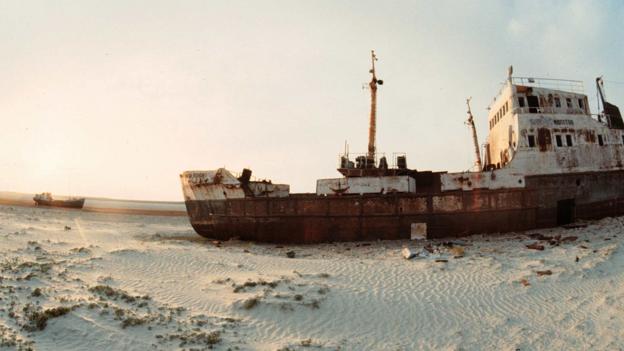
Easily gotten sources — reservoirs, lakes and rivers — are getting quickly depleted. The Aral Sea in Uzbekistan, for example, has shrunk so much that former fishing villages are now surrounded by desert land. Formerly part of the famous Silk Road, the Aral Sea will be completely dry within a decade.

Storied rivers such as the Nile and the Colorado in the US are also losing water as dams and other measures divert water from their flows for agricultural and other uses.

“Too much water is also being taken out of the Nile,” said Dr Jenny Kehl, director of the Center for Water Policy at the University of Wisconsin-Milwaukee. But the Nile isn’t alone, she added, since other great rivers such as the Jordan and the Mekong are also running drier as usage increases.

Deep underground aquifers, which store the freshest water, are also in rough shape as increased demand drains them dry. The problem is particularly acute in North Africa and the southwestern US, Kehl added.

Good news for water companies

Both dwindling supplies and dirtier water are translating into tighter water management. And that’s good news for the 300 global companies plying the water market. Most are in the US, followed by Europe, said Gottelier. Japan is a serious player, too.

Unlike taming carbon, water is a cheerier story.

“There are already lots of solutions in place,” said Cate Lamb, head of Carbon Disclosure Project’s water program. “So water management can shift much more rapidly than carbon.”

Repairing and monitoring crumbling, leaky pipes, pumps and valves is a key part of the water market. There are about 50 to 100 years of underinvestment in water supply upgrades in parts of Europe, said Gottelier, which leads to lots of leakage. In the US, the EPA estimates that upgrades to its aged water infrastructure will cost as much as $400 billion.

Water needs will translate into recurring business for infrastructure manufacturers such as Swiss-based Pentair Ltd, Texas based Flowserve Corp, and New York-based Xylem, said Matthew Sheldon, a portfolio manager for the Calvert Global Water Fund. “They all have very strong business models,” he said.

No surprise, then, that the $197 million Calvert fund’s largest holding is infrastructure stocks, along with technology plays for leak detection. Canada-based Pure Technologies Ltd which inspects and monitors pipelines, is a player in the water efficiency niche. The company is growing 20% to 30% per year, added Sheldon. UK-based Halma PLC also makes leak detection equipment.

Reusing water is the fastest growing niche though, said Sheldon. So water treatment and filtration companies such as Kurita Water Industries Ltd in Japan and China Everbright International in Hong Kong are set to prosper, said Sheldon.

“Much of the world is catching up with purification,” added Neil Berlant, a partner at Crowell, Weedon & Co, a brokerage and money management firm in Los Angeles. “Water treatment transcends all borders.”

Desalination, which removes salt from water, is being heavily used in Israel, Spain and Australia. The main reason: its price is decreasing.

“Up until now, desalination has been a small part of the water industry,” said Sheldon. “But it should begin accelerating next year.” Desalination players include big water utility companies such as VeoliaEnvironnement and Suez Environnement in France and the smaller pure-play company Energy Recovery in the US.

Oddly, few innovative emerging water companies are making waves. The initial public offering market, like the broader market, is still suffering. And new biological treatments for recovering energy and nutrients from waste water are still in their infancy, said Sheldon. More