Showing posts with label United Kingdom. Show all posts

Tuesday, July 28, 2015

CIA Confirms Role in 1953 Iran Coup

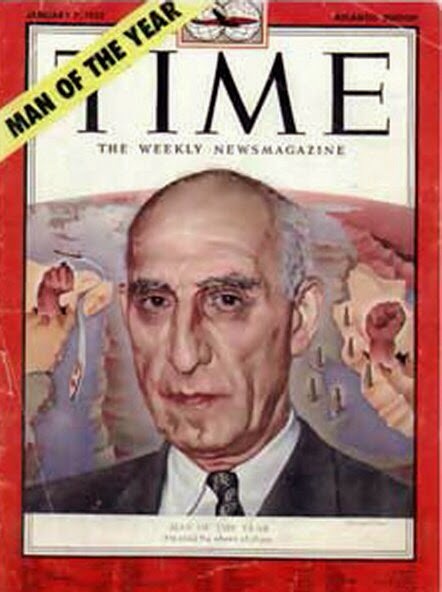
The CIA has publicly admitted for the first time that it was behind the notorious 1953 coup against Iran’s democratically elected prime minister Mohammad Mosaddeq, in documents that also show how the British government tried to block the release of information about its own involvement in his overthrow.

On the 60th anniversary of an event often invoked by Iranians as evidence of western meddling, the US national security archive at George Washington University published a series of declassified CIA documents.

“The military coup that overthrew Mosaddeq and his National Front cabinet was carried out under CIA direction as an act of US foreign policy, conceived and approved at the highest levels of government,” reads a previously excised section of an internal CIA history titled The Battle for Iran.

The documents, published on the archive’s website under freedom of information laws, describe in detail how the US – with British help – engineered the coup, codenamed TPAJAX by the CIA and Operation Boot by Britain’s MI6.

Britain, and in particular Sir Anthony Eden, the foreign secretary, regarded Mosaddeq as a serious threat to its strategic and economic interests after the Iranian leader nationalised the British Anglo-Iranian Oil Company, latterly known as BP. But the UK needed US support. The Eisenhower administration in Washington was easily persuaded.

Mohammad Mosaddeq

British documents show how senior officials in the 1970s tried to stop Washington from releasing documents that would be “very embarrassing” to the UK.

Official papers in the UK remain secret, even though accounts of Britain’s role in the coup are widespread. In 2009 the former foreign secretary Jack Straw publicly referred to many British “interferences” in 20th-century Iranian affairs. On Monday the Foreign Office said it could neither confirm nor deny Britain’s involvement in the coup.

The previously classified US documents include telegrams from Kermit Roosevelt, the senior CIA officer on the ground in Iran during the coup. Others, including a draft in-house CIA history by Scott Kock titled Zendebad, Shah! (Viva, Shah!), say that according to Monty Woodhouse, MI6’s station chief in Tehran at the time, Britain needed US support for a coup. Eden agreed. “Woodhouse took his words as tantamount to permission to pursue the idea” with the US, Kock wrote.

Mosaddeq’s overthrow, still given as a reason for the Iranian mistrust of British and American politicians, consolidated the Shah’s rule for the next 26 years until the 1979 Islamic revolution. It was aimed at making sure the Iranian monarchy would safeguard the west’s oil interests in the country.

The archived CIA documents include a draft internal history of the coup titled “Campaign to install a pro-western government in Iran”, which defines the objective of the campaign as “through legal, or quasi-legal, methods to effect the fall of the Mosaddeq government; and to replace it with a pro-western government under the Shah’s leadership with Zahedi as its prime minister”.

Kermit Roosevelt

One document describes Mosaddeq as one of the “most mercurial, maddening, adroit and provocative leaders with whom they [the US and Britain] had ever dealt”. The document says Mosaddeq “found the British evil, not incomprehensible” and “he and millions of Iranians believed that for centuries Britain had manipulated their country for British ends”. Another document refers to conducting a “war of nerves” against Mossadeq.

The Iranian-Armenian historian Ervand Abrahamian, author of The Coup: 1953, the CIA and the Roots of Modern US-Iranian Relations, said in a recent interview that the coup was designed “to get rid of a nationalist figure who insisted that oil should be nationalised”.

Unlike other nationalist leaders, including Egypt’s Gamal Abdel Nasser, Mosaddeq epitomised a unique “anti-colonial” figure who was also committed to democratic values and human rights, Abrahamian argued.

Some analysts argue that Mosaddeq failed to compromise with the west and the coup took place against the backdrop of communism fears in Iran. “My study of the documents proves to me that there was never really a fair compromise offered to Mosaddeq, what they wanted Mosaddeq to do is to give up oil nationalisation and if he’d given that of course then the national movement would have been meaningless,” he told the Iranian online publication, Tableau magazine.

“My argument is that there was never really a realistic threat of communism … discourse and the way justifying any act was to talk about communist danger, so it was something used for the public, especially the American and the British public.”

Despite the latest releases, a significant number of documents about the coup remain secret. Malcolm Byrne, deputy director of the national security archive, has called on the US intelligence authorities to release the remaining records and documents.

“There is no longer good reason to keep secrets about such a critical episode in our recent past. The basic facts are widely known to every school child in Iran,” he said. “Suppressing the details only distorts the history, and feeds into myth-making on all sides.”

In recent years Iranian politicians have sought to compare the dispute over the country’s nuclear activities to that of the oil nationalisation under Mosaddeq: supporters of the former president Mahmoud Ahmadinejad often invoke the coup.

US officials have previously expressed regret about the coup but have fallen short of issuing an official apology. The British government has never acknowledged its role. More


Monday, December 22, 2014

Prosecute Torturers and Their Bosses

Since the day President Obama took office, he has failed to bring to justice anyone responsible for the torture of terrorism suspects — an official government program conceived and carried out in the years after the attacks of Sept. 11, 2001.

He did allow his Justice Department to investigate the C.I.A.’s destruction of videotapes of torture sessions and those who may have gone beyond the torture techniques authorized by President George W. Bush. But the investigation did not lead to any charges being filed, or even any accounting of why they were not filed.

Mr. Obama has said multiple times that “we need to look forward as opposed to looking backwards,” as though the two were incompatible. They are not. The nation cannot move forward in any meaningful way without coming to terms, legally and morally, with the abhorrent acts that were authorized, given a false patina of legality, and committed by American men and women from the highest levels of government on down.

Americans have known about many of these acts for years, but the 524-page executive summary of the Senate Intelligence Committee’s report erases any lingering doubt about their depravity and illegality: In addition to new revelations of sadistic tactics like “rectal feeding,” scores of detainees were waterboarded, hung by their wrists, confined in coffins, sleep-deprived, threatened with death or brutally beaten. In November 2002, one detainee who was chained to a concrete floor died of “suspected hypothermia.”

These are, simply, crimes. They are prohibited by federal law, which defines torture as the intentional infliction of “severe physical or mental pain or suffering.” They are also banned by the Convention Against Torture, the international treaty that the United States ratified in 1994 and that requires prosecution of any acts of torture.

So it is no wonder that today’s blinkered apologists are desperate to call these acts anything but torture, which they clearly were. As the report reveals, these claims fail for a simple reason: C.I.A. officials admitted at the time that what they intended to do was illegal.

In July 2002, C.I.A. lawyers told the Justice Department that the agency needed to use “more aggressive methods” of interrogation that would “otherwise be prohibited by the torture statute.” They asked the department to promise not to prosecute those who used these methods. When the department refused, they shopped around for the answer they wanted. They got it from the ideologically driven lawyers in the Office of Legal Counsel, who wrote memos fabricating a legal foundation for the methods. Government officials now rely on the memos as proof that they sought and received legal clearance for their actions. But the report changes the game: We now know that this reliance was not made in good faith.

No amount of legal pretzel logic can justify the behavior detailed in the report. Indeed, it is impossible to read it and conclude that no one can be held accountable. At the very least, Mr. Obama needs to authorize a full and independent criminal investigation.

The American Civil Liberties Union and Human Rights Watch are to give Attorney General Eric Holder Jr. a letter Monday calling for appointment of a special prosecutor to investigate what appears increasingly to be “a vast criminal conspiracy, under color of law, to commit torture and other serious crimes.”

The question everyone will want answered, of course, is: Who should be held accountable? That will depend on what an investigation finds, and as hard as it is to imagine Mr. Obama having the political courage to order a new investigation, it is harder to imagine a criminal probe of the actions of a former president.

But any credible investigation should include former Vice President Dick Cheney; Mr. Cheney’s chief of staff, David Addington; the former C.I.A. director George Tenet; and John Yoo and Jay Bybee, the Office of Legal Counsel lawyers who drafted what became known as the torture memos. There are many more names that could be considered, including Jose Rodriguez Jr., the C.I.A. official who ordered the destruction of the videotapes; the psychologists who devised the torture regimen; and the C.I.A. employees who carried out that regimen.

One would expect Republicans who have gone hoarse braying about Mr. Obama’s executive overreach to be the first to demand accountability, but with one notable exception, Senator John McCain, they have either fallen silent or actively defended the indefensible. They cannot even point to any results: Contrary to repeated claims by the C.I.A., the report concluded that “at no time” did any of these techniques yield intelligence that averted a terror attack. And at least 26 detainees were later determined to have been “wrongfully held.” More


Friday, June 27, 2014

"The Battle for Iran," 1953: Re-Release of CIA Internal History Spotlights New Details about anti-Mosaddeq Coup

Mohammad Mossadegh

"The Battle for Iran," 1953: Re-Release of CIA Internal History Spotlights New Details about anti-Mosaddeq Coup

U.S. Ambassador Loy Henderson and Some CIA Officials Initially Disagreed with Certain Premises of Coup Planners

Declassified History Implies British Ties to the Operation, Criticizes London's Policies in Period Leading up to the OverthrowNational Security Archive Electronic Briefing Book No. 476Posted on June 27, 2014Edited by Malcolm ByrneFor more information contact:202 / 994-7043 or nsarchiv@gwu.eduWashington, D.C., June 27, 2014 --

During early planning for the 1953 Iran coup, U.S. Ambassador Loy Henderson warned not only that the Shah would not support the United States' chosen replacement for Prime Minister Mohammad Mosaddeq but that the Army would not play its hoped-for leading role without the Shah's active cooperation, according to a newly released version of an internal CIA history of the operation posted today by the National Security Archive.

The Archive, based at The George Washington University, obtained the latest release of this history -- "The Battle for Iran," written in the mid-1970s -- in response to a Mandatory Declassification Review request.

(Today's posting includes all previously released versions of the document as well, for purposes of comparison.)

The document goes on to say that members of the CIA's station in Tehran and certain officials at agency headquarters sided with Henderson against some of the assumptions of American coup planners, who were working under "closely held" conditions in Washington during Spring and Summer 1953.Mainly through interviews with coup participants, scholars have known generally that disagreements existed (and eventually Henderson went along with Mosaddeq's overthrow), but freshly declassified portions of the document posted today provide a few more specifics about the nature of the differences and who held to which views.The history also offers the most explicit declassified references to-date to British participation in the operation. London's role -- undoubtedly the worst-kept secret in Britain's relationship with Iran over the past 60 years -- has never been formally acknowledged by either British or U.S. authorities.

"The Battle for Iran" is one of three agency histories of the coup that are known to exist. All three have been posted at various times on the National Security Archive's Web site.Check out today's posting at the National Security Archive's website -http://www2.gwu.edu/~nsarchiv/NSAEBB/NSAEBB476/

Find us on Facebook - http://www.facebook.com/NSArchiveUnredacted, the Archive blog - http://nsarchive.wordpress.com/________________________________________________________

THE NATIONAL SECURITY ARCHIVE is an independent non-governmental research institute and library located at The George Washington University in Washington, D.C. The Archive collects and publishes declassified documents acquired through the Freedom of Information Act (FOIA). A tax-exempt public charity, the Archive receives no U.S. government funding; its budget is supported by publication royalties and donations from foundations and individuals.

_________________________________________________________


Monday, December 31, 2012

UK High Court rejects inquiry into British role in Pakistan drone strikes

On December 21, the High Court in London rejected a request for a judicial inquiry into the alleged role of the UK’s Government Communications Headquarters (GCHQ) spying operation in aiding drone strikes by the US in Pakistan’s northwest region.

The case was brought by Noor Khan, a Pakistani man whose father was killed, along with 49 other people, by a US drone attack on March 17, 2011. Khan’s father, Malik Daud Khan, was chairing a peaceful jirga (tribal assembly) meeting to discuss chromite mining rights in North Waziristan when he was killed by several missile strikes.

In his legal submission, Khan asked the court to look into whether UK intelligence officials provided assistance in the killing of his father and if they are liable for prosecution under British law.

The revealing 15-page ruling by Lord Justice Moses and supported by Mr Justice Simon came down blatantly in favour of the Foreign and Commonwealth Office. In essence, it serves as the legal justification for ensuring that the UK’s role in assisting the US to carry out its murderous drone operations never sees the light of day. As with every ruling designed to conceal the nefarious and illegal activities of the ruling elite, it is cloaked in the guise that to require the UK government to reveal such information would jeopardise “national security”.

Citing evidence given to the court from the Foreign Office, the ruling states “that if the Secretary of State were required to make a substantive response to the claim, the likely consequence would be serious harm to national security and international relations. The United Kingdom Government would be compelled to express a definitive view on legal issues, complicating and damaging relations with our most important bilateral ally and, in consequence, damaging the United Kingdom’s security.”

The ruling refused permission for Khan’s claim, stating that “the real aim and target of these proceedings is not to inform GCHQ employees that if they were prosecuted, no defence of combatant immunity would be available. The real aim is to persuade this court to make a public pronouncement designed to condemn the activities of the United States in North Waziristan, as a step in persuading them to halt such activity.”

The ruling also took note of legal proceedings that Khan has undertaken in Pakistan, in order to reiterate that under no conditions would the UK High Court make a ruling condemning the drone attacks or the GCHQ’s alleged role in these. Referring to Khan’s plea to the Court in Peshawar, Moses writes, “[H]e contends that the Government of Pakistan, and various Ministries, are under a constitutional obligation to take all necessary action to stop ‘illegal drone strikes’ and ‘safeguard its citizens from target killing by an external force’. He pleads that ‘the act of killing of innocent people on March 17 2011 was extra-judicial killing, more generally referred to as murder’. The prayer refers to criminal offences by those inside and outside Pakistan in drone operations.” More


Sunday, November 18, 2012

The four guilty parties behind Israel’s attack

The inciting cause of the latest confrontation between Israel and Hamas has little to do with the firing of rockets, whether by Hamas or the other Palestinian factions. The conflict predates the rockets – and even the creation of Hamas – by decades. It is the legacy of Israel’s dispossession of Palestinians in 1948, forcing many of them from their homes in what is now Israel into the tiny Gaza Strip. That original injustice has been compounded by the occupation Israel has not only failed to end but has actually intensified in recent years with its relentless siege of the small strip of territory.

Why Gaza must suffer again 18 November 2012

The four guilty parties behind Israel’s attack

Israeli Occupation Archive – 18 November 2012

A short interview broadcast by CNN late last week featuring two participants – a Palestinian in Gaza and an Israeli within range of the rocket attacks – did not follow the usual script.

For once, a media outlet dropped its role as gatekeeper, there to mediate and therefore impair our understanding of what is taking place between Israel and the Palestinians, and inadvertently became a simple window on real events.

The usual aim of such “balance” interviews relating to the Israeli-Palestinian conflict is twofold: to reassure the audience that both sides of the story are being presented fairly; and to dissipate potential outrage at the deaths of Palestinian civilians by giving equal time to the suffering of Israelis.

But the deeper function of such coverage in relation to Gaza, given the media’s assumption that Israeli bombs are simply a reaction to Hamas terror, is to redirect the audience’s anger exclusively towards Hamas. In this way, Hamas is made implicitly responsible for the suffering of both Israelis and Palestinians.

The dramatic conclusion to CNN’s interview appears, however, to have otherwise trumped normal journalistic considerations.

The pre-recorded interview via Skype opened with Mohammed Sulaiman in Gaza. From what looked like a cramped room, presumably serving as a bomb shelter, he spoke of how he was too afraid to step outside his home. Throughout the interview, we could hear the muffled sound of bombs exploding in the near-distance. Mohammed occasionally glanced nervously to his side.

The other interviewee, Nissim Nahoom, an Israeli official in Ashkelon, also spoke of his family’s terror, arguing that it was no different from that of Gazans. Except in one respect, he hastened to add: things were worse for Israelis because they had to live with the knowledge that Hamas rockets were intended to harm civilians, unlike the precision missiles and bombs Israel dropped on Gaza.

The interview returned to Mohammed. As he started to speak, the bombing grew much louder. He pressed on, saying he would not be silenced by what was taking place outside. The interviewer, Isha Sesay, interrupted – seemingly unsure of what she was hearing – to inquire about the noise.

Then, with an irony that Mohammed could not have appreciated as he spoke, he began to say he refused to be drawn into a comparison about whose suffering was worse when an enormous explosion threw him from his chair and severed the internet connection. Switching back to the studio, Sesay reassured viewers that Mohammed had not been hurt.

The bombs, however, spoke more eloquently than either Mohammed or Nissim. More


Monday, August 27, 2012

As Afghanistan Turns

In a raucous session that brought lawmakers to blows this month, the Afghan parliament passed a no-confidence vote against the country's top security officials: the ministers of defense and interior. With Afghanistan struggling to take on more challenging pieces of its own defense burden from international troops, the decision came as an ill-timed surprise. Just as surprising was President Hamid Karzai's quick agreement that the two should go.

It is always hazardous to claim to see through the complexities of Afghan politics, but the ousters were clearly rooted, at least in part, in a fierce struggle for positioning in a post-America Afghanistan that may well implode.

One reason cited by officials and the media for the no-confidence vote is that the lawmakers had grown exasperated by the security forces' inability to stem or respond to artillery fire that has been pummeling Afghanistan from neighboring Pakistan. It's certainly true that people are frustrated by the shelling, but whether that is the reason or the excuse for the vote is less clear. Short of a declaration of war on Pakistan, an eminently political decision that would require at least some international coordination, it's not clear what the army could do.

A second reason cited for the ousters is that Karzai wants to demonstrate that he is at last taking action against corruption in his government, and the record of police and military personnel is particularly poor. However, having worked for two commanders of international military forces as well as for the Joint Staff on anti-corruption policy in Afghanistan, I have not observed Karzai, since 2003, make a good-faith move to address the institutionalized graft that plagues his country. Rather, he has obstructed anti-corruption efforts, directing ministers to shut down investigations, ordering detained suspects set free, and reportedly helping arrange the 2010 escape from Afghanistan of a former minister of religious affairs indicted on charges of corruption. It seems unlikely that high-mindedness is motivating the president now. More