Showing posts with label NATO. Show all posts

Monday, April 20, 2015

NATO: Guardian of peace or bellicose bully?

Former NATO Secretary-General Anders Fogh Rasmussen on whether the West's military alliance has reignited the Cold War.

"We are pretty close to a new Cold War because of Russia's illegal actions in Ukraine," says former Secretary-General of NATO Anders Fogh Rasmussen who led the alliance from 2009 to 2014.

In this episode of Head to Head, Mehdi Hasan challenges Anders Fogh Rasmussen, the former Danish prime minister and former NATO chief, on the West's military alliance's role in Eastern Europe and the so-called War on Terror.

We examine his record since assuming office in 2001, his role in the European support for the Iraq War and ask whether his NATO policies since 2009 have backfired.

Is it the West, or Putin who calls the shots in Ukraine? Has NATO reignited the Cold War? Did it create a bigger problem in Libya? And did it botch its mission in Afghanistan?

Joining this discussion are:

• Richard Sakwa, Russia and European politics professor and author of Frontline Ukraine: Crisis in the Borderlands, from the University of Kent

• Alexander Nekrassov, a political commentator and former adviser to the Kremlin

• Ian Bond, a former British diplomat and director of foreign policy at the Centre for European Reform

NATO: Guardian of peace or bellicose bully? with Anders Fogh Rasmussen will be broadcast on Al Jazeera English on April 17 at 2000GMT and will be repeated on April 18 at 1200GMT; April 19 at 0100GMT; and April 20 at 0600GMT.

Follow us on: https://www.facebook.com/AJHeadToHead and @AJheadtohead


Saturday, September 6, 2014

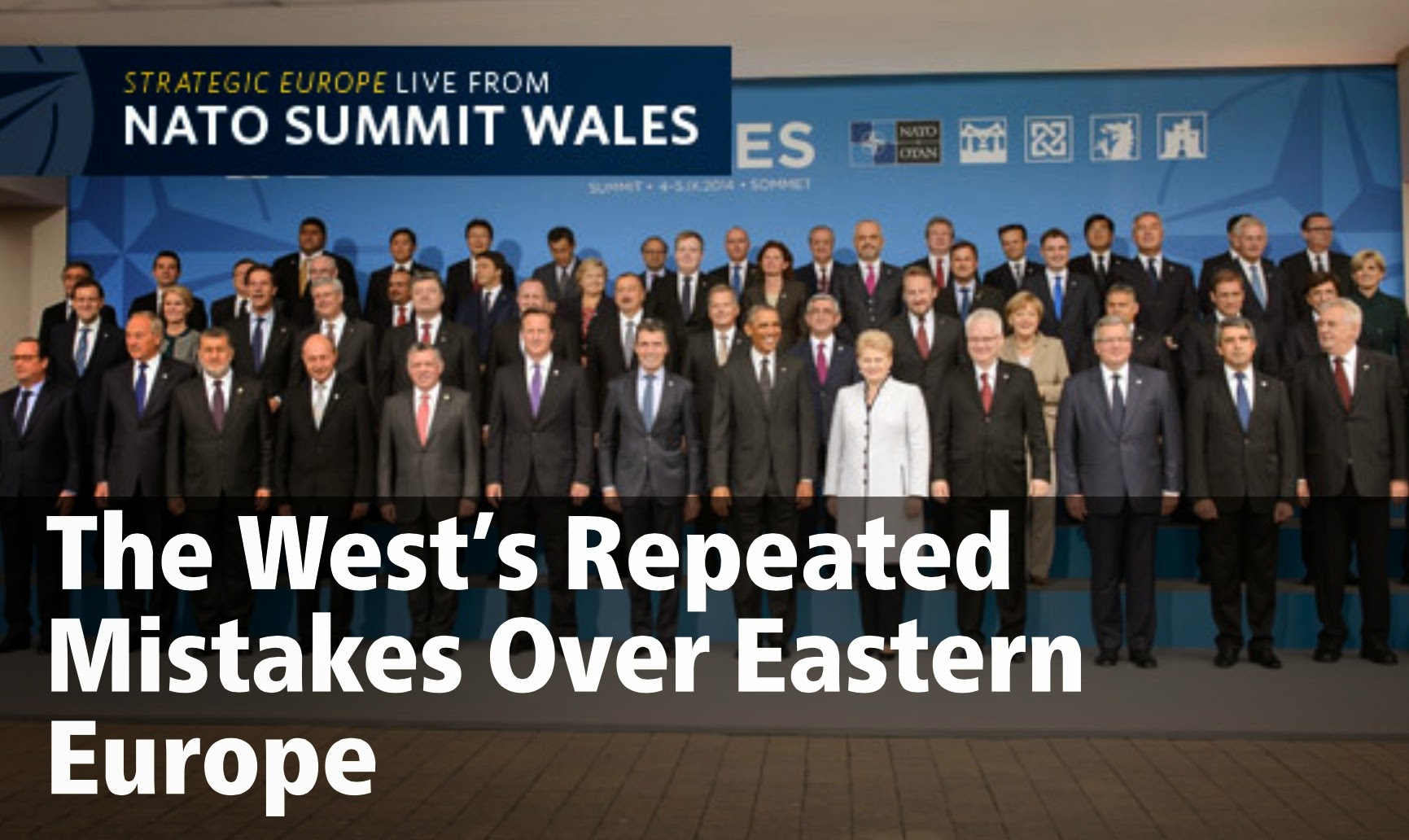
The West’s Repeated Mistakes Over Eastern Europe

Something very similar is happening now in the countries east of the European Union and west of Russia. As the people of Ukraine’s Euromaidan protest movement showed in January 2014 on Kiev’s Independence Square, they were not going to accept a post–Cold War status quo in which Russia sets the agenda. They wanted to choose their own political path.

It seems that history is repeating itself. This time round, NATO is not prepared to help the countries in Europe’s East, while the EU is divided and weak over how to deal with Russian President Vladimir Putin’s invasion of eastern Ukraine and illegal annexation of Crimea in March.

During a press conference with Ukrainian President Petro Poroshenko on September 4 at the NATO summit in Wales, the alliance’s Secretary General Anders Fogh Rasmussen tried to put the best spin on NATO help to Ukraine. Since NATO is not prepared even to consider the idea of Ukraine one day becoming a member of the organization, Rasmussen—and indeed Poroshenko—didn’t mention the “m-word.”

“It is for the Ukrainian people to decide . . . [their] future relationship with NATO,” the secretary general said—as if Putin will allow that to happen.

Rasmussen did say that NATO allies had pledged to provide support to help Ukraine improve its own security. “Our support is concrete and tangible. . . . Ukraine has stood by NATO. Now in these difficult times, NATO stands by Ukraine.”

Rasmussen explained how the allies had established “a comprehensive and tailored package of measures” to help Ukraine. The focus of NATO support would be on four areas: rehabilitation for injured troops, cyberdefense, logistics, and command and control and communications. “And allies will assist Ukraine with around €15 million [$19 million] through NATO,” Rasmussen added. NATO would not be supplying weapons. But that won’t stop individual countries from doing so.

Above all, the NATO chief insisted that an independent, sovereign, and stable Ukraine firmly committed to democracy and the rule of law was key to Euro-Atlantic security. “We stand united in our support of Ukraine’s sovereignty and territorial integrity,” he said.

Actually, the West is only rhetorically united over Ukraine’s sovereignty and territorial integrity. Western nations have no real intentions of matching that statement with deeds to allow Ukraine to regain territory in eastern Ukraine that has been taken over by rebels backed by Russian troops and tanks—let alone Crimea.

As for the EU, it is prepared to impose more sanctions on Russia—but with many misgivings and criticisms from several member states, especially Hungary, Slovakia, and the Czech Republic. That is despite the fact that until twenty-five years ago, these countries were under the Soviet yoke.

The measures undertaken by NATO and the EU are insufficient because they perpetuate the new rules of the game that Putin is writing across Eastern Europe. And because the West’s responses give him no reason to desist, at least for the moment, Western countries are repeating the mistakes they made when Eastern European civil society reared its head during the Communist era. The West is not prepared to stand up to Putin’s Russia.

Instead, willy-nilly, the West is allowing a new cordon sanitaire of countries to take hold between Russia and the EU. But if Putin and European leaders believe that this buffer zone is going to represent a new, stable “post-post–Cold War” status quo, they are seriously mistaken.

The reason is that civil society across these countries, from Belarus to Armenia, will not accept these new demarcation lines on a permanent basis. Just as Poles challenged their country’s Communist regime in 1980, the same will happen across the states in Europe’s East.

That has already happened in Ukraine. And despite the war in eastern Ukraine and the continuing influence of the country’s oligarchs, the supporters of the Euromaidan are not prepared to let this revolution fail. They are not naive enough to believe that the EU and NATO will come to their rescue. Instead, against all the odds, they will continue to struggle for their freedom to choose their own political path. More


Monday, May 5, 2014

NATO's Biggest Mistake

The Alliance Drifted From Its Core Mission -- And the World Is Paying the Price

For 20 years, NATO and European security policy have been guided by four flawed strategic assumptions. First, Western leaders assumed that Russia had become a benign power and that inter-state threats to European security were therefore no longer a concern.

Second, because NATO’s core mission -- collective defense -- was no longer a compelling reason to keep the alliance together, leaders argued that NATO needed to go “out of area or out of business.” NATO consequently expanded its membership and took on a new array of global missions. Third, Western leaders assumed that NATO expansion would not provoke a reaction from Russia. NATO’s leaders believed their own rhetoric about the benign nature of NATO expansion, and they assumed Moscow would see it this way as well. Fourth, they believed that the alliance would be successful in carrying out military and stabilization missions in far-off places such as Afghanistan, Iraq, and Libya.

In 2014, Western officials are learning about their strategic errors the hard way. They have come to realize that NATO’s collective defense mission in Europe is still vital because Russia is in the business of changing international borders by force, that NATO never had to go “out of area” for a compelling mission, that the Kremlin didn’t see NATO expansion to Russia’s borders as benign, and that NATO missions in Afghanistan, Iraq, and Libya cost a great deal in lives and money but they only achieved mixed results.

As U.S. and European officials scramble to devise a coherent, credible, effective response to Russian aggression in Ukraine, they must also undertake a fundamental strategic reassessment. Europe still faces inter-state security threats, in the form of Russian aggression. NATO’s core mission -- collective defense -- is still vital. Deterrence and defense are still needed in Europe. And, as in many great-power relationships, the challenge is to deter aggression and reassure allies without provoking escalation.

For U.S. and European leaders -- and for NATO -- it’s back to basics.

OUT OF AREA, OUT OF WHACK

Following the collapse of Soviet power in Eastern Europe in 1989 and the break-up of the Soviet Union itself in 1991, it was natural and inevitable that NATO would change. The alliance had been created to deter -- and, if necessary, defend against -- a Soviet attack on Western Europe. With the Soviet Union gone, the military balance in Europe suddenly and fundamentally shifted. NATO’s raison d’être was called into question.

By the mid-1990s, the conventional wisdom was that NATO must go “out of area or out of business.” This view was promulgated by most (but not all) security policy experts, and it was ultimately embraced by the alliance’s leadership. This led to two main changes in NATO policy.

First, the leadership expanded the alliance from 16 to 28 members, bringing in countries from the former Warsaw Pact and the former Soviet Union, in particular. In 1999, the Czech Republic, Hungary, and Poland formally joined NATO. In 2004, Bulgaria, Estonia, Latvia, Lithuania, Romania, Slovakia, and Slovenia joined the alliance. Albania and Croatia became NATO members in 2009.

In the 1990s, some scholars and commentators -- including me -- argued that NATO expansion could be counter-productive because it could trigger a backlash in Russia. NATO expansion could give Russian nationalists and political opportunists yet another weapon to use against pro-Western factions in Russia’s domestic political arena. In the worst-case scenario, embittered nationalists or opportunists could come to power and adopt more aggressive policies toward Europe and the United States. “The emergence of a kinder, gentler Russia is far from certain,” I wrote at the time, “but it is not in the interests of the United States or NATO’s European members to take steps that would make Russian authoritarianism and belligerence more likely.”

U.S. and European leaders preferred to believe that their intentions were benign and that Russia’s leaders would see NATO expansion in that benign light. The alliance’s leaders also believed that their diplomatic overtures to Russia -- such as the creation of a NATO-Russia Permanent Joint Council in 1997 -- would further pacify the Kremlin. That was wishful thinking.

In a recent Washington Post article, Jack F. Matlock, the former U.S. ambassador to Moscow, observed that the effect of NATO actions in the 1990s -- alliance expansion and the bombing of Serbia in 1999 without UN Security Council authorization -- was “devastating.” He observed that in 1991, Russian public opinion polls indicated that approximately 80 percent of Russian citizens had a positive view of the United States; in 1999, nearly the same number had a negative view of the country. In 2000, Vladimir Putin was elected president of the Russian Federation.

The second major change in NATO policy, starting in the 1990s, was the adoption of a new array of global missions to justify NATO’s continued existence. The rationale was that NATO’s European members would have to help Washington with its global concerns to keep the United States committed to Europe.

This strategic reasoning was based on several flawed assumptions. First, the global interests of the United States and Europe were not (and are not) in alignment. Second, Europe had limited power-projection capabilities in the 1990s, and these capabilities declined substantially over time. Third, the far-flung security problems that would be tackled -- Afghanistan, Iraq, Libya -- were exceptionally formidable. Success, which would depend on high levels of political will and material commitments sustained over time, would be difficult to achieve.

As he was about to step down as U.S. Secretary of Defense in June 2011, Robert Gates assessed the track record. In Afghanistan, he said in a 2011 speech, the “mission has exposed significant shortcomings in NATO -- in military capabilities and in political will. Despite more than 2 million troops in uniform -- NOT counting the U.S. military -- NATO has struggled, at times desperately, to sustain a deployment of 25-40,000 troops.” In Libya, he continued, “it has become painfully clear that similar shortcomings -- in capability and will -- have the potential to jeopardize the alliance’s ability to conduct an integrated, effective and sustained air-sea campaign.... [While] every alliance member voted for the Libya mission, less than half have participated at all, and fewer than a third have been willing to participate in the strike mission.”

“Going global” did not make NATO more relevant, effective, or credible. To the contrary, these operations entailed tremendous costs -- in terms of lives, money, political unity, and alliance credibility. These operations also drained European military capabilities that were already weak and are now even more steeply in decline. Expectations have been dashed, and the alliance’s credibility has been damaged.

Unfortunately, this has happened just as security threats in Europe have reemerged, in ways that are now obvious to almost everyone. Ironically, these threats have developed in part because of NATO’s own misguided actions.

GRAVE NEW WORLD

U.S. and European leaders are now grappling with the immediate challenge posed by Russia’s aggression in Ukraine, but they must also undertake a fundamental strategic reassessment.

First, they must recognize that Europe still faces inter-state security threats. For decades, Americans and western Europeans believed that inter-state war in Europe was unthinkable; they were confident in the emergence of a Europe that was “whole, free, and at peace.” They believed that Russia would behave as if it were a member of the NATO-EU club, even though there was no chance that it would be admitted to the club any time soon.

Putin has chosen another path. Russian aggression is real, and it may continue. Putin’s, domestic approval ratings are up, and they may stay up unless economic sanctions change Russian public and elite opinion. Putin is not yet looking for an “off-ramp” to defuse the confrontation. To the contrary, he currently has a domestic political incentive for a sustained confrontation with the West.

As President Toomas Hendrik Ilves of Estonia recently observed: “The fundamental understanding of security in Europe has now collapsed. Everything that has happened since 1989 has been predicted on the fundamental assumption that you don’t change borders by force, and that’s now out the window.” General Philip Breedlove, NATO’s Supreme Allied Commander Europe, put it succinctly, “It’s a paradigm shift.”

Second, U.S. and European leaders will have to devise new security responses to counter Russia’s new, semi-covert forms of military aggression. Russia’s campaigns in Crimea and eastern Ukraine have not involved columns of tanks streaming across borders. Instead, Moscow has skillfully used staged provocations, local supporters, unmarked special forces, cyber-attacks, and massive disinformation campaigns to create instabilities that can be used as pretexts for annexation.

To date, the U.S. and European responses have been very modest and almost entirely traditional in character -- verbal assurances; some small, additional troop rotations in eastern Europe; and some small, additional military exercises. NATO needs to think hard and fast about countering Russia’s new form of warfare, especially for NATO members that have Russian minorities. This will entail substantially enhanced internal security, homeland security, training, intelligence, early warning, cybersecurity, and public diplomacy capacities. These will be the keys to deterrence and defense against destabilization operations.

Third, U.S. and European leaders will have to forge a consensus on broader, long-term responses to Russia. Many Europeans are still in denial, and Europe is therefore divided. Belief systems are notoriously resistant to change, and the appeal of a European security nirvana was especially powerful.

Europe’s paralysis is reinforced by economic vulnerabilities (many European countries depend on Russian energy experts) and other economic and business ties with Russia. As a result, there is a range of opinion in Europe on Russia, and it varies according to geography, of course. Countries that are closer to Russia -- Poland and the Baltic states, in particular -- are afraid of Russia and have called for strong Western responses. Bridging these intra-European differences will not be easy. More


Saturday, May 3, 2014

The NATO narrative

Podcast

2 May 2014


Tags: NATO Russia Ukraine


We talk about the importance of NATO in Washington and discuss the three tasks in the 2010 strategic concept. With the current situation around the Ukraine and Russia, we ask how NATO creates a narrative to reflect changes in an evolving world.

Contributor:

Johannes Binnendijk, Senior Fellow, Center for Transatlantic Relations, School for Advanced International Studies, John Hopkins University, Washington DC

All contributors to our podcasts are expressing their own opinions and not those of any organisation to which they may be affiliated.


Friday, March 28, 2014

Ukraine, Security Assurances and Nuclear Weapons

Since the events of February and March this year, in particular the annexation of Crimea, there have been pundits suggesting that perhaps Ukraine should have held onto Soviet nuclear weapons back in the early 1990s and thus deterred Russia’s intervention.

Patricia Lewis

In addition to the inaccuracy of such assertions – Ukraine did not have the command and control of the nuclear weapons on its territory – they are highly irresponsible in that they are likely to stimulate nuclear proliferation policies in other countries and stem from fantasy not reality.

Back in the early 1990s, at the point when the USSR fell apart, three newly independent states found themselves with a tricky nuclear weapons problem: Moscow had stationed these weapons on the territories of other members of the Soviet Union namely Belarus, Kazakhstan and Ukraine as part of its nuclear doctrine. The world feared that the USSR, a single nuclear weapons state would spawn four. Not quite the outcome hoped by the people of Europe and the US. Nor was it a comfortable position for Russia, unsure where the loyalties of the former USSR countries would lie. It was already clear that Warsaw Pact countries such as Poland and Hungary were distancing themselves from Russia as fast as they could, with the view to join NATO and the EU. Russia was not keen to be surrounded by three nuclear-armed states in addition to the US, UK, France and China.

For its part, the US and its allies were keen to move ahead on nuclear disarmament and nonproliferation efforts. The bilateral nuclear reduction negotiations had been going well, the problem of short-range tactical nuclear weapons in Europe was being addressed, the Conventional Armed Forces in Europe treaty negotiations had transformed the management of those forces, the Conference on Disarmament in Geneva was negotiating the Chemical Weapons Convention and there was great hope that a new relationship could be forged between West and East putting nuclear weapons firmly in the past.

Although Ukraine was never a fully-fledged nuclear weapon state, large numbers of strategic (approximately 1,900) and tactical (approximately 2,500) nuclear weapons were in place on its territory. Ukraine’s national capabilities at that time included a full civil fuel cycle expertise, and a missile and space-rocket design and manufacturing capability (the Southern Machine-building Factory ‘Yuzhmash’ was in the closed city of Dnipropetrovsk). The nuclear warheads however were not manufactured or tested in Ukraine and so, at that time, the country did not have the full complement of expertise it would have needed to become a true nuclear weapons possessor able to threaten to launch and detonate a nuclear warhead.

Ukraine could have developed such a capability and learned how to maintain nuclear warheads, found a way to change and adapt the launch codes, alter targeting programmes and guidance systems, and establish command and control procedures over the next 5-10 years. However, in 1990, Ukraine’s parliament adopted the Declaration of State Sovereignty of Ukraine in which Ukraine committed not to use, produce or stockpile nuclear weapons. So once Ukraine became an independent state in 1991, negotiations to relinquish the remaining stockpile to Russia began (along with similar efforts in Belarus and Kazakhstan).

In 1991, as part of the newly formed Commonwealth of Independent States, Ukraine pledged to join the NPT under the Alma-Ata Declaration on unified control of nuclear weapons and agreed to the withdrawal and dismantling of tactical nuclear weapons. Then Ukraine signed the Lisbon Protocol of the START I treaty in May 1992 and the Minsk Agreement on Strategic Forces at the end of the same year, committing to the full dismantlement of the nuclear forces by the end of 1994.

What followed next was hardly plain sailing however. Some in Ukraine’s political system wanted to hang on to the nuclear weapons, believing that they could be useful in providing a long-term counter to any future Russian aggression. Others wanted to hold on to them to secure a better bargain with Russia and the US, particularly in exchange for security, energy, financial and trade deals. The debates and negotiations stretched out for years with President Leonid Kravchuk promising one thing and the Rada demanding another. Numerous delays followed and the debates also signified a tussle for the centre of democratic power in Ukraine between the executive and legislative branches of governance.

Finally in 1994, a trilateral agreement between Ukraine, Russia and the US was agreed that enabled Ukraine’s accession as a non-nuclear weapons state to the NPT on 5 December 1994. The same day, the Budapest Memorandum was adopted by the United States, the Russian Federation, and the United Kingdom – the three depositaries of the NPT – that agreed to, among other things, respect the independence, sovereignty and existing borders of Ukraine, to refrain from the threat or use of force against the territorial integrity or political independence of Ukraine, to refrain from economic coercion of Ukraine and to seek immediate UN Security Council action to provide assistance if Ukraine should become a victim of an act of aggression.

The Budapest Memorandum has clearly been breached in the letter and spirit by one of its own members. Far from respecting the independence, sovereignty and existing borders of Ukraine and refrain from the threat or use of force against Ukraine, Russia has demonstrated that such assurances count for little in the real world. These assurances were part of the package that enabled Ukraine to join the NPT and Russia’s actions will send shivers down the spines of all 180+ non-nuclear weapons states that rely on such assurances. Russia’s actions could lead to a severe loss of trust in security assurances. At least the UK and US have fulfilled their commitments under the Budapest Memorandum and have taken the matter to the UN Security Council and continue to try to resolve the situation with Russia as promised. They at least have demonstrated their trustworthiness in terms of the assurances they have given. More

by Patricia Lewis, Research Director, International Security


Sunday, March 23, 2014

The Obsolescence of Ideology: Debating Syria and Ukraine by Richard Falk

I have been struck by the unhelpfulness of ideology to my own efforts to think through the complexities of recommended or preferred policy in relation to Syria, and more recently, the Ukraine. There is no obvious posture to be struck by referencing a ‘left’ or ‘right’ identity. A convincing policy proposal depends on sensitivity to context and the particulars of the conflict.

Richard Falk

To insist that the left/right distinction obscures more than it reveals is not the end of the story. To contend that ideology is unhelpful as a guide for action is not the same as saying that it is irrelevant to the public debate. In the American context, to be on the left generally implies an anti-interventionist stance, while being on the right is usually associated with being pro-interventionist. Yet, these first approximations can be misleading, even ideologically. Liberals, who are deliberately and consigned to the left by the mainstream media, often favor intervention if the rationale for military force is primarily humanitarian.

Likewise, the neocon right is often opposed to intervention if it is not persuasively justified on the basis of strategic interests, which could include promoting ideological affinities. The neocon leitmotif is global leadership via military strength, force projection, friends and enemies, and the assertion and enforcement of red lines. When Obama failed to bomb Syria in 2013 after earlier declaring that the use of chemical weapons by the Assad regime was for him a red line this supposedly undermined the credibility of American power. My point is that ideology remains a helpful predictor of how people line up with respect to controversial uses of force, although relying on ideology is a lazy way to think if the purpose is to decide on the best course of action to take, which requires a sensitivity to the concrete realities of a particular situation. Such an analysis depends on context, and may include acknowledging the difficulties of intervention, and the moral unacceptability of nonintervention.

On a high level of abstraction, it is true that the hard right tends to find a justification for military action as the preferred solvent for any challenge to American foreign policy and the hard left is equally disposed to dismiss all calls for humanitarian intervention as sly anti-imperialist maneuvers, recalling Noam Chomsky’s dismissal of the Kosovo War in 1999 as ‘miltary humanism.’ In this sense it seems easier to proceed by dogma than to engage seriously with the existential complexities and uncertainties of the specifics pertaining to a conflict setting, and thus be willing to conclude either that ‘the situation is horrible, and something must be done’ and yet still believe that ‘the situation is horrible, but military intervention will only make it worse.’ This is the kind of conundrum that has perplexed and troubled me ever since the Syrian uprising in 2011 turned violent, unleashing the criminal fury of the Damascus regime, and attracting a variety of predatory outside forces on both sides. Often those on one side or the other of the debate fail to recognize the consequences of either a failed intervention or a refusal to intervene.

There are at least two problems that bedevil interpretation in these setting. To assess particularities of context requires a genuine familiarity with the specifics and changing dynamics of a conflict if persuasive policy recommendations are to be grounded in relevant knowledge rather than on knee jerk reactions. And secondly, no matter how expert, core uncertainties will persist, and the difficulties of making choices that involve killing and dying of others is a huge weight of responsibility if the policy risks and alternatives are carefully weighed.

I would add a third caveat—in the last fifty years military intervention has rarely worked out well for the target society or for the intervener; that is, historical experience would seem to call for what lawyers call ‘a presumption against intervention.’ This presumption is not intended as an absolute prohibition, but it does impose a burden of persuasion on the advocates of intervention. Often, also, the evidence pro and con intervention is doctored and manipulated one way or another to reflect the views of the government or of special interests. This was spectacularly illustrated by the lead up to the U.S. led attack on Iraq in 2003 where governmental efforts to strengthen the public case for intervention produced notorious fabrications. Rwanda in 1994, did present an exceptionally strong humanitarian case supportive of a limited military intervention with operational responsibility entrusted to the United Nations, but the bad experience of the Clinton presidency with the Somalia intervention during the prior year led the United States to oppose effectively a UN effort to prevent, or at least mitigate, a genocidal onslaught.

It would seem against such a background that the best solution in such situations might be procedural, that is, leaving the final policy decision in each instance up to a determination by the UN Security Council. If the Bush Administration had accepted the outcome of the Security Council vote that withheld approval for intervening in Iraq it would have been spared a humiliating strategic defeat that damaged America’s status as world leader. Allowing the Security Council to decide whether or not international force is required and justified also is consistent with the presumption against intervention due to the possibility that any of the five permanent members casting a negative vote counts as a veto.

The Obama approach has not fared much better than that of Bush. It induced members of the Security Council opposed to military intervention to accept the plea of NATO countries in 2011 to engage in a humanitarian operation to save the besieged civilian population of the Libyan city of Benghazi by way of establishing a No Fly Zone. Once the operation got underway, it completely ignored these UN guidelines, and used its air dominance to widen the scope of violence and carry out an unauthorized mission of regime-change. The aftermath in Libya casts further doubt on the overall wisdom of authorizing intervention in such a circumstance of internal strife. As well, the spillover from the refusal of the interveners to adhere to the limited UN mandate has been to undermine trust in such a way as to weaken any prospect for the UN to play a more robust role in resolving the Syrian conflict where the case for interference has become stronger than it ever was in Libya.

Beyond this issue of trust are questions of geopolitical alignment, especially encounters that align the U.S. and NATO on one side and Russia and/or China on the other. As yet, fortunately, there is no second cold war, although the neocons, and some in Europe, are beating the war drums in relation to the Ukraine in such a way as to point in that most unwelcome and totally unjustified direction. Russia’s sensitivity to hostile developments on its borders, previously expressed a few years ago in the 2008 crisis over Georgia, is now more potently evident in relation to the Ukraine and breakaway Crimea, which contains a strategic Russian naval base at Sevastopol that is the only Russian warm water port, as well as home to their Black Sea naval fleet. More


Monday, October 8, 2012

Afghan government could 'collapse post-NATO'

The Afghan government could implode after NATO troops pull out in 2014, particularly if presidential elections are fraudulent, according to a report by the International Crisis Group (ICG).

A repeat could undermine what little hope remains for stability after the Afghan government takes full responsibility for security from US-led NATO forces, the analysis by the respected Brussels-based group says.

The report, Afghanistan: The Long, Hard Road to the 2014 Transition, says the country is on course in 2014 for another set of fraudulent elections after the chaotic presidential and parliamentary polls in 2009 and 2010.

"There is a real risk that the regime in Kabul could collapse upon NATO's withdrawal," Candace Rondeaux, the ICG's senior Afghanistan analyst, says in the report.

"The window for remedial action is closing fast."

"The Afghan army and police are overwhelmed and underprepared for the transition," Rondeaux says. "Another botched election and resultant unrest would push them to breaking point."

The coalition, which has waged an 11-year war against Taliban fighters, is reducing its troop numbers from a peak of some 130,000, and almost all combat forces are scheduled to quit the country by the end of 2014.

Police targeted

Within hours of the report's publication, a suicide car bomber targeted on Monday a police station in Lashkar Gar, capital of the southern Helmand province, killing two intelligence agents and wounding 15 other people.

Afghan police are increasingly targets of such assaults as they take a bigger role in the fight against the Taliban in the run-up to of the NATO withdrawal.

Speaking to Al Jazeera from Kabul, Rondeaux said: "Today you have an economic crisis which is growing by the day, and there is a lot of fear among Afghans over the future of Karzai's regime, and no one knows what is going to happen."

She said that up until now there are no visible preparations for the elections. "Instead what you have are the gears of transition working in reverse against the gears of transformation," she said.

"Everyone was hoping that 2014 would be the dawn of the new age politically for the country. Now there is a great deal of concern that these elections may not even happen."

The UN-backed government of President Hamid Karzai and the parliament have failed to take any serious steps towards preparing for a clean vote, Rondeaux said.

"Karzai seems more interested in perpetuating his own power by any means rather than ensuring credibility of the political system and long-term stability in the country."

The president is constitutionally required to step down at the end of his second term in 2014, and has said he will do so, but there are fears that he might try to manipulate the polls to ensure the election of an ally, possibly one of his brothers.

"The danger is President Karzai's top priority is maintaining control, either directly or via a trusted proxy," Rondeaux says in the ICG report. More


Monday, August 27, 2012

Buried Mines in Afghanistan

Last week American casualties in Afghanistan passed 2,000. But with the presidential campaign in full tilt and heavily focused on domestic issues, this milestone generated less interest than some that have gone before. A rash of attacks on NATO troops by their Afghan comrades gained rather more attention.


Afghanistan

In a Q&A, Senior Associate Sarah Chayes, who lived for most of the past decade in Afghanistan and served as an adviser to senior U.S. military leadership, takes up these issues and their implications. She argues for a sober look at the time bombs U.S. policy may be planting in Afghanistan, and for rigorous planning to mitigate the potential damage. She also assesses candidates to replace General John Allen as commander of international troops.

More


As Afghanistan Turns

In a raucous session that brought lawmakers to blows this month, the Afghan parliament passed a no-confidence vote against the country's top security officials: the ministers of defense and interior. With Afghanistan struggling to take on more challenging pieces of its own defense burden from international troops, the decision came as an ill-timed surprise. Just as surprising was President Hamid Karzai's quick agreement that the two should go.

It is always hazardous to claim to see through the complexities of Afghan politics, but the ousters were clearly rooted, at least in part, in a fierce struggle for positioning in a post-America Afghanistan that may well implode.

One reason cited by officials and the media for the no-confidence vote is that the lawmakers had grown exasperated by the security forces' inability to stem or respond to artillery fire that has been pummeling Afghanistan from neighboring Pakistan. It's certainly true that people are frustrated by the shelling, but whether that is the reason or the excuse for the vote is less clear. Short of a declaration of war on Pakistan, an eminently political decision that would require at least some international coordination, it's not clear what the army could do.

A second reason cited for the ousters is that Karzai wants to demonstrate that he is at last taking action against corruption in his government, and the record of police and military personnel is particularly poor. However, having worked for two commanders of international military forces as well as for the Joint Staff on anti-corruption policy in Afghanistan, I have not observed Karzai, since 2003, make a good-faith move to address the institutionalized graft that plagues his country. Rather, he has obstructed anti-corruption efforts, directing ministers to shut down investigations, ordering detained suspects set free, and reportedly helping arrange the 2010 escape from Afghanistan of a former minister of religious affairs indicted on charges of corruption. It seems unlikely that high-mindedness is motivating the president now. More


Wednesday, August 15, 2012

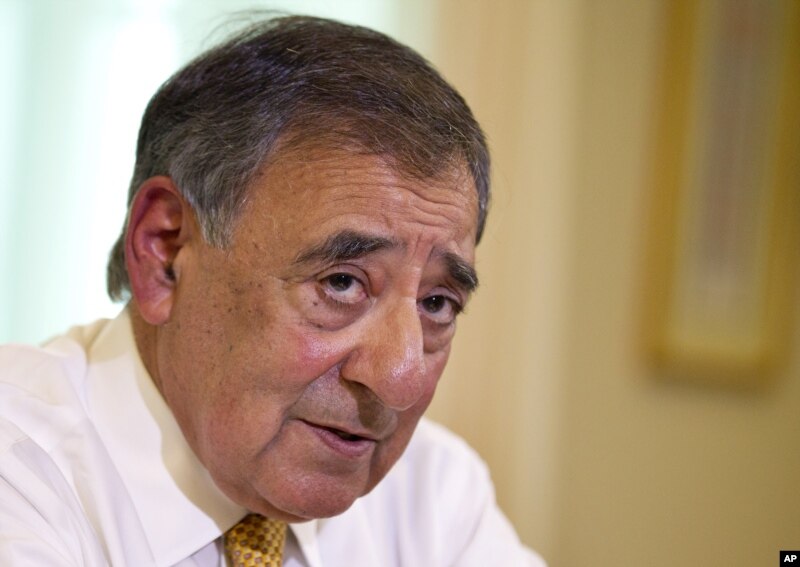
Panetta: Pakistan to Launch Long-Awaited Offensive Against Militants in North Waziristan

ISLAMABAD — U.S. Defense Secretary Leon Panetta says Pakistan’s military will soon be ready to begin a long-awaited offensive in its North Waziristan border region, where the al-Qaida-affiliated Haqqani network is reportedly based. Military officials in Pakistan have nothing to say about Panetta's claim, and Pakistan's political leaders say it would be premature to speculate on whether an operation is being planned.

Pakistan has long resisted pressure to mobilize troops against the Haqqani network who are said to be entrenched in North Waziristan. The United States says the militants are involved in cross-border attacks on NATO forces to fuel the Taliban insurgency in Afghanistan.

The proposed Waziristan operation was said to be high on the agenda when the chief of the Pakistani spy agency, Lieutenant-General Zaheerul Islam, visited Washington earlier this month for counterterrorism talks.

No details of those discussions were made public, but leaks to both Pakistani and U.S. media have led to speculation that the two sides are closer to an agreement on the issue. Military officials in Islamabad are dismissing the reports.

U.S. Defense Secretary Leon Panetta's revelation that Pakistan is readying itself for the long-awaited offensive in North Waziristan has again revived the controversy. He told The Associated Press that army chief General Ashfaq Parvez Kayani discussed the Pakistani plan in recent talks with the U.S. commander of NATO forces in Afghanistan General John Allen.

"General Kayani did indicate that they had developed plans to go into Waziristan," said Panetta. "Our understanding is that, hopefully, they're going to take that step in the near future. I can't tell you when, but the indication we have is that they are prepared to conduct that operation soon."

Panetta says the Pakistani Taliban, not the Haqqani network, might be the target of a government offensive in North Waziristan.

The political administrator of Pakistan's northwestern province bordering the tribal belt says it is too soon to say whether a military offensive in North Waziristan is in the making.

Khyber Pakhtunkhwa's Chief Minister Amir Haider Khan Hoti told reporters in Peshawar that “whenever a decision is taken to launch the operation, the nation will come to know about it.”

Tribal sources and local officials say they have seen no signs of an imminent military operation in North Waziristan.

Analysts say the situation on the ground is more complicated.

Maria Sultan, a defense analyst, and the director of the private South Asian Strategic Stability Institute in Islamabad, says the Haqqani network has a very strong presence in Afghanistan’s border regions adjacent to Pakistan’s North Waziristan agency.

“The area occupied by the Haqqani network, it is a cross-border area, so a military operation could only be successful from either side if both sides had agreed to it," she says. "Will Pakistan go ahead with it? Yes, we will go ahead with it, if there is collective decision making on it. And it will require a major military operation. So this means that all countries of NATO, America and Pakistan have to be on board if this operation is to succeed.” More


Friday, June 15, 2012

Haggling over Afghanistan

Afghanistan’s future matters much more to Pakistan than to the United States. This elemental truth is forgotten in U.S. deliberations about how best to leverage Pakistan to achieve a political settlement in Afghanistan. Pakistani military and intelligence services have demonstrated that they are willing to risk ties with Washington to achieve a friendly government on their western border — a government that most Afghans and Washington would oppose. This is the central roadblock to U.S.-Pakistani relations and to a stable Afghanistan.

Pakistan’s leaders will continue to seek U.S. assistance even as they tirelessly pursue a government in Kabul that, after most U.S. troops withdraw in 2014, will be friendlier to them than to India. If the Pakistanis fail to ensure this negotiated outcome, they will employ allies to upend an Afghan government that they deem unfriendly.

Pakistani resolve is rooted in the assumption that, if India gains a strong foothold in Afghanistan, then Pakistan’s largest and most resource-rich province, Baluchistan, would be ripe for an India-supported insurgency. Pakistan’s military knows how this game is played — it played it in the Indian state of Jammu and in Kashmir for more than a decade after Soviet troops left Afghanistan in 1989. Baluchistan is as disaffected today as the Kashmir Valley was then.

Pakistani distrust is heightened by events of four decades ago: India severed East Pakistan (now Bangladesh) from West Pakistan in their 1971 war. Pakistani leaders will not abide another territorial loss or an extended, foreign-backed insurgency, not when they are feeling so vulnerable. Pakistan has suffered the second-highest number of mass-casualty attacks — behind only Iraq — over the past five years. Pakistan’s military and intelligence services firmly believe that sooner or later, New Delhi will be unable to resist the temptation to dismember their country again. In fact, Pakistan’s dissolution would jeopardize Indian growth and security. And Pakistan’s nuclear capabilities have frozen a territorial status quo, which serves Indian interests. The prospect of a clash would be raised only if spectacular acts of terrorism originate from Pakistan. More


Thursday, June 7, 2012

NATO needs a vision

The Chicago NATO Summit accomplished its main goal of finalizing plans to turn over control of the security situation in Afghanistan to the Afghan security forces by the middle of next year. But in fact that goal had already been accomplished well before the meeting. As David Sanger writes in his new book, Confront and Conceal: Obama's Secret Wars and the Use of American Power, Obama had already conveyed his plans to the leaders of the NATO nations in private. Moreover, the president had announced this to the American people when he traveled to Afghanistan to sign the strategic framework agreement with President Hamid Karzai. The alliance also left Chicago having agreed to acquire some critical equipment, like drones, that it had to borrow from the US military during the Libyan intervention.

But the 28 member states that participated in the summit did not adequately deal with a range of critical issues that will persist long after combat forces are withdrawn from Afghanistan -- namely the thousands of tactical nuclear weapons based in Europe, the Obama administration missile defense plan known as the European Phased Adaptive Approach, the bolstering of political support for the alliance in the United States, and the outline for a strategic vision of operations outside of Europe. These issues, particularly nuclear weapons and missile defense, are important in their own right and will also impact relations between NATO and Russia.

Two decades after the end of the Cold War, there is still an uncertain but excessive number of tactical nuclear weapons remaining in Europe.

Two decades after the end of the Cold War, there is still an uncertain but excessive number of tactical nuclear weapons remaining in Europe. At the last NATO summit in 2010, the alliance committed itself to the goal of creating conditions for a world without nuclear weapons. According to foreign ministers Radoslav Sikorski of Poland and Jonas Gahr Støre of Norway (two countries with significantly different approaches to foreign policy), nobody knows the exact size of the US and Russian tactical nuclear arsenals or the exact locations of the weapons; they also point out that tactical nuclear weapons are not covered by any existing arms control system. As Sikorski and Støre wrote shortly before the summit, "NATO should honor this commitment and seize the opportunity of the upcoming Chicago summit to look at its nuclear policy -- and engage with Russia." The ministers correctly argued that such talks could help improve the tenor of NATO-Russian relations, bring about greater transparency in deployment and verification, and enhance mutual trust between these two entities. Unfortunately, no action was taken on this front; in fact, NATO appears to be committed to upgrading its tactical nuclear weapons. More


Tuesday, May 15, 2012

Pakistan agrees to reopen NATO supply route to Afghanistan, but for a fee

The cost of the U.S.-led war effort in Afghanistan is about to rise by $365 million annually under an agreement that would reopen a key NATO supply route through Pakistan that’s been closed for nearly six months.

The accord, which the Pakistani government announced late Tuesday, would revive the transport of vital supplies of food and equipment from Pakistani ports overland to land-locked Afghanistan. In return, the U.S.-led coalition will pay Pakistan a still-to-be-fixed fee of $1,500 to $1,800 for each truck carrying supplies, a tab that officials familiar with negotiations estimated would run nearly $1 million a day. The officials requested anonymity because they weren’t authorized to reveal details of the agreement.

Pakistan closed the land route to supplies headed to the coalition after American aircraft mistakenly attacked two Pakistani border outposts Nov. 26, killing 24 Pakistani soldiers. Since then, supplies for coalition forces in Afghanistan have passed through one of two routes that stretch from Afghanistan through central Asia and Siberia to Georgia on the Black Sea. One of the routes is nearly 6,000 miles long. The Pakistan route is less than 500 miles.

Officials in Washington said they didn’t know how much of the new cost the United States would bear. As the United States contributes more than two-thirds of the 130,000-strong international force, which operates under the command of NATO, it’s expected that Washington will pay most of the new fee.

In return, the U.S. is asking Pakistan to provide security for the supplies, which are trucked through the country by private local transport companies, and much speedier clearance of customs and checkpoints. Militants and robbers frequently attack trucks carrying NATO goods. No effective security had been provided in the past. More


Read more here: http://www.mcclatchydc.com/2012/05/15/148936/pakistan-agrees-to-reopen-nato.html#storylink=cpy

E
Read more here: http://www.mcclatchydc.com/2012/05/15/148936/pakistan-agrees-to-reopen-nato.html#storylink=cpy


Sunday, February 26, 2012

The trap being laid by Israel and its allies on both sides of the Atlantic

By accident or design, the third trilateral summit that recently brought President Mahmoud Ahmadinejad, President Hamid Karzai and President Asif Ali Zardari together in Islamabad, took place against the backdrop of a fragile strategic environment.

Tanvir Ahmad Khan

Afghanistan faces the consequences of Nato’s decision to withdraw the US-led armies by the end of 2014, with their active combat role ending as early as the summer of 2013. Iran is confronted by the United States and the European Union with an economic war that can easily degenerate into a full-fledged military conflict. Pakistan is reeling under the shocks suffered in its poorly conceived and poorly executed participation in the ‘global war on terror’, a situation greatly aggravated by astonishing misrule and poor governance.

The summit provided an opportunity to move towards a dynamic consensus on trilateral and bilateral issues in a revived awareness of an inner ring of immediate neighbours with long common borders. Understandably, Karzai hogged the limelight with his media interaction, his address at the National Defence University and with an endless queue of Pakistani politicians at his door. For Ahmadinejad’s sojourn, the spectre of Iran’s conflict with the West and its regional allies loomed large behind the summit. What could happen in Iran and the Gulf could be no less catastrophic than what has happened in Afghanistan over three decades. Pakistan’s leaders made appropriate statements about denying Pakistan’s soil for any hostile action against Iran and, in the bilateral context, about their resolve to proceed with the Iran-Pakistan gas pipeline.

The lynchpin of the western project for Afghanistan that can easily get derailed with disastrous consequences for the neighbours is the present effort to initiate a meaningful dialogue with the Taliban in Qatar, an enterprise to which the three presidents seem to have only a limited access. Afghanistan is walking a tight rope between efforts to influence the Qatar process and establishing an independent dialogue with the Taliban, with assistance from Pakistan. Karzai has only a limited leverage with the US in working out a peaceful transition to an inclusive Afghan dispensation beyond 2014. More


Logic, if brought to bear on regional relations would dictate that Afghanistan's immediate neighbors would be included in negotiations with the so called 'Taliban', and would not be left solely to states that will withdraw from the country shortly. Does this sound familiar? Editor.


Sunday, February 19, 2012

The Winter War

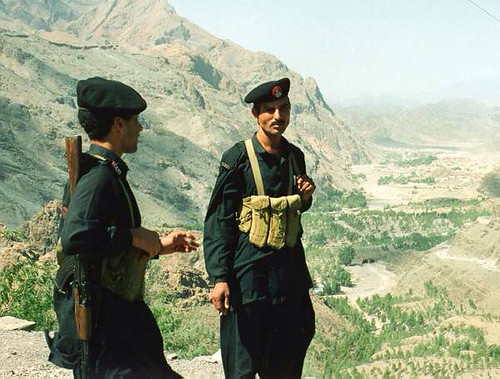
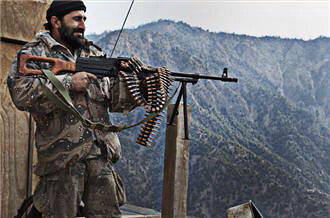
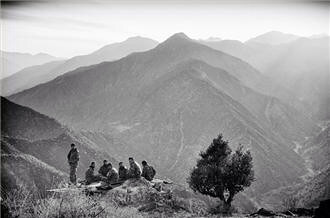
In the frozen peaks of Afghanistan's Kunar province, a ferocious clash for supremacy rages amid the mountaintops.

Barack Obama, the US president, has pledged to withdraw American forces from Afghanistan by 2014, with other NATO nations set to pull out their troops before that date and overall responsibility for security gradually being handed to the Afghan National Army and police.

Following the announcement last month from the Taliban that they are prepared to open a political office in Qatar - a step which may facilitate a move towards negotiations and a peaceful settlement - many people hope that the end of Afghanistan's long and brutal war may just be in sight.

But there is a long way to go yet and many ways in which any deal could be upset by events. General John Allen, the senior American commander on the ground, has publicly expressed doubts that a full military withdrawal by 2014 is feasible and, as many experts point out, fighting in parts of Afghanistan is just as fierce as it has always been.

This is especially so in two strategically vital provinces, Kunar and Nuristan, which sit on Afghanistan's mountainous north-eastern border with Pakistan. Since US troops arrived in the country 11 years ago, the area has seen sustained and intense violence. In 2009, with casualties rising, the Americans withdrew entirely from Nuristan. The following year northern Kunar was also handed over to Afghan control. But within a few months, the Taliban had retaken the area, infiltrating through vital border crossings and completely undermining attempts by Afghan forces to maintain security across the region.

So now US forces have returned to the area, this time to the frozen peaks as well as the valleys, determined to re-establish their military dominance and win over the local population before they go. The Taliban are just as keen to see them defeated and the result is an intermittent but occasionally ferocious clash for supremacy amid the mountain tops. Both sides know that what happens here may yet decide the success or failure of NATO's war and indeed the future of Afghanistan itself. More


Tuesday, January 17, 2012

Three Pots of Tea

 Peace in Afghanistan Depends on Its Leaders, Neighbors, and Security Forces

There are three key ingredients for peace in Afghanistan. Afghan leaders must negotiate a peace. Afghan neighbors must respect the peace. And Afghan soldiers and police must keep the peace.

Only the Afghan parties should take part in the formal negotiations over their country’s future. But all of the major external stakeholders, including India, Iran, Pakistan, Russia, and the United States, should conduct parallel, less-formal discussions, with a view to exercising convergent influence on the Afghan parties. All potential parties to a peace treaty accept that the Taliban must be involved in negotiations and granted some role in the resulting government. 

Taliban fighters hand over their weapons in Herat, Afghanistan.

As for keeping the peace, there is likely no organization in the world other than the U.S. Army that can train security forces on the scale needed in places like Afghanistan. But current U.S. Army doctrine is insufficient for this task, and Western models for security forces may not work in Afghanistan. Developing and fielding 

host-nation forces that take the unique context of the country into account will be critical. So will be the army’s selection of advisers and preparation of leaders.

Pacifying Afghans and Their Neighbors

Agreement among the main Afghan parties is a necessary but not sufficient condition for peace. Unlike Iraq and Yugoslavia, which are strong states riven by even stronger ethnic antipathies, Afghanistan is a weak polity that has been torn apart by its near and more-distant neighbors, not unlike the hapless sheep that is pulled apart by mounted riders in buzkashi, the Central Asian version of polo. Until these neighboring countries sense that there is a credible endgame for an Afghan peace accord that protects their interests, they have every incentive to continue meddling destructively and to promote divisions among Afghans. To succeed, any peace process must include Afghanistan’s neighbors. More