U.S. Intelligence : Hiding of Military Assets by "Rogue Nations" and Other States a Major Security Challenge for 21st Century - U.S. Documents Describe Monitoring Effort Going Back to Early Cold War Years
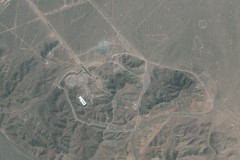
Washington, D.C., March 23, 2012 – A central element of the current debate over how to deal with Iran's nuclear program has focused on the possible difficulty of destroying the Qom underground uranium enrichment facility via air strikes. However, documents posted today by the National Security Archive show that Qom is only the latest in a long series of alleged and real underground facilities that for decades have been a high priority challenge for U.S. and allied intelligence collection and analysis efforts, as well as for military planners.
The documents featured in this posting describe in detail the agencies and programs the U.S. government has brought to the task of identifying and assessing underground structures in foreign countries since World War II. Internal records indicate there are more than 10,000 such facilities worldwide, many of them in hostile territory, and many presumably intended to hide or protect lethal military equipment and activities, including weapons of mass destruction, that could threaten U.S. or allied interests.
The records (and introductory essay by Archive Fellow Jeffrey T. Richelson) also discuss the vast complexities of gathering and analyzing intelligence on these facilities, and detail several of the highly technical methods U.S. agencies have developed for the purpose over time.
Introduction: "Underground Facilities: Intelligence and Targeting Issues"
By Jeffrey T. Richelson
A central element of the current debate over how to deal with Iran's nuclear program has focused on the possible difficulty of destroying the Qom underground uranium enrichment facility via air strikes.1 But documents posted today by the National Security Archive show that Qom is only the latest in a long series of alleged and real underground facilities that for decades have been a high priority challenge for U.S. and allied intelligence collection and analysis efforts, as well as for military planners.
Such challenges go back to at least the Second World War. In August 1943, the Germans, in the face of allied aerial attacks, decided to move production of their A-4 (V-2) rocket to an underground facility near Nordhausen. By late 1944, British intelligence was reporting that the facility was producing over thirty rockets a day, while the British Chiefs of Staff wanted to know the feasibility of a bombing campaign to halt or seriously impair production. In her memoirs, Constance Babington-Smith reported examining aerial photographs of Kahla, in the Thuringian Hills, and finding evidence of an underground jet-fighter factory.2 More