Showing posts with label United States. Show all posts

Sunday, February 4, 2018

The Increasing Likelihood Of Nuclear War Should Straighten Out All Our Priorities


A Russian pilot has been killed by US-armed terrorists in Syria. The Ron Paul Institute‘s Daniel McAdams writes the following about this new development:

“The scenario where a US-backed, US-supplied jihadist group in Syria uses US weapons to shoot down a Russian plane and then murders the pilot on the ground should be seen as a near-nightmare escalation, drawing the US and Russia terrifyingly closer to direct conflict.”

McAdams is not fearmongering; he is stating a plainly obvious fact. The Trump administration has just announced that it is restructuring its nuclear weapons policy to take a more aggressive stance toward Russia than that which was held by the previous administration. This is coming after this administration’s decision to arm Ukraine against Russia, a move Obama refused to take for fear of escalating tensions with Moscow, as well as its decision to continue to occupy Syria in order to effect regime change, along with numerous other escalations. The Council on Foreign Relations, which is without exaggeration as close to the voice of the US establishment as you can possibly get, is now openly admitting that the “United States is currently in a second Cold War with Russia. Read More

Tuesday, January 19, 2016

What Happens If Russia Loses in Syria?

It's worth considering a subject that's seldom discussed here, though it should be. What if Russia's intervention in Syria -- its version of the American way of war (air power and more air power) -- proves to be somewhere between quagmirish and disastrous? Dominic Tierney at the Atlantic gives the subject some thought. Here's the end of the resulting piece. TomDispatch

President Putin

"In other words, Putin’s war may very well fail. But if it does, will he make concessions and abandon his ally? If the Russian president acts rationally, he should cut his losses. Putin, however, may not act rationally. When I researched my book on military disaster, The Right Way to Lose a War, I was struck by how poorly governments tend to handle battlefield reversals. From the United States in Vietnam to the Soviet Union in Afghanistan, leaders often respond to defeat with disastrous decisions that only worsen their plight. Rather than coolly looking for a way out of the predicament, they rage against the dying of the light."Part of the problem is what psychologists call “loss aversion.” Losing hurts twice as bad as winning feels good—whether in a tennis match or a war. The idea of accepting even a small loss can seem intolerable, and people are tempted to risk greater losses for a shot at the win. The gambler who drops 20 bucks in a casino doesn’t walk away; he doubles his bets. In a similar vein, the president who loses 1,000 soldiers in Vietnam doesn’t end the war; he sends half a million Americans into the mire.

Putin has repeatedly responded to the potential loss of client regimes with military force.

"It’s hard to imagine Putin accepting defeat. He has cultivated an image as the father of the Russian people, who is restoring the country as a world power. If Assad’s regime falls, Russia could lose its only military installation outside the former U.S.S.R.—the naval base in Tartus, Syria. Therefore, if the war effort collapses, Putin may want to salvage something from the wreckage, potentially moving the conflict into a dangerous new phase. He could intensify Russian air strikes or deploy “little green men”—as the Russian soldiers serving unofficially in eastern Ukraine were called. Once Russian troops start dying in Syria, all bets are off."Putin, moreover, has repeatedly responded to the potential loss of client regimes with military force. In 2008, the Russian military intervened in Georgia to punish pro-Western Georgian President Mikheil Saakashvili and protect the independence of the breakaway Georgian territories of Abkhazia and South Ossetia. Six years later, in 2014, Putin aided Ukrainian rebels and annexed Crimea following the toppling of pro-Russian Ukrainian President Viktor Yanukovych. In late 2015, with Assad’s forces reeling, Putin once again intervened to stabilize a client regime."And Putin has already raised the prospect of further military escalation, saying that Russia is using “far from everything we are capable of” in Syria and that “We also have other things as well and will use them if necessary.”

"What’s the solution? If Russia’s defeat could trigger hazardous escalation, this doesn’t mean a Russian victory is preferable. After all, if Assad somehow assumed a winning position, why would he negotiate a compromise peace that recognized the interests of all Syrian groups? Instead, the optimal opportunity for a peace deal may be a situation in which Putin believes a decisive triumph is not possible, but he can still save face by spinning the outcome as a success. In other words, he needs a story to tell the Russian people about the positive results of the mission. This narrative doesn’t need to be true, but it does need to havetruthiness, or a seeming plausibility. And so, to get Putin out of Syria, the United States might need to play along by avoiding boastful claims of a major Russian debacle. In 1989, after the Berlin Wall fell, U.S. President George H.W. Bush deliberately refused to declare the development a win—to avoid complicating the life of Soviet Premier Mikhail Gorbachev.

"Putin needs a victory speech. And Washington may have to help him write it." More


Saturday, December 19, 2015

HOW ROGUE TECHIES ARMED THE PREDATOR, ALMOST STOPPED 9/11, AND ACCIDENTALLY INVENTED REMOTE WAR

ON THE AFTERNOON of October 7, 2001, the first day of the war in Afghanistan, an Air Force pilot named Scott Swanson made history while sitting in a captain’s chair designed for an RV. His contribution to posterity was to kill someone in a completely novel way.

In the moments leading up to the act, Swanson was nervous. He sat in a darkened trailer tucked behind a parking garage at CIA headquarters in Langley, Virginia, remotely piloting a Predator drone over Kandahar, 6,900 miles away. Nearly everything about his rig had been cobbled together and hastily assembled. The Predator itself, one of just a handful in existence, was flying about 250 pounds heavier than usual. And the satellite communications link that connected Swanson to the aircraft would periodically shut down due to a power issue, which software engineers in California were frantically trying to patch.

When the order came through to take the shot, Swanson pulled a trigger on his joystick. A little more than a second later, a Hellfire missile slid off an aluminum rail on the Predator’s wing and sailed into the Afghan night.

Swanson’s target was a pickup truck parked outside a compound thought to be hiding Mullah Omar, the supreme commander of the Taliban. The missile killed two unidentified men believed to have been his bodyguards. It was the first time a US drone had fired a weapon in combat. It was the first time a modern drone had ever killed a human being. More


Friday, October 30, 2015

The long-term petroleum price outlook - When will it escalate?

For the last few years, the Saudi kingdom’s insistence on pumping oil at high capacity has dramatically depressed oil prices. The result has undermined Saudi’s major oil rivals in OPEC – like Iran and Venezuela.

It has also hit Russia, hard.

Rating agency Standard & Poor forecasts that Russia’s budget deficit is set to swell to 4.4 per cent of GDP this year. Russia’s own finance ministry concedes that if expenditures continue at this rate, within sixteen months – by around the end of next year – its oil reserve funds will be exhausted.

Meanwhile, over the last year real incomes have dropped by 9.8 per cent, and food prices have spiked by 17 per cent, heightening the risk of civil unrest.

System failureh

Rumbling along beneath the surface of such financial woes are deeper systemic issues.

A report from the Swedish Defence Research Agency notes that “prolonged dry periods in southern Russia are having the effect of reducing the level of food production”.

Most of Russia’s wheat imports come from Kazakhstan, “where climate change is expected to exacerbate droughts. These impacts would make farming harder and food more expensive,” observe Dr. Marina Sharmina and Dr. Christopher Jones of the Tyndall Centre for Climate Change Research.

Russia’s looming energy crisis is the other elephant in the room. In 2013, HSBC forecasted that Russia would hit peak oil between 2018 and 2019, experiencing a brief plateau before declining by 30 per cent from 2020 to 2025.

That year, Fitch Ratings came to pretty much the same conclusion. And last year, Leonid Fedun, vice-president of Russia’s second largest oil producer, Lukoil, predicted that the production could peak earlier due to falling oil prices and US-EU sanctions.

Faced with overlapping economic, food and energy crises, Russia is well and truly on the brink. More

Furthermore, According to a recent report from the IMF, Saudi Arabia’s public debt is estimated to rise from below 2 percent of its GDP in 2014 up to 33 percent by the end of 2020. The report also shows that in the past three years, Saudi Arabia’s budget surplus was turned into a deficit reaching 21.6 percent of GDP in 2015. More


Wednesday, October 7, 2015

Why Assad turned to Moscow for help

Iran has long been sending troops and material to help Syrian autocrat Bashar Assad wage war against his own people. But now Tehran is busy establishing a state within a state — which is why Assad now wants help from Russia.

Fear of his enemies was the primary reason for Bashar Assad’s call for help to Moscow. “But right after that came the fear of his friends,” says a Russian official who long worked in his country’s embassy in Damascus. The friend he refers to is Iran, the Syrian regime’s most important protector.

“Assad and those around him are afraid of the Iranians,” the Russian says. Anger over the arrogance of the Iranians, who treat Syria like a colony, is also part of it, the Russian continues. Most of all, though, the Syrians “mistrust Tehran’s goals, for which Assad’s position of power may no longer be decisive. That is why the Syrians absolutely want us in the country.”

What the Russian diplomat, who wants to remain anonymous, has to say is a bit jarring at first. Without the Shiite auxiliaries from Iran, Afghanistan, Pakistan, Iraq and Lebanon — whose recruitment and transfer is organized by the Iranian Revolutionary Guard — Assad’s rule would long since have come to an end. Yet his comments are complemented by a number of additional details that add up to an image of a behind-the-scenes power struggle — one which casts a new, scary light on the condition of the Syrian regime and on the country’s prospects as a whole.

The Iranian Revolutionary Guard has long planned and carried out the most important missions and operations of the Syrian regime. They were responsible, right down to the details, for the sporadically successful offensives in Aleppo in the north and Daraa in the south, which began in 2013. In Iran, the Revolutionary Guard is one of those groups intent on continuing the “Islamic Revolution” — the victory of Shiites over the Sunnis. They are a state within a state, one which owns several companies and is answerable only to Iran’s Supreme Leader Ali Khamenei. President Hassan Rohani has no power over the Revolutionary Guard whatsoever.

Their goals go far beyond merely reestablishing the status quo in Syria. In early 2013, Hojatoleslam Mehdi Taeb, one of the planners behind Iran’s engagement in Syria, said: “Syria is the 35th province of Iran and it is a strategic province for us.” For several decades, the alliance between the Assads and Iran was a profitable one, particularly in opposition to the Iraq of Saddam Hussein, which long had the upper hand in the region. But today, Assad depends on Iran to remain in power, and Tehran is taking advantage of the situation.

Using a variety of pathways, both civilian and military, Tehran is currently in the process of establishing itself in Syria. Military means are being employed to strengthen the holdings of the Shiite militia Hezbollah in areas near the border with Lebanon. To serve this goal, the Syrian National Defense Forces were established, troops that exist alongside the regular Syrian army and which includes tens of thousands of fighters who were trained in Iran. Still, the National Defense Forces have begun to disintegrate into local mafia militias and have actually accelerated the loss of state control over those regions.

Changes Afoot

It is, however, primarily in the civilian sector where significant changes are afoot. Just as in Damascus, Latakia and Jabla, increasing numbers of hosseiniehs — Shiite religious teaching centers — are opening. The centers are aimed at converting Sunnis, and even the Alawites, the denomination to which the Assads belong, to “correct” Shiite Islam by way of sermons and stipends. In addition, the government decreed one year ago that state-run religion schools were to teach Shiite material.

All of this is taking place to the consternation of the Alawites, who have begun to voice their displeasure. “They are throwing us back a thousand years. We don’t even wear headscarves and we aren’t Shiites,” Alawites complained on the Jableh News Facebook page. There were also grumblings when a Shiite mosque opened in Latakia and an imam there announced: “We don’t need you. We need your children and grandchildren.”

In addition, Iranian emissaries, either directly or via middlemen, have been buying land and buildings in Damascus, including almost the entire former Jewish quarter, and trying to settle Shiites from other countries there.

Talib Ibrahim, an Alawite communist from Masyaf who fled to the Netherlands many years ago, summarizes the mood as follows: “Assad wants the Iranians as fighters, but increasingly they are interfering ideologically with domestic affairs. The Russians don’t do that.”

That’s why Assad has now decided to place his fate in the hands of the religiously unproblematic Russia, which last week transferred aircraft and troops to its military base in the northern Syrian town of Latakia and began flying airstrikes. The fight against the Islamic State terror militia served as a pretext for the operation, but the initial air strikes have not targeted the Islamists at all. Rather, they have been flown against areas controlled by Syrian rebels. More


Tuesday, August 11, 2015

To avoid counting civilian deaths, Obama re-defined “militant” to mean “all military-age males in a strike zone

Virtually every time the U.S. fires a missile from a drone and ends the lives of Muslims, American media outlets dutifully trumpet in headlines that the dead were "militants" — even though those media outlets literally do not have the slightest idea of who was actually killed.

They simply cite always-unnamed "officials" claiming that the dead were "militants." It’s the most obvious and inexcusable form of rank propaganda: media outlets continuously propagating a vital claim without having the slightest idea if it’s true.

This practice continues even though key Obama officials have been caught lying, a term used advisedly, about how many civilians they’re killing. I’ve written and said many times before that in American media discourse, the definition of "militant" is any human being whose life is extinguished when an American missile or bomb detonates (that term was even used when Anwar Awlaki’s 16-year-old American son, Abdulrahman, was killed by a U.S. drone in Yemen two weeks after a drone killed his father, even though nobody claims the teenager was anything but completely innocent: "Another U.S. Drone Strike Kills Militants in Yemen").

This morning, the New York Times has a very lengthy and detailed article about President Obama’s counter-Terrorism policies based on interviews with "three dozen of his current and former advisers." I’m writing separately about the numerous revelations contained in that article, but want specifically to highlight this one vital passage about how the Obama administration determines who is a "militant." The article explains that Obama’s rhetorical emphasis on avoiding civilian deaths "did not significantly change" the drone program, because Obama himself simply expanded the definition of a "militant" to ensure that it includes virtually everyone killed by his drone strikes. Just read this remarkable passage;

Mr. Obama embraced a disputed method for counting civilian casualties that did little to box him in. It in effect counts all military-age males in a strike zone as combatants, according to several administration officials, unless there is explicit intelligence posthumously proving them innocent.

Counterterrorism officials insist this approach is one of simple logic: people in an area of known terrorist activity, or found with a top Qaeda operative, are probably up to no good. "Al Qaeda is an insular, paranoid organization — innocent neighbors don’t hitchhike rides in the back of trucks headed for the border with guns and bombs," said one official, who requested anonymity to speak about what is still a classified program.

This counting method may partly explain the official claims of extraordinarily low collateral deaths. In a speech last year Mr. Brennan, Mr. Obama’s trusted adviser, said that not a single noncombatant had been killed in a year of strikes. And in a recent interview, a senior administration official said that the number of civilians killed in drone strikes in Pakistan under Mr. Obama was in the "single digits" — and that independent counts of scores or hundreds of civilian deaths unwittingly draw on false propaganda claims by militants.

But in interviews, three former senior intelligence officials expressed disbelief that the number could be so low. The C.I.A. accounting has so troubled some administration officials outside the agency that they have brought their concerns to the White House. One called it "guilt by association" that has led to "deceptive" estimates of civilian casualties.

"It bothers me when they say there were seven guys, so they must all be militants," the official said. "They count the corpses and they’re not really sure who they are."

For the moment, leave the ethical issues to the side that arise from viewing "all military-age males in a strike zone as combatants"; that’s nothing less than sociopathic, a term I use advisedly, but I discuss that in the separate, longer piece I’ve written. For now, consider what this means for American media outlets. Any of them which use the term "militants" to describe those killed by U.S. strikes are knowingly disseminating a false and misleading term of propaganda. By "militant," the Obama administration literally means nothing more than: any military-age male whom we kill, even when we know nothing else about them. They have no idea whether the person killed is really a militant: if they’re male and of a certain age they just call them one in order to whitewash their behavior and propagandize the citizenry (unless conclusive evidence somehow later emerges proving their innocence).

What kind of self-respecting media outlet would be party to this practice? Here’s the New York Times documenting that this is what the term "militant" means when used by government officials. Any media outlet that continues using it while knowing this is explicitly choosing to be an instrument for state propaganda — not that that’s anything new, but this makes this clearer than it’s ever been. More


Saturday, August 1, 2015

Nuclear Nonproliferation

Our 70th Anniversary Homework: Confronting the Myths and Learning the Lessons of Hiroshima and Nagasaki.

Seventy years ago, two nuclear weapons targeted against cities which met the criteria of having “densely packed workers’ homes,” killed more than 200,000 people in the Japanese cities of Hiroshima and Nagasaki. In the years that have followed, many more have suffered and died from cancers, radiation disease, genetic damage and other fallout from the atom bombings.

The myths that the A-bombings were necessary to end the war against Japan and that they saved the lives of half a million US troops remain widely believed. The myths serve as the ideological foundation for continuing U.S. preparations for nuclear war, which in turn has served as the primary driver of nuclear weapons proliferation and the creation of deterrent nuclear arsenals

It is no accident that this wartime propaganda took on a life of its own. Japanese and other journalists’ film footage and photos of the devastation wrought by the A-bombs taken within days of the A-bombings, were seized by U.S. Occupation forces and were locked away in Pentagon vaults for more than two decades. In 1995, the Smithsonian Museum’s initially excellent 50th anniversary exhibition was censored beyond recognition to prevent people from seeing what the A-bombs inflicted on human beings. Also removed were the facts that U.S. Secretary of War Stimson had advised Truman that Japan’s surrender “could be arranged on terms acceptable to the United States” without the atom bombings. (That arrangement was later deemed acceptable – even necessary – by U.S. military occupation authorities.) Indeed, before it was sterilized, the exhibit included quotations from senior US wartime military leaders including Admiral Leahy and General (later President) Eisenhower who thought, “It wasn’t necessary to hit [Japanese] with that awful thing.”

Scholars now know that numerous factors contributed to Truman’s decision to destroy Hiroshima and Nagasaki and their civilian populations. These include Truman’s political calculations as he looked to the 1948 presidential election, vengeance, racism, institutional inertia, and the callousness that came with already having burned more than sixty Japanese cities to the ground.

But, as General Leslie Groves, the commander of the Manhattan Project, told senior scientist Joseph Rotblat, the bombs came to be designed for the Soviet Union. The determinative reasons for the A-bombings were to bring the war to an immediate end so that the US could avoid sharing influence with the USSR in Northern China, Manchuria and Korea and to intimidate Stalin and other Soviet leaders by demonstrating the apocalyptic power of nuclear weapons and Washington’s willingness to use them – even against civilians. Little Boy and Fat Man, as the bombs were named, announced the beginning of the Cold War.

Americans also continue to suffer from the misconception that nuclear weapons have not been used since the Nagasaki A-bombing on August 9, 1945. In fact, the US, and to a lesser degree the other nuclear powers, have repeatedly used their nuclear arsenals. Long ago, Daniel Ellsberg, a senior Pentagon nuclear war planner for Presidents Kennedy, Johnson and Nixon, explained that the US has repeatedly used nuclear weapons “in the way that you use a gun when you point it at someone’s head in a confrontation….whether or not you pull the trigger...[and] You’re also using it when you have it on your hip ostentatiously.” During wars and international crises, the US has prepared and/or threatened to initiate nuclear war on at least thirty occasions - at least 15 times during the Korean and Vietnam Wars and crises with China, and at least 10 times to reinforce US Middle East hegemony. And each of the other eight nuclear powers has made such threats or preparations at least once.

Eric Schlosser, author of Command and Control, reported last December to the International Conference on the Consequences of Nuclear Weapons, attended by representatives of 158 governments that luck, not state policies and regulations, best explains why humanity has survived nuclear blackmail, reckless dependence on deterrence, miscalculations and nuclear accidents.

Still more sobering are the recent scientific studies demonstrating that even a “small” exchange of 50-100 nuclear weapons targeted against cities would result in fires, smoke that would cause global cooling, and up to two billion deaths from famine.

All of which lead to a series of existential questions: As we race against time to save our civilizations from the impending ravages of climate change, why are our governments preparing to inflict nuclear annihilation? Why do we tolerate the continued deployment and stockpiling of nearly 16,000 nuclear weapons, 90% of them in U.S. and Russian arsenals? Why have the P-5 nuclear powers (US, Russia, Britain, France and China) refused to implement their 45 year-old Nuclear Non-Proliferation Treaty (NPT) obligation to begin negotiations for the complete elimination of their nuclear arsenals? And why did the US condemn this past spring’s NPT Review Conference to failure by refusing to honor its long-standing commitment to co-convene a conference to lay the foundations for a nuclear weapons and weapons of mass destruction-free zone in the Middle East?

There are high costs to denying history and reality. In a worst case scenario, the failure of the US and the other nuclear powers to heed the warning of A-bomb survivors that human beings and nuclear weapons cannot coexist is the end to life on earth as we know it.

The majority of the world’s governments are not in similar denial. The NPT Review Conference’s one achievement was the commitment of the vast majority of the world’s governments the Humanitarian Pledge. Initiated by Austria, 113 governments pledged “to cooperate with all relevant stakeholders, states, international organizations, the Red Cross and Red Crescent Movement, parliamentarians and civil society, in efforts to stigmatize, prohibit and eliminate nuclear weapons in light of their unacceptable humanitarian consequences and associated risks.” The gulf between the non-nuclear weapons states and the nuclear powers has widened, and in time the former may use their economic, political and other power in the struggle to secure humanity’s future.

On August 6, many in Japan will appreciate the silent presence of U.S. Ambassador Caroline Kennedy at Hiroshima’s official 70th anniversary commemoration, but there will be no apology. And, even as we celebrate and work for the implementation of the nuclear deal with Iran, the sorry truth is that the US is now on track to spend one trillion dollars to “modernize” its nuclear arsenal and delivery systems, with the other nuclear powers following the U.S. lead. And, despite his pledge in Prague, President Obama has retired fewer nuclear weapons that any other US post-Cold War President.

As the US-Russian confrontation, marked by implicit and explicit nuclear threats remids us, we are living on borrowed time. Seventy years after the Hiroshima and Nagasaki A-bombings, human survival still hanging in the balance. Midst the carnival of the 2016 presidential election, let us insist that those who seek to rule us and the world finally learn the lessons of Hiroshima and Nagasaki: Never again to anyone! No more Hiroshimas! No More Nagasakis! No more nuclear weapons!


Tuesday, July 28, 2015

CIA Confirms Role in 1953 Iran Coup

The CIA has publicly admitted for the first time that it was behind the notorious 1953 coup against Iran’s democratically elected prime minister Mohammad Mosaddeq, in documents that also show how the British government tried to block the release of information about its own involvement in his overthrow.

On the 60th anniversary of an event often invoked by Iranians as evidence of western meddling, the US national security archive at George Washington University published a series of declassified CIA documents.

“The military coup that overthrew Mosaddeq and his National Front cabinet was carried out under CIA direction as an act of US foreign policy, conceived and approved at the highest levels of government,” reads a previously excised section of an internal CIA history titled The Battle for Iran.

The documents, published on the archive’s website under freedom of information laws, describe in detail how the US – with British help – engineered the coup, codenamed TPAJAX by the CIA and Operation Boot by Britain’s MI6.

Britain, and in particular Sir Anthony Eden, the foreign secretary, regarded Mosaddeq as a serious threat to its strategic and economic interests after the Iranian leader nationalised the British Anglo-Iranian Oil Company, latterly known as BP. But the UK needed US support. The Eisenhower administration in Washington was easily persuaded.

Mohammad Mosaddeq

British documents show how senior officials in the 1970s tried to stop Washington from releasing documents that would be “very embarrassing” to the UK.

Official papers in the UK remain secret, even though accounts of Britain’s role in the coup are widespread. In 2009 the former foreign secretary Jack Straw publicly referred to many British “interferences” in 20th-century Iranian affairs. On Monday the Foreign Office said it could neither confirm nor deny Britain’s involvement in the coup.

The previously classified US documents include telegrams from Kermit Roosevelt, the senior CIA officer on the ground in Iran during the coup. Others, including a draft in-house CIA history by Scott Kock titled Zendebad, Shah! (Viva, Shah!), say that according to Monty Woodhouse, MI6’s station chief in Tehran at the time, Britain needed US support for a coup. Eden agreed. “Woodhouse took his words as tantamount to permission to pursue the idea” with the US, Kock wrote.

Mosaddeq’s overthrow, still given as a reason for the Iranian mistrust of British and American politicians, consolidated the Shah’s rule for the next 26 years until the 1979 Islamic revolution. It was aimed at making sure the Iranian monarchy would safeguard the west’s oil interests in the country.

The archived CIA documents include a draft internal history of the coup titled “Campaign to install a pro-western government in Iran”, which defines the objective of the campaign as “through legal, or quasi-legal, methods to effect the fall of the Mosaddeq government; and to replace it with a pro-western government under the Shah’s leadership with Zahedi as its prime minister”.

Kermit Roosevelt

One document describes Mosaddeq as one of the “most mercurial, maddening, adroit and provocative leaders with whom they [the US and Britain] had ever dealt”. The document says Mosaddeq “found the British evil, not incomprehensible” and “he and millions of Iranians believed that for centuries Britain had manipulated their country for British ends”. Another document refers to conducting a “war of nerves” against Mossadeq.

The Iranian-Armenian historian Ervand Abrahamian, author of The Coup: 1953, the CIA and the Roots of Modern US-Iranian Relations, said in a recent interview that the coup was designed “to get rid of a nationalist figure who insisted that oil should be nationalised”.

Unlike other nationalist leaders, including Egypt’s Gamal Abdel Nasser, Mosaddeq epitomised a unique “anti-colonial” figure who was also committed to democratic values and human rights, Abrahamian argued.

Some analysts argue that Mosaddeq failed to compromise with the west and the coup took place against the backdrop of communism fears in Iran. “My study of the documents proves to me that there was never really a fair compromise offered to Mosaddeq, what they wanted Mosaddeq to do is to give up oil nationalisation and if he’d given that of course then the national movement would have been meaningless,” he told the Iranian online publication, Tableau magazine.

“My argument is that there was never really a realistic threat of communism … discourse and the way justifying any act was to talk about communist danger, so it was something used for the public, especially the American and the British public.”

Despite the latest releases, a significant number of documents about the coup remain secret. Malcolm Byrne, deputy director of the national security archive, has called on the US intelligence authorities to release the remaining records and documents.

“There is no longer good reason to keep secrets about such a critical episode in our recent past. The basic facts are widely known to every school child in Iran,” he said. “Suppressing the details only distorts the history, and feeds into myth-making on all sides.”

In recent years Iranian politicians have sought to compare the dispute over the country’s nuclear activities to that of the oil nationalisation under Mosaddeq: supporters of the former president Mahmoud Ahmadinejad often invoke the coup.

US officials have previously expressed regret about the coup but have fallen short of issuing an official apology. The British government has never acknowledged its role. More


Friday, July 24, 2015

Is the Iran deal about staving off the coming oil shock - By Nafeez Ahmed

The Iran nuclear deal signals a major shift in the geopolitics of the Middle East. Integral to the equation is oil, economics, terror – and US hegemony.

The Bush administration had initiated a long-term covert strategy to undermine Iranian influence in the Middle East and Central Asia, combined with overt pressure through diplomatic initiatives and economic sanctions.

Under Obama, this strategy accelerated, largely in concert with other Gulf powers like Saudi Arabia, Qatar and the UAE, who have long sought to roll-back Iranian influence.

Yet even as the strategy accelerated, unlike its predecessors which openly declared their warmongering hostility to Iran, the Obama administration had used the pressure to forge an unprecedented deal with the country.

Averting regional war

The reasons for the shift are, of course, pragmatic. For years, US intelligence agencies have told the White House that there is simply no evidence Iran is trying to build a nuclear bomb.

And the International Atomic Energy Agency (IAEA) has repeatedly certified that uranium is not being enriched to levels necessary for weaponisation, nor is it being diverted to a secret weapons programme.

Meanwhile, senior US military officials have long warned that the sort of US-Iran military confrontation which frothing neoconservatives have been pining for would likely fail and destabilise the entire region.

What about an Israel-Iran confrontation? A classified Pentagon war simulation held in 2012 found that an Israeli attack on Iran would also lead to a wider regional war.

Unlike the neocons, for the military pragmatists in successive US administrations, war with Iran could never be a preferred option.

The added bonus is that Iran might notch down its involvement in Iraq and Syria.

Earlier this year, the US assured its allies at the Camp David summit that under the nuclear deal, Iran’s growing geopolitical influence in the region would be curtailed. Simultaneously, the US gave Saudi Arabia, Qatar, the UAE and others the green light to accelerate support to the Islamist militants of their choice in Syria.

George Friedman, founder and CEO of private US intelligence firm Stratfor – which operates closely with the Pentagon and State Department – forecasted the US-Iran détente four years ago.

His prescient assessment of its strategic rationale is worth noting. Friedman explained that by reaching “a temporary understanding with Iran,” the US would give itself room to withdraw while playing off Iran against the Sunni regimes, limiting Iran’s “direct controls” in the region, “while putting the Saudis, among others, at an enormous disadvantage”.

“This strategy would confront the reality of Iranian power and try to shape it,” wrote Friedman.

Ultimately, though, the US is betting on the rise of Turkey – hence the latter’s pivotal role in the new anti-IS rebel training strategy, despite Turkey’s military and financial sponsorship of IS. More


Friday, March 13, 2015

Different Angles on Iran

Dear Colleague,


As the deadline for finalizing the outline of a nuclear deal with Iran approaches, I want to draw your attention to recent commentary and analysis by Carnegie’s scholars.

Critics of the agreement, including Israeli Prime Minister Benjamin Netanyahu and U.S. Republican senators, are voicing their complaints. But as I explain in a Q&A, there is no better alternative to the current approach, and critics’ arguments depend on dubious assumptions that Iran is not deterrable.

In an article on China’s role in the negotiations, Tong Zhao analyzes how Beijing’s strategic interests align with those of Washington, providing China a chance to contribute to an important precedent for nonproliferation.

In an article on EU-Iran relations, Cornelius Adebahr, Marc Otte, and Nathalie Tocci look at conditions for a more effective EU policy toward Tehran.

In an op-ed published in Arms Control Today, Ariel Levite outlines a Plan B to avoid undue escalation if the goal of securing a credible deal proves elusive.

Finally, in an op-ed published in National Interest, Alexei Arbatov discusses ways for U.S. policymakers to move on in case of a failure to reach a final deal.

I very much hope that you’ll take a look.

Sincerely,

George Perkovich
Vice President for Studies
Nuclear Policy Program


Monday, December 22, 2014

Prosecute Torturers and Their Bosses

Since the day President Obama took office, he has failed to bring to justice anyone responsible for the torture of terrorism suspects — an official government program conceived and carried out in the years after the attacks of Sept. 11, 2001.

He did allow his Justice Department to investigate the C.I.A.’s destruction of videotapes of torture sessions and those who may have gone beyond the torture techniques authorized by President George W. Bush. But the investigation did not lead to any charges being filed, or even any accounting of why they were not filed.

Mr. Obama has said multiple times that “we need to look forward as opposed to looking backwards,” as though the two were incompatible. They are not. The nation cannot move forward in any meaningful way without coming to terms, legally and morally, with the abhorrent acts that were authorized, given a false patina of legality, and committed by American men and women from the highest levels of government on down.

Americans have known about many of these acts for years, but the 524-page executive summary of the Senate Intelligence Committee’s report erases any lingering doubt about their depravity and illegality: In addition to new revelations of sadistic tactics like “rectal feeding,” scores of detainees were waterboarded, hung by their wrists, confined in coffins, sleep-deprived, threatened with death or brutally beaten. In November 2002, one detainee who was chained to a concrete floor died of “suspected hypothermia.”

These are, simply, crimes. They are prohibited by federal law, which defines torture as the intentional infliction of “severe physical or mental pain or suffering.” They are also banned by the Convention Against Torture, the international treaty that the United States ratified in 1994 and that requires prosecution of any acts of torture.

So it is no wonder that today’s blinkered apologists are desperate to call these acts anything but torture, which they clearly were. As the report reveals, these claims fail for a simple reason: C.I.A. officials admitted at the time that what they intended to do was illegal.

In July 2002, C.I.A. lawyers told the Justice Department that the agency needed to use “more aggressive methods” of interrogation that would “otherwise be prohibited by the torture statute.” They asked the department to promise not to prosecute those who used these methods. When the department refused, they shopped around for the answer they wanted. They got it from the ideologically driven lawyers in the Office of Legal Counsel, who wrote memos fabricating a legal foundation for the methods. Government officials now rely on the memos as proof that they sought and received legal clearance for their actions. But the report changes the game: We now know that this reliance was not made in good faith.

No amount of legal pretzel logic can justify the behavior detailed in the report. Indeed, it is impossible to read it and conclude that no one can be held accountable. At the very least, Mr. Obama needs to authorize a full and independent criminal investigation.

The American Civil Liberties Union and Human Rights Watch are to give Attorney General Eric Holder Jr. a letter Monday calling for appointment of a special prosecutor to investigate what appears increasingly to be “a vast criminal conspiracy, under color of law, to commit torture and other serious crimes.”

The question everyone will want answered, of course, is: Who should be held accountable? That will depend on what an investigation finds, and as hard as it is to imagine Mr. Obama having the political courage to order a new investigation, it is harder to imagine a criminal probe of the actions of a former president.

But any credible investigation should include former Vice President Dick Cheney; Mr. Cheney’s chief of staff, David Addington; the former C.I.A. director George Tenet; and John Yoo and Jay Bybee, the Office of Legal Counsel lawyers who drafted what became known as the torture memos. There are many more names that could be considered, including Jose Rodriguez Jr., the C.I.A. official who ordered the destruction of the videotapes; the psychologists who devised the torture regimen; and the C.I.A. employees who carried out that regimen.

One would expect Republicans who have gone hoarse braying about Mr. Obama’s executive overreach to be the first to demand accountability, but with one notable exception, Senator John McCain, they have either fallen silent or actively defended the indefensible. They cannot even point to any results: Contrary to repeated claims by the C.I.A., the report concluded that “at no time” did any of these techniques yield intelligence that averted a terror attack. And at least 26 detainees were later determined to have been “wrongfully held.” More


Monday, October 27, 2014

Reality of National Security State Trumps 'Delusions' of U.S. Democracy

In the halls of U.S. government, "policy in the national security realm is made by the concealed institutions," political scientist argues in new book

"I think the American people are deluded."

So says Tufts University political scientist Michael J. Glennon, whose new book, National Security and Double Government (Oxford University Press), describes a powerful bureaucratic network that's really pulling the strings on key aspects of U.S. foreign policy.

The 'double government' explains why the Obama version of national security is virtually indistinguishable from the one he inherited from President George W. Bush.

The American public believes "that when they vote for a president or member of Congress or succeed in bringing a case before the courts, that policy is going to change," Glennon told the Boston Globe in an interview published Sunday. "Now, there are many counter-examples in which these branches do affect policy... But the larger picture is still true—policy by and large in the national security realm is made by the concealed institutions."

Glennon argues that because managers of the military, intelligence, diplomatic, and law enforcement agencies operate largely outside the institutions meant to check or constrain them—the executive branch, the courts, Congress—national security policy changes very little from one administration to the next.

This explains, he says, why the Obama version of national security is virtually indistinguishable from the one he inherited from President George W. Bush. It's also why Guantanamo is still open; why whistleblowers are being prosecuted more; why NSA surveillance has expanded; why drone strikes have increased.

"I was curious why a president such as Barack Obama would embrace the very same national security and counterterrorism policies that he campaigned eloquently against," Glennon said. Drawing on his own personal experiences as former legal counsel to the Senate Foreign Relations Committee, as well as conversations with dozens of individuals in U.S. military, law enforcement, and intelligence agencies and elected officials, Glennon drew the following conclusion: "National security policy actually bubbles up from within the bureaucracy. Many of the more controversial policies, from the mining of Nicaragua’s harbors to the NSA surveillance program, originated within the bureaucracy."

To dismantle this so-called "double government"—a phrase coined by British journalist and businessman Walter Bagehot to describe the British government in the 1860s—will be a challenge, Glennon admits. After all, "There is very little profit to be had in learning about, and being active about, problems that you can’t affect, policies that you can’t change."

But he is not hopeless. "The ultimate problem is the pervasive political ignorance on the part of the American people. And indifference to the threat that is emerging from these concealed institutions. That is where the energy for reform has to come from: the American people," he said. "The people have to take the bull by the horns." More

This work is licensed under a Creative Commons Attribution-Share Alike 3.0 License


Friday, September 5, 2014

I'd Dump the Israelis Tomorrow -Ex-CIA Michael Scheuer Tells Congress

I'd Dump the Israelis Tomorrow -Ex-CIA Michael Scheuer Tells Congress House Homeland Security Committee on October 9, 2013

Iran-Contra Revisited

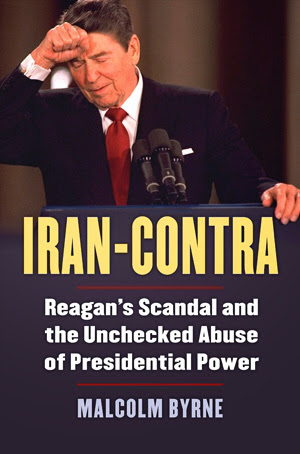
Iran-Contra Revisited: New Book Places Reagan at Center of 1980s Scandal

Lack of Legal or Legislative Closure to Affair Opened Path to Future Presidential Abuses

Narrative Spotlights Iranian, Israeli, Nicaraguan Perspectives

National Security Archive Electronic Briefing Book No. 483 - Posted September 5, 2014

For more information contact: +1 202/994-7000 or nsarchiv@gwu.edu

Washington, D.C., September 5, 2014 -- A new book on the Iran-Contra affair shows that President Ronald Reagan stood at the epicenter of the scandal both in terms of his willingness to break the law in order to free American hostages in Lebanon and his failure to take account of the costs and consequences of his decisions, including the illicit conduct of numerous aides.

Advance praise for "Iran-Contra: Reagan's Scandal and the Unchecked Abuse of Presidential Power" by Malcolm Byrne (University Press of Kansas, September 15, 2014), includes this from Seymour Hersh: "At last, the Reagan administration's Iran-Contra affair finally has a comprehensive history worthy of the scandal ... Malcolm Byrne has told the complex story in brilliant fashion."

"Iran-Contra" details the historical, political, and institutional background against which the affair played out. Utilizing tens of thousands of pages of previously classified materials, the narrative describes in detail all the administration's decisions and actions, and discusses the rationales invoked at the time as well as after the fact (explanations that sometimes differed widely).

Looking beyond the U.S. side, the volume explores -- through documents and interviews -- the views and actions of Iranians, Israelis, Nicaraguans, and others who played parts in the affair. Many of these insights are published here for the first time.

"Iran-Contra" is the first full-length account of the affair to study and assess the various official investigations that were convened -- the Tower Commission, the joint congressional hearings, and the independent counsel's inquiry. The limitations of each helped lead to an inconclusive end to the affair, which has had implications for the unchecked conduct of future presidents and their administrations.

While the scandal had many contributors -- including Congress, which failed to avert either element of the affair or to pass meaningful legislation in its wake -- the role of the president and his top aides stands out.

Today's posting includes a revealing series of recently declassified high-level records that explore the president's thinking and actions during the affair.


Check out today's posting at the National Security Archive's Website -http://www2.gwu.edu/~nsarchiv/NSAEBB/NSAEBB483/

Find us on Facebook - http://www.facebook.com/NSArchive

Unredacted, the Archive blog - http://nsarchive.wordpress.com/

________________________________________________________
THE NATIONAL SECURITY ARCHIVE is an independent non-governmental research institute and library located at The George Washington University in Washington, D.C. The Archive collects and publishes declassified documents acquired through the Freedom of Information Act (FOIA). A tax-exempt public charity, the Archive receives no U.S. government funding; its budget is supported by publication royalties and donations from foundations and individuals.
_________________________________________________________


Friday, August 22, 2014

Tomgram: Patrick Cockburn, How to Ensure a Thriving Caliphate

Think of the new “caliphate” of the Islamic State, formerly the Islamic State in Iraq and Syria (ISIS), as George W. Bush and Dick Cheney's gift to the world (with a helping hand from the Saudis and other financiers of extremism in the Persian Gulf). How strange that they get so little credit for its rise, for the fact that the outlines of the Middle East, as set up by Europe’s colonial powers in the wake of World War I, are being swept aside in a tide of blood.

Had George and Dick not decided on their “cakewalk” in Iraq, had they not raised the specter of nuclear destruction and claimed that Saddam Hussein’s regime was somehow linked to al-Qaeda and so to the 9/11 attacks, had they not sent tens of thousands of American troops into a burning, looted Baghdad (“stuff happens”), disbanded the Iraqi army, built military bases all over that country, and generally indulged their geopolitical fantasies about dominating the oil heartlands of the planet for eternity, ISIS would have been an unlikely possibility, no matter the ethnic and religious tensions in the region. They essentially launched the drive that broke state power there and created the kind of vacuum that a movement like ISIS was so horrifically well suited to fill.

All in all, it’s a remarkable accomplishment to look back on. In September 2001, when George and Dick launched their “Global War on Terror” to wipe out -- so they then claimed -- “terrorist networks” in up to 60 countries, or as they preferred to put it, “drain the swamp,” there were scattered bands of jihadis globally, while al-Qaeda had a couple of camps in Afghanistan and a sprinkling of supporters elsewhere. Today, in the wake of the invasions of Afghanistan and Iraq and an air power intervention in Libya, after years of drone (and non-drone) bombing campaigns across the Greater Middle East, jihadist groups are thriving in Yemen and Pakistan, spreading through Africa (along with the U.S. military), and ISIS has taken significant parts of Iraq and Syria right up to the Lebanese border for its own bailiwick and is still expanding murderously, despite a renewed American bombing campaign that may only strengthen that movement in the long run.

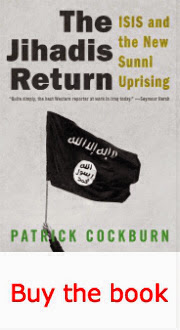
Has anyone covered this nightmare better than the world’s least embedded reporter, Patrick Cockburn of the British Independent? Not for my money. He’s had the canniest, clearest-eyed view of developments in the region for years now. As it happens, when he publishes a new book on the Middle East (the last time was 2008), he makes one of his rare appearances at TomDispatch. This month, his latest must-read work, The Jihadis Return: ISIS and the New Sunni Uprising, is out. Today, this website has an excerpt from its first chapter on why the war on terror was such a failure (and why, if Washington was insistent on invading someplace, it probably should have chosen Saudi Arabia). It includes a special introductory section written just for TomDispatch. Thanks go to his publisher, OR Books. Tom

Why Washington’s War on Terror Failed

The Underrated Saudi Connection

By Patrick Cockburn

[This essay is excerpted from the first chapter of Patrick Cockburn’s new book, The Jihadis Return: ISIS and the New Sunni Uprising, with special thanks to his publisher, OR Books. The first section is a new introduction written for TomDispatch.]

There are extraordinary elements in the present U.S. policy in Iraq and Syria that are attracting surprisingly little attention. In Iraq, the U.S. is carrying out air strikes and sending in advisers and trainers to help beat back the advance of the Islamic State of Iraq and the Levant (better known as ISIS) on the Kurdish capital, Erbil. The U.S. would presumably do the same if ISIS surrounds or attacks Baghdad. But in Syria, Washington’s policy is the exact opposite: there the main opponent of ISIS is the Syrian government and the Syrian Kurds in their northern enclaves. Both are under attack from ISIS, which has taken about a third of the country, including most of its oil and gas production facilities.

But U.S., Western European, Saudi, and Arab Gulf policy is to overthrow President Bashar al-Assad, which happens to be the policy of ISIS and other jihadis in Syria. If Assad goes, then ISIS will be the beneficiary, since it is either defeating or absorbing the rest of the Syrian armed opposition. There is a pretense in Washington and elsewhere that there exists a “moderate” Syrian opposition being helped by the U.S., Qatar, Turkey, and the Saudis. It is, however, weak and getting more so by the day. Soon the new caliphate may stretch from the Iranian border to the Mediterranean and the only force that can possibly stop this from happening is the Syrian army.

The reality of U.S. policy is to support the government of Iraq, but not Syria, against ISIS. But one reason that group has been able to grow so strong in Iraq is that it can draw on its resources and fighters in Syria. Not everything that went wrong in Iraq was the fault of Prime Minister Nouri al-Maliki, as has now become the political and media consensus in the West. Iraqi politicians have been telling me for the last two years that foreign backing for the Sunni revolt in Syria would inevitably destabilize their country as well. This has now happened.

By continuing these contradictory policies in two countries, the U.S. has ensured that ISIS can reinforce its fighters in Iraq from Syria and vice versa. So far, Washington has been successful in escaping blame for the rise of ISIS by putting all the blame on the Iraqi government. In fact, it has created a situation in which ISIS can survive and may well flourish.

Using the al-Qa'ida Label

The sharp increase in the strength and reach of jihadist organizations in Syria and Iraq has generally been unacknowledged until recently by politicians and media in the West. A primary reason for this is that Western governments and their security forces narrowly define the jihadist threat as those forces directly controlled by al-Qa‘ida central or “core” al-Qa‘ida. This enables them to present a much more cheerful picture of their successes in the so-called war on terror than the situation on the ground warrants.

In fact, the idea that the only jihadis to be worried about are those with the official blessing of al-Qa‘ida is naïve and self-deceiving. It ignores the fact, for instance, that ISIS has been criticized by the al-Qa‘ida leader Ayman al-Zawahiri for its excessive violence and sectarianism. After talking to a range of Syrian jihadi rebels not directly affiliated with al-Qa‘ida in southeast Turkey earlier this year, a source told me that “without exception they all expressed enthusiasm for the 9/11 attacks and hoped the same thing would happen in Europe as well as the U.S.”

Jihadi groups ideologically close to al-Qa‘ida have been relabeled as moderate if their actions are deemed supportive of U.S. policy aims. In Syria, the Americans backed a plan by Saudi Arabia to build up a “Southern Front” based in Jordan that would be hostile to the Assad government in Damascus, and simultaneously hostile to al-Qa‘ida-type rebels in the north and east. The powerful but supposedly moderate Yarmouk Brigade, reportedly the planned recipient of anti-aircraft missiles from Saudi Arabia, was intended to be the leading element in this new formation. But numerous videos show that the Yarmouk Brigade has frequently fought in collaboration with JAN, the official al-Qa‘ida affiliate. Since it was likely that, in the midst of battle, these two groups would share their munitions, Washington was effectively allowing advanced weaponry to be handed over to its deadliest enemy. Iraqi officials confirm that they have captured sophisticated arms from ISIS fighters in Iraq that were originally supplied by outside powers to forces considered to be anti-al-Qa‘ida in Syria. More


Friday, August 8, 2014

Hiroshima and Nagasaki: The many retrospectives

Sixty-nine years ago, at 8:15 in the morning on August 6, the first atomic bomb exploded over Hiroshima. Three days later, another bomb was dropped on Nagasaki.

Estimates vary as to the number of people who died in those blasts, but the figure of at least 130,000 deaths for Hiroshima seems to be generally accepted, with another 70,000 for Nagasaki as of surveys conducted in November 1945.

With the anniversaries of those events have come many news and comment stories in the press. But how best to put the bombings into perspective, especially after so much time has passed? The problem—to loosely paraphrase Joseph Stalin, no stranger to death on an industrial scale—is that “one death is a tragedy, while a million deaths is a statistic.” (This is particularly true when dealing with dry analytical reports about security, which inevitably use phrases like “collateral damage,” “kilotons,” and “battlefield scenarios”—masking the fact that there are large numbers of very real human lives involved on the receiving end of a nuclear weapon.)

Consequently, some of the most powerful and compelling articles about the atomic bombing bring things back to the individual, dealing with just a single person and the most intimate, small details of his or her life at the moment of the bombing, as shown in this BBC multimedia piece on Hiroshima survivor Shinji Mikamo. For example, after the blast, while looking through the ruins of his family home, Mikamo found his father’s watch, which had stopped at precisely 8:15 am. In Mikamo’s words: “The unimaginable intense heat that reached several thousand degrees Fahrenheit from the blast had fused the shadows of the hands into the face of the timepiece, slightly displaced, leaving distinct marks where the hands had been at the moment of the explosion. It was enough to clearly see the exact moment the watch stopped.”

Other articles, such as this one in the Washington Post, tried a different approach to bring home the horror of the blasts. It focuses on a large and well-known symbol of the bombing: the dome of a concrete-and-steel structure that was one of the few buildings to survive the atomic blast in 1945. Now known as theHiroshima Peace Memorial, the building has become the epicenter of yearly memorials and services to remember the victims. Through the use of the article’s slide show, readers can see the dome as it looked immediately after the blast, and again over the years, until today. The memorial itself contains a museum with artifacts, exhibitions, and first-person survivor, or hibakusha, accounts.

There is something about seeing or hearing something first-hand, on-site; it really makes an impression. Knowing this, the mayor of Hiroshima asked leaders of nuclear-armed nations to see for themselves atomic bomb-scarred cities. “If you do, you will be convinced that nuclear weapons are an absolute evil that must no longer be allowed to exist,” Kazumi Matsui was quoted as saying by ABC News.

Not that there is anything wrong with standing back and taking a look at the big picture. Some media outlets have used the anniversary as an occasion to pause and think about nuclear weapons, such as thisTime magazine piece by Harvard's Elaine Scarry, which notes: “An appropriate way to reflect on these events might be to contemplate our current nuclear arsenal and ask why it is being kept in place. The U.S. has by far the most powerful arsenal on Earth. Our 14 Ohio-class submarines together carry the equivalent of at least 56,000 Hiroshima blasts. These ships are not a remnant of the Cold War. Eight were made after the opening of the Berlin Wall during the presidencies of George H.W. Bush and Bill Clinton.”

Over the years, of course, the Bulletin of Atomic Scientists has published its own rich lode of material—from all viewpoints—on the bombings of Hiroshima and Nagasaki. Highlights include The Sanctification of Hiroshima, a 1985 piece in which a physicist affiliated with the Manhattan Project supports the Hiroshima but not the Nagasaki bombing.

Meanwhile, John E. Coggle’s 1982 review of the 600-page book Hiroshima and Nagasaki: the Physical, Medical, and Social Effects of the Atomic Bombings, by The Committee for the Compilation of Materials on Damage Caused by the Atomic Bombs hews to a different perspective. Drawing on his background as a medical doctor, Coggle went over the informative, technical prose and the 200 statistical tables, diagrams, maps, and photographs that graphically depict the effects of thermal radiation, the shock wave and ionizing radiation, short-term and long-term biological effects, and the social and psychological impacts. Coggle used the phrase “encyclopedia of horror” to describe the book’s un-nerving but necessary content, noting: “As a radiation biologist one sees the words ‘Hiroshima and Nagasaki’ quite frequently but only in the arid academic context of science…”

At the end of the day, it can be worthwhile on the Hiroshima and Nagasaki anniversaries to think about the personal and the emotional—while keeping such clinical data in mind and ready to hand when it is necessary to debate proponents of ideas such as “battlefield nuclear weapons,” “limited nuclear war,” and the use of select nuclear strikes as a form of “de-escalation.”

Therefore, perhaps the most compelling of the stories in the Bulletin archive is a first-person recollection,Hiroshima Memories, by Hideko Tamura Friedman, who was just a young girl back on August 6, 1945. After moving to the United States and becoming a therapist in private practice and a part-time social worker in the Radiation Oncology Department at the University of Chicago Hospitals, Hideko excerpted this 1995 article from a longer, unpublished manuscript she was working on.

Hideko describes how she was reading a book when “a huge band of white light fell from the sky down to the trees.” She jumped up and hid behind a large pillar as an explosion shook the earth and pieces of the roof fell about her.

Hideko survived; some members of her family did not. “My father,” she wrote in in a heart-rending statement of fact, “brought Mama’s ashes home in his army handkerchief.”

Editor’s note: The Bulletin’s archives from 1945 to 1998, complete with the original covers and artwork, can be found here. http://books.google.ca/books?id=-wsAAAAAMBAJ&source=gbs_all_issues_r&cad=1. Anything after 1998 can be found via the search engine on the Bulletin’s home page.