Showing posts with label Iran. Show all posts

Wednesday, October 7, 2015

Why Assad turned to Moscow for help

Iran has long been sending troops and material to help Syrian autocrat Bashar Assad wage war against his own people. But now Tehran is busy establishing a state within a state — which is why Assad now wants help from Russia.

Fear of his enemies was the primary reason for Bashar Assad’s call for help to Moscow. “But right after that came the fear of his friends,” says a Russian official who long worked in his country’s embassy in Damascus. The friend he refers to is Iran, the Syrian regime’s most important protector.

“Assad and those around him are afraid of the Iranians,” the Russian says. Anger over the arrogance of the Iranians, who treat Syria like a colony, is also part of it, the Russian continues. Most of all, though, the Syrians “mistrust Tehran’s goals, for which Assad’s position of power may no longer be decisive. That is why the Syrians absolutely want us in the country.”

What the Russian diplomat, who wants to remain anonymous, has to say is a bit jarring at first. Without the Shiite auxiliaries from Iran, Afghanistan, Pakistan, Iraq and Lebanon — whose recruitment and transfer is organized by the Iranian Revolutionary Guard — Assad’s rule would long since have come to an end. Yet his comments are complemented by a number of additional details that add up to an image of a behind-the-scenes power struggle — one which casts a new, scary light on the condition of the Syrian regime and on the country’s prospects as a whole.

The Iranian Revolutionary Guard has long planned and carried out the most important missions and operations of the Syrian regime. They were responsible, right down to the details, for the sporadically successful offensives in Aleppo in the north and Daraa in the south, which began in 2013. In Iran, the Revolutionary Guard is one of those groups intent on continuing the “Islamic Revolution” — the victory of Shiites over the Sunnis. They are a state within a state, one which owns several companies and is answerable only to Iran’s Supreme Leader Ali Khamenei. President Hassan Rohani has no power over the Revolutionary Guard whatsoever.

Their goals go far beyond merely reestablishing the status quo in Syria. In early 2013, Hojatoleslam Mehdi Taeb, one of the planners behind Iran’s engagement in Syria, said: “Syria is the 35th province of Iran and it is a strategic province for us.” For several decades, the alliance between the Assads and Iran was a profitable one, particularly in opposition to the Iraq of Saddam Hussein, which long had the upper hand in the region. But today, Assad depends on Iran to remain in power, and Tehran is taking advantage of the situation.

Using a variety of pathways, both civilian and military, Tehran is currently in the process of establishing itself in Syria. Military means are being employed to strengthen the holdings of the Shiite militia Hezbollah in areas near the border with Lebanon. To serve this goal, the Syrian National Defense Forces were established, troops that exist alongside the regular Syrian army and which includes tens of thousands of fighters who were trained in Iran. Still, the National Defense Forces have begun to disintegrate into local mafia militias and have actually accelerated the loss of state control over those regions.

Changes Afoot

It is, however, primarily in the civilian sector where significant changes are afoot. Just as in Damascus, Latakia and Jabla, increasing numbers of hosseiniehs — Shiite religious teaching centers — are opening. The centers are aimed at converting Sunnis, and even the Alawites, the denomination to which the Assads belong, to “correct” Shiite Islam by way of sermons and stipends. In addition, the government decreed one year ago that state-run religion schools were to teach Shiite material.

All of this is taking place to the consternation of the Alawites, who have begun to voice their displeasure. “They are throwing us back a thousand years. We don’t even wear headscarves and we aren’t Shiites,” Alawites complained on the Jableh News Facebook page. There were also grumblings when a Shiite mosque opened in Latakia and an imam there announced: “We don’t need you. We need your children and grandchildren.”

In addition, Iranian emissaries, either directly or via middlemen, have been buying land and buildings in Damascus, including almost the entire former Jewish quarter, and trying to settle Shiites from other countries there.

Talib Ibrahim, an Alawite communist from Masyaf who fled to the Netherlands many years ago, summarizes the mood as follows: “Assad wants the Iranians as fighters, but increasingly they are interfering ideologically with domestic affairs. The Russians don’t do that.”

That’s why Assad has now decided to place his fate in the hands of the religiously unproblematic Russia, which last week transferred aircraft and troops to its military base in the northern Syrian town of Latakia and began flying airstrikes. The fight against the Islamic State terror militia served as a pretext for the operation, but the initial air strikes have not targeted the Islamists at all. Rather, they have been flown against areas controlled by Syrian rebels. More


Tuesday, July 28, 2015

CIA Confirms Role in 1953 Iran Coup

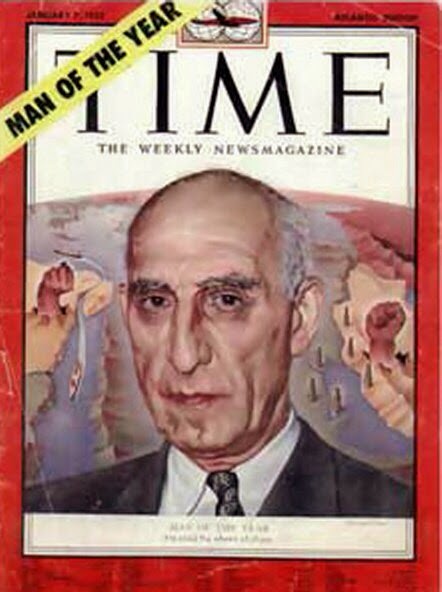
The CIA has publicly admitted for the first time that it was behind the notorious 1953 coup against Iran’s democratically elected prime minister Mohammad Mosaddeq, in documents that also show how the British government tried to block the release of information about its own involvement in his overthrow.

On the 60th anniversary of an event often invoked by Iranians as evidence of western meddling, the US national security archive at George Washington University published a series of declassified CIA documents.

“The military coup that overthrew Mosaddeq and his National Front cabinet was carried out under CIA direction as an act of US foreign policy, conceived and approved at the highest levels of government,” reads a previously excised section of an internal CIA history titled The Battle for Iran.

The documents, published on the archive’s website under freedom of information laws, describe in detail how the US – with British help – engineered the coup, codenamed TPAJAX by the CIA and Operation Boot by Britain’s MI6.

Britain, and in particular Sir Anthony Eden, the foreign secretary, regarded Mosaddeq as a serious threat to its strategic and economic interests after the Iranian leader nationalised the British Anglo-Iranian Oil Company, latterly known as BP. But the UK needed US support. The Eisenhower administration in Washington was easily persuaded.

Mohammad Mosaddeq

British documents show how senior officials in the 1970s tried to stop Washington from releasing documents that would be “very embarrassing” to the UK.

Official papers in the UK remain secret, even though accounts of Britain’s role in the coup are widespread. In 2009 the former foreign secretary Jack Straw publicly referred to many British “interferences” in 20th-century Iranian affairs. On Monday the Foreign Office said it could neither confirm nor deny Britain’s involvement in the coup.

The previously classified US documents include telegrams from Kermit Roosevelt, the senior CIA officer on the ground in Iran during the coup. Others, including a draft in-house CIA history by Scott Kock titled Zendebad, Shah! (Viva, Shah!), say that according to Monty Woodhouse, MI6’s station chief in Tehran at the time, Britain needed US support for a coup. Eden agreed. “Woodhouse took his words as tantamount to permission to pursue the idea” with the US, Kock wrote.

Mosaddeq’s overthrow, still given as a reason for the Iranian mistrust of British and American politicians, consolidated the Shah’s rule for the next 26 years until the 1979 Islamic revolution. It was aimed at making sure the Iranian monarchy would safeguard the west’s oil interests in the country.

The archived CIA documents include a draft internal history of the coup titled “Campaign to install a pro-western government in Iran”, which defines the objective of the campaign as “through legal, or quasi-legal, methods to effect the fall of the Mosaddeq government; and to replace it with a pro-western government under the Shah’s leadership with Zahedi as its prime minister”.

Kermit Roosevelt

One document describes Mosaddeq as one of the “most mercurial, maddening, adroit and provocative leaders with whom they [the US and Britain] had ever dealt”. The document says Mosaddeq “found the British evil, not incomprehensible” and “he and millions of Iranians believed that for centuries Britain had manipulated their country for British ends”. Another document refers to conducting a “war of nerves” against Mossadeq.

The Iranian-Armenian historian Ervand Abrahamian, author of The Coup: 1953, the CIA and the Roots of Modern US-Iranian Relations, said in a recent interview that the coup was designed “to get rid of a nationalist figure who insisted that oil should be nationalised”.

Unlike other nationalist leaders, including Egypt’s Gamal Abdel Nasser, Mosaddeq epitomised a unique “anti-colonial” figure who was also committed to democratic values and human rights, Abrahamian argued.

Some analysts argue that Mosaddeq failed to compromise with the west and the coup took place against the backdrop of communism fears in Iran. “My study of the documents proves to me that there was never really a fair compromise offered to Mosaddeq, what they wanted Mosaddeq to do is to give up oil nationalisation and if he’d given that of course then the national movement would have been meaningless,” he told the Iranian online publication, Tableau magazine.

“My argument is that there was never really a realistic threat of communism … discourse and the way justifying any act was to talk about communist danger, so it was something used for the public, especially the American and the British public.”

Despite the latest releases, a significant number of documents about the coup remain secret. Malcolm Byrne, deputy director of the national security archive, has called on the US intelligence authorities to release the remaining records and documents.

“There is no longer good reason to keep secrets about such a critical episode in our recent past. The basic facts are widely known to every school child in Iran,” he said. “Suppressing the details only distorts the history, and feeds into myth-making on all sides.”

In recent years Iranian politicians have sought to compare the dispute over the country’s nuclear activities to that of the oil nationalisation under Mosaddeq: supporters of the former president Mahmoud Ahmadinejad often invoke the coup.

US officials have previously expressed regret about the coup but have fallen short of issuing an official apology. The British government has never acknowledged its role. More


Friday, July 24, 2015

Is the Iran deal about staving off the coming oil shock - By Nafeez Ahmed

The Iran nuclear deal signals a major shift in the geopolitics of the Middle East. Integral to the equation is oil, economics, terror – and US hegemony.

The Bush administration had initiated a long-term covert strategy to undermine Iranian influence in the Middle East and Central Asia, combined with overt pressure through diplomatic initiatives and economic sanctions.

Under Obama, this strategy accelerated, largely in concert with other Gulf powers like Saudi Arabia, Qatar and the UAE, who have long sought to roll-back Iranian influence.

Yet even as the strategy accelerated, unlike its predecessors which openly declared their warmongering hostility to Iran, the Obama administration had used the pressure to forge an unprecedented deal with the country.

Averting regional war

The reasons for the shift are, of course, pragmatic. For years, US intelligence agencies have told the White House that there is simply no evidence Iran is trying to build a nuclear bomb.

And the International Atomic Energy Agency (IAEA) has repeatedly certified that uranium is not being enriched to levels necessary for weaponisation, nor is it being diverted to a secret weapons programme.

Meanwhile, senior US military officials have long warned that the sort of US-Iran military confrontation which frothing neoconservatives have been pining for would likely fail and destabilise the entire region.

What about an Israel-Iran confrontation? A classified Pentagon war simulation held in 2012 found that an Israeli attack on Iran would also lead to a wider regional war.

Unlike the neocons, for the military pragmatists in successive US administrations, war with Iran could never be a preferred option.

The added bonus is that Iran might notch down its involvement in Iraq and Syria.

Earlier this year, the US assured its allies at the Camp David summit that under the nuclear deal, Iran’s growing geopolitical influence in the region would be curtailed. Simultaneously, the US gave Saudi Arabia, Qatar, the UAE and others the green light to accelerate support to the Islamist militants of their choice in Syria.

George Friedman, founder and CEO of private US intelligence firm Stratfor – which operates closely with the Pentagon and State Department – forecasted the US-Iran détente four years ago.

His prescient assessment of its strategic rationale is worth noting. Friedman explained that by reaching “a temporary understanding with Iran,” the US would give itself room to withdraw while playing off Iran against the Sunni regimes, limiting Iran’s “direct controls” in the region, “while putting the Saudis, among others, at an enormous disadvantage”.

“This strategy would confront the reality of Iranian power and try to shape it,” wrote Friedman.

Ultimately, though, the US is betting on the rise of Turkey – hence the latter’s pivotal role in the new anti-IS rebel training strategy, despite Turkey’s military and financial sponsorship of IS. More


Friday, March 13, 2015

Different Angles on Iran

Dear Colleague,


As the deadline for finalizing the outline of a nuclear deal with Iran approaches, I want to draw your attention to recent commentary and analysis by Carnegie’s scholars.

Critics of the agreement, including Israeli Prime Minister Benjamin Netanyahu and U.S. Republican senators, are voicing their complaints. But as I explain in a Q&A, there is no better alternative to the current approach, and critics’ arguments depend on dubious assumptions that Iran is not deterrable.

In an article on China’s role in the negotiations, Tong Zhao analyzes how Beijing’s strategic interests align with those of Washington, providing China a chance to contribute to an important precedent for nonproliferation.

In an article on EU-Iran relations, Cornelius Adebahr, Marc Otte, and Nathalie Tocci look at conditions for a more effective EU policy toward Tehran.

In an op-ed published in Arms Control Today, Ariel Levite outlines a Plan B to avoid undue escalation if the goal of securing a credible deal proves elusive.

Finally, in an op-ed published in National Interest, Alexei Arbatov discusses ways for U.S. policymakers to move on in case of a failure to reach a final deal.

I very much hope that you’ll take a look.

Sincerely,

George Perkovich
Vice President for Studies
Nuclear Policy Program


Monday, November 24, 2014

Iran Nuclear Negotiations: Looking Ahead

Carnegie Endowment for International Peace
Dear Colleague,

With talks set to continue between Iran and the world powers to strike a deal on Tehran’s nuclear program, I want to draw your attention to recent commentary and analysis by Carnegie’s scholars.

In recent testimony to the House Committee on Foreign Affairs, Karim Sadjadpour warned about the risk of premature sanctions and said the intent of U.S. policy should be to deter Iran’s nuclear advancement, not provoke it.

In a groundbreaking op-ed, James Acton encourages policymakers to switch focus from an Iranian nuclear breakout to the possibility of an atomic “sneak-out.” Acton offers ideas for how America can rethink its strategy for preventing Tehran from getting the Bomb.

Finally, in an article that looks at dynamics in Tehran, Cornelius Adebahr suggests that if the United States were to increase sanctions, Iran would likely continue research and development on new centrifuges as a sign of defiance as much as an effort to build a stockpile for the future.

I very much hope that you’ll take a look.

Sincerely,

George Perkovich
Vice President for Studies
Nuclear Policy Program

Carnegie Endowment for International Peace
George PerkovichGeorge Perkovich
Toby DaltonToby Dalton
James M. ActonJames M. Acton
Togzhan KassenovaTogzhan Kassenova
WASHINGTON, DC
Nicholas WrightNicholas
Wright

WASHINGTON, DC
Ariel LeviteAriel Levite
TEL AVIV
Li BinLi Bin
WASHINGTON, DC, AND BEIJING
Tomoko KurokawaTomoko Kurokawa
TOKYO
Duyeon KimDuyeon Kim
WASHINGTON, DC, AND SEOUL
Alexei ArbatovAlexei
Arbatov

MOSCOW
Petr TopychkanovPetr Topychkanov
MOSCOW
Sinan ÜlgenSinan Ülgen
ISTANBUL
Mark HibbsMark Hibbs
BERLIN
Shahram ChubinShahram Chubin
GENEVA
Pierre GoldschmidtPierre Goldschmidt
BRUSSELS
Paul SchultePaul Schulte
LONDON
Tong ZhaoTong Zhao
BEIJING
Paul SchulteWilliam Norris
CarnegieEndowment.orgBEIJINGBEIRUTBRUSSELSMOSCOWWASHINGTON


Friday, September 5, 2014

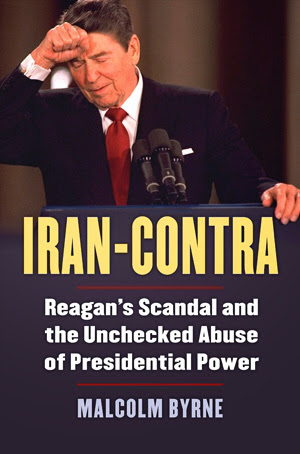
Iran-Contra Revisited

Iran-Contra Revisited: New Book Places Reagan at Center of 1980s Scandal

Lack of Legal or Legislative Closure to Affair Opened Path to Future Presidential Abuses

Narrative Spotlights Iranian, Israeli, Nicaraguan Perspectives

National Security Archive Electronic Briefing Book No. 483 - Posted September 5, 2014

For more information contact: +1 202/994-7000 or nsarchiv@gwu.edu

Washington, D.C., September 5, 2014 -- A new book on the Iran-Contra affair shows that President Ronald Reagan stood at the epicenter of the scandal both in terms of his willingness to break the law in order to free American hostages in Lebanon and his failure to take account of the costs and consequences of his decisions, including the illicit conduct of numerous aides.

Advance praise for "Iran-Contra: Reagan's Scandal and the Unchecked Abuse of Presidential Power" by Malcolm Byrne (University Press of Kansas, September 15, 2014), includes this from Seymour Hersh: "At last, the Reagan administration's Iran-Contra affair finally has a comprehensive history worthy of the scandal ... Malcolm Byrne has told the complex story in brilliant fashion."

"Iran-Contra" details the historical, political, and institutional background against which the affair played out. Utilizing tens of thousands of pages of previously classified materials, the narrative describes in detail all the administration's decisions and actions, and discusses the rationales invoked at the time as well as after the fact (explanations that sometimes differed widely).

Looking beyond the U.S. side, the volume explores -- through documents and interviews -- the views and actions of Iranians, Israelis, Nicaraguans, and others who played parts in the affair. Many of these insights are published here for the first time.

"Iran-Contra" is the first full-length account of the affair to study and assess the various official investigations that were convened -- the Tower Commission, the joint congressional hearings, and the independent counsel's inquiry. The limitations of each helped lead to an inconclusive end to the affair, which has had implications for the unchecked conduct of future presidents and their administrations.

While the scandal had many contributors -- including Congress, which failed to avert either element of the affair or to pass meaningful legislation in its wake -- the role of the president and his top aides stands out.

Today's posting includes a revealing series of recently declassified high-level records that explore the president's thinking and actions during the affair.


Check out today's posting at the National Security Archive's Website -http://www2.gwu.edu/~nsarchiv/NSAEBB/NSAEBB483/

Find us on Facebook - http://www.facebook.com/NSArchive

Unredacted, the Archive blog - http://nsarchive.wordpress.com/

________________________________________________________
THE NATIONAL SECURITY ARCHIVE is an independent non-governmental research institute and library located at The George Washington University in Washington, D.C. The Archive collects and publishes declassified documents acquired through the Freedom of Information Act (FOIA). A tax-exempt public charity, the Archive receives no U.S. government funding; its budget is supported by publication royalties and donations from foundations and individuals.
_________________________________________________________


Sunday, August 24, 2014

Iran unveils new drones and long-range missiles

Iran on Sunday unveiled two new missiles and two new drones it said have been added to its arsenal, in a ceremony attended by President Hassan Rouhani.

The Ghadir (Mighty), with a range of 300 kilometres (185 miles), is a ground-to-sea and sea-to-sea missile, the official IRNA news agency said.

It is in the same family as the Ghader or Qader cruise missile, which has a range of 200 kilometres.

The other missile unveiled on Sunday, the Nasr-e Basir (Clear Victory), is equipped with a seeker homing head. Its range was not given.

The new Karar-4 (Striker) drone can track and monitor enemy aircraft, the agency said, while the Mohajer-4 (Migrant) drone is designed to perform photographic and mapping missions.

Iran has developed a major missile programme in addition to producing different types of Unmanned Aerial Vehicles (UAVs), including attack drones.

The United States, whose Fifth Fleet is based in Sunni-ruled Bahrain across the Gulf from the mainly Shiite Islamic republic, has repeatedly expressed concern about these two programmes.

Rouhani on Sunday sought to allay such fears.

“Iran has no intention to interfere in, dominate or attack other countries or plunder their resources,” he said in a speech broadcast on state television, adding that the country’s military doctrine was defensive.

“But at the same time we will stand up to any aggression,” he added.

In May, Iran said it had succeeded in copying an American RQ-170 Sentinel drone that it forced down and recovered nearly intact in December 2011.

Tehran is currently engaged in negotiations with the five permanent members of the UN Security Council plus Germany — known as P5+1 — on securing an agreement with world powers on its controversial nuclear programme.

Israel and Western powers suspect Iran’s civilian nuclear project to be a cover to develop an atomic weapon, an allegation Tehran denies, insisting its uranium enrichment drive is entirely peaceful.

["Iranian President Hassan Rouhani (centre) and Iran's Defence Minister Hossein Dehqan (2nd right) visit Iran's defence capabilities exhibition in Tehran on August 24, 2014" via AFP]


Friday, August 22, 2014

Tomgram: Patrick Cockburn, How to Ensure a Thriving Caliphate

Think of the new “caliphate” of the Islamic State, formerly the Islamic State in Iraq and Syria (ISIS), as George W. Bush and Dick Cheney's gift to the world (with a helping hand from the Saudis and other financiers of extremism in the Persian Gulf). How strange that they get so little credit for its rise, for the fact that the outlines of the Middle East, as set up by Europe’s colonial powers in the wake of World War I, are being swept aside in a tide of blood.

Had George and Dick not decided on their “cakewalk” in Iraq, had they not raised the specter of nuclear destruction and claimed that Saddam Hussein’s regime was somehow linked to al-Qaeda and so to the 9/11 attacks, had they not sent tens of thousands of American troops into a burning, looted Baghdad (“stuff happens”), disbanded the Iraqi army, built military bases all over that country, and generally indulged their geopolitical fantasies about dominating the oil heartlands of the planet for eternity, ISIS would have been an unlikely possibility, no matter the ethnic and religious tensions in the region. They essentially launched the drive that broke state power there and created the kind of vacuum that a movement like ISIS was so horrifically well suited to fill.

All in all, it’s a remarkable accomplishment to look back on. In September 2001, when George and Dick launched their “Global War on Terror” to wipe out -- so they then claimed -- “terrorist networks” in up to 60 countries, or as they preferred to put it, “drain the swamp,” there were scattered bands of jihadis globally, while al-Qaeda had a couple of camps in Afghanistan and a sprinkling of supporters elsewhere. Today, in the wake of the invasions of Afghanistan and Iraq and an air power intervention in Libya, after years of drone (and non-drone) bombing campaigns across the Greater Middle East, jihadist groups are thriving in Yemen and Pakistan, spreading through Africa (along with the U.S. military), and ISIS has taken significant parts of Iraq and Syria right up to the Lebanese border for its own bailiwick and is still expanding murderously, despite a renewed American bombing campaign that may only strengthen that movement in the long run.

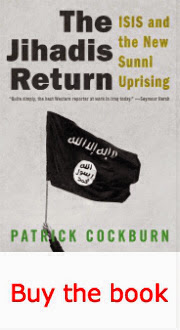
Has anyone covered this nightmare better than the world’s least embedded reporter, Patrick Cockburn of the British Independent? Not for my money. He’s had the canniest, clearest-eyed view of developments in the region for years now. As it happens, when he publishes a new book on the Middle East (the last time was 2008), he makes one of his rare appearances at TomDispatch. This month, his latest must-read work, The Jihadis Return: ISIS and the New Sunni Uprising, is out. Today, this website has an excerpt from its first chapter on why the war on terror was such a failure (and why, if Washington was insistent on invading someplace, it probably should have chosen Saudi Arabia). It includes a special introductory section written just for TomDispatch. Thanks go to his publisher, OR Books. Tom

Why Washington’s War on Terror Failed

The Underrated Saudi Connection

By Patrick Cockburn

[This essay is excerpted from the first chapter of Patrick Cockburn’s new book, The Jihadis Return: ISIS and the New Sunni Uprising, with special thanks to his publisher, OR Books. The first section is a new introduction written for TomDispatch.]

There are extraordinary elements in the present U.S. policy in Iraq and Syria that are attracting surprisingly little attention. In Iraq, the U.S. is carrying out air strikes and sending in advisers and trainers to help beat back the advance of the Islamic State of Iraq and the Levant (better known as ISIS) on the Kurdish capital, Erbil. The U.S. would presumably do the same if ISIS surrounds or attacks Baghdad. But in Syria, Washington’s policy is the exact opposite: there the main opponent of ISIS is the Syrian government and the Syrian Kurds in their northern enclaves. Both are under attack from ISIS, which has taken about a third of the country, including most of its oil and gas production facilities.

But U.S., Western European, Saudi, and Arab Gulf policy is to overthrow President Bashar al-Assad, which happens to be the policy of ISIS and other jihadis in Syria. If Assad goes, then ISIS will be the beneficiary, since it is either defeating or absorbing the rest of the Syrian armed opposition. There is a pretense in Washington and elsewhere that there exists a “moderate” Syrian opposition being helped by the U.S., Qatar, Turkey, and the Saudis. It is, however, weak and getting more so by the day. Soon the new caliphate may stretch from the Iranian border to the Mediterranean and the only force that can possibly stop this from happening is the Syrian army.

The reality of U.S. policy is to support the government of Iraq, but not Syria, against ISIS. But one reason that group has been able to grow so strong in Iraq is that it can draw on its resources and fighters in Syria. Not everything that went wrong in Iraq was the fault of Prime Minister Nouri al-Maliki, as has now become the political and media consensus in the West. Iraqi politicians have been telling me for the last two years that foreign backing for the Sunni revolt in Syria would inevitably destabilize their country as well. This has now happened.

By continuing these contradictory policies in two countries, the U.S. has ensured that ISIS can reinforce its fighters in Iraq from Syria and vice versa. So far, Washington has been successful in escaping blame for the rise of ISIS by putting all the blame on the Iraqi government. In fact, it has created a situation in which ISIS can survive and may well flourish.

Using the al-Qa'ida Label

The sharp increase in the strength and reach of jihadist organizations in Syria and Iraq has generally been unacknowledged until recently by politicians and media in the West. A primary reason for this is that Western governments and their security forces narrowly define the jihadist threat as those forces directly controlled by al-Qa‘ida central or “core” al-Qa‘ida. This enables them to present a much more cheerful picture of their successes in the so-called war on terror than the situation on the ground warrants.

In fact, the idea that the only jihadis to be worried about are those with the official blessing of al-Qa‘ida is naïve and self-deceiving. It ignores the fact, for instance, that ISIS has been criticized by the al-Qa‘ida leader Ayman al-Zawahiri for its excessive violence and sectarianism. After talking to a range of Syrian jihadi rebels not directly affiliated with al-Qa‘ida in southeast Turkey earlier this year, a source told me that “without exception they all expressed enthusiasm for the 9/11 attacks and hoped the same thing would happen in Europe as well as the U.S.”

Jihadi groups ideologically close to al-Qa‘ida have been relabeled as moderate if their actions are deemed supportive of U.S. policy aims. In Syria, the Americans backed a plan by Saudi Arabia to build up a “Southern Front” based in Jordan that would be hostile to the Assad government in Damascus, and simultaneously hostile to al-Qa‘ida-type rebels in the north and east. The powerful but supposedly moderate Yarmouk Brigade, reportedly the planned recipient of anti-aircraft missiles from Saudi Arabia, was intended to be the leading element in this new formation. But numerous videos show that the Yarmouk Brigade has frequently fought in collaboration with JAN, the official al-Qa‘ida affiliate. Since it was likely that, in the midst of battle, these two groups would share their munitions, Washington was effectively allowing advanced weaponry to be handed over to its deadliest enemy. Iraqi officials confirm that they have captured sophisticated arms from ISIS fighters in Iraq that were originally supplied by outside powers to forces considered to be anti-al-Qa‘ida in Syria. More


Wednesday, July 16, 2014

How Saudi Arabia Helped Isis Take Over the North of Iraq

How far is Saudi Arabia complicit in the Isis takeover of much of northern Iraq, and is it stoking an escalating Sunni-Shia conflict across the Islamic world?

Some time before 9/11, Prince Bandar bin Sultan, once the powerful Saudi ambassador in Washington and head of Saudi intelligence until a few months ago, had a revealing and ominous conversation with the head of the British Secret Intelligence Service, MI6, Sir Richard Dearlove. Prince Bandar told him: “The time is not far off in the Middle East, Richard, when it will be literally ‘God help the Shia’. More than a billion Sunnis have simply had enough of them.”

The fatal moment predicted by Prince Bandar may now have come for many Shia, with Saudi Arabia playing an important role in bringing it about by supporting the anti-Shia jihad in Iraq and Syria. Since the capture of Mosul by the Islamic State of Iraq and the Levant (Isis) on 10 June, Shia women and children have been killed in villages south of Kirkuk, and Shia air force cadets machine-gunned and buried in mass graves near Tikrit.

In Mosul, Shia shrines and mosques have been blown up, and in the nearby Shia Turkoman city of Tal Afar 4,000 houses have been taken over by Isis fighters as “spoils of war”. Simply to be identified as Shia or a related sect, such as the Alawites, in Sunni rebel-held parts of Iraq and Syria today, has become as dangerous as being a Jew was in Nazi-controlled parts of Europe in 1940.

There is no doubt about the accuracy of the quote by Prince Bandar, secretary-general of the Saudi National Security Council from 2005 and head of General Intelligence between 2012 and 2014, the crucial two years when al-Qa’ida-type jihadis took over the Sunni-armed opposition in Iraq and Syria. Speaking at the Royal United Services Institute last week, Dearlove, who headed MI6 from 1999 to 2004, emphasised the significance of Prince Bandar’s words, saying that they constituted “a chilling comment that I remember very well indeed”.

He does not doubt that substantial and sustained funding from private donors in Saudi Arabia and Qatar, to which the authorities may have turned a blind eye, has played a central role in the Isis surge into Sunni areas of Iraq. He said: “Such things simply do not happen spontaneously.” This sounds realistic since the tribal and communal leadership in Sunni majority provinces is much beholden to Saudi and Gulf paymasters, and would be unlikely to cooperate with Isis without their consent.

Dearlove’s explosive revelation about the prediction of a day of reckoning for the Shia by Prince Bandar, and the former head of MI6′s view that Saudi Arabia is involved in the Isis-led Sunni rebellion, has attracted surprisingly little attention. Coverage of Dearlove’s speech focused instead on his main theme that the threat from Isis to the West is being exaggerated because, unlike Bin Laden’s al-Qa’ida, it is absorbed in a new conflict that “is essentially Muslim on Muslim”. Unfortunately, Christians in areas captured by Isis are finding this is not true, as their churches are desecrated and they are forced to flee. A difference between al-Qa’ida and Isis is that the latter is much better organised; if it does attack Western targets the results are likely to be devastating.

The forecast by Prince Bandar, who was at the heart of Saudi security policy for more than three decades, that the 100 million Shia in the Middle East face disaster at the hands of the Sunni majority, will convince many Shia that they are the victims of a Saudi-led campaign to crush them. “The Shia in general are getting very frightened after what happened in northern Iraq,” said an Iraqi commentator, who did not want his name published. Shia see the threat as not only military but stemming from the expanded influence over mainstream Sunni Islam of Wahhabism, the puritanical and intolerant version of Islam espoused by Saudi Arabia that condemns Shia and other Islamic sects as non-Muslim apostates and polytheists.

Dearlove says that he has no inside knowledge obtained since he retired as head of MI6 10 years ago to become Master of Pembroke College in Cambridge. But, drawing on past experience, he sees Saudi strategic thinking as being shaped by two deep-seated beliefs or attitudes. First, they are convinced that there “can be no legitimate or admissible challenge to the Islamic purity of their Wahhabi credentials as guardians of Islam’s holiest shrines”. But, perhaps more significantly given the deepening Sunni-Shia confrontation, the Saudi belief that they possess a monopoly of Islamic truth leads them to be “deeply attracted towards any militancy which can effectively challenge Shia-dom”.

Western governments traditionally play down the connection between Saudi Arabia and its Wahhabist faith, on the one hand, and jihadism, whether of the variety espoused by Osama bin Laden and al-Qa’ida or by Abu Bakr al-Baghdadi’s Isis. There is nothing conspiratorial or secret about these links: 15 out of 19 of the 9/11 hijackers were Saudis, as was Bin Laden and most of the private donors who funded the operation.

The difference between al-Qa’ida and Isis can be overstated: when Bin Laden was killed by United States forces in 2011, al-Baghdadi released a statement eulogising him, and Isis pledged to launch 100 attacks in revenge for his death.

But there has always been a second theme to Saudi policy towards al-Qa’ida type jihadis, contradicting Prince Bandar’s approach and seeing jihadis as a mortal threat to the Kingdom. Dearlove illustrates this attitude by relating how, soon after 9/11, he visited the Saudi capital Riyadh with Tony Blair.

He remembers the then head of Saudi General Intelligence “literally shouting at me across his office: ’9/11 is a mere pinprick on the West. In the medium term, it is nothing more than a series of personal tragedies. What these terrorists want is to destroy the House of Saud and remake the Middle East.’” In the event, Saudi Arabia adopted both policies, encouraging the jihadis as a useful tool of Saudi anti-Shia influence abroad but suppressing them at home as a threat to the status quo. It is this dual policy that has fallen apart over the last year.

Saudi sympathy for anti-Shia “militancy” is identified in leaked US official documents. The then US Secretary of State Hillary Clinton wrote in December 2009 in a cable released by Wikileaks that “Saudi Arabia remains a critical financial support base for al-Qa’ida, the Taliban, LeT [Lashkar-e-Taiba in Pakistan] and other terrorist groups.” She said that, in so far as Saudi Arabia did act against al-Qa’ida, it was as a domestic threat and not because of its activities abroad. This policy may now be changing with the dismissal of Prince Bandar as head of intelligence this year. But the change is very recent, still ambivalent and may be too late: it was only last week that a Saudi prince said he would no longer fund a satellite television station notorious for its anti-Shia bias based in Egypt.

The problem for the Saudis is that their attempts since Bandar lost his job to create an anti-Maliki and anti-Assad Sunni constituency which is simultaneously against al-Qa’ida and its clones have failed.

By seeking to weaken Maliki and Assad in the interest of a more moderate Sunni faction, Saudi Arabia and its allies are in practice playing into the hands of Isis which is swiftly gaining full control of the Sunni opposition in Syria and Iraq. In Mosul, as happened previously in its Syrian capital Raqqa, potential critics and opponents are disarmed, forced to swear allegiance to the new caliphate and killed if they resist.

The West may have to pay a price for its alliance with Saudi Arabia and the Gulf monarchies, which have always found Sunni jihadism more attractive than democracy. A striking example of double standards by the western powers was the Saudi-backed suppression of peaceful democratic protests by the Shia majority in Bahrain in March 2011. Some 1,500 Saudi troops were sent across the causeway to the island kingdom as the demonstrations were ended with great brutality and Shia mosques and shrines were destroyed.

An alibi used by the US and Britain is that the Sunni al-Khalifa royal family in Bahrain is pursuing dialogue and reform. But this excuse looked thin last week as Bahrain expelled a top US diplomat, the assistant secretary of state for human rights Tom Malinowksi, for meeting leaders of the main Shia opposition party al-Wifaq. Mr Malinowski tweeted that the Bahrain government’s action was “not about me but about undermining dialogue”.

Western powers and their regional allies have largely escaped criticism for their role in reigniting the war in Iraq. Publicly and privately, they have blamed the Iraqi Prime Minister Nouri al-Maliki for persecuting and marginalising the Sunni minority, so provoking them into supporting the Isis-led revolt. There is much truth in this, but it is by no means the whole story. Maliki did enough to enrage the Sunni, partly because he wanted to frighten Shia voters into supporting him in the 30 April election by claiming to be the Shia community’s protector against Sunni counter-revolution.

But for all his gargantuan mistakes, Maliki’s failings are not the reason why the Iraqi state is disintegrating. What destabilised Iraq from 2011 on was the revolt of the Sunni in Syria and the takeover of that revolt by jihadis, who were often sponsored by donors in Saudi Arabia, Qatar, Kuwait and United Arab Emirates. Again and again Iraqi politicians warned that by not seeking to close down the civil war in Syria, Western leaders were making it inevitable that the conflict in Iraq would restart. “I guess they just didn’t believe us and were fixated on getting rid of [President Bashar al-] Assad,” said an Iraqi leader in Baghdad last week.

Of course, US and British politicians and diplomats would argue that they were in no position to bring an end to the Syrian conflict. But this is misleading. By insisting that peace negotiations must be about the departure of Assad from power, something that was never going to happen since Assad held most of the cities in the country and his troops were advancing, the US and Britain made sure the war would continue.

The chief beneficiary is Isis which over the last two weeks has been mopping up the last opposition to its rule in eastern Syria. The Kurds in the north and the official al-Qa’ida representative, Jabhat al-Nusra, are faltering under the impact of Isis forces high in morale and using tanks and artillery captured from the Iraqi army. It is also, without the rest of the world taking notice, taking over many of the Syrian oil wells that it did not already control.

Saudi Arabia has created a Frankenstein’s monster over which it is rapidly losing control. The same is true of its allies such as Turkey which has been a vital back-base for Isis and Jabhat al-Nusra by keeping the 510-mile-long Turkish-Syrian border open. As Kurdish-held border crossings fall to Isis, Turkey will find it has a new neighbour of extraordinary violence, and one deeply ungrateful for past favours from the Turkish intelligence service.

As for Saudi Arabia, it may come to regret its support for the Sunni revolts in Syria and Iraq as jihadi social media begins to speak of the House of Saud as its next target. It is the unnamed head of Saudi General Intelligence quoted by Dearlove after 9/11 who is turning out to have analysed the potential threat to Saudi Arabia correctly and not Prince Bandar, which may explain why the latter was sacked earlier this year.

Nor is this the only point on which Prince Bandar was dangerously mistaken. The rise of Isis is bad news for the Shia of Iraq but it is worse news for the Sunni whose leadership has been ceded to a pathologically bloodthirsty and intolerant movement, a sort of Islamic Khmer Rouge, which has no aim but war without end.

The Sunni caliphate rules a large, impoverished and isolated area from which people are fleeing. Several million Sunni in and around Baghdad are vulnerable to attack and 255 Sunni prisoners have already been massacred. In the long term, Isis cannot win, but its mix of fanaticism and good organisation makes it difficult to dislodge.

“God help the Shia,” said Prince Bandar, but, partly thanks to him, the shattered Sunni communities of Iraq and Syria may need divine help even more than the Shia. More


Friday, July 4, 2014

US may recognize Iran's right to produce fuel for nuclear power plants under certain conditions

However, until the Islamic Republic does not prove that its nuclear program is exclusively peaceful, enriching facilities should be cut, stated Washington, reports Itar-Tass.

Iran and the six world powers resumed talks on Thursday aimed at clinching a long-term deal later this month on the scope of Tehran's contested nuclear program. The cost of failure could be high. If diplomacy falls short, the risk of Israeli air strikes on Iranian nuclear sites could rise, and with it the threat of a wider Middle East conflict, Reuters reports.

After informal contacts on Wednesday, chief negotiators from Iran, the United States, France, Germany, China, Russia and Britain began a full plenary.

There are less than three weeks to try to agree on the future dimensions of Iran's uranium enrichment program and other issues if they are to meet a self-imposed July 20 deadline for a deal. Western officials privately acknowledge that additional talks might be needed.

Washington and some of its allies have imposed sanctions on Iran over suspicions that its nuclear program is designed to produce weapons - a charge denied by Iran, which says it is only interested in producing electricity and other peaceful projects.

US, Iran expected to continue P5+1 nuclear talks in Vienna

US Deputy Secretary of State Bill Burns is expected to attend talks between Iran and the six powers in Vienna this week that aim to strike a nuclear deal by July 20, Reuters reports. The new round of talks starts today and will continue until at least July 15. The presence of the American diplomat who led secret negotiations between Iran and the United States would open up the possibility of bilateral talks between the two diplomatic rivals.

Burns has met the Iranians two times during the last month, first in Geneva for bilateral talks and later in Vienna, where the wider nuclear talks are to be held.

During the latter talks, he broached the possibility of US and Iran's cooperation to stabilize Iraq against an onslaught by Sunni militants.

The primary disagreement between the United States and Iran is over the Iranian nuclear program, which Washington and some of its allies suspect is designed to produce atomic weapons. Iran denies this, saying the program is for peaceful purposes.

The United States along with Britain, China, France, Russia, Germany (the P5+1) and Iran reached an interim pact on Nov. 24 under which Iran won some relief from the economic sanctions in return for reducing some of its nuclear facilities.

Their target is to reach a comprehensive nuclear agreement that would lay to rest Western concerns about the Iranian program and comprehensively ease sanctions on Tehran by July 20, but outside analysts and diplomats are deeply skeptical they can achieve this.

Western officials have said very little progress has been made after five rounds of talks since February toward striking a deal that could end years of hostility and defuse the risk of a new war and a nuclear arms race in the Middle East.

Both sides have said their goal is to have a deal by July 20 and avoid a difficult extension of the interim accord which expires then. Privately, Western diplomats say they would be willing to consider extending the interim deal and continuing talks beyond July 20 only if an agreement was clearly in sight. More


Friday, June 27, 2014

"The Battle for Iran," 1953: Re-Release of CIA Internal History Spotlights New Details about anti-Mosaddeq Coup

Mohammad Mossadegh

"The Battle for Iran," 1953: Re-Release of CIA Internal History Spotlights New Details about anti-Mosaddeq Coup

U.S. Ambassador Loy Henderson and Some CIA Officials Initially Disagreed with Certain Premises of Coup Planners

Declassified History Implies British Ties to the Operation, Criticizes London's Policies in Period Leading up to the OverthrowNational Security Archive Electronic Briefing Book No. 476Posted on June 27, 2014Edited by Malcolm ByrneFor more information contact:202 / 994-7043 or nsarchiv@gwu.eduWashington, D.C., June 27, 2014 --

During early planning for the 1953 Iran coup, U.S. Ambassador Loy Henderson warned not only that the Shah would not support the United States' chosen replacement for Prime Minister Mohammad Mosaddeq but that the Army would not play its hoped-for leading role without the Shah's active cooperation, according to a newly released version of an internal CIA history of the operation posted today by the National Security Archive.

The Archive, based at The George Washington University, obtained the latest release of this history -- "The Battle for Iran," written in the mid-1970s -- in response to a Mandatory Declassification Review request.

(Today's posting includes all previously released versions of the document as well, for purposes of comparison.)

The document goes on to say that members of the CIA's station in Tehran and certain officials at agency headquarters sided with Henderson against some of the assumptions of American coup planners, who were working under "closely held" conditions in Washington during Spring and Summer 1953.Mainly through interviews with coup participants, scholars have known generally that disagreements existed (and eventually Henderson went along with Mosaddeq's overthrow), but freshly declassified portions of the document posted today provide a few more specifics about the nature of the differences and who held to which views.The history also offers the most explicit declassified references to-date to British participation in the operation. London's role -- undoubtedly the worst-kept secret in Britain's relationship with Iran over the past 60 years -- has never been formally acknowledged by either British or U.S. authorities.

"The Battle for Iran" is one of three agency histories of the coup that are known to exist. All three have been posted at various times on the National Security Archive's Web site.Check out today's posting at the National Security Archive's website -http://www2.gwu.edu/~nsarchiv/NSAEBB/NSAEBB476/

Find us on Facebook - http://www.facebook.com/NSArchiveUnredacted, the Archive blog - http://nsarchive.wordpress.com/________________________________________________________

THE NATIONAL SECURITY ARCHIVE is an independent non-governmental research institute and library located at The George Washington University in Washington, D.C. The Archive collects and publishes declassified documents acquired through the Freedom of Information Act (FOIA). A tax-exempt public charity, the Archive receives no U.S. government funding; its budget is supported by publication royalties and donations from foundations and individuals.

_________________________________________________________