Showing posts with label United Nations. Show all posts

Wednesday, August 5, 2015

UNFCCC’s Internship Programme - General Information and Governing Conditions

Purpose

The objective of the internship programme is to provide a framework through which postgraduate students from diverse academic backgrounds may be assigned to the UNFCCC secretariat to enhance their educational experience through practical work assignments. It allows selected candidates to gain insight into the work of the United Nations and provides assistance and training in various professional fields.

UNFCCC secretariat’s internship programme is coordinated by the Administrative Services Programme and a designated focal point is responsible for liaising with the relevant substantive programmes for placement of interns. At the end of an internship period, both the intern and the staff member acting as his/her supervisor are required to submit an evaluation report to the designated focal point of the Internship Programme.

Eligibility requirements

i) An undergraduate degree should have been completed with work on a Master degree in progress. Applicants should therefore be enrolled in a recognized university course of study in fields related to the work of the UNFCCC secretariat (including economics, environmental sciences, international law, international relations, natural sciences, political science, human resources and/or public administration, event management, IT/computer sciences, and communication) at the time of application and during the entire period of internship.

ii) Applicants should be able to work in English.

Applicants pursuing their studies in countries where higher education is not divided into undergraduate and postgraduate stages should have completed at least four years of study and be a student at the time of application and during the internship.

Terms and conditions

a) The normal duration of an internship is two months, which can be extended for an additional period of two months by mutual consultation and consent. The total duration may exceptionally be extended to a maximum period of six months when there are special academic requirements or special needs of the receiving programme.

b) Applicants may not be related - i.e. spouse, mother, father, sister, brother, daughter, son - to a staff member of the UNFCCC secretariat.

c) Upon selection for an internship placement, an ‘Internship Agreement’ is forwarded to the confirmed candidate for signature and returned together with proof of medical insurance coverage for the entire duration of the internship. This must be done prior to the agreed starting date.

d) There is no promise of employment either during or upon completion of an internship with the UNFCCC secretariat.

e) An intern with UNFCCC secretariat is not a staff member of the UNFCCC secretariat, therefore the privileges and immunities agreed between the UNFCCC secretariat and the host Government do not apply to interns.

f) An intern undertakes to conduct himself/herself at all times in a manner compatible with his/her responsibilities as an intern of the UNFCCC secretariat.

g) The intern is required to keep confidential all unpublished information made known during the course of the internship, and must not publish any reports or papers on the basis of information obtained, except with the prior written authorization of the UNFCCC secretariat. These obligations will not lapse upon the expiration of the internship period. More


Friday, March 13, 2015

Different Angles on Iran

Dear Colleague,


As the deadline for finalizing the outline of a nuclear deal with Iran approaches, I want to draw your attention to recent commentary and analysis by Carnegie’s scholars.

Critics of the agreement, including Israeli Prime Minister Benjamin Netanyahu and U.S. Republican senators, are voicing their complaints. But as I explain in a Q&A, there is no better alternative to the current approach, and critics’ arguments depend on dubious assumptions that Iran is not deterrable.

In an article on China’s role in the negotiations, Tong Zhao analyzes how Beijing’s strategic interests align with those of Washington, providing China a chance to contribute to an important precedent for nonproliferation.

In an article on EU-Iran relations, Cornelius Adebahr, Marc Otte, and Nathalie Tocci look at conditions for a more effective EU policy toward Tehran.

In an op-ed published in Arms Control Today, Ariel Levite outlines a Plan B to avoid undue escalation if the goal of securing a credible deal proves elusive.

Finally, in an op-ed published in National Interest, Alexei Arbatov discusses ways for U.S. policymakers to move on in case of a failure to reach a final deal.

I very much hope that you’ll take a look.

Sincerely,

George Perkovich
Vice President for Studies
Nuclear Policy Program


Monday, December 22, 2014

Prosecute Torturers and Their Bosses

Since the day President Obama took office, he has failed to bring to justice anyone responsible for the torture of terrorism suspects — an official government program conceived and carried out in the years after the attacks of Sept. 11, 2001.

He did allow his Justice Department to investigate the C.I.A.’s destruction of videotapes of torture sessions and those who may have gone beyond the torture techniques authorized by President George W. Bush. But the investigation did not lead to any charges being filed, or even any accounting of why they were not filed.

Mr. Obama has said multiple times that “we need to look forward as opposed to looking backwards,” as though the two were incompatible. They are not. The nation cannot move forward in any meaningful way without coming to terms, legally and morally, with the abhorrent acts that were authorized, given a false patina of legality, and committed by American men and women from the highest levels of government on down.

Americans have known about many of these acts for years, but the 524-page executive summary of the Senate Intelligence Committee’s report erases any lingering doubt about their depravity and illegality: In addition to new revelations of sadistic tactics like “rectal feeding,” scores of detainees were waterboarded, hung by their wrists, confined in coffins, sleep-deprived, threatened with death or brutally beaten. In November 2002, one detainee who was chained to a concrete floor died of “suspected hypothermia.”

These are, simply, crimes. They are prohibited by federal law, which defines torture as the intentional infliction of “severe physical or mental pain or suffering.” They are also banned by the Convention Against Torture, the international treaty that the United States ratified in 1994 and that requires prosecution of any acts of torture.

So it is no wonder that today’s blinkered apologists are desperate to call these acts anything but torture, which they clearly were. As the report reveals, these claims fail for a simple reason: C.I.A. officials admitted at the time that what they intended to do was illegal.

In July 2002, C.I.A. lawyers told the Justice Department that the agency needed to use “more aggressive methods” of interrogation that would “otherwise be prohibited by the torture statute.” They asked the department to promise not to prosecute those who used these methods. When the department refused, they shopped around for the answer they wanted. They got it from the ideologically driven lawyers in the Office of Legal Counsel, who wrote memos fabricating a legal foundation for the methods. Government officials now rely on the memos as proof that they sought and received legal clearance for their actions. But the report changes the game: We now know that this reliance was not made in good faith.

No amount of legal pretzel logic can justify the behavior detailed in the report. Indeed, it is impossible to read it and conclude that no one can be held accountable. At the very least, Mr. Obama needs to authorize a full and independent criminal investigation.

The American Civil Liberties Union and Human Rights Watch are to give Attorney General Eric Holder Jr. a letter Monday calling for appointment of a special prosecutor to investigate what appears increasingly to be “a vast criminal conspiracy, under color of law, to commit torture and other serious crimes.”

The question everyone will want answered, of course, is: Who should be held accountable? That will depend on what an investigation finds, and as hard as it is to imagine Mr. Obama having the political courage to order a new investigation, it is harder to imagine a criminal probe of the actions of a former president.

But any credible investigation should include former Vice President Dick Cheney; Mr. Cheney’s chief of staff, David Addington; the former C.I.A. director George Tenet; and John Yoo and Jay Bybee, the Office of Legal Counsel lawyers who drafted what became known as the torture memos. There are many more names that could be considered, including Jose Rodriguez Jr., the C.I.A. official who ordered the destruction of the videotapes; the psychologists who devised the torture regimen; and the C.I.A. employees who carried out that regimen.

One would expect Republicans who have gone hoarse braying about Mr. Obama’s executive overreach to be the first to demand accountability, but with one notable exception, Senator John McCain, they have either fallen silent or actively defended the indefensible. They cannot even point to any results: Contrary to repeated claims by the C.I.A., the report concluded that “at no time” did any of these techniques yield intelligence that averted a terror attack. And at least 26 detainees were later determined to have been “wrongfully held.” More


Friday, May 9, 2014

'Killer robots' to be debated at UN

Killer robots will be debated during an informal meeting of experts at the United Nations in Geneva.

Two robotics experts, Prof Ronald Arkin and Prof Noel Sharkey, will debate the efficacy and necessity of killer robots.

The meeting will be held during the UN Convention on Certain Conventional Weapons (CCW).

A report on the discussion will be presented to the CCW meeting in November.

This will be the first time that the issue of killer robots, or lethal autonomous weapons systems, will be addressed within the CCW.

Autonomous kill function

A killer robot is a fully autonomous weapon that can select and engage targets without any human intervention. They do not currently exist but advances in technology are bringing them closer to reality.

Those in favour of killer robots believe the current laws of war may be sufficient to address any problems that might emerge if they are ever deployed, arguing that a moratorium, not an outright ban, should be called if this is not the case.

However, those who oppose their use believe they are a threat to humanity and any autonomous "kill functions" should be banned.

"Autonomous weapons systems cannot be guaranteed to predictably comply with international law," Prof Sharkey told the BBC. "Nations aren't talking to each other about this, which poses a big risk to humanity."

Prof Sharkey is a member and co-founder of the Campaign Against Killer Robots and chairman of the International Committee for Robot Arms Control.

Side events at the CCW will be hosted by the Campaign to Stop Killer Robots.

Automation of warfare

Prof Arkin from the Georgia Institute of Technology told the BBC he hoped killer robots would be able to significantly reduce non-combatant casualties but feared they would be rushed into battle before this was accomplished.

"I support a moratorium until that end is achieved, but I do not support a ban at this time," said Prof Arkin.

He went on to state that killer robots may be better able to determine when not to engage a target than humans, "and could potentially exercise greater care in so doing".

Prof Sharkey is less optimistic. "I'm concerned about the full automation of warfare," he says.

Drones

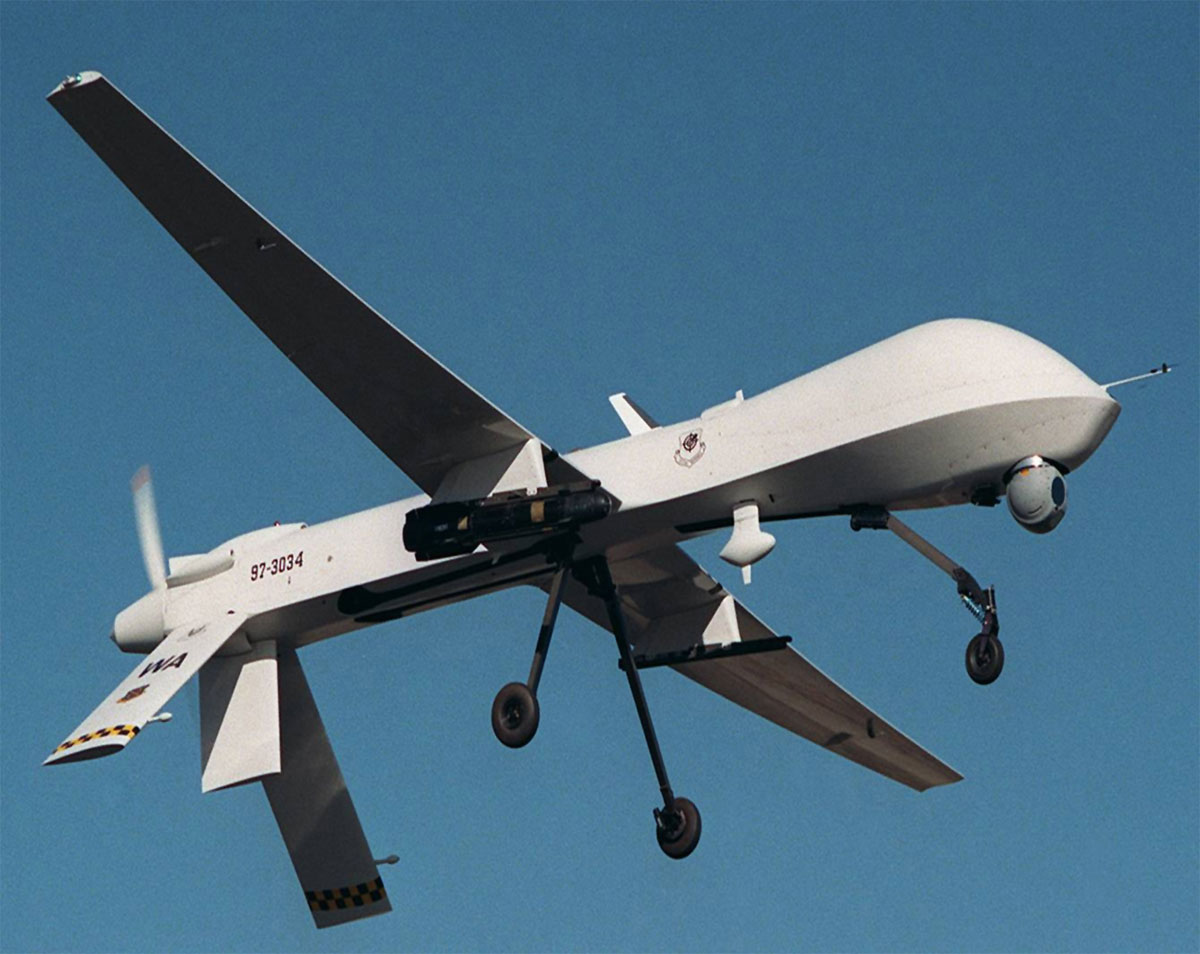
The discussion of drones is not on the agenda as they are yet to operate completely autonomously, although there are signs this may change in the near future.

The UK successfully tested the Taranis, an unmanned intercontinental aircraft in Australia this year and America's Defense Advanced Research Projects Agency (Darpa) has made advances with the Crusher, an unmanned ground combat vehicle, since 2006.

The MoD has claimed in the past that it currently has no intention of developing systems that operate without human intervention.

On 21 November 2012 the United States Defense Department issued a directive that, "requires a human being to be 'in-the-loop' when decisions are made about using lethal force," according to Human Rights Watch.

The meeting of experts will be chaired by French ambassador Jean-Hugues Simon-Michel from 13 to 16 May 2014. More


Tuesday, April 1, 2014

Noam Chomsky: U.S. Politics Are Now 'Pure Savagery'.

Published on Jan 17, 2014 • Noam Chomsky: U.S. Politics Are Now 'Pure Savagery'.


Author and activist Noam Chomsky said that the congressional controversy over extending unemployment benefits is evidence that American politics has descended into madness. "The refusal to provide very minimal living standards to people who are caught in this monstrosity -- that's just pure savagery," Chomsky said during an interview with HuffPost Live. "There's no other word for it."

Chomsky is a leading American intellectual known at first for his academic work in the field of linguistics. He has since

become an influential activist and progressive political thinker. HuffPost will be publishing excerpts from its inteiview with Chomsky over the next week.

Republicans pursued food-stamp cuts last year, and blocked a deal to extend unemployment benefits during budget negotiations in December. On Tuesday, a handful of Republicans joined Senate Democrats to advance a bill reinstating the benefits for three months, but the agreement faces an uphill battle in the GOP-controlled House. There are currently about three people seeking a job for every job opening in the United States.

Chomsky said that recent economic doldrums, however, are not isolated phenomena, but rather the product of decades of economic policies pursued by American elites. Some of the major changes included the signing of World Trade Organization treaties, the North American Free Trade Agreement and the deregulation of major industries, he said. "The general and very severe problem of the economy that's staring us in the face ... that has nothing to do with bad apples in Congress," Chomsky said. "These are deep structural problems having to do with, in effect, the neoliberal assault on the population, not just of the United States but of the world, that's taken place in the past generation. More


Friday, March 28, 2014

UN backs resolution presented by Pakistan on drones

GENEVA: The United Nations called on all states on Friday to ensure that the use of armed drones complies with international law, backing a proposal from Pakistan seen as taking aim at the United States.

A resolution presented by Pakistan on behalf of co-sponsors including Yemen and Switzerland did not single out any state. The United States is the biggest drone user in conflicts including those in Pakistan, Yemen, Afghanistan and Somalia.

“The purpose of this resolution is not to shame or name anyone, as we are against this approach,” Pakistan's ambassador Zamir Akram told the UN Human Rights Council.

“It is about supporting a principle.”

The United States prizes drones for their accuracy against al Qaeda and Taliban militants. Pakistan says they kill civilians and infringe its sovereignty.

“The United States is committed to ensuring that our actions, including those involving remotely piloted aircraft, are undertaken in accordance with all applicable domestic and international laws and with the greatest possible transparency, consistent with our national security needs,” Paula Schriefer, US deputy assistant secretary of state, told the talks.

The resolution was adopted by a vote of 27 states in favour to six against, with 14 abstentions at the 47-member Geneva forum. The United States, Britain and France voted against.

The Council “urges all states to ensure that any measures employed to counter terrorism, including the use of remotely piloted aircraft or armed drones, comply with their obligations under international law ... in particular the principles of precaution, distinction and proportionality.”

The text voiced concern at civilian casualties resulting from the use of remotely-piloted aircraft or armed drones, as highlighted by the UN special investigator on counter-terrorism Ben Emmerson in a recent report.

It called on UN human rights boss Navi Pillay to organise expert discussions on armed drones and report back in September.

The United States, Britain and France said it was not appropriate for the forum to put weapons systems on its agenda.

The Obama administration preferred to discuss drones under an initiative of Switzerland and the International Committee of the Red Cross, which it hoped would provide a “non-politicised forum” where military experts can discuss law of war issues, Schriefer said.

Akram, speaking before the vote, said opposition “can only lead to the conclusion that these states are guilty of violating applicable international law and demonstrate that they are afraid of being exposed in the expert panel.”

A separate UN human rights watchdog called on the Obama administration on Thursday to limit its use of drones and to curb US surveillance activities.


Sunday, March 23, 2014

The Obsolescence of Ideology: Debating Syria and Ukraine by Richard Falk

I have been struck by the unhelpfulness of ideology to my own efforts to think through the complexities of recommended or preferred policy in relation to Syria, and more recently, the Ukraine. There is no obvious posture to be struck by referencing a ‘left’ or ‘right’ identity. A convincing policy proposal depends on sensitivity to context and the particulars of the conflict.

Richard Falk

To insist that the left/right distinction obscures more than it reveals is not the end of the story. To contend that ideology is unhelpful as a guide for action is not the same as saying that it is irrelevant to the public debate. In the American context, to be on the left generally implies an anti-interventionist stance, while being on the right is usually associated with being pro-interventionist. Yet, these first approximations can be misleading, even ideologically. Liberals, who are deliberately and consigned to the left by the mainstream media, often favor intervention if the rationale for military force is primarily humanitarian.

Likewise, the neocon right is often opposed to intervention if it is not persuasively justified on the basis of strategic interests, which could include promoting ideological affinities. The neocon leitmotif is global leadership via military strength, force projection, friends and enemies, and the assertion and enforcement of red lines. When Obama failed to bomb Syria in 2013 after earlier declaring that the use of chemical weapons by the Assad regime was for him a red line this supposedly undermined the credibility of American power. My point is that ideology remains a helpful predictor of how people line up with respect to controversial uses of force, although relying on ideology is a lazy way to think if the purpose is to decide on the best course of action to take, which requires a sensitivity to the concrete realities of a particular situation. Such an analysis depends on context, and may include acknowledging the difficulties of intervention, and the moral unacceptability of nonintervention.

On a high level of abstraction, it is true that the hard right tends to find a justification for military action as the preferred solvent for any challenge to American foreign policy and the hard left is equally disposed to dismiss all calls for humanitarian intervention as sly anti-imperialist maneuvers, recalling Noam Chomsky’s dismissal of the Kosovo War in 1999 as ‘miltary humanism.’ In this sense it seems easier to proceed by dogma than to engage seriously with the existential complexities and uncertainties of the specifics pertaining to a conflict setting, and thus be willing to conclude either that ‘the situation is horrible, and something must be done’ and yet still believe that ‘the situation is horrible, but military intervention will only make it worse.’ This is the kind of conundrum that has perplexed and troubled me ever since the Syrian uprising in 2011 turned violent, unleashing the criminal fury of the Damascus regime, and attracting a variety of predatory outside forces on both sides. Often those on one side or the other of the debate fail to recognize the consequences of either a failed intervention or a refusal to intervene.

There are at least two problems that bedevil interpretation in these setting. To assess particularities of context requires a genuine familiarity with the specifics and changing dynamics of a conflict if persuasive policy recommendations are to be grounded in relevant knowledge rather than on knee jerk reactions. And secondly, no matter how expert, core uncertainties will persist, and the difficulties of making choices that involve killing and dying of others is a huge weight of responsibility if the policy risks and alternatives are carefully weighed.

I would add a third caveat—in the last fifty years military intervention has rarely worked out well for the target society or for the intervener; that is, historical experience would seem to call for what lawyers call ‘a presumption against intervention.’ This presumption is not intended as an absolute prohibition, but it does impose a burden of persuasion on the advocates of intervention. Often, also, the evidence pro and con intervention is doctored and manipulated one way or another to reflect the views of the government or of special interests. This was spectacularly illustrated by the lead up to the U.S. led attack on Iraq in 2003 where governmental efforts to strengthen the public case for intervention produced notorious fabrications. Rwanda in 1994, did present an exceptionally strong humanitarian case supportive of a limited military intervention with operational responsibility entrusted to the United Nations, but the bad experience of the Clinton presidency with the Somalia intervention during the prior year led the United States to oppose effectively a UN effort to prevent, or at least mitigate, a genocidal onslaught.

It would seem against such a background that the best solution in such situations might be procedural, that is, leaving the final policy decision in each instance up to a determination by the UN Security Council. If the Bush Administration had accepted the outcome of the Security Council vote that withheld approval for intervening in Iraq it would have been spared a humiliating strategic defeat that damaged America’s status as world leader. Allowing the Security Council to decide whether or not international force is required and justified also is consistent with the presumption against intervention due to the possibility that any of the five permanent members casting a negative vote counts as a veto.

The Obama approach has not fared much better than that of Bush. It induced members of the Security Council opposed to military intervention to accept the plea of NATO countries in 2011 to engage in a humanitarian operation to save the besieged civilian population of the Libyan city of Benghazi by way of establishing a No Fly Zone. Once the operation got underway, it completely ignored these UN guidelines, and used its air dominance to widen the scope of violence and carry out an unauthorized mission of regime-change. The aftermath in Libya casts further doubt on the overall wisdom of authorizing intervention in such a circumstance of internal strife. As well, the spillover from the refusal of the interveners to adhere to the limited UN mandate has been to undermine trust in such a way as to weaken any prospect for the UN to play a more robust role in resolving the Syrian conflict where the case for interference has become stronger than it ever was in Libya.

Beyond this issue of trust are questions of geopolitical alignment, especially encounters that align the U.S. and NATO on one side and Russia and/or China on the other. As yet, fortunately, there is no second cold war, although the neocons, and some in Europe, are beating the war drums in relation to the Ukraine in such a way as to point in that most unwelcome and totally unjustified direction. Russia’s sensitivity to hostile developments on its borders, previously expressed a few years ago in the 2008 crisis over Georgia, is now more potently evident in relation to the Ukraine and breakaway Crimea, which contains a strategic Russian naval base at Sevastopol that is the only Russian warm water port, as well as home to their Black Sea naval fleet. More


Wednesday, March 19, 2014

Confessions of a Drone Warrior

From the darkness of a box in the Nevada desert, he watched as three men trudged down a dirt road in Afghanistan.

The box was kept cold—precisely sixty-eight degrees—and the only light inside came from the glow of monitors. The air smelled spectrally of stale sweat and cigarette smoke. On his console, the image showed the midwinter landscape of eastern Afghanistan’s Kunar Province—a palette of browns and grays, fields cut to stubble, dark forests climbing the rocky foothills of the Hindu Kush. He zoomed the camera in on the suspected insurgents, each dressed in traditional shalwar kameez, long shirts and baggy pants. He knew nothing else about them: not their names, not their thoughts, not the thousand mundane and profound details of their lives.

He was told that they were carrying rifles on their shoulders, but for all he knew, they were shepherd’s staffs. Still, the directive from somewhere above, a mysterious chain of command that led straight to his headset, was clear: confirmed weapons. He switched from the visible spectrum—the muted grays and browns of “day-TV”—to the sharp contrast of infrared, and the insurgents’ heat signatures stood out ghostly white against the cool black earth. A safety observer loomed behind him to make sure the “weapon release” was by the book. A long verbal checklist, his targeting laser locked on the two men walking in front. A countdown—three…two…one…—then the flat delivery of the phrase “missile off the rail.” Seventy-five hundred miles away, a Hellfire flared to life, detached from its mount, and reached supersonic speed in seconds.

It was quiet in the dark, cold box in the desert, except for the low hum of machines.

He kept the targeting laser trained on the two lead men and stared so intently that each individual pixel stood out, a glowing pointillist dot abstracted from the image it was meant to form. Time became almost ductile, the seconds stretched and slowed in a strange electronic limbo. As he watched the men walk, the one who had fallen behind seemed to hear something and broke into a run to catch up with the other two. Then, bright and silent as a camera flash, the screen lit up with white flame.

Airman First Class Brandon Bryant stared at the scene, unblinking in the white-hot clarity of infrared. He recalls it even now, years later, burned into his memory like a photo negative: “The smoke clears, and there’s pieces of the two guys around the crater. And there’s this guy over here, and he’s missing his right leg above his knee. He’s holding it, and he’s rolling around, and the blood is squirting out of his leg, and it’s hitting the ground, and it’s hot. His blood is hot. But when it hits the ground, it starts to cool off; the pool cools fast. It took him a long time to die. I just watched him. I watched him become the same color as the ground he was lying on.”

That was Brandon Bryant’s first shot. It was early 2007, a few weeks after his twenty-first birthday, and Bryant was a remotely-piloted-aircraft sensor operator—a “sensor” for short—part of a U.S. Air Force squadron that flew Predator drones in the skies above Iraq and Afghanistan. Beginning in 2006, he worked in the windowless metal box of a Ground Control Station (GCS) at Nellis Air Force Base, a vast sprawl of tarmac and maintenance hangars at the edge of Las Vegas.

The airmen kept the control station dark so they could focus on controlling their MQ-1B Predators circling two miles above the Afghan countryside. Bryant sat in a padded cockpit chair. He had a wrestler’s compact build, a smooth-shaved head, and a piercing ice blue gaze frequently offset by a dimpled grin. As a sensor, his job was to work in tandem with the drone’s pilot, who sat in the chair next to him. While the pilot controlled the drone’s flight maneuvers, Bryant acted as the Predator’s eyes, focusing its array of cameras and aiming its targeting laser. When a Hellfire was launched, it was a joint operation: the pilot pulled a trigger, and Bryant was responsible for the missile’s “terminal guidance,” directing the high-explosive warhead by laser to its desired objective. Both men wore regulation green flight suits, an unironic Air Force nod to the continuity of military decorum in the age of drone warfare.

Since its inception, the drone program has been largely hidden, its operational details gathered piecemeal from heavily redacted classified reports or stage-managed media tours by military public-affairs flacks. Bryant is one of very few people with firsthand experience as an operator who has been willing to talk openly, to describe his experience from the inside. While Bryant considers leakers like Chelsea Manning and Edward Snowden heroes willing to sacrifice themselves for their principles, he’s cautious about discussing some of the details to which his top-secret clearance gave him access. Still, he is a curtain drawn back on the program that has killed thousands on our behalf.

Despite President Obama’s avowal earlier this year that he will curtail their use, drone strikes have continued apace in Pakistan, Yemen, and Afghanistan. With enormous potential growth and expenditures, drones will be a center of our policy for the foreseeable future. (By 2025, drones will be an $82 billion business, employing an additional 100,000 workers.) Most Americans—61 percent in the latest Pew survey—support the idea of military drones, a projection of American power that won’t risk American lives. More

======================

Chatham House Conference - Stop Killer Robots


Friday, March 14, 2014

Campaign to stop killer robots: Chatham House conference

Chatham House conference

The first Chatham House conference on autonomous military technologies in London on 24-25 February brought together individuals from different constituencies to contemplate autonomous weapons and the prospect of delegating human control over targeting and attack decisions to machines. The Campaign to Stop Killer Robots was pleased to be able to attend this well-organized and timely conference held under the Chatham House rule, which permits participants to use information received but not to reveal the identity or affiliation of the speaker or participants. The conference was a useful opportunity to discuss our concerns with fully autonomous weapons, provide clarifications, and answer questions about our coalition’s focus and objectives.

Some participants have since publicly provided their views on the conference, including Charles Blanchard on Opinio Juris (4 March) and Paul Scharre on the Lawfare blog (3 March).

Several of the Campaign to Stop Killer Robots representatives who attended the Chatham House conference have provided input for this web post, including on the reflections published by Blanchard and Scharre. The campaign’s principal spokespersons Nobel Peace laureate Jody Williams, roboticist Professor Noel Sharkey, and Human Rights Watch arms director Steve Goose addressed the conference, while campaigners were present from the non-governmental organizations Action on Armed Violence,Amnesty International, Article 36, Human Rights Watch, International Committee for Robot Arms Control, and PAX (formerly IKV Pax Christi).

The perspective of the Campaign to Stop Killer Robots and its call for a ban on fully autonomous weapons were heard throughout the conference, but to ensure that key concerns are not downplayed and in the spirit of furthering common understanding on this emerging issue of international concern, we have the following comments on the reflections by Blanchard and Scharre.

Blanchard, a former US Air Force general counsel, gave a public talk on the topic “Autonomous Technologies: A Force for Good?” at Chatham House together with our campaign spokesperson Jody Williams, who received the 1997 Nobel Peace laureate together with the International Campaign to Ban Landmines (ICBL). He is now a partner at Arnold & Porter LLP, a Washington DC law firm that actively supported the negotiation of the 2006 Disability Rights Treaty as well as efforts to include victim assistance provisions in the 1997 Mine Ban Treaty.

Blanchard considers “deep philosophical viewpoints” in his piece, which looks at some of the “disputes” at the Chatham House conference over the call for a ban on fully autonomous weapons to enshrine the principle that only humans should decide to kill other humans. Blanchard is concerned that “more death” may result from a ban because autonomous weapons might be “more capable than humans” of complying with the laws of war.

While we do not agree with Blanchard’s skeptical position as to the benefits that a ban on fully autonomous weapons could provide, we welcome his acknowledgement of the counter-argument that letting a machine decide whom to kill would violate notions of human dignity. Blanchard’s assessment of the viability of a ban illustrates how the debate has advanced far in recent months to the point that a ban is being seriously contemplated.

Paul Scharre heads the 20YY Warfare Initiative at the Center for a New American Security in Washington DC and previously worked for the US Department of Defense, where he led a working group that drafted the 2012 policy directive 3000.09 on autonomy in weapon systems. His comprehensive presentations at the Chatham House conference were well-received, and his rational, measured and well-written reflections on the conference contain many useful observations.

Yet Scharre’s “key takeaways” oversimplify the “areas of agreement” and make it sound as if participants agreed more often than they actually did. His commentary attempts to reflect the conference speakers’ views and areas of convergence, but the same cannot be done for the audience—comprising approximately 150 participants from government, military, industry, think tanks, academia, civil society, and media.

With respect to the scope of what was discussed at the Chatham House, Scharre’s depiction of the conference being focused only on “anti-materiel” autonomous weapons systems is confusing as the conference addressed all types of autonomous weapons systems, including “anti-personnel.” The conference was also not specifically limited to “lethal” autonomous weapons as opposed to “non-lethal” or “less-than-lethal.” That said, we welcome the comments by Scharre indicating that he is not in favor fully autonomous anti-personnel weapon systems.

There was indeed convergence by the technologists who spoke to the capabilities of current autonomous technologies and the notion that precursors indicate something more dangerous to come.

Throughout the conference there did appear to be “universal agreement that humans should remain in control of decisions over the use of lethal force.” Consensus on this point was, however, qualified by a number of speakers who suggested that systems with no meaningful human control could be legal and have military utility. Such views illustrate why policy-level restraints will not suffice in addressing the challenges posed by fully autonomous weapons and should be supplemented with new law.

Indeed, this debate is happening because many are contemplating a future with no human control. Yet Scharre gave minimal consideration to proliferation concerns—development, production, transfer, stockpiling—in the “objections” section of his reflection. Concerns over an arms race were raised several times in the course of the Chatham House conference, which was sponsored by BAE Systems, manufacturer of the Taranis autonomous aircraft, the prime example of a UK precursor to autonomous weapons technology. As has been learned from experience with nuclear weapons, proliferation concerns cannot be addressed permanently through regulation and existing international humanitarian law.

Scharre claims that “a major factor in whether autonomous weapons are militarily attractive or even necessary may be simply whether other nations develop them,” but he seems to misunderstand the point of stigmatization in the “endgame” section of his reflections. By proposing that that the answer to concerns about “cheating” is an “even playing field” where everyone can have them (and presumably all can be “cheaters”), Scharre dismisses the power of an international, legally binding ban to stigmatize a weapon and ensure respect for the law. A global ban could succeed in stigmatizing autonomous weapons to the extent that no major military power uses them, as has been the case for the Mine Ban Treaty where major powers have not used antipersonnel landmines in years.

Scharre views the commercial sector as driving the “underlying technology behind autonomy” but that ignores that fact that industry is regulated by the state. Governments won’t prevent industry from developing the underlying technology nor–as Blanchard notes–is the campaign seeking to do that because the same technology that will be used in autonomous robotics and AI systems has many non-weapons and non-military purposes. But research and development activities should be banned if they are directed at technology that can only be used for fully autonomous weapons or that is explicitly intended for use in such systems.

Scharre downplays legal concerns in several sections of his reflections. This is in part because the conference panel on international law was dominated by legal advocates of autonomous weapons. Several of the law panelists may have agreed with each other that autonomous weapons are “not illegal weapons prohibited under the laws of armed conflict” but this was not a view shared by all participants at the conference. In particular, serious concern was expressed about the nature of fully autonomous weapons and their likely inability, in making attack decisions, to distinguish noncombatants and judge the proportionality of expected civilian harms to expected military gains. Although no one can know for sure what future technology will look like, the possibility that fully autonomous weapons would be unable to comply with the laws of war cannot be dismissed at this point.

One speaker argued that if fully autonomous weapons could lawfully be used in any circumstance, they could not be considered per se unlawful. This point may be correct legally, but the case can be made that any weapon can be used legally in some carefully crafted scenario. The possibility of such limited use should not be used to legitimize fully autonomous weapons. History has well demonstrated that once a weapon is developed and fielded, it will not only be used in limited, pre-determined ways. The potential for harm is so great as to nullify the argument for legality.

Scharre claims agreement about “lawful limited uses,” citing three examples of his own. We certainly don’t agree.

Accountability is another area where there was less agreement than depicted in Scharre’s reflections. As he states, machines, as currently envisioned, can’t be held responsible under laws of war, and it makes sense that programmers or operators not be held liable for war crimes unless they intended the robot to commit one.

The notion of accountability for operators was touched on during the Chatham House conference, but it was not considered in depth and it is important to note the lingering concerns of some audience members. For example, the “fixes” that Scharre cites from the US Department of Defense directive fall far short. Under the directive, human decision makers are charged with responsibility for ensuring compliance with laws of war when the machines they set in motion are unable to ensure this. However, it is unlikely that commanders will be held liable for war crimes if unintended technical failures can be blamed, while programmers, engineers and manufacturers are unlikely to be held liable if they have acted in good faith.

Scharre’s apparent answer to the issue of accountability is a “completely predictable and reliable system,” but how is that possible? Even with rigorous test and evaluation procedures, autonomy will make it significantly harder to ensure predictability and reliability. In fact, one definition of autonomy is that the system, even when functioning correctly, is not fully predictable (due to its complexity and that of the environment with which it is interacting).

In addition, some question whether operators should be held directly responsible for the consequences of fully autonomous weapons’ actions. Can these operators be treated in the same way as operators of a “normal” weapon when fully autonomous weapons are able to make choices on their own?

Scharre seems to dismiss the Martens Clause as only an ethical issue, but it’s a legal one as well. Although its precise meaning is debated, the clause is a fixture of international humanitarian law that appears in several treaties. It implies that when there is no existing law specifically on point, weapons that “shock the human conscience” can be regarded as unlawful in anticipation of an explicit ban. It also supports adoption of an explicit ban of weapons that violate the “principles of humanity and dictates of public conscience.”

Scharre’s post raises a “practical” objection to fully autonomous weapons that was not considered by the conference: “A weapon that is uncontrollable or vulnerable to hacking is not very valuable to military commanders. In fact, such a weapon could be quite dangerous if it led to systemic fratricide.” This concern about “large-scale,” accidental killing is valid, but the same practical argument applies to civilian casualties and not just military ones.

As Scharre notes, there are many concerns with fully autonomous weapons that exist on several fundamentally different levels. We agree that discussions about where the technology is headed are critical, but finding a permanent solution is even more urgent.

The Chatham House event was the first of several important meetings due to be held on killer robots in2014. The International Committee of the Red Cross (ICRC) will convene its first experts meeting on autonomous weapons systems on 26-28 March. The first Convention on Conventional Weapons (CCW) meeting on lethal autonomous weapons systems will be held at the UN in Geneva on 13-16 May. UN Special Rapporteur Christof Heyns is due to report on lethal autonomous robots and other matters to the Human Rights Council in Geneva during the week of 10 June.

The fact that conferences like the one held by Chatham House are happening shows how the challenge of killer robots has vaulted to the top rank of traditional multilateral arms control and humanitarian disarmament, validating the importance and urgency of the issue and undercutting arguments that fully autonomous weapons are “inevitable” and “nothing to worry about.” The strong and diverse turn-out means it is unlikely to be the last Chatham House conference on this topic.

Immediately after the Chatham House conference, the Campaign to Stop Killer Robots held a strategy meeting that 50 NGO representatives attended. The meeting focused on planning the campaign’s strategy for year ahead at CCW and the Human Rights Council as well as how to initiate national campaigning to influence policy development and secure support for a ban.

For more information see:

Photo: Patricia Lewis, research director for international security at Chatham House (center) introduced the first panel of the Chatham House conference on autonomous military technologies. (c) Campaign to Stop Killer Robots, 24 February 2014


Monday, December 30, 2013

Why Saudi Arabia and the U.S. don’t see eye to eye in the Middle East

Give credit to Vladimir Putin and his New York Times op-ed on Syria for sparking a new tactic for foreign leaders hoping to influence American public opinion. In recent weeks, Saudi Arabian political elites have followed Putin’s lead, using American outlets to express their distaste with the West’s foreign policy, particularly with regard to Syria and Iran.

In comments to the Wall Street Journal, prominent Saudi Prince Turki al-Faisal decried the United States for cutting a preliminary deal with Iran on its nuclear program without giving the Saudis a seat at the table, and for Washington’s unwillingness to oppose Assad in the wake of the atrocities he’s committed. Saudi Arabia’s ambassador to Britain followed with an op-ed in the New York Times entitled “Saudi Arabia Will Go It Alone.” The Saudis are clearly upholding the vow made by intelligence chief Bandar bin Sultan back in October to undergo a “major shift” away from the United States.

In light of the recent actions of the Obama administration, many allies are also frustrated and confused, and even hedging their bets in reaction to the United States’ increasingly unpredictable foreign policy. But of all the disappointed countries, none is more so than Saudi Arabia — and with good reason. That’s because the two countries have shared interests historically — but not core values — and those interests have recently diverged.

First, America’s track record in the Middle East in recent years has sowed distrust. The relationship began to deteriorate with the United States’ initial response to the Arab Spring, where its perceived pro-democratic stance stood at odds with the Saudi ruling elite. After Washington stood behind the elections that installed a Muslim Brotherhood government in Egypt and then spoke out against the Egyptian army’s attempt to remove President Mohammad Morsi, the Saudi royals were left to wonder where Washington would stand if similar unrest broke out on their soil.

Ian Bremmer

Second, while the oil trade has historically aligned U.S.-Saudi interests, the unconventional energy breakthrough in North America is calling this into question. The United States and Canada are utilizing hydraulic fracturing and horizontal drilling techniques, leading to a surge in domestic energy production. That development leaves America significantly less dependent on oil from the Middle East, and contributes to the U.S.’ shifting interests and increasing disengagement in the region. Not only does Saudi Arabia lose influence in Washington — many of the top American executives in the oil industry were their best conduits — but it also puts the Saudis on the wrong end of this long-term trend toward increasing global energy supply.

To say that oil is an integral part of Saudi Arabia’s economy is a gross understatement. Oil still accounts for 45 percent of Saudi GDP, 80 percent of budget revenue, and 90 percent of exports. In the months ahead, new oil supply is expected to outstrip new demand, largely on the back of improvements in output in Iraq and Libya. By the end of the first quarter of 2014, Saudi Arabia will likely have to reduce production to keep prices stable. And the trend toward more supply doesn’t take into account the potential for a comprehensive Iranian nuclear deal that would begin to ease sanctions and allow more Iranian crude to reach global markets.

It is this ongoing nuclear negotiation with Iran that poses the principal threat to an aligned United States and Saudi Arabia. An Iranian deal would undercut Saudi Arabia’s leadership over fellow Gulf States, as other Gulf Cooperation Council (GCC) members like Kuwait and the UAE would welcome resurgent trade with Iran. At the same time, Iran would emerge over the longer term as the chief competitor for influence across the broader region, serving as the nexus of Shi’ite power. The Saudis would find themselves most directly threatened by this Shi’ite resurgence within neighboring Bahrain, a majority Shi’ite state ruled by a Sunni regime that is backstopped by the Saudi royals.

The bottom line: the Saudis are actively competing with Iran for influence throughout the Middle East. That’s why the Saudis have the most at stake from any easing of sanctions on Iran, any normalization of relations with the West, or any nuclear breakthrough that gives Iran the ultimate security bargaining chip. The Saudis have reaped the benefits of an economically weak Iran — and they are not prepared to relinquish that advantage. Ultimately, any deal that exchanges Iranian economic security for delays in Iran’s nuclear program is a fundamental problem for Saudi Arabia — as is any failed deal that allows sanctions to unravel.

For all of these reasons, even though the United States will be buying Saudi oil for years to come and will still sell the Saudis weapons, American policy in the Middle East has now made the United States more hostile to Saudi interests than any other major country outside the region. That’s why the Saudis have been so vocal about the United States’ perceived policy failures.

But to say Obama has messed up the Middle East is a serious overstatement. What he has tried to do is avoid getting too involved in a messed up Middle East. Obama ended the war in Iraq. In Libya, he did everything possible to remain on the sidelines, not engaging until the GCC and Arab League beseeched him to — and even then, only in a role of “leading from behind” the French and the British.

Call the Obama policy “engaging to disengage.” In Syria, Obama did everything possible to stay out despite the damage to his international credibility. When the prospect for a chemical weapons agreement arose, he leapt at the chance to point to a tangible achievement that could justify the U.S. remaining a spectator to the broader civil war. In Iran, a key goal of Obama’s diplomatic engagement will be to avoid the use of military force down the road. It hasn’t always been pretty, but Obama has at least been trying to act in the best interests of the United States — interests that are diverging from Saudi Arabia’s. More