Showing posts with label noam chomsky. Show all posts

Tuesday, August 5, 2014

Noam Chomsky, Why National Security Has Nothing to Do With Security

Think of it as the true end of the beginning. Last week, Theodore "Dutch" Van Kirk, the final member of the 12-man crew of the Enola Gay, the plane (named after its pilot’s supportive mother) that dropped the atomic bomb on Hiroshima, died at age 93.
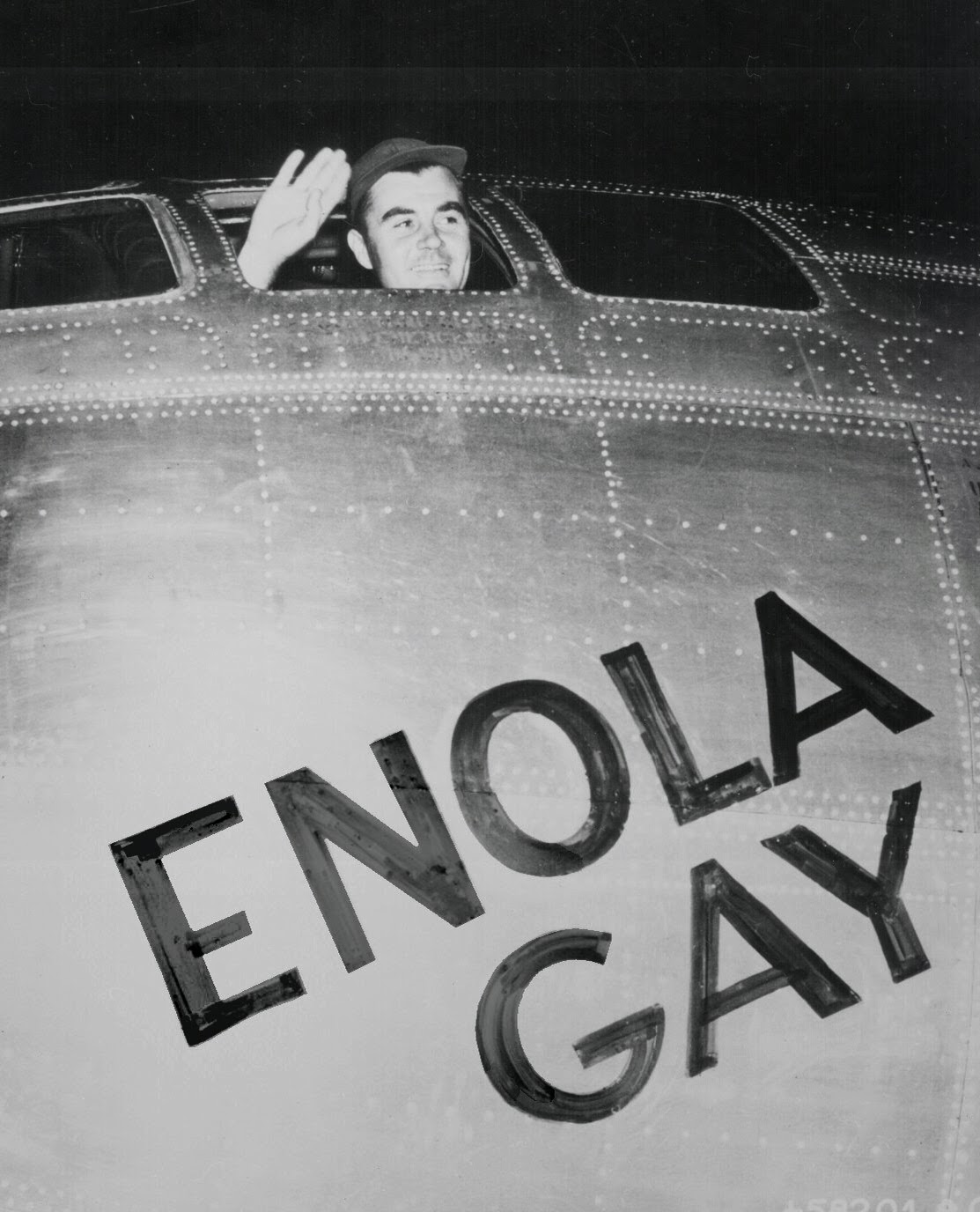
Paul Tibbetts, Jr. in cockpit

When that first A-bomb left its bomb bay at 8:15 on the morning of August 6, 1945, and began its descent toward its target, the Aioli (“Live Together”) Bridge, it was inscribed with a series of American messages, some obscene, including “Greetings to the Emperor from the men of the Indianapolis.” (That ship had delivered to the Pacific island of Tinian parts of the very bomb that would turn Hiroshima into an inferno of smoke and fire -- “that awful cloud,” Paul Tibbetts, Jr., theEnola Gay's pilot, would call it -- and afterward was torpedoed by a Japanese submarine with the loss of hundreds of sailors.)

The bomb, dubbed Little Boy, that had gestated in the belly of the Enola Gay represented not only the near endpoint of a bitter global war of almost unimaginable destruction, but the birthing of something new. The way for its use had been paved by an evolution in warfare: the increasing targeting of civilian populations from the air (something that can be seen again today in the carnage of Gaza). The history of that grim development extends from German airship bombings of London (1915) by way of Guernica (1937), Shanghai (1937), and Coventry (1940), to the fire bombings of Dresden (1945) and Tokyo (1945) in the last year of World War II. It even had an evolutionary history in the human imagination, where for decades writers (among others) had dreamed of the unparalleled release of previously unknown forms of energy for military purposes.

On August 7, 1945, a previous age was ending and a new one was dawning. In the nuclear era, city-busting weapons would be a dime a dozen and would spread from the superpowers to many other countries, including Great Britain, China, India, Pakistan, North Korea, and Israel. Targeted by the planet’s major nuclear arsenals would be the civilian inhabitants not just of single cities but of scores and scores of cities, even of the planet itself. On August 6th, 70 years ago, the possibility of the apocalypse passed out of the hands of God or the gods and into human hands, which meant a new kind of history had begun whose endpoint is unknowable, though we do know that even a “modest” exchange of nuclear weapons between India and Pakistan would not only devastate South Asia, but thanks to the phenomenon of nuclear winter also cause widespread famine on a planetary scale.

In other words, 70 years later, the apocalypse is us. Yet in the United States, the only nuclear bomb you're likely to read about is Iran’s (even though that country possesses no such weapon). For a serious discussion of the U.S. nuclear arsenal, those more than 4,800 increasingly ill-kept weapons that could incinerate several Earth-sized planets, you need to look not to the country’s major newspapers or news programs but to comic John Oliver -- or TomDispatch regular Noam Chomsky. Tom

How Many Minutes to Midnight?
Hiroshima Day 2014

If some extraterrestrial species were compiling a history of Homo sapiens, they might well break their calendar into two eras: BNW (before nuclear weapons) and NWE (the nuclear weapons era). The latter era, of course, opened on August 6, 1945, the first day of the countdown to what may be the inglorious end of this strange species, which attained the intelligence to discover the effective means to destroy itself, but -- so the evidence suggests -- not the moral and intellectual capacity to control its worst instincts.

Day one of the NWE was marked by the “success” of Little Boy, a simple atomic bomb. On day four, Nagasaki experienced the technological triumph of Fat Man, a more sophisticated design. Five days later came what the official Air Force history calls the “grand finale,” a 1,000-plane raid -- no mean logistical achievement -- attacking Japan’s cities and killing many thousands of people, with leaflets falling among the bombs reading “Japan has surrendered.” Truman announced that surrender before the last B-29 returned to its base.

Those were the auspicious opening days of the NWE. As we now enter its 70th year, we should be contemplating with wonder that we have survived. We can only guess how many years remain.

Some reflections on these grim prospects were offered by General Lee Butler, former head of the U.S. Strategic Command (STRATCOM), which controls nuclear weapons and strategy. Twenty years ago, he wrote that we had so far survived the NWE “by some combination of skill, luck, and divine intervention, and I suspect the latter in greatest proportion.”

Reflecting on his long career in developing nuclear weapons strategies and organizing the forces to implement them efficiently, he described himself ruefully as having been “among the most avid of these keepers of the faith in nuclear weapons.” But, he continued, he had come to realize that it was now his “burden to declare with all of the conviction I can muster that in my judgment they served us extremely ill.” And he asked, “By what authority do succeeding generations of leaders in the nuclear-weapons states usurp the power to dictate the odds of continued life on our planet? Most urgently, why does such breathtaking audacity persist at a moment when we should stand trembling in the face of our folly and united in our commitment to abolish its most deadly manifestations?”

He termed the U.S. strategic plan of 1960 that called for an automated all-out strike on the Communist world “the single most absurd and irresponsible document I have ever reviewed in my life.” Its Soviet counterpart was probably even more insane. But it is important to bear in mind that there are competitors, not least among them the easy acceptance of extraordinary threats to survival.

Survival in the Early Cold War Years

According to received doctrine in scholarship and general intellectual discourse, the prime goal of state policy is “national security.” There is ample evidence, however, that the doctrine of national security does not encompass the security of the population. The record reveals that, for instance, the threat of instant destruction by nuclear weapons has not ranked high among the concerns of planners. That much was demonstrated early on, and remains true to the present moment.

In the early days of the NWE, the U.S. was overwhelmingly powerful and enjoyed remarkable security: it controlled the hemisphere, the Atlantic and Pacific oceans, and the opposite sides of those oceans as well. Long before World War II, it had already become by far the richest country in the world, with incomparable advantages. Its economy boomed during the war, while other industrial societies were devastated or severely weakened. By the opening of the new era, the U.S. possessed about half of total world wealth and an even greater percentage of its manufacturing capacity.

There was, however, a potential threat: intercontinental ballistic missiles with nuclear warheads. That threat was discussed in the standard scholarly study of nuclear policies, carried out with access to high-level sources -- Danger and Survival: Choices About the Bomb in the First Fifty Years by McGeorge Bundy, national security adviser during the Kennedy and Johnson presidencies.

Bundy wrote that “the timely development of ballistic missiles during the Eisenhower administration is one of the best achievements of those eight years. Yet it is well to begin with a recognition that both the United States and the Soviet Union might be in much less nuclear danger today if [those] missiles had never been developed.” He then added an instructive comment: “I am aware of no serious contemporary proposal, in or out of either government, that ballistic missiles should somehow be banned by agreement.” In short, there was apparently no thought of trying to prevent the sole serious threat to the U.S., the threat of utter destruction in a nuclear war with the Soviet Union.

Could that threat have been taken off the table? We cannot, of course, be sure, but it was hardly inconceivable. The Russians, far behind in industrial development and technological sophistication, were in a far more threatening environment. Hence, they were significantly more vulnerable to such weapons systems than the U.S. There might have been opportunities to explore these possibilities, but in the extraordinary hysteria of the day they could hardly have even been perceived. And that hysteria was indeed extraordinary. An examination of the rhetoric of central official documents of that moment like National Security Council Paper NSC-68 remains quite shocking, even discounting Secretary of State Dean Acheson’s injunction that it is necessary to be “clearer than truth.” Read More


Saturday, July 19, 2014

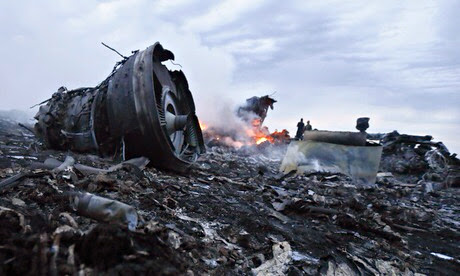
Sifting through the wreckage of MH17, searching for sense amid the horror

Any journalist should hesitate before saying this, but news can be bad for you. You don’t have to agree with the analyst who reckons “news is to the mind what sugar is to the body” to see that reading of horror and foreboding hour by hour, day after day, can sap the soul.

This week ended with a double dose, administered within the space of a few hours: Israel’s ground incursion into Gaza and, more shocking because entirely unexpected, the downing of Malaysia Airlines flight MH17 over Ukraine, killing all 298 on board.

So in Gaza we look at the wildly lopsided death tolls – nearly 300 Palestinians and two Israelis killed these past nine days.

The different responses these events stir in those of us who are distant, and the strategies we devise to cope with them, say much about our behaviour as consumers of news. But they also go some way to determining our reaction as citizens, as constituent members of the amorphous body we call public, or even world, opinion.

As I write, 18 of the 20 most-read articles on the Guardian website are about MH17. The entry into Gaza by Israeli forces stands at number 21. It’s not hard to fathom why the Malaysian jet strikes the louder chord. As the preacher might put it, “There but for the grace of God go I.” Stated baldly, most of us will never live in Gaza, but we know it could have been us boarding that plane in Amsterdam.

Which is why there is a morbid fascination with tales of the passenger who changed flights at the last minute, thereby cheating death, or with the crew member who made the opposite move, hastily switching to MH17 at the final moment, taking a decision that would have seemed so trivial at the time but which cost him his life. When we read about the debris – the holiday guidebooks strewn over the Ukrainian countryside, the man found next to an iPhone, the boy with his seatbelt still on – our imaginations put us on that flight. Of course we have sympathy for the victims and their families. But our fear is for ourselves.

It’s quite true that if the US truly decided that Israel’s 47-year occupation of Palestinian territory was no longer acceptable, that would bring change.

The reports from Gaza stir a different feeling. When we read the Guardian’s Peter Beaumont describe the sights he saw driving around the strip on Friday morningthree Palestinian siblings killed by an Israeli artillery shell that crashed into their bedroom, a father putting the remains of his two-year-old son into a plastic shopping bag – we are shaken by a different kind of horror. It is compassion for another human being, someone in a situation utterly different to ours. We don’t worry that this might happen to us, as we now might when we contemplate an international flight over a war zone. Our reaction is directed not inward, but outward. More

There is an interesting article by Chris Hedges entitled It's NOT going to be OK on the current economic disparity which, he believes could lead to a drastic decline in democracy as states respond to social protests. The question I ask is what can be done to slow or erradicate this process? Editor


Monday, May 5, 2014

Noam Chomsky: The Anthropocene Period and its Challenges


(2014) "Noam Chomsky": The Anthropocene Period and its Challenges

Uploaded on 29 Apr 2014©2014 Leigha Cohen Video Production http://www.leighacohenvideo.com/

For Noam Chomsky the edge is literal and deadly as he looks into the present and predicted future consequences of how humans in industrial society "Anthropocene Period" are impacting our environment and ecosystems which is increasingly having more extensive and rapid effects to our world. We as always have a choice, as a commons to let this continue or we can we can be the forces of change.

Noam Chomsky who was on of several speakers who spoke at the 10th. Annual Pen World of Voices Festival held April 28, 2014 http://worldvoices.pen.org/event/2014/03/11/opening-night-edge.
Filmed in The Great Hall, The Cooper Union 7 East 7th Street, New York, NY 10003 on April 28, 2014 at the 2014 PEN World Voices Festival. Some of the globe's most prominent thinkers each, in turn, brought their enthusiasm for societal improvement to the stage for a short oration http://worldvoices.pen.org/event/2014/03/11/opening-night-edge

Unless otherwise indicated, all materials on in this video are copyrighted to Leigha Cohen Video, All rights reserved. No part of this video may be used for any purpose other than educational use and any monetary gain from this video is prohibited without prior permission from me. Therefore, reproduction, modification, storage in a retrieval system is prohibited. Standard linking of this video is allowed and encouraged.


Monday, April 21, 2014

DARPA producing sea-floor pods that can release attack drones on command

The Pentagon’s research arm, DARPA, is developing robot pods that can sit at the bottom of the ocean for long stretches of time, waiting to release airborne and water-based drones to the surface upon an attack command.

The Defense Advanced Research Projects Agency (DARPA) recently called for bids to complete the final two phases of its Upward Falling Payloads (UFP) program. The UFP operation is an effort to position unmanned systems around far-flung regions of the sea floor. The housing pods would be left in place for years in anticipation of the US Navy’s need for non-lethal assistance.

The UFPs would come equipped with electronic and low-power laser attack capabilities, surveillance sensors, and airborne and aquatic drones that would have the ability to act as decoys or offer intelligence and targeting data, Ars Technica reported.

DARPA recently solicited proposals for the UFP. It wrote, “To succeed, the UFP program must be able to demonstrate a system that can: (angel) survive for years under extreme pressure, (beer) reliably be triggered from standoff commands, and (coffee) rapidly rise through the water column and deploy a non-lethal payload.”

Autonomous, non-lethal systems are the priority for DARPA, given the remoteness of the UFPs’ stationing on the ocean floor. Recovery in the deep ocean would be difficult, and the pods with weaponry or hazardous materials could cause harm to ships upon expiration.

The UFP program’s first phase, launched in 2013, focused on designs for the robot pods and the capsules that will live inside, as well as communication logistics for UFPs to communicate with other modules. The next phase aims to develop prototype testing and demonstrations at sea in the next couple of years. The third and final stage will include “full depth” testing of various scattered modules working as one system by spring 2017.

Much of the UFP testing will likely occur in the Western Pacific, given the United States’ ongoing “pivot” to the region – not coincidentally near China’s realm. Other tests will occur near US shores to reduce costs.

DARPA is seeking a 59 percent increase for the Upward Falling Payloads budget, from $11.9 million to $19 million, it was reported in March.

In addition, DARPA has asked for a boost to its budget for underwater drone fleets. The agency has asked for its current spending to double, from $14.9 million to $29.9 million, for its Hydra program. Hydra was conceived to be a large, mothership-like craft capable of moving through the water and deploying a number of smaller surveillance drones.

The research agency also announced recently that it is launching a program to unite existing and future drones into hives, where individual autonomous aircraft will share data and operate together against targets on a battlefield under the oversight of human operators. More


Tuesday, April 1, 2014

Noam Chomsky: U.S. Politics Are Now 'Pure Savagery'.

Published on Jan 17, 2014 • Noam Chomsky: U.S. Politics Are Now 'Pure Savagery'.


Author and activist Noam Chomsky said that the congressional controversy over extending unemployment benefits is evidence that American politics has descended into madness. "The refusal to provide very minimal living standards to people who are caught in this monstrosity -- that's just pure savagery," Chomsky said during an interview with HuffPost Live. "There's no other word for it."

Chomsky is a leading American intellectual known at first for his academic work in the field of linguistics. He has since

become an influential activist and progressive political thinker. HuffPost will be publishing excerpts from its inteiview with Chomsky over the next week.

Republicans pursued food-stamp cuts last year, and blocked a deal to extend unemployment benefits during budget negotiations in December. On Tuesday, a handful of Republicans joined Senate Democrats to advance a bill reinstating the benefits for three months, but the agreement faces an uphill battle in the GOP-controlled House. There are currently about three people seeking a job for every job opening in the United States.

Chomsky said that recent economic doldrums, however, are not isolated phenomena, but rather the product of decades of economic policies pursued by American elites. Some of the major changes included the signing of World Trade Organization treaties, the North American Free Trade Agreement and the deregulation of major industries, he said. "The general and very severe problem of the economy that's staring us in the face ... that has nothing to do with bad apples in Congress," Chomsky said. "These are deep structural problems having to do with, in effect, the neoliberal assault on the population, not just of the United States but of the world, that's taken place in the past generation. More


Thursday, March 28, 2013

Noam Chomsky: If Nuclear War Doesn't Get Us, Climate Change Will

In the twenty-first century, humanity will likely burn out in a nuclear holocaust or fade away amid the gradually mounting effects of climate change. That was Noam Chomsky's prediction during a question-and-answer session in 2009 that still resonates today.

By moving forward with a missile defense policy that upsets the balance of nuclear deterrence with Russia, "we're consciously increasing the threat of nuclear war," Chomsky said. As for the effects of climate change, "nobody knows the exact details, but everybody knows that the longer you wait, the worse it's going to be."

More


Wednesday, September 5, 2012

The US And Israel, Not Iran, Threaten Peace

It is not easy to escape from one’s skin, to see the world differently from the way it is presented to us day after day. But it is useful to try. Let’s take a few examples.

The war drums are beating ever more loudly over Iran. Imagine the situation to be reversed.

Iran is carrying out a murderous and destructive low-level war against Israel with great-power participation. Its leaders announce that negotiations are going nowhere. Israel refuses to sign the Non-Proliferation Treaty and allow inspections, as Iran has done. Israel continues to defy the overwhelming international call for a nuclear-weapons-free zone in the region. Throughout, Iran enjoys the support of its superpower patron.

Iranian leaders are therefore announcing their intention to bomb Israel, and prominent Iranian military analysts report that the attack may happen before the U.S. elections.

Iran can use its powerful air force and new submarines sent by Germany, armed with nuclear missiles and stationed off the coast of Israel. Whatever the timetable, Iran is counting on its superpower backer to join if not lead the assault. U.S. defense secretary Leon Panetta says that while we do not favor such an attack, as a sovereign country Iran will act in its best interests.

All unimaginable, of course, though it is actually happening, with the cast of characters reversed. True, analogies are never exact, and this one is unfair – to Iran.

Like its patron, Israel resorts to violence at will. It persists in illegal settlement in occupied territory, some annexed, all in brazen defiance of international law and the U.N. Security Council. It has repeatedly carried out brutal attacks against Lebanon and the imprisoned people of Gaza, killing tens of thousands without credible pretext.

Thirty years ago Israel destroyed an Iraqi nuclear reactor, an act that has recently been praised, avoiding the strong evidence, even from U.S. intelligence, that the bombing did not end Saddam Hussein’s nuclear weapons program but rather initiated it. Bombing of Iran might have the same effect.

Iran too has carried out aggression – but during the past several hundred years, only under the U.S.-backed regime of the shah, when it conquered Arab islands in the Persian Gulf.

Iran engaged in nuclear development programs under the shah, with the strong support of official Washington. The Iranian government is brutal and repressive, as are Washington’s allies in the region. The most important ally, Saudi Arabia, is the most extreme Islamic fundamentalist regime, and spends enormous funds spreading its radical Wahhabist doctrines elsewhere. The gulf dictatorships, also favored U.S. allies, have harshly repressed any popular effort to join the Arab Spring.

The Nonaligned Movement – the governments of most of the world’s population – is now meeting in Teheran. The group has vigorously endorsed Iran’s right to enrich uranium, and some members – India, for example – adhere to the harsh U.S. sanctions program only partially and reluctantly. More