Showing posts with label terrorism. Show all posts

Monday, April 20, 2015

Saudi Arabia is 'biggest funder of terrorists says Hillary

Saudi Arabia is the single biggest contributor to the funding of Islamic extremism and is unwilling to cut off the money supply, according to a leaked note from Hillary Clinton.

The US Secretary of State says in a secret memorandum that donors in the kingdom still "constitute the most significant source of funding to Sunni terrorist groups worldwide" and that "it has been an ongoing challenge to persuade Saudi officials to treat terrorist financing emanating from Saudi Arabia as a strategic priority".

In a separate diplomatic cable published by WikiLeaks last night, the militant group which carried out the Mumbai bombings in 2008, Lashkar-e-Toiba, is reported to have secured money in Saudi Arabia via one of its charity offshoots which raises money for schools.

Saudi Arabia is accused, along with Qatar, Kuwait and the United Arab Emirates, of failing to prevent some of its richest citizens financing the insurgency against Nato troops in Afghanistan. Fund-raisers from the Taliban regularly travel to UAE to take advantage of its weak borders and financial regulation to launder money.

However, it is Saudi Arabia that receives the harshest assessment. The country from which Osama bin Laden and most of the 9/11 terrorists originated, according to Mrs Clinton, "a critical financial support base for al-Qa'ida, the Taliban, Lashkar-e-Toiba and other terrorist groups, including Hamas, which probably raise millions of dollars annually from Saudi sources, often during the Haj and Ramadan".

These pilgrimages, especially the Haj, are described as a "big problem" in another cable dated 29 May 2009. Detailing a briefing from the Saudi interior ministry to Richard Holbrooke, the US envoy to Afghanistan and Pakistan, it notes: "The Haj is still a major security loophole for the Saudis, since pilgrims often travel with large amounts of cash and the Saudis cannot refuse them entry into Saudi Arabia."

It also quotes one of the officials admitting that the Haj is "a vacuum in our security". The huge annual influx of Muslims from around the world offers a prime opportunity for militants and their donors to enter the kingdom to exchange funds, launder money through front companies and accept money from government-approved charities.

The memo underlines that the US supports the work of Islamic charities, but is frustrated that they are so easily exploited to fund terrorism.

"In 2002, the Saudi government promised to set up a charities committee that would address this issue, but has yet to do so," Mrs Clinton's cable reads, before seeming to admit with disappointment that merely "obtaining Saudi acknowledgement of the scope of this problem and a commitment to take decisive action" has proved hard. More


Wednesday, January 14, 2015

Pakistani Taliban: The fault in their narrative

On December 16, 2014, Pakistani Taliban massacred over 132 children when they attacked a high school in Peshawar.

Taliban in the spring of 2013

They rationalized this attack as a reaction to the violence perpetrated against them (whether by the Pakistani military or US drones). This narrative attempts to shift blame for the violence away from the Taliban, creating an environment where the population becomes sympathetic to their rationales, even while disagreeing with their tactics. Therefore, it is increasingly important to challenge the Taliban narrative.

First, simply claiming to be fighting in reaction to military operations, does not make it true. Taliban in Pakistan were targeting civilians long before the start of any military campaigns. Lethal force was employed against them because the militants had started violence against the Pakistan state, rather than vice versa.

Second, while civilians are in fact being harmed by both the Pakistani military and the US drones, it is not clear if these victims are necessarily joining the Taliban. In fact, there is considerable evidence of child recruitment and forcible recruitment within the Taliban organizations.

Third, in the context of Afghanistan, in his study Jason Lyall found that while insurgents do increase their attacks after the use of force by the counter-insurgency, civilian casualties play an insignificant role in motivating these attacks. To put it simply, terrorist do not care about civilian casualties. By definition, terrorism is a tactic that deliberately targets civilians. Militants increase attacks because their own survival is threatened, and violence is a way of bolstering their bargaining leverage. The choice of targeting a school does show desperation on their part. To quote a Pakistani general, “The militants know they won’t be able to strike at the heart of the military, they don’t have the capacity. So they are going for soft targets.”

The use of lethal force against terrorist groups is a hard sell in today’s political climate, as experts often argue that it exacerbates the problem of terrorism. However, if the use of weapons is to be reduced in the “war against terrorism,” then it is important to challenge the terrorists’ narrative and condemn their actions in an unapologetic fashion. This will shrink the sympathetic space that makes it easier for these groups to operate, making their demise more likely. More


Saturday, July 19, 2014

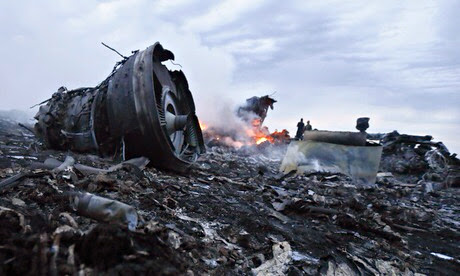
Sifting through the wreckage of MH17, searching for sense amid the horror

Any journalist should hesitate before saying this, but news can be bad for you. You don’t have to agree with the analyst who reckons “news is to the mind what sugar is to the body” to see that reading of horror and foreboding hour by hour, day after day, can sap the soul.

This week ended with a double dose, administered within the space of a few hours: Israel’s ground incursion into Gaza and, more shocking because entirely unexpected, the downing of Malaysia Airlines flight MH17 over Ukraine, killing all 298 on board.

So in Gaza we look at the wildly lopsided death tolls – nearly 300 Palestinians and two Israelis killed these past nine days.

The different responses these events stir in those of us who are distant, and the strategies we devise to cope with them, say much about our behaviour as consumers of news. But they also go some way to determining our reaction as citizens, as constituent members of the amorphous body we call public, or even world, opinion.

As I write, 18 of the 20 most-read articles on the Guardian website are about MH17. The entry into Gaza by Israeli forces stands at number 21. It’s not hard to fathom why the Malaysian jet strikes the louder chord. As the preacher might put it, “There but for the grace of God go I.” Stated baldly, most of us will never live in Gaza, but we know it could have been us boarding that plane in Amsterdam.

Which is why there is a morbid fascination with tales of the passenger who changed flights at the last minute, thereby cheating death, or with the crew member who made the opposite move, hastily switching to MH17 at the final moment, taking a decision that would have seemed so trivial at the time but which cost him his life. When we read about the debris – the holiday guidebooks strewn over the Ukrainian countryside, the man found next to an iPhone, the boy with his seatbelt still on – our imaginations put us on that flight. Of course we have sympathy for the victims and their families. But our fear is for ourselves.

It’s quite true that if the US truly decided that Israel’s 47-year occupation of Palestinian territory was no longer acceptable, that would bring change.

The reports from Gaza stir a different feeling. When we read the Guardian’s Peter Beaumont describe the sights he saw driving around the strip on Friday morningthree Palestinian siblings killed by an Israeli artillery shell that crashed into their bedroom, a father putting the remains of his two-year-old son into a plastic shopping bag – we are shaken by a different kind of horror. It is compassion for another human being, someone in a situation utterly different to ours. We don’t worry that this might happen to us, as we now might when we contemplate an international flight over a war zone. Our reaction is directed not inward, but outward. More

There is an interesting article by Chris Hedges entitled It's NOT going to be OK on the current economic disparity which, he believes could lead to a drastic decline in democracy as states respond to social protests. The question I ask is what can be done to slow or erradicate this process? Editor


Tuesday, June 17, 2014

Secret state: Trevor Paglen documents the hidden world of governmental surveillance, from drone bases to "black sites"

Secret prisons, drone bases, surveillance stations, offices where extraordinary rendition is planned: Trevor Paglen takes pictures of the places that the American and British governments don’t want you to know even exist

As anyone who has worked there knows, Kabul is a tough place, redeemed by the charm of the people and the abundance of cheap taxis. But Trevor Paglen had trouble finding a taxi driver willing and able to take him where he wanted to go: north-east out of the city along an old back road reputed to be so dangerous – even by Afghan standards – that it had seen no regular traffic for more than 30 years.

Finally he succeeded in digging out an old man who had been driving a cab since before the Soviet invasion. "We started driving and we left the city behind and we're out in the sticks," he recalls, "and we end up in a traffic jam – not cars but goats. And we wait for the goats to go by and we see the shepherd, this very old man, traditional Afghan clothes, big beard, exactly what you'd picture in your head. But he's wearing a baseball hat.

"The shepherd finally turns to look at us in the car – and on that baseball cap are the letters KBR. It stands for Kellogg Brown and Root – a company that was a subsidiary of Halliburton, which Dick Cheney was on the board of. The local goatherd is wearing a Dick Cheney baseball cap!" It was the final clue he needed that this particular bad road was the right road. There in the distance, behind a high cream wall and coiled razor wire, was what Paglen was looking for: the nondescript structures of what he says he is "99.999 per cent sure" is the place they call the Salt Pit: a never-before-identified-or-photographed secret CIA prison. See photo above.

Trevor Paglen is an artist of a very particular kind. His principal tool is the camera, and most of his works are photographs, but the reason they are considered to be art – the reason, for example, that this bland photo, three feet wide by two feet high, showing the outer wall and the interior roof outline of the Salt Pit, with a dun-coloured Afghan hill behind it, sells for $20,000 – is because of the arduous, painstaking, sometimes dangerous path that culminated in pressing the shutter; and because it reveals something that the most powerful state in history has done everything in its power to keep secret.

Since he was a postgraduate geography student at UCLA 10 years ago, Paglen has dedicated himself to a very 21st-century challenge: seeing and recording what our political masters do everything in their power to render secret and invisible.

Above our heads more than 200 secret American surveillance satellites constantly orbit the Earth: with the help of fanatical amateur astronomers who track their courses, Paglen has photographed them. A secret air force base deep in the desert outside Las Vegas is the control centre for the US's huge fleet of drones: Paglen has photographed these tiny dots hurtling through the Nevada skies. To carry out the extraordinary rendition programme which was one of President George W Bush's answers to the 9/11 attacks, seizing suspects from the streets and spiriting them off to countries relaxed about torture, the CIA created numerous front companies: grinding through flight records and using the methods of a private detective, Paglen identified them, visiting and covertly photographing their offices and managers. The men and women who carried out the rendition programme were equipped with fake identities: Paglen has made a collection of these people's unconvincing and fluctuating signatures, "people," as he puts it, "who don't exist because they're in the business of disappearing other people".

It sounds like the work-in-progress of an extraordinarily determined investigative journalist. But while the dogged tracking of a Seymour Hersh will culminate in a 5,000-word piece for The New Yorker, blowing the lid off, say, alleged American plans to seize control of Pakistan's nuclear weapons or the origin of the sarin used in the Syrian civil war, Paglen is not interested in such narratives. Not that he is uninterested: he describes the extraordinary rendition programme, for example, as "incredibly evil", and has worked closely with human-rights activists. But rather than a charge sheet of the guilty men or calls for government action or popular insurrection, he presents us with a succession of enigmatic images: boring suburban offices, middle-aged men getting into American cars, shimmering lines in the sky, aircraft waiting to take off.

The new project that brings him to Britain is in line with this, though it is also prettier than most of his work. A photograph more than 60 metres wide which will stretch the entire length of the platform of Gloucester Road Underground station – home of the Art on the Underground programme – shows an idyllic expanse of rolling north York moors. And there, nestling among the folds of the hills are the massed giant golfballs of the vast RAF Fylingdales surveillance station, jointly operated with the US.

Given the existence of bitter and determined enemies, what's wrong with having secret facilities to keep a close eye on them?

"I think mass surveillance is a bad idea because a surveillance society is one in which people understand that they are constantly monitored," Paglen says, "and when people understand that they are constantly monitored they are more conformist, they are less willing to take up controversial positions, and that kind of mass conformity is incompatible with democracy.

"The second reason is that mass surveillance creates a dramatic power imbalance between citizens and government. In a democracy the citizens are supposed to have all the power and the government is supposed to be the means by which the citizens exercise that power. But when you have a surveillance state, the state has all the power and citizens have very little. In a democratic society you should have a state with maximum transparency and maximum civil liberties for citizens. But in a surveillance state the exact opposite is true." More


Friday, May 9, 2014

'Killer robots' to be debated at UN

Killer robots will be debated during an informal meeting of experts at the United Nations in Geneva.

Two robotics experts, Prof Ronald Arkin and Prof Noel Sharkey, will debate the efficacy and necessity of killer robots.

The meeting will be held during the UN Convention on Certain Conventional Weapons (CCW).

A report on the discussion will be presented to the CCW meeting in November.

This will be the first time that the issue of killer robots, or lethal autonomous weapons systems, will be addressed within the CCW.

Autonomous kill function

A killer robot is a fully autonomous weapon that can select and engage targets without any human intervention. They do not currently exist but advances in technology are bringing them closer to reality.

Those in favour of killer robots believe the current laws of war may be sufficient to address any problems that might emerge if they are ever deployed, arguing that a moratorium, not an outright ban, should be called if this is not the case.

However, those who oppose their use believe they are a threat to humanity and any autonomous "kill functions" should be banned.

"Autonomous weapons systems cannot be guaranteed to predictably comply with international law," Prof Sharkey told the BBC. "Nations aren't talking to each other about this, which poses a big risk to humanity."

Prof Sharkey is a member and co-founder of the Campaign Against Killer Robots and chairman of the International Committee for Robot Arms Control.

Side events at the CCW will be hosted by the Campaign to Stop Killer Robots.

Automation of warfare

Prof Arkin from the Georgia Institute of Technology told the BBC he hoped killer robots would be able to significantly reduce non-combatant casualties but feared they would be rushed into battle before this was accomplished.

"I support a moratorium until that end is achieved, but I do not support a ban at this time," said Prof Arkin.

He went on to state that killer robots may be better able to determine when not to engage a target than humans, "and could potentially exercise greater care in so doing".

Prof Sharkey is less optimistic. "I'm concerned about the full automation of warfare," he says.

Drones

The discussion of drones is not on the agenda as they are yet to operate completely autonomously, although there are signs this may change in the near future.

The UK successfully tested the Taranis, an unmanned intercontinental aircraft in Australia this year and America's Defense Advanced Research Projects Agency (Darpa) has made advances with the Crusher, an unmanned ground combat vehicle, since 2006.

The MoD has claimed in the past that it currently has no intention of developing systems that operate without human intervention.

On 21 November 2012 the United States Defense Department issued a directive that, "requires a human being to be 'in-the-loop' when decisions are made about using lethal force," according to Human Rights Watch.

The meeting of experts will be chaired by French ambassador Jean-Hugues Simon-Michel from 13 to 16 May 2014. More


Wednesday, April 30, 2014

US Department of State - Country Reports: South and Central Asia Overview

Bureau Of Counterterrorism - Country Reports on Terrorism 2013 Report - Pakistan - April 30, 2014

PAKISTAN

Overview: In 2013, Pakistan continued to confront terrorist groups, including al-Qa’ida (AQ), Tehrik-e Taliban Pakistan (TTP), the Punjabi Taliban, and Lashkar I Jhangvi (LJ), all of whom mounted attacks against police, military and security forces, or engaged in sectarian violence and criminal activities against all sectors of society. Pakistan did not confront Lashkare-Tayyiba, however, who continued to operate, rally, and fundraise in Pakistan with its front organizations. In 2013, terrorists used remote-controlled improvised explosive devices (IEDs) in bicycles, motorcycles, parked cars, rickshaws, donkey carts, and alongside roads, used vehicle-borne IEDs, suicide bombers (including females), targeted assassinations, rocket-propelled grenades, and other armed combat tactics in attacks on mosques, churches, markets, journalists, aid workers, government institutions and officials. AQ and HQN continued to plot against U.S. interests in the region, including U.S. diplomatic facilities. TTP posed a threat to both U.S. and Pakistani interests, and carried out numerous attacks against Pakistani armed forces, Pakistani civilians, and government institutions.

The May 2013 national elections brought in new civilian leadership, which was reviewing a new counterterrorism strategy at year’s end. In the pre-election period, some terrorist groups forged alliances with certain political parties, including religiously-based political parties. Some violent extremists conducted election-related terrorist attacks against political parties, candidates, and government officials. Pakistan’s government has pursued negotiations with TTP while also targeting the group militarily. Pakistan continued to support the Afghan peace process.

Karachi continued to suffer from political and ethnic violence inflicted by different groups, including militant organizations, fundamentalist religious groups, and the militant wings of political parties. Some militant groups worked to assert control over political parties and criminal gangs operating in the city and surrounding areas of southern Sindh. The security situation in Karachi was a priority concern for Pakistan’s president, prime minister, parliament, Supreme Court, and the military and law enforcement agencies.


2013 Terrorist Incidents: During 2013, terrorist groups targeted the Pakistani government and military, engaged in sectarian violence, and perpetrated attacks against civilians. Terrorists organized armed assaults on police stations, judicial centers, border check posts, military convoys, and polio vaccination teams. Terrorists plotted against and attacked judges, prosecutors, police officers, defense lawyers, anti-TTP peace committee members, intelligence officers, and elected officials. In the months leading up to the May national elections, terrorists attacked and killed political party workers and candidates, bombed political rallies, and, after the elections, killed newly elected and appointed officials. Terrorists mounted an armed attack on a Pakistan military and Inter-Services Intelligence (ISI) office in Sukkur, and days later stormed a major prison, releasing several dozen imprisoned high-profile terrorists.

In separate incidents, terrorists assassinated a high-ranking Army general in the tribal areas, the Karachi Chief of Police, and the president’s chief of security. Terrorists targeted Shia and other religious minorities in all areas of Pakistan, especially in Sindh, Khyber Pakhtunkhwa (KP), and Balochistan. Terrorists killed an international team of mountain climbers, including one U.S. citizen, on Pakistan’s famed Nanga Parbat Mountain.

As of mid-December, over 1,025 civilians and more than 475 security forces personnel had been killed in terrorist-related incidents in Pakistan during the year. The presence of AQ, TTP, and other militant groups continues to pose a threat to U.S. citizens throughout Pakistan. The TTP claimed responsibility for the majority of the frequent attacks that targeted civilians and security personnel. Terrorist incidents occurred in every province. Representative incidents include:

  • On January 10, a string of bombings in Quetta killed over 105 people and injured an estimated 169 more. In one attack, there were two explosions 10 minutes apart, with most fatalities occurring when police and media responded to the first bombing. The banned Sunni group, LJ, claimed responsibility for the twin attack, which took place in a predominantly Shia neighborhood. On the same day, a bomb exploded under a military vehicle at a busy market area, killing 12 and injuring 47 people. A Baloch nationalist group claimed responsibility.
  • On June 15, 25 people died in a sectarian-related coordinated attack on a women’s college in Quetta along with the medical complex where victims were subsequently taken for treatment. The attack was notable for its use of a female suicide bomber, the first such occurrence in Balochistan. Later the same day, terrorists attacked and torched the historical landmark Ziarat residence 75 miles east of Quetta.
  • On June 23, terrorists wearing paramilitary uniforms attacked a mountaineering base camp on Nanga Parbat in Gilgit-Baltistan and killed 10 foreign climbers, including one U.S. citizen. Three security officials sent to investigate the murders were also killed by terrorists.
  • On July 10, a terrorist suicide bomber attacked the convoy of the chief of the presidential security detail in Karachi, killing the chief of security for President Zardari and two others.
  • On July 24, suicide bombers and armed militants attacked the regional office of the ISI in a high security zone in Sukkur. Three ISI officials, and 10 Sindh police and Rangers personnel were killed, and 50 other people were injured during the ensuing battle.
  • On July 29, terrorists stormed the Central Prison at Dera Ismail Khan in KP, forcing the release of imprisoned high-value terrorists. Twenty-four people died during the attack.
  • On September 22, two suicide bombers attacked an historic Christian church in Peshawar; 119 persons were killed with over 145 others injured. The bombers detonated their vests at the end of a church service.
  • On September 29, 42 people were killed and over 100 injured after a car bomb blast in the crowded Kissa Khawani Bazaar in Peshawar.
  • On October 16, the newly appointed Khyber Pakhtunkhwa law minister and 10 others died after a suicide attacker exploded a bomb at the minister’s residence in Dera Ismail Khan.

Legislation, Law Enforcement, and Border Security: Pakistan enacted additional amendments to the Antiterrorism Act of 1997, and promulgated several new laws to empower the national government to address terrorism with enhanced law enforcement and prosecutorial powers. Pakistan’s government is in the process of implementing four significant laws passed in 2013: the National Counterterrorism Authority Act, the Fair Trial Act, amendments to the Antiterrorism Act of 1997, and the Protection of Pakistan Ordinance of 2013 (PPO). The Pakistan government continued to make use of the reinforced counterterrorism legislation; however, the judiciary moved slowly in processing terrorism and other criminal cases in general.

Pakistan took steps in 2013 to address challenges in in interagency cooperation and coordination. In 2013, Pakistan engaged in structural reforms on counterterrorism, designed to centralize coordination and information sharing. The National Counterterrorism Authority (NACTA) was empowered by new legislation in April, but was not fully activated in 2013. NACTA is envisioned as facilitating increased coordination and collection of counterterrorism intelligence among security agencies and provincial police, and providing a vehicle for national policy and strategy formulation for all aspects of counterterrorism. The Intelligence Bureau (IB) has nationwide jurisdiction as a civilian agency, and is fully empowered under the PPO to coordinate with provincial and territorial counterterrorism units.

Intimidation by terrorists against witnesses, police, victims, prosecutors, defense lawyers, and judges contribute both to the slow progress of cases in Antiterrorism Courts and a high acquittal rate. Prosecutors often lacked resources needed to conduct successfully prosecutions in the trial phase. Jurisdictional divisions among and between military and civilian security agencies continued to hamper effective investigation and prosecution of terrorism cases. Pakistan promulgated new legislation in 2013 that supports the investigation and prosecution of terrorism offenses. The new enhanced tools provided by the Fair Trial Act of 2012 and the NACTA law are in the process of being implemented by the government. These laws are designed to provide the necessary legal tools to detect, disrupt, and dismantle terrorist activities and organizations to intelligence agencies, law enforcement agencies, and prosecutors. The PPO augments the Antiterrorism Act of 1997 (as amended) and creates a federally-empowered infrastructure with special federal courts, prosecutors, police stations, and investigation teams for the enforcement of 20 specially delineated categories of offenses. Pakistan’s 2013 amendments to the Antiterrorism Act of 1997 increase protections for witnesses, victims, and judges in terrorism cases, provide for admissibility of electronic evidence in court, and set guidelines for detention and judicial review.

Pakistan is implementing biometric collection in national databases and screening at border land crossings with the International Border Management Security (IBMS) system. The National Automated Database Registration Authority (NADRA) maintains a national biometric database of citizens, residents, and diaspora Pakistanis, which is continually subject to upgrades. The Federal Board of Revenue (FBR), Pakistan’s customs and tax authority, continues to maintain currency detection units in Pakistan’s 12 international airports to counter bulk cash smuggling. The FBR has improved information sharing protocols on arrests and seizures.

The Antiterrorism Courts in Pakistan have limited procedures for the admission of foreign evidence. Pakistan’s prosecution of seven suspects accused in the 2008 Mumbai terrorist attack is ongoing, with witnesses recording statements before the court. A Pakistani judicial commission made a second visit to India to obtain evidence and cross-examine four witnesses involved in India’s prosecution of Ajmal Kasab; however, it is unknown what impact India’s execution of Kasab in 2012 might have on the prosecution’s ability to introduce Kasab’s confession in the trial.

Pakistani military forces conducted significant counterterrorism operations in the tribal areas, and civilian and other forces conducted operations in Sindh, Balochistan, KP, and Punjab. Some AQ- affiliated terrorist groups were disrupted in Punjab, and some TTP leaders were killed during security operations. Security forces intercepted large stockpiles of weapons and explosives and discovered bomb-making facilities and sophisticated telecommunication networks. Pakistan continued to arrest terrorists and initiate prosecutions throughout 2013.

Cooperation with Pakistan’s security establishment on information sharing and law enforcement continued. Law enforcement cooperation continues with respect to terrorist attacks and plots against the embassy and personnel in Islamabad and the U.S. Consulates General and personnel in Lahore, Karachi, and Peshawar. Pakistani security services continued to actively investigate individuals and organizations behind the threats to the U.S. Consulate in Lahore and have partnered with the United States for information exchange and enhanced security cooperation.

Pakistan continued to participate in the Department of State’s Antiterrorism Assistance (ATA) program. ATA training and equipment focused on building capacity to respond to critical terrorism-related incidents – including explosives-related incidents – and to conduct counterterrorism investigations. The ATA program was able to successfully deliver crisis response training in the latter part of 2013. Overall, however, delays in issuance of Pakistani visas to ATA trainers significantly impeded program implementation.


Countering the Financing of Terrorism: Pakistan is an active participant in the Asia/Pacific Group on Money Laundering, a Financial Action Task Force (FATF)-style regional body. In February 2012, FATF identified Pakistan on its public statement because Pakistan failed to address strategic deficiencies in anti-money laundering and counterterrorist finance (AML/CFT). In October, the FATF noted Pakistan’s substantial steps towards improving its AML/CFT regime, including by issuing a Statutory Regulatory Order that addresses the definition of terrorism and an Antiterrorism Amendment Ordinance to establish procedures for the identification and freezing of terrorist assets. While FATF praised the content of the Antiterrorism Amendment Ordinance, it encouraged Pakistan to take the necessary steps for swift ratification of the ordinance by its legislature.

UN-designated terrorist organizations in Pakistan continue to avoid sanctions by reconstituting themselves under different names, often with little effort to hide their connections to previously banned groups. Although Pakistan added some named groups to its proscribed organizations list, there was still concern about the weak implementation of UNSCRs 1267 (1999) and 1988 (2011) and their follow-on resolutions. While Pakistan has taken steps over the past year to implement UNSCR 1267, it still falls short of FATF’s international standards regarding the identification and freezing of terrorist assets under UNSCR 1373 (2001). The government has the ability to freeze assets but cannot confiscate assets unless an individual or entity is convicted of a crime. Pakistan issued a UNSC Enforcement Order of 2012 setting out a range of sanctions for non-compliance in the implementation of UNSCR 1267 but has not yet applied this authority. The FATF has recommended that Pakistan increase the administrative monetary penalty available or legislate for additional criminal sanctions to meet the international standards.

Lack of capacity, resource constraints, and effective CFT training for all participants in the criminal justice system are deterrents to an effective government response. Further, delays or denials of visas for U.S. law enforcement and judicial officials seeking to engage in AML/CFT capacity building have furthered hampered efforts in this area. Terrorist groups such as the Haqqani Network continued to raise funds in Pakistan.

For further information on money laundering and financial crimes, see the 2014 International Narcotics Control Strategy Report (INCSR), Volume 2, Money Laundering and Financial Crimes: http://www.state.gov/j/inl/rls/nrcrpt/index.htm.


Regional and International Cooperation: Pakistan actively participated in counterterrorism efforts in both regional and international venues. Pakistan is an active member of the Global Counterterrorism Forum (GCTF) and attended GCTF meetings and supported GCTF initiatives. Pakistan is a partner in the UK’s Counterterrorism Prosecution Reform Initiative (CaPRI), and provincial governments contributed to rule of law programs in Malakand and Punjab. Pakistan participated in South Asian Association for Regional Cooperation (SAARC) meetings on counterterrorism; is a member of Interpol and the Organization of Islamic States (OIC); and participated in multilateral groups where counterterrorism cooperation is discussed, including the Shanghai Cooperation Organization (SCO) (as an observer) and the D-8, a group of developing nations with large Muslim populations. Pakistan participated in UN Security Council meetings on sanctions and counterterrorism, and co-hosted a UN Counter-Terrorism Committee’s Executive Directorate regional workshop for South Asian judges, prosecutors and investigators in Islamabad.

Pakistan, Afghanistan, and the United States held high-level meetings on regional security, including efforts to combat violent extremism in the border region and to promote an Afghan reconciliation process. Pakistan also participated in bilateral meetings with a number of other nations on security cooperation and counterterrorism, including Turkey and the People’s Republic of China.

Countering Radicalization to Violence and Violent Extremism: In 2013, Pakistan’s NACTA started consultations with Malaysia, Turkey, and Indonesia on strategies for countering violent extremism Integration of militants into society after peace agreements remained a major priority for the government. Pakistan’s military worked with civil society to operate the Sabaoon Rehabilitation Center, a de-radicalization program for youth in a military camp in Mingora, Swat. Militancy-exposed youth are rehabilitated through a combination of education and counseling. Sabaoon centers claim success in reintegrating militant youth into society, and there are now nine such centers operating in KP and FATA.


Full Article - http://lnkd.in/bNge_xQ


Wednesday, April 23, 2014

A race to the top in nuclear security strategy by Kenneth Loungo

The possibility of a nuclear terrorist attack has been called a black swan occurrence, an unlikely but possible event that is the national security nightmare that keeps President Obama— and other world leaders—up at night.

It Is 5 minutes to midnight

At a closed-door session of the Nuclear Security Summit in The Hague last month, the assembled leaders were challenged to respond to terrorist nuclear attack scenarios. The goal was to focus them on the serious security and financial consequences that would affect all nations if poorly secured nuclear materials fell into the wrong hands.

They defeated the virtual dangers through collective action. After three summits and six years, however, it is clear that real-world international cooperation and consensus on nuclear security remains weak. And focusing on the threat alone has proven insufficient motivation for significantly improving global defenses against nuclear terrorism.

In advance of the likely final summit in 2016, the fear of nuclear terrorism should be redirected into a global nuclear security “race to the top.” The concept of a race to the top would flip the incentives in favor of showcasing nuclear security improvement and raise the overall expectation of what can and should be done. Posing this challenge could eradicate the lowest-common-denominator approach of past summits, and help eliminate the significant security vulnerabilities that now exist. A “race to the top” should change the narrative from risk to responsibility, and incorporate regional cooperation and competition, incentives for action, and rewards for superior performance. The rewards for demonstrating maximally effective nuclear security can include a special acknowledgment at the next summit, a certification for those nations that confirm their improved performance, and an opportunity to address their peers and the media on why and how they chose to improve.

A good place to start this race to the top is among the 35 nations that signed on to a new agreement in The Hague to strengthen nuclear security implementation, known as the Trilateral Initiative. Sponsored by the three Nuclear Security Summit hosts—the Netherlands, South Korea, and the United States—the initiative’s signatories agreed to implement the major recommendations of the International Atomic Energy Agency (IAEA) for nuclear and radiological source security. But the initiative goes further by underscoring that nuclear security is an international responsibility as well as a national one, and encouraging the signatories to “assess new ideas to improve the nuclear security regimes.” In addition, a new section of the summit communiqué on “voluntary measures” identified actions that countries can take to show that they are implementing effective security.

While the full implementation of the IAEA recommendations will be valuable, that alone will not eliminate all the weak links in the global nuclear security system. The current architecture does not include any binding standards for security performance; any mandatory, regularized and objective assessment of security effectiveness on a global basis; or any requirement that nations take steps to build international confidence in their security systems by providing non-sensitive information on their planning and practices. In addition, some major nuclear states—including Russia, China, India and Pakistan—did not sign the initiative, thereby exempting the world’s largest fissile material stockpile and the fastest-growing ones from its scope. Also left unclear is how the signatories will demonstrate implementation of their commitments.

To address these shortcomings and succeed in the race to the top, the Trilateral Initiative signatories should take five steps leading up to the 2016 summit.

First, nations must be willing to share non-sensitive security information to help build higher levels of international confidence in global nuclear security. The details on facility vulnerabilities, the specific threat spectrum to be defended against, and how precisely that is done is not information that can or should be openly shared. But other information is less sensitive. For example: How are countries fully implementing the IAEA’s physical protection recommendations beyond their previous actions? If they are participating in a peer review process with the IAEA or others, how have they implemented the resulting recommendations? Have they completed a comprehensive threat analysis? Can they demonstrate the independence of their regulatory apparatus? Do they “red team” the security at their facilities to independently assess its adequacy?

Second, the signatories should create a peer review process on a regional basis or among politically likeminded nations that can supplement the IAEA’s efforts. The Agency offers to assess nuclear security if it is invited by a member state. But it has a limited capacity to do these assessments, and their results remain confidential unless a country agrees to release the information. This is a very different peer-review system than the multilateral approach under the nuclear-reactor safety regime, where nations are mandated to produce periodic reports, and other governments review them and make recommendations. The nuclear-reactor safety model is one that should be emulated by the new initiative’s adherents. .

Third, states should determine what best security practices are most suitable for their needs and culture. Nuclear security approaches are not one-size-fits-all. There should be common performance standards, but the implementation of those objectives can be individually determined by each nation. For example, some nations in Asia do not have armed guards at facilities and perform only minimal background checks on employees. It probably is not realistic to expect significant changes in a nation’s gun laws, but off-site guards with weapons should be trained to quickly respond.

Fourth, by fully implementing the IAEA’s recommendations and acceding to the few binding treaties that exist, the initiative’s supporters can de facto begin the process of creating common international standards for nuclear security. These voluntary actions can avoid the need for unpopular new mandates in the near term, but lead to new norms of international behavior that then can ultimately result in universalized global security standards. The lack of any binding, common criteria for nuclear security is one of the most significant obstacles when attempting to measure concrete progress on a global basis.

Finally, as part of the commitment to assess new ideas for nuclear security improvement under the Trilateral Initiative, serious consideration must be given to establishing a legally binding framework convention on nuclear security that will complement the current regime. The convention will have two important substantive objectives—to eliminate gaps in the current regime so that the resulting architecture is harmonized, strengthened, and made adaptable and sustainable, and to standardize security performance requirements so that progress can be measured. A convention would also have significant political value by maintaining high-level attention to nuclear security and supporting the process of continuous improvement after the summits’ end.

At the end of the summit in The Hague, Obama called upon his colleagues to “finish strong” by marshaling the political will to take necessary actions leading up to the 2016 summit. Engaging in a nuclear security race to the top over the next two years will demonstrate that countries understand that radiation from a terrorist attack or sabotage will not respect any nation’s borders. There needs to be a much more aggressive global effort to prevent it. And the summit at The Hague has provided a vehicle to do it. More


Tuesday, April 1, 2014

Noam Chomsky: U.S. Politics Are Now 'Pure Savagery'.

Published on Jan 17, 2014 • Noam Chomsky: U.S. Politics Are Now 'Pure Savagery'.


Author and activist Noam Chomsky said that the congressional controversy over extending unemployment benefits is evidence that American politics has descended into madness. "The refusal to provide very minimal living standards to people who are caught in this monstrosity -- that's just pure savagery," Chomsky said during an interview with HuffPost Live. "There's no other word for it."

Chomsky is a leading American intellectual known at first for his academic work in the field of linguistics. He has since

become an influential activist and progressive political thinker. HuffPost will be publishing excerpts from its inteiview with Chomsky over the next week.

Republicans pursued food-stamp cuts last year, and blocked a deal to extend unemployment benefits during budget negotiations in December. On Tuesday, a handful of Republicans joined Senate Democrats to advance a bill reinstating the benefits for three months, but the agreement faces an uphill battle in the GOP-controlled House. There are currently about three people seeking a job for every job opening in the United States.

Chomsky said that recent economic doldrums, however, are not isolated phenomena, but rather the product of decades of economic policies pursued by American elites. Some of the major changes included the signing of World Trade Organization treaties, the North American Free Trade Agreement and the deregulation of major industries, he said. "The general and very severe problem of the economy that's staring us in the face ... that has nothing to do with bad apples in Congress," Chomsky said. "These are deep structural problems having to do with, in effect, the neoliberal assault on the population, not just of the United States but of the world, that's taken place in the past generation. More


Thursday, January 9, 2014

NSA Insiders reveal what went wrong.

In a memo to President Obama, former National Security Agency insiders William Binney, Thomas Drake, Edward Loomis and J. Kirk Wiebe explain how NSA leaders botched intelligence collection and analysis before 9/11, covered up the mistakes, and violated the constitutional rights of the American people, all while wasting billions of dollars and misleading the public.

January 7, 2014

MEMORANDUM FOR: The President

FROM: Former NSA Senior Executives/Veteran Intelligence Professionals for Sanity (VIPS)

SUBJECT: Input for Your Decisions on NSA

EXECUTIVE SUMMARY

Official Washington – from Senate Intelligence Committee chair Dianne Feinstein to NSA Director Keith Alexander to former Vice President Dick Cheney to former FBI Director Robert Mueller – has been speaking from the same set of NSA talking points acquired recently via a Freedom of Information request. It is an artful list, much of it designed to mislead. Take this one, for example:

– NSA AND ITS PARTNERS MUST MAKE SURE WE CONNECT THE DOTS SO THAT THE NATION IS NEVER ATTACKED AGAIN LIKE I WAS ON 9/11

At a hearing of the Senate Judiciary Committee on October 2, Senator Feinstein showed her hand when she said: “I will do everything I can to prevent this [NSA’s bulk] program from being canceled.” Declaring that 9/11 “can never be allowed to happen in the United States of America again,” Feinstein claimed that intelligence officials did not have enough information to prevent the terrorist attacks.

Mr. President, we trust you are aware that the lack-of-enough-intelligence argument is dead wrong. Feinstein’s next dubious premise – that bulk collection is needed to prevent another 9/11 – is unproven and highly unlikely (not to mention its implications for the privacy protections of the Fourth Amendment).

Given the closed circle surrounding you, we are allowing for the possibility that the smell from these rotting red herrings has not yet reached you – even though your own Review Group has found, for example, that NSA’s bulk collection has thwarted exactly zero terrorist plots.

The sadder reality, Mr. President, is that NSA itself had enough information to prevent 9/11, but chose to sit on it rather than share it with the FBI or CIA. We know; we were there. We were witness to the many bureaucratic indignities that made NSA at least as culpable for pre-9/11 failures as are other U.S. intelligence agencies.

We prepared this Memorandum in an effort to ensure that you have a fuller picture as you grapple with what to do about NSA. What follows is just the tip of an iceberg of essential background information – much of it hidden until now – that goes to the core of serious issues now front and center.

The drafting process sparked lively discussion of the relative merits of your Review Group’s recommendations. We have developed very specific comments on those recommendations. We look forward to an opportunity to bring them to your attention.

_________

Introduction

We write you with a sense of urgency looking toward your upcoming decisions regarding the activities of the National Security Agency. We the undersigned (William Binney, Thomas Drake, Edward Loomis, and Kirk Wiebe) worked with NSA for a total of 144 years, most of them at senior levels. Our mission required the highest technical skills to keep the country safe from foreign enemies, while protecting the privacy rights of U.S. citizens under the Fourth Amendment to the U.S. Constitution.

For us, the 21st Century arrived with serious management and technical shortcomings at NSA in meeting the huge challenges posed by the digital and Internet age and the huge problems accompanying the transition from a Cold War footing over 40 years to an increasingly complex world with many asymmetric threats.

NSA management’s reaction in this environment not only opened the door to the attacks of 9/11 but led to violation of what had been the “First Commandment” at NSA; namely, “Thou Shalt Not Eavesdrop on Americans Without a Court Warrant.” Under the circumstances, three of us (Binney, Loomis, and Wiebe) left; Drake had just come on board in hopes of playing a constructive role in addressing the challenges at NSA.

We all share an acute sense of regret for NSA’s demonstrable culpability for what happened on 9/11, and – for those of us working there before the terrorist attacks – a remorse for not having been able to stop them. We tried; but it is hard to escape a nagging regret that, somehow, we should have tried harder.

We were there; we know what happened. And we know how what happened has been successfully covered up – until now. Calamities like this tend to happen again if there is no accountability for what happened before. You need the unvarnished truth. The flood of revelations now in the public domain frees us to address facts and events formerly hidden behind a convenient, cover-up classification regime. We feel bound by the solemn oath we took to support and defend the Constitution of the United States against all enemies, foreign and domestic, to make truths known to you that you may find as unconscionable as we do.

Why do we still care? Because we have consciences; because the oath we took has no expiration date; because we know – as few others do – how critically important it is for our country to have a well functioning, Constitution-abiding National Security Agency; and because we know how that ship can be steered back on course at that important place of work by improving its ability to find terrorists and other criminals in massive amounts of data, while protecting the right to privacy and citizen sovereignty.

Getting in the Door

It comes to us as no surprise that there is strong resistance on the part of the Establishment when it comes to giving us a hearing – a shunning of the very people who know what happened and how to take steps to prevent it from happening again.

Our predicament calls to mind that of our colleague veteran intelligence professionals, who were ignored by Official Washington and an obsequious media, when we knew that fraudulent (not mistaken) intelligence was being used to “justify” the launching of an aggressive war on Iraq 11 years ago. Establishment Washington barred the doors in 2002-2003. Just five years later our own clearances were taken away.

Now, once again the voices of seasoned intelligence professionals are being muted, in favor of a closed group of officials with huge incentive to cover up their failure to keep America safe and their playing fast and loose with the Fourth Amendment.

Mr. President, we have given up hope that your palace guard will let us in. Our chances of reaching you seem far better via this Memorandum, the 28th of its kind issued since early 2003, prepared at the behest of the Steering Group of our Veteran Intelligence Professionals for Sanity (VIPS). If this gets past your in-box protectors, we encourage you to pay more heed to it than your predecessor did to VIPS’ warnings in the months before the attack on Iraq.

In one limited sense, we are better off than our colleagues 11 years ago. This time, mainstream media have been unable to ignore the documentary evidence of rank dishonesty on the part of senior NSA and other intelligence officials. This time the media has come to us, seeking our views. This time we can comment rather freely on matters that until now were hidden under TOP SECRET stamps.

On December 26, for example, The Wall Street Journal published a lengthy front-page article, quoting NSA’s former Senior Technical Director William Binney (undersigned) and former chief of NSA’s SIGINT Automation Research Center Edward Loomis (undersigned) warning that NSA is drowning in useless data lacking adequate privacy provisions, to the point where it cannot conduct effective terrorist-related surveillance and analysis.

A recently disclosed internal NSA briefing document corroborates the drowning, with the embarrassing admission, in bureaucratize, that NSA collection has been “outpacing” NSA’s ability to ingest, process, and store data – let alone analyze the take.

54 Now Down to Zero ‘Thwarts’

It is not difficult to connect NSA’s collect-everything approach with one principal finding of the Review Group you appointed to look into NSA programs; namely, that exactly zero terrorist plots have been prevented by NSA’s bulk trawling for telephone call records. One Review Group member, your former Chicago law professor colleague, Geoffrey Stone, has confessed to being “absolutely” surprised at the group’s finding of zero. Clearly, the statements of top NSA officials left Stone wholly unprepared for the truth. More


Thursday, July 25, 2013

Shocking 'Extermination' Fantasies By the People Running America's Empire on Full Display at Aspen Summit

Security Forum participants expressed total confidence in American empire, but could not contain their panic at the mention of Snowden.


Seated on a stool before an audience packed with spooks, lawmakers, lawyers and mercenaries, CNN’s Wolf Blitzer introduced recently retired CENTCOM chief General James Mattis. “I’ve worked with him and I’ve worked with his predecessors,” Blitzer said of Mattis. “I know how hard it is to run an operation like this.”

Reminding the crowd that CENTCOM is “really, really important,” Blitzer urged them to celebrate Mattis: “Let’s give the general a round of applause.”

Following the gales of cheering that resounded from the room, Mattis, the gruff 40-year Marine veteran who once volunteered his opinion that “it’s fun to shoot some people,” outlined the challenge ahead. The “war on terror” that began on 9/11 has no discernable end, he said, likening it to the “the constant skirmishing between [the US cavalry] and the Indians” during the genocidal Indian Wars of the 19th century.

“The skirmishing will go on likely for a generation,” Mattis declared.

Mattis’ remarks, made beside a cable news personality who acted more like a sidekick than a journalist, set the tone for the entire 2013 Aspen Security Forum this July. A project of the Aspen Institute, the Security Forum brought together the key figures behind America’s vast national security state, from military chieftains like Mattis to embattled National Security Agency Chief General Keith Alexander to top FBI and CIA officials, along with the bookish functionaries attempting to establish legal groundwork for expanding the war on terror.

Partisan lines and ideological disagreements faded away inside the darkened conference hall, as a parade of American securitocrats from administrations both past and present appeared on stage to defend endless global warfare and total information awareness while uniting in a single voice of condemnation against a single whistleblower bunkered inside the waiting room of Moscow International Airport: Edward Snowden.

With perhaps one notable exception, none of the high-flying reporters junketed to Aspen to act as interlocutors seemed terribly interested in interrogating the logic of the war on terror. The spectacle was a perfect window into the world of access journalism, with media professionals brown-nosing national security elites committed to secrecy and surveillance, avoiding overly adversarial questions but making sure to ask the requisite question about how much Snowden has caused terrorists to change their behavior.

Jeff Harris, the communications director for the Aspen Institute, did not respond to questions I submitted about whether the journalists who participated in the Security Forum accepted fees. (It is likely that all relied on Aspen to at least cover lodging and travel costs). CNN sponsored the forum through a special new website called CNN Security Clearance, promoting the event through Twitter and specially commissioned op-eds from participating national security figures like former CIA director John McLaughlin.

Another forum sponsor was Academi, the private mercenary corporation formerly known as Blackwater. In fact, Academi is Blackwater’s third incarnation (it was first renamed “Xe”) since revelations of widespread human rights abuses and possible war crimes in Iraq and Afghanistan threw the mercenary firm into full damage control mode. The Aspen Institute did not respond to my questions about whether accepting sponsorship from such an unsavory entity fit within its ethical guidelines.

'Exterminating People'

John Ashcroft, the former Attorney General who prosecuted the war on terror under the administration of George W. Bush, appeared at Aspen as a board member of Academi. Responding to a question about U.S. over-reliance on the “kinetic” approach of drone strikes and special forces, Ashcroft reminded the audience that the U.S. also likes to torture terror suspects, not just “exterminate” them.

“It's not true that we have relied solely on the kinetic option,” Ashcroft insisted. “We wouldn't have so many detainees if we'd relied on the ability to exterminate people…We've had a blended and nuanced approach and for the guy who's on the other end of a Hellfire missile he doesn't see that as a nuance.”

Security Forum participants expressed total confidence in American empire, but could not contain their panic at the mention of Snowden.

Hearty laughs erupted from the crowd and fellow panelists. With a broad smile on her face, moderator Catherine Herridge of Fox News joked to Ashcroft, “You have a way with words.”

But Ashcroft was not done. He proceeded to boast about the pain inflicted on detainees during long CIA torture sessions: “And maybe there are people who wish they were on the end of one of those missiles.”

Competing with Ashcroft for the High Authoritarian prize was former NSA chief Michael Hayden, who emphasized the importance of Obama’s drone assassinations, at least in countries the U.S. has deemed to be Al Qaeda havens. “Here's the strategic question,” Hayden said. “People in Pakistan? I think that's very clear. Kill 'em. People in Yemen? The same. Kill 'em.”

“We don’t smoke [drug] cartel leaders but personally I’d support it,” remarked Philip Mudd, the former deputy director of Bush’s Counterterrorism Center, earning more guffaws from his fellow panelists and from Herridge. Ironically, Mudd was attempting to argue that counter-terror should no longer be a top U.S. security priority because it poses less of a threat to Americans than synthetic drugs and child obesity.

Reflection was not on the agenda for most of the Security Forum’s participants. When asked by a former US ambassador to Denmark the seminal question “This is a great country, why are we always the bad guy?,” Mudd replied, “They think that anything the U.S. does [in the Middle East], even though we helped Muslim communities in Bosnia and Kuwait, everything is rewritten to make us the bad guys.”

The clamoring about U.S. invasions, drone strikes, bankrolling of Israel’s occupation, and general political meddling, could all be written off as fevered anti-Americanism borne from the desert canyons of the paranoid Arab mind.

And the wars could go on.

Delusions of Empire

Throughout the three days of the Security Forum, the almost uniformly white cast of speakers were called on to discuss recent geopolitical developments, from "Eye-rak" and "Eye-ran" to Egypt, where a military coup had just toppled the first elected government in the country’s history.

Mattis carefully toed the line of the Obama administration, describing the overthrow of Egypt’s government not as a coup, but as “military muscle saddled on top of this popular uprising.”

Warning that using terms like “coup” could lead to a reduction in U.S. aid to Egypt, where the military controls about one-third of the country’s economy, Mattis warned, “We have to be very careful about passing laws with certain words when the reality of the world won’t allow you to.”

Wolf Blitzer mentioned that Egypt’s new military-imposed foreign minister, Nabil Fahmy, had been a fixture in Washington during the Mubarak days. “These are people the West knows, the U.S. knows,” he said of the new cabinet in Cairo. “I assume from the U.S. perspective, the United States is so much more happy with this.”

Later, one of the few Arab participants in the forum, Al Jazeera DC bureau chief Abderrahim Foukara, claimed that the Arab revolts were inspired by the U.S. invasion of Iraq. “The iconic image of Saddam being pulled out of a hole did something to the dynamic between ruler and ruled in the Arab world,” Foukara claimed.

With the revolts blurring the old boundaries imposed on the Arab world during the late colonial era, former CIA director John McLaughlin rose from the audience to call for the U.S. to form a secret, Sikes-Picot-style commission to draw up a new set of borders.

“The American government should now have such a group asking how we should manage those lines and what should those lines be,” McLaughlin told the panelists, who dismissed the idea of a new Great Game even as they discussed tactics for preserving U.S. dominance in the Middle East.

Security Forum participants expressed total confidence in American empire, but could not contain their panic at the mention of Snowden.


ABC’s Chris Isham asked Jim Jeffrey, the former U.S. ambassador to Iraq, why, with a recession on its hands and Middle Eastern societies spiraling out of control, should the U.S. remain militarily involved in the region. Without hesitation, Jeffrey rattled off the reasons: Saudi Arabia, Turkey, Israel, and “world oil markets.”

“What could we have done better?” Isham asked the ambassador.

“Probably not too much.”

NSA Heroes, Saving Lives of Potential Consumers

While participants in the Security Forum expressed total confidence in American empire, they could not contain their panic, outrage, and fear at the mere mention of Snowden.

“Make no mistake about it: These are great people who we’re slamming and tarnishing and it’s wrong. They’re the heroes, not this other and these leakers!” NSA chief General Keith Alexander proclaimed, earning raucous applause from the crowd.

Snowden’s leaks had prompted a rare public appearance from Alexander, forcing the normally imperious spy chief into the spotlight to defend his agency’s Panopticon-style programs and its dubious mechanisms of legal review. Fortunately for him, NBC’s Pete Williams offered him the opportunity to lash out at Snowden and the media that reported the leaks, asking whether the "terrorists” (who presumably already knew they were being spied on) had changed their behavior as a result of the leaks.

“We have concrete proof that terrorists are taking action, making changes, and it’s gonna make our job harder,” Alexander declared, offering nothing to support his claim.

Alexander appeared in full military regalia, with colorful decorations and medallions covering his left breast. Casting himself as a stern but caring father who has the best interests of all Americans at heart, even if he can't fully disclose his methods, he turned to the crowd and explained, “The bad guys…hide amongst us to kill our people. Our job is to stop them without impacting your civil liberties and privacy and these programs are set up to do that.”

“The reason we use secrecy is not to hide it from the American people, but to hide it from the people who walk among you and are trying to kill you,” Alexander insisted.

Corporations like AT&T, Google and Microsoft that had been compelled to hand over customer data to the NSA “know that we’re saving lives,” the general claimed. With a straight face, he continued, “And that’s good for business because there’s more people out there who can buy their products.”

Self-Reporting

So who were the "bad guys” who “walk among us,” and how could Americans be sure they had not been ensnared by the NSA’s all-encompassing spying regime, either inadvertently or intentionally? Nearly all the Security Forum participants involved in domestic surveillance responded to this question by insisting that the NSA had the world’s most rigorous program of oversight, pointing to Congress and the Foreign Intelligence Surveillance Act (FISA) courts as the best and only means of ensuring that “mistakes” are corrected.

“We have more oversight on this [PRISM] program than any other program in any government that I’m aware of,” Alexander proclaimed, ramming home a talking point repeated throughout the forum.

“I can assure these are some of the judges who are renowned for holding the government to a very high standard,” John Carlin, the Assistant US Attorney General for National Security, stated.

But in the last year, FISA courts received 1,856 applications for surveillance from the government. In 100 percent of cases, they were approved. As for Congress, only two senators, Ron Wyden and Mark Udall, demanded the NSA explain why PRISM was necessary or questioned its legality. Despite the fact that the entire regime of oversight was a rubber stamp, or perhaps because of it, none of those who appeared at the Security Forum to defend it were willing to consider any forum of independent civilian review. More