Showing posts with label surveillance. Show all posts

Tuesday, June 17, 2014

Secret state: Trevor Paglen documents the hidden world of governmental surveillance, from drone bases to "black sites"

Secret prisons, drone bases, surveillance stations, offices where extraordinary rendition is planned: Trevor Paglen takes pictures of the places that the American and British governments don’t want you to know even exist

As anyone who has worked there knows, Kabul is a tough place, redeemed by the charm of the people and the abundance of cheap taxis. But Trevor Paglen had trouble finding a taxi driver willing and able to take him where he wanted to go: north-east out of the city along an old back road reputed to be so dangerous – even by Afghan standards – that it had seen no regular traffic for more than 30 years.

Finally he succeeded in digging out an old man who had been driving a cab since before the Soviet invasion. "We started driving and we left the city behind and we're out in the sticks," he recalls, "and we end up in a traffic jam – not cars but goats. And we wait for the goats to go by and we see the shepherd, this very old man, traditional Afghan clothes, big beard, exactly what you'd picture in your head. But he's wearing a baseball hat.

"The shepherd finally turns to look at us in the car – and on that baseball cap are the letters KBR. It stands for Kellogg Brown and Root – a company that was a subsidiary of Halliburton, which Dick Cheney was on the board of. The local goatherd is wearing a Dick Cheney baseball cap!" It was the final clue he needed that this particular bad road was the right road. There in the distance, behind a high cream wall and coiled razor wire, was what Paglen was looking for: the nondescript structures of what he says he is "99.999 per cent sure" is the place they call the Salt Pit: a never-before-identified-or-photographed secret CIA prison. See photo above.

Trevor Paglen is an artist of a very particular kind. His principal tool is the camera, and most of his works are photographs, but the reason they are considered to be art – the reason, for example, that this bland photo, three feet wide by two feet high, showing the outer wall and the interior roof outline of the Salt Pit, with a dun-coloured Afghan hill behind it, sells for $20,000 – is because of the arduous, painstaking, sometimes dangerous path that culminated in pressing the shutter; and because it reveals something that the most powerful state in history has done everything in its power to keep secret.

Since he was a postgraduate geography student at UCLA 10 years ago, Paglen has dedicated himself to a very 21st-century challenge: seeing and recording what our political masters do everything in their power to render secret and invisible.

Above our heads more than 200 secret American surveillance satellites constantly orbit the Earth: with the help of fanatical amateur astronomers who track their courses, Paglen has photographed them. A secret air force base deep in the desert outside Las Vegas is the control centre for the US's huge fleet of drones: Paglen has photographed these tiny dots hurtling through the Nevada skies. To carry out the extraordinary rendition programme which was one of President George W Bush's answers to the 9/11 attacks, seizing suspects from the streets and spiriting them off to countries relaxed about torture, the CIA created numerous front companies: grinding through flight records and using the methods of a private detective, Paglen identified them, visiting and covertly photographing their offices and managers. The men and women who carried out the rendition programme were equipped with fake identities: Paglen has made a collection of these people's unconvincing and fluctuating signatures, "people," as he puts it, "who don't exist because they're in the business of disappearing other people".

It sounds like the work-in-progress of an extraordinarily determined investigative journalist. But while the dogged tracking of a Seymour Hersh will culminate in a 5,000-word piece for The New Yorker, blowing the lid off, say, alleged American plans to seize control of Pakistan's nuclear weapons or the origin of the sarin used in the Syrian civil war, Paglen is not interested in such narratives. Not that he is uninterested: he describes the extraordinary rendition programme, for example, as "incredibly evil", and has worked closely with human-rights activists. But rather than a charge sheet of the guilty men or calls for government action or popular insurrection, he presents us with a succession of enigmatic images: boring suburban offices, middle-aged men getting into American cars, shimmering lines in the sky, aircraft waiting to take off.

The new project that brings him to Britain is in line with this, though it is also prettier than most of his work. A photograph more than 60 metres wide which will stretch the entire length of the platform of Gloucester Road Underground station – home of the Art on the Underground programme – shows an idyllic expanse of rolling north York moors. And there, nestling among the folds of the hills are the massed giant golfballs of the vast RAF Fylingdales surveillance station, jointly operated with the US.

Given the existence of bitter and determined enemies, what's wrong with having secret facilities to keep a close eye on them?

"I think mass surveillance is a bad idea because a surveillance society is one in which people understand that they are constantly monitored," Paglen says, "and when people understand that they are constantly monitored they are more conformist, they are less willing to take up controversial positions, and that kind of mass conformity is incompatible with democracy.

"The second reason is that mass surveillance creates a dramatic power imbalance between citizens and government. In a democracy the citizens are supposed to have all the power and the government is supposed to be the means by which the citizens exercise that power. But when you have a surveillance state, the state has all the power and citizens have very little. In a democratic society you should have a state with maximum transparency and maximum civil liberties for citizens. But in a surveillance state the exact opposite is true." More


Thursday, January 9, 2014

NSA Insiders reveal what went wrong.

In a memo to President Obama, former National Security Agency insiders William Binney, Thomas Drake, Edward Loomis and J. Kirk Wiebe explain how NSA leaders botched intelligence collection and analysis before 9/11, covered up the mistakes, and violated the constitutional rights of the American people, all while wasting billions of dollars and misleading the public.

January 7, 2014

MEMORANDUM FOR: The President

FROM: Former NSA Senior Executives/Veteran Intelligence Professionals for Sanity (VIPS)

SUBJECT: Input for Your Decisions on NSA

EXECUTIVE SUMMARY

Official Washington – from Senate Intelligence Committee chair Dianne Feinstein to NSA Director Keith Alexander to former Vice President Dick Cheney to former FBI Director Robert Mueller – has been speaking from the same set of NSA talking points acquired recently via a Freedom of Information request. It is an artful list, much of it designed to mislead. Take this one, for example:

– NSA AND ITS PARTNERS MUST MAKE SURE WE CONNECT THE DOTS SO THAT THE NATION IS NEVER ATTACKED AGAIN LIKE I WAS ON 9/11

At a hearing of the Senate Judiciary Committee on October 2, Senator Feinstein showed her hand when she said: “I will do everything I can to prevent this [NSA’s bulk] program from being canceled.” Declaring that 9/11 “can never be allowed to happen in the United States of America again,” Feinstein claimed that intelligence officials did not have enough information to prevent the terrorist attacks.

Mr. President, we trust you are aware that the lack-of-enough-intelligence argument is dead wrong. Feinstein’s next dubious premise – that bulk collection is needed to prevent another 9/11 – is unproven and highly unlikely (not to mention its implications for the privacy protections of the Fourth Amendment).

Given the closed circle surrounding you, we are allowing for the possibility that the smell from these rotting red herrings has not yet reached you – even though your own Review Group has found, for example, that NSA’s bulk collection has thwarted exactly zero terrorist plots.

The sadder reality, Mr. President, is that NSA itself had enough information to prevent 9/11, but chose to sit on it rather than share it with the FBI or CIA. We know; we were there. We were witness to the many bureaucratic indignities that made NSA at least as culpable for pre-9/11 failures as are other U.S. intelligence agencies.

We prepared this Memorandum in an effort to ensure that you have a fuller picture as you grapple with what to do about NSA. What follows is just the tip of an iceberg of essential background information – much of it hidden until now – that goes to the core of serious issues now front and center.

The drafting process sparked lively discussion of the relative merits of your Review Group’s recommendations. We have developed very specific comments on those recommendations. We look forward to an opportunity to bring them to your attention.

_________

Introduction

We write you with a sense of urgency looking toward your upcoming decisions regarding the activities of the National Security Agency. We the undersigned (William Binney, Thomas Drake, Edward Loomis, and Kirk Wiebe) worked with NSA for a total of 144 years, most of them at senior levels. Our mission required the highest technical skills to keep the country safe from foreign enemies, while protecting the privacy rights of U.S. citizens under the Fourth Amendment to the U.S. Constitution.

For us, the 21st Century arrived with serious management and technical shortcomings at NSA in meeting the huge challenges posed by the digital and Internet age and the huge problems accompanying the transition from a Cold War footing over 40 years to an increasingly complex world with many asymmetric threats.

NSA management’s reaction in this environment not only opened the door to the attacks of 9/11 but led to violation of what had been the “First Commandment” at NSA; namely, “Thou Shalt Not Eavesdrop on Americans Without a Court Warrant.” Under the circumstances, three of us (Binney, Loomis, and Wiebe) left; Drake had just come on board in hopes of playing a constructive role in addressing the challenges at NSA.

We all share an acute sense of regret for NSA’s demonstrable culpability for what happened on 9/11, and – for those of us working there before the terrorist attacks – a remorse for not having been able to stop them. We tried; but it is hard to escape a nagging regret that, somehow, we should have tried harder.

We were there; we know what happened. And we know how what happened has been successfully covered up – until now. Calamities like this tend to happen again if there is no accountability for what happened before. You need the unvarnished truth. The flood of revelations now in the public domain frees us to address facts and events formerly hidden behind a convenient, cover-up classification regime. We feel bound by the solemn oath we took to support and defend the Constitution of the United States against all enemies, foreign and domestic, to make truths known to you that you may find as unconscionable as we do.

Why do we still care? Because we have consciences; because the oath we took has no expiration date; because we know – as few others do – how critically important it is for our country to have a well functioning, Constitution-abiding National Security Agency; and because we know how that ship can be steered back on course at that important place of work by improving its ability to find terrorists and other criminals in massive amounts of data, while protecting the right to privacy and citizen sovereignty.

Getting in the Door

It comes to us as no surprise that there is strong resistance on the part of the Establishment when it comes to giving us a hearing – a shunning of the very people who know what happened and how to take steps to prevent it from happening again.

Our predicament calls to mind that of our colleague veteran intelligence professionals, who were ignored by Official Washington and an obsequious media, when we knew that fraudulent (not mistaken) intelligence was being used to “justify” the launching of an aggressive war on Iraq 11 years ago. Establishment Washington barred the doors in 2002-2003. Just five years later our own clearances were taken away.

Now, once again the voices of seasoned intelligence professionals are being muted, in favor of a closed group of officials with huge incentive to cover up their failure to keep America safe and their playing fast and loose with the Fourth Amendment.

Mr. President, we have given up hope that your palace guard will let us in. Our chances of reaching you seem far better via this Memorandum, the 28th of its kind issued since early 2003, prepared at the behest of the Steering Group of our Veteran Intelligence Professionals for Sanity (VIPS). If this gets past your in-box protectors, we encourage you to pay more heed to it than your predecessor did to VIPS’ warnings in the months before the attack on Iraq.

In one limited sense, we are better off than our colleagues 11 years ago. This time, mainstream media have been unable to ignore the documentary evidence of rank dishonesty on the part of senior NSA and other intelligence officials. This time the media has come to us, seeking our views. This time we can comment rather freely on matters that until now were hidden under TOP SECRET stamps.

On December 26, for example, The Wall Street Journal published a lengthy front-page article, quoting NSA’s former Senior Technical Director William Binney (undersigned) and former chief of NSA’s SIGINT Automation Research Center Edward Loomis (undersigned) warning that NSA is drowning in useless data lacking adequate privacy provisions, to the point where it cannot conduct effective terrorist-related surveillance and analysis.

A recently disclosed internal NSA briefing document corroborates the drowning, with the embarrassing admission, in bureaucratize, that NSA collection has been “outpacing” NSA’s ability to ingest, process, and store data – let alone analyze the take.

54 Now Down to Zero ‘Thwarts’

It is not difficult to connect NSA’s collect-everything approach with one principal finding of the Review Group you appointed to look into NSA programs; namely, that exactly zero terrorist plots have been prevented by NSA’s bulk trawling for telephone call records. One Review Group member, your former Chicago law professor colleague, Geoffrey Stone, has confessed to being “absolutely” surprised at the group’s finding of zero. Clearly, the statements of top NSA officials left Stone wholly unprepared for the truth. More


Wednesday, January 8, 2014

How the NSA Threatens National Security

Our choice isn't between a digital world where the agency can eavesdrop and one where it cannot; our choice is between a digital world that is vulnerable to any attacker and one that is secure for all users.

A scene from the McCarthy hearings

Secret NSA eavesdropping is still in the news. Details about once secret programscontinue to leak. The Director of National Intelligence has recently declassifiedadditional information, and the President's Review Group has just released its report and recommendations.

With all this going on, it's easy to become inured to the breadth and depth of the NSA's activities. But through the disclosures, we've learned an enormous amount about the agency's capabilities, how it is failing to protect us, and what we need to do to regain security in the Information Age.

First and foremost, the surveillance state is robust. It is robust politically, legally, and technically. I can name three different NSA programs to collect Gmail user data. These programs are based on three different technical eavesdropping capabilities. They rely on three different legal authorities. They involve collaborations with three different companies. And this is just Gmail. The same is true for cell phone call records, Internet chats, cell-phone location data.

Second, the NSA continues to lie about its capabilities. It hides behind tortured interpretations of words like "collect," "incidentally," "target," and "directed." It cloaks programs in multiple code names to obscure their full extent and capabilities. Officials testify that a particular surveillance activity is not done under one particular program or authority, conveniently omitting that it is done under some other program or authority.

Third, U.S. government surveillance is not just about the NSA. The Snowden documents have given us extraordinary details about the NSA's activities, but we now know that the CIA, NRO, FBI, DEA, and local police all engage in ubiquitous surveillance using the same sorts of eavesdropping tools, and that they regularlyshare information with each other.

The NSA's collect-everything mentality is largely a hold-over from the Cold War, when a voyeuristic interest in the Soviet Union was the norm. Still, it is unclear how effective targeted surveillance against "enemy" countries really is. Even when we learn actual secrets, as we did regarding Syria's use of chemical weapons earlier this year, we often can't do anything with the information.

Ubiquitous surveillance should have died with the fall of Communism, but it got a new—and even more dangerous—life with the intelligence community's post-9/11 "never again" terrorism mission. This quixotic goal of preventing something from happening forces us to try to know everything that does happen. This pushes the NSA to eavesdrop on online gaming worlds and on every cell phone in the world. But it's a fool's errand; there are simply too many ways to communicate.

We have no evidence that any of this surveillance makes us safer. NSA Director General Keith Alexander responded to these stories in June by claiming that he disrupted 54 terrorist plots. In October, he revised that number downward to 13, and then to "one or two." At this point, the only "plot" prevented was that of a San Diego man sending $8,500 to support a Somali militant group. We have beenrepeatedly told that these surveillance programs would have been able to stop 9/11, yet the NSA didn't detect the Boston bombings—even though one of the two terrorists was on the watch list and the other had a sloppy social media trail. Bulk collection of data and metadata is an ineffective counterterrorism tool.

NSA-level surveillance is like the Maginot Line was in the years before World War II: ineffective and wasteful.

Not only is ubiquitous surveillance ineffective, it is extraordinarily costly. I don't mean just the budgets, which will continue to skyrocket. Or the diplomatic costs, as country after country learns of our surveillance programs against their citizens. I'm also talking about the cost to our society. It breaks so much of what our society has built. It breaks our political systems, as Congress is unable to provide anymeaningful oversight and citizens are kept in the dark about what government does. It breaks our legal systems, as laws are ignored or reinterpreted, and people are unable to challenge government actions in court. It breaks our commercial systems, as U.S. computer products and services are no longer trusted worldwide. It breaks our technical systems, as the very protocols of the Internet become untrusted. And it breaks our social systems; the loss of privacy, freedom, and liberty is much more damaging to our society than the occasional act of random violence.

And finally, these systems are susceptible to abuse. This is not just a hypothetical problem. Recent history illustrates many episodes where this information was, or would have been, abused: Hoover and his FBI spying, McCarthy, Martin Luther King Jr. and the civil rights movement, anti-war Vietnam protesters, and—more recently—the Occupy movement. Outside the U.S., there are even more extreme examples. Building the surveillance state makes it too easy for people and organizations to slip over the line into abuse.

It's not just domestic abuse we have to worry about; it's the rest of the world, too. The more we choose to eavesdrop on the Internet and other communications technologies, the less we are secure from eavesdropping by others. Our choice isn't between a digital world where the NSA can eavesdrop and one where the NSA is prevented from eavesdropping; it's between a digital world that is vulnerable to all attackers, and one that is secure for all users.

Fixing this problem is going to be hard. We are long past the point where simple legal interventions can help. The bill in Congress to limit NSA surveillance won't actually do much to limit NSA surveillance. Maybe the NSA will figure out an interpretation of the law that will allow it to do what it wants anyway. Maybe it'll do it another way, using another justification. Maybe the FBI will do it and give it a copy. And when asked, it'll lie about it.

NSA-level surveillance is like the Maginot Line was in the years before World War II: ineffective and wasteful. We need to openly disclose what surveillance we have been doing, and the known insecurities that make it possible. We need to work toward security, even if other countries like China continue to use the Internet as a giant surveillance platform. We need to build a coalition of free-world nations dedicated to a secure global Internet, and we need to continually push back against bad actors—both state and non-state—that work against that goal.

Securing the Internet requires both laws and technology. It requires Internet technology that secures data wherever it is and however it travels. It requires broad laws that put security ahead of both domestic and international surveillance. It requires additional technology to enforce those laws, and a worldwide enforcement regime to deal with bad actors. It's not easy, and has all the problems that other international issues have: nuclear, chemical, and biological weapon non-proliferation; small arms trafficking; human trafficking; money laundering; intellectual property. Global information security and anti-surveillance needs to join those difficult global problems, so we can start making progress. More


Thursday, September 19, 2013

Phone Companies Paid Millions to Cooperate with NSA

Senators Mark Udall (D-Colo.) and Ron Wyden (D-Ore.), members of the Senate Select Committee on Intelligence, issued a joint statement this week regarding admissions by senior intelligence officials that they did not fully understand the entirety of the NSA’s bulk collection programs.

NSA HQ

The Foreign Intelligence Surveillance (FISA) court released a previously classified opinion this week asserting the constitutionality of the National Security Agency’s (NSA) controversial bulk phone log collection program. The 29-page opinion, written by Judge Claire V. Eagan, is the most extensive explanation yet for the massive program, defending the practice on the grounds that it is sanctioned by a provision of the Patriot Act, and that it does not violate the Fourth Amendment since it does not eavesdrop on contents of phone calls. Judge Eagan, a 2001 George W. Bush appointee assigned to the FISA court this year by Chief Justice Roberts, wrote that “any decision about whether to keep it was a political question, not a legal one.” Jameel Jaffer, a senior attorney at the American Civil Liberties Union (ACLU), was unconvinced by the court’s opinion, saying the opinion “only confirms the folly of entrusting privacy rights to a court that hears argument only from the government.”

The ACLU isn’t the only one not reassured by Judge Eagan’s opinion on the program’s legality.Senators Mark Udall (D-Colo.) and Ron Wyden (D-Ore.), members of the Senate Select Committee on Intelligence, issued a joint statement this week regarding admissions by senior intelligence officials that they did not fully understand the entirety of the NSA’s bulk collection programs. After revelations that intelligence officials routinely mislead the FISA court and consistently violated the court’s orders, the Senators argue that, “[i]f the assertion that ineptitude and not malice was the cause of these ongoing violations is taken at face value, it is perfectly reasonable for Congress and the American people to question whether a program that no one fully understood was an effective defense of American security at all. The fact that this program was allowed to operate this way raises serious concerns about the potential for blind spots in the NSA’s surveillance programs. It also supports our position that bulk collection ought to be ended.”

Judge Eagan’s opinion also revealed that no telecommunications company has ever challenged the legality of an NSA surveillance request. While technology companies like Yahoo, Google, and Microsoft have all filed petitions with the FISA court to disclose records proving their objection to the programs, the NSA pays AT&T, Sprint, and Verizon hundreds of millions of dollars for their willing compliance. Matthew Aid argues this means that these private companies “now actually do much of NSA’s SIGINT collection work, for which NSA pays them tens of millions of dollars every year. And the irony is that we American taxpayers pay for this through a series of surcharges, fees and taxes tacked on to our AT&T, Verizon and Sprint long-distance telephone bills.” A Verizon executive went so far as to say tech companies were “grandstanding” in public about their aversion to cooperating with the NSA. However, despite the controversy surrounding the NSA’s surveillance practices, President Obama’s review panel created specifically to reform the NSA’s programs did not discuss making any substantive changes during the panel’s first meeting.

In non-NSA news, while the NSA has the budget to pay telecommunications companies $278 million for user data, the FBI is facing serious government spending cuts. The agency has long agonized over the anticipated budget cuts, and recently decided that the bureau will be forced to shut down their headquarters and nation-wide offices for 10 days over the course of the next year. “Besides the short-term effect on morale, response time and focus on the mission, this will degrade the capabilities of the bureau in the long term as well,” according to former FBI deputy director Tim Murphy. “I think the long-term impact is not being considered by those having this budget debate in Congress. Mistakes will be made down the road because of these cuts, and they will be able to be traced back to these cuts.”

The ACLU is challenging the CIA’s refusal to release any documents on its use of drones in targeted killings. Since the ACLU submitted a FOIA request to the CIA for use of drones for such practices, the CIA has continually refused to list or describe any documents in its possession –in direct opposition to a federal court’s orders. The CIA is not only ignoring the federal courts on the basis that releasing any information would endanger national security, it is continuing to engage in what an appeals courts calls a “pattern of strategic and selective leaks at very high levels of the Government,” prompting the ACLU to state in its brief, “[i]ndeed, the CIA’s response is so obviously deficient that one can only assume that the CIA’s goal is not to prevail on this motion but simply to delay as long as possible the day on which the agency will finally be required to explain what documents it is withholding and why.” More


Tuesday, August 20, 2013

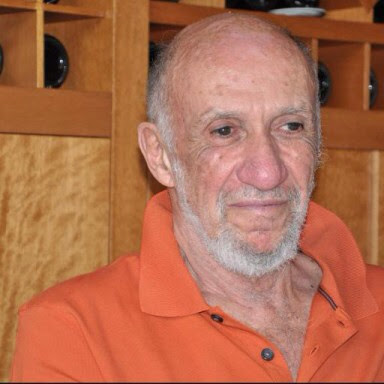
Globalizing Homeland Security by Richard Falk

Taking Note: The Drift Toward Autocracy

Richard Falk

It is not just one thing that should worry us about the authoritarian tendencies of the Obama presidency, but one thing after another. The cumulative effect of it all.

The latest sign of the times was the August 19th detention of David Miranda, Glenn Greenwald’s partner, at Heathrow Airport under the British anti-terrorist law for nine hours. His laptop, cell phone, and other electronic devices were also confiscated, and presumably examined. We need to wonder what is so frightening about ‘the Snowden documents’ that it induces these flagrant intrusions on the privacy and confidentiality of journalists, and now even their associates.

President Obama keeps reassuring Americans, and indeed the world, that he shares a concern for protecting elemental rights, and yet he seems to spare no means to move against disclosures of information that seems awkward for the United States and some allies even when not of great interest to Al Qaeda and the like. Just as 40 years ago the government sought to prosecute Daniel Ellsberg for revealing secrets being kept from the American people, and not from the ‘enemy’ in the jungles and rice paddies of Vietnam. It is not a matter of secrecy for secrecy’s sake, but secrecy to sustain the trust of the citizenry by a cover up of lies and deception.

Keep in mind that by the rules of the road in international affairs, Moscow could not extradite Snowden, and yet Washington insisted, and when spurned, ‘punished’ itself more than Russia and Putin, by canceling the presidential meeting scheduled for Russia in September to discuss issues of common concern, including Syria, Iran, North Korea, nuclear arms control, and presumably the horrifying turmoil that is turning the Middle East into a war zone. Any fool would realize that at this point the United States has much more to gain from a cooperative rather than an alienated Russia, and so what is the point of showing Snowden childish pique by this rebuff of Putin? It would seem that Washington’s concept of such cooperation between the two countries is entirely hegemonic: the United States sets the tune, and Russia is supposed to sing the song. There are no honest disagreements.

It is a one-way street as near as I can tell, and when the songsters in Moscow provide their own lyrics, the music makers in Washington turn hostile, claiming disappointment.

Also, it is not an unfriendly gesture to accord Snowden asylum in view of his political crimes and the punitive approach adopted by the Obama presidency for breaches of secrecy. On the contrary, it is what a human rights culture should lead us to hope for in such situations. Was it really sensible diplomacy to use America’s leverage in the NATO region to disrupt the European flight of Evo Morales, not only violating the navigational rights of Bolivia, and also encroaching upon its sovereignty and insulting its leader. As it turned out, this effort to capture Snowden while he was mistakenly thought to be on his way to Bolivia, angered and affronted all of Latin America, including the usually placid Brazil, which even speculated that it might not now continue with its plan to make a large purchase of fighter aircraft from Boeing. It would seem that the Obama presidency loses its composure as soon as some of its dirty secrets are told, whether involving war crimes in Iraq and Afghanistan or human rights violations around the world.

Instead of such a display of childish frustration, Obama would have helped his cause much more by declaring the Snowden disclosures as a ‘teaching moment,’ an occasion both to discuss the post-9/11 pressures to gain information and the threats poses to freedom and democracy by the inflated demands of ‘homeland security,’ especially when the homeland becomes equated with the world.

The road to autocracy in America, aside from the plutocratic ride of the 1%, tunnels through mountains of secrecy, a panopticon of surveillance, drone warfare, White House approved assassination lists, death squads roaming foreign lands, and a globe-girdling militarism manifest in a network of hundreds of foreign bases, space satellites, provocative military exercises, and outmoded strategic doctrines. More


Saturday, May 18, 2013

How Cell Phone Tech Resulted In The Spookiest Surveillance Camera On Earth

Everyone marveled when the iPhone 4S came equipped with a full high definition video camera. Little did they know that the race to miniaturize cell phone cameras led to quite possibly the spookiest surveillance camera on earth.

Autonomous Real-Time Ground Ubiquitous Surveillance Imaging System, or ARGUS-IS, which we recently covered, is the result of a low budget and 368 cannibalized cell phone cameras, slammed together to create the largest, finest surveillance camera in the world.

Attached to a predator drone, the camera records approximately 1 trillion gigabytes of information in a single day. More


The ARGUS-IS, or the Autonomous Real-Time Ground Ubiquitous Surveillance Imaging System, is a Defense Advanced Research Projects Agency (DARPA) project contracted to BAE Systems. According to DARPA:[1]

The mission of the Autonomous Real-time Ground Ubiquitous Surveillance - Imaging System (ARGUS-IS) program is to provide military users a flexible and responsive capability to find, track and monitor events and activities of interest on a continuous basis in areas of interest. The overall objective is to increase situational awareness and understanding enabling an ability to find and fix critical events in a large area in enough time to influence events. ARGUS - IS provides military users an "eyes-on" persistent wide area surveillance capability to support tactical users in a dynamic battlespace or urban environment. More

Wednesday, May 15, 2013

From WikiLeaks to the AP scandal: US nears Totalitarian Security and Surveillance State

Chris Hedges From WikiLeaks to the AP scandal: US nears Totalitarian Security and Surveillance State

Saturday, May 12, 2012

In Afghanistan it is 1984 and 'Big Brother' is watching

KABUL, Afghanistan — The traders crouched beneath the walls of an old fort, hunkered down with the sheep and goats as they talked, eyes nervously flitting up from time to time at the blimp that has become their constant overseer.

“It is there every day except the days when it is windy and rainy,” said Suleman, 45, who goes by only one name.

“It watches us day and night,” said another trader, Mir Akbar, 18, his eyes following the balloon as its nose swiveled with the wind from east to west.

“I notice it all the time,” said Rahmat Shah, 28, a secondhand car seller, who was standing slightly aside from the other men. “I know there is a camera in it.”

The dirigible, a white 117-foot-long surveillance balloon called an aerostat by the military, and scores more like it at almost every military base in the country, have become constant features of the skies over Kabul and Kandahar, and anywhere else American troops are concentrated or interested in.

Shimmering more than 1,500 feet up in the daytime haze, or each visible as a single light blinking at night, the balloons, with infrared and color video cameras, are central players in the American military’s shift toward using technology for surveillance and intelligence.

In recent years, they have become part of a widening network of devices — drones, camera towers at military bases and a newer network of street-level closed-circuit cameras monitoring Kabul’s roads — that have allowed American and Afghan commanders to keep more eyes on more places where Americans are fighting.

The dirigibles are now such a common feature in daily Afghan life that some people here shrug and say they hardly notice them. Other parts of the network have become lasting parts of the urban landscape as well, particularly in Kabul, where long-necked closed-circuit cameras overlook locations susceptible to attacks, like the Supreme Court building, traffic circles and main highways past the military camps.

But other Afghans describe a growing sense of oppression, the feeling that even as the Americans are starting to pack up to leave, the foreigners’ eyes will always be on them.More