Showing posts with label security. Show all posts

Sunday, September 16, 2018

For Whom the Climate Bell Tolls

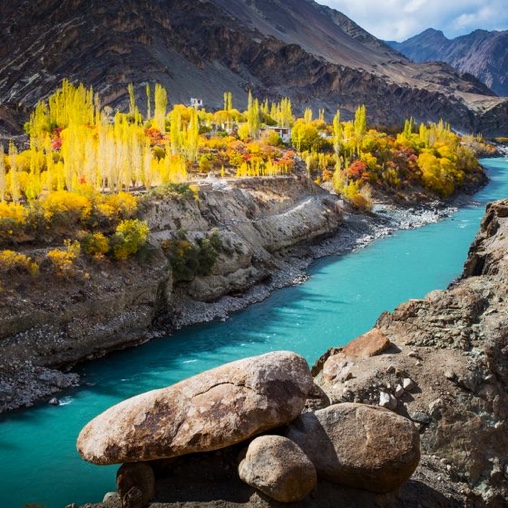
Indus River


...the problems associated with climate change will be neither mere inconveniences, nor as far off as we would like to think. There are currently two billion near-subsistence farmers living in the six great river valleys of Asia, from the Yellow all the way around to the Indus. These farmers have limited means and few non-agricultural skills. It would not be easy for them to pick up and relocate, let alone earn their livelihood doing something else.
Asia’s six great river valleys have supported most of human civilization for the past 5,000 years. During that time, the snow melt from the region’s high plateaus has always arrived at precisely the right moment, and in precisely the right volume, to support the crops upon which the region’s people rely. Read More

Thursday, May 17, 2018

Water shortages to be key environmental challenge of the century, Nasa warns


Water shortages to be key environmental challenge of the century, Nasa warns | Environment | The Guardian

Water shortages are likely to be the key environmental challenge of this century, scientists from Nasa have warned, as new data has revealed a drying-out of swaths of the globe between the tropics and the high latitudes, with 19 hotspots where water depletion has been dramatic.

Areas in northern and eastern India, the Middle East, California and Australia are among the hotspots where overuse of water resources has caused a serious decline in the availability of freshwater that is already causing problems. Without strong action by governments to preserve water the situation in these areas is likely to worsen


(https://www.theguardian.com/environment/2018/may/16/water-shortages-to-be-key-environmental-challenge-of-the-century-nasa-warns

Friday, June 9, 2017

The Relentless March of Drought – That ‘Horseman of the Apocalypse’

ROME, Jun 7 2017 (IPS) - By 2025 –that’s in less than 8 years from today– 1.8 billion people will experience absolute water scarcity, and two thirds of the world will be living under water-stressed conditions. Now it is feared that advancing drought and deserts, growing water scarcity and decreasing food security may provoke a huge ‘tsunami” of climate refugees and migrants.
No wonder then that a major United Nations Convention calls drought ‘one of the four horsemen of the apocalypse.’ See what the United Nations Convention to Combat Desertification (UNCCD) says in this regard.

By 2050, the demand for water is expected to increase by 50 per cent. As populations increase, especially in dry-land areas, more and more people are becoming dependent on fresh water supplies in land that are becoming degraded, the Bonn-based Convention secretariat warns.

“The world’s drought-prone and water scarce regions are often the main sources of refugees.” Monique Barbut.
Water scarcity is one of the greatest challenges of the twenty-first century, it underlines, adding that drought and water scarcity are considered to be the most far-reaching of all natural disasters, causing short and long-term economic and ecological losses as well as significant secondary and tertiary impacts.

To mitigate these impacts, drought preparedness that responds to human needs, while preserving environmental quality and ecosystems, requires involvement of all stakeholders including water users and water providers to achieve solutions for drought, explains UNCCD.

“Drought, a complex and slowly encroaching natural hazard with significant and pervasive socio-economic and environmental impacts, is known to cause more deaths and displace more people than any other natural disaster.” More

Thursday, January 14, 2016

Reframing the narrative on nuclear weapons: Insights & Findings Report

Reframing the narrative on nuclear weapons: Insights & Findings Report

This new publication represents 14 months of investigation into how future nuclear weapons policy can be more relevant to the concerns and security of the next generation. Our aim has been to explore this by engaging new perspectives within the next generation of policy shapers, those with ideas unstructured by Cold War experiences, but nevertheless motivated to take action to move beyond the legacies from past generations, focused on future decisions over global policy challenges. We used a variety of tools, including focus groups, systems mapping, and expert roundtable discussions utilising different frames of reference and disciplines for comparison.

We hope this report serves as a point of departure in developing innovative ideas to engage new people within the next generation of policy shapers in the interests of furthering nuclear non-proliferation and disarmament. We would like to thank the William and Flora Hewlett Foundation for their foresight in funding this project with the expressed purpose of stimulating new ways of thinking and working in this field.

Read the full report here


Thursday, May 8, 2014

Third National Climate Assessment: Climate Change Impacts in the United States

Please see the message below announcing the release of the new U.S. National Climate Assessment and the associated websites where it is available.

We are so pleased to announce today’s release of the Third National Climate Assessment: Climate Change Impacts in the United States. The Third National Climate Assessment (NCA), which delivers on USGCRP’s legal mandate and the President’s Climate Action Plan, is the most comprehensive, authoritative, transparent scientific report ever generated on U.S. climate impacts, both as currently observed and as projected for the future. The Third NCA documents climate change-related impacts and responses across key sectors and all regions of the U.S. with the goal of better informing public and private decision-making at all levels.

WHERE CAN YOU FIND THE ASSESSMENT?

The Third NCA is available to download and also can be explored in a novel interactive format through USGCRP’s newly redeployed web presence at http://globalchange.gov. An important feature of this interactivity is the traceability of the data and other information in the report, giving users the means to refer back to these data for their analyses and decision support. The site is mobile-compatible and every piece of the report—from highlights to chapters to key messages to graphics—has its own unique URL for social network sharing. Please find below links that will help you navigate the Third NCA:

· Full Report: http://nca2014.globalchange.gov/

· Highlights: http://nca2014.globalchange.gov/highlights

Beyond the Third NCA, the new globalchange.gov features accessible and dynamic information on a wide range of climate-related topics.

Any White House materials about the release of the Third NCA will be available from: http://www.whitehouse.gov/climate-change. At 2:00 pm EDT, the White House is hosting a stakeholder event that will feature speakers from the Administration, NCA authors, and users of the report. For those who won't be at the event in person, you can tune into the live webcast:http://www.whitehouse.gov/live.

WHAT CAN BE FOUND IN THIS LATEST ASSESSMENT?

The data and information in the Third NCA can be of great value to the adaptation planning and implementation efforts of U.S. Federal Agencies and their partners and stakeholders. Some examples include:

· The latest science on observed trends and projected future conditions of changes in the climate across the 8 NCA regions and contiguous U.S. as well as 13 sectors and cross-sectors.

· Examples throughout of on-the-ground impacts across the U.S., many of which are already directly affecting substantial numbers of Americans.

· For the first time in a U.S. national assessment, explicit chapters on Decision Support, Mitigation, and Adaptation, with specific information on those topics as they are practiced now in addition to identifying research needs associated with these topics for improving future implementation of climate resilience measures. Specifically related to adaptation, the following information is captured in the Adaptation chapter:

o Adaptation key terms defined

o An overview of adaptation activities at multiple levels including the Federal government, states, tribes, local and regional governments, non-governmental organizations, and the private sector

o Example barriers to adaptation

o Several illustrative case studies of adaptation in action

· A useful and informative section that answers some frequently asked questions about climate change. The questions addressed range from those purely related to the science of climate change to those that extend to some of the issues being faced in consideration of mitigation and adaptation measures.

· Data and metadata behind content and images used in the assessment are accessible and traceable.


Tuesday, May 6, 2014

ASEAN countries and Russia agree to enhance defence co-operation

The Association of Southeast Asian Nations (ASEAN) and Russia have agreed to collaborate in defence and security-related technologies. The move is aimed at expanding ASEAN capability to address strategic threats and consolidate Russia's already strong position in Southeast Asian defence markets.

Following a meeting of the 12th ASEAN-Russian joint co-operation committee (ARJCC) in Indonesia on 30 April, ASEAN said the two sides will undertake projects focused on developing remote sensing and positioning systems.

ASEAN said the partnership would also feature a joint project related to GLONASS, Russia's military-operated satellite navigation system. ASEAN did not elaborate on this plan, although it is understood that it encompasses potential ASEAN participation in the development and installation of ground-based GLONASS stations in the region.

To read the full article, Client Login


Wednesday, April 23, 2014

A race to the top in nuclear security strategy by Kenneth Loungo

The possibility of a nuclear terrorist attack has been called a black swan occurrence, an unlikely but possible event that is the national security nightmare that keeps President Obama— and other world leaders—up at night.

It Is 5 minutes to midnight

At a closed-door session of the Nuclear Security Summit in The Hague last month, the assembled leaders were challenged to respond to terrorist nuclear attack scenarios. The goal was to focus them on the serious security and financial consequences that would affect all nations if poorly secured nuclear materials fell into the wrong hands.

They defeated the virtual dangers through collective action. After three summits and six years, however, it is clear that real-world international cooperation and consensus on nuclear security remains weak. And focusing on the threat alone has proven insufficient motivation for significantly improving global defenses against nuclear terrorism.

In advance of the likely final summit in 2016, the fear of nuclear terrorism should be redirected into a global nuclear security “race to the top.” The concept of a race to the top would flip the incentives in favor of showcasing nuclear security improvement and raise the overall expectation of what can and should be done. Posing this challenge could eradicate the lowest-common-denominator approach of past summits, and help eliminate the significant security vulnerabilities that now exist. A “race to the top” should change the narrative from risk to responsibility, and incorporate regional cooperation and competition, incentives for action, and rewards for superior performance. The rewards for demonstrating maximally effective nuclear security can include a special acknowledgment at the next summit, a certification for those nations that confirm their improved performance, and an opportunity to address their peers and the media on why and how they chose to improve.

A good place to start this race to the top is among the 35 nations that signed on to a new agreement in The Hague to strengthen nuclear security implementation, known as the Trilateral Initiative. Sponsored by the three Nuclear Security Summit hosts—the Netherlands, South Korea, and the United States—the initiative’s signatories agreed to implement the major recommendations of the International Atomic Energy Agency (IAEA) for nuclear and radiological source security. But the initiative goes further by underscoring that nuclear security is an international responsibility as well as a national one, and encouraging the signatories to “assess new ideas to improve the nuclear security regimes.” In addition, a new section of the summit communiqué on “voluntary measures” identified actions that countries can take to show that they are implementing effective security.

While the full implementation of the IAEA recommendations will be valuable, that alone will not eliminate all the weak links in the global nuclear security system. The current architecture does not include any binding standards for security performance; any mandatory, regularized and objective assessment of security effectiveness on a global basis; or any requirement that nations take steps to build international confidence in their security systems by providing non-sensitive information on their planning and practices. In addition, some major nuclear states—including Russia, China, India and Pakistan—did not sign the initiative, thereby exempting the world’s largest fissile material stockpile and the fastest-growing ones from its scope. Also left unclear is how the signatories will demonstrate implementation of their commitments.

To address these shortcomings and succeed in the race to the top, the Trilateral Initiative signatories should take five steps leading up to the 2016 summit.

First, nations must be willing to share non-sensitive security information to help build higher levels of international confidence in global nuclear security. The details on facility vulnerabilities, the specific threat spectrum to be defended against, and how precisely that is done is not information that can or should be openly shared. But other information is less sensitive. For example: How are countries fully implementing the IAEA’s physical protection recommendations beyond their previous actions? If they are participating in a peer review process with the IAEA or others, how have they implemented the resulting recommendations? Have they completed a comprehensive threat analysis? Can they demonstrate the independence of their regulatory apparatus? Do they “red team” the security at their facilities to independently assess its adequacy?

Second, the signatories should create a peer review process on a regional basis or among politically likeminded nations that can supplement the IAEA’s efforts. The Agency offers to assess nuclear security if it is invited by a member state. But it has a limited capacity to do these assessments, and their results remain confidential unless a country agrees to release the information. This is a very different peer-review system than the multilateral approach under the nuclear-reactor safety regime, where nations are mandated to produce periodic reports, and other governments review them and make recommendations. The nuclear-reactor safety model is one that should be emulated by the new initiative’s adherents. .

Third, states should determine what best security practices are most suitable for their needs and culture. Nuclear security approaches are not one-size-fits-all. There should be common performance standards, but the implementation of those objectives can be individually determined by each nation. For example, some nations in Asia do not have armed guards at facilities and perform only minimal background checks on employees. It probably is not realistic to expect significant changes in a nation’s gun laws, but off-site guards with weapons should be trained to quickly respond.

Fourth, by fully implementing the IAEA’s recommendations and acceding to the few binding treaties that exist, the initiative’s supporters can de facto begin the process of creating common international standards for nuclear security. These voluntary actions can avoid the need for unpopular new mandates in the near term, but lead to new norms of international behavior that then can ultimately result in universalized global security standards. The lack of any binding, common criteria for nuclear security is one of the most significant obstacles when attempting to measure concrete progress on a global basis.

Finally, as part of the commitment to assess new ideas for nuclear security improvement under the Trilateral Initiative, serious consideration must be given to establishing a legally binding framework convention on nuclear security that will complement the current regime. The convention will have two important substantive objectives—to eliminate gaps in the current regime so that the resulting architecture is harmonized, strengthened, and made adaptable and sustainable, and to standardize security performance requirements so that progress can be measured. A convention would also have significant political value by maintaining high-level attention to nuclear security and supporting the process of continuous improvement after the summits’ end.

At the end of the summit in The Hague, Obama called upon his colleagues to “finish strong” by marshaling the political will to take necessary actions leading up to the 2016 summit. Engaging in a nuclear security race to the top over the next two years will demonstrate that countries understand that radiation from a terrorist attack or sabotage will not respect any nation’s borders. There needs to be a much more aggressive global effort to prevent it. And the summit at The Hague has provided a vehicle to do it. More
 

Thursday, February 13, 2014

Pak-NATO relations conference culminated amid new ideas

ISLAMABAD, Feb 12 (APP): South Asian Strategic Stability Institute (SASSI) organized a two-day international conference on ‘Pakistan-NATO Relations: Post 2014’ with collaboration of International Centre for Democratic Transition (ICDT), Hungary at a local hotel on Wednesday.

Dr. Maria Sultan, Director General SASSI, in her welcome address said that the war in Afghanistan has always cast a deep shadow on Pakistan and the geostrategic importance of Pakistan is double edged sword, on one hand it ushers Pakistan to the center stage of the international security architecture and the other, it has placed Pakistan at the cross road of international politics.

She said that the continuous shift in US policy towards Afghanistan-Pakistan had serious implications for Pakistan’s internal stability.

“Pakistan has paid a heavy price in flesh and blood in fighting terrorism over the last decade and remains committed to bringing this fight to an end through all available means both internally as well as regionally.”, she added.

Federal Minister for Water, Power and Defence Khawaja Muhammad Asif said that Pakistan and NATO (North Atlantic Treaty Organization) relations are of key importance as they represent the bedrock of regional security but also provide the necessary detail to the Afghan security imbroglio.

He said that it is high time to redraw Pakistan-NATO relations on new parameters adding that today, Pakistan is facing serious challenges as a result of the security situation in Afghanistan and due to its direct and indirect impact on Pakistan’s security matrix. This is our firm belief that regional security problems require a local and regional approach they cannot be imposed on the region, he maintained.

Khawaja Asif said that our state policy demonstrated our sincere commitment to peace and stability in Afghanistan. We are facilitating an Afghan-owned and Afghan-led process of reconciliation as the date for the withdrawal of NATO forces approaches.

Federal Minister for Commerce Engineer Khurram Dastgir said that the role of Pakistan and NATO countries are critical in making Afghanistan, a peaceful and prosperous country. In post 2014, the emergence of a free, united and friendly to all Afghanistan is the best solution for regional as well as to international peace and security, he added.

Dastgir said that Pakistan has a three prong strategy with regards to Afghanistan: promoting peaceful, united and prosperous Afghanistan by endorsing Afghan led-Afghan owned reconciliation process, promoting economic prosperity though increasing bilateral between the both countries and a smooth withdrawal of NATO forces from Afghanistan.

On this occasion, JUI Chief Maulana Fazalu-ur-Rehman, Shah Mehmood Qureshi, former Foreign Minister, Lt. Gen ® Asif Yaseen, Secretary Defense, Szabolcs Tak cs, Deputy State Secretary, Hungary, Major General Noel Israel Khokhar, Director General Institute for Strategic Studies Research and Analysis (ISSRA), Gen Laszlo Tombol, Former Chief of General Staff, Hungry, Amb Istvan gyarmati, Director of ICDT, Chairman UN Secretary General Advisory Committee on Disarmament also spoke on this occasion. More


Tuesday, October 22, 2013

Model OSCE of the Swiss OSCE Chairmanship

Switzerland will assume the Chairmanship of the Organisation for Security and Co-operation in Europe (OSCE) in 2014.

In accordance with the year’s overall theme, “Creating a Security Community for the Benefit of Everyone,” it will pursue three overarching objectives:

  • Fostering security and stability in Europe;
  • Improving people’s lives;
  • And strengthening the OSCE and increasing its capacity to act.

As part of its third objective, Switzerland wants to strengthen the voice of young people and enhance their involvement within OSCE structures. It will therefore organise a year-long Model OSCE series in which one delegate from each of the 57 OSCE-participating States will be invited to participate.

More specifically, that means that the delegates will simulate the activities and responsibilities of two specific OSCE decision-making bodies. And in doing so, the delegates will . . .

  • Get familiar with OSCE structures and –themes;
  • Have the opportunity to acquire and develop various skills (in international diplomacy, negotiations, public speaking, communications, problem solving and critical thinking);
  • Improve their team-working and leadership abilities;
  • And have the opportunity to meet other young people from the 57 OSCE-participating States.

Who should register in the Model OSCE? We strongly encourage young people aged 18-30 to submit their applications. Participants must be citizens of one of the 57 OSCE participating States, fluent in written and oral English, interested in international politics, and ready to devote their time and ideas to this project throughout the year of the Swiss OSCE Presidency. More


Please visit the Swiss National Youth Council (SNYC) website to submit your application.


Thursday, August 22, 2013

Heat Wave In China

For the entire month of July and the first half of August, eastern China baked in a record-breaking heat wave. Nineteen provinces endured above-normal temperatures.

Shanghai broke its all-time record high three times in as many weeks. The current record—40.8 degrees Celsius (105.4°F)—was set on August 7, 2013. At least 40 people have died during the heat wave, including ten in Shanghai, according to the Xinhua news service.

During a heat wave, ground temperatures soar, particularly in urban areas where there are fewer plants to cool the ground with shade and evapotranspiration. Paved or metallic surfaces can become warm enough to cook food. These images show land surface temperatures as measured by two different satellites.

The image above shows temperature anomalies across China between August 5 and August 12, 2013, as observed by the Moderate Resolution Imaging Spectroradiometer (MODIS) on NASA’s Terra satellite. Red areas are warmer than the long-term average for the week, while cooler-than-average temperatures are blue. While much of China was warm during this period, the worst of the heat wave was concentrated near the coast and in Tibet. This weather pattern is tied to a subtropical high-pressure system parked over southern China, according to the China Meteorological Administration.

Though miserable everywhere, the heat wave was likely worst in China’s cities, where manmade surfaces absorb heat during the day and cool slowly at night. As a result, cities are warmer during the day and slower to cool at night, making an extended heat wave more uncomfortable, and more deadly, in a city. The image below shows this “urban heat island” effect in Shanghai.

The image was made with measurements taken on August 13, 2013 by the Thermal Infrared Sensor on the Landsat 8 satellite. The warmest surfaces are yellow, while cooler surfaces are pink. The image shows pockets of very warm areas, particularly downtown, surrounded by cooler suburban areas. The dark purple dots are cold clouds.

Chinese officials have declared a weather emergency, warning residents to limit time outdoors. It is the first time the country has issued a weather warning for heat. China’s National Meteorological Center expected the heat to break sometime after August 15.


Tuesday, August 20, 2013

Globalizing Homeland Security by Richard Falk

Taking Note: The Drift Toward Autocracy

Richard Falk

It is not just one thing that should worry us about the authoritarian tendencies of the Obama presidency, but one thing after another. The cumulative effect of it all.

The latest sign of the times was the August 19th detention of David Miranda, Glenn Greenwald’s partner, at Heathrow Airport under the British anti-terrorist law for nine hours. His laptop, cell phone, and other electronic devices were also confiscated, and presumably examined. We need to wonder what is so frightening about ‘the Snowden documents’ that it induces these flagrant intrusions on the privacy and confidentiality of journalists, and now even their associates.

President Obama keeps reassuring Americans, and indeed the world, that he shares a concern for protecting elemental rights, and yet he seems to spare no means to move against disclosures of information that seems awkward for the United States and some allies even when not of great interest to Al Qaeda and the like. Just as 40 years ago the government sought to prosecute Daniel Ellsberg for revealing secrets being kept from the American people, and not from the ‘enemy’ in the jungles and rice paddies of Vietnam. It is not a matter of secrecy for secrecy’s sake, but secrecy to sustain the trust of the citizenry by a cover up of lies and deception.

Keep in mind that by the rules of the road in international affairs, Moscow could not extradite Snowden, and yet Washington insisted, and when spurned, ‘punished’ itself more than Russia and Putin, by canceling the presidential meeting scheduled for Russia in September to discuss issues of common concern, including Syria, Iran, North Korea, nuclear arms control, and presumably the horrifying turmoil that is turning the Middle East into a war zone. Any fool would realize that at this point the United States has much more to gain from a cooperative rather than an alienated Russia, and so what is the point of showing Snowden childish pique by this rebuff of Putin? It would seem that Washington’s concept of such cooperation between the two countries is entirely hegemonic: the United States sets the tune, and Russia is supposed to sing the song. There are no honest disagreements.

It is a one-way street as near as I can tell, and when the songsters in Moscow provide their own lyrics, the music makers in Washington turn hostile, claiming disappointment.

Also, it is not an unfriendly gesture to accord Snowden asylum in view of his political crimes and the punitive approach adopted by the Obama presidency for breaches of secrecy. On the contrary, it is what a human rights culture should lead us to hope for in such situations. Was it really sensible diplomacy to use America’s leverage in the NATO region to disrupt the European flight of Evo Morales, not only violating the navigational rights of Bolivia, and also encroaching upon its sovereignty and insulting its leader. As it turned out, this effort to capture Snowden while he was mistakenly thought to be on his way to Bolivia, angered and affronted all of Latin America, including the usually placid Brazil, which even speculated that it might not now continue with its plan to make a large purchase of fighter aircraft from Boeing. It would seem that the Obama presidency loses its composure as soon as some of its dirty secrets are told, whether involving war crimes in Iraq and Afghanistan or human rights violations around the world.

Instead of such a display of childish frustration, Obama would have helped his cause much more by declaring the Snowden disclosures as a ‘teaching moment,’ an occasion both to discuss the post-9/11 pressures to gain information and the threats poses to freedom and democracy by the inflated demands of ‘homeland security,’ especially when the homeland becomes equated with the world.

The road to autocracy in America, aside from the plutocratic ride of the 1%, tunnels through mountains of secrecy, a panopticon of surveillance, drone warfare, White House approved assassination lists, death squads roaming foreign lands, and a globe-girdling militarism manifest in a network of hundreds of foreign bases, space satellites, provocative military exercises, and outmoded strategic doctrines. More


Friday, April 26, 2013

The Future of Warfare Is Warfare in Cyberspace

National Security Agency Tasked with Targeting Adversaries' Computers for Attack Since Early 1997, According to Declassified Document

"The Future of Warfare Is Warfare in Cyberspace," NSA Declared

"Cyberspace and U.S. National Security" - New Archive Posting Explores Wide Range of U.S. Cyber Concerns, Experiences and Counter-Activities

National Security Archive Electronic Briefing Book No. 424

Posted - April 26, 2013

Edited by Jeffrey T. Richelson

For more information contact:
Jeffrey T. Richelson 202/994-7000 or nsarchiv@gwu.edu

http://www.nsarchive.org

Washington, D.C., April 26, 2013 - Since at least 1997, the National Security Agency (NSA) has been responsible for developing ways to attack hostile computer networks as part of the growing field of Information Warfare (IW), according to a recently declassified internal NSA publication posted today by the non-governmental National Security Archive ("the Archive") at The George Washington University. Declaring that "the future of warfare is warfare in cyberspace," a former NSA official describes the new activity as "sure to be a catalyst for major change" at the super-secret agency.

The document is one of 98 items the Archive is posting today that provide wide-ranging background on the nature and scope of U.S. cyber activities.

Activities in cyberspace - both defensive and offensive - have become a subject of increasing media and government attention over the last decade, although usually the focus has been on foreign attacks against the United States, most notably the Chinese government's reported exploitation of U.S. government, commercial and media computer networks. At the same time, the apparent U.S.-Israeli created Stuxnet worm, designed to damage Iranian centrifuges, has put the spotlight on the United States' own clandestine cyber efforts.

The NSA's new assignment as of 1997, known as Computer Network Attack (CNA), comprises "operations to disrupt, deny, degrade or destroy" information in target computers or networks, "or the computers and networks themselves," according to the NSA document.

Today's posting by the Archive highlights various aspects of U.S. cyberspace activities and concerns going back to the late 1970s. The documents - obtained from government and private websites as well as Freedom of Information Act requests - originate from a wide variety of organizations. These include the White House and National Security Council, the National Security Agency, the Departments of Defense, Energy, and Homeland Security, the military services, the General Accounting/ Government Accountability Office, and the Congressional Research Service - as well as three private organizations (Project 2049, Mandiant Corporation, and Symantec).

Among the highlights of the documents are:

* The NSA's earlier concerns about the vulnerability of sensitive computer systems to either viruses or compromise through foreign intelligence service recruitment of computer personnel

* The Secretary of Defense's March 1997 authorization of the National Security Agency to conduct computer network attack operations

* Detailed discussions of Chinese computer network exploitation activities

* Analyses of the Stuxnet worm

* Extensive treatments of intelligence collection concerning U.S. technologies through computer network exploitation

Check out today's posting at the National Security Archive website - http://www.nsarchive.org

Find us on Facebook - http://www.facebook.com/NSArchive

Unredacted, the Archive blog - http://nsarchive.wordpress.com/

http://twitter.com/NSArchive

________________________________________________________
THE NATIONAL SECURITY ARCHIVE is an independent non-governmental research institute and library located at The George Washington University in Washington, D.C. The Archive collects and publishes declassified documents acquired through the Freedom of Information Act (FOIA). A tax-exempt public charity, the Archive receives no U.S. government funding; its budget is supported by publication royalties and donations from foundations and individuals.


Monday, February 18, 2013

China and Russia block UN Security Council climate change action

Russia and China blocked efforts last Friday to have climate change recognised as an international security threat by the UN Security Council (UNSC).

The council met in New York to discuss the potential effects of global warming, but according to Bloomberg the two permanent members objected to it being a ‘formal session’.

Despite the participation of UN Secretary-General Ban Ki-moon this meant the session – planned by Pakistan and the United Kingdom – had few political implications.

China, Russia, India and more than 100 developing countries oppose climate becoming a UNSC issue as the council does not operate under the principles of Common But Differentiated Responsibility, which underpins the UN climate talks.

They are concerned that securitizing the issue would place a greater burden on poorer nations with large greenhouse gas emissions to take action.

Small island states vulnerable to sea level rises have pushed for climate to be discussed at this level for over two decades.

Marshall Islands representative Tony deBrum expressed frustration with Russia and China’s stance, explaining that 35 years on from gaining independence from the USA the very existence of his country is now in question.

“Our roads are inundated every 14 days,” he said. “We have to ration water three times a week. People have emergency kits for water. We can no longer use well water because it’s inundated with salt.”

The meeting – the third in UNSC history – was convened by council President Pakistan and permanent member the United Kingdom, which despite domestic criticism over its low carbon strategy appears to be embarking on a new initiative to inject momentum into global efforts to cut emissions.

The UK’s new climate envoy Rear Admiral Neil Morisetti is pushing for climate change to be framed as a global security concern.

“The UK believes that the impacts of a changing climate pose a significant and emerging threat to a country’s national security and prosperity,” a Foreign Office spokesman told RTCC.

“The UK is engaging with our international partners and through international forums to better manage this risk.”

Risk multiplier

A 2009 report commissioned by the council identified climate change as a ‘threat multiplier’, stressing it would hit food supply lines and affect the territorial integrity of island states.

And in 2011 it discussed whether ‘green helmet’ climate peacekeepers could be required to prevent conflicts caused by resource scarcity.

Addressing the session, leading German scientist Joachim Schellnhuber explained that rises in global temperatures were likely to have catastrophic consequences.

“With unabated greenhouse-gas emissions, humankind would venture into an uncertain future that is much hotter than ever before in its history – so from a scientist’s perspective, climate change is a global risk multiplier,” he said.

The World Bank’s Rachel Kyte told delegates cities must take the lead in developing low carbon infrastructure, in terms of transport, urban planning and managing water resources.

In a statement Oxfam International’s Tim Gore urged the UNSC to debate the issue further, warning the global food system was already under severe stress as a result of droughts across the US, Africa and Asia.

“Droughts or floods can wipe out entire harvests, as we have seen in recent years in Pakistan, in the Horn of Africa and across the Sahel,” he said.

“And when extreme weather hits major world food producers – like last year’s droughts in the US and Russia – world food prices rocket. This presents a major risk to net food importing countries, such as Yemen, which ships in 90% of its wheat.

“The food riots and social unrest seen in the wake of the 2008 food price spikes were not a one-off phenomenon, but a sign of the risks we face through our failure to feed a warming world.” More


Saturday, December 22, 2012

PhD in energy security at Central European University

Central European University (CEU, www.ceu.hu) welcomes applicants for a PhD position in the area of energy security and future energy systems.

A successful candidate will work under the supervision of Prof. Aleh Cherp to pursue the Doctor of Philosophy degree at the Department of Environmental Sciences and Policy.

The research agenda will be developed to match the candidate’s interests and capacities and to advance policy-relevant knowledge on present and future national and global energy security challenges including under sustainable energy transitions. It will built on the recently completed Global Energy Assessment, where Professor Cherp led the analysis of energy security. Of particular interests might be such topics as energy security assessments and policies, and the relationship between global energy scenarios and national energy realities. These issues may be studied with respect to entire energy systems or particular energy sectors.
CEU provides a full tuition waiver as well as a living stipend for all PhD students. Research and travel grants as well as support for a “study abroad” year are also provided to good doctoral students. In addition, many PhD students participate in international research projects with CEU faculty.

A candidate for this position must hold a Masters degree relevant to Energy or Environmental studies from a good university of international standing. He or she should have demonstrated academic excellence as well as passion for research and commitment to academic success. Good writing abilities as well as advanced computer and quantitative analytical skills are an advantage.

Central European University is an English-language graduate institution founded by George Soros in 1991. It is accredited in both the United States and Hungary, and offers English-language Master's and doctoral programs. Located in the heart of Central Europe -- Budapest, Hungary -- CEU has developed a distinct academic and intellectual focus, combining the comparative study of the region's historical, cultural, and social contexts with a global perspective on good governance, sustainable development and social transformation. As part of its educational, research, and civic engagement activities, CEU attaches particular importance to scholarship relevant to public policy.

Inquiries about the position can be made to Prof Cherp while applications can be submitted online (http://www.ceu.hu/admissions/apply) by January 24th, 2013.
=====================


Tuesday, December 18, 2012

UK Energy Research Centre Summer School 2013 nominations now open

The UK Energy Research Centre (UKERC) is holding its ninth annual Energy Summer School from 7-12th July 2013 at the University of Warwick in the English Midlands. There will be 100 places available for UK and international students.

The School has been specifically designed to give second year PhD students an opportunity to look beyond their own research and develop an understanding of energy systems as a whole and pathways to low-carbon and resilient energy systems. We welcome applications from those engaged in energy-related research including technical, physical, social, economic, environmental and business aspects of energy and energy systems.

We would like to invite you to nominate students to attend. There is no charge for registered research students to attend the School; UKERC will provide accommodation and all meals and materials for activities. The School is conducted in English, and as it is highly interactive a good standard of comprehension and spoken English is essential.

Agenda

During the week-long School, which runs in parallel to UKERC’s Annual Assembly, students will:
Understand the global commercial, political, innovation and technological challenges in the transition to a low-carbon system;
Be involved in high level debate on energy technologies and research priorities in a number of key research areas, from demand reduction to future sources of energy;
Be presented with a number of contrasting international perspectives on energy;
Have the opportunity to network with key academic, and energy research contacts;
Research, develop, negotiate and agree a collective vision for a low-carbon energy system with the opportunity to apply your current research and present the work to the UK Energy Research Centre
Develop and practice professional skills in communication and engagement.

The School is professionally facilitated to provide continual support for participants, and includes a number of networking opportunities as well as social events.

Successful applicants will be notified by e-mail from 25th March 2013 and both nominator and nominee will at that time be asked to formally accept the place. Should the delegate subsequently withdraw and a suitable replacement not be found, the nominator will be required to pay for the cost of the unused place. The School is normally heavily over-subscribed, and UKERC will select delegates by giving preference to those in the second year of a PhD, to provide an appropriate mix of specialist disciplines, and a balance of UK and non-UK based students.

Nominations are now open until midnight GMT on the 17th March 2013. For convenience we ask that the student completes the nomination form, but they will need to include your details as confirmation of supervisor endorsement.

The nomination form can be accessed from our website or by clicking on the link below.

http://www.regonline.co.uk/ukercsummerschool2013


Thursday, September 13, 2012

Nuclear reactor safety in the post-Fukushima world

Since the Fukushima-Daiichi nuclear power plant disaster in 2011, there have been calls for increasing safety levels in nuclear plants worldwide. The incident in Japan was the fourth significant accident in the 55-year history of nuclear reactor operation.

The first occurred in 1957 at the Windscale reactor in the UK. Two decades later, in 1979, a reactor at Three Mile Island in the USA was severely damaged, though radioactive material releases were slight. The third incident is well-known: the 1986 disaster at Chernobyl, Ukraine, where the destruction of a reactor by steam explosion, fire and core disruption had significant health and environmental consequences, mainly due to fission product release and dispersion, as well as a human death toll at the site itself.

But throughout the nuclear age, countries and international bodies have, of course, been developing a variety of approaches and systems to promote safety and minimize the risk of accidents. In the UK and US, for example, nuclear reactor safety has, since the latter part of the twentieth century, been based on a comprehensive risk assessment approach in which experts, at the design stage, identify what could go wrong—based on a detailed knowledge of the components, materials, energy flows and core neutronics.

The experts then identify the various paths that an accident might follow, taking into account the plant design and its safety features such as emergency shutdown control rods, emergency core cooling and pressure vessel strength. They also calculate probabilities for each scenario (how often in ten thousand years a given accident might happen). For each hypothetical accident, they calculate the likely release of radioactive materials and model what the consequences would be for human life, health and the environment. Once all the above is complete, the so-called ‘envelope of risks’ for the planned reactor can be examined. If any part of this represents a risk above that which is judged to be tolerable, improvements can be made.

A landmark event in the UK was the Public Enquiry into the construction of a pressurised water reactor at the existing nuclear site at Sizewell. This enquiry revealed that neither the operators nor the Nuclear Installations Inspectorate had a numerical basis for comparing the tolerability of risks from nuclear reactors to such things as deaths from earthquakes, aircraft crashes and lightning strikes. The Sizewell enquiry was adjourned until these things were developed and approved. The result was two seminal documents: ‘The Tolerability of Risk from Nuclear Power Stations HSE, London 1988 (revised 1992)’; and ‘Safety Assessment Principles for Nuclear Facilities (revised as 2006 Edition, Revision 1, HSE, Bootle, UK).

The US has also engaged in studying these issues. The latest document is the US Nuclear Regulatory Commission’s State-of-the-Art Reactor Consequence Analyses, which analyzed the potential consequences of severe accidents at the Surry Power Station, Virginia, and the Peach Bottom Atomic Power Station in Pennsylvania as real examples of nuclear reactors. The project combined up-to-date information about the plants’ layout and operations with local population data and emergency preparedness plans. This information was then analyzed using computer codes that incorporate decades of research into reactor accidents. More


Thursday, August 30, 2012

WB for international cooperation on river basins for food, water security

ISLAMABAD: Against a backdrop of increased volatility in international food prices and energy supply, due in part to water availability, a new World Bank report calls for greater international cooperation on 80% of the world's rivers that cross national boundaries.

"Overcoming barriers to international cooperation on river basins is critical for future food, energy and water security" says the new report released this week at World Water Week in Stockholm.

With water scarcity increasing in many parts of the world, governments must find ways to maximize the use of water for multiple, often competing uses: growing populations requiring food security; rapid urbanization increasing domestic and industrial demand; the ever-increasing need for clean electricity; tourism and recreation; and environmental management, the report says.

"Within a nation, any two of these multiple interests can be at odds," said World Bank Vice President for Middle East and North Africa Inger Andersen.

"Add international boundaries and the complexity grows substantially. The key challenge - and opportunity - for riparian nations is to manage perceptions of risk, and benefit from lessons of experience where cooperation has worked demonstrably, benefiting countries and supporting their efforts to reduce poverty and protect the environment."

The new World Bank report, Reaching Across the Waters: Facing the Risks of Cooperation in International Waters reviews the experience of cooperation in five international river basins (Eastern Nile, Ganges, Niger, Syr Darya, and Zambezi), focusing on the perceptions of risks and opportunities by decision makers as they consider prospects for cooperation on international waters.

Today, 40% of the world's population lives in international basins which account for 80% of global river flow. Despite this and the proven benefits of cooperation, such as reduced chances of conflict, improved river sustainability, and access to external markets, 166 of the world's 276 international basins have no treaty provisions covering them.

Moreover, many multilateral basins are subject to bilateral treaties that preclude participation by other riparian countries. More

The report Reaching Across the Waters: Facing the Risks of Cooperation in International Waters can be downloaded here


Wednesday, August 29, 2012

World Water Week - Earth Policy Institute

Every August, scientists gather in Stockholm to participate in World Water Week and discuss the various issues related to water.

Water is as necessary to life as breath. This year in the United States, the lack of rain has resulted in drought conditions throughout the Corn Belt that, combined with excessive heat, will drastically reduce the U.S. corn harvest. According to Lester Brown, the drop could be roughly 100 million tons or 30 percent of the expected harvest.

In some parts of the Midwest, homeowners are turning on their taps and getting nothing but air as the water tables have so precipitously dropped. More intense droughts and heat waves are likely as the Earth’s temperature rises.

With regard to agricultural water use, Lester Brown has long been talking about the need for a major push to raise the level of water productivity. Two decades ago, he said that a shortage of water was the most underreported threat to civilization.

Here is some of what he writes on the subject (from Chapter 2 of World on the Edge)

The global water deficit is a product of the tripling of water demand over the last half-century coupled with the worldwide spread of powerful diesel and electrically driven pumps. Only since the advent of these pumps have farmers had the pumping capacity to pull water out of aquifers faster than it is replaced by precipitation.

As the world demand for food has soared, millions of farmers have drilled irrigation wells to expand their harvests. In the absence of government controls, far too many wells have been drilled. As a result, water tables are falling and wells are going dry in some 20 countries, including China, India, and the United States—the three countries that together produce half the world’s grain.

The overpumping of aquifers for irrigation temporarily inflates food production, creating a food production bubble, one that bursts when the aquifer is depleted. Since 40 percent of the world grain harvest comes from irrigated land, the potential shrinkage of the supply of irrigation water is of great concern. Among the big three grain producers, roughly a fifth of the U.S. grain harvest comes from irrigated land. For India, the figure is three fifths and for China, roughly four fifths. … More


Sunday, August 19, 2012

Troubled Waters: Can a Bridge Be Built over the Indus?

Whereas once the Indus Waters Treaty could correctly be described as a beacon of light in an otherwise gloomy relationship between India and Pakistan, this is no longer so.

The odds now are that the crumbling IWT will be a cause for further tension and conflict between India and Pakistan. It is also true that with far-sighted political leadership, especially in India but also in Pakistan, a bridge could be built over these troubled waters and the Indus could, again, become a catalyst for cooperation.

Preamble

t has been one of the great privileges of my life to work for almost 40 years on the challenges of water management in the south Asian subcontinent. Starting with a Harvard University/Government of India collaborative programme on planning of the Ganga and Narmada rivers in the early 1970s. I lived in Bangladesh (in the 1970s) and Delhi (from 2002 to 2005 when I was senior water advisor at the World Bank). In 2006 I published, with Indian colleagues a book titled India’s Water Economy: Facing a Turbulent Future and with Pakistani col- leagues, one titled Pakistan’s Water Economy: Running Dry.

Writing on a subject as fraught with mis- trust as the Indus requires a level of “personal declaration” that is not necessary in most other contexts. So whose views do I represent? America? No, I am not American but South African. The World Bank? No, but this requires a bit more explanation. I worked for 20 years for the World Bank, the last 10 as Senior Water Advisor and then as the country director for Brazil until the end of 2008 when I accepted a faculty position at Harvard University.

Institutions like the World Bank necessarily have to craft institutional positions on complex issues. Healthy institutions ensure that there is space for the expression of a wide variety of views in coming to decisions. As is described in detail in Chapter 13 of Sebastian Mallaby’s (2005) landmark history of the World Bank, my views were frequently different from the views of management of the Bank. Furthermore, I have not been involved in any internal discussion in the World Bank on Indian and Pakistan water issues since 2005. The interpretations in this article do not depend on any confidential information but are based entirely on my own reading of documents and reports that are in the public domain. So this paper represents the personal views of a mere university professor, who speaks in the name of no one else or no other institution. Over these 40 years I have acquired a deep affection for the people of both India and Pakistan, and am dismayed by what I see as a looming trainwreck on the Indus, with potentially disastrous consequences for both countries. Whereas once the Indus Waters Treaty (IWT) could correctly be described as a beacon of light in an other- wise gloomy relationship, the situation has changed: because of the growing invest- ment in hydropower in Indian-held Kashmir; because of the declining water availability in Pakistan; because the Baglihar verdict of the Neutral Expert has gutted the IWT of its essential balance, because the World Bank has withdrawn from its once-heroic en- gagement with the Indus and because of the appropriation of the water dialogue by extremists on both sides. The purpose of this article is to delve into some of these questions, and to suggest how to find a way out before it is too late.

The Indus Waters Treaty

In the 19th century, the British constructed most of what is today the world’s largest contiguous irrigation system in the Indus Basin. However, the boundaries between the two states drawn in 1947 paid no attention to hydrology. Eighty per cent of the irrigated area was in Pakistan, but after Partition a large portion of the headwaters for the rivers which serviced most of this immense area were in Indian-held Kashmir.

Seeing that India and Pakistan were un- able to resolve this issue, the World Bank offered its help. After 10 years of intense negotiation, in 1960 the IWT was signed by then Indian Prime Minister Jawaharlal Nehru, Pakistani President Ayub Khan and the World Bank.

There are four essential elements to the treaty. The first relates to the division of the waters. The waters of the three western rivers (the Indus, the Jhelum and the Chenab) were allocated to Pakistan, and the waters of the three eastern rivers (the Ravi, the Beas and the Sutlej) were allocated to India. More


Wednesday, August 15, 2012

Extreme Weather

The weekend forecast for Nashville, Tennessee, called for two to four inches of rain. But by the afternoon of Saturday, May 1, 2010, parts of the city had seen more than six inches, and the rain was still coming down in sheets.


Mayor Karl Dean was in the city’s Emergency Communications Center monitoring the first reports of flash flooding when something on a TV screen caught his eye. It was a live shot of cars and trucks on Interstate 24 being swamped by a tributary of the Cumberland River southeast of the city. Floating past them in the slow lane was a 40-foot-long portable building from the Lighthouse Christian School.

“We’ve got a building running into cars,” the TV anchorman was saying.

Dean had been in the “war room” for hours. But when he saw the building floating down the highway, he says, “it became very clear to me what an extreme situation we had on our hands.” Soon 911 calls were coming in from every part of the city. Police, fire, and rescue teams were dispatched in boats. One crew in a skiff headed out to I-24 to pluck the driver of an 18-wheeler from the chest-high water. Other teams pulled families off rooftops and workers from flooded warehouses. Still, 11 people died in the city that weekend.

This was a new kind of storm for Nashville. “It came down harder than I’ve ever seen it rain here,” says Brad Paisley, the country singer, who owns a farm outside town. “You know how when you’re in a mall and it’s coming down in sheets, and you think, I’ll give it five minutes, and when it lets up I’ll run to my car? Well, imagine that it didn’t let up until the next day.”

Over at NewsChannel 5, the local CBS station, meteorologist Charlie Neese could see where the weather was coming from. The jet stream had gotten stuck over the city, and one thunderstorm after another was sucking up warm, humid air from the Gulf of Mexico, rumbling hundreds of miles northeast, and dumping the water on Nashville. While Neese and his colleagues were broadcasting from a second-floor studio, the first-floor newsroom was being swamped by backed-up sewers. “Water was shooting up through the toilets,” Neese says.

The Cumberland River, which winds through the heart of Nashville, started rising Saturday morning. At Ingram Barge Company, David Edgin, a former towboat captain, had more than seven boats and 70 barges out on the waterway. As the rain continued to pound down, he called the U.S. Army Corps of Engineers to get its forecast of how high the river would rise. “It’s blowing up our models,” the duty officer said. “We’ve never seen anything like this.” Edgin ordered all of Ingram’s boats to tie up at safe locations along the riverbank. It turned out to be a smart move.

By Saturday night the Cumberland had risen at least 15 feet, to 35 feet, and the corps was predicting it would crest at 42. But the rain didn’t stop Sunday, and the river didn’t crest until Monday—at 52 feet, 12 feet above flood stage. Spilling into downtown streets, the flood caused some two billion dollars in damage. More

When one starts to look at the bigger picture of extreme weather around the world you quickly realize that something is ot right. Climate change anyone? Editor