Showing posts with label earthquake. Show all posts

Friday, August 29, 2014

A Traditional Future

Pakistani architect Yasmeen Lari uses local building techniques to rebuild villages in the flood-stricken Sindh region.

Yasmeen Lari - Architect

Yasmeen Lari is Pakistan’s first female architect and one of the most successful providers of disaster relief shelters in the world. She has built over 36,000 houses for victims of floods and earthquakes in Pakistan since 2010.

Shunning the structurally weak, mass-produced houses offered by international organisations, Lari uses vernacular techniques and local materials such as lime and bamboo. Her houses have a tiny carbon footprint and are simple enough for people to build themselves. With this, she hopes to demonstrate the role that architecture can play in humanitarian aid.

“I often tell my colleagues, let us not treat disaster-affected households as destitute, needing handouts … but with dignity,” she says.

Lari once built giant concrete and steel buildings for clients like the Pakistani State Oil company. But when disaster struck in 2005, she turned to traditional techniques to design flood and earthquake proof buildings for people in remote regions.

She returns to the Sindh region to see how her homes survived the 2013 floods and helps villagers in Awaran after the 2013 Balochistan earthquake.

Filmmaker’s view

By Faiza Ahmad Khan

Just a week before I left for Pakistan to film this documentary, the chief minister of my home state Rajasthan in India (which, incidentally, borders Sindh, the part of Pakistan that I was about to visit), pledged that within the next two years, there would be not a single mud house left standing in the state.

For many years the central government in India has already had a programme in place, which gives those in rural areas a sum of money to replace their traditional mud houses with brick and cement structures. Traditional is seen as poor and inferior and the fast track to “development” cannot, God forbid, be lined with mud and thatch houses.

While filming in Pakistan, I shared our chief minister’s announcement with an artisan who works with Yasmeen Lari at the Heritage Foundation in a village called Moak Sharif in Sindh.

“Thank God we’re decades behind India in this development business,” he said.

On one of my travels in Orissa in India, to a village called Govindpur that is resisting land acquisition for the mega steel company, POSCO, I met a woman who was rebuilding her kachcha house (made of natural materials, such as mud, bamboo and leave) despite being able to access government funding for a concrete house.

“We depend on this land for everything, we take what we know can be replenished. People in cities have no connection with the land so they don’t think twice about cutting down trees, mining the earth hollow. You think you’re separate from nature but you’re not. If this goes, you go,” she said.

What I am constantly being reminded of, as this country builds the capitalist dream, is that we stand to lose the wealth of traditional knowledge that pivots around this belief - ways to farm, heal, learn and live.

At the Heritage Foundation centre in Moak Sharif, Yasmeen Lari has been working to preserve traditional ways of building. The centre was set up by Yasmeen and her team in 2005 and has evolved to include a women’s centre, a small learning centre for children and a clinic to provide health care for the residents of the village.

Yasmeen believes that her role as an architect should not be restricted to designing houses and buildings. Instead, things should grow in an integrated way.

While I was there, they managed to get the government school, once barely functioning, in working order. Women from the village had organised themselves into a ‘mothers committee’ to oversee the school’s daily operations. And after I returned to India, every once in a while, Yasmeen would call and explain, with great delight, something new they were experimenting with – organic farming, bio fertilizers and natural soaps.

Through the making of this film I realised that building the “earth-way” means fluidity, not concreteness. It means working with the community, integrating it with structures of support and togetherness. Building homes, for Yasmeen, is about situating them. She guides her team to create this kind of space. Traditional, yes, but by no means can this approach be deemed irrelevant. More


Tuesday, March 11, 2014

Onagawa: The Japanese nuclear power plant that didn’t melt down on 3/11

Three years ago, the biggest recorded earthquake in Japanese history hit Tohoku prefecture, leaving more than 20,000 people dead or missing. On the heels of the destructive magnitude 9.0 earthquake came a tsunami that reached a run-up height of 30 meters in some areas, sweeping entire towns away in seconds.


Within the affected area were three nuclear power plants: the Fukushima Daiichi and Daini nuclear power plants operated by the Tokyo Electric Power Company (Tepco), and the Onagawa Nuclear Power Station operated by the Tohoku Electric Power Company. While the three power stations shared similar disaster conditions, nuclear reactor types, dates of operation, and an identical regulatory regime, their fates were very different. The Fukushima Daiichi plant experienced fatal meltdowns and radiation releases. Fukushima Daini was damaged by the earthquake and tsunami, but the heroic efforts and improvisations of its operators resulted in the cold shutdown of all four operating reactors. Onagawa managed to remain generally intact, despite its proximity to the epicenter of the enormous earthquake.

The earthquake and tsunami of March 11, 2011, were natural disasters of a magnitude that shocked the entire world. Although triggered by these cataclysmic events, the subsequent accident at the Fukushima Daiichi Nuclear Power Plant cannot be regarded as a natural disaster. It was a profoundly manmade disaster—that could and should have been foreseen and prevented.” - Kiyoshi Kurokawa, “Message from the Chairman,” The Official Report of The Fukushima Nuclear Accident Independent Investigation Commission


Everyone knows the name Fukushima, but few people, even in Japan, are familiar with the Onagawa power station. Fewer still know how Onagawa managed to avoid disaster. According to a report by the International Atomic Energy Agency mission that visited Onagawa and evaluated its performance, “the plant experienced very high levels of ground motion—the strongest shaking that any nuclear plant has ever experienced from an earthquake,” but it “shut down safely” and was “remarkably undamaged.”


Most people believe that Fukushima Daiichi’s meltdowns were predominantly due to the earthquake and tsunami. The survival of Onagawa, however, suggests otherwise. Onagawa was only 123 kilometers away from the epicenter—60 kilometers closer than Fukushima Daiichi—and the difference in seismic intensity at the two plants was negligible. Furthermore, the tsunami was bigger at Onagawa, reaching a height of 14.3 meters, compared with 13.1 meters at Fukushima Daiichi. The difference in outcomes at the two plants reveals the root cause of Fukushima Daiichi’s failures: the utility’s corporate “safety culture.”


Higher ground. While the Fukushima Daiichi and Onagawa plants are similar in many ways, the most obvious difference is that Tohoku Electric constructed Onagawa’s reactor buildings at a higher elevation than Tepco’s Fukushima reactor buildings. Before beginning construction, Tohoku Electric conducted surveys and simulations aimed at predicting tsunami levels. The initial predictions showed that tsunamis in the region historically had an average height of about 3 meters. Based on that, the company constructed its plant at 14.7 meters above sea level, almost five times that height. As more research was done, the estimated tsunami levels climbed higher, and Tohoku Electric conducted periodic checkups based on the new estimates.


Tepco, on the other hand, to make it easier to transport equipment and to save construction costs, in 1967 removed 25 meters from the 35-meter natural seawall of the Daiichi plant site and built the reactor buildings at a much lower elevation of 10 meters. According to the National Diet of Japan’s Fukushima Nuclear Accident Independent Investigation Commission (NAIIC), the initial construction was based on existing seismological information, but later research showed that tsunami levels had been underestimated. While Tohoku Electric learned from past earthquakes and tsunamis—including one in Chile on February 28, 2010—and continuously improved its countermeasures, Tepco overlooked these warnings. According to the NAIIC report, Tepco “resorted to delaying tactics, such as presenting alternative scientific studies and lobbying.”


Tepco’s tsunami risk characterization and assessment was, in the judgment of one the world’s renowned tsunami experts, Costas Synolakis, director of the Tsunami Research Center at the University of Southern California, a “cascade of stupid errors that led to the disaster.”


Emergency response. Tohoku Electric also took a different approach to emergency response—one that was more organized, collaborative, and controlled than Tepco’s. Tohoku Electric established an emergency response center at the Onagawa plant, as well as at company headquarters, immediately after the earthquake. Throughout the disaster, headquarters supported the plant operators minute by minute. Supervisors and chief engineers were dispatched to the main control rooms of the damaged reactors to make decisions, and information was sent in a timely manner to all levels of the response team.


Why did the Tohoku Electric team remain more poised and unified than their counterparts at Tepco? According to the Nippon Telegraph and Telephone Facilities Research Institute, Yanosuke Hirai, vice president of Tohoku Electric from 1960 to 1975—a time period that preceded the 1980 groundbreaking at Onagawa—was adamant about safety protocols and became a member of the Coastal Institution Research Association in 1963 because of his concern about the importance of protecting against natural disasters. With a senior employee in upper management advocating forcefully for safety, a strong safety culture formed within the company. Representatives of Tohoku Electric participated in seminars and panel discussions about earthquake and tsunami disaster prevention held by the Japan Nuclear Energy Safety Organization. The company implemented strict protocols for disaster response, and all workers were familiar with the steps to be taken when a tsunami was approaching.


These initiatives were not part of Tepco’s culture. The company had a mindset that its domination in the electricity industry was an indication of flawlessness. After the disaster, Hasuike Tooru, the former president of Tepco, described how management decided to lengthen the expected lifetime of power plants, even if there were severe safety consequences.


Safety culture. Government investigations of the Fukushima accident, as well as a statement by US Nuclear Regulatory Commission (NRC) chairwoman Allison MacFarlane, have explicitly acknowledged the vital role of safety culture, which the NRC has defined as “the core values and behaviors resulting from a collective commitment by leaders and individuals to emphasize safety over competing goals to ensure protection of people and the environment.”


The NAIIC report described the Fukushima accident as “made in Japan,” because Japan’s nuclear industry failed to absorb the lessons learned from Three Mile Island and Chernobyl. In the words of NAIIC chairman Kiyoshi Kurokawa, “It was this mindset that led to the disaster.” Safety culture has also been implicated as a primary root cause of the Chernobyl accident.


The Fukushima Daiichi Nuclear Power Station’s meltdowns were not due to the natural disaster, but rather to a series of decisions by Tepco not to be proactive with safety, dating back to when the reactors were being constructed. With most other factors being similar, it was Tokohu Electric’s overall organizational practices and safety culture that saved the day for Onagawa. If safety and disaster response had been properly recognized, addressed, and implemented at Fukushima Daiichi—as they were within Tohoku Electric’s corporate safety culture—perhaps the disastrous meltdowns would have been prevented.


Editor's note: This article is adapted from a research paper based on material available in the public domain in Japan and the United States; the full version of the paper can be found here.


Saturday, April 20, 2013

Aftermath of Pakistan's Recent Earthquake

The aftermath of of the earthquake in Iran close to the Pakistan border has hit many

villages very hard and they desperately need help to rebuild.

Tuesday, April 9, 2013

Ex-Regulator Says Reactors Are Flawed

WASHINGTON — All 104 nuclear power reactors now in operation in the United States have a safety problem that cannot be fixed and they should be replaced with newer technology, the former chairman of the Nuclear Regulatory Commission said on Monday. Shutting them all down at once is not practical, he said, but he supports phasing them out rather than trying to extend their lives.

Nine Mile Point Unit 1, New York, November 1969

The position of the former chairman, Gregory B. Jaczko, is not unusual in that various anti-nuclear groups take the same stance. But it is highly unusual for a former head of the nuclear commission to so bluntly criticize an industry whose safety he was previously in charge of ensuring.

Asked why he did not make these points when he was chairman, Dr. Jaczko said in an interview after his remarks, “I didn’t really come to it until recently.”

“I was just thinking about the issues more, and watching as the industry and the regulators and the whole nuclear safety community continues to try to figure out how to address these very, very difficult problems,” which were made more evident by the 2011 Fukushima nuclear accident in Japan, he said. “Continuing to put Band-Aid on Band-Aid is not going to fix the problem.”

Dr. Jaczko made his remarks at the Carnegie International Nuclear Policy Conference in Washington in a session about the Fukushima accident. Dr. Jaczko said that many American reactors that had received permission from the nuclear commission to operate for 20 years beyond their initial 40-year licenses probably would not last that long. He also rejected as unfeasible changes proposed by the commission that would allow reactor owners to apply for a second 20-year extension, meaning that some reactors would run for a total of 80 years.

Dr. Jaczko cited a well-known characteristic of nuclear reactor fuel to continue to generate copious amounts of heat after a chain reaction is shut down. That “decay heat” is what led to the Fukushima meltdowns. The solution, he said, was probably smaller reactors in which the heat could not push the temperature to the fuel’s melting point.

The nuclear industry disagreed with Dr. Jaczko’s assessment. “U.S. nuclear energy facilities are operating safely,” said Marvin S. Fertel, the president and chief executive of the Nuclear Energy Institute, the industry’s trade association. “That was the case prior to Greg Jaczko’s tenure as Nuclear Regulatory Commission chairman. It was the case during his tenure as N.R.C. chairman, as acknowledged by the N.R.C.’s special Fukushima response task force and evidenced by a multitude of safety and performance indicators. It is still the case today.”


Saturday, March 2, 2013

Pacific Northwest and Himalayas Could Experience Major Earthquakes, Geophysicists Say

Dec. 4, 2012 — Research by Stanford scientists focuses on geologic features and activity in the Himalayas and Pacific Northwest that could mean those areas are primed for major earthquakes.

A big one in the Himalayas

The Himalayan range was formed, and remains currently active, due to the collision of the Indian and Asian continental plates. Scientists have known for some time that India is subducting under Asia, and have recently begun studying the complexity of this volatile collision zone in greater detail, particularly the fault that separates the two plates, the Main Himalayan Thrust (MHT).

Previous observations had indicated a relatively uniform fault plane that dipped a few degrees to the north. To produce a clearer picture of the fault, Warren Caldwell, a geophysics doctoral student at Stanford, has analyzed seismic data from 20 seismometers deployed for two years across the Himalayas by colleagues at the National Geophysical Research Institute of India.

The data imaged a thrust dipping a gentle two to four degrees northward, as has been previously inferred, but also revealed a segment of the thrust that dips more steeply (15 degrees downward) for 20 kilometers. Such a ramp has been postulated to be a nucleation point for massive earthquakes in the Himalaya.

Although Caldwell emphasized that his research focuses on imaging the fault, not on predicting earthquakes, he noted that the MHT has historically been responsible for a magnitude 8 to 9 earthquake every several hundred years.

"What we're observing doesn't bear on where we are in the earthquake cycle, but it has implications in predicting earthquake magnitude," Caldwell said. "From our imaging, the ramp location is a bit farther north than has been previously observed, which would create a larger rupture width and a larger magnitude earthquake."

Caldwell will present a poster detailing the research on Dec. 4 at the meeting of the American Geophysical Union in San Francisco.

Caldwell's adviser, geophysics Professor Simon Klemperer, added that recent detections of magma and water around the MHT indicate which segments of the thrust will rupture during an earthquake.

"We think that the big thrust vault will probably rupture southward to the Earth's surface, but we don't expect significant rupture north of there," Klemperer said. The findings are important for creating risk assessments and disaster plans for the heavily populated cities in the region.

Klemperer spoke about the evolution of geophysical studies of the Himalayas Dec. 3 at the same meeting in San Francisco.

Measuring small tremors in the Pacific Northwest

The Cascadia subduction zone, which stretches from northern California to Vancouver Island, has not experienced a major seismic event since it ruptured in 1700, an 8.7-9.2 magnitude earthquake that shook the region and created a tsunami that reached Japan. And while many geophysicists believe the fault is due for a similar scale event, the relative lack of any earthquake data in the Pacific Northwest makes it difficult to predict how ground motion from a future event would propagate in the Cascadia area, which runs through Seattle, Portland and Vancouver.

Stanford postdoctoral scholar Annemarie Baltay will present research on how measurements of small seismic tremors in the region can be utilized to determine how ground motion from larger events might behave. Baltay's research involves measuring low amplitude tectonic tremor that occurs 30 kilometers below Earth's surface, at the intersections of tectonic plates, roughly over the course of a month each year.

By analyzing how the tremor signal decays along and away from the Cascadia subduction zone, Baltay can calculate how ground motion activity from a larger earthquake will dissipate. An important application of the work will be to help inform new construction how best to mitigate damage should a large earthquake strike.

"We can't predict when an earthquake will occur, but we can try to be very prepared for them," Baltay said. "Looking at these episodic tremor events can help us constrain what the ground motion might be like in a certain place during an earthquake."

Though Baltay has focused on the Cascadia subduction zone, she said that the technique could be applied in areas of high earthquake risk around the world, such as Alaska and Japan. More


Tuesday, January 1, 2013

More Serious Earthquakes Predicted in the Himalayas

Dec. 28, 2012 — A research team led by scientists from Nanyang Technological University (NTU) has discovered that massive earthquakes in the range of 8 to 8.5 magnitudes on the Richter scale have left clear ground scars in the central Himalayas.

This ground-breaking discovery has huge implications for the area along the front of the Himalayan Mountains, given that the region has a population density similar to that of New York City.

NTU Professor Paul Tapponnier, who is recognised as a leading scientist in the field of neotectonics, said that the existence of such devastating quakes in the past means that quakes of the same magnitude could happen again in the region in future, especially in areas which have yet to have their surface broken by a temblor.

Published recently in Nature Geosciences, the study by NTU's Earth Observatory of Singapore (EOS) in Singapore and colleagues in Nepal and France, showed that in 1255 and 1934, two great earthquakes ruptured the surface of the earth in the Himalayas. This runs contrary to what scientists have previously thought.

Massive earthquakes are not unknown in the Himalayas, as quakes in 1897, 1905, 1934 and 1950 all had magnitudes between 7.8 and 8.9, each causing tremendous damage. But they were previously thought not to have broken the earth's surface -- classified as blind quakes -- which are much more difficult to track.

However, Prof Tapponnier said that by combining new high resolution imagery and state of the art dating techniques, they could show that the 1934 earthquake did indeed rupture the surface, breaking the ground over a length of more than 150 kilometres, essentially south of the part of the range that harbours Mt Everest.

This break formed along the main fault in Nepal that currently marks the boundary between the Indian and Asian tectonic plates -- also known as the Main Frontal Thrust (MFT) fault.

Using radiocarbon dating of offset river sediments and collapsed hill-slope deposits, the research team managed to separate several episodes of tectonic movement on this major fault and pin the dates of the two quakes, about 7 centuries apart.

"The significance of this finding is that earthquakes of magnitude 8 to 8.5 may return at most twice per millennium on this stretch of the fault, which allows for a better assessment of the risk they pose to the surrounding communities," said Prof Tapponnier.

Prof Tapponnier warns that the long interval between the two recently discovered earthquake ruptures does not mean people should be complacent, thinking that there is still time before the next major earthquake happens in the region.

"This does not imply that the next mega-earthquake in the Himalayas will occur many centuries from now because we still do not know enough about adjacent segments of the MFT Mega-thrust," Prof Tapponier explains.

"But it does suggest that areas west or east of the 1934 Nepal ground rupture are now at greater risk of a major earthquake, since there are little or no records of when last earth shattering temblor happened in those two areas."

The next step for Prof Tapponnier and his EOS scientists is to uncover the full extent of such fault ruptures, which will then allow them to build a more comprehensive model of earthquake hazard along the Himalayan front. More


Monday, October 22, 2012

Earthquake-Causing Fracking to Be Allowed within 500 Feet of Nuclear Plants

Nuclear Plants Vulnerable to Earthquakes

The American government has officially stated that fracking can cause earthquakes. Some fracking companies now admit this fact The scientific community agrees. See this, this, this, this and this.

Earthquakes can – of course – damage nuclear power plants. For example, even the operator of Fukushima and the Japanese government now admit that the nuclear cores might have started melting down before the tsuanmi ever hit. More here.

Indeed, the fuel pools and rods at Fukushima appear to have “boiled”, caught fire and/or exploded soon after the earthquake knocked out power systems. See this, this, this, this and this. And fuel pools in the United States store an average of ten times more radioactive fuel than stored at Fukushima, have virtually no safety features, and are vulnerable to accidents and terrorist attacks. And see this.

Indeed, American reactors may be even more vulnerable to earthquakes than Fukushima.

But American nuclear “regulators” have allowed numerous nuclear power plants to be built in earthquake zones:

And they have cover up the risks from earthquakes for years … just like theJapanese regulators did. For example:

  • The NRC won’t even begin conducting its earthquake study for Indian Point nuclear power plant in New York until after relicensing is complete in 2013, because the NRC doesn’t consider a big earthquake “a serious risk”
  • Congressman Markey has said there is a cover up. Specifically, Markey alleges that the head of the NRC told everyone not to write down risks they find from an earthquake greater than 6.0 (the plant was only built to survive a 6.0 earthquake)
  • We have 4 reactors in California – 2 at San Onofre 2 at San Luis Obisbo – which are vulnerable to earthquakes and tsunamis

For example, Diablo Canyon is located on numerous earthquake faults, and a state legislator and seismic expert says it could turn into California’s Fukushima:

On July 26th 2011 the California Energy Commission held hearings concerning the state’s nuclear safety. During those hearings, the Chairman of the Commission asked governments experts whether or not they felt the facilities could withstand the maximum credible quake. The response was that they did not know.This is similar to what happened at Fukushima: seismologists dire warnings were ignored (and see this.)

Yet the Nuclear Regulatory Commission doesn’t even take earthquake risk into account when deciding whether or not to relicense plants like Diablo Canyon. More


Monday, October 15, 2012

Fukushima disaster could have been avoided, nuclear plant operator admits

Tepco, which previously insisted nothing could have protected plant, now says it failed to implement safety improvements


The company at the centre of Japan's worst-ever nuclear crisis has acknowledged for the first time it could have avoided the disaster that crippled the Fukushima Daiichi power plant last year.

In a dramatic reversal of its insistence that nothing could have protected the plant against the earthquake and tsunami that killed almost 20,000 people on 11 March 2011, Tokyo Electric Power (Tepco) said it had known safety improvements were needed before the disaster, but had failed to implement them.

"When looking back on the accident, the problem was that preparations were not made in advance," Tepco's internal reform taskforce, led by the firm's president, Naomi Hirose, said in a statement on Monday.

The company could have taken steps to prevent a catastrophic accident by adopting more extensive safety measures, the statement added.

Tepco's about-turn came after an independent panel of experts challenged the company's claim that it could not have foreseen the waves, which reached up to 14m high, that swept through the plant, knocking out its backup power supply and causing three of its six reactors to melt down.

In a damning report released in July, a parliament-appointed panel criticised years of "collusion" between Tepco, industry regulators and politicians, and described the disaster as "manmade". More


Monday, September 24, 2012

Twenty-Three Nuclear Power Plants Found to Be in Tsunami Risk Areas

ScienceDaily (Sep. 21, 2012) — Tsunamis are synonymous with the destruction of cities and homes and since the Japanese coast was devastated in March 2011 we now know that they cause nuclear disaster, endanger the safety of the population and pollute the environment. As such phenomena are still difficult to predict, a team of scientists has assessed "potentially dangerous" areas that are home to completed nuclear plants or those under construction.

In the study published in the journal Natural Hazards, the researchers drew a map of the world's geographic zones that are more at risk of large tsunamis. Based on this data, 23 nuclear power plants with 74 reactors have been identified in high risk areas. One of them includes Fukushima I. Out of them, 13 plants with 29 reactors are active; another four, that now have 20 reactors, are being expanded to house nine more; and there are seven new plants under construction with 16 reactors.

"We are dealing with the first vision of the global distribution of civil nuclear power plants situated on the coast and exposed to tsunamis," as explained by José Manuel Rodríguez-Llanes, coauthor of the study and researcher at the Centre for Research on the Epidemiology of Disasters (CRED) of the Catholic University of Leuven in Belgium. The authors used historical, archaeological, geological and instrumental records as a base for determining tsunami risk.

Despite the fact that the risk of these natural disasters threatens practically the entire western coast of the American continent, the Spanish/Portuguese Atlantic Coast and the coast of North Africa, the Eastern Mediterranean and areas of Oceania, especially in South and Southeast Asia are at greater risk due to the presence of atomic power stations.

For Debarati Guha-Sapir, another coauthor of the study and CRED researcher, "the impact of natural disaster is getting worse due to the growing interaction with technological installations."

China: a nuclear power in the making

Some 27 out of 64 nuclear reactors that are currently under construction in the world are found in China. This is an example of the massive nuclear investment of the Asian giant. "The most important fact is that 19 (two of which are in Taiwan) out of the 27 reactors are being built in areas identified as dangerous," state the authors of the study.

In the case of Japan, which in March 2011 suffered the consequences of the worse tsunami in its history, there are seven plants with 19 reactors at risk, one of which is currently under construction. South Korea is now expanding two plants at risk with five reactors. India (two reactors) and Pakistan (one reactor) could also feel the consequences of a tsunami in the plants.

The ghost of Fukushima

"The location of nuclear installations does not only have implications for their host countries but also for the areas which could be affected by radioactive leaks," as outlined by Joaquín Rodríguez-Vidal, lead author of the study and researcher at the Geodynamics and Paleontology Department of the University of Huelva. More


Thursday, September 20, 2012

New atomic regulator launches, vowing no more disasters

The government launched a new nuclear regulatory body Wednesday that vowed never to let a disaster like the Fukushima triple meltdown occur again.

News photo
Shunichi Tanaka
The new body — the Nuclear Regulation Authority — has been imbued with a high level of independence and authority. But it has a lot of work to do to win back the public's trust in nuclear power regulation after the crisis at the Fukushima No. 1 power plant.

"We are starting this new regulatory body under very difficult circumstances," Shunichi Tanaka, head of the five-member commission, said during its first meeting.

"Our mission is to protect people's lives and their properties. This means we will never, ever let an accident like Fukushima happen again," said Tanaka, a physicist and former vice chairman of the Japan Atomic Energy Commission, a policy-drafting body of the government.

The Nuclear and Industrial Safety Agency, the NRA's predecessor, was heavily criticized for its lack of expertise and independence in regulating the utilities because it was part of the Ministry of Economy Trade and Industry, which for decades had been tasked with promoting nuclear power.

One of the major criticisms of NISA was that it failed to get Tokyo Electric Power Co., the operator of the Fukushima No. 1 plant, to take the measures needed to reduce the risk of a large tsunami knocking out power at the plant, even though the risks had been raised before the major earthquake and ensuing tsunami crippled it on March 11, 2011.

The NRA, along with its secretariat consisting of about 480 employees, has been established as an outside agency under the environment ministry separate from METI. The NRA has also been given "article 3 commission" status, which gives the body a greater independence from politics to the extent that even the prime minister cannot easily change commission members.

The secretariat employees are mostly from NISA, while others are from the science ministry, land ministry and the Cabinet Office.

Under the previous regulatory system, nuclear-related matters were handled not only by NISA but also by other ministries, which resulted in sectionalism. Now, the NRA and its secretariat will handle all nuclear-related matters, including drafting safety standards for reactors, deciding whether to restart idled reactors and decommissioning the crippled Fukushima plant.

One of the most pressing tasks for the NRA will be to draw up new safety standards that will be applied in reactivating reactors and examining possible active faults underneath some plants. More

Thursday, September 13, 2012

Nuclear reactor safety in the post-Fukushima world

Since the Fukushima-Daiichi nuclear power plant disaster in 2011, there have been calls for increasing safety levels in nuclear plants worldwide. The incident in Japan was the fourth significant accident in the 55-year history of nuclear reactor operation.

The first occurred in 1957 at the Windscale reactor in the UK. Two decades later, in 1979, a reactor at Three Mile Island in the USA was severely damaged, though radioactive material releases were slight. The third incident is well-known: the 1986 disaster at Chernobyl, Ukraine, where the destruction of a reactor by steam explosion, fire and core disruption had significant health and environmental consequences, mainly due to fission product release and dispersion, as well as a human death toll at the site itself.

But throughout the nuclear age, countries and international bodies have, of course, been developing a variety of approaches and systems to promote safety and minimize the risk of accidents. In the UK and US, for example, nuclear reactor safety has, since the latter part of the twentieth century, been based on a comprehensive risk assessment approach in which experts, at the design stage, identify what could go wrong—based on a detailed knowledge of the components, materials, energy flows and core neutronics.

The experts then identify the various paths that an accident might follow, taking into account the plant design and its safety features such as emergency shutdown control rods, emergency core cooling and pressure vessel strength. They also calculate probabilities for each scenario (how often in ten thousand years a given accident might happen). For each hypothetical accident, they calculate the likely release of radioactive materials and model what the consequences would be for human life, health and the environment. Once all the above is complete, the so-called ‘envelope of risks’ for the planned reactor can be examined. If any part of this represents a risk above that which is judged to be tolerable, improvements can be made.

A landmark event in the UK was the Public Enquiry into the construction of a pressurised water reactor at the existing nuclear site at Sizewell. This enquiry revealed that neither the operators nor the Nuclear Installations Inspectorate had a numerical basis for comparing the tolerability of risks from nuclear reactors to such things as deaths from earthquakes, aircraft crashes and lightning strikes. The Sizewell enquiry was adjourned until these things were developed and approved. The result was two seminal documents: ‘The Tolerability of Risk from Nuclear Power Stations HSE, London 1988 (revised 1992)’; and ‘Safety Assessment Principles for Nuclear Facilities (revised as 2006 Edition, Revision 1, HSE, Bootle, UK).

The US has also engaged in studying these issues. The latest document is the US Nuclear Regulatory Commission’s State-of-the-Art Reactor Consequence Analyses, which analyzed the potential consequences of severe accidents at the Surry Power Station, Virginia, and the Peach Bottom Atomic Power Station in Pennsylvania as real examples of nuclear reactors. The project combined up-to-date information about the plants’ layout and operations with local population data and emergency preparedness plans. This information was then analyzed using computer codes that incorporate decades of research into reactor accidents. More


Friday, August 31, 2012

International Experts' Meeting to Discuss Protecting Nuclear Power Plants from Natural Hazards

The importance of protecting nuclear power plants (NPPs) from extreme natural hazards remains a priority for the nuclear power industry. In this light, the International Experts' Meeting (IEM) on Protection Against Extreme Earthquakes and Tsunamis in the Light of the Accident at the Fukushima Daiichi Nuclear Power Plant is being convened by the IAEA under the framework of the IAEA Action Plan on Nuclear Safety.

This meeting will take place in Vienna, Austria from 4 to 7 September 2012. More than 120 experts and government officials from 37 countries, from regulatory bodies, utilities, technical support organizations, academic institutions, vendors and research and development organizations will participate in the meeting.

The IEM will discuss technical developments and research programmes in site evaluation and nuclear plant safety, particularly as they relate to extreme natural hazards such as earthquake and tsunamis.

The IEM will provide an opportunity to share lessons learned from recent extreme natural events, including the Great East Japan Earthquake and Tsunami of 11 March 2011. This earthquake and associated tsunami affected the Fukushima Daiichi, Fukushima Daini, Tokai and Onagawa NPPs in Japan and triggered the accident at TEPCO's Fukushima Daiichi Nuclear Power Station.

This was the first NPP accident to arise from the combined hazards of ground motion and flooding. It highlighted the importance of preparing not only for a single external hazard, but also the combined effect of multiple external hazards, in the safety assessment of NPPs, and the measures for defence in depth. More

I must admit I find it strange that it has taken this long to convene this meeting. I raised the issue at a panel discussion last March at the Carnegie Endowment in Washington. Granted the official Japanese report was only released eight weeks ago but.... Editor


Sunday, August 19, 2012

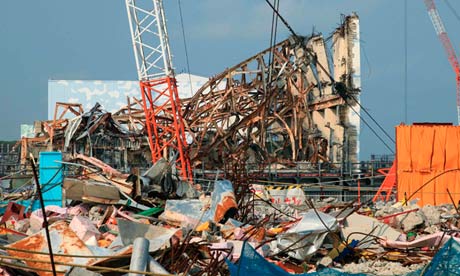
Fukushima Daiichi NPS Reactor 4 in July 2012

This aerial view shows the damaged No. 4 reactor building at Tokyo Electric Power Co.'s Fukushima Dai-ichi nuclear power plant in Okuma town, Fukushima prefecture, northeastern Japan, Wednesday, July 18, 2012. A giant crane removed two rods packed with nuclear fuel from the reactor building on Wednesday, the beginning of a delicate and long process to deal with a remaining risk of more radiation escaping from the disaster-struck plant. AP More


Wednesday, April 18, 2012

Fukushima: Probability theory is unsafe

A year has now passed since the complete core meltdowns of three boiling water reactors at Tokyo Electric Power Co.'s Fukushima No. 1 plant. Because of the limited and biased information issued by the Japanese government, the world does not know what really happened when the earthquake and the tsunami hit the six Fukushima nuclear reactors. There are many important lessons that must be learned to avoid a future disaster. These lessons can be applied to all the nuclear reactors globally. People around the world deserve the right to know what happened.


As a nuclear core designer and someone who earned a Ph.D. from the Massachusetts Institute of Technology in nuclear engineering, I volunteered to look into the situation at Fukushima No. 1 in June of 2011. Mr. Goushi Hosono, minister of nuclear power and environment, personally gave me access to the information and personnel who were directly involved in the containment operations of the postdisaster nuclear plants. After three months of investigation, I analyzed and wrote a long report detailing minute by minute how the nuclear reactors were actually disabled (pr.bbt757.com/eng/)


Here are the highlights of my findings:

1. Three of the six reactors of Fukushima No. 1 had a complete core meltdown a few days after the tsunami hit. The molten fuel penetrated not only through the bottom of the thick pressure vessel, but also poked holes at the bottom of the containment vessel, thus releasing fission materials into the environment. The meltdown itself started at 11p.m. on the day of the tsunami, March 11, 2011.

2. As expected, the meltdown caused the fuel cladding material, zircaloy (zirconium alloy), to react with vapor and to create large quantities of hydrogen and zirconium oxide, which caused the catastrophic hydrogen explosion that blew out three reactor buildings. The hydrogen explosion took place on March 12, 14 and 15. The Japanese Government did not admit to the meltdown until three months later, nor did they admit to the damage to the containment vessels until a half year later. Our government tried to hide this important information for some reason, though judging from the amount of fission material released and from the size of the hydrogen explosion, the meltdown of the entire core was undeniable for anyone who has studied reactor engineering.

3. The earthquake on March 11 damaged all of the five independent external power supply systems, and the 15-meter-high tsunami damaged all of the pumps and motors of the main and emergency cooling systems that were constructed along the shore line, thus disabling the cooling system that pumps in sea water.

4. The tsunami also sent massive amounts of water into the reactor buildings and the turbine housing, thus soaking the emergency diesel engines and batteries, which were stored in the basement of these buildings. This meant that all sources of emergency backup power stored in the basement of the reactors were totally destroyed.

5. There was an air-cooled diesel engine sitting atop a hill close to Reactor No. 6. Its airfins were too big to fit into the basement and was luckily placed outside, and as such, this engine started to generate electricity. With a pump brought in from outside, it started to cool not only Reactor No. 6, but had enough power to cool Reactor No. 5. Of the 13 emergency generators associated with the six plants, this was the only one of the three air-cooled backups, and hence not dependent on water as the heat sink. This air-cooled diesel engine was the only one not entirely submerged in water, but in fact at one point the water level did reach up to half its height. A few weeks later Reactors No. 5 and No. 6 were brought to a cold shutdown.

6. The buildings of reactors No. 1 and No. 3 were blown away by an explosion of hydrogen generated by the core meltdown. Reactor No. 4 eventually exploded, though its core had no fuel inside due to a periodic inspection that meant the fuel rods were stored elsewhere. It turned out that the Reactor No. 4's building filled with hydrogen that leaked from Reactor No. 3 through their common gas release ducts. Reactor No. 2 escaped from the massive explosion, although its core had completely melted. Its windows were blown away most likely by the explosions from neighboring reactors No. 1 and No. 3 and the hydrogen inside Reactor No. 2 escaped into the air. More