Showing posts with label balochistan. Show all posts

Friday, August 29, 2014

A Traditional Future

Pakistani architect Yasmeen Lari uses local building techniques to rebuild villages in the flood-stricken Sindh region.

Yasmeen Lari - Architect

Yasmeen Lari is Pakistan’s first female architect and one of the most successful providers of disaster relief shelters in the world. She has built over 36,000 houses for victims of floods and earthquakes in Pakistan since 2010.

Shunning the structurally weak, mass-produced houses offered by international organisations, Lari uses vernacular techniques and local materials such as lime and bamboo. Her houses have a tiny carbon footprint and are simple enough for people to build themselves. With this, she hopes to demonstrate the role that architecture can play in humanitarian aid.

“I often tell my colleagues, let us not treat disaster-affected households as destitute, needing handouts … but with dignity,” she says.

Lari once built giant concrete and steel buildings for clients like the Pakistani State Oil company. But when disaster struck in 2005, she turned to traditional techniques to design flood and earthquake proof buildings for people in remote regions.

She returns to the Sindh region to see how her homes survived the 2013 floods and helps villagers in Awaran after the 2013 Balochistan earthquake.

Filmmaker’s view

By Faiza Ahmad Khan

Just a week before I left for Pakistan to film this documentary, the chief minister of my home state Rajasthan in India (which, incidentally, borders Sindh, the part of Pakistan that I was about to visit), pledged that within the next two years, there would be not a single mud house left standing in the state.

For many years the central government in India has already had a programme in place, which gives those in rural areas a sum of money to replace their traditional mud houses with brick and cement structures. Traditional is seen as poor and inferior and the fast track to “development” cannot, God forbid, be lined with mud and thatch houses.

While filming in Pakistan, I shared our chief minister’s announcement with an artisan who works with Yasmeen Lari at the Heritage Foundation in a village called Moak Sharif in Sindh.

“Thank God we’re decades behind India in this development business,” he said.

On one of my travels in Orissa in India, to a village called Govindpur that is resisting land acquisition for the mega steel company, POSCO, I met a woman who was rebuilding her kachcha house (made of natural materials, such as mud, bamboo and leave) despite being able to access government funding for a concrete house.

“We depend on this land for everything, we take what we know can be replenished. People in cities have no connection with the land so they don’t think twice about cutting down trees, mining the earth hollow. You think you’re separate from nature but you’re not. If this goes, you go,” she said.

What I am constantly being reminded of, as this country builds the capitalist dream, is that we stand to lose the wealth of traditional knowledge that pivots around this belief - ways to farm, heal, learn and live.

At the Heritage Foundation centre in Moak Sharif, Yasmeen Lari has been working to preserve traditional ways of building. The centre was set up by Yasmeen and her team in 2005 and has evolved to include a women’s centre, a small learning centre for children and a clinic to provide health care for the residents of the village.

Yasmeen believes that her role as an architect should not be restricted to designing houses and buildings. Instead, things should grow in an integrated way.

While I was there, they managed to get the government school, once barely functioning, in working order. Women from the village had organised themselves into a ‘mothers committee’ to oversee the school’s daily operations. And after I returned to India, every once in a while, Yasmeen would call and explain, with great delight, something new they were experimenting with – organic farming, bio fertilizers and natural soaps.

Through the making of this film I realised that building the “earth-way” means fluidity, not concreteness. It means working with the community, integrating it with structures of support and togetherness. Building homes, for Yasmeen, is about situating them. She guides her team to create this kind of space. Traditional, yes, but by no means can this approach be deemed irrelevant. More


Tuesday, September 24, 2013

Pakistan tackles water crisis with rainwater harvesting

MORRY-JE-WANDH, Pakistan (AlertNet) – Wearing colourful traditional dresses with silver jewellery and bangles on their arms, the women of Tharparkar district look festive. But the empty earthen pots they carry tell a different story.

Women of Tharparkar district

“Walking for three miles and (hoisting) a ... bucket filled with water through a wooden pulley from a 130-feet-deep well twice a day is toilsome work,” says Marvi Bheel, who lives in isolated Morry-je-Wandh village in this arid district of Sindh province, some 450 km (280 miles) south-east of Karachi.

Increasing temperatures and lower rainfalls, believed to be associated with climate change, are creating intense water shortages in much of Pakistan, a situation which is likely to worsen if the country’s 170 million population doubles as projected in the next 25 years.

In response, non-governmental organizations are trying to improve water harvesting in rural areas. A pilot project in Morry-je-Wandh has seen the construction of a large covered pond with the capacity to supply the domestic and drinking water needs of 20 families (135 villagers) for more than eight months.

“The new rainwater harvesting facilities have transformed the lives of people, as we have now a safe source of clean water,” said Sobho Bheel, a farmer unrelated to Marvi Bheel.

The effects of having a good supply of drinking water at hand are far-reaching, he added: diseases have diminished, children can go to school and women have more time to spend on other economic activities.

IMPROVING LIFE FOR WOMEN

Women in Tharparker district, as in many places around the world, are charged with the task of gathering water. But as water becomes scarcer, travelling long distances to collect it can be arduous.

“Women fall unconscious on their way to these dug wells, while others develop pregnancy related complications due to being malnourished,” Marvi Bheel said. On summer days temperatures hover around 48 to 50 degrees Celsius (118 to 122 degrees Fahrenheit), and the falling water table means that water sometimes has to be hauled from a depth of 200 to 250 feet (62 to 77 metres).

Dug wells are the major source of water for over 90 percent of the approximately 1.4 million people living in Tharparkar, Pakistan’s largest arid district, which spreads over nearly 20,000 square kilometres (7,600 square miles) and comprises some 2,350 villages.

Water is taken from the wells for domestic, agriculture and livestock needs. But because of the inadequate number of wells in the district and demand for water exceeding supply, wells often produce too little water or dry up within several months of being recharged by rain.

Bharumal Armani of Chelhar village recalls that during August 2010, rains in the Thar Desert recharged parched shallow wells, raised the water table in deep wells and filled household cisterns.

But after four months, local people were without sufficient water even for drinking. Many villagers had to walk miles to fetch supplies, while herdsmen were forced to take their livestock to reservoirs to water them.

According to a study by the Pakistan Council for Research on Water Resources (PCRWR), a government body, the entire Thar Desert receives between 260 and 280 mm (1.0-1.1 inches) of rainfall annually. The scanty precipitation, however, could suffice to meet the domestic water needs of the locals and their livestock for three years, according to the PCRWR.

95 PERCENT OF RAINFALL LOST

But because of inadequate storage and rainwater harvesting facilities, more than 95 percent of the water is lost under sand dunes or evaporates in the summer heat.

“Hardly 0.06 percent of the total annual rainwater is harvested by the locals in their household cisterns or in other indigenous ways,” said A.D. Khan, director for groundwater management at the water council. Khan believes the water shortage problem can be addressed by scaling up rainwater harvesting to at least 0.25 percent of the annual rainfall.

In Morry-je-Wandh, a water storage pond with a cover to curb evaporation is part of that effort. The pond, constructed by the Sukkar Foundation, a non-governmental organisation, cost Rs. 125,000 (about $1,400) and relied on financial and technical support from WaterAid-UK’s Pakistan chapter.

“We lay a geo-membrane sheet under the floor of these (ponds) to check seepage, and cover them with roofs that help check evaporation of stored rainwater during the sizzling summer days,” said Abdul Hafeez, WaterAid’s national programme manager.

Using hand pumps connected to the storage ponds through pipes, women can fill their pitchers with water without any difficulty.

According to Qamar uz Zaman Chaudhry, Pakistan’s advisor on climate change affairs, the country is one of the world’s most arid. Most areas have little or no access to surface water. By international standards, Pakistan was already considered a water-scarce country in 1992 with an annual per capita availability of 1,700 cubic metres. This has now declined to fewer than 1,100 cubic metres, according to the government.

“The situation will grow tenser as rains are becoming more erratic and scarce due to climate change,” said Chaudhry, who is author of Pakistan’s national climate change policy.

Climate change and overuse of limited water is expected to create severe problems for the country in coming years, according to Simi Kamal, chairperson of the Hisar Foundation for Water, Food and Livelihood Security, promotes water conservation and management practices in Pakistan.

Annual per capita availability of water may fall to half its current level by 2020 if the depletion of water resources goes unchecked, she said. She believes much of the solution to growing water stress lies in planning and implementing workable rainwater harvesting programmes at medium and small levels.

Chaudhry agrees.

“More than adequate water can be made available for domestic, agriculture, industrial, livestock and other miscellaneous needs, provided that viable strategic plans are drawn up and implemented for rainwater harvesting at all levels,” he said. More

Saleem Shaikh and Sughra Tunio are development reporters based in Karachi, Pakistan.


Saturday, April 20, 2013

Aftermath of Pakistan's Recent Earthquake

The aftermath of of the earthquake in Iran close to the Pakistan border has hit many

villages very hard and they desperately need help to rebuild.

Saturday, April 28, 2012

Obama's Secret Drone War Explained

The Obama Administration has approved five times the number of covert drone strikes that his predecessor did. Thomson Reuters Digital Editor Chrystia Freeland sits down with Reuters' Pulitzer Prize-winning columnist David Rohde to discuss his special report detailing the quiet expansion of presidential power under Obama

Thursday, March 29, 2012

Pakistan tribal areas: what matters

Within Pakistan and internationally, there is a growing recognition that well-off tribesman will not become the tools of terrorist organizations. But will it come soon enough?

Since the most recent phase of US involvement in Afghanistan began, Pakistan has been a witness to

multiple terrorist attacks on its soil in one form or the other. It has been generally recognised that Pakistan has suffered grave consequences from this conflict. Unfortunately, media outlets and commentators consistently refer to terrorist activities taking place in Pakistan as being undertaken by the ‘Taliban’ or ‘Terrorist Organizations’.

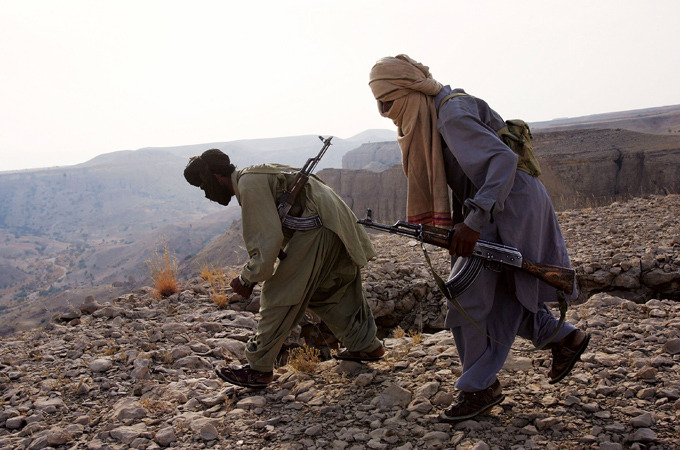
It needs to be understood that every tribal man is not a terrorist. On analyzing tribal areas in Pakistan it is clear that there exist some traditional socio-political norms and values there which are understood as acts of terrorists by others. For instance, by the end of President Zia’s administration the majority of the population kept guns for self protection. Nowadays if an individual is armed they are termed as a terrorist by default.

There are a number of groups in tribal regions who are neither Taliban members nor terrorists but instead view them as criminals, to be despised by the majority of the population. The first such group is the country’s elite. These groups may have links with particular tribal regions in that they are involved in policy making or political representation for those regions. Unfortunately however, they are disconnected from the real issues facing the local population.

The second category is the middle class which makes up a substantial portion of society. This is an interesting group in that they want to be a part of progressive social developments and are equipped with some of the means to do so. However at the same time their progress is being hampered by a number of factors. They want to play a role in policy making and escape the influence of terrorism but are failing to do so, primarily due to the economic pressure under which they find themselves.

The third category consists of people living below the poverty line. These are the people who have actually suffered throughout. They essentially have no choice but to act according to the demands of external influences within their region. If they live in an area which is under the influence of the Taliban then they are compelled to adhere to their wishes, but if Taliban influence diminishes then this often precipitates a shift in the mindset of the local population.

The most pertinent example here is the operation that took place in the Swat region close to the Afghan-Pakistan border. Before the initiation of the operation in Swat the local populace was supportive of the Taliban and the majority of the young joined up with the Taliban in order to secure an income. The reason being that the poor run towards bread: that is to say they seek to grasp the maximum economic benefits from their actions.

After the army’s intervention in these areas people have become highly supportive of the state military forces. This is because they understand that state institutions are able to provide them with security. A man in uniform has rules to obey and is required to protect the interests of the state - he is answerable to the system because he is part of the system. The tribesmen feel that they are deprived of the basic necessities of life. They lead an isolated existence as no one is ready to bring them into the mainstream, in part because liberals are not ready to accommodate them within society.

President Musharraf ushered in change post 9/11 when he banned all jihadi organizations in Pakistan. Many jihadists fled to tribal areas and the relics of both Al-Qaeda and Afghani Taliban joined them in the Federally Administrated Tribal Areas (FATA). There they had initial success in recruiting members through economic rewards, and later through religious ideology. Al-Qaeda and the Taliban possess substantial strategic experience. They knew exactly how to deal with the tribesmen in order to use them for their own purposes. Initially, the tribesmen were committed to not attacking Pakistani state forces, but the Afghan Taliban and Al-Qaeda successfully turned the them against the state. They accomplished this by launching terrorist attacks within Pakistan, in turn forcing the army to launch military operations in FATA, previously designated as no-go areas for them.

The United States are currently engaged in peace talks with the Taliban. They have also pushed Pakistan to continue its military operations in these areas, inadvertently providing new opportunities to radicalise elements within FATA. This is a wake up call for Pakistan. They should be making intensive use of non-military strategies and projects. Haqooq-e-Balochistan should be given to the tribal areas of Balochistan, and the needs of the tribes must be treated in the same way as those of other Pakistani citizens. Quality education, implementation of proper security measures and job opportunities can transform this region from an extremist to a moderate hub. The US has to realize that assisting the development of FATA will be a benefit to their own cause. So called ‘Reconstruction Opportunity Zones’ can be very helpful if implemented properly. There is a growing recognition that well-off tribesman will not become the tools of terrorist organizations. This approach will damage those terrorist activities around the globe that take place under the banner of “Global Jihad”. More


Saturday, March 3, 2012

Should the US supporting an independent Balochistan?

A handful of US congressmen support creating an independent Balochistan, carved out of mostly Pakistani land?


Washington, DC - Over the last few months, a small faction of congressmen, minority Afghan groups, Baloch nationalists, and their supporters have laid out the framework for an alternative US policy approach for Southwest Asia.

This alternative policy centres on backing remnants of the Northern Alliance and Baloch insurgents, who seek to carve out semi-autonomous territories or independent states from Afghanistan, Pakistan, and Iran.

While supporters of this new approach are motivated by a variety of interests, they appear unified in their rejection of what they see as three cornerstones of the Obama administration's current regional policy approach: 1) Normalising relations with Pakistan's government and military; 2) Incorporating the Taliban into the current Afghan political system; 3) Overly accommodating an emerging Iran.


In one broad stroke, this new approach would attempt to advance US national interests by redrawing the political borders of Southwest Asia - contrary to the the sovereignty and territorial integrity of three existing states.

While its advocates clearly do not yet have broad support for their initiative, the campaign for an alternative Southwest Asian policy approach is maturing and garnering increased attention in Congress and beyond, especially as a result of three recent high-profile events: a Balochistan National Front strategy session in Berlin, a US congressional hearing on Balochistan, and the introduction of a Baloch self-determination bill before the US Congress.

Regardless of whether you agree or disagree, it's nevertheless critical to understand how this alternative policy approach framework has evolved over the past few months.

The 'Berlin Mandate' as a loose framework

In early January, a bipartisan congressional delegation, led by Representative Dana Rohrabacher (Republican-California), held a "strategy session" in Berlin with Afghan opposition leaders, including the country's former intelligence chief. The meeting addressed constitutional reforms that would make Afghanistan a federal system.

Meeting participants argued that vesting political and economic power in the provinces, instead of centralising power in Kabul, would protect the US' Northern Alliance allies from retribution at the hands of Pashtuns once the Taliban is fully reincorporated into the Afghan political system.

"Let's talk about creating a Balochistan in the southern part of Pakistan. They'll stop the IEDs and all of the weaponry coming into Afghanistan, and we got a shot to win over there."

- Texas congressman Louie Gohmert

By advancing these policies, the attendees portrayed the Taliban's incorporation into Afghanistan's political system as a greater risk than the threat posed to Afghanistan's territorial integrity by their alternative - which would risk the partition of "Afghanistan between the minority-dominated north and the Pashtun south". This clearly runs counter to the the interests of Hamid Karzai's government.

A few weeks later, Representative Louie Gohmert (Republican-Texas), a Berlin meeting attendee, added fuel to the fire by arguing in a videointerview that the US should not just push for a new political system in Afghanistan but go further by rearming the Northern Alliance.

In the same breath, Gohmert provided one of the first definitive links between support for the Northern Alliance in Afghanistan and Baloch nationalists in Pakistan: "Let's talk about creating a Balochistan in the southern part of Pakistan. They'll stop the IEDs and all of the weaponry coming into Afghanistan, and we got a shot to win over there."

With these remarks, the two pillars of an alternative Afghanistan-Pakistan (Af-Pak) policy approach were now set: To advance its interests, the US should support the carving out of an independent Baloch state and semi-autonomous Afghan territories - even if it undermined existing US partnerships with the governments of Afghanistan and Pakistan.

In early February, Rohrabacher convened a public congressional hearing on Balochistan. While human rights violations in Pakistan's Balochistan province were discussed (per the agenda), the hearing also provided a forum to start a larger (and arguably off-topic) national dialogue on the viability of Southwest Asia's state borders.

As a result of the hearing, witnesses - including Ralph Peters and M Hossein Bor - were able to argue that the dismemberment of Afghanistan, Iran, Pakistan would serve the United States' long-term strategic interests. But, even more importantly, the hearing allowed the witnesses to inject their views into the larger debate on US foreign policy in Southwest Asia. This included Bor's controversial assertion (which was later censored in Pakistan) that supporting an independent Balochistan stretching from "the Strait of Hormuz to Karachi" would be a better policy approach than ongoing US efforts to counter the Iranian and Pakistani regimes.

Rohrabacher, Gohmert, and Representative Steve King (Republican-Iowa) followed up the hearing by introducing a new bill in Congress stating that the Baloch nation has a historic right to self-determination. With this action, the congressmen went from "familiarising themselves" with Balochistan to calling for Congress to recognise the Baloch nation's right to sovereign independence in roughly a week.

In many ways, this brought the "Berlin Mandate" full circle. In less than two months, a small group of congressmen, minority Afghan groups, Baloch nationalists, and their supporters had gone from voicing displeasure with the current Obama Administration's Af-Pak policy approach to advancing a revolutionary alternative policy approach that called for supporting the minority interests of the Northern Alliance and Baloch against the sovereign interests of Afghanistan, Iran, and Pakistan.

Reflecting upon this effort a few days after the bill was introduced, Rohrabacher confided to me in an on-the-record interview:

"There is a natural extension from the Berlin meeting with the Northern Alliance to the Balochistan bill. I have always stood for self-determination, but there are certain things that activate me to start pushing more on that philosophy. Clearly, the whole issue of the Taliban being reintegrated in Afghanistan and Pakistan, providing safe haven to terrorists like Bin Laden, are major factors.There is also my support for immediately withdrawing troops from Afghanistan. To do so, we need to have a major policy dialogue on what our policy is in Southwest Asia, how we properly transition out of Afghanistan, and what will be our ongoing relationship with Pakistan. Balochistan is clearly part of that debate."


Cross-linking with other congressional causes

While the introduction of the Baloch self-determination bill marks an important milestone for their cause, it is important to point out that there has been an equally big change in how "Berlin Mandate" supporters have advocated their cause. Over the last month, these supporters - particularly Baloch nationalists in the US diaspora - have increasingly sought to extend their cause beyond US foreign policy in the Af-Pak region. They appear to recognise the need to latch onto larger foreign policy issues as part of their efforts to garner mainstream support for their cause. Four of the most important include:

I. Punishing Pakistan for supporting terrorism and nuclear proliferation

Rohrabacher, Gohmert, and other key supporters of the alternative policy approach for Southwest Asia have been unabashed in overtly linking the need for policy alternatives to Pakistan's "betrayal of America's trust". It is evenalleged that the Balochistan hearing was called specifically to "stick it to the Pakistanis" for their arrest of a reported key informant in the bin Laden operation. Even after widespread criticism for his past remarks against Pakistan, Rohrabacher does not shy away from his criticism: "Quite frankly, the Pakistani military and leaders that give safe haven to the mass murderer of Americans should not expect to be treated with respect."

Such rhetoric almost certainly will find a receptive audience in Congress - even among the many members who have never heard of Balochistan or know little about the Northern Alliance's struggles over the last year. For this reason, Peters pointed out to me recently as part of a yet unpublished post-hearing interview that the current high levels of anti-Pakistani sentiment in Congress probably provide the best opportunity that the Baloch may see to advance their cause. More


Tuesday, February 21, 2012

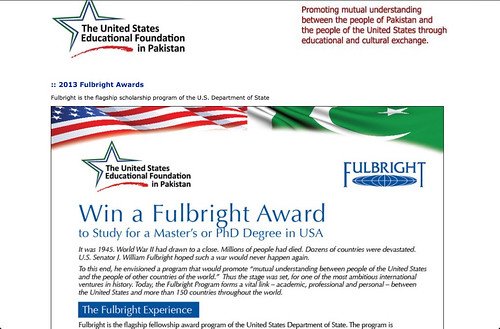
Win A Fulbright Award

Did you know that Pakistan will have the largest Fulbright program in the world in 2013? The program will award Pakistanis with grants to study for their Master's or Ph.D degrees at a U.S. university beginning in Fall 2013. Deadline is May 16, 2012 to apply.

More


Monday, February 20, 2012

Foreign Office Summons Acting US Ambassador Over Balochistan Resolution

US charge d`affaires Richard Hoagland was summoned by the Foreign Office on Monday and a protest was lodged with the US regarding the resolution presented in the congress about Balochistan.

According to the Foreign Office spokesperson, the resolution is a violation of the UN charter and it would have a negative impact on Pak-US relations.

On Sunday, Hoagland while speaking to a private channel said Balochistan was an important issue but not part of US foreign policy.

He added that supporting Balochistan's independence was not the policy of the Obama administration. Official sources said that Hoagland was also asked to conveys Islamabad's reaction on the matter to Washington. More


Sunday, February 19, 2012

US Policy Towards The China-Pakistan-India Triangle – OpEd

The region of South Asia comprising of two nuclear states India and Pakistan – which also happen to be long time rivals - is the flashpoint of future conflicts.

These conflicts would most likely arise from the on and off imbalance of nuclear deterrence, trans-border terrorism, water disputes or the much clichéd Kashmir issue. But one must note here that these conflicts won’t come into play without the role of foreign involvement like the United States and China.

The United States is on the verge of losing balance in the region because of economic constraints, as a result of the failing War on Terror in Afghanistan. It is therefore, looking for a way out which seems to be not that easy. The expansion of its influence into Asia-Pacific for economic ties with partners like South Korea, Japan, Taiwan and India is gaining the required media hype. The recent visits of President Obama on the eve of Asian Economic Summits have proven that America can no longer sustain the decade long war and is now claiming its dominance as an Asia-Pacific power in the region. One wonders where that is going to lead the superpower.

China on the other hand, being a superpower in its own region has managed to match the American economy and has the potential to leave it behind in the near future. China is strong economically and militarily and is an apparent threat to the United States and India alike. Pakistan being an old ally of China, is taking every advantage of the “friendship” to improve its security, economic and energy problems. In other words, Pakistan provides a platform to China in the heart of South Asia which is a strategic gain for the latter. More


Saturday, February 18, 2012

Balochistan resolution in US Congress drives Pakistan crazy

WASHINGTON: A resolution moved by a group of US Congressmen calling for right to self-determination for the Baloch people has drivenPakistan to hysteria, with its leaders from the Prime Minister down questioning Washington's commitment to the country's sovereignty.


Following a Congressional hearing last week on the human rights situation in Balochistan, the Obama administration had assured Islamabadthat it is committed to the country's unity and integrity, but suspicion runs deep in Pakistan that Washington is intent on fingering the country on account of its covert support for terrorists.


Some hardline American analysts have suggested that the Washington help the Baloch break away from the federation so that American and Nato forces can have unfettered access to landlocked Afghanistan, given how Pakistan has been holding the US to ransom. More