Senior scientists discuss the potential for abrupt disruptions of human and natural systems as a consequence of climate change.
Showing posts with label global warming. Show all posts
Showing posts with label global warming. Show all posts
Friday, February 14, 2014
Wednesday, January 29, 2014
Climate Change Is Already Causing Mass Human Migration
There are a lot of reasons people move: for work, for love, for the draw of the big city or the quiet of nature. But as the world continues to warm, it's expected that global climate change will become another factor driving people to move: to dodge coastal erosion and sea level rise, to follow changes in rainfall, to avoid strengthening storms.
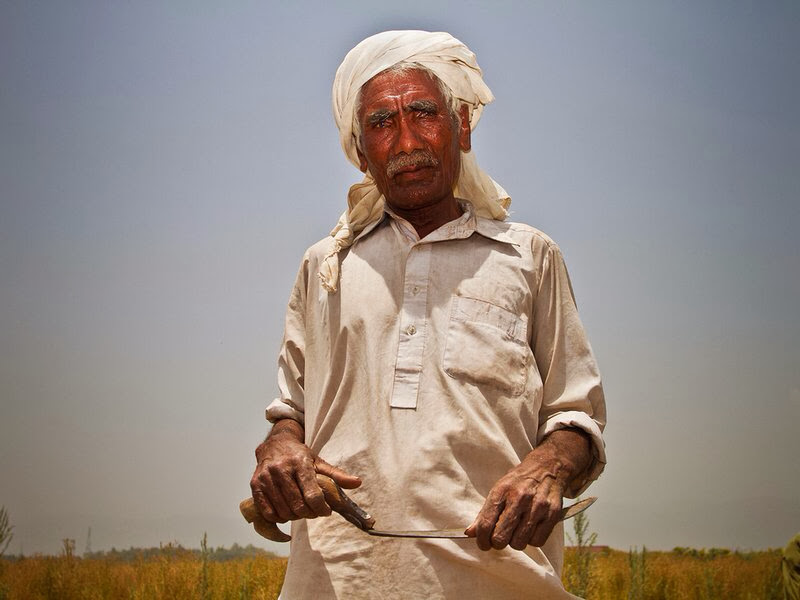
Climate change is already inducing marine animals to migrate, and according to a new study published in the journal Nature Climate Change, it's starting to make people move, too.
For the past 21 years, researchers have been studying the migration patterns of people in Pakistan. (Similar studies are done in America—that's how we know that most emigrants from New York are going to Florida.) Migration data in hand, the scientists, led by the International Food Policy Research Institute's Valerie Mueller, measured the relationship between Pakistanis' movements and changes in a handful of environmental variables, from the quantity and timing of rainfall, to temperature, the strength of the annual monsoon and the occurrence of floods.
“This approach reveals a complex migratory response that is not fully consistent with common narratives of climate-induced migration,” the scientists wrote in their report.
Traditionally, scientists have assumed that it is big, catastrophic natural disasters that drive people to pack up and leave. But as with those who hunker down in Tornado Alley, the researchers found that even though Pakistan is prone to extreme floods, like the devastating 2010 floods that affected 20 million people and forced 14 million to move temporarily, flooding in general has little effect on where people chose to live long-term.
Instead, they found, high temperatures, particularly during the spring and winter farming season, were the dominant driver of mass migration. It's not that it suddenly became too hot for people to live. But as temperature and weather patterns change, previously productive ground may become uneconomical to work. High heat wipes out the farming economy, the researchers suggest, causing Pakistani men to pack up and leave for greener pastures.
“Thus, we are left with an overall picture that heat stress—not high rainfall, flooding, or moisture—is most strongly associated with migration. The risk of a male, non-migrant moving out of the village is 11 times more likely when exposed to temperature values in the fourth quartile,” they wrote.
The failure of the farm and the exodus that follows, the scientists say, sends a rippling shock through the rest of the economy as people stop buying and start leaving. More


Wednesday, January 1, 2014
Climate Change Worse Than We Thought, Likely To Be 'Catastrophic Rather Than Simply Dangerous'
Climate change may be far worse than scientists thought, causing global temperatures to rise by at least 4 degrees Celsius by 2100, or about 7.2 degrees Fahrenheit, according to a new study.

The study, published in the journal Nature, takes a fresh look at clouds' effect on the planet, according to a report by The Guardian. The research found that as the planet heats, fewer sunlight-reflecting clouds form, causing temperatures to rise further in an upward spiral.
That number is double what many governments agree is the threshold for dangerous warming. Aside from dramatic environmental shifts like melting sea ice, many of the ills of the modern world -- starvation, poverty, war and disease -- are likely to get worse as the planet warms.
"4C would likely be catastrophic rather than simply dangerous," lead researcher Steven Sherwood told the Guardian. "For example, it would make life difficult, if not impossible, in much of the tropics, and would guarantee the eventual melting of the Greenland ice sheet and some of the Antarctic ice sheet."
Another report released earlier this month said the abrupt changes caused by rapid warming should be cause for concern, as many of climate change's biggest threats are those we aren't ready for.
In September, the Intergovernmental Panel on Climate Change said it was "extremely likely" that human activity was the dominant cause of global warming, or about 95 percent certain -- often the gold standard in scientific accuracy.
"If this isn't an alarm bell, then I don't know what one is. If ever there were an issue that demanded greater cooperation, partnership, and committed diplomacy, this is it," U.S. Secretary of State John Kerry said after the IPCC report was released. More
Wednesday, October 2, 2013
Monsoon to get longer in India [sub-continent]: IPCC
NEW DELHI: North India is likely to heat up more than the southern parts of the country while the entire Indian subcontinent may see longer rainy seasons in second half of the century, the UN's climate body has predicted in its latest comprehensive document on climate change.

The conclusion, showing variation in temperature and rainfall in South Asia, is part of the lengthy technical details of the United Nation's Intergovernmental Panel on Climate Change (IPCC) which made its comprehensive report — Climate Change 2013, The Physical Science Basis — public in Stockholm on Monday.
The findings of the report show that the northern part of the continent is likely to witness winter temperatures rise of up to 0.4 to 0.8 degree Celsius during 2016-35 as compared to the 1986-2005 average, 2 to 3 degree Celsius during 2046-65 and up to 3 to 5 degree Celsius by the end of the century (2081-2100), under different scenarios of action to limit greenhouse gas emissions.
Though the UN body's report on region-wise "impact, adaptation and vulnerability" will come out in March next year, the technical details comprising 14 chapters and Atlas of Global and Regional Climate Projections in its annexure carry indications of these changes in South Asia.
Krishna Kumar Kanikicharla, climate scientist at Pune's Indian Institute of Tropical Meteorology and one of the drafting authors of the IPCC report, told TOI there was "growing evidence" of the impact of the climate change on monsoons in South Asia and the tropical cyclone system in the Bay of Bengal.
Kanikicharla, responsible for drafting the chapter comprising details of monsoon systems, said: "There is strong hint that the duration of the rainy season would increase due to early onset of monsoon. The quantum of rainfall will also increase during the later part of this century."
He said though the Indian summer monsoon circulation will weaken, rainfall will increase due to higher atmospheric moisture resulting from a rise in temperatures.
In its projection for South Asia, the technical summary of the report clearly points at "enhanced summer monsoon precipitation and increased rainfall extremes of landfall cyclones on the coasts of the Bay of Bengal and Arabian Sea".
What is the confidence level of these predictions? Prashant Goswami, one of the lead authors of the IPCC report, admitted that these conclusions were based on climatic projections that were not as firm as those made at a global level.
"These uncertainties increase as you go to smaller scale (from global to regional or from regional to sub-regional levels). But one has to have an element of faith in these conclusions which are based on well defined scientific methodology," Goswami, chief scientist at Bangalore's CSIR Centre for Mathematical Modelling and Computer Simulation, told TOI.
The impact of temperature rise and rainfall variations on the region's agriculture that's highly dependent on monsoon, will be considered in the report on impact, adaptation and vulnerability, to be released next year as part of the IPCC's fifth assessment report (AR5). More
Sunday, September 29, 2013
Bill Clinton and Al Gore Discuss Climate Change with Charlie Rose
On September 25 former President Bill Clinton and former Vice-President Al Gore discussing climate change with Charlie Rose.
Tuesday, September 24, 2013
Pakistan tackles water crisis with rainwater harvesting
MORRY-JE-WANDH, Pakistan (AlertNet) – Wearing colourful traditional dresses with silver jewellery and bangles on their arms, the women of Tharparkar district look festive. But the empty earthen pots they carry tell a different story.
 |
| Women of Tharparkar district |
“Walking for three miles and (hoisting) a ... bucket filled with water through a wooden pulley from a 130-feet-deep well twice a day is toilsome work,” says Marvi Bheel, who lives in isolated Morry-je-Wandh village in this arid district of Sindh province, some 450 km (280 miles) south-east of Karachi.
Increasing temperatures and lower rainfalls, believed to be associated with climate change, are creating intense water shortages in much of Pakistan, a situation which is likely to worsen if the country’s 170 million population doubles as projected in the next 25 years.
In response, non-governmental organizations are trying to improve water harvesting in rural areas. A pilot project in Morry-je-Wandh has seen the construction of a large covered pond with the capacity to supply the domestic and drinking water needs of 20 families (135 villagers) for more than eight months.
“The new rainwater harvesting facilities have transformed the lives of people, as we have now a safe source of clean water,” said Sobho Bheel, a farmer unrelated to Marvi Bheel.
The effects of having a good supply of drinking water at hand are far-reaching, he added: diseases have diminished, children can go to school and women have more time to spend on other economic activities.
IMPROVING LIFE FOR WOMEN
Women in Tharparker district, as in many places around the world, are charged with the task of gathering water. But as water becomes scarcer, travelling long distances to collect it can be arduous.
“Women fall unconscious on their way to these dug wells, while others develop pregnancy related complications due to being malnourished,” Marvi Bheel said. On summer days temperatures hover around 48 to 50 degrees Celsius (118 to 122 degrees Fahrenheit), and the falling water table means that water sometimes has to be hauled from a depth of 200 to 250 feet (62 to 77 metres).
Dug wells are the major source of water for over 90 percent of the approximately 1.4 million people living in Tharparkar, Pakistan’s largest arid district, which spreads over nearly 20,000 square kilometres (7,600 square miles) and comprises some 2,350 villages.
Water is taken from the wells for domestic, agriculture and livestock needs. But because of the inadequate number of wells in the district and demand for water exceeding supply, wells often produce too little water or dry up within several months of being recharged by rain.
Bharumal Armani of Chelhar village recalls that during August 2010, rains in the Thar Desert recharged parched shallow wells, raised the water table in deep wells and filled household cisterns.
But after four months, local people were without sufficient water even for drinking. Many villagers had to walk miles to fetch supplies, while herdsmen were forced to take their livestock to reservoirs to water them.
According to a study by the Pakistan Council for Research on Water Resources (PCRWR), a government body, the entire Thar Desert receives between 260 and 280 mm (1.0-1.1 inches) of rainfall annually. The scanty precipitation, however, could suffice to meet the domestic water needs of the locals and their livestock for three years, according to the PCRWR.
95 PERCENT OF RAINFALL LOST
But because of inadequate storage and rainwater harvesting facilities, more than 95 percent of the water is lost under sand dunes or evaporates in the summer heat.
“Hardly 0.06 percent of the total annual rainwater is harvested by the locals in their household cisterns or in other indigenous ways,” said A.D. Khan, director for groundwater management at the water council. Khan believes the water shortage problem can be addressed by scaling up rainwater harvesting to at least 0.25 percent of the annual rainfall.
In Morry-je-Wandh, a water storage pond with a cover to curb evaporation is part of that effort. The pond, constructed by the Sukkar Foundation, a non-governmental organisation, cost Rs. 125,000 (about $1,400) and relied on financial and technical support from WaterAid-UK’s Pakistan chapter.
“We lay a geo-membrane sheet under the floor of these (ponds) to check seepage, and cover them with roofs that help check evaporation of stored rainwater during the sizzling summer days,” said Abdul Hafeez, WaterAid’s national programme manager.
Using hand pumps connected to the storage ponds through pipes, women can fill their pitchers with water without any difficulty.
According to Qamar uz Zaman Chaudhry, Pakistan’s advisor on climate change affairs, the country is one of the world’s most arid. Most areas have little or no access to surface water. By international standards, Pakistan was already considered a water-scarce country in 1992 with an annual per capita availability of 1,700 cubic metres. This has now declined to fewer than 1,100 cubic metres, according to the government.
“The situation will grow tenser as rains are becoming more erratic and scarce due to climate change,” said Chaudhry, who is author of Pakistan’s national climate change policy.
Climate change and overuse of limited water is expected to create severe problems for the country in coming years, according to Simi Kamal, chairperson of the Hisar Foundation for Water, Food and Livelihood Security, promotes water conservation and management practices in Pakistan.
Annual per capita availability of water may fall to half its current level by 2020 if the depletion of water resources goes unchecked, she said. She believes much of the solution to growing water stress lies in planning and implementing workable rainwater harvesting programmes at medium and small levels.
Chaudhry agrees.
“More than adequate water can be made available for domestic, agriculture, industrial, livestock and other miscellaneous needs, provided that viable strategic plans are drawn up and implemented for rainwater harvesting at all levels,” he said. More
Saleem Shaikh and Sughra Tunio are development reporters based in Karachi, Pakistan.
Monday, September 23, 2013
North African Countries Commit to Cooperative Management of Nubian Aquifer read more: http://land-l.iisd.org/news/north-african-countries-commit-to-cooperative-management-of-nubian-aquifer/
18 September 2013: Chad, Egypt, Libya and Sudan signed a Strategic Action Programme to establish a long-term framework for managing the Nubian Sandstone Aquifer System (NSAS), the world's largest known fossil water aquifer system.

The agreement establishes a Joint Authority for the NSAS, with the aim of strengthening regional coordination and optimizing equitable use among the four arid North African countries.
The Aquifer is the main water resource for humans, livestock, irrigation and industry in this region, and is under pressure from increasing populations, agricultural expansion and decreasing water availability from other sources. The agreement seeks to strengthen transboundary water cooperation among the four countries to ensure water removal does not threaten water quality, harm the surrounding desert ecosystem and its biodiversity, or accelerate land degradation. The agreement is based on an ecosystem-based management approach (EBMA) and integrated water resources management (IWRM), and includes transboundary actions and targets that individual countries are expected to translate into national actions.
The agreement resulted from a technical cooperation project among the International Atomic Energy Agency (IAEA), the UN Development Programme (UNDP), the Global Environment Facility (GEF) and the UN Educational, Scientific and Cultural Organization (UNESCO). The project, which began in 2006, created an aquifer model to assist the countries in optimizing the aquifer's use for human needs and ecosystem protection. The project also improved understanding of the transboundary ecosystem threats and improved data sharing. The Programme will build upon this project by continuing to strengthen the countries' capacity to monitor groundwater quantity and quality, and providing a framework for transboundary cooperation.
UNDP Administrator Helen Clark congratulated the African countries on the agreement, saying cooperative management of their shared sub-surface waters “will help to ensure maintenance of livelihoods and ecosystems dependent upon the aquifer." The agreement was signed at IAEA headquarters in Vienna, Austria. [UN Press Release] [UNDP Press Release] [GEF Press Release] [Strategic Action Programme Agreement]
More:
Sunday, July 28, 2013
Rivers' in air could boost flooding
Winter floods could intensify in Britain, [and countries globally] according to new research into powerful weather systems called "atmospheric rivers".

Only identified about 20 years ago, atmospheric rivers are intense bands of moisture that flow through the air.
Known to be responsible for heavy rainfall, they have been blamed for severe flooding in California and the UK.
The new study suggests that warmer conditions could create more rivers - and make them more severe.
The paper is published by the Institute of Physics in Environmental Research Letters.
Atmospheric rivers are up to 300km wide and can stretch in length for over 1,000-2,000km. They flow invisibly between 1-2.5km above the surface of the ocean.
One atmospheric river is believed to have been behind the violent flooding that hit Cockermouth in Cumbria on 19 November 2009.
The flooding claimed the life of a policeman, PC Bill Barker, who died after a bridge collapsed.
The researchers, led by Dr David Lavers of the University of Iowa, have estimated the staggering volume of moisture carried by this particular atmospheric river.
They calculate that at its peak it was transporting almost 300,000 tonnes of moisture every second.
By comparison, the River Thames carries about 65 tonnes of water through London over the same period.
Remain on course
If the rivers make landfall and encounter a steep rise in terrain, the air is forced upwards where it cools and releases the moisture in the form of rain.

On top of that, if the river remains on the same course for 24 hours - as it did over Cumbria in 2009 - it will deliver a continuous flow of heavy rain over the same area.
The most closely-studied atmospheric river, which flows towards the California coast, has been dubbed the "Pineapple Express" because it usually originates from the region of Hawaii.
It has been linked to a number of extremely damaging storms along the US West Coast.
Over the last 30 years, there has been an average of 9-11 of the strongest atmospheric river events hitting Britain every year.
In this latest study, the researchers examined five different modelling scenarios to simulate possible conditions this century and found that a warming climate - which allows the atmosphere to hold more moisture - made the rivers more likely.
Dr Lavers said: "All five models suggest that there could be a doubling of atmospheric river events in the period 2074-99 and most of those could be expected to make landfall in the UK.
"One of the big things is that these are the most relevant feature of winter flooding in Britain and the work is certainly suggesting an increase in strength and frequency."
Computer modelling
Among the uncertainties about the research are the reliability of the models used to generate the future scenarios and possible shifts in the patterns of the winds - a change of course away from the UK would reduce the risk.
It was research in the 1970s that first identified "conveyor belts" of moisture travelling through the atmosphere, with later studies in the early 1990s detecting much narrower bands of intense vapour that became known as atmospheric rivers.
Dr Richard Allan of Reading University, also an author of the paper, said: "What this shows is that the dominating factor is the increase in water vapour which means that if you've got more moisture - and the winds don't change -then you've got a much bigger potential for flooding.
"These are really massive flows of invisible water which can feed clouds and cause rainfall if forced up over mountains."
The researchers say the study could help guide forecasters trying to give warning of future flood risks. More
Tuesday, June 4, 2013
Rising energy prices will challenge western way of life – MoD report
A little-known Ministry of Defence (MoD) report published earlier this year warns that converging global trends will dramatically affect UK economic prosperity through to 2040.
The report says that depletion of cheap conventional "easy oil", along with shortages of food and water due to climate change and population growth, will sustain rocketing energy prices. Long-term price spikes are likely to lead to a long recession in Western economies, fuelling internal unrest and the rise of nationalist movements.
The report departs significantly from the conservative and relatively optimistic scenarios officially adopted by the British government, as exemplified in the coalition's new Energy Security Strategy published in November last year by the Department of Energy and Climate Change (Decc).

Peak "easy oil"
The report predicts that "the imminent passing of the point of peak 'easy oil' will mean that hydrocarbon-based energy prices will rise significantly out to 2040." Other factors affecting energy prices include "increasing demand for fossil fuels" due to South Asia's "industrial rise" and greater "volatility in supply" in the Middle East.
Contradicting the British government's official position on peak oil - which accepts the International Energy Agency's (IEA) latest estimate that oil prices will reach "$125/barrel in real terms (over $215/barrel in nominal terms)" - the MoD report projects an exponential escalation in prices, such that "the increasing price of oil... is likely to reach $500 a barrel by 2040" - almost double conventional projections.
This price rise will, however, "drive the development of alternative fuel sources" including tar sands, shale gas, coal, nuclear and renewables.
Rising demand for "resources and energy" from China and India will spur a "'scramble' for commodities and resources" as less developed countries' "resource requirements may go unfulfilled." There will also be a greater chance of clashes over access to "Middle East resources", the South China Sea and the Indian Ocean.
Climate crisis
Climates change will significantly compound these challenges, including a wide range of impacts such as "rising sea levels... increased incidents of seasonal floods, heat-waves, storms, and unpredictable farm yields."
If sea levels rise quicker than anticipated, "millions of people across South Asia (principally in Sri Lanka, Bangladesh and the Maldives) will be displaced, with no opportunity to return to their homes."
Irregularities in the pattern of monsoon rains are likely to undermine South Asia's "agricultural and domestic water needs", while higher temperatures will "increase the range of vector-borne diseases such as malaria", such that it becomes "prevalent all-year-round."
Water stress
Water may become a "destabilising factor", with water stress and scarcity affecting some "2.5 billion people", and acting as a limiter to economic growth in some South Asian economies, including China by 2030.
Water will be a "defence and security issue" through to 2040, and increasing water demand is also likely to "heighten tensions over shared resources such as the Brahma-Putra Himalayan region and the River Indus", between China, India, Pakistan and Bangladesh.
Food shortages
The sustainability of food production in such conditions "will also be a key issue for the region, with much of the population dependent on rice crops as a staple." The report warns that a "rapid loss of some arable land is likely to promote local, then national migration", which may contribute to unrest.
As agriculture is the single largest contributor to GDP and employment in the region, the report observes that the decline in agricultural output driven by higher temperatures, erratic weather, lower yields, soil erosion and increased pests and weeds, will primarily affect nearly all those who are "close to, or below, the poverty line."
Demographic time bomb?
Although China and India will incorporate "some measures of sustainable development", those measures will be limited by the fact that "economic growth will remain the imperative throughout the period."
Despite their confidence in being able to meet these emerging climate and energy challenges, the sheer scale of the latter - "especially with regard to food and water availability and the sensitivity of the monsoon cycle, may challenge such confidence."
Under present trends, South Asia will contain "nearly 40% of the world's population" within the next 30 years. China and India will therefore face "increasing demands" from their "burgeoning populations" requiring "strong levels of sustained economic growth over the period to maintain internal stability."
Inadequate "social and educational policies" and persistent "inequality and corruption" could turn this demographic dividend into "a 'demographic time bomb.'"
In fact, the report predicts that due to "rising inequality", ethnic tensions, strict controls on freedom of speech, and increased access to global communications, "China is likely to experience increased incidents internal of unrest."
End of growth due to resource price spikes?
But the West faces other parallel challenges:
"The growth of South Asian economies will impact on most western nations, where the way of life for the majority of the populaces may be challenged by rising energy and resource prices, coupled with a relative decline in the value of their national economies...
The economic and industrial rise of China and India will increase the cost and reduce the availability of UK energy supplies. As a resource-importing nation, and with relatively modest fossil fuel reserves, the UK will be affected by increased resource and commodity costs. The UK will increasingly need to compete with China and India in order to secure enduring access to energy."
Consequently, the report argues that the "western 'way of life'" - associated with "a wide variety of consumer choice and relatively cheap energy" - will be "increasingly challenged as lifestyles follow GDP levels and 'normalise' across the globe."
Within the US and UK, the bulk of the populations will be affected by:
"... rising energy and resource prices, and the declining availability of finance to sustain discretionary spending. In such a context, this could lead to periods of sustained recession in the West, causing increasingly protectionist policies to be adopted."
"Internal unrest"
This could occur even as growth continues in South Asia, with global GDP per capita overall levelling off to "equilibrate", culminating in "the stalling and subsequent decline of many western economies." This will result in:
"long periods of recession and rising disaffection within the UK population... This could subsequently lead to increased incidents of internal unrest, a rise of nationalistic groups and a demand for protectionist economic and defence policies."
Corporate stakeholders
This could occur even as growth continues in South Asia, with global GDP per capita overall levelling off to "equilibrate", culminating in "the stalling and subsequent decline of many western economies." This will result in:
"long periods of recession and rising disaffection within the UK population... This could subsequently lead to increased incidents of internal unrest, a rise of nationalistic groups and a demand for protectionist economic and defence policies."
The report, titled Regional Survey: South Asia out to 2040, was published by the MoD's Development, Concepts and Doctrine Centre (DCDC) as part of its Strategic Trends Programme in January. The DCDC is an MoD think tank within the Defence Academy site at Shrivenham.
The report utilised the input of a range of government agencies and departments, including the MoD's Strategy Unit, the Defence Science and Technology Laboratory, the Cabinet Office, and the Foreign Office - as well as two private institutions, Standard Chartered Bank and Now & Next. Decc is notably missing from the list of contributors.
Standard Chartered has a chequered history replete with scandals and "ethical lapses". Two years ago, an Ecologist investigation alleged that a coal power plant project in India financed by Standard Chartered among others, had "displaced poor communities and will lead to the destruction of forests."
The project was slated to receive carbon credits under the UN's controversial Clean Development Mechanism. Standard Chartered is now heavily invested in South Asia.
Now and Next is the website of a future trend analysis publication, What's Next, which includes among its clients General Electric, KPMG, McDonalds, and Shell.
Privatisation of power
Although the document sets out reasons to believe the UK is well-positioned to "adapt" to these converging trends, and perhaps even benefit from them, the overall vision heralds the recognition that of a rapidly shifting global landscape.
The report concedes that the "'relative' decline of the West is likely to lead to a new power framework where alliances are constantly reassessed and negotiated." This will also see "the declining influence of existing international institutions such as NATO and the UN Security Council."
In this context, the report predicts an accelerating coalescence between nation states and global capital, noting that:
"The line between government, and private industry protection of intellectual property of key technologies for security and wealth creation, may become increasingly blurred... [as] blueprints, patents and formulas will be increasingly seen as the foundations of wealth generation." More
Tuesday, April 9, 2013
NASA: New study: A warming world will further intensify extreme precipitation events
April 4, 2013 According to a newly-published NOAA-led study in Geophysical Research Letters, as the globe warms from rising atmospheric concentrations of greenhouse gases, more moisture in a warmer atmosphere will make the most extreme precipitation events more intense.
The study, conducted by a team of researchers from the North Carolina State University’s Cooperative Institute for Climate and Satellites-North Carolina (CICS-NC), NOAA’s National Climatic Data Center (NCDC), the Desert Research Institute, University of Wisconsin-Madison, and ERT, Inc., reports that the extra moisture due to a warmer atmosphere dominates all other factors and leads to notable increases in the most intense precipitation rates.

The study also shows a 20-30 percent expected increase in the maximum precipitation possible over large portions of the Northern Hemisphere by the end of the 21st century if greenhouse gases continue to rise at a high emissions rate.
“We have high confidence that the most extreme rainfalls will become even more intense, as it is virtually certain that the atmosphere will provide more water to fuel these events,” said Kenneth Kunkel, Ph.D., senior research professor at CICS-NC and lead author of the paper.
The paper looked at three factors that go into the maximum precipitation value possible in any given location: moisture in the atmosphere, upward motion of air in the atmosphere, and horizontal winds. The team examined climate model data to understand how a continued course of high greenhouse gas emissions would influence the potential maximum precipitation. While greenhouse gas increases did not substantially change the maximum upward motion of the atmosphere or horizontal winds, the models did show a 20-30 percent increase in maximum moisture in the atmosphere, which led to a corresponding increase in the maximum precipitation value.

The findings of this report could inform “design values,” or precipitation amounts, used by water resource managers, insurance and building sectors in modeling the risk due to catastrophic precipitation amounts. Engineers use design values to determine the design of water impoundments and runoff control structures, such as dams, culverts, and detention ponds.
“Our next challenge is to translate this research into local and regional new design values that can be used for identifying risks and mitigating potential disasters. Findings of this study, and others like it, could lead to new information for engineers and developers that will save lives and major infrastructure investments,” said Thomas R. Karl, L.H.D., director of NOAA’s NCDC in Asheville, N.C., and co-author on the paper.
The study, Probable Maximum Precipitation (PMP) and Climate Change, can be viewed online. More
Wednesday, March 27, 2013
HSBC: World is hurtling towards Peak Planet
Global investment bank HSBC says the world is hurtling towards a “Peak Planet” scenario where the global carbon budget from 2000 to 2050 is consumed well before 2030.

To address this, a peak in greenhouse emissions will need to be achieved as a matter or urgency, and by 2020 at the latest. “This is a tough task – but not impossible in our view,” it writes. “There is a growing recognition of the severity of the situation … and we believe that ambition is about to pick up again.”
In an analysis on climate change politics and the business case for action, HSBC economists say the focus is now on five key economies to break that nexus between economic growth and emissions – in fact to double the rate of decoupling.
This so-called Carbon 5 comprises China, Russia, India, the EU and the US, and HSBC says these countries need to cut the carbon emitted per unit of GDP by between 3 and 5 per cent per annum by 2020, beyond existing efforts.
It points to five reasons why this might be achievable, despite the apparent stalemate in international talks.
First, it notes that awareness of the severity of climate impacts is rising, and public opinion is shifting, particularly in the US. It says improving economic confidence and falling clean tech costs will assist the process, and it expects an increase in policy activism in the next three years after the recent plateau.
“Ultimately, climate change is like a chronic disease, where the problem accumulates over time. If we are to avoid unmanageable disruptions to the global economy, governments have agreed that we need to keep the rise in global temperatures below 2°C,” HSBC says.
“What they haven’t agreed, however, is the likelihood of hitting this target. This will be a core part of the negotiations that are now underway for an international climate agreement by the end of 2015.”
HSBC says there are different views of carbon budgets for the global economy, depending on differing views of risk, and where investors can generate returns.
The most commonly cited assessment is Malte Meinshausen’s 2009 evaluation that to have an 80 per cent chance staying below 2°C, the global carbon budget is around 886 gigatonnes of CO2 equivalent from 2000-2050. A riskier 50:50 scenario increases the budget substantially to 1440Gt (see chart above). But by the end of 2011, 420Gt had already been consumed.
HSBC says that with annual emissions from energy alone running at over 31Gt, the budget for the 80% scenario would de depleted by 2026, and by 2039 for the 50/50 chance.
This means that without large-scale deployment of carbon capture and storage, between two-thirds and four-fifths of current reserves cannot be commercialised in a 2°C world, and global emissions need to peak before 2020. The International Energy Agency, it notes, says global CO2 emissions from energy need to peak by 2017. “The contradiction between global carbon budgets and fossil fuel reserves is gaining increasing attention,” it says.
Is this target impossible? Nearly, but not quite, says HSBC. It says major European economies – France, Germany and the UK – peaked their emissions of greenhouse gases in the 1970s, and have each cut their emissions by more than 30 per cent as a result of oil price shocks and a structural shift away from coal for economic and environmental reasons. (see chart below) More

Friday, March 15, 2013
Stimson Environmental Security program Releasing New South Asia Water Report

For people in the Washington, DC area, next week Stimson hopes you can join their Environmental Security Program on Wednesday March 20th from 10 am-12 pm as we release a new report on transboundary water management and climate change impacts in South Asia, entitled Connecting the Drops: An Indus Basin Roadmap for Cross-Border Water Research, Data Sharing, and Policy Coordination.
The event will feature David Michel (Director of the Stimson Environmental Security Program), Winston Yu (Senior Water Resources Specialist for South Asia at the World Bank), and Satu Limaye (Director of the East-West Center). Please join us for a discussion of the current state of India-Pakistan water relations and new potential pathways for water collaboration between the two countries. You can RSVP by clicking the link in the formal invitation below, or by following this link:
https://docs.google.com/forms/d/1tPeXvZLpLnfcudKQLtikWNBQnrh3mdnw7nTxWJe2u5Y/viewform
Please feel free to forward this invitation to interested colleagues. Thank you, and we look forward to welcoming you to Stimson.
Best,
Russell Sticklor
Stimson Environmental Security Program
Stimson's Environmental Security Program invites you to the publication launch of: Connecting the Drops: An Indus Basin Roadmap for Cross-Border Water Research, Data Sharing, and Policy Coordination Wednesday, March 20, 2013 10 AM – 12 PM Washington, DC 20036 Decision makers in India and Pakistan will have to overcome a host of overlapping socio-economic, environmental, and political pressures as they endeavor to fulfill their countries’ future water needs and peacefully manage the Indus River Basin that both countries share. Increasingly subject to soaring demand, unsustainable consumption patterns, and mounting environmental stresses, almost all of the basin’s renewable water resources are already allocated for various uses — with little to no spare capacity. Scientific and policy collaboration across national and disciplinary boundaries will be essential to providing decision makers with better understanding of the multiple risks weighing on the Indus Basin and the consequent water resource challenges and choices facing the riparian nations. |
Friday, March 1, 2013
Killer Heat Waves and Floods Linked to Climate Change
- Killer heat waves, floods and storms are increasingly caused by climate change, new research reveals.

Scientists in Germany say they have found how greenhouse gases from burning fossil fuels are helping to trap the jet stream, resulting in extraordinary weather such as the 2010 Pakistan flood and the 2011 heat wave in the United States.
Human-driven climate change repeatedly disturbs the flow of atmospheric waves around the globe’s Northern hemisphere, said lead author Vladimir Petoukhov of the Potsdam Institute for Climate Impact Research (PIK) in Germany.
Giant atmospheric waves called Rossby waves are meanders in the strong, high-altitude winds known as jet streams and have a major influence on weather. These wave movements are caused by the difference in temperatures between the cold air from the Arctic and hot air from the tropics.
When the waves shift north, they suck warm air from the tropics to Europe, Russia, or the U.S., and when they swing down, they do the same thing with cold air from the Arctic, said Petoukhov.
“During several recent extreme weather events, these planetary waves almost freeze in their tracks for weeks,” he said. “So instead of bringing in cool air after having brought warm air in before, the heat just stays.”
This unnatural pattern is due to human heating of the climate through emissions of greenhouse gases that result from burning fossil fuels, according to the study published this week in Proceedings of the National Academy of Sciences.
However, this heating of the atmosphere is wildly uneven. The Arctic is warming two to three times faster than the global temperature rise of 0.8C and that affects the Rossby waves and is slowing the jet stream.
“(Our research) complements previous research that already linked such phenomena to climate change,” said Hans Joachim Schellnhuber, a co-author of the study.
IPS previously reported research showing the dramatic loss of Arctic sea ice and rapid warming of the region was affecting weather patterns in the northern hemisphere.
The unprecedented expanse of ice-free Arctic Ocean has been absorbing the 24-hour sun over the short polar summer. The heat in the water must be released into the atmosphere if the ice is to re-form in the autumn.
“This is like a new energy source for the atmosphere,” Jennifer Francis, a researcher at Rutgers University, told the Guardian.
Major declines of Arctic summer sea ice as in 2011 and 2007 have been linked to colder winters in the UK and northern Europe, Francis said. The record ice loss in 2012 has been followed by a cold and stormy winter over much of Europe.
“The jet stream is clearly weaker,” said Francis. That means weather systems, be it rain or dry conditions, are slow to move on and last longer. Ultimately, this can result in “blocking” events, such as the conditions that produced the terrible heatwave in western Russia during the summer of 2010 and floods in Pakistan, she said.
Last summer, Greenland experienced a similar blocking anti-cyclone, resulting in a record surface melting of its ice sheet. “Blocks act like a traffic jam, slowing down weather patterns elsewhere,” Francis said.
Scientists are surprised by how extreme these changes have been with a relatively small amount of warming. That has prompted some to speak out politically to urge emission reductions. On Monday, a group of Canadian and U.S. scientists pleaded with the Canadian government to stop the expansion of the Alberta tar sands oil projects and take real steps to reduce carbon emissions. More
Tuesday, February 26, 2013
Pakistan and UK Invite Climate scientist Schellnhuber to brief UN Security Council
02/15/2013 - As climate change starts being recognized as a security issue on the highest international levels, Pakistan and the United Kingdom have asked Hans Joachim Schellnhuber of the Potsdam Institute for Climate Impact Research (PIK) to speak at an in-depth discussion event for the UN Security Council members. The meeting aims at addressing “potential threats posed by possible adverse effects of climate change to the maintenance of international peace and security”. It will take place on February 15th at the UN headquarters in New York City. Secretary-General Ban Ki-moon plans to attend.
 |
| UN HQ |
“With unabated greenhouse-gas emissions, humankind would venture into an uncertain future that is much hotter than ever before in its history – so from a scientist’s perspective, climate change is a global risk multiplier,” says Schellnhuber, director of PIK and chair of the Scientific Advisory Council on Global Change (WBGU) for the German government. Many millions of people could be affected by severe climate change impacts. They range from sea-level rise that increases the frequency of severe coastal flooding, to changes in atmospheric circulation patterns that could trigger, e.g., monsoon failures.
“Most remarkably, Pakistan and the UK together have called this meeting – illustrating, by action, that climate change is an issue for both developing and industrialized countries,” Schellnhuber says.
Climate change impacts might trigger social tipping dynamics
If the international community allows global mean temperature to rise way beyond the 2-degree limit that it agreed upon, major environmental tipping points could be crossed. “The Earth system shows a nonlinear response to greenhouse-gas emissions, so elements like the Amazon rainforest could react drastically if some warming thresholds are passed. This in turn might result in tipping international relations from a situation in which an initial increase of cooperation in face of a crisis shifts into a fierce competition for scarce natural resources, like food,” argues Schellnhuber. “However, another kind of social tipping dynamics is imaginable as well – with states, and people, becoming aware of the dangers ahead, and starting the great transformation towards sustainability.” One small example for this might be the German Energiewende (a rapid decarbonization of the national energy system).
Schellnhuber is the only scientist invited to the meeting. The other eminent speakers are Tony DeBrum, Minister-in-assistance to the President of the Marshall Islands, Rachel Kyte, Vice President of Sustainable Development at the World Bank, and Gyan Acharya, Under-Secretary General and High Representative of the least developed countries. Some of the issues to be debated are climate change impacts on food security, sustaining cooperative management of freshwater supply in the face of glacial melting and reduced runoff, and possible large-scale displacements of people across borders. More
Subscribe to:
Posts (Atom)