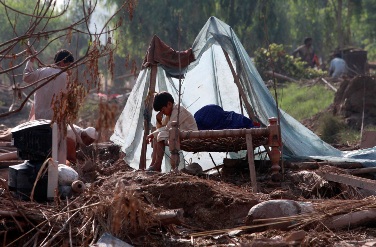
Showing posts with label floods. Show all posts

Monday, March 31, 2014

Planet at Risk

Human interference with the climate system is occurring, and climate change poses risks for human and natural systems . The assessment of impacts, adaptation, and vulnerability in the Working Group II contribution to the IPCC's Fifth Assessment Report (WGII AR5) evaluates how patterns of risks and potential benefits are shifting due to climate change. It considers how impacts and risks related to climate change can be reduced and managed through adaptation and mitigation. The report assesses needs, options, opportunities, constraints, resilience, limits, and other aspects associated with adaptation.

Climate change involves complex interactions and changing likelihoods of diverse impacts. A focus on risk, which is new in this report, supports decision-making in the context of climate change, and complements other elements of the report. People and societies may perceive or rank risks and potential benefits differently, given diverse values and goals.

Compared to past WGII reports, the WGII AR5 assesses a substantially larger knowledge base of relevant scientific, technical, and socioeconomic literature. Increased literature has facilitated comprehensive assessment across a broader set of topics and sectors, with expanded coverage of human systems, adaptation, and the ocean. More


Sunday, March 16, 2014

A Fork in the Road by Dr. James Hansen

We stand at a fork in the road. Conventional oil and gas supplies are limited. We can move down the path of dirtier more carbon-intensive unconventional fossil-fuels, digging up the dirtiest tar sands and tar shales, hydrofracking for gas, continued mountain-top removal and mechanized destructive long-wall coal mining. Or we can choose the alternative path of clean energies and energy efficiency.

The climate science is crystal clear. We cannot go down the path of the dirty fuels without guaranteeing that the climate system passes tipping points, leaving our children and grandchildren a situation out of their control, a situation of our making. Unstable ice sheets will lead to continually rising seas and devastation of coastal cities worldwide. A large fraction of Earth's species will be driven to extinction by the combination of shifting climate zones and other stresses. Summer heat waves, scorching droughts, and intense wildfires will become more frequent and extreme. At other times and places, the warmer water bodies and increased evaporation will power stronger storms, heavier rains, greater floods.

The economics is crystal clear. We are all better off if fossil fuels are made to pay their honest costs to society. We must collect a gradually rising fee from fossil fuel companies at the source, the domestic mine or port of entry, distributing the funds to the public on a per capita basis. This approach will provide the business community and entrepreneurs the incentives to develop clean energy and energy-efficient products, and the public will have the resources to make changes.

This approach is transparent, built on conservative principles. Not one dime to the government.

The alternative is to slake fossil fuel addiction, forcing the public to continue to subsidize fossil fuels. And hammer the public with more pollution. The public must pay the medical costs for all pollution effects. The public will pay costs caused by climate change. Fossil fuel moguls get richer, we get poorer. Our children are screwed. Our well-oiled coal-fired government pretends to not understand.

Joe Nocera is polite, but he does not understand basic economics. If a rising price is placed on carbon, the tar sands will be left in the ground where they belong. And the remarkable life and landscape of the original North American people will be preserved.

Joe Nocera quoted a private comment from a note explaining that I could not promise I would be back in New York to meet him. But he did not mention the contents of the e-mail that I sent him with information about the subject we were to discuss. The entire e-mail is copied below.

Jim Hansen


_______

Joe,

Here are some relevant words from the draft of a paper that I am working on:

Transition to a post-fossil fuel world of clean energies will not occur as long as fossil fuels are the cheapest energy. Fossil fuels are cheap only because they are subsidized and do not pay their costs to society. Air and water pollution from fossil fuel extraction and use have high costs in human health, food production, and natural ecosystems, with costs borne by the public. Costs of climate change and ocean acidification also are borne by the public, especially young people and future generations.

Thus the essential underlying policy, albeit not sufficient, is for emissions of CO2 to come with a price that allows these costs to be internalized within the economics of energy use. Because so much energy is used through expensive capital stock, the price should rise in a predictable way to enable people and businesses to efficiently adjust lifestyles and investments to minimize costs.

An economic analysis indicates that a tax beginning at $15/tCO2 and rising $10/tCO2 each year would reduce emissions in the U.S. by 30% within 10 years. Such a reduction is more than 10 times as great as the carbon content of tar sands oil carried by the proposed Keystone XL pipeline (830,000 barrels/day). Reduced oil demand would be nearly six times the pipeline capacity, thus rendering it superfluous

A rising carbon price is the sine qua non for fossil fuel phase out, but it is not sufficient. Investment is needed in energy RD&D (research, development and demonstration) in new technologies such as low-loss smart electric grids, electrical vehicles interacting effectively with the power grid, and energy storage for intermittent renewable energy. Nuclear power has made major contributions to climate change mitigation and mortality prevention, and advanced nuclear reactor designs can address safety, nuclear waste, and weapons proliferation issues that have limited prior use of nuclear power, but governments need to provide a regulatory environment that supports timely construction of approved designs to limit costs. etc.

Jim Hansen


Tuesday, August 20, 2013

Save the Date: World Conference on Disaster Risk Reduction 2015

Subject to an anticipated decision of the UN General Assembly later in 2013, the Third United Nations World Conference on Disaster Risk Reduction (WCDRR) is to take place in Sendai City, Miyagi Prefecture, Japan, from 14 to 18 March 2015 (five days inclusive).


Hosted by the Government of Japan in cooperation with the United Nations Office for Disaster Risk Reduction (UNISDR), as secretariat of the International Strategy for Disaster Reduction, the WCDRR will review the implementation of the Hyogo Framework for Action and is expected to adopt a successor framework for disaster risk reduction.

The post-2015 framework for disaster risk reduction will build on the knowledge and practice developed through the implementation of the International Framework for the International Decade for Natural Disaster Reduction of 1989, the Yokohama Strategy and Plan of Action of 1994, the International Strategy for Disaster Reduction of 1999 and the Hyogo Framework for Action 2005-2015: Building the Resilience of Nations and Communities to Disasters. Pursuant to General Assembly resolution 66/199, UNISDR will continue to ensure extensive and inclusive multi-stakeholder consultations for a post-2015 framework for disaster risk reduction.

Kind regards,
UNISDR


*******************
International Day for Disaster Reduction 2013
http://www.unisdr.org/2013/iddr

The United Nations Office for Disaster Risk Reduction (UNISDR)
Visit our website: http://www.unisdr.org
Follow us on Twitter: http://www.twitter.com/unisdr
Find us on Facebook: http://www.facebook.com/unisdr

Share your Disaster Risk Reduction content: http://www.preventionweb.net/submit


Thursday, August 1, 2013

Northeast Pakistan hit by 'surprise' floods, as monsoon rains intensify

SIALKOT, Pakistan (Thomson Reuters Foundation) - “We kept quivering with fear the whole night and could not sleep even a wink,” recalled Salma Zehra, a mother of five teenage children. The family trembled to think that the roof of their mud house could cave in at any time, as the rain lashed down in a huge thunderstorm.

Mehtabpur, District Sialkot, Pakistan

By early morning on July 22, the house in Mehtabpur village in northeast Pakistan’s Sialkot district was waist-deep in water. The torrential downpour had left Zehra’s two buffaloes dead, the 45-year-old said in a shaky voice.

Another bout of heavy rain followed later that night. The Dek tributary of the Chenab River in Sialkot, 192 km (122 miles) from Islamabad, burst its banks, submerging more than 72 villages in the district.

Besides Sialkot, other districts in Punjab province have also suffered massive damage to crops across 1,000 hectares of land, as well as to properties. According to the district disaster management authorities of Sialkot, Gujranwala and Narowal, an estimated 400 villages have been flooded.

Officials have declined to give final figures for the losses, but say dozens have died and thousands of people remain stranded in the affected parts of the three districts. Some are starting to return home, but many houses have collapsed and must be rebuilt, they report.

Sialkot District Coordination Officer Iftikhar Ali Sahu told Thomson Reuters Foundation thousands of people had been trapped on the roofs of their houses during the worst of the flooding. “Mortality among cattle is high - the number of dead animals continued to rise as the floodwaters began to recede on July 26,” he added.

The situation in adjoining districts is just as bad. In Narowal alone, around 2,000 people were marooned on their rooftops in some seven villages a week ago.

Less than 30 percent of the floodwater has yet to recede, according to Mujahid Sherdil, director-general of the Punjab Provincial Disaster Management Authority.

Machines have been brought in to help drain water out of the flood-affected areas, and he hopes the task will be accomplished in the next two to three days, he told Thomson Reuters Foundation from Lahore.

Sherdil said the torrential rainfall had caused breaches of irrigation canals, streams and natural dams, and the floods had washed away crops, livestock, roads, bridges, buildings and even entire villages.

Farmers say surviving cattle in flood-hit areas are now at risk.

“Besides paddy, maize and vegetable crops, fodder fields are also underwater. This has created an acute shortage of fodder, and it is barely possible to save our cattle from the looming threat of hunger and disease,” said Zehra’s husband, Ghulam Abbas.

METEOROLOGISTS ‘STARTLED’

The above-normal monsoon rains in Punjab’s northeastern districts have taken weather experts by surprise.

“Last month, we predicted that this year monsoon rains across the country would remain normal with no possibility of flooding. But unexpected heavy rains in the northeastern districts are startling for us,” said Ghulam Rasul, a senior weather scientist at the Pakistan Meteorological Department (PMD) in Islamabad. “This shows how monsoon rains have become erratic and unpredictable in timing, volume and intensity.”

Sherdil, head of the Punjab disaster management agency, said the heavy rains and flooding had caught them unprepared.

“We were closely following the weekly and monthly forecasts of PMD that never predicted heavy rains of unprecedented significance for July in northeastern parts, which have been nearly 40 percent above normal for the month,” he said.

It has been difficult to get aid into the affected areas due to damaged and flooded roads and bridges, he said. “Nevertheless, we left no stone unturned to get the emergency relief items including food, medicines, to the flood victims on boats – although (they arrived) a bit late,” he added.

MONSOON SHIFTS

In June 2012, scientists argued in the Nature Climate Change journal that global warming would make understanding changes in the South Asian monsoon more difficult.

They said the impacts of short- and long-term monsoon shifts would affect the lives of over a billion people in the region, who rely on rainfall for agriculture, hydropower generation, economic growth and basic human needs.

Understanding how the South Asian monsoon will alter due to climate change is necessary to cope with the effects, reduce the risk of disasters and safeguard people’s livelihoods, they underlined.

“Addressing the uncertainties in projected changes of the monsoon variability in coming years will remain a daunting challenge for climate scientists,” said Arshad Abbasi, a water and energy expert at the Sustainable Development Policy Institute in Islamabad.

Arshad Khan, the executive director of the Global Change Impact Study Centre (GCISC), the research arm of Pakistan’s Federal Climate Change Division, said the country is in the grip of unpredictable weather patterns.

Intense monsoon rains will be a common phenomenon, particularly on the country’s southern plains which lack water reservoirs and are highly vulnerable to floods, he warned.

And a spurt in the speed of glacial melt, due to rising global temperatures and above-normal monsoon rains, is likely to cause rivers to overflow and burst their banks across the country, he added.

GOVERNMENT EFFORTS

Officials at the Climate Change Division, which operates under the oversight of the prime minister, said efforts are underway to tackle the vagaries of climate change across different sectors of the economy, particularly agriculture and water.

“Consultations are being made with national and provincial disaster management authorities, and officials of federal and provincial environment, agriculture, irrigation departments to implement national climate change policy to mitigate the impacts of changing weather patterns and erratic monsoon rains,” said a senior official, who coordinates policy at federal and provincial levels.

The Climate Change Division is developing climate adaptation plans for the agriculture, water and irrigation sectors, which will be implemented in Pakistan’s four provinces in collaboration with international NGOs and provincial government offices.

It is also working on programmes to ensure that climate change is considered in other sectors such as health and education, to make them more climate-resilient.

Abbasi of the Sustainable Development Policy Institute said the best ways to avert the growing threat of floods in Pakistan include efficient watershed management, reforestation in northern mountain areas and the revival of riverine forests.

Saleem Shaikh and Sughra Tunio are Islamabad-based journalists specialising in climate change and development issues. More

Tuesday, June 4, 2013

As Sea Waters Rise, Costal Communities in Pakistan Suffer

As global warming causes ocean water to creep farther up the Indus Delta, communities in Pakistan's coastal areas are suffering. A recent report from the World Wildlife Fund Pakistan highlights these challenges.

One farmer told WWF Pakistan he had to start fishing:

“Over the last few years, I sowed seeds in over 200 acres. But now my hands are empty. Only 15 acres is still fertile while the rest has become plagued by the problem of water-logging and salinity.”

Dawn.com reports over half of the population's livelihoods are threaten by climate change:

The majority of the people in Pakistan (between 60 to 70 per cent) depend on the eco-system to survive. A shepherd in Balochistan, a farmer in Punjab or a fisherman from Sindh — all rely directly on the environment for their livelihood. Unfortunately, the livelihood of these people is at risk due to climate change. More

Report from WWF Pakistan


Thursday, April 25, 2013

Untitled

Medellin, Colombia - Scientists are finding a new suspect to blame for flood disasters around the world, and it’s not climate change: It’s sediment.

Researchers in Spain have found the number of yearly floods and related disasters around the world has jumped more than 9 times since the 1950s - to more than 180 per year - and that the trends in rainfall attributed to climate change are not enough to explain such a rise.

Instead, the dramatic rise of water-related disasters seems to follow GDP, the researchers found. As economies around the world grow, people are clearing more and more forests to make way for cities and farms. Without trees to retain soil, excess dirt and rocks are poured into rivers, damaging their capacity to cope with storms.

Sediments are produced when water, wind, ice or changes in temperature break up rocks and soil into small bits, in a process called erosion. Erosion is a natural process that shapes the landscape and transports nutrients.

However, human impacts on land - especially deforestation - have significantly increased erosion rates all around the world.

A 2010 study by the University of Cantabria in Santander, Spain and the Universidad Nacional de La Plata in Argentina looked at sediments and their connection with economic growth, using the La Plata River in South America as a case study.

The study found while unpopulated Andean regions showed no major increase in erosion, in places near the Sao Paulo metropolitan area sedimentations rates increased “gently” starting in the mid-1980s and then sharply since 2000, showing more than tenfold growth in about 20 years.

A 2012 follow-up study by the Earth Science Department at the University of Cantabria found that as GDP increased in northern Spain, so did the rates of sediment production, and also the number of water-triggered disasters in the region.

Colombia’s Magdalena River

The researchers’ hypothesis is that human contributions to erosion have risen to an extent that the world is now undergoing “global geomorphic change”, which makes floods and landslides worse, regardless of the changes in the weather.

The Magdalena River in Colombia is a dramatic illustration of the changes, and the inter-relationships between economic growth, sediments and flooding.

The Magdalena is born in the Colombian Andes, and flows north into the Caribbean Sea. More than 80 percent of Colombians live in the Magdalena Basin, and about 85 percent of Colombia’s GDP is generated there.

Once it was the swiftest way to move between cities in Colombia’s interior and the Atlantic Ocean. But current navigation on the Magdalena is very limited, partly because of excess sediments accumulated in the riverbed.

The Magdalena flooded in 2010 and 2011 when rainy seasons enhanced by the La Niña phenomenon caused the worst climate-linked tragedy in Colombian history, affecting more than four million Colombians. Two-and-a-half million became climate refugees. One million hectares of cropland were flooded, and more than 800 roads destroyed. The country spent more than $3.9bn in emergency humanitarian aid to cope with the tragedy. More

I have to question if this is partly to blame for the flooding in Pakistan in 2010 and 2011? Editor


Tuesday, April 9, 2013

NASA: New study: A warming world will further intensify extreme precipitation events

April 4, 2013 According to a newly-published NOAA-led study in Geophysical Research Letters, as the globe warms from rising atmospheric concentrations of greenhouse gases, more moisture in a warmer atmosphere will make the most extreme precipitation events more intense.

The study, conducted by a team of researchers from the North Carolina State University’s Cooperative Institute for Climate and Satellites-North Carolina (CICS-NC), NOAA’s National Climatic Data Center (NCDC), the Desert Research Institute, University of Wisconsin-Madison, and ERT, Inc., reports that the extra moisture due to a warmer atmosphere dominates all other factors and leads to notable increases in the most intense precipitation rates.

The study also shows a 20-30 percent expected increase in the maximum precipitation possible over large portions of the Northern Hemisphere by the end of the 21st century if greenhouse gases continue to rise at a high emissions rate.

“We have high confidence that the most extreme rainfalls will become even more intense, as it is virtually certain that the atmosphere will provide more water to fuel these events,” said Kenneth Kunkel, Ph.D., senior research professor at CICS-NC and lead author of the paper.

The paper looked at three factors that go into the maximum precipitation value possible in any given location: moisture in the atmosphere, upward motion of air in the atmosphere, and horizontal winds. The team examined climate model data to understand how a continued course of high greenhouse gas emissions would influence the potential maximum precipitation. While greenhouse gas increases did not substantially change the maximum upward motion of the atmosphere or horizontal winds, the models did show a 20-30 percent increase in maximum moisture in the atmosphere, which led to a corresponding increase in the maximum precipitation value.

The findings of this report could inform “design values,” or precipitation amounts, used by water resource managers, insurance and building sectors in modeling the risk due to catastrophic precipitation amounts. Engineers use design values to determine the design of water impoundments and runoff control structures, such as dams, culverts, and detention ponds.

“Our next challenge is to translate this research into local and regional new design values that can be used for identifying risks and mitigating potential disasters. Findings of this study, and others like it, could lead to new information for engineers and developers that will save lives and major infrastructure investments,” said Thomas R. Karl, L.H.D., director of NOAA’s NCDC in Asheville, N.C., and co-author on the paper.

The study, Probable Maximum Precipitation (PMP) and Climate Change, can be viewed online. More


Sunday, March 24, 2013

Climate Change Now Seen as Security Threat Worldwide

WASHINGTON, Mar 22 2013 (IPS) - Defence establishments around the world increasingly see climate change as posing potentially serious threats to national and international security, according to a review of high-level statements by the world’s governments released here Thursday.

The review, “The Global Security Defense Index on Climate Change: Preliminary Results,” found that nearly three out of four governments for which relevant information is available view the possible effects of climate change as a serious national security issue.

In many nations, the armed forces are the most respected arm of government, and their action on climate change can raise awareness throughout the country.

It found that the wealthy developed countries of North America, Europe and East Asia, including China, have made the most progress in integrating climate change into their national security strategies.

With the notable exception of India, leaders of South Asian countries have also made strong statements about the security threats posed by climate change, while smaller countries in the Pacific, the Caribbean, and Central America have expressed alarm at the possible catastrophic impacts of climate change on them, according to the review.

It was officially released at the this week’s Climate Security Conference in the Asia-Pacific Region in Seoul, South Korea by the American Security Project (ASP), a non-partisan group headed by former senior U.S. government and military officials.

The Index, which will go online later this spring and be constantly updated, will catalogue official documents and statements by national governments – and particularly their military establishments — about the relationship between climate change and security issues.

“In many nations, the armed forces are the most respected arm of government, and their action on climate change can raise awareness throughout the country,” according to ASP’s Andrew Holland, who co-authored the report with Xander Vagg.

The review’s release comes amidst growing frustration among both climate scientists and activists over the slow pace and weakness of multilateral and unilateral efforts to curb the emission of greenhouse gases that contribute to global warming.

Governments’ failure to take stronger action has been attributed in part to the fact that climate change has been seen primarily as an environmental issue. As such, it has been accorded a lower priority than other challenges faced by countries, particularly economic growth.

In recent years, however, governments in a growing number of countries have recognised climate change as a national security issue – a recognition welcomed by activists who believe it should bolster their efforts to push the issue up the national and international agenda.

Here in the U.S., such an effort has been underway for some time. Just last month, a bipartisan group of 38 former senior and cabinet-level U.S. foreign policy officials, military officers, and lawmakers published an “open letter” to President Barack Obama and Congress calling for urgent action, especially in funding programmes designed to help poor countries both curb emissions and adapt to climate change.

Unless such action is forthcoming, “climate change impacts abroad could spur mass migrations, influence civil conflict and ultimately lead to a more unpredictable world,” the letter, sponsored by the Partnership for a Secure America, warned.

“…(P)rotecting U.S. interests under these conditions would progressively exhaust American military, diplomatic and development resources as we struggle to meet growing demands for emergency international engagement.”

A recent joint report by the Center for American Progress, the Stimson Center, and the Center for Climate and Security found that crop failures resulting from both severe droughts and flooding in various parts of the world contributed to food shortages that helped spark popular unrest in key Arab countries, paving the way for the upheavals known as the Arab Spring.

In his annual global threat assessment report issued last week, the director for national intelligence (DNI) warned that “(e)xtreme weather events (floods, droughts, heat waves) will increasingly disrupt food and energy markets, exacerbating state weakness, forcing human migrations, and triggering riots, civil disobedience, and vandalism.”

At the same time, head of the U.S. Pacific Command (PACOM), Adm. Samuel Locklear, warned that the impact of climate change on his region was “probably the most likely thing that is going to happen …that will cripple the security environment, probably more likely than the other scenarios we all often talk about.”

He told the Boston Globe that his command was already engaging the militaries of other regional countries, including China and India, about co-operation in addressing the challenge.

But the security implications of climate change are by no means confined to the U.S. and other wealthy countries with large military establishments, according to the ASP review.

It found that the governments and militaries of a least 110 of 155 countries for which relevant information was available have identified climate as a threat to their security. And many of those have integrated into their defence and national security planning documents.

“It was fascinating to learn how many different nations with such a variety of political systems, economic practices, and geographic locales share a common view on the dangers posed by climate change,” Vagg told IPS in an email.

“More to the point, these states all share the view that climate change — and its direct/indirect effects — should no longer be treated as a purely environmental threat, but rather a full-blown national security issue.”

Of the 32 countries identified by the study as resisting the view that climate change poses a security threat, India and Brazil were by far the most important.

Both countries opposed a move last month sponsored by Pakistan and Britain to put climate change on the U.N. Security Council’s agenda, according to Vagg.

Russia and China also opposed “securitising” the issue by placing it under the Security Council’s jurisdiction, although senior political and military leaders in both countries have defined climate change as a security threat, along with other non-traditional threats, such as global pandemics, terrorism, and transnational crime networks. More


Wednesday, March 13, 2013

India, Bangladesh very short of water, among Asia's worst - report

NEW DELHI (AlertNet) - Three out of four countries in Asia and the Pacific are facing a serious lack of water, and some are in danger of a crisis unless steps are taken to improve water management, a report by the Asian Development Bank and the Asia-Pacific Water Forum has said.

A private vehicle crosses a bridge as excavators work at the dam site of Kishanganga power project in Gurez, 160 km north of Srinagar, Indian-administered Kashmir. Picture June 21, 2012, REUTERS/Fayaz Kabli

The Asian Water Development Outlook 2013 , the first study of the degree of water security of every country in the region, found that 37 out of 49 nations do not have enough water, the worst being India, Afghanistan, Bangladesh, Pakistan, Cambodia, Kiribati, Nauru and Tuvalu.

"South Asia and parts of Central and West Asia are faring the worst with rivers under immense strain, while many Pacific islands suffer from a lack of access to safe piped water and decent sanitation and are highly vulnerable to increasingly severe water disasters," said an ADB statement.

"By contrast East Asia, which has the highest frequency of hazards in the region, is relatively better off due to higher levels of investment in disaster defences, but urban water security remains poor in many cities and towns."

Water security has become an increasing concern across the world in recent years.

More frequent floods and droughts caused by climate change, pollution of rivers and lakes, urbanisation, over-extraction of ground water and expanding populations mean that many Asia-Pacific nations face serious water shortages.

In addition, the demand for more power by countries like India to fuel their economic growth has resulted in a need to harness more water for hydropower dams.

The study examined water security in countries at five different levels, including access to clean drinking water and sanitation, water availability for industry and agriculture, and water supply systems in urban areas.

"Much progress has been made in terms of providing drinking water, but when we look at the number of households that have piped water, it is much less," said Wouter T. Lincklaen, lead water resources specialist at the ADB.

Only 35 percent of the region's population have a secure water supply. Even worse, only 23 percent of South Asians and 21 percent of those living in the Pacific have piped water, he said.

ADB experts cited China as a good example of improved water management, in which the government not only promised to double annual investment in the water sector to $608 billion by 2020, but also set performance targets for industry, irrigation and water quality. More


Friday, March 1, 2013

Killer Heat Waves and Floods Linked to Climate Change

UXBRIDGE, Canada, Feb 27 2013 (IPS) - Killer heat waves, floods and storms are increasingly caused by climate change, new research reveals.

Scientists in Germany say they have found how greenhouse gases from burning fossil fuels are helping to trap the jet stream, resulting in extraordinary weather such as the 2010 Pakistan flood and the 2011 heat wave in the United States.

Human-driven climate change repeatedly disturbs the flow of atmospheric waves around the globe’s Northern hemisphere, said lead author Vladimir Petoukhov of the Potsdam Institute for Climate Impact Research (PIK) in Germany.

Giant atmospheric waves called Rossby waves are meanders in the strong, high-altitude winds known as jet streams and have a major influence on weather. These wave movements are caused by the difference in temperatures between the cold air from the Arctic and hot air from the tropics.

When the waves shift north, they suck warm air from the tropics to Europe, Russia, or the U.S., and when they swing down, they do the same thing with cold air from the Arctic, said Petoukhov.

“During several recent extreme weather events, these planetary waves almost freeze in their tracks for weeks,” he said. “So instead of bringing in cool air after having brought warm air in before, the heat just stays.”

This unnatural pattern is due to human heating of the climate through emissions of greenhouse gases that result from burning fossil fuels, according to the study published this week in Proceedings of the National Academy of Sciences.

However, this heating of the atmosphere is wildly uneven. The Arctic is warming two to three times faster than the global temperature rise of 0.8C and that affects the Rossby waves and is slowing the jet stream.

“(Our research) complements previous research that already linked such phenomena to climate change,” said Hans Joachim Schellnhuber, a co-author of the study.

IPS previously reported research showing the dramatic loss of Arctic sea ice and rapid warming of the region was affecting weather patterns in the northern hemisphere.

The unprecedented expanse of ice-free Arctic Ocean has been absorbing the 24-hour sun over the short polar summer. The heat in the water must be released into the atmosphere if the ice is to re-form in the autumn.

“This is like a new energy source for the atmosphere,” Jennifer Francis, a researcher at Rutgers University, told the Guardian.

Major declines of Arctic summer sea ice as in 2011 and 2007 have been linked to colder winters in the UK and northern Europe, Francis said. The record ice loss in 2012 has been followed by a cold and stormy winter over much of Europe.

“The jet stream is clearly weaker,” said Francis. That means weather systems, be it rain or dry conditions, are slow to move on and last longer. Ultimately, this can result in “blocking” events, such as the conditions that produced the terrible heatwave in western Russia during the summer of 2010 and floods in Pakistan, she said.

Last summer, Greenland experienced a similar blocking anti-cyclone, resulting in a record surface melting of its ice sheet. “Blocks act like a traffic jam, slowing down weather patterns elsewhere,” Francis said.

Scientists are surprised by how extreme these changes have been with a relatively small amount of warming. That has prompted some to speak out politically to urge emission reductions. On Monday, a group of Canadian and U.S. scientists pleaded with the Canadian government to stop the expansion of the Alberta tar sands oil projects and take real steps to reduce carbon emissions. More


Tuesday, August 7, 2012

Climate change is wild card in water security – SEI analysts

We can think creatively about water management, but unknown large global threats could cause a fundamental reorganisation of life on Earth, according to a water expert with the Stockholm Environment Institute (SEI).

“A doomsday scenario would be that if the Greenland ice sheet melts, and then there’s six metres of sea-level rise — all bets are off,” said David Purkey, a senior scientist who heads SEI’s Northern California office. “I think we’ve got bigger problems than water scarcity at that moment.”

“What happens when L.A. has to evacuate, when New York has to evacuate? At that point, I wonder whether rational conversations about water management will be what we’re having.”

In a separate interview, Arno Rosemarin, senior research fellow at SEI’s EcoSanRes (ecological sanitation research) programme, told AlertNet that water security problems will be compounded by global population growth, expected to hit 9 billion by 2050.

Rosemarin cautioned that climate change could also have an unknown impact on vulnerable urban populations in ever-expanding cities.

“We aren’t going to have enough water,” Rosemarin said. When you add factors like weather changes, drought and flooding — you can’t manage — it’s like a monster and that’s not water supply that’s a disaster.”

Treating greywater and sewage to be re-used in urban agriculture — using less water, more efficient taps and appliances — even choosing to eat fried food instead of boiled, are just a few water-management tactics Rosemarin recommends.

To read the interviews, please visit AlertNet, and for more stories about water, visit the Battle for Water page.

Picture caption: Chinese People’s Liberation Army soldiers place sandbags to block a breaching dyke after heavy rainfalls hit the Fangshan district of Beijing, July 25, 2012. REUTERS/Stringer


Wednesday, September 1, 2010

A Possible Solution for Pakistan's Destroyed Bridge Infrastructure

The Bailey bridge is a portable pre-fabricated truss bridge, designed for use by military engineering units to bridge up to 60-metre gaps (200 ft). 

It requires no special tools or heavy equipment for construction, the bridge elements are small enough to be carried in trucks, and the bridge is strong enough to carry tanks. It is considered a great example of military engineering. Bailey bridges are also extensively used in civil engineering construction projects to provide temporary access across canals, rivers, railway lines, etc
More >>>

Call to Cancel Pakistan's International Debt

Dear Friends,

As Pakistan struggles to rescue families from flood waters and fend off disease and starvation before winter sets in, it is scrambling to pay out a shocking 30% of its annual budget revenues to foreign creditors on debt incurred by previous dictatorships.

If Pakistan is obliged to make these debt payments, rescue efforts for tens of millions of people whose lives have been devastated could be crippled. Earlier this year, we persuaded creditor governments to drop Haiti's debt after it was devastated by an earthquake -- and now we could do the same for Pakistan.

Right now international financial institutions and donor countries are assessing how to assist Pakistan. Let's come together and call for life-saving debt relief for the people of Pakistan. Sign the petition below to stop these stifling debt payments and let Pakistan rebuild, and it will be delivered directly to ministers and senior officials attending the Annual Meetings of the World Bank and the International Monetary Fund (IMF).

http://www.avaaz.org/en/pakistan_cancel_the_debt97.php?cl_tta_sign=22923291adad0a709a43651304156e43

Pakistan's staggering $55 billion debt burden comes from decades of reckless spending, matched by irresponsible lending on the part of Western creditors and banks.

But 60% of Pakistanis still live below the poverty line. It is a tragic irony that these tens of millions of Pakistanis whose lives have been destroyed in these floods and who have received little or no benefit from these massive loans, are the ones now footing the bill of such unjust debt.

In the aftermath of Haiti's earthquake, Hurricane Mitch in Central America, and the Asian tsunami, the world responded by suspending and cancelling debt payments from affected countries. Pakistan's debt is too vast to cancel in one swoop, but a two year moratorium with accountability mechanisms to ensure that the released funds are spent on relief is a first step and now is the moment to push for it.

Together we have donated a stunning $1 million which is already making a difference to desperate Pakistani flood victims. But if we win this debt campaign, we can make billions available for relief and reconstruction. Let's make sure the international community does the right thing. Sign the urgent petition below and share this message with all your friends and family:

http://www.avaaz.org/en/pakistan_cancel_the_debt97.php?cl_tta_sign=22923291adad0a709a43651304156e43

With hope and solidarity,

Luis, Iain, Paula, Ricken, Alice, Pascal and the entire Avaaz team

PS - Over the last 2 weeks, thousands of us have contributed US$1 million for relief and recovery from the Pakistan floods, which has been sent to support the Sungi Development Foundation, Hirrak Development Centre (HDC), Participatory Welfare Services (PWS) and other outstanding local organisations provide life-saving food, water, shelter and medical care across the country.

Sources:

# Race against winter in Pakistan's north-west:
http://www.bbc.co.uk/news/world-south-asia-11128880

# Reuters, IMF talks: all options being explored to help Pakistan:
http://www.reuters.com/article/idUSN26195747._CH_.2400

# "Fuelling Injustice: Debt and Muslim countries", Report by Jubilee Debt Campaign and Islamic Relief UK:
http://www.jubileedebtcampaign.org.uk/?lid=6302&bid=13

# Jubilee USA Network Calls for Immediate Debt Service Moratorium in Response to Disaster, Assistance in Grant Form:
http://www.jubileeusa.org/press/press-item/article/new-debt-for-disaster-for-pakistan.html?tx_ttnews[backPid]=170&cHash=02e62f133f

# EURODAD, "Pakistan needs debt cancellation, not new IMF loans":
http://www.eurodad.org/whatsnew/articles.aspx?id=4220


Avaaz.org is a 5.5-million-person global campaign network
 that works to ensure that the views and values of the world's people shape global decision-making. ("Avaaz" means "voice" or "song" in many languages.) Avaaz members live in every nation of the world; our team is spread across 13 countries on 4 continents and operates in 14 languages. Learn about some of Avaaz's biggest campaigns here, or follow us on Facebook or Twitter.

To contact Avaaz, please do not reply to this email. Instead, write to us at www.avaaz.org/en/contact or call us at +1-888-922-8229 (US).