Showing posts with label national security. Show all posts

Monday, July 28, 2014

Drone attacks undermine national security

Drone blowback is real. Over the past five years, terrorists have attempted serious attacks on American soil that were motivated in part by U.S. drone strikes abroad. We know this because the apprehended terrorists have been loud and clear about their motives.
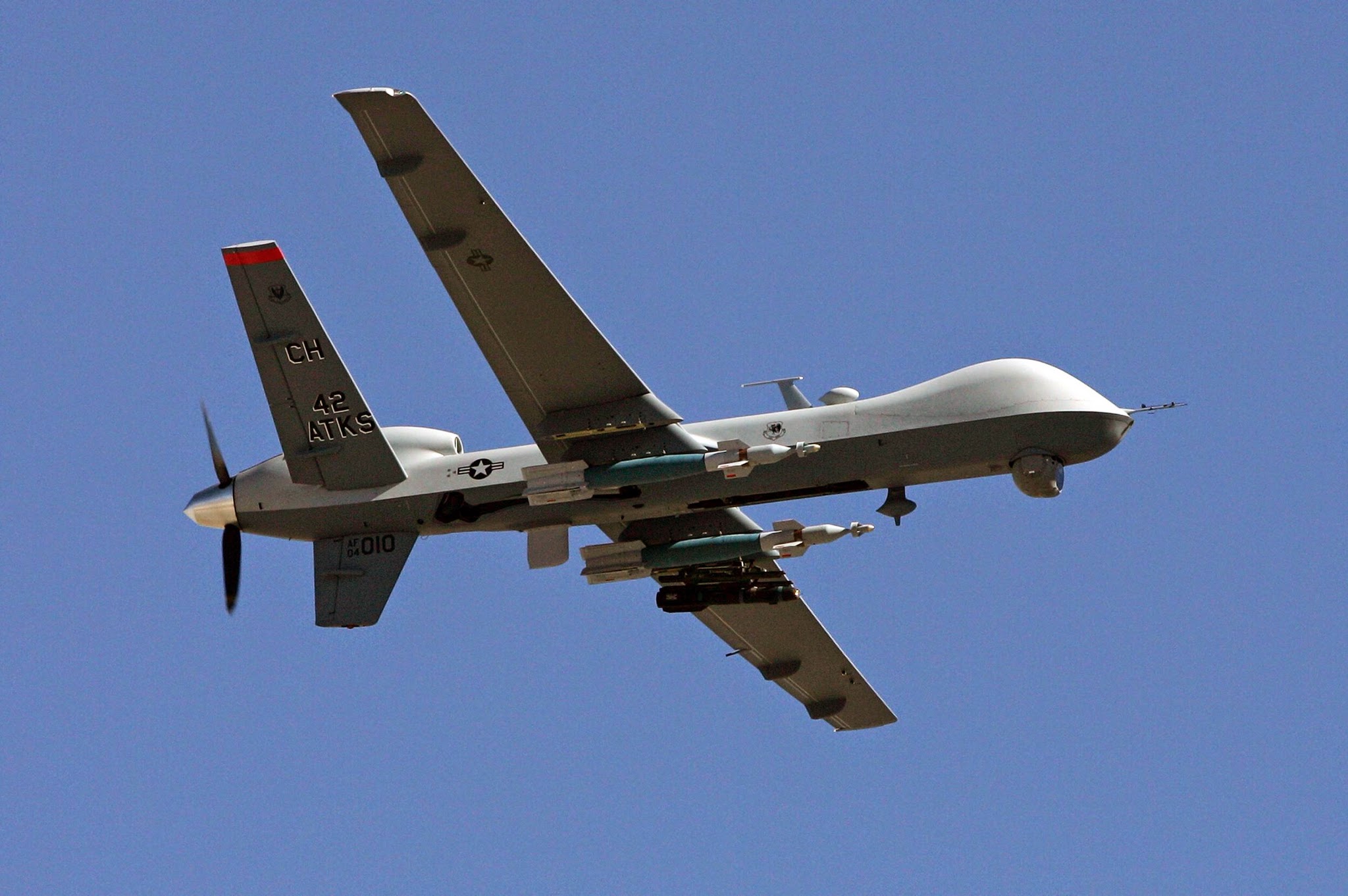
As Pakistani-born Faisal Shahzad, whose car bomb failed to explode in Times Square in May 2010, said at his arraignment:

Until the hour the U.S. pulls its forces from Iraq and Afghanistan and stops the drone strikes in Somalia and Yemen and in Pakistan and stops the occupation of Muslim lands … we will be attacking U.S. The drone hits in Afghanistan and Iraq, they don’t see children … They kill women, children — they kill everybody.

A foiled plot to blow up the New York subway, led by Afghan-born, Queens-raised Najibullah Zazi, also speaks to the growing anger over drone warfare.According to courtroom testimony from the would-be perpetrators, they conceived their effort as revenge for the drone attacks in northwestern Pakistan, where U.S. strikes have killed some 2,800 people. Just how many of those killed were Al-Qaeda fighters and how many civilians is not precisely known. But the connection between drones abroad and danger at home is not hypothetical: It’s a demonstrable fact. And yet our national security experts tend to treat these attempted terrorist attacks as if they were of no relevance to Washington’s increasing use of lethal unmanned aircraft.

Pure fanaticism

Last month the Stimson Center, a defense-industry-funded think tank issued what is only the latest report to take a remarkably blasé attitude toward the homeland security liabilities of drone strikes abroad. In fact, the report, “Recommendations and Report of the Drone Policy Task Force” makes no mention of Shahzad or Zazi. It is baffling that the task force, co-led by retired U.S. Army Gen. John Abizaid and Georgetown law professor Rosa Brooks, chose to ignore the attempts on Times Square and the New York subway. Do they perhaps think that what motivated a couple of near-miss terrorist attacks is of no importance?

The U.S. national security establishment hypes and magnifies anything remotely resembling a terrorist plot when it’s time to justify security agency budgets and surveillance programs. But when assessing the security costs of U.S. military violence, these terrorist plots suddenly become invisible. This is in part because the acknowledgment of any motive for terrorism stemming from U.S. foreign policy — any motive other than pure evil or pure fanaticism, of course — is huffily condemned by the natsec establishment as excuse-making and perhaps even sympathy: Tout comprendre, c’est tout pardonner. This is, of course, obtuse; knowing why John Wilkes Booth killed Abraham Lincoln won’t turn you into a neo-Confederate.

Making connections between U.S. violence abroad and retaliatory violence at home should not be controversial, especially when it is a matter of national security. And yet touching these two wires together is, for today’s security pundits, a deeply internalized taboo. The liberal Brennan Center’s 2011 reporton Muslim radicalization, for instance, mentions in passing Shahzad’s attempted bombing but is careful to say nothing about his plainly stated (and widely reported) motive — a bizarre omission in a report dedicated to understanding what turns people into terrorists.

For its part, a 2010 report by the Center for Strategic and International Studies (CSIS) on homegrown extremism floats a connection between Muslim discontent and U.S. foreign policy, only to torpedo it as a “misperception.” To credit the motivating force of U.S. violence overseas, the report argues, is to buy into “the Al-Qaeda-driven narrative” of an American war with all of Islam.

The CSIS authors are of course correct that the U.S. is not waging a war against the Muslim faith in general — no matter what some American generals, clergyand law enforcement officials like to say. But is also true that Washington has, in the past 10 years, waged war or semiwar in such majority-Muslim lands as Afghanistan, Iraq, Yemen, Libya, Pakistan and Somalia, all the while lavishly arming Egypt’s authoritarian dictatorships, the Israeli occupation of the Palestinian territories and the Sunni overlords of Bahrain. A war on Islam is indeed a misperception, but it would be foolish to think that so much military violence will not beget a violent reaction.

If drone strikes are a security liability for the United States, then all other arguments in their favor are moot.

Given the well-documented blowback attacks, one might expect plenty of forthright opposition to drone strikes on strategic grounds. But American liberals don’t have a lot to say about these security consequences. They’d rather talk about more high-minded matters, such as how to regulate drones. When prestigious media outlets such as The New York Review of Books writes about drones, the criticism sticks largely to questions of legal procedure. (Most of the magazine’s “13 Questions for John O. Brennan,” director of CIA, were about the legal aspects of drone assassinations.)

Such commentary leaves the impression that had the strikes been carried out with more due diligence and transparency, there would be nothing wrong with them. By confining dissent mainly to procedural grounds, liberals tacitly affirm the assumption that drone strikes are an unalloyed benefit for homeland security — an assumption that is not grounded in data, even if the Stimson Center report optimistically conjectures that drone assassinations “may have helped keep the homeland free of major terrorist attacks.”

To its credit, that report does fret about the long-term strategic effects of increased use of drones — notably, that unmanned aerial vehicles are fast becoming a first resort to any crisis. When U.S. drones were first put to use 10 years ago in Pakistan, it was for the narrowly defined purpose of killing the leadership of Al-Qaeda. But the U.S. government has since quickly rushed drones into serving a much wider array of other goals and aims, as Micah Zenko of the Council on Foreign Relations and others have documented, including assassinating low-level Al-Qaeda soldiers and helping the Pakistani government kill armed insurgents that threaten its rule. Lately the White House has announced a number of vague missions for drones in Iraq and Syria, from force protection to guarding infrastructure.

No strategy

Drones have killed some Al-Qaeda leaders and plenty of low-level insurgents along with the civilians of several nations. But if drones are actively harmful to the Unites States’ reputation abroad and its security at home, what are these assassinations worth? Strategy is not trumped by tactical operations, no matter how technologically sophisticated they may be. But then “strategy” is perhaps too dignified a term for Washington’s undisciplined and spasmodic efforts at global, open-ended counterinsurgency — unless their aim is to spread and foment terrorism, not curb it. As James A. Russell of the Naval Postgraduate School has written, drones are a clear example of tactics in aimless search of a strategy.

To be sure, the strategic balance sheet of risk and security is not the sole criterion for judging drone strikes or any other military tactic. But it is the threshold question. If drone strikes are, on the whole, a security liability for the United States, if they increase the risk of terrorist attack rather than diminish it, then all other arguments — moral, legal, procedural — are moot, however toothsome they may be to pundits, jurists and think tankers for hire.

The Stimson report, like others before it, concludes by calling for a “rigorous strategic review.” What else were they going to say? But given the well-documented reality of drone blowback attempts on the homeland, it is already clear enough that this tactic is harmful to U.S. security. And the real purpose of drone strikes has always been to protect the United States — right? More

Chase Madar is an attorney in New York and the author of “The Passion of [Chelsea] Manning: The Story Behind the WikiLeaks Whistleblower” (Verso, 2013).

The views expressed in this article are the author's own and do not necessarily reflect Al Jazeera America's editorial policy.


Saturday, June 21, 2014

Pentagon preparing for mass civil breakdown

A US Department of Defense (DoD) research programme is funding universities to model the dynamics, risks and tipping points for large-scale civil unrest across the world, under the supervision of various US military agencies.

The multi-million dollar programme is designed to develop immediate and long-term "warfighter-relevant insights" for senior officials and decision makers in "the defense policy community," and to inform policy implemented by "combatant commands."

Launched in 2008 – the year of the global banking crisis – the DoD 'Minerva Research Initiative' partners with universities "to improve DoD's basic understanding of the social, cultural, behavioral, and political forces that shape regions of the world of strategic importance to the US."

Among the projects awarded for the period 2014-2017 is a Cornell University-led study managed by the US Air Force Office of Scientific Research which aims to develop an empirical model "of the dynamics of social movement mobilisation and contagions." The project will determine "the critical mass (tipping point)" of social contagians by studying their "digital traces" in the cases of "the 2011 Egyptian revolution, the 2011 Russian Duma elections, the 2012 Nigerian fuel subsidy crisis and the 2013 Gazi park protests in Turkey."

Twitter posts and conversations will be examined "to identify individuals mobilised in a social contagion and when they become mobilised."

Another project awarded this year to the University of Washington "seeks to uncover the conditions under which political movements aimed at large-scale political and economic change originate," along with their "characteristics and consequences." The project, managed by the US Army Research Office, focuses on "large-scale movements involving more than 1,000 participants in enduring activity," and will cover 58 countries in total.

Last year, the DoD's Minerva Initiative funded a project to determine 'Who Does Not Become a Terrorist, and Why?' which, however, conflates peaceful activists with "supporters of political violence" who are different from terrorists only in that they do not embark on "armed militancy" themselves. The project explicitly sets out to study non-violent activists:

"In every context we find many individuals who share the demographic, family, cultural, and/or socioeconomic background of those who decided to engage in terrorism, and yet refrained themselves from taking up armed militancy, even though they were sympathetic to the end goals of armed groups. The field of terrorism studies has not, until recently, attempted to look at this control group. This project is not about terrorists, but about supporters of political violence."

The project's 14 case studies each "involve extensive interviews with ten or more activists and militants in parties and NGOs who, though sympathetic to radical causes, have chosen a path of non-violence."

I contacted the project's principal investigator, Prof Maria Rasmussen of the US Naval Postgraduate School, asking why non-violent activists working for NGOs should be equated to supporters of political violence – and which "parties and NGOs" were being investigated – but received no response.

Similarly, Minerva programme staff refused to answer a series of similar questions I put to them, including asking how "radical causes" promoted by peaceful NGOs constituted a potential national security threat of interest to the DoD.

Among my questions, I asked:

"Does the US Department of Defense see protest movements and social activism in different parts of the world as a threat to US national security? If so, why? Does the US Department of Defense consider political movements aiming for large scale political and economic change as a national security matter? If so, why? Activism, protest, 'political movements' and of course NGOs are a vital element of a healthy civil society and democracy - why is it that the DoD is funding research to investigate such issues?"

Minerva's programme director Dr Erin Fitzgerald said "I appreciate your concerns and am glad that you reached out to give us the opportunity to clarify" before promising a more detailed response. Instead, I received the following bland statement from the DoD's press office:

"The Department of Defense takes seriously its role in the security of the United States, its citizens, and US allies and partners. While every security challenge does not cause conflict, and every conflict does not involve the US military, Minerva helps fund basic social science research that helps increase the Department of Defense's understanding of what causes instability and insecurity around the world. By better understanding these conflicts and their causes beforehand, the Department of Defense can better prepare for the dynamic future security environment."

In 2013, Minerva funded a University of Maryland project in collaboration with the US Department of Energy's Pacific Northwest National Laboratory to gauge the risk of civil unrest due to climate change. The three-year $1.9 million project is developing models to anticipate what could happen to societies under a range of potential climate change scenarios.

From the outset, the Minerva programme was slated to provide over $75 million over five years for social and behavioural science research. This year alone it has been allocated a total budget of $17.8 million by US Congress.

An internal Minerva staff email communication referenced in a 2012 Masters dissertation reveals that the programme is geared toward producing quick results that are directly applicable to field operations. The dissertation was part of a Minerva-funded project on "counter-radical Muslim discourse" at Arizona State University.

The internal email from Prof Steve Corman, a principal investigator for the project, describes a meeting hosted by the DoD's Human Social Cultural and Behavioural Modeling (HSCB) programme in which senior Pentagon officials said their priority was "to develop capabilities that are deliverable quickly" in the form of "models and tools that can be integrated with operations."

Although Office of Naval Research supervisor Dr Harold Hawkins had assured the university researchers at the outset that the project was merely "a basic research effort, so we shouldn't be concerned about doing applied stuff", the meeting in fact showed that DoD is looking to "feed results" into "applications," Corman said in the email. He advised his researchers to "think about shaping results, reports, etc., so they [DoD] can clearly see their application for tools that can be taken to the field."

Many independent scholars are critical of what they see as the US government's efforts to militarise social science in the service of war. In May 2008, the American Anthropological Association (AAA) wrote to the US government noting that the Pentagon lacks "the kind of infrastructure for evaluating anthropological [and other social science] research" in a way that involves "rigorous, balanced and objective peer review", calling for such research to be managed instead by civilian agencies like the National Science Foundation (NSF).

The following month, the DoD signed a memorandum of understanding (MoU) with the NSF to cooperate on the management of Minerva. In response, the AAA cautioned that although research proposals would now be evaluated by NSF's merit-review panels. "Pentagon officials will have decision-making power in deciding who sits on the panels":

"… there remain concerns within the discipline that research will only be funded when it supports the Pentagon's agenda. Other critics of the programme, including the Network of Concerned Anthropologists, have raised concerns that the programme would discourage research in other important areas and undermine the role of the university as a place for independent discussion and critique of the military."

According to Prof David Price, a cultural anthropologist at St Martin's University in Washington DC and author of Weaponizing Anthropology: Social Science in Service of the Militarized State, "when you looked at the individual bits of many of these projects they sort of looked like normal social science, textual analysis, historical research, and so on, but when you added these bits up they all shared themes of legibility with all the distortions of over-simplification. Minerva is farming out the piece-work of empire in ways that can allow individuals to disassociate their individual contributions from the larger project."

Prof Price has previously exposed how the Pentagon's Human Terrain Systems (HTS) programme - designed to embed social scientists in military field operations - routinely conducted training scenarios set in regions "within the United States."

Citing a summary critique of the programme sent to HTS directors by a former employee, Price reported that the HTS training scenarios "adapted COIN [counterinsurgency] for Afghanistan/Iraq" to domestic situations "in the USA where the local population was seen from the military perspective as threatening the established balance of power and influence, and challenging law and order."

One war-game, said Price, involved environmental activists protesting pollution from a coal-fired plant near Missouri, some of whom were members of the well-known environmental NGO Sierra Club. Participants were tasked to "identify those who were 'problem-solvers' and those who were 'problem-causers,' and the rest of the population whom would be the target of the information operations to move their Center of Gravity toward that set of viewpoints and values which was the 'desired end-state' of the military's strategy."

Such war-games are consistent with a raft of Pentagon planning documents which suggest that National Security Agency (NSA) mass surveillance is partially motivated to prepare for the destabilising impact of coming environmental, energy and economic shocks.

James Petras, Bartle Professor of Sociology at Binghamton University in New York, concurs with Price's concerns. Minerva-funded social scientists tied to Pentagon counterinsurgency operations are involved in the "study of emotions in stoking or quelling ideologically driven movements," he said, including how "to counteract grassroots movements."

Minerva is a prime example of the deeply narrow-minded and self-defeating nature of military ideology. Worse still, the unwillingness of DoD officials to answer the most basic questions is symptomatic of a simple fact – in their unswerving mission to defend an increasingly unpopular global system serving the interests of a tiny minority, security agencies have no qualms about painting the rest of us as potential terrorists. More


Sunday, March 24, 2013

Climate Change Now Seen as Security Threat Worldwide

WASHINGTON, Mar 22 2013 (IPS) - Defence establishments around the world increasingly see climate change as posing potentially serious threats to national and international security, according to a review of high-level statements by the world’s governments released here Thursday.

The review, “The Global Security Defense Index on Climate Change: Preliminary Results,” found that nearly three out of four governments for which relevant information is available view the possible effects of climate change as a serious national security issue.

In many nations, the armed forces are the most respected arm of government, and their action on climate change can raise awareness throughout the country.

It found that the wealthy developed countries of North America, Europe and East Asia, including China, have made the most progress in integrating climate change into their national security strategies.

With the notable exception of India, leaders of South Asian countries have also made strong statements about the security threats posed by climate change, while smaller countries in the Pacific, the Caribbean, and Central America have expressed alarm at the possible catastrophic impacts of climate change on them, according to the review.

It was officially released at the this week’s Climate Security Conference in the Asia-Pacific Region in Seoul, South Korea by the American Security Project (ASP), a non-partisan group headed by former senior U.S. government and military officials.

The Index, which will go online later this spring and be constantly updated, will catalogue official documents and statements by national governments – and particularly their military establishments — about the relationship between climate change and security issues.

“In many nations, the armed forces are the most respected arm of government, and their action on climate change can raise awareness throughout the country,” according to ASP’s Andrew Holland, who co-authored the report with Xander Vagg.

The review’s release comes amidst growing frustration among both climate scientists and activists over the slow pace and weakness of multilateral and unilateral efforts to curb the emission of greenhouse gases that contribute to global warming.

Governments’ failure to take stronger action has been attributed in part to the fact that climate change has been seen primarily as an environmental issue. As such, it has been accorded a lower priority than other challenges faced by countries, particularly economic growth.

In recent years, however, governments in a growing number of countries have recognised climate change as a national security issue – a recognition welcomed by activists who believe it should bolster their efforts to push the issue up the national and international agenda.

Here in the U.S., such an effort has been underway for some time. Just last month, a bipartisan group of 38 former senior and cabinet-level U.S. foreign policy officials, military officers, and lawmakers published an “open letter” to President Barack Obama and Congress calling for urgent action, especially in funding programmes designed to help poor countries both curb emissions and adapt to climate change.

Unless such action is forthcoming, “climate change impacts abroad could spur mass migrations, influence civil conflict and ultimately lead to a more unpredictable world,” the letter, sponsored by the Partnership for a Secure America, warned.

“…(P)rotecting U.S. interests under these conditions would progressively exhaust American military, diplomatic and development resources as we struggle to meet growing demands for emergency international engagement.”

A recent joint report by the Center for American Progress, the Stimson Center, and the Center for Climate and Security found that crop failures resulting from both severe droughts and flooding in various parts of the world contributed to food shortages that helped spark popular unrest in key Arab countries, paving the way for the upheavals known as the Arab Spring.

In his annual global threat assessment report issued last week, the director for national intelligence (DNI) warned that “(e)xtreme weather events (floods, droughts, heat waves) will increasingly disrupt food and energy markets, exacerbating state weakness, forcing human migrations, and triggering riots, civil disobedience, and vandalism.”

At the same time, head of the U.S. Pacific Command (PACOM), Adm. Samuel Locklear, warned that the impact of climate change on his region was “probably the most likely thing that is going to happen …that will cripple the security environment, probably more likely than the other scenarios we all often talk about.”

He told the Boston Globe that his command was already engaging the militaries of other regional countries, including China and India, about co-operation in addressing the challenge.

But the security implications of climate change are by no means confined to the U.S. and other wealthy countries with large military establishments, according to the ASP review.

It found that the governments and militaries of a least 110 of 155 countries for which relevant information was available have identified climate as a threat to their security. And many of those have integrated into their defence and national security planning documents.

“It was fascinating to learn how many different nations with such a variety of political systems, economic practices, and geographic locales share a common view on the dangers posed by climate change,” Vagg told IPS in an email.

“More to the point, these states all share the view that climate change — and its direct/indirect effects — should no longer be treated as a purely environmental threat, but rather a full-blown national security issue.”

Of the 32 countries identified by the study as resisting the view that climate change poses a security threat, India and Brazil were by far the most important.

Both countries opposed a move last month sponsored by Pakistan and Britain to put climate change on the U.N. Security Council’s agenda, according to Vagg.

Russia and China also opposed “securitising” the issue by placing it under the Security Council’s jurisdiction, although senior political and military leaders in both countries have defined climate change as a security threat, along with other non-traditional threats, such as global pandemics, terrorism, and transnational crime networks. More


Friday, March 15, 2013

Pak-Iran Pipeline Carries Energy and Defiance

After almost two decades of non-stop negotiations, and two years of intense U.S. opposition, the much-delayed and controversial 7.5 billion dollar Iran-Pakistan pipeline is well on its track to full operation in the next 15 months.

In a telling sign of Pakistan’s growing energy woes, Pakistan President Asif Ali Zardari chose to ignore vigorous external opposition and visit Iran (Feb. 27) in order to finalise a fateful energy deal which could potentially elevate Iran-Pakistan relations into a strategic partnership. Zardari and Iran President Mahmoud Ahmadinejad inaugurated the pipeline on Monday this week.

Once completed, the gigantic 1,881 kilometre pipeline is set to carry 21.5 million cubic metres of natural gas per day (mid-2015) from Iran’s Assalouyeh Energy Zone in the south, stretching over 1,100 km through the country, to the Iran-Pakistan border (Gabd-zero point). Then it will pass through Balochistan and Sindh within Pakistan, from where it would be connected to an existing gas transmission network. Iran has almost completed its side of the pipeline, but Pakistan has been searching for sufficient funds to build its side of the bargain.

After meeting Iran’s top leaders in Tehran, Zardari was able to seal a final agreement to complete the 1.5 billion dollar pipeline project on the Pakistani side. According to the deal, Iran will provide as much as 500 million dollars in soft loans, with an Iran-Pakistan consortium, Iran’s Tadbir Energy and Pakistan’s Interstate Gas Company, to undertake the pipeline construction inside Pakistani soil. The pipeline is due to assume full operation by December 2014, based on an earlier gas sales and purchase agreement.

“The two countries have mutual trust and consolidated relations today despite the will of all those who intend to ruin Tehran-Islamabad relations and impede our path of cooperation,” Pakistan’s president said after signing the final agreement with Tehran. “I believe that building this project is very beneficial for both sides and we support all the work carried out so far.”

“Iran and Pakistan have and will stand beside each other with a strategic outlook,” Ahmadinejad declared, characterising the agreement as a diplomatic coup against growing external pressure to isolate Tehran amid the ongoing nuclear impasse.

Ahead of the Zardari visit, the Pakistani cabinet committee (composed of senior figures in the finance, law, and petroleum ministries headed by the minister of state for finance) approved a 1.5 billion dollar agreement. In this sense, Zardari’s visit was to iron out the details of the deal, particularly the terms of Iranian financing, construction participation, and gas prices, since the Pakistani bureaucracy was already fully on board.

Nonetheless, the trip marked a dramatic turn in Islamabad’s foreign policy, with Zardari braving international pressure and risking irreversible estrangement with Washington, which has tirelessly pushed for an alternative supply from Turkmenistan, via Afghanistan, the so-called TAPI (Turkmenistan-Afghanistan-Pakistan-India) pipeline.

Ahead of the Zardari trip, outgoing secretary of state Hillary Clinton, in a statement to the U.S. Congress, warned Pakistan against pursuing the pipeline project, saying that “beginning the construction of such a pipeline, either as an Iranian project or as a joint project, would violate our Iran sanctions law.”

Canada’s hawkish leadership condemned the pipeline project, with foreign minister John Baird stating that “Canada is deeply disappointed by Pakistan‘s decision” and that “Pakistan’s decision runs directly contrary” to the objective of isolating Iran over its nuclear programme.

In Pakistan’s view, however, the West is insensitive to the country’s national interests. Pakistan is grappling with an energy crisis, with power shortages hammering domestic industries and further angering the general public. Relations with Washington are frosty and mired in controversy, prompting occasional diplomatic jabs, with growing bilateral tensions over American drone strikes and anti-terror operations inside Pakistani soil. More

More on history and timeline of the Iran / Pakistan Pipeline from the South Asian Strategic Stability Institute


Monday, February 18, 2013

China and Russia block UN Security Council climate change action

Russia and China blocked efforts last Friday to have climate change recognised as an international security threat by the UN Security Council (UNSC).

The council met in New York to discuss the potential effects of global warming, but according to Bloomberg the two permanent members objected to it being a ‘formal session’.

Despite the participation of UN Secretary-General Ban Ki-moon this meant the session – planned by Pakistan and the United Kingdom – had few political implications.

China, Russia, India and more than 100 developing countries oppose climate becoming a UNSC issue as the council does not operate under the principles of Common But Differentiated Responsibility, which underpins the UN climate talks.

They are concerned that securitizing the issue would place a greater burden on poorer nations with large greenhouse gas emissions to take action.

Small island states vulnerable to sea level rises have pushed for climate to be discussed at this level for over two decades.

Marshall Islands representative Tony deBrum expressed frustration with Russia and China’s stance, explaining that 35 years on from gaining independence from the USA the very existence of his country is now in question.

“Our roads are inundated every 14 days,” he said. “We have to ration water three times a week. People have emergency kits for water. We can no longer use well water because it’s inundated with salt.”

The meeting – the third in UNSC history – was convened by council President Pakistan and permanent member the United Kingdom, which despite domestic criticism over its low carbon strategy appears to be embarking on a new initiative to inject momentum into global efforts to cut emissions.

The UK’s new climate envoy Rear Admiral Neil Morisetti is pushing for climate change to be framed as a global security concern.

“The UK believes that the impacts of a changing climate pose a significant and emerging threat to a country’s national security and prosperity,” a Foreign Office spokesman told RTCC.

“The UK is engaging with our international partners and through international forums to better manage this risk.”

Risk multiplier

A 2009 report commissioned by the council identified climate change as a ‘threat multiplier’, stressing it would hit food supply lines and affect the territorial integrity of island states.

And in 2011 it discussed whether ‘green helmet’ climate peacekeepers could be required to prevent conflicts caused by resource scarcity.

Addressing the session, leading German scientist Joachim Schellnhuber explained that rises in global temperatures were likely to have catastrophic consequences.

“With unabated greenhouse-gas emissions, humankind would venture into an uncertain future that is much hotter than ever before in its history – so from a scientist’s perspective, climate change is a global risk multiplier,” he said.

The World Bank’s Rachel Kyte told delegates cities must take the lead in developing low carbon infrastructure, in terms of transport, urban planning and managing water resources.

In a statement Oxfam International’s Tim Gore urged the UNSC to debate the issue further, warning the global food system was already under severe stress as a result of droughts across the US, Africa and Asia.

“Droughts or floods can wipe out entire harvests, as we have seen in recent years in Pakistan, in the Horn of Africa and across the Sahel,” he said.

“And when extreme weather hits major world food producers – like last year’s droughts in the US and Russia – world food prices rocket. This presents a major risk to net food importing countries, such as Yemen, which ships in 90% of its wheat.

“The food riots and social unrest seen in the wake of the 2008 food price spikes were not a one-off phenomenon, but a sign of the risks we face through our failure to feed a warming world.” More


Friday, August 17, 2012

Shamoon virus targets energy sector infrastructure

A new threat targeting infrastructure in the energy industry has been uncovered by security specialists.

The attack, known as Shamoon, is said to have hit “at least one organisation” in the sector.

Shamoon is capable of wiping files and rendering several computers on a network unusable.

On Wednesday, Saudi Arabia’s national oil company said an attack had led to its own network being taken offline.

Although Saudi Aramco did not link the issue to the Shamoon threat, it did confirm that the company had suffered a “sudden disruption”.

In a statement, the company said it had now isolated its computer networks as a precautionary measure.

The disruptions were “suspected to be the result of a virus that had infected personal workstations without affecting the primary components of the network”, a statement read.

It said the attack had had “no impact whatsoever” on production operations.

Rendered unusable

On Thursday, security firms released the first detailed information about Shamoon.

Experts said the threat was known to have had hit “at least one organisation” in the energy sector.

“It is a destructive malware that corrupts files on a compromised computer and overwrites the MBR (Master Boot Record) in an effort to render a computer unusable,” wrote security firm Symantec.

The attack was designed to penetrate a computer through the internet, before targeting other machines on the same network that were not directly connected to the internet.

Once infected, the machines’ data is wiped. A list of the wiped files then sent back to the initially infected computer, and in turn passed on to the attacker’s command-and-control centre.

During this process, the attack replaces the deleted files with JPEG images - obstructing any potential file recovery by the victim. More


Sunday, June 27, 2010

Defense Experts Want More Explicit Climate Models

SAN DIEGO June 24th 2010 -- Tell us what you don't know.
That's the message military and national security experts gathered here want to send to climate scientists.
While political leaders on Capitol Hill seek definitive answers about how quickly the world's climate will change, military and national security experts say they're used to making decisions with limited information.
But as they turn their attention to the geopolitical implications of climate change, they're pressing scientists to help them understand the risk and uncertainty inherent in forecasts of future environmental shifts. More >>