Showing posts with label aquifers. Show all posts

Tuesday, September 2, 2014

Ned Breslin: thinking big about water supply

Jordan Levy on Ned Breslin

Ned Breslin believes that too many organisations who are providing clean water and sanitation are chasing numbers. He wants to see them be bold enough to operate towards a long-term vision for clean water for everyone. This may seem simple, but he says this is not the way most in the sector operate. He believes these short-term achievements do not always contribute towards solving the systematic issues. I am inspired by Ned and his organisation because they don’t rely on short-term outputs to build legitimacy regardless of outside pressure to do so. They are not afraid to say that real solutions take time.

Ned Breslin on Water for People

The problem is clear. Three decades of support for water projects from NGOs, governments and large and small donors alike have not transformed people’s lives and country’s economic trajectories as such massive investments should.

Few celebrate the report from the World Health Organisation and Unicef (pdf) that shows progress on water supply worldwide – as contradictory evidence paints a much more unfortunate story. The European Union’s scathing audit of water aid investments and the Dutch government’s brave evaluation of their own work (pdf) offer sobering insight into water-sector history and challenges moving forward.

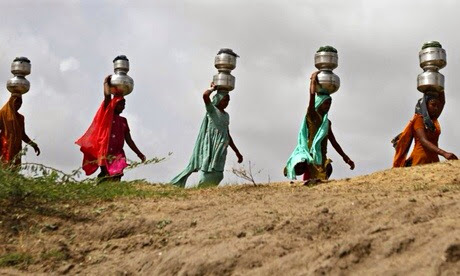
The impact of such failure is also sadly clear. Girls continue to fetch polluted water from muddy puddles and rivers, walking past broken hand-pumps and schools they would be attending if they had the time. To break this cycle, Water For People, the IRC, Water and Sanitation for the Urban Poor, One Drop, and some members of the Millennium Water Alliance are partnering with governments and the local private sector to change the water sector narrative.

We are testing this initiative – called Everyone Forever (EF) – across Africa, Asia and Latin America. The concept is that districts maintain water services for everyone without the need for further philanthropic aid or support.

EF takes a page from polio and smallpox eradication efforts that saturated entire districts, consisting of millions of people and hundreds and thousands of villages. “Everyone” is only achieved when every family, school and clinic in a target district has access to water services, that includes the hardest to reach, the poorest, the disabled, the politically marginalised and the socially ostracised. The poorest in those areas are receiving water services because other residents are covering their tariffs. “Forever” is only achieved when districts show they can sustain these investments over time as populations grow, water resources are threatened, economies change and infrastructure ages.

EF works with governments and insists that their financial support is essential for success. We have seen a 39% increase in government investments towards EF in the past year, with examples like the district of Rulindo in Rwanda now spending over $1m a year on water infrastructure.

Two districts – Chinda, Honduras and Cuchumuela, Bolivia – have reached full coverage verified by the national government. Another five areas are close, including an island in the Ganges in India where half a million pilgrims use the local sanitation system every year (pdf).

One mayor in Bolivia now brags about his district achieving “everyone” status. As a result, other mayors across the country are replicating EF, channeling their investments towards full district coverage. Similar spread is happening in India, Rwanda, Ghana, Uganda and Honduras.

Momentum is now building scaled work that excludes nobody, transcends individual communities and is focused on sustainability. Everyone Forever offers a model that is hard to argue against by politicians and development agencies. The alternative – more projects and hollow slogans of coverage delinked from investments – is simply not good enough anymore. More

Ned Breslin is the CEO of Water for the People. Follow @NedBreslin on Twitter.


Friday, August 22, 2014

Global Climate Inaction Will Mean Economic Turmoil for South Asia, Warns Bank

The first comprehensive study ever issued on the economic costs that uncontrolled climate change would inflict on South Asia predicts a staggering burden that would hit the region's poorest the hardest.

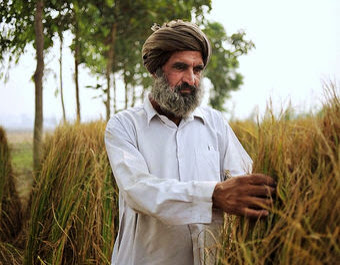
Rice Farmer in Punjab, India

"The impacts of climate change are likely to result in huge economic, social and environmental damage to South Asian countries, compromising their growth potential and poverty reduction efforts," said the study, published by the Asian Development Bank.

The cuts in regional GDP are so deep that they might ripple around the world, as six developing countries with 1.4 billion people—a third of them living in poverty—pay the price of the world's continuing reliance on fossil fuels.

Projections like this feed into the urgency for action as world leaders prepare to meet at the United Nations next month to discuss the climate crisis. Recent warnings show that the steps nations seem willing to take will fall well short of what is needed.

Action now, the study shows, would pay immediate and lasting dividends to the countries it examined: Bangladesh, Bhutan, India, the Maldives, Nepal and Sri Lanka.

The study, published as a new 160-page book, says that if the world cuts fossil fuel consumption enough to keep warming within 2 degrees Celsius—the goal of UN negotiations—the costs to South Asian countries of adapting to rising seas and temperatures in the decades ahead might be cut almost in half.

But if business-as-usual continues, leading to a world that is 4 or 5 degrees warmer by 2100 than at the start of the industrial age, the outlook looks grim.

"Climate change will slash up to 9 percent off the South Asian economy every year by the end of this century if the world continues on its current fossil-fuel intensive path," the bank said. "The human and financial toll could be even higher if the damage from floods, droughts, and other extreme weather events is included."

Because this kind of estimate is inherently imprecise, the bank warned that the real damage could be much worse than expected. Under business-as-usual trends, there is a one in 20 chance that South Asia will lose 24 percent of its annual GDP by the end of the century, the study found.

Paying to stave off those damages will cost these nations dearly, the study said.

To avoid the damage that is expected if the world takes no action on climate change, South Asia would have to spend nearly $40 billion per year by 2050 on adaptation measures, or nearly half a percentage point of average annual GDP. By 2100, the costs would have to increase to $73 billion per year, or roughly nine-tenths of a point of GDP.

If the world were to achieve the 2-degree warming goal established by UN negotiators at climate treaty talks in Copenhagen in 2009—a goal also at the heart of culminating talks set for Paris in 2015—annual adaptation costs for South Asia would be considerably less: $31 billion a year at mid-century, and $41 billion at century's end.

And instead of losing nearly 9 percent of annual GDP by the end of the century, the study found, South Asia would lose about 2.5 percent by 2100 if the world lives up to the goals of Copenhagen. More


Tuesday, June 10, 2014

Years of Living Dangerously - Premiere Full Episode

Years of Living Dangerously Premiere Full Episode


Published on Apr 6, 2014 • Hollywood celebrities and respected journalists span the globe to explore the issues of climate change and cover intimate stories of human triumph and tragedy. Watch new episodes Mondays at 8PM ET/ PT, only on SHOWTIME.

Subscribe to the Years of Living Dangerously channel for more: http://s.sho.com/YearsYouTube

Official site: http://www.sho.com/yearsoflivingdangerously

The Years Project: http://yearsoflivingdangerously.com/

Follow: https://twitter.com/YEARSofLIVING

Like: https://www.facebook.com/YearsOfLiving

Watch on Showtime Anytime: http://s.sho.com/1 hoirn4

Don't Have Showtime? Order Now: http://s.sho.com/PODCVU

It's the biggest story of our time. Hollywood's brightest stars and today's most respected journalists explore the issues of climate change and bring you intimate accounts of triumph and tragedy. YEARS OF LIVING DANGEROUSLY takes you directly to the heart of the matter in this awe-inspiring and cinematic documentary series event from Executive

Producers James Cameron, Jerry Weintraub and Arnold Schwarzenegger.

Thursday, May 22, 2014

Challenge in Sao Paulo: Overcoming Water Scarcity in South America’s Largest City

Last March, one of Brazil’s most important newspapers, O Estado de S. Paulo, published a version of the article below, which summarizes the Conservancy’s efforts to help secure Sao Paulo’s water supply. It is translated and reprinted here with permission.

By João Campari and Samuel Barrêto, The Nature Conservancy

The inhabitants of Sao Paulo have been dealing with discouraging images of cracked riverbeds where they used to see flowing water, making this temperate part of Brazil look more like the country’s semi-arid region. Unfortunately, these stark images show the worsening struggles of the Cantareira system, one of the greatest water supply systems in the world.

Right now, the Cantareira’s reservoirs — responsible for providing water for more than 12 million inhabitants of the Sao Paulo Metropolitan Region (RMSP) and Campinas — are operating at less than 15% capacity*, the lowest level recorded since the Cantareira’s creation in the early 1970s.

The images, the symbol of the current crisis, show that water doesn’t really come from the taps in our houses. It comes from nature, and in Sao Paulo much of that nature is the Atlantic Forest. While water rationing gets peoples’ attention and is one of the necessary responses to water scarcity, rationing alone is not enough to solve the long-term problem of securing lasting access to fresh water.

We must look beyond the tap and work to take care of our water supplies at their sources. We need a systemic response for the management of watersheds to restore the sources of our water that have been degraded, polluted and deforested. Forests are very important for healthy fresh water supplies. Unfortunately, the Cantareira system alone has lost 70% of its original forest cover, aggravating the sedimentation of rivers and dams, and decreasing their ability to supply water.The degradation of native vegetation also worsens the effects of erosion and drought.

The interaction of all these factors — deforestation, sedimentation, erosion and drought — leads to a situation of extreme risk and represents an environmental, social and economic threat not just to Sao Paulo, but to the entire country of Brazil. The Sao Paulo Metropolitan Region and Campinas together are responsible for more then 22% of the country’s GDP. Therefore, it is a priority to create a strong and strategic response to the increasing and urgent problems of water quantity, quality, access and supply for urban centers.

Protecting Water Supplies at their Sources

We must go beyond conventional interventions, such as engineering works — more dams or aqueducts are not the answer. Wider, systemic responses are necessary, and the responsibility to act is not limited to the government. We all need water and it is the shared responsibility of businesses, communities and civil society as a whole to search for solutions together. The government’s role is to foster and implement multiple solutions that reach multiple stakeholders at once.

The Conservancy’s work shows that one of the highest priorities for securing Sao Paulo’s water supplies is strengthening the Cantareira system’s “green infrastructure” by restoring the degraded forests of the Atlantic Forest, as well as conserving existing forest remnants. Such initiatives ensure the health of a watershed. This type of solution, when well managed, minimizes the risk of extreme events and reduces the vulnerability of populations to floods and prolonged droughts. Healthy forests also store water and reduce erosion and provide environmental services of water regulation and security to the population.

New York City illustrates this equation quite clearly. Decades ago, the city’s administration compared the costs of both natural and built infrastructure for protecting and providing water. Preserving the forests that were source of the city’s drinking water cost US $1 to 1.5 billion over 10 years. That amount was seven times lessthan the estimated US $6 to 8 billion needed to build a traditional, engineered water treatment and distribution network. (That amount doesn’t include the additional and ongoing operational and maintenance costs of $300 to $500 million a year that would have been necessary.) Obviously, nature was the better buy for the people of New York.

It is something for Sao Paulo to consider. A recent study by the Conservancy showed that restoring about 35,000 acres of deforested areas and preventing erosion on 5000 acres within the basins of the Piracicaba, Capivari, Jundiaí and Alto Tietê rivers would decrease the level of sediments that clog the rivers by 50%. Reducing erosion would increase the capacity of water reservoirs and simultaneously decrease the cost of treatment for the removal of sediments.

What the Conservancy is doing in Sao Paulo

To help accomplish restoration goals in the lands around Sao Paulo’s Cantareira system, the Conservancy-led Water Producers Project provides payments to farmers and ranchers who conserve forests on properties that are part of the watershed that feeds the Cantareira reservoirs. This payment-for-environmental-services program recognizes and compensates landowners for the water-producing value their lands provide.

The Conservancy also leads the Water for Sao Paulo Movement. This initiative fosters conversation and working relationships between different stakeholders and focuses on the importance of both water conservation and nature-based solutions for securing the water supply of the region. Because healthy forests are so important for healthy rivers and water supplies, Water for Sao Paulo seeks to restore degraded forests near the urban area.

Finally, Sao Paulo must strengthen the existing Watersheds Committees. Created by the Brazilian Legislature, Watersheds Committees discuss and make decisions about the use of water from specific river basins and are some of the most important collaborations for achieving a balance between water supply and demand.Committees include representatives of local governments, water supply companies and civil society, who are responsible for tasks such as approving water management plans, defining actions for conservation of biodiversity and mediating conflicts about the use of water resources. There are more than 200 of these groups in Brazil.

The current crisis in the Cantareira system is both a challenge and an opportunity to learn from the past and make better decisions for the future. If we have the discernment to act in a systemic way and the political and institutional capacity for change, we will be able to reduce the risks of a permanent cycle of water shortage. In addition to this, we have the opportunity to show how healthy watersheds contribute to water security, which is indispensable for Sao Paulo’s social and economic stability into the future.

To learn more about how the Conservancy is helping to secure Brazil’s water supplies, please visit Where Does Your Water Come From?

*Since this article was published in March, the need for concerted action in Sao Paulo has become even more urgent. The level of water in the Cantareira system has now dropped – to about 8% of its overall capacity. As an emergency stopgap to provide water to the city, the government of Sao Paulo spent US$36 million on emergency constructions to allow access to water stored below the level of the pumps. Known to water managers as “dead volume,” this water was never intended to be part of the water supply, and the reservoirs are now, essentially, operating at a deficit. More


Thursday, April 17, 2014

Food shortages could be most critical world issue by mid-century

The world is less than 40 years away from a food shortage that will have serious implications for people and governments, according to a top scientist at the U.S. Agency for International Development.

Dr. Fred Davies

"For the first time in , food production will be limited on a global scale by the availability of land, water and energy," said Dr. Fred Davies, senior science advisor for the agency's bureau of food security. "Food issues could become as politically destabilizing by 2050 as are today."

Davies, who also is a Texas A&M AgriLife Regents Professor of Horticultural Sciences, addressed the North American Agricultural Journalists meeting in Washington, D.C. on the "monumental challenge of feeding the world."

He said the world population will increase 30 percent to 9 billion people by mid-century. That would call for a 70 percent increase in food to meet demand.

"But resource limitations will constrain global food systems," Davies added. "The increases currently projected for crop production from biotechnology, genetics, agronomics and horticulture will not be sufficient to meet food demand." Davies said the ability to discover ways to keep pace with food demand have been curtailed by cutbacks in spending on research.

"The U.S. agricultural productivity has averaged less than 1.2 percent per year between 1990 and 2007," he said. "More efficient technologies and crops will need to be developed—and equally important, better ways for applying these technologies locally for farmers—to address this challenge." Davies said when new technologies are developed, they often do not reach the small-scale farmer worldwide.

"A greater emphasis is needed in high-value horticultural crops," he said. "Those create jobs and economic opportunities for rural communities and enable more profitable, intense farming." Horticultural crops, Davies noted, are 50 percent of the farm-gate value of all crops produced in the U.S.

He also made the connection between the consumption of fruits and vegetables and chronic disease prevention and pointed to research centers in the U.S. that are making links between farmers, biologists and chemists, grocers, health care practitioners and consumers. That connection, he suggested, also will be vital in the push to grow enough food to feed people in coming years.

"Agricultural productivity, , safety, the environment, health, nutrition and obesity—they are all interconnected," Davies said. One in eight people worldwide, he added, already suffers from chronic undernourishment, and 75 percent of the world's chronically poor are in the mid-income nations such as China, India, Brazil and the Philippines.

"The perfect storm for horticulture and agriculture is also an opportunity," Davies said. "Consumer trends such as views on quality, nutrition, production origin and safety impact what foods we consume. Also, urban agriculture favors horticulture." For example, he said, the fastest growing segment of new farmers in California, are female, non-Anglos who are "intensively growing horticultural crops on small acreages," he said. More


Wednesday, April 16, 2014

The Future Is Evaporating: Climate Change Could Dry Out 30 Percent of the Earth

Scientists expect the changing climate to bring on more drought; there's going to be less rainfall in the already arid regions.

That alone would be bad news for denizens of the planet's dry zones—in some places in North Africa, the American Southwest, India, and the Middle East, water shortages could well become an existential threat to societies built there. But new research shows that in addition to less rain, the rate of evaporation is likely to rise, too. Combined, the two forces could dry out up to a third of the planet.

The study, published in the journal Climate Dynamics last month, estimates that climate change will cause reduced rainfall alone to dry out 12 percent of the Earth's land by 2100. But if evaporation is factored in, the study's authors say that it will "increase the percentage of global land area projected to experience at least moderate drying by the end of the 21st century from 12 to 30 percent."

“We know from basic physics that warmer temperatures will help to dry things out,” the study’s lead author, Benjamin Cook, a climate scientist with Columbia University and NASA's Goddard Institute for Space Studies, said in a statement. “Even if precipitation changes in the future are uncertain, there are good reasons to be concerned about water resources.”

Writing in a 2011 literature review in the science journal Nature, the physicist Joe Romm elaborates on how increased heat and evaporation can lead to a vicious cycle: "Precipitation patterns are expected to shift, expanding the dry subtropics. What precipitation there is will probably come in extreme deluges, resulting in runoff rather than drought alleviation. Warming causes greater evaporation and, once the ground is dry, the Sun’s energy goes into baking the soil, leading to a further increase in air temperature."

Disappearing soil moisture is likely to be a greater problem than previously thought, and the occasional downpour won't sate year-round crops. As Columbia University notes, "An increase in evaporative drying means that even regions expected to get more rain, including important wheat, corn, and rice belts in the western United States and southeastern China, will be at risk of drought."

If it becomes too dry to cultivate crops on one-third of the planet's surface, there's little doubt that crisis will follow. For millions of people who depend on food grown in vulnerable regions, the future is literally evaporating. More


Monday, April 14, 2014

Quenching Kenya: Can New Water Discoveries Save East Africa?

Water scarcity is becoming the defining international crisis of the twenty-first century. Water conflicts rage across the world as communities struggle to secure a clean, reliable supply.

One of the world’s most water-stressed regions is East Africa. Overexploitation of water resources there has been compounded by declining snowpacks on Mount Kilimanjaro and Mount Kenya, which have shrunk since the late 1980s due to global warming. Meanwhile, Lake Turkana -- the world’s largest perennial desert lake -- has largely disappeared from Ethiopian territory, retreating south into Kenya.

In this light, the discovery of two significant aquifers in mostly arid Kenya by a Japanese-financed UNESCO project has been hailed as a potential game changer. The first, the Lotikipi Basin Aquifer, is situated just west of Lake Turkana. The second, the smaller Lodwar Basin Aquifer, is near Lodwar, the capital of Turkana county. The aquifers were discovered by a French firm, Radar Technologies International (RTI), using a space-based exploration technology called WATEX that was originally designed to reveal mineral deposits. The company blended satellite and radar imagery with geographical surveys and seismic data to detect moisture. Subsequent drilling by UNESCO confirmed the presence of aquifers. Three other suspected aquifers in the region have yet to be verified through drilling.

For parched and economically backward Turkana, more than one-third of whose residents are malnourished, the discovery of major groundwater reserves is a godsend. Not only will the reserves provide lifesaving water, they will also spur the development of agricultural and hydrocarbon sectors and improve the lives of the impoverished residents in this conflict-ridden region, which extends from Kenya into the borderlands of Ethiopia and South Sudan. More [Subscription]


Friday, April 11, 2014

Water Crisis: 2020 Statement by Mikhail Gorbachev on 20th Anniversary of Green Cross

Water crisis – clear and present danger

We live in urgent times. The sum of the concurrent crises that have been engulfing everything from climate to energy, to the economy, is creating a spiral of need for change. But the water crisis sticks out of this list in terms of being an explicitly clear and present danger with deadly implications.

Mikhail Gorbachev

The mounting water crisis and its geography make it clear that without resolute counteraction, it will overstretch many societies’ adaptive capacities within the coming decades. This could result in massive migration, severe socio-economic stress, destabilization and violence, jeopardizing national and international security to a new degree.

By 2025, a predicted 1.8 billion people will live in regions suffering from absolute water scarcity. Two-thirds of the world population could be under hydric stress conditions. Demand for water will rise: water withdrawals in developing countries will increase by 50%, and 18% in developed countries by 2025.

Despite these demands, what state is the world’s water in? Despite the fact that we use slightly more than half the world’s (54%) accessible water, more than 50% of the 3.5 billion people living in urban circumstances around the world already do not have access to adequate water and sanitation.

But the really bad news is that the water use is growing even faster than the population: the 20th century water consumption grew twice as fast as the world population. As a result, a third of the world's population lives in water-stressed countries now. By 2025, this is expected to rise to two-thirds.

In addition to unsustainable water use we are polluting our lakes, rivers and streams to death. Most wastewater (about 80%) from residential and industrial sources enters the environment untreated.

The growing human need for water, to sustain life and wellbeing, plus the pressures on the resource itself, from mismanagement, pollution and a general lack of foresight, make for the most telling case for improved global water conservation and consumption.

But too little is being done on these fronts. We have been waiting since 1997 for just 35 countries to sign the UN Watercourses Convention, to promote the management and sharing of the world’s 276 cross-border rivers and connected underground water sources, and we are still a handful short.

The lack of a global framework to manage water sources that cross national borders endangers the world in many ways, not least of all in terms of the risk of conflict between countries over who controls the same river that runs through their respective frontiers.

Then there is the Right to Water and Sanitation, which Green Cross was a loud advocate of before it finally came into being in 2010. While this recognition itself, that access to safe drinking water and sanitation are basic human rights, is a success, what must be happening at breakneck speed now is the realization of this right. This means creation of national legislation enshrining the right (alongside education, health and others) and investing in the infrastructure needed to make safe water and sanitation services available to all.

Despite UN adoption of this vital principle, the deficit of fresh water is becoming increasingly severe and large-scale – whereas, unlike other resources, there is no substitute for water.

While the Millennium Development Goal for access to drinking water and sanitation was announced met in 2012, almost 800 million people still have no access to safe water today, and three times that number lack adequate sanitation. Thousands of children die daily in the developing world due to related waterborne diseases.

The scale and global nature of the water crisis demand stronger statesmanship, vision and international action. To master the water crisis, we must address its effects and causes. The economic, social, water and environmental aspects must be properly coordinated in any response.

A comprehensive “water goal” must be injected into the post-2015 development agenda, linking development and environment in analyses and in governance policies. Such a goal would address the three interdependent dimensions of water: water, sanitation and hygiene; water management; and wastewater management and water quality.

This goal must be based on principles of equity, solidarity, recognition of limits of planet and rights approach, coupled with effective means to check and demand the accountability of all stakeholders.

We live in volatile and transformative times, faced with the awe-inspiring global challenge of climate change, the devastation of civil wars, and the hope-crushing scourge of extreme poverty. But one thing is constant: our need for water. Whole regions are languishing in poverty and conflict, effectively held hostage by their hydrology: we must break this cycle and give people a chance for their future. Benjamin Franklin said that "when the well's dry, we know the worth of water." The alarm clock has been ringing on deaf ears for far too long, it is time to wake-up before it is too late, before the wells of the world have run dry. More


Friday, March 14, 2014

Pakistan’s Impending Famine

Thar, Sindh, Pakistan

It’s hard to catch a break in Pakistan.

Extremist violence is widespread, earthquakes and flooding are routine, and polio remains endemic. No nation has a higher infant mortality rate, and only a few have more cases of tuberculosis. Nearly half the country’s 180 million people lack access to safe water, and many Pakistanis have experienced power outages of up to 20 hours per day. Given such stresses, it’s not surprising that up to 16 percent of the country suffers from mental illness.

And now comes the latest scourge: Famine.

In recent days, media reports have revealed that dozens of people—many of them children—have died from malnutrition over the last three months in the bone-dry desert region of Thar, in the southern province of Sindh. And yet things could soon get much worse. A recent UNICEF report, noting that drought has “devastated” crops and livestock and that “hundreds of thousands” of people have fled, warns of a possible “massive humanitarian crisis” in Thar. Ominously, almost 3 million people “risk starvation” across Pakistan.

Many Pakistani press accounts—and numerous Pakistani politicians—depict the Thar tragedy as a catastrophic case of negligence by Sindh’s provincial government. They fault local officials for taking too long to get food assistance to those in need late last year when drought conditions first began to set in. And they single out authorities for failing to transfer sick children in remote areas to better hospitals.

Yet the Thar famine also reflects another type of failure: that of democracy.

In recent years, Pakistan—a country ruled by the military for about half its existence— has made remarkable democratic progress. With successive free elections, civilian rule is firmly in place. Pakistan’s mighty military has mellowed. Constitutional amendments have decentralized power. The Supreme Court is increasingly targeting powerful people and institutions. And private media outlets have rapidly proliferated.

However, there are limits to this progress.

The most commonly cited obstacles to deeper democratization are the military, which continues to exert heavy influence over politics; a lack of pluralism and tolerance, which contributes to the deplorable plight of religious minorities; and the country’s abysmal law enforcement, which enables militants to operate with impunity.

Yet the tragedy in Thar underscores a more insidious and underreported threat to democracy: Astounding manifestations of land inequality.

In Sindh, a paltry 0.05 percent of households hold more than five acres of land (the figure is similar in Punjab, Pakistan’s most populous province). In the nation as a whole, 2 percent of households own nearly 50 percent of land, while 5 percent of agricultural households own nearly two thirds of Pakistan’s farmland.

This means that the majority of the population holds little to no land. Without land, it’s difficult to access food and water (and it’s also difficult to earn a livelihood; landless Pakistanis make up 70 percent of the country’s rural poor). Most Pakistanis must depend on a tiny, wealthy landowning minority for access to these natural resources.

These resources, and the land that holds them, are becoming increasingly precious. According to one alarming estimate, Pakistan loses three acres of good agricultural land every 20 minutes. In Thar, land and natural resources are further imperiled by Islamabad’s plan to tap into the region’s vast coalfields to ease the country’s severe energy crisis. Officials insist there will be no deleterious impacts on local communities, but there’s good reason to fear that such exploitation could cause environmental distress and displacement, and deprive an impoverished region of a critical natural resource. These are very real problems in equally dry and poor Baluchistan, a province long subjected to intensive natural resource extractions by Islamabad and large corporations. Such conditions have helped fuel a long-running separatist insurgency.

In effect, millions of Pakistanis have neither the land to grow food nor the money to buy it. And yet little is done to help them. Landed rural elites—the essence of vested interests in Pakistan—seemingly spend more time blocking critical agricultural reforms (including those that would increase the tax base) than addressing the plight of the landless. They have also been accused of siphoning off irrigation water flows from poor farmers, and of diverting floodwaters away from their crops and into more vulnerable communities. What’s particularly troubling about all this is that these wealthy landowners are often politically connected, or politicians themselves (Sindh’s landed rural elite is a strong base of support for the Pakistan People’s Party, or PPP, which runs the Sindh government).

Consider the strikingly blasé reactions of local officials to current conditions in Thar. Apparently unmoved by (or oblivious to) UNICEF’s warnings of a massive crisis, PPP leaders have described events of recent days as “normal” and “nothing new.” Sindh’s advocate general, speaking Monday at a hearing convened by Pakistan’s Supreme Court, expressed regret, but also appeared to lay the blame on parents for not taking their kids to the hospital.

Perhaps most egregious of all, after federal officials toured affected areas this week, Sindh’s government hosted a lavish buffet lunch featuring fried fish and biryani —“an act of such monumental stupidity and insensitivity,” according to one Pakistani editorial, “that it beggars belief.”

Call this heartlessness, or call it apathy. Many Pakistanis call it feudalism—the embodiment of a system in which imperious landed elites lord over their hapless subjects. One thing you can’t call it, however, is democracy. Yes, it’s an imperfect institution—but surely it doesn’t sanction such vast disparities in land ownership, or the type of leadership that seems unmoved by the humanitarian crises spawned by those disparities.

The takeaway here is that in Thar, people are dying because of deeply entrenched inequalities that make them profoundly food insecure and hyper-vulnerable to calamities—like drought and disease—that more fortunate people elsewhere can withstand and survive.

Ultimately, the dead and dying of Thar—just like slaughtered Shia Muslims, the military’s large political footprint, and state sponsorship of militancy—underscore the fact that despite considerable achievements in recent years, democracy in Pakistan remains a work in progress.

Michael Kugelman is the senior program associate for South Asia at the Woodrow Wilson International Center for Scholars in Washington, DC. He can be reached at michael.kugelman[@]wilsoncenter.org or on Twitter @michaelkugelman.


Tuesday, March 11, 2014

Cary Fowler on Food Security - TED Talk

Cary Fowler served as the Executive Director of the Global Crop Diversity Trust from 2005 to 2012.[8] The trust's mandate is to ensure "the conservation and availability of crop diversity for food security worldwide." Fowler was influential in the creation of the Svalbard Global Seed Vault, which currently houses samples of more than 783,000 distinct crop varieties. He stepped down as Executive Director of the trust in late 2012 but continues to serve in an advisory role and chairs the International Advisory Council of the Svalbard Global Seed Vault.[4][8]

Working with partner genebanks in 71 countries during Fowler's tenure as Executive Director, the Trust helped rescue 83,393 unique crop varieties from extinction. It sponsored more than 40 projects to screen crop collections for important traits such as heat and drought tolerance. In partnership with the USDA, a state-of-the-art genebank management system ("GRIN-Global") was developed and made available to 38 genebanks internationally, and the first ever global portal to accession (sample) level information (Genesys)[9] was launched. The Trust's endowment grew more than $100 million to $134 million, and total funds raised surpassed $200 million.[10][11]

By the end of Fowler's tenure, the Trust concluded three major agreements intended to protect and conserve crop diversity: with the Millennium Seed Bank of Kew Gardens,[12] the indigenous communities in the Andes,[13] and the international genebanks of the Consultive Group on International Agricultural Research (CGIAR).[14]

One example given here is for South Asia where we must pay attention from a food security perspective. Editor

Thursday, March 6, 2014

China is so bad at conservation that it had to launch the most impressive water-pipeline project ever

BEIJING—On a Saturday morning in late August, about a dozen university students, professors, and middle-aged Beijing locals stand by a row of apartments in northwestern Beijing. Once an outskirt of the city known for its natural springs and reed-filled ponds, the area now looks just like another part of the sprawling capital: wide roads lined with set-back buildings, crowded with pedestrians. It’s home to some of China’s best schools, Peking and Tsinghua universities. One member of the group—an environmental society called the Green Earth Volunteers, led by one of China’s most well-known environmentalists, Wang Yongchen—asks a local if he knows how to get to the Wanquan River.

“That’s a river?” the man asks, and offers directions to what he says is a nearby ditch that sometimes puddles. After a few minutes, the Green Earth Volunteers arrive at a narrow canal holding a few centimeters of water. The bed of the Wanquan, which means “ten thousand springs,” is now paved over with concrete, the result of attempts to keep water from soaking into the ground when the canal was full. A pipe, once used to carry water into the small river, lies exposed to the sun, as do patches of dry ground. Ivy creeps along the sides of the canal, as if trying to reach what’s left of the water.

The Wanquan is one of thousands of rivers in China that have dried and disappeared after decades of declining rainfall, prolonged droughts, exploding population growth, industrial expansion, and a series of disastrous reservoirs built during the early days of the Communist Republic. The problem is most obvious in Beijing, which was chosen to be China’s capital in part because of its abundance of streams and freshwater springs. Beijing consumed 3.6 billion cubic meters (127 billion cubic feet or 950 billion gallons) of water in 2012, far more than the 2.1 billion cubic meters per year the city has at its disposal in nearby rivers and in the ground. The city’s water resources, about 120 cubic meters per person a year, are well below the 500 cubic meters the UN deems a situation of “absolute water scarcity.” Beijing has been supplementing the shortfall by diverting water from the nearby province of Hebei and trying to lower water usage in the city.

China’s water crisis

China has a severe water problem overall. Its resources of freshwater, around2,000 cubic meters per capita, are one-third of the global average. Coal production, which supplies about three-quarters of China’s energy, already accounts forone-sixth (pdf, p. 3) of total water withdrawals. Between now and 2040 China’s total energy demand is expected to more than double, and be twice that of the US(slide 26). The World Bank has put the annual cost of China’s water problems—specifically, water scarcity and the direct impacts of water pollution—at 2.3% of GDP (pdf, p. xxi) but says it is likely much higher. About 45% of the country’s GDPcomes from water-scarce provinces, according to a 2012 report by HSBC and China Water Risk, a consultancy. About 300 million people in China, almost a quarter of its population, drink contaminated water every day. Former Chinese premier Wen Jiabao wasn’t being dramatic in 1999 when he called the country’s water problems a threat to the “survival of the Chinese nation.”

But these shortages are unevenly spread. The North Plain, a region home to a quarter of the population, and which includes Beijing, is especially dry. Here, water tables are falling by two to three meters a year (pdf, p. 194), according to the UN, and posing serious risks to agriculture and food security. Of China’s 22 provinces, 11 were considered “water-stressed,” meaning they have less than 1,000 cubic meters of water per person a year as of 2012. One of the north’s main water sources, the Yellow River, has been shrinking for the past three decades, drying up almost every year before reaching the the sea. Hebei province, which neighbors Beijing, has seen 969 of its 1,052 lakes dry up; some of its farmers water their crops with sewage water. Wang Shucheng, a former minister of water resources, predicted that if groundwater extraction in the north continues at current rates, in 15 years there will be none left.

The solution, as Mao Zedong first said in 1952, is to “borrow a little water from the south.” Southern China is home to four-fifths of the country’s water sources, mostly around the Yangtze River Basin. It took another 50 years after Mao’s suggestion for China to start work on it. Finally, on Dec. 10, the first phase of the South-to-North Water Diversion Project (SNWDP) or Nanshuibeidiao, began operating.

The project’s eventual goal is to move 44.8 billion cubic meters of water across the country every year, more than there is in the River Thames. The infrastructure includes some of the longest canals in the world; pipelines that weave underneath riverbeds; a giant aqueduct; and pumping stations powerful enough to fill Olympic-sized pools in minutes. It is the world’s largest water-transfer project, unprecedented both in the volume of water to be transferred and the distance to be traveled—a total of 4,350 km (2,700 miles), about the distance between the two coasts of America. The US, Israel, and South Africa are home to long-distance water transfer systems, but none on this scale.

It’s the kind of operation, observers of China say, that would never have a chance somewhere like America. The project requires the coordination of at least 15 provinces—several of them water-rich areas that will have to give up some of their own water. It involves building over hundreds of archeological sites and eventually through religious ones as well. Almost half a million people will have to be relocated. The cost is budgeted at some $60 billion and is likely to exceed that considerably. In the US, proposals for large-scale water transfers from the Great Lakes to the west or south of the country have been repeatedly put down. It would seem to be an example of the power of an autocratic central government to enact the kinds of far-reaching national transformations that, in a democracy, get bogged down.

But a closer look reveals that it’s far from certain whether the benefits will outweigh costs: Some describe the project as a “high-risk gamble.” And rather than showing off the power of China’s central government, in many ways the project merely highlights the limitations of the central government’s ability to manage China’s water needs.

Three horizontals, four verticals

The project creates a grid of water highways that criss-cross the country and can be adjusted to send water almost anywhere. That grid—the siheng sanzong, literally the “four horizontals, three verticals”—consists of the Yangtze, Yellow, Huai, and Hai Rivers running west to east, and three routes that run from south to north, each longer than 1,500 kilometers (600 miles) through both natural and man-made canals.

The first branch, the eastern route, has just started transferring water from the Yangtze River in Jiangsu province to the dry cities in Shandong province. A second route will start carrying water from central China to Beijing and other northern cities at some point in 2014. The third, western route may link the Yangtze River to the Yellow River by crossing through the mountainous terrain of Sichuan and Qinghai, at elevation of between 3,000 and 5,000 meters.

Borrowing water from the south isn’t as simple as Mao suggested. The government has so far relocated at least 345,000 people to make way for construction, the largest resettlement for an infrastructure project since at least 1.4 million people were moved for the Three Gorges Dam. Officials say their relocation is a sacrifice for the good of the country, but others argue that the government is overlooking the extent and impact of the forced relocations that are taking place. The diversion project also risks long-term damage to two of China’s most important rivers, along with the communities that depend on them.

Less water upstream, and more pollution

About 1,400 kilometers south of Beijing and its dried-up Wanquan River is the ancient town of Xiangyang, best known as the setting for epic battles over control of southern China over 700 years ago. Today, stretches of newly paved highways dotted with half-built high-rise apartment buildings lead to the city of 5 million. Locals brag that their strip of the Han River has some of the best water in the country. Of China’s six levels of water quality, theirs is of the second highest level, crisp and clean enough for drinking—a rarity in a country where as many as 20% of rivers are so polluted they’re unsafe to even touch. Over the summer, traffic near the river shore jams around 6pm as people stream to the water for a quick bathe before dinner.

That may change once the central route of the water transfer system opens next year. About 30% of the Danjiangkou Reservoir will then go north instead of flowing south toward Xiangyang and into the Yangtze River—the river that supplies water to the diversion project’s eastern route, and eventually the western one as well. Officials say any impact will be minimal, but local environmentalists and researchers dispute that. Worse, some say, is that diverting this much water may permanently hurt two of China’s most important rivers: the Han, the main source of water for about 30 million people, and the Yangtze, which runs through 11 provinces and supports up to 400 million people.

“We’ve resolved a lot of issues and done a lot of research. The negative impacts are so small they almost don’t exist,” says Shen Fengsheng, head engineer of the water project, sitting at a broad wooden table at the SNWDP’s project office in Beijing. When all three routes are completed, he says, the Yangtze will lose only about 5% of the 29,400 cubic meters of water it dumps into the ocean every second.

Local governments are building passageways for fish whose routes are disrupted by the canals, supplementary dams to ensure consistent water flow, and wastewater treatment plants to reduce pollution in water transferred or affected by the central or eastern routes. Officials in charge of managing the diversion from Danjiangkou say they’re making sure a minimum amount of water still flows downstream to cities like Xiangyang. ”The water volume overall will be lower, but it will be enough to meet the daily needs of the people,” Zhou Jinhua, general office director at Danjiangkou SNWDP Water Resources Company, in charge of the dam for the Danjiangkou Reservoir, told Quartz.

Locals in Xiangyang, however, say their water will become not only more sparse but also more polluted. Water quality there will fall at least one level when the route begins, according to Yun Jianli, head of Green Hanjiang, a nonprofit environmental group based in Xiangyang. That’s because decreasing water volume weakens a river’s “environmental capacity”—its ability to clear out pollution. Provincial researchers say the quality will go down another level, to the fourth of six, once the central route is at full capacity.

A slower-flowing river is also slower at depositing the sediments along the riverbed needed to form wetlands, which help mitigate pollution and nurture the river’s ecosystem. According to estimates by the Xiangyang municipal government, average water levels in the city’s section of the Han River will fall between0.51 meters and 0.82 meters (pdf) once diversion begins. “That water quality level will be worse is a foregone conclusion. The situation for the water environment is grim,” says a provincial report on the impact of the project on the Han River near Xiangyang, which was seen by Quartz.

“You haven’t even fixed the old problem, and you’ve already created new problems.”

In part to prepare for the diversion, Xiangyang is transforming itself. Plots of land covered in brick and concrete rubble litter the city as officials tear down paper and chemical factories. These have long been a large part of Xiangyang’s economy; now local officials want to move the economy away from manufacturing to minimize pollution in the Han River, and build up a services sector based on things like tourism. But as part of doing so, they plan to expand the city to three or four times its current size. Given that city dwellers consume about three times as much water as rural residents, according to International Rivers, a US-based environmental group, a bigger Xiangyang will probably guzzle much more water.

To make things worse, both the Han and the Yangtze will end up with less water than even the diversion plan allowed for. The amount of water to be diverted for the central route, for instance, is based on calculations of the Han River’s water flow between the 1950s and the early 1990s. But since then the Han has become less consistent as rising temperatures have made droughts in the south more common. The amount to be diverted, however, hasn’t been adjusted. “It begs the question of why the Chinese government is going to spend all this money to alleviate drinking water shortages in Beijing. Are they more important?” says Kristen McDonald, China program director for Pacific Environment, a California-based nonprofit.

Water levels in the Yangtze have been falling too. In 2012, Chinese researchers found that the amount of water entering the Yangtze from glaciers on the Tibetan plateau had fallen 15% over the last four decades. And in 2009, total freshwater reserves in the Yangtze River Basin had fallen 17% (pdf, p. 726) from 2005 levels, according to the China Statistical Yearbook. So cutting 5% from the river’s annual runoff is not trivial. Parts of the Yangtze will see much lower flow during the dry months of the year, affecting navigation and the health of the river. Officials say shipping along the Yangtze, which has become something of a “second coastline” for China, won’t be affected—but even now, local governments dig at least once a year to make the riverbed deeper to give ships more room.

A lower water volume could also mean more saltwater from the sea filters into the Yangtze’s estuary. That will impose higher costs on factories along the shore to treat and use salt water. Polluted water in the Yangtze—which officials have called “cancerous”—may also be transferred northward, bringing with it diseases like schistosomiasis (bilharzia), which can damage internal organs and harm children’s brain development. The solutions include installing costly wastewater management systems and, according to officials in Shandong, simply cutting off the flow of dozens of streams that carry factory wastewater into two lakes that function as transfer points for the diverted water. “The project will be useless if these problems aren’t solved,” Chinese environmentalist Yang Yong told Quartz. ”You haven’t even solved the old problem and you’ve already created new problems.”

Water diversion begets more water diversion

Perhaps the most alarming example of how the SNWDP creates new problems is that it has triggered a cascade of unforeseen extra engineering projects. This is because provincial officials, worried that their towns will lose water, are pushing for supplementary dams and water-transfer systems to protect them.

The rivers can ill afford this extra engineering burden. There are already almost 1,000 dams on the Han and its tributaries and hundreds of dams and other hydro-projects on the Yangtze. With China’s goal of tripling hydropower generation, says Ma Jun, director of the Institute of Public and Environmental Affairs, many Chinese rivers simply won’t be flowing in 10 years.

But the real problem is that this creates a circular web of hydro-projects that take water from one river to replenish another—robbing Peter to pay Paul.

For instance, about 17 km south of Xiangyang on the Han River is the Cuijiaying Dam. A metal security fence guards it, with a sign that warns trespassers of intruding on “an area important for the work of national development.” The dam will maintain water levels for the city but slow the river’s flow downstream. “Usually NGOs are against dams, but this one is good for the local community,” Yun says.

Another diversion route, separate from the SNWDP, is being built to transfer water from the Yangtze to the Han, to help cities downstream of the Danjiangkou Reservoir. In turn, Shaanxi province—a parched region from which the central route will also take water—is building a project to take water out of the Han, to supplement its Wei River and the 13 cities along it that have serious water shortages. Officials are considering another proposal to bring water from the Three Gorges Reservoir, on the Yangtze River, to the Danjiangkou Reservoir. The Yangtze already has 353 dams, making it the world’s second most engineered water basin, according to data from International Rivers. There are already 14 dams on the Han River, and another 18 on a main tributary, according to the group.

Officials say they can resolve any unforeseen environmental impacts after the system begins operating, in much the same way that problems caused by the Three Gorges Dam project are being addressed now. That’s not very comforting, given that the Three Gorges project has caused, in the words of China’s State Council, “urgent problems” including thousands of earthquakes and landslides and tens of thousands of extra people needing relocation. Earlier this month, China’s anti-graft body accused officials who helped run the dam project of corruption, including taking bribes and influencing the bidding process for projects.

Dong Wenhu, former head of the water resource department in Taizhou in Jiangsu province, near the beginning of the eastern route, tells Quartz, “Yes there are risks. But no, I’m not worried. Why? Because we can just build more.”

“We had no other choice”

For all the social and environmental costs, not even the project’s leaders pretend that it solves China’s water problem. “For now, the transfer project is just compensating an amount. It can’t completely fix the problem,” says Shen, the head engineer of the project. There is dissent even among officials. In February, China’s vice minister of housing and urban rural development, Qiu Baoxing, in a rare public criticism (link in Chinese), called the project “difficult to sustain” and unnecessary if cities would only conserve more.

The central route will supply 1.24 billion cubic meters of water a year to Beijing. That won’t cover the city’s annual shortfall of 1.5 billion cubic meters. As the city’s population expands, its water needs will also expand faster than the diversion project can keep up. Water demands in northern China overall—the river basins around the Hai, Yellow, and Huai rivers—will be beyond what the SNWDP can cover at full capacity. The Institute of Water and Hydroelectric Research estimates that total demand in northern China will reach 203 billion cubic meters (pdf, p.3) by 2050, of which the SNWDP will only supply a little over a fourth.

This does bring an economic benefit. By alleviating water shortages, the SNWDP is supposed to add between 0.12% to 0.3% to annual GDP growth and create up to 600,000 jobs, according to government brochures and a state research center. “If you look at other countries in comparable stages of development and water scarcity, virtually all of them have employed some form or another of water transfer. At one level, I can’t blame China’s economic planners for thinking this is an essential thing to do,” says Scott Moore, a research fellow at the Harvard Belfer Center for Science and International Affairs.

Still, the SNWDP’s project’s costs are rising quickly. Construction material, labor and added expenses like installing dozens of wastewater treatment plants are pushing the total bill past the previously earmarked amount of 500 billion yuan (about $60 billion, according to exchange rates in 2002 when construction began).

That figure, for all three routes, was already almost twice as expensive as the Three Gorges Dam. And, Shen tells Quartz, “that number is meaningless now… In the future, it will be far more than 500 billion.” Costs for the now completed first phase have almost doubled to 300 billion yuan from the earlier budget of 124 billion yuan, according to Zhang Jiyao, in an interview (link in Chinese) with Southern Weekend in October.

These spiraling costs mean there’s a risk that the SNWDP could turn into China’s largest white elephant—an unused network of canals and structures across the country. Beijing residents currently pay 4 yuan ($0.66) per cubic meter of water. The diverted water could cost around 10 yuan a cubic meter for residents in Beijing, according to estimates. So far, water from the eastern route costs up to 2.24 yuan per cubic meter (link in Chinese) for cities, but the final price that residents pay will be higher, government academics say. Residents, factories and some cities may be unwilling to pay this price, says Jia Shaofeng, a government researcher in water-resource management at the Chinese Academy of Science (CAS).

If the SNWDP doesn’t pay back its own costs, that could be a catastrophe for government finances. About 45% of the project is financed by loans from banks. “There could be a great default,” says James Nickum, vice-president of the International Water Resources Association, who visited areas slated to be the grounds for the eastern and central route in the 1980s, when officials were still debating the project. “I’m not convinced the project is a good deal economically.”

“It shows both the strength of the center and its limitations”

So why do it? The SNWDP seems to be another example of China’s penchant for massive projects that show off the power of the party. Large water projects are an especial favorite of China’s engineer-dominated leadership. (Eight of the nine members of the previous Politburo’s standing committee were engineers, including former president, Hu Jintao, who was a water engineer.) “It’s an approach that comes from both a Maoist impulse to subjugate nature in the pursuit of economic development, as well as what you’d expect from a government made up of engineers,” says Peter Martin, an analyst of Chinese politics at APCO Worldwide.

But this massive display of power—some might say hubris—is also a sign of weakness. One reason why China’s water crisis is so dire is that the central government hasn’t been able to coordinate national efforts to conserve water. Local environmental bureaus are often weak. Companies fined for breaking pollution rules often ignore the fines or renegotiate them with local officials. Local officials have been loath to raise water prices, despite Beijing’s requests, because of the backlash they might face from residents, or their relationships with local businesses. “Beijing can only get localities to do a certain number of things,” says Kenneth Pomeranz, an environmental historian at the University of Chicago. Water conservation hasn’t traditionally been one of them. ”It shows both the strength of the center and its limitations.”

So, while China is pushing other forms of water conservation, from new provincial water usage quotas to initiatives to raise water prices as well as recycle rainwater, the SNWDP is China’s most ambitious effort perhaps because it is the most feasible. Formalized and promoted as a national initiative, the project requires officials to fall in line, at least to some extent. “We had other choices, but construction is easier. You pay. Companies build it,” says Jia, the researcher from CAS. By contrast, when it comes to things like conservation, “The upper leaders have their policy and the local officials have their countermeasures.”

You can see some of those countermeasures on display in Jining, a city in the coastal province of Shandong, where the eastern diversion route passes through. Pharmaceutical company Cathay Biotech is one of dozens of polluting factories that officials promised to move out of the city to clean up a local lake through which the diverted water will flow. A People’s Daily article on the factory in April said that it had closed and moved to a nearby development area in Jin Xiang.

Quartz visited Cathay’s original location in Jining in late August. The complex of buildings was along a row of car manufacturers and other factories. Plumes were wafting upwards from a smokestack. In a half-full parking lot, workers were unloading a truck and one of the workers said the factory was still operating. (The company declined to respond to emailed questions.)

Meanwhile, in Jin Xiang, the plot of land belonging to Cathay Biotech’s new factory was little more than a mound of dirt. Nearby plots of land were similarly empty. Near Cathay’s Jining factory is a small village where the residents say local industry has long polluted their water supply. They don’t expect the SNWDP to change that. One man says, “You can build, but it won’t solve the core problem.” More