Showing posts with label rivers. Show all posts

Sunday, January 4, 2015

Abu Dhabi summit to discuss water security challenges

More than 32,000 global leaders from 170 countries representing government, industry, investment and research to Abu Dhabi, will provide an upfront look at affordable technologies to enable sustainable water resource management to help meet the Middle East’s rising demand for water.

Hosted by Masdar, Abu Dhabi’s renewable energy company, ADSW is a yearly platform that addresses the interconnected challenges of energy and water security, climate risk and sustainable development.

Running from January 17 to 24, ADSW includes the World Future Energy Summit (WFES), the world’s foremost event dedicated to the advancement of renewable energy, energy efficiency and clean technology; and the International Water Summit (IWS), which provides a business approach to addressing water scarcity, sustainable growth and economic development in arid regions.

“The Mena region is in a truly unique position to solve the challenge of water security,” remarked Raed Bkayrat, vice president of development for Saudi Arabia at First Solar, which is participating in WFES.

“While the region is quite arid, it also has one of the highest solar irradiances of any region in the world, and much of the population has ready access to seawater. Accordingly, solar photovoltaic projects are proving to be sustainable means of powering water desalination in the region, ensuring that the supply of clean water will keep up with the region’s increasing demand for it,” he noted.

Masdar took a major step by launching a pilot project to test energy-efficient desalination technologies – such as reverse osmosis and forward osmosis – powered by renewable energy.

The company awarded contracts to Abengoa, Degremont, Sidem/Veolia and Trevi Systems to build the desalination plants, which are expected to enable the implementation of cost-competitive desalination plants powered by renewable energy in the UAE and abroad.

“Engaging different sectors of the industry is really crucial to bring forward innovative solutions, as well as pilot projects that demonstrate to governments the value of new integrated systems,” Bkayrat added.

Both WFES and IWS will offer numerous keynote addresses, panel discussions and workshops as well as exhibitors introducing affordable technologies to enable sustainable water resource management.

Along with WFES and IWS, ADSW will include the second EcoWaste and the seventh Zayed Future Energy Prize Award Ceremony; it also coincides with the Fifth General Assembly of the International Renewable Energy Agency.-TradeArabia News Service More


Saturday, May 31, 2014

Monsoon Disrupted By El Nino + Climate Change as India Suffers Deaths, Crop Losses from Extreme Heat.

May is the month when the massive rainstorm that is the Asian Monsoon begins to gather and advance. This year, as in many other years, the monsoon gradually formed along the coast of Myanmar early in the month. It sprang forward with gusto reaching the Bay of Bengal by last week.

And there it has stalled ever since.

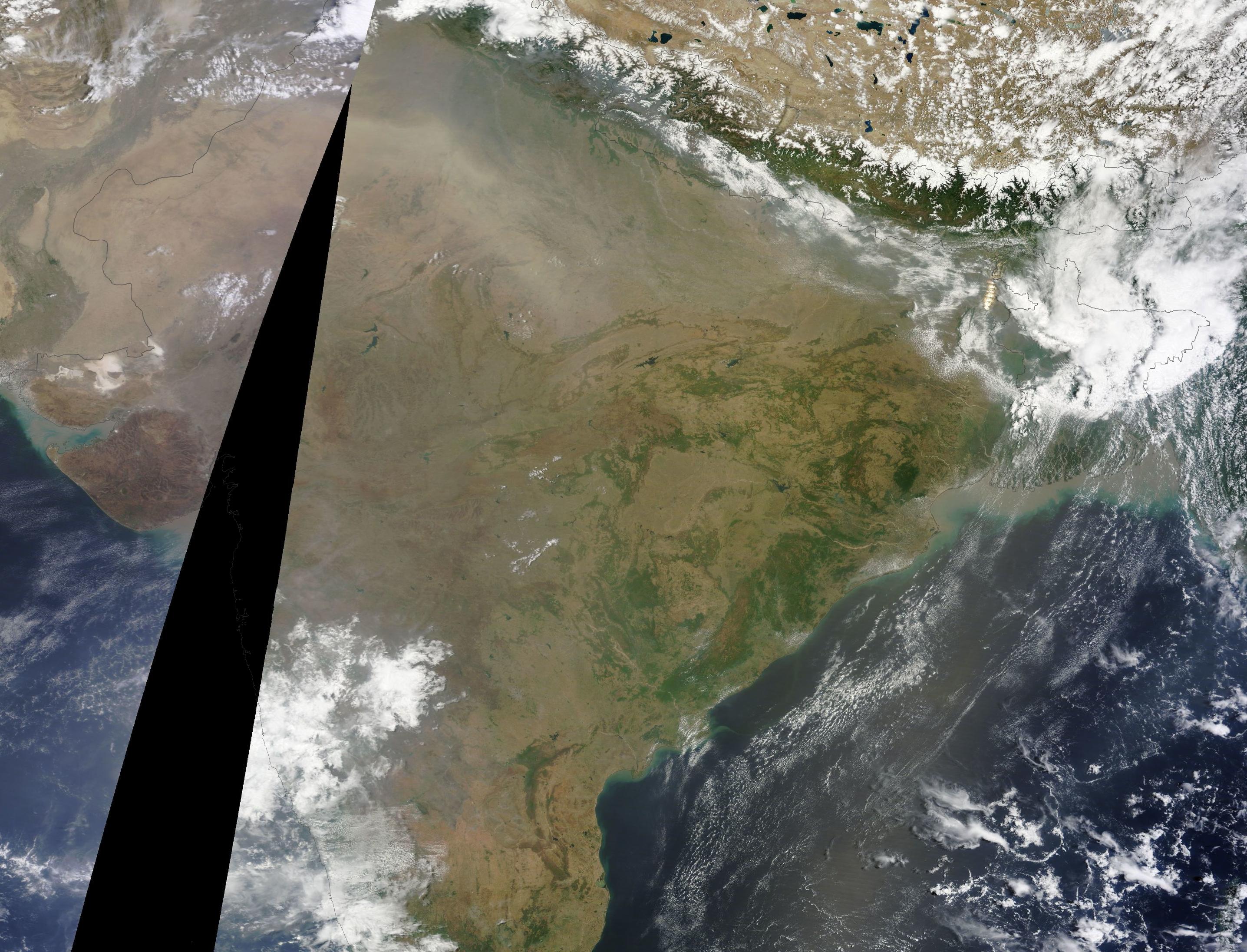
On May 25-27, an outburst of moisture from this stalled monsoonal flow splashed over the coasts of India. But by the 29th and 30th, these coastal storms and even the ones gathering over the Bengali waters had all been snuffed out. The most prominent feature in the MODIS shot of India today isn’t the rainfall that should be now arriving along the southeast coast, but the thick and steely-gray pallor of coal-ash smog trapped under a persistent and oppressive dome of intense heat.

(MODIS shot of India on May 30th. See the open stretch of blue water in the lower right frame? That’s the Bay of Bengal which borders coastal India. During a normal year at this time, that entire ocean zone should be filled with the storm clouds of a building monsoon that is already encroaching on coastal India. Today, there is nothing but a smattering of small and dispersed cloud through a mostly clear sky. Image source: LANCE-MODIS.)

Monsoon Described as Feeble

Official forecasts had already announced as of May 27th that the annual monsoon was likely to be delayed by at least a week for southeast regions of India. Meanwhile, expected monsoonal rainfall for western and northern sections of India for 2014 fell increasingly into doubt.

From The Times of India:

The monsoon is likely to be delayed by 10 days, according to scientists at the Indian Institute of Tropical Meteorology (IITM) here. The IITM’s third experimental real-time forecast says that a feeble monsoon will reach central India after June 20 as against the usual June 15. Last year, the monsoon had covered the entire country by June 15.

The annual monsoon is key to India’s agriculture. The substantial rains nurture crops even as they tamp down a powerful heating that typically builds throughout the sub-continent into early summer. Without these rains, both heat and drought tend to run rampant, bringing down crop yields and resulting in severe human losses due to excessive heat.

But, this year, heat and drought are already at extreme levels.

Major Heatwave Already Results in Loss of Life for 2014

As early as late March, the heatwave began to build over the Indian subcontinent. The heat surged throughout the state, setting off fires, resulting in a growing list of heat casualties, shutting down the power grid and spurring unrest. Meanwhile, impacts to India’s agriculture were already growing as the Lychee fruit crop was reported to have suffered a 40% loss.

By late May, temperatures across a broad region had surged above 105 degrees shattering records as the oppressive and deadly heat continued to tighten its grip.

In a country surrounded on three sides by oceans, it is a combination of heat, humidity and persistently high night-time temperatures that can be a killer. Wet bulb temperatures surge into a high-risk range for human mortality during the day even as night-time provides little respite for already stressed human bodies. Such extreme and long-duration heat doesn’t come without a sad toll. As of today, early reports indicated a loss of more than 56 lives due to heat stroke (In 2012 and 2013, total Indian heat deaths were near 1,000 each year). That said, final figures on heat losses are still pending awaiting complete reports from all of India’s provinces.

"Climatologically, we know that heatwaves are increasing in frequency and the number of days exceeding 45ºC temperatures is increasing. The frequency will increase further with global warming, hence this is a good example of a situation where science and disaster management can come together and avert damage," a spokesman for India’s National Disaster Management Authority noted on Friday.

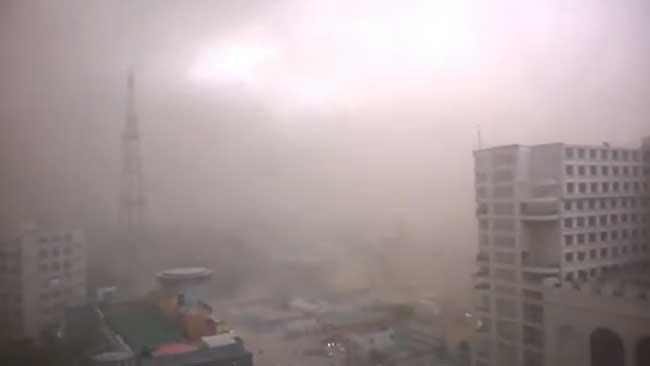
(Hot Dust. A dust storm rolls through New Delhi on Friday amidst furnace-like 113 degree heat snarling traffic and resulting in the tragic loss of 9 more lives. Image source: Gaurav Karoliwal/YouTube Screenshot.)

Today the heatwave continued to gain ground, with Kota and Rajasthan reaching an all-time record of 116 degree F (46.5 C) as New Delhi’s mercury hit 113 degrees F in the midst of a drought-induced dust storm. Dust shrouding the city spurred traffic chaos and in the heat, darkness, and confusion nine more souls were lost.

After two months of growing disruption due to heat and drought, the lands and peoples of India cry out for a Monsoon that is running later and later with each new weather report.

Climate Change + El Nino: Adding Heat and Beating Back the Monsoon

As systems approach tipping points, they are more likely to tilt toward the extremes.

For India this year, its seasonally warmest period from April to May found severe heat amplification from a number of global factors. First, climate change seeded the ground for the current Indian heatwave by adding general heat and evaporation to already hot conditions. With global average heating of +0.8 C above 1880s levels amplifying in the hot zones, early moisture loss due to higher-than-normal temperatures produces a kind of snowball effect for still more warming. Essentially, the cooling effect of water evaporation is baked out early allowing for heat to hit harder just as typical seasonal maximums are reached. More

Originally published by robertscribbler.wordpress.com/


Sunday, May 25, 2014

Nepal Glaciers Shrink By Quarter In 30 Years

Climate crisis has caused Nepal 's Himalayan glaciers to shrink by nearly a quarter in just over 30 years, said a scientist.

The glacier loss raises the risk of natural disasters in the ecologically fragile region.

A new study by the Kathmandu-based International Centre for Integrated Mountain Development (ICIMOD) shows that the area covered by glaciers has decreased by 24 per cent between 1977 and 2010.

Samjwal Ratna Bajracharya, lead author of the report, said “the shrinking of glaciers in Nepal is definitely connected to climate change; glacial melt is a huge indicator of rising temperatures.”

Under the three-year study led by ICIMOD scientists mapped satellite imagery from several decades to find the extent of ice loss in the region.

The fastest decline occurred between 1980 and 1990, said Bajracharya. Prior to the late 1970s, satellite imagery reflected little change in Nepal 's glacial area.

He said the glacial melting is creating huge, expanding lakes that threaten to burst and devastate mountain communities living downstream.

The accelerated glacial loss raises concerns over future access to water resources, particularly in regions where groundwater is limited and monsoon rains are erratic.

“If the trend continues, the immediate impact will be felt by those living in high-altitude regions, which are dependent on freshwater reserves from glaciers,” said Bajracharya.

The findings also sound alarm bells for Nepal 's push to develop hydropower projects.

“ Nepal cannot use its water resources to develop the country without assessing the state of our glaciers and river basins,” he said.

A government report in India recently blamed hydropower projects for devastating floods last year that killed thousands in India and Nepal .

The government panel said the build up of sediment in rivers, due to the dumping of soil that was dug up during construction of hydropower projects, exacerbated flooding when record-high rainfall hit the region last June.

It should be mentioned that the Himalayan region abounds in glaciers. Most of the big glaciers lie in the eastern Himalayas .

As the western Himalayas receive only a small amount of rainfall, barring the formation of vast snowfields, the source of some of the big rivers of Nepal are in fact glaciers.

Nepal 's largest glacier lies in the Mahalangur and the Kumbhakarna ranges. Khumbu is the biggest glacier and Langtang the longest. Kanchenjunga , Yalung, Nupchu and Langtang are some other glaciers belonging to the eastern Himalayas . Tukche and Hidden valley glaciers belong to the central Himalayas but these are comparatively small.

The Khumbu glacier is situated between Mount Everest and the Lhotse-Nuptse Ridge. It is seen flowing down between the two mountains and swerving right through the Khumbu valley. The terrain is gray and rocky. More


Thursday, May 22, 2014

Challenge in Sao Paulo: Overcoming Water Scarcity in South America’s Largest City

Last March, one of Brazil’s most important newspapers, O Estado de S. Paulo, published a version of the article below, which summarizes the Conservancy’s efforts to help secure Sao Paulo’s water supply. It is translated and reprinted here with permission.

By João Campari and Samuel Barrêto, The Nature Conservancy

The inhabitants of Sao Paulo have been dealing with discouraging images of cracked riverbeds where they used to see flowing water, making this temperate part of Brazil look more like the country’s semi-arid region. Unfortunately, these stark images show the worsening struggles of the Cantareira system, one of the greatest water supply systems in the world.

Right now, the Cantareira’s reservoirs — responsible for providing water for more than 12 million inhabitants of the Sao Paulo Metropolitan Region (RMSP) and Campinas — are operating at less than 15% capacity*, the lowest level recorded since the Cantareira’s creation in the early 1970s.

The images, the symbol of the current crisis, show that water doesn’t really come from the taps in our houses. It comes from nature, and in Sao Paulo much of that nature is the Atlantic Forest. While water rationing gets peoples’ attention and is one of the necessary responses to water scarcity, rationing alone is not enough to solve the long-term problem of securing lasting access to fresh water.

We must look beyond the tap and work to take care of our water supplies at their sources. We need a systemic response for the management of watersheds to restore the sources of our water that have been degraded, polluted and deforested. Forests are very important for healthy fresh water supplies. Unfortunately, the Cantareira system alone has lost 70% of its original forest cover, aggravating the sedimentation of rivers and dams, and decreasing their ability to supply water.The degradation of native vegetation also worsens the effects of erosion and drought.

The interaction of all these factors — deforestation, sedimentation, erosion and drought — leads to a situation of extreme risk and represents an environmental, social and economic threat not just to Sao Paulo, but to the entire country of Brazil. The Sao Paulo Metropolitan Region and Campinas together are responsible for more then 22% of the country’s GDP. Therefore, it is a priority to create a strong and strategic response to the increasing and urgent problems of water quantity, quality, access and supply for urban centers.

Protecting Water Supplies at their Sources

We must go beyond conventional interventions, such as engineering works — more dams or aqueducts are not the answer. Wider, systemic responses are necessary, and the responsibility to act is not limited to the government. We all need water and it is the shared responsibility of businesses, communities and civil society as a whole to search for solutions together. The government’s role is to foster and implement multiple solutions that reach multiple stakeholders at once.

The Conservancy’s work shows that one of the highest priorities for securing Sao Paulo’s water supplies is strengthening the Cantareira system’s “green infrastructure” by restoring the degraded forests of the Atlantic Forest, as well as conserving existing forest remnants. Such initiatives ensure the health of a watershed. This type of solution, when well managed, minimizes the risk of extreme events and reduces the vulnerability of populations to floods and prolonged droughts. Healthy forests also store water and reduce erosion and provide environmental services of water regulation and security to the population.

New York City illustrates this equation quite clearly. Decades ago, the city’s administration compared the costs of both natural and built infrastructure for protecting and providing water. Preserving the forests that were source of the city’s drinking water cost US $1 to 1.5 billion over 10 years. That amount was seven times lessthan the estimated US $6 to 8 billion needed to build a traditional, engineered water treatment and distribution network. (That amount doesn’t include the additional and ongoing operational and maintenance costs of $300 to $500 million a year that would have been necessary.) Obviously, nature was the better buy for the people of New York.

It is something for Sao Paulo to consider. A recent study by the Conservancy showed that restoring about 35,000 acres of deforested areas and preventing erosion on 5000 acres within the basins of the Piracicaba, Capivari, Jundiaí and Alto Tietê rivers would decrease the level of sediments that clog the rivers by 50%. Reducing erosion would increase the capacity of water reservoirs and simultaneously decrease the cost of treatment for the removal of sediments.

What the Conservancy is doing in Sao Paulo

To help accomplish restoration goals in the lands around Sao Paulo’s Cantareira system, the Conservancy-led Water Producers Project provides payments to farmers and ranchers who conserve forests on properties that are part of the watershed that feeds the Cantareira reservoirs. This payment-for-environmental-services program recognizes and compensates landowners for the water-producing value their lands provide.

The Conservancy also leads the Water for Sao Paulo Movement. This initiative fosters conversation and working relationships between different stakeholders and focuses on the importance of both water conservation and nature-based solutions for securing the water supply of the region. Because healthy forests are so important for healthy rivers and water supplies, Water for Sao Paulo seeks to restore degraded forests near the urban area.

Finally, Sao Paulo must strengthen the existing Watersheds Committees. Created by the Brazilian Legislature, Watersheds Committees discuss and make decisions about the use of water from specific river basins and are some of the most important collaborations for achieving a balance between water supply and demand.Committees include representatives of local governments, water supply companies and civil society, who are responsible for tasks such as approving water management plans, defining actions for conservation of biodiversity and mediating conflicts about the use of water resources. There are more than 200 of these groups in Brazil.

The current crisis in the Cantareira system is both a challenge and an opportunity to learn from the past and make better decisions for the future. If we have the discernment to act in a systemic way and the political and institutional capacity for change, we will be able to reduce the risks of a permanent cycle of water shortage. In addition to this, we have the opportunity to show how healthy watersheds contribute to water security, which is indispensable for Sao Paulo’s social and economic stability into the future.

To learn more about how the Conservancy is helping to secure Brazil’s water supplies, please visit Where Does Your Water Come From?

*Since this article was published in March, the need for concerted action in Sao Paulo has become even more urgent. The level of water in the Cantareira system has now dropped – to about 8% of its overall capacity. As an emergency stopgap to provide water to the city, the government of Sao Paulo spent US$36 million on emergency constructions to allow access to water stored below the level of the pumps. Known to water managers as “dead volume,” this water was never intended to be part of the water supply, and the reservoirs are now, essentially, operating at a deficit. More


Monday, April 14, 2014

Quenching Kenya: Can New Water Discoveries Save East Africa?

Water scarcity is becoming the defining international crisis of the twenty-first century. Water conflicts rage across the world as communities struggle to secure a clean, reliable supply.

One of the world’s most water-stressed regions is East Africa. Overexploitation of water resources there has been compounded by declining snowpacks on Mount Kilimanjaro and Mount Kenya, which have shrunk since the late 1980s due to global warming. Meanwhile, Lake Turkana -- the world’s largest perennial desert lake -- has largely disappeared from Ethiopian territory, retreating south into Kenya.

In this light, the discovery of two significant aquifers in mostly arid Kenya by a Japanese-financed UNESCO project has been hailed as a potential game changer. The first, the Lotikipi Basin Aquifer, is situated just west of Lake Turkana. The second, the smaller Lodwar Basin Aquifer, is near Lodwar, the capital of Turkana county. The aquifers were discovered by a French firm, Radar Technologies International (RTI), using a space-based exploration technology called WATEX that was originally designed to reveal mineral deposits. The company blended satellite and radar imagery with geographical surveys and seismic data to detect moisture. Subsequent drilling by UNESCO confirmed the presence of aquifers. Three other suspected aquifers in the region have yet to be verified through drilling.

For parched and economically backward Turkana, more than one-third of whose residents are malnourished, the discovery of major groundwater reserves is a godsend. Not only will the reserves provide lifesaving water, they will also spur the development of agricultural and hydrocarbon sectors and improve the lives of the impoverished residents in this conflict-ridden region, which extends from Kenya into the borderlands of Ethiopia and South Sudan. More [Subscription]


Friday, April 11, 2014

Water Crisis: 2020 Statement by Mikhail Gorbachev on 20th Anniversary of Green Cross

Water crisis – clear and present danger

We live in urgent times. The sum of the concurrent crises that have been engulfing everything from climate to energy, to the economy, is creating a spiral of need for change. But the water crisis sticks out of this list in terms of being an explicitly clear and present danger with deadly implications.

Mikhail Gorbachev

The mounting water crisis and its geography make it clear that without resolute counteraction, it will overstretch many societies’ adaptive capacities within the coming decades. This could result in massive migration, severe socio-economic stress, destabilization and violence, jeopardizing national and international security to a new degree.

By 2025, a predicted 1.8 billion people will live in regions suffering from absolute water scarcity. Two-thirds of the world population could be under hydric stress conditions. Demand for water will rise: water withdrawals in developing countries will increase by 50%, and 18% in developed countries by 2025.

Despite these demands, what state is the world’s water in? Despite the fact that we use slightly more than half the world’s (54%) accessible water, more than 50% of the 3.5 billion people living in urban circumstances around the world already do not have access to adequate water and sanitation.

But the really bad news is that the water use is growing even faster than the population: the 20th century water consumption grew twice as fast as the world population. As a result, a third of the world's population lives in water-stressed countries now. By 2025, this is expected to rise to two-thirds.

In addition to unsustainable water use we are polluting our lakes, rivers and streams to death. Most wastewater (about 80%) from residential and industrial sources enters the environment untreated.

The growing human need for water, to sustain life and wellbeing, plus the pressures on the resource itself, from mismanagement, pollution and a general lack of foresight, make for the most telling case for improved global water conservation and consumption.

But too little is being done on these fronts. We have been waiting since 1997 for just 35 countries to sign the UN Watercourses Convention, to promote the management and sharing of the world’s 276 cross-border rivers and connected underground water sources, and we are still a handful short.

The lack of a global framework to manage water sources that cross national borders endangers the world in many ways, not least of all in terms of the risk of conflict between countries over who controls the same river that runs through their respective frontiers.

Then there is the Right to Water and Sanitation, which Green Cross was a loud advocate of before it finally came into being in 2010. While this recognition itself, that access to safe drinking water and sanitation are basic human rights, is a success, what must be happening at breakneck speed now is the realization of this right. This means creation of national legislation enshrining the right (alongside education, health and others) and investing in the infrastructure needed to make safe water and sanitation services available to all.

Despite UN adoption of this vital principle, the deficit of fresh water is becoming increasingly severe and large-scale – whereas, unlike other resources, there is no substitute for water.

While the Millennium Development Goal for access to drinking water and sanitation was announced met in 2012, almost 800 million people still have no access to safe water today, and three times that number lack adequate sanitation. Thousands of children die daily in the developing world due to related waterborne diseases.

The scale and global nature of the water crisis demand stronger statesmanship, vision and international action. To master the water crisis, we must address its effects and causes. The economic, social, water and environmental aspects must be properly coordinated in any response.

A comprehensive “water goal” must be injected into the post-2015 development agenda, linking development and environment in analyses and in governance policies. Such a goal would address the three interdependent dimensions of water: water, sanitation and hygiene; water management; and wastewater management and water quality.

This goal must be based on principles of equity, solidarity, recognition of limits of planet and rights approach, coupled with effective means to check and demand the accountability of all stakeholders.

We live in volatile and transformative times, faced with the awe-inspiring global challenge of climate change, the devastation of civil wars, and the hope-crushing scourge of extreme poverty. But one thing is constant: our need for water. Whole regions are languishing in poverty and conflict, effectively held hostage by their hydrology: we must break this cycle and give people a chance for their future. Benjamin Franklin said that "when the well's dry, we know the worth of water." The alarm clock has been ringing on deaf ears for far too long, it is time to wake-up before it is too late, before the wells of the world have run dry. More


Wednesday, April 9, 2014

Pakistan has only 30 days of water reserves - researchers

ISLAMABAD, Pakistan (Thomson Reuters Foundation) – Inadequate planning is exposing Pakistan to water-related threats from climate change and putting the country’s agriculture, industry and hydropower at risk, water experts say.

Speaking at a water summit in Pakistan recently, they said the country desperately needs more reservoirs to increase its water storage capacity, and they called for conservation awareness campaigns, the introduction of drought-tolerant crop varieties and more economical irrigation.

“The country is gravely vulnerable to water-related (effects) of the changing weather patterns,” said Pakistan’s minister for planning, development and reform, Ahsan Iqbal, in a keynote address at the summit in the nation’s capital.

In December, the World Resources Institute ranked Pakistan among the 36 most water-stressed countries in the world.

Iqbal said that Pakistan needs a minimum storage capacity of 40 percent of the around 115 million acre-feet of water available in the Indus river system throughout the year. But the country’s storage capacity is only 7 percent and is decreasing due to sediment build-up in reservoirs.

This gives Pakistan a stored water supply, adequate to meet its needs, of just 30 days. By contrast, “carryover capacity” in other countries ranges from 200 days in India to 1,000 days in Egypt, he said.

“In Pakistan, planners and policy makers across different sectors, including agriculture and industry, energy and health now have ... a daunting challenge before them of increasing the country’s water storage capacity,” Iqbal said.

The minister urged the finance ministry to explore funding avenues for new water storage projects to boost storage capacity. Many of these are hydroelectric dams, which would also produce power.

THREATS TO HYDROPOWER, AGRICULTURE

But Pakistan Water Partnership’s country director, Pervaiz Amir, warned that if climate change leads to lower water flows in the northwest of the country, it would cut the amount of hydroelectricity that can be produced.

More variable rainfall and glacier melt in the face of climate change also means that agriculture, which he said accounts for over 96 percent of the country’s water consumption, will be affected, Amir said.

Without more facilities to divert and store water, heavy rainfall and flooding in some parts of the country will continue to damage crops, increase soil erosion and delay planting and harvesting, he said.

Pakistan ranks ninth among countries most affected by floods, according to UN-Water’s World Water Development Report.

Arun Shrestha, a senior climate change specialist at the International Centre for Integrated Mountain Development (ICIMOD), said that many South Asian countries lack preparedness for water-related hazards, including flood, droughts and glacial lake outburst floods, and instead focus mainly on post-disaster relief.

What is “more appalling,” he said, is that climate change is dealt with as a separate problem rather than integrated into planning for water-related areas of the government and economy including agriculture, industry, health and energy.

Shrestha urged South Asian countries to include disasters attributable to climate change in their respective water-related planning and policies.

He called for them to analyse their vulnerabilities to increasingly frequent flooding, droughts and glacial lake outburst floods, and to share the findings with each other to develop a regional action plan for dealing with climate-related disasters.

Shrestha underlined the need for regional coordination between government agencies so that river basins can be managed more efficiently, for example by sharing data about river flows.

Stephen Davies, a senior research fellow at the International Food Policy Research Institute, said that water, food and energy are closely interconnected, yet energy models do not properly address water constraints in South Asia and other regions.

Industrial growth and accelerating urbanisation are creating greater demand for energy, he said, but efforts to expand hydropower generation are being hampered by the shrinking availability of water.

Limitations on water availability also are impacting food production to meet the country’s galloping population growth, he added.

Chief executive of LEAD Pakistan and climate policy expert Tauqeer Ali Sheikh urged policymakers to incorporate the interdependence of water, food and energy into their planning.

In South Asia, “energy planning is often made without taking into account possible changes in water availability due to climate change or other water competing uses,” he pointed out. More

Saleem Shaikh and Sughra Tunio are climate change and development reporters based in Islamabad, Pakistan.


Sunday, March 23, 2014

How NASA Can Save Us Billions of Gallons of Water

Here’s something to add to your doomsday list of natural resources that people need to survive but are threatened by climate change: snow.

It’s a key source of freshwater for more than 1 billion people across the globe, slaking thirst, irrigating croplands, and driving turbines that generate electricity. Conveniently, in much of the world, snow also acts as a natural reservoir, storing water during wet seasons, then rationing it out slowly during drier summer months. But today, growing populations, warming temperatures, and changing weather patterns are straining that supply like never before. “June is the new July,” says Auden Schendler, vice president of sustainability at Aspen Skiing Company in Colorado. “Snowmelt comes earlier than it used to, and it all happens in one big flood.”

Which means that knowing exactly how much snow is in the highlands—and when it’s coming down to lower elevations to feed rivers, aqueducts, and irrigation channels—is ever more important. But how do you measure something that’s spread over thousands of miles of steep, rugged, alpine terrain?

Tom Painter, a research scientist at NASA’s Jet Propulsion Laboratory, has an answer: by measuring snow from thousands of feet in the air. Using sophisticated, aircraft-borne sensors that gauge snow’s depth and the amount of light it reflects, Painter and his team are assembling the most accurate measurement ever made of just how much water the mountains hold.

This is welcome news in California, where the water content of accumulated snow is at historically low levels. Runoff from the Sierra Nevada mountains provides about a third of the entire state’s water, and up to 80 percent in some areas, supplying tens of millions of people and almost 1 million acres of farmland.

Painter can’t make it snow, but he can provide more and better data to water managers, who need to plan how to most efficiently fill their reservoirs; farmers deciding which crops to plant and when; and cities trying to figure out if they’ll have enough water to supply their residents—or will need to start rationing. “The demand for knowledge about water resources is at an all-time high,” says Painter, a gregarious, athletically built 46-year-old.

For decades, state water officials have estimated the snowpack’s water content by a straightforward method that will appeal to steampunk aficionados: They clamber into the mountains on snowshoes and stick aluminum tubes into the snow. The tubes indicate depth while collecting a sample revealing water volume. More recently, California has added a network of tabletop-size scales scattered through the mountains that electronically transmit the weight of snow that has fallen on them.

Both systems yield reliable measurements but only of the snow where the measurement is taken; extrapolating out from that to a whole basin, or a whole mountain range, is better than guesswork but less than precise. What’s more, both the scales and the human surveyors are concentrated at lower elevations, leaving scientists to wonder what lies farther uphill. “The old system worked OK historically because there was always enough water,” says Painter. “But now it’s all been allocated out, and demand is starting to exceed supply.” More


Monday, March 17, 2014

Climate change: Leaked draft of UN IPCC report predicts global warming will cause violent conflict, displace millions of people and wipe trillions of dollars off the global economy

Climate change will displace hundreds of millions of people by the end of this century, increasing the risk of violent conflict and wiping trillions of dollars off the global economy, a forthcoming UN report will warn.

The second of three publications by the UN’s Intergovernmental Panel on Climate Change, due to be made public at the end of this month, is the most comprehensive investigation into the impact of climate change ever undertaken. A draft of the final version seen by The Independent says the warming climate will place the world under enormous strain, forcing mass migration, especially in Asia, and increasing the risk of violent conflict.

Based on thousands of peer-reviewed studies and put together by hundreds of respected scientists, the report predicts that climate change will reduce median crop yields by 2 per cent per decade for the rest of the century – at a time of rapidly growing demand for food. This will in turn push up malnutrition in children by about a fifth, it predicts.

Climate change


The report also forecasts that the warming climate will take its toll on human health, pushing up the number of intense heatwaves and fires and increasing the risk from food and water-borne diseases.

While the impact on the UK will be relatively small, global issues such as rising food prices will pose serious problems. Britain’s health and environmental “cultural heritage” is also likely to be hurt, the report warns.

According to the draft report, a rare grassy coastal habitat unique to Scotland and Ireland is set to suffer, as are grouse moors in the UK and peatlands in Ireland. The UK’s already elevated air pollution is likely to worsen as burning fossil fuels increase ozone levels, while warmer weather will increase the incidence of asthma and hay fever.

Coastal systems and low-lying areas

The report predicts that by the end of the century “hundreds of millions of people will be affected by coastal flooding and displaced due to land loss”. The majority affected will be in East Asia, South-east Asia and South Asia. Rising sea levels mean coastal systems and low-lying areas will increasingly experience submergence, coastal flooding and coastal erosion.

Food security

Relatively low local temperature increases of 1C or more above pre-industralised levels are projected to “negatively impact” yields of major crops such as wheat, rice and maize in tropical and temperate regions. The report forecasts that climate change will reduce median yields by up to 2 per cent per decade for the rest of the century – against a backdrop of rising demand that is set to increase by 14 per cent per decade until 2050.

The global economy

A global mean temperature increase of 2.5C above pre-industrial levels may lead to global aggregate economic losses of between 0.2 and 2.0 per cent, the report warns. Global GDP was $71.8trn (£43.1trn) in 2012, meaning a 2 per cent reduction would wipe $1.4trn off the world’s economic output that year.

Human health

Until mid-century, climate change will impact human health mainly by exacerbating problems that already exist, the report says. Climate change will lead to increases in ill-health in many regions, with examples including a greater likelihood of injury, disease and death due to more intense heatwaves and fires; increased likelihood of under-nutrition; and increased risks from food and water-borne diseases. Without accelerated investment in planned adaptations, climate change by 2050 would increase the number of undernourished children under the age of five by 20-25 million globally, or by 17-22 per cent, it says.

Human security

Climate change over the 21st century will have a significant impact on forms of migration that compromise human security, the report states. For example, it indirectly increases the risks from violent conflict in the form of civil war, inter-group violence and violent protests by exacerbating well-established drivers of these conflicts such as poverty and economic shocks.

Small-island states and other places highly vulnerable to sea-level rise face major challenges to their territorial integrity. Some “transboundary” impacts of climate change, such as changes in sea ice, shared water resources and migration of fish stocks have the potential to increase rivalry among states.

Freshwater resources

The draft of the report says “freshwater-related risks of climate change increase significantly with increasing greenhouse gas emissions”. It finds that climate change will “reduce renewable surface water and groundwater resources significantly in most dry subtropical regions”, exacerbating the competition for water. Terrestrial and freshwater species will also face an increased extinction risk under projected climate change during and beyond the 21st century.

Unique landscapes

Machair, a grassy coastal habitat found only in north-west Scotland and the west coast of Ireland, is one of the several elements of the UK’s “cultural heritage” that is at risk from climate change, the report says. Machair is found only on west-facing shores and is rich in calcium carbonate derived from crushed seashells. It is so rare and special, that a recent assessment by the European Forum on Nature Conservation and Pastoralism described it as an “unknown jewel”.

The IPCC also warns of climate threats to Irish peatlands and UK grousemoors and notes an increasing risk to health across Europe from rising air pollution – in which the polluted UK is already in serial breach of EU regulations. More


Friday, March 14, 2014

Pakistan’s Impending Famine

Thar, Sindh, Pakistan

It’s hard to catch a break in Pakistan.

Extremist violence is widespread, earthquakes and flooding are routine, and polio remains endemic. No nation has a higher infant mortality rate, and only a few have more cases of tuberculosis. Nearly half the country’s 180 million people lack access to safe water, and many Pakistanis have experienced power outages of up to 20 hours per day. Given such stresses, it’s not surprising that up to 16 percent of the country suffers from mental illness.

And now comes the latest scourge: Famine.

In recent days, media reports have revealed that dozens of people—many of them children—have died from malnutrition over the last three months in the bone-dry desert region of Thar, in the southern province of Sindh. And yet things could soon get much worse. A recent UNICEF report, noting that drought has “devastated” crops and livestock and that “hundreds of thousands” of people have fled, warns of a possible “massive humanitarian crisis” in Thar. Ominously, almost 3 million people “risk starvation” across Pakistan.

Many Pakistani press accounts—and numerous Pakistani politicians—depict the Thar tragedy as a catastrophic case of negligence by Sindh’s provincial government. They fault local officials for taking too long to get food assistance to those in need late last year when drought conditions first began to set in. And they single out authorities for failing to transfer sick children in remote areas to better hospitals.

Yet the Thar famine also reflects another type of failure: that of democracy.

In recent years, Pakistan—a country ruled by the military for about half its existence— has made remarkable democratic progress. With successive free elections, civilian rule is firmly in place. Pakistan’s mighty military has mellowed. Constitutional amendments have decentralized power. The Supreme Court is increasingly targeting powerful people and institutions. And private media outlets have rapidly proliferated.

However, there are limits to this progress.

The most commonly cited obstacles to deeper democratization are the military, which continues to exert heavy influence over politics; a lack of pluralism and tolerance, which contributes to the deplorable plight of religious minorities; and the country’s abysmal law enforcement, which enables militants to operate with impunity.

Yet the tragedy in Thar underscores a more insidious and underreported threat to democracy: Astounding manifestations of land inequality.

In Sindh, a paltry 0.05 percent of households hold more than five acres of land (the figure is similar in Punjab, Pakistan’s most populous province). In the nation as a whole, 2 percent of households own nearly 50 percent of land, while 5 percent of agricultural households own nearly two thirds of Pakistan’s farmland.

This means that the majority of the population holds little to no land. Without land, it’s difficult to access food and water (and it’s also difficult to earn a livelihood; landless Pakistanis make up 70 percent of the country’s rural poor). Most Pakistanis must depend on a tiny, wealthy landowning minority for access to these natural resources.

These resources, and the land that holds them, are becoming increasingly precious. According to one alarming estimate, Pakistan loses three acres of good agricultural land every 20 minutes. In Thar, land and natural resources are further imperiled by Islamabad’s plan to tap into the region’s vast coalfields to ease the country’s severe energy crisis. Officials insist there will be no deleterious impacts on local communities, but there’s good reason to fear that such exploitation could cause environmental distress and displacement, and deprive an impoverished region of a critical natural resource. These are very real problems in equally dry and poor Baluchistan, a province long subjected to intensive natural resource extractions by Islamabad and large corporations. Such conditions have helped fuel a long-running separatist insurgency.

In effect, millions of Pakistanis have neither the land to grow food nor the money to buy it. And yet little is done to help them. Landed rural elites—the essence of vested interests in Pakistan—seemingly spend more time blocking critical agricultural reforms (including those that would increase the tax base) than addressing the plight of the landless. They have also been accused of siphoning off irrigation water flows from poor farmers, and of diverting floodwaters away from their crops and into more vulnerable communities. What’s particularly troubling about all this is that these wealthy landowners are often politically connected, or politicians themselves (Sindh’s landed rural elite is a strong base of support for the Pakistan People’s Party, or PPP, which runs the Sindh government).

Consider the strikingly blasé reactions of local officials to current conditions in Thar. Apparently unmoved by (or oblivious to) UNICEF’s warnings of a massive crisis, PPP leaders have described events of recent days as “normal” and “nothing new.” Sindh’s advocate general, speaking Monday at a hearing convened by Pakistan’s Supreme Court, expressed regret, but also appeared to lay the blame on parents for not taking their kids to the hospital.

Perhaps most egregious of all, after federal officials toured affected areas this week, Sindh’s government hosted a lavish buffet lunch featuring fried fish and biryani —“an act of such monumental stupidity and insensitivity,” according to one Pakistani editorial, “that it beggars belief.”

Call this heartlessness, or call it apathy. Many Pakistanis call it feudalism—the embodiment of a system in which imperious landed elites lord over their hapless subjects. One thing you can’t call it, however, is democracy. Yes, it’s an imperfect institution—but surely it doesn’t sanction such vast disparities in land ownership, or the type of leadership that seems unmoved by the humanitarian crises spawned by those disparities.

The takeaway here is that in Thar, people are dying because of deeply entrenched inequalities that make them profoundly food insecure and hyper-vulnerable to calamities—like drought and disease—that more fortunate people elsewhere can withstand and survive.

Ultimately, the dead and dying of Thar—just like slaughtered Shia Muslims, the military’s large political footprint, and state sponsorship of militancy—underscore the fact that despite considerable achievements in recent years, democracy in Pakistan remains a work in progress.

Michael Kugelman is the senior program associate for South Asia at the Woodrow Wilson International Center for Scholars in Washington, DC. He can be reached at michael.kugelman[@]wilsoncenter.org or on Twitter @michaelkugelman.


Tuesday, March 11, 2014

Cary Fowler on Food Security - TED Talk

Cary Fowler served as the Executive Director of the Global Crop Diversity Trust from 2005 to 2012.[8] The trust's mandate is to ensure "the conservation and availability of crop diversity for food security worldwide." Fowler was influential in the creation of the Svalbard Global Seed Vault, which currently houses samples of more than 783,000 distinct crop varieties. He stepped down as Executive Director of the trust in late 2012 but continues to serve in an advisory role and chairs the International Advisory Council of the Svalbard Global Seed Vault.[4][8]

Working with partner genebanks in 71 countries during Fowler's tenure as Executive Director, the Trust helped rescue 83,393 unique crop varieties from extinction. It sponsored more than 40 projects to screen crop collections for important traits such as heat and drought tolerance. In partnership with the USDA, a state-of-the-art genebank management system ("GRIN-Global") was developed and made available to 38 genebanks internationally, and the first ever global portal to accession (sample) level information (Genesys)[9] was launched. The Trust's endowment grew more than $100 million to $134 million, and total funds raised surpassed $200 million.[10][11]

By the end of Fowler's tenure, the Trust concluded three major agreements intended to protect and conserve crop diversity: with the Millennium Seed Bank of Kew Gardens,[12] the indigenous communities in the Andes,[13] and the international genebanks of the Consultive Group on International Agricultural Research (CGIAR).[14]

One example given here is for South Asia where we must pay attention from a food security perspective. Editor