Showing posts with label India. Show all posts

Wednesday, August 23, 2017

Trump’s Request for India’s Help in Afghanistan Rattles Pakistan

Trump’s Request for India’s Help in Afghanistan Rattles Pakistan - The New York Times

However, Maria Sultan, a defense analyst based in Islamabad and director general of the South Asian Strategic Stability Institute, said the Trump policy was “not as bad as we were expecting. The responsibility has been essentially shifted to Afghanistan.”

She warned that intelligence-based operations against groups inside Pakistan might increase. “This will further reduce the space for cooperation between Pakistan and U.S. and will be counterproductive for a long-term relationship,” Ms. Sultan said. More

Tuesday, June 6, 2017

South Asia's Turn: Policies to Boost Competitiveness and Create the Next Export Powerhouse


South Asia is undergoing a rapid economic transformation and has the potential to become the next major middle-income region of the world. More than a million young people are reaching working age every month, and the population of the region’s mega agglomerations and sprawling cities is expanding at roughly the same pace. By 2030 more than a quarter of the world’s working adults will live in South Asia. But the region has not been particularly successful in integrating within itself and with the global economy. The demographic transition and urbanization on the one hand, and poor competitiveness on the other, are South Asia’s greatest opportunity and greatest challenge. View PDF

Wednesday, July 15, 2015

Pakistan, Bangladesh face ‘state failure’ as globe heats up

Study compiled by experts from US, UK, China and India underlines migration potential from warming world

India will face a huge influx of refugees from Afghanistan, Pakistan and Bangladesh should high degrees of climate change develop, according to one of the country’s senior military officials.

Drought and flooding linked to sea level rise would place the governments of those countries under "severe stress" and lead to large-scale migration, said Vice Admiral Pradeep Chauhan, head of the Indian Naval Academy.

"In India, this would combine with an internal population shift from rural to urban areas, further increasing demographic pressure in cities," he wrote in a climate risk study backed by the UK Foreign Office.

A significant influx of migrants could further destabilise what is known as India’s "Red Corridor", a belt of land running through east India where Marxist rebels are fighting the state.

"The temptation to solve this problem through military intervention could become overwhelming," he added.

Current greenhouse gas emissions will "likely as not" mean temperature increases of 4C above pre-industrial levels by 2150 said the study, with severe implications for human health and crop yields.

A N M Muniruzzaman, a retired Bangladeshi major general, said millions of people in his country could be displaced as a result of sea level rise.

"Flooding is projected to increase in many regions, but it could be a particular problem in South Asia due to the contribution of melting glaciers," he said.

Planning battle

Chauhan’s and Muniruzzaman’s comments were based on a war gaming exercise held in Delhi in March, hosted by the Council on Energy, Environment and Water.

Former military officials from India, China, the US, the UK, Bangladesh, Germany, the Netherlands, and Finland took part, along with scientists and diplomats.

"In the game, it was notable that increasing numbers of refugees contributed to several large countries becoming more isolationist in their foreign policies," says the study.

"Participants in our exercise considered it extremely likely that climate change would exacerbate humanitarian crises over the coming decades."

Long term water stress in South Asia could become so severe previous agreements over resource sharing between India, Pakistan, China and Bangladesh "could be broken", the study warns.

"At the high degrees of climate change possible in the long-term future, participants in our scenarios exercise considered that there could even be risks to the political integrity of states that are currently considered developed and stable."

Alex Randall from the UK-based Climate Change and Migration Coalition said the document presented a "one sided view of migration" seeing it only as a security threat.

"While there is growing evidence linking climate change to changing patterns of migration, there is little evidence suggesting that migrants and refugee present the kind of security threat suggested in the report," he said.

"There is also strong evidence indicating that migration could become a key way for some people to adapt to climate change." More


Thursday, June 25, 2015

The World’s Most Hostile International Water Basins

At the launch of A New Climate for Peace, a new report on climate-fragility risks produced for the G7 by a consortium of international partners including the Wilson Center, USAID Deputy Assistant Administrator Christian Holmes called water a common denominator for climate risk.

“How you manage your water programs…has a huge amount to do with how you mitigate the prospect for increased fragility,” he said. “Sometimes it’s the obvious that’s so easy to miss, and I think that the obvious on water as it relates to economic development is, essentially, the question of sustainable water supply.”

One of the most striking infographics from A New Climate for Peace touches on that question of supply. Using data from Oregon State University’s Transboundary Freshwater Dispute Database and adapted from a graphic that originally appeared in Popular Sciencelast year, the map shows the world’s most active – and tension-filled – international water basins.

Water is a common denominator for climate risk

The Transboundary Freshwater Dispute Database measures not only the frequency of hostile events in a basin, but cooperative ones as well, each on a sliding scale. Hostile events range from declarations of war (zero recorded from 1990 to 2008, the period of time encompassed by the graphic) to leaders using “language of discord.” Cooperative events range from “mild verbal support” to “voluntary unification into a single country.”

The total number of events is indicated by shades of blue – the darker the blue, the more transboundary events, both positive and negative. This is essentially the “hot list” of international water basins – which regions have the most official and unofficial chatter over water.

Circles superimposed on the basins represent the total number of hostile events. As the description text points out, however, “circle size does not automatically translate into conflict danger.” In some places, transboundary institutions and diplomatic frameworks allow different actors to work through their differences. Cooperative hostility, if you will. In the Danube River Basin, for example, the high number of “hostile” events is mitigated by strong cooperative incentives associated with European integration. Likewise in North America, where Canada, the United States, and Mexico share several basins with a high number of hostile events, there is little chance of violent conflict.

Water basins in South Asia, the Middle East, and East Africa are major hotspots with a high number of hostile events and weaker institutional frameworks to mitigate them. The Indus, Ganges-Brahmaputra-Meghna, Salween, Tigris-Euphrates, and Jordan basins witness a very high number of interactions, suggesting at least that continued dialogue could be a way forward to mitigate the risk of violent conflict or fragility. The Nile Basin has less activity reflecting the stalled negotiations between the basin’s 10 member states to replace colonial-era water agreements. The Mekong Basin, where the largest member, China, does not participate as a full member of the Mekong River Commission, shows less activity as well.

The map does a great job illustrating why it can be difficult to answer the question, where is the highest risk of water-related violence? Tensions between states and other freshwater basin actors isn’t necessarily a sign of impending violence if there’s a framework to resolve them. Likewise, lack of communication over a major natural resource can be a bad sign for cooperation when the resource in question is the Nile. More

More infographics from ‘A New Climate for Peace: Taking Action on Climate and Fragility Risks’ are available on NewClimateforPeace.org.


Tuesday, September 16, 2014

India-Japan proliferation: delinquency or a crime? By Mobeen Tariq

The ongoing India-Japan negotiations on a civil nuclear agreement were the hallmark of Indian Premier Modi’s recent visit to Japan.


Modi could not achieve the breakthrough on the much sought after civil nuclear deal. There are issues in the prospective Japan-India Nuclear Cooperation Agreement that can have multiple, deplorable implications. India possesses nuclear weapons and has tested these several times. It is not a signatory of the Nuclear Nonproliferation Treaty (NPT). If nonproliferation norms and Japanese traditional championing of these were to be followed, Tokyo cannot enter into nuclear trade with New Delhi.

Nuclear technology is the key to Japan’s energy sector and affects its industrial output. Overblown safety fears after the Fukushima nuclear power plant accident in 2011 affected the public’s sentiment against nuclear energy but the economic realities have changed the government’s and public’s behaviour. Japan is one of the major traders of nuclear technology for peaceful purposes and a member of the Nuclear Suppliers Group (NSG) that was founded in 1975 after India tested a nuclear weapons device using fissile material diverted from fuel provided for nuclear power generation.

India claims to have a huge energy deficit and not having enough uranium to fuel its existing and upcoming nuclear power plants that will add millions of volts to its impoverished energy mix. New Delhi boasts a fat purse and exerts sufficient political influence to woo some nuclear supplier states in foregoing their domestic and international nonproliferation commitments to trade with India. That is why the US arm-twisted the members of the NSG in giving India an exceptional waiver to trade with that country. Japan was also part of that Faustian bargain but Tokyo could not be charmed into becoming the 12th capital with which India could trade in nuclear materials. Giving a NSG waiver was delinquency but nuclear trading or allowing New Delhi to become a member of the group would be a crime. That is perhaps why Japan has demurred from signing a nuclear deal with India.

For its own sake, Japan is gearing up to start a massive nuclear fuel reprocessing plant that can produce nine tonnes of weapons usable plutonium annually, enough for 2,000 atomic bombs!

For its own sake, Japan is gearing up to start a massive nuclear fuel reprocessing plant that can produce nine tonnes of weapons usable plutonium annually, enough for 2,000 atomic bombs! This is in spite of the fact that 150,000 of its people remain homeless and that the nuclear disaster has cost almost $ 100 billion. Japan is a rational state and has reverted to nuclear energy because it is considered a safe and inexhaustible source of energy and a panacea against its dependence on hydrocarbon imports from the Middle East and elsewhere. The South China Sea is gradually becoming a powder keg due to US and Chinese competition, forcing Japan to hedge its bets on safer energy production alternatives to fossil fuels.

Indian negotiations for a civil nuclear deal with Japan started in Tokyo in June 2010. Two consecutive rounds followed in October 2010 and November 2010 in New Delhi and Tokyo. However, India slowed the pace of negotiations in the wake of the Fukushima disaster in March 2011. The last round of talks was held in November 2013. Japanese companies such as specialist reactor vessel manufacturer JSW are keen on signing a nuclear deal but the government has insisted that India agree to more stringent inspections than those required under nuclear cooperation pacts with other countries. In the longer run, Japan will have to make a choice between its trade and geopolitical interests against non-proliferation commitments.

Another hold up in the nuclear deal has been India’s refusal to accept limited liability for commercial operators who supply equipment. The Indian Civil Liability for Nuclear Damage Act of 2010 is only acceptable to states where their governments provide a financial cushion to the nuclear industry in taking the huge liability enforced by India. The prospective Japan-India Nuclear Cooperation Agreement would be a de facto legitimisation of India’s nuclear weapons status. Every gram of nuclear fuel that India would import from Japan would allow its indigenous uranium to be used for nuclear weapons production. If Japan enters a deal with India it joins a dozen others in effectively participating in New Delhi’s burgeoning nuclear weapons production.

India has invested heavily in nuclear technology for prestige and power. In his recent book The Power of Promise: Examining Nuclear Energy in India, Ramana explains how India’s Department of Aatomic Energy first acquired its present political clout, and how the Atomic Energy Commission, which reports directly to the Prime Minister, achieved its immunity to public scrutiny despite repeated failures to meet India’s nuclear energy needs. This domestic dynamic complements Indian global power ambition and some states happily let this happen for their short-term economic and geopolitical interests. It is just a matter of time that Faust will do what he is best at: having bought souls, he will ultimately challenge his hosts.

The writer is a freelance columnist


Friday, August 22, 2014

Global Climate Inaction Will Mean Economic Turmoil for South Asia, Warns Bank

The first comprehensive study ever issued on the economic costs that uncontrolled climate change would inflict on South Asia predicts a staggering burden that would hit the region's poorest the hardest.

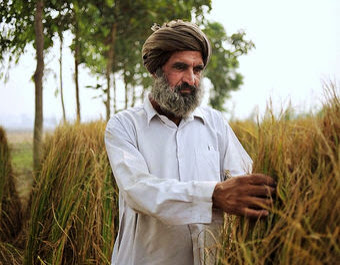
Rice Farmer in Punjab, India

"The impacts of climate change are likely to result in huge economic, social and environmental damage to South Asian countries, compromising their growth potential and poverty reduction efforts," said the study, published by the Asian Development Bank.

The cuts in regional GDP are so deep that they might ripple around the world, as six developing countries with 1.4 billion people—a third of them living in poverty—pay the price of the world's continuing reliance on fossil fuels.

Projections like this feed into the urgency for action as world leaders prepare to meet at the United Nations next month to discuss the climate crisis. Recent warnings show that the steps nations seem willing to take will fall well short of what is needed.

Action now, the study shows, would pay immediate and lasting dividends to the countries it examined: Bangladesh, Bhutan, India, the Maldives, Nepal and Sri Lanka.

The study, published as a new 160-page book, says that if the world cuts fossil fuel consumption enough to keep warming within 2 degrees Celsius—the goal of UN negotiations—the costs to South Asian countries of adapting to rising seas and temperatures in the decades ahead might be cut almost in half.

But if business-as-usual continues, leading to a world that is 4 or 5 degrees warmer by 2100 than at the start of the industrial age, the outlook looks grim.

"Climate change will slash up to 9 percent off the South Asian economy every year by the end of this century if the world continues on its current fossil-fuel intensive path," the bank said. "The human and financial toll could be even higher if the damage from floods, droughts, and other extreme weather events is included."

Because this kind of estimate is inherently imprecise, the bank warned that the real damage could be much worse than expected. Under business-as-usual trends, there is a one in 20 chance that South Asia will lose 24 percent of its annual GDP by the end of the century, the study found.

Paying to stave off those damages will cost these nations dearly, the study said.

To avoid the damage that is expected if the world takes no action on climate change, South Asia would have to spend nearly $40 billion per year by 2050 on adaptation measures, or nearly half a percentage point of average annual GDP. By 2100, the costs would have to increase to $73 billion per year, or roughly nine-tenths of a point of GDP.

If the world were to achieve the 2-degree warming goal established by UN negotiators at climate treaty talks in Copenhagen in 2009—a goal also at the heart of culminating talks set for Paris in 2015—annual adaptation costs for South Asia would be considerably less: $31 billion a year at mid-century, and $41 billion at century's end.

And instead of losing nearly 9 percent of annual GDP by the end of the century, the study found, South Asia would lose about 2.5 percent by 2100 if the world lives up to the goals of Copenhagen. More


Saturday, August 16, 2014

After Modi's Big Win: Can India and Pakistan Enhance Relations?

As the new Indian government settles in, questions arise about the future of the Indian-Pakistani relationship—questions prompted mostly by the new Indian prime minister’s history of Hindu nationalism.

Frederic Grare

But a more revealing lens for analyzing this relationship might be to regard it from the perspective of Pakistan. Pakistan’s “dysfunctional civil-military relations” suggest an uncertain political future, leaving India in an essentially reactive role. That dynamic, may have an even more powerful impact than Narendra Modi’s politics.

Modi’s decision to invite his Pakistani counterpart, Nawaz Sharif, to his swearing-in ceremony together with all the other heads of state or government from the South Asian Association for Regional Cooperation, was considered a positive gesture on both sides of the border. The meeting between the two prime ministers was cordial and frank but—to no one’s surprise—not groundbreaking.

While Pakistani leaders are unanimous and sincere in welcoming warmer relations with India, civilians and military officials have opposing long-term objectives. It is doubtful that the Pakistani military supports such a change for any reasons beyond the narrowly tactical, and in fact will fight fiercely against such a change affecting its territorial claims. Sharif is pursuing an opposite strategy—trying to turn a tactical rapprochement into a more permanent arrangement.

India is likely to adopt a “wait and see” attitude. While the election of a new government may have elevated resolve to punish Pakistan in case of a terrorist attack, it has not increased India’s capacity to coerce its neighbor into any specific outcome. New Delhi will have to walk a fine line between ignoring Pakistan, which it can’t control and does not need economically, and keeping the door to better relations open enough to provide a real incentive for Islamabad to adopt meaningful new policies—all without making unilateral concessions to Pakistan.

Most-Favored-Nation Status

A year ago, then-candidate Sharif made the normalization of relations with India a central plank of his platform. Hopes were high, therefore, that Pakistan would finally extend India Most-Favored-Nation (MFN) status, removing tariff and other trade barriers. Sharif did not spell out any preconditions. But, twelve months later, the issue is still pending. Pakistan is now stipulating that the MFN status will be attributed to India only if New Delhi reopens the composite dialogue, a stalled executive-level negotiation process.

Awarding the MFN status to India is important in its own right. A substantial part of the business community, in particular small- and medium-sized enterprises, seem to fear being overwhelmed by a massive arrival of cheaper Indian products on the Pakistani market. Nontariff barriers to India’s market have also been invoked as a justification for Pakistan’s hesitations. Yet, the Pakistani government continues to insist on the need to facilitate bilateral trade between the two countries. It blames several Indian lobbies (the automobile, textile and pharmaceutical industries as well as the agricultural lobbies) for obstructing the negotiations and maintains that awarding India MFN status would benefit Pakistan.

However, the MFN issue provides clues to a larger domestic political dynamic in Pakistan. The main political parties support Sharif’s policy. Jihadi organizations, on the contrary, oppose any trade deals with New Delhi as long as Kashmir remains under Indian control. Here, as elsewhere, the jihadis are joined by the military—whose opposition Sharif seems to have underestimated. The nomination of Raheel Sharif as replacement for Ashfaq Parvez Kayani as Chief of Army Staff (COAS) did not usher a more receptive posture in Rawalpindi. It was the military that insisted that the government take the small- and medium-sized enterprises’ objections to heart. It also lent its explicit support to their cause, warning the Sharif brothers “against making rapid concessions, particularly in the run-up to India’s general election.” In February 2014, Shabaz Sharif, the prime minister’s brother, obliquely accused the military of obstructing trade normalization.

Awarding the MFN status to India would thus serve the interests of the civilian government, not to mention the country, whose economy would benefit from free trade with India. But such a move would only partly benefit the military. This relative convergence opens some diplomatic and political space that the government can exploit, providing it can keep its relations with the military under control. Yet, a spectacular advance in trade relations between India and Pakistan is unlikely. In the delay, Pakistan, whose economy is in shambles, has much more to lose than India does. New Delhi can afford patience. Its economic future lies in its integration in the global economy, not in any specific trade relation with its South Asian neighbors. More


Tuesday, August 5, 2014

Russia’s Strategic Pakistan Play

Russia’s decision to go ahead with the sale of Mi-35 attack helicopters to Pakistan, even in the face of official Indian concerns, is being seen by some quarters as evidence of a “major” regional re-alignment in the wake of the American drawdown in Afghanistan.

In fact, the Russia-Pakistan dialogue for regional integration has been underway for some time now and beyond security cooperation, it is more fundamentally driven by Moscow’s push towards ‘southern” markets and Pakistan’s need for a capable yet politically “manageable” strategic sector trade and investment partner. The Mi-35 sale (if it does materialize) reflects the fact that the geo-economic stakes for both sides are now high enough for them to make a concerted push towards a long term compartmentalized working relationship in a manner not dissimilar to the way in which their more traditional partners – India for Russia and America for Pakistan – deal with each other. Indeed, in a world characterized by both competition and cooperation the heady rhetoric of “strategic partnership” means little and it is the transactional content that weighs on any relationship. Far more than cooperation in counter-terrorism, Russia and Pakistan will have to move forward quickly on Putin’s commitment to invest in the latter’s energy and metallurgy sectors for their relationship to be meaningful.

Mi-35

It could be argued that it was actually America’s entry into the region a decade ago that ultimately accentuated the circumstances that impel Russia and Pakistan closer to each other. Pakistan’s counter-terrorism cooperation with America salved with military aid has been toxic for domestic stability, as the situation in FATA and Waziristan reveal. As the tempo of internal stability operations has increased, Pakistan is keen to diversify away from America for certain classes of weaponry to a source that can supply cheaper and more rugged alternatives with a much smaller political price on the domestic front. The Mi-35 fits that bill and is likely to prove useful for Pakistani operations against the Tehrik-i-Taliban Pakistan (TTP) in mountainous areas, given its pedigree from the Afghan theater. At the moment Pakistan is using AH-1 Cobra Gunships that were originally obtained from America for use against Indian armoured formations in the plains and are proving expensive to use in operations against the TTP. Pakistan may not wish to be saddled with too much expensive American equipment that it can”t afford without generous aid.

Russia until recently was “reluctant” to transfer equipment that could be labelled as offensive in nature such as the Mi-35, and was holding back probably with an eye on a number of Indian military procurement tenders such as the multi-billion dollar medium multirole combat aircraft (MMRCA) competition. In 2010, Russia’s UAC, which was participating in the tender, even made noises about blocking the re-export of 150 KlimovRD-93 turbofans from China for Pakistan Air force’s future mainstay, the JF-17, on the grounds that it would compete with the Russian Mig-29 in international markets. By 2013, however, with Russia having lost out on the MMRCA tender and other Indian competitions, the Russians reiterated their commitment to continue supplies of the RD-93 and the JF-17 Block II commenced production in late 2013. So while much is being made of the Mi-35 sale, the fact is the Pakistanis seem set to rely on Russian engines for a majority of their fleet in the coming decades. When seen along with the fact that Russia supplied IL-78 MP refuelling tankers to Pakistan between 2009 and 2012, it is clear that comfort levels on both sides have been growing for quite a while now.

However, Russia is now willing to supply tactical equipment to Pakistan, especially in categories such as attack helicopters, where India either has domestic projects or may buy American. In many of these categories, though Pakistani spending ability given relatively cheaper Russian equipment is not insignificant, the pull for the Russians also comes from securing greater Pakistani willingness to help the Russians maintain security over energy infrastructure transiting areas like Eastern Afghanistan.

Once again, the American push to set up energy transit corridors from Central Asia to India such as the Turkmenistan-Afghanistan-Pakistan-India (TAPI) gas pipeline has created a situation of Russia-Pakistan commonality. Russia has for some time expressed an interest in joining the TAPI project and is now pushing decisively for it even while proposing new oil pipelines next to it. Russia is also eager to partner in the Iran-Pakistan-India pipeline project, opposed by the Americans, but with clear potential if Pakistan agrees to guarantee delivery of gas to the India border. Of course, besides military supplies, Russia can also offer Pakistan a lot of useful intelligence in the latter’s fight against the TTP given that group’s link with various Central Asian terrorist organizations.

For Pakistan, the opening of Russia as a source for weapons greatly increases Pakistan’s leg room vis-à-vis American pressure at the strategic level. Moreover while Pakistan is certainly eager to get involved in trilateral military projects with Russia and China like the JF-17 (which may now even be exported to Myanmar), direct Russian weapon sales are also coveted since the Pakistani military does not want to field only Chinese weapons either.

In fact, as terrorist activities in Xingjiang increase and Pakistan’s internal security situation worsens, the Chinese have been rather selective in their Pakistani investments. For instance, Pakistan’s decrepit railways have actually had to turn to India for help and are looking to lease up to 50 diesel engines as rolling stock. While Indian industry has been making overtures to Nawaz Sharif’s government to open up to cross border investment, the Pakistani military is still looking to a politically less sensitive prospect to shore up the flagging core sectors of the Pakistani economy clearly in need of reliable foreign capital.

Of course, if former Pakistani Army Chief General Kayani’s views are anything to go by, the military understands that there can be no Pakistan without a viable economy. While in uniform, it was Kayani who made a couple of visits to Russia and today the Russians are being wooed as a source for investment in Pakistan’s flagship Thar Coal Project as well as a strategic partner for upgrading the South Asian country’s moribund steel industry. Chechnya it seems is more distant than Kashmir or even Xingjiang and Russia could yet prove a politically acceptable partner for meeting an energy crisis ridden Pakistan’s requirements in quite a few sectors.

For Russia the benefits of succeeding in Pakistan are worth the risk, since it could leverage influence over Af-Pak to reach Indian shores. Indeed, even Pakistan’s Gwadar port, much touted as a Chinese “pearl” could actually host a LNG liquefaction facility that could send cheaper gas supplies than Qatar to import terminals in South India. However, both Russia and Pakistan will have to work quicker to remove long-standing trade disputes for a more conducive environment.

India will of course watch closely to see whether the Russians are indeed able to use the dependencies they are creating in Pakistan for closer regional energy integration. That the Russians are increasing strategic options for their neighbor when even the Saudis are handing over Lashkar-e-Taiba terrorists will obviously be of concern to New Delhi. That is especially so since the Pakistanis themselves are masters at selective counterterrorism at a time when many jihadists in Syria and Afghanistan may soon be looking for a re-direct.

Saurav Jha is a commentator on energy and security. Follow him on twitter @SJha1618.


Monday, July 14, 2014

The Unity of Water

MOSCOW – In May, Vietnam became the 35th and decisive signatory of the 1997 United Nations Convention on the Law of the Non-Navigational Uses of International Watercourses. As a result, 90 days later, on August 17, the convention will enter into force.

The fact that it took almost 50 years to draft and finally achieve the necessary ratification threshold demonstrates that something is very wrong with the modern system of multilateralism. Regardless of longstanding disagreements over how cross-border freshwater resources should be allocated and managed, and understandable preferences by governments and water professionals to rely on basin agreements rather than on international legal instruments, that half-century wait can be explained only by a lack of political leadership. So, though the world may celebrate the convention’s long-awaited adoption, we cannot rest on our laurels.

Roughly 60% of all freshwater runs within cross-border basins; only an estimated 40% of those basins, however, are governed by some sort of basin agreement. In an increasingly water-stressed world, shared water resources are becoming an instrument of power, fostering competition within and between countries. The struggle for water is heightening political tensions and exacerbating impacts on ecosystems.

But the really bad news is that water consumption is growing faster than population – indeed, in the twentieth century it grew at twice the rate. As a result, several UN agencies forecast that, by 2025, 1.8 billion people will be living in regions stricken with absolute water scarcity, implying a lack of access to adequate quantities for human and environmental uses. Moreover, two-thirds of the world’s population will face water-stress conditions, meaning a scarcity of renewable freshwater.

Without resolute counter-measures, demand for water will overstretch many societies’ adaptive capacities. This could result in massive migration, economic stagnation, destabilization, and violence, posing a new threat to national and international security.

The UN Watercourses Convention must not become just another ignored international agreement, filed away in a drawer. The stakes are too high. In today’s context of climate change, rising demand, population growth, increasing pollution, and overexploited resources, everything must be done to consolidate the legal framework for managing the world’s watersheds. Our environmental security, economic development, and political stability directly depend on it.

The convention will soon apply to all of the cross-border rivers of its signatories’ territories, not just the biggest basins. It will complement the gaps and shortcomings of existing agreements and provide legal coverage to the numerous cross-border rivers that are under increasing pressure.

Worldwide, there are 276 cross-border freshwater basins and about as many cross-border aquifers. Backed by adequate financing, political will, and the engagement of stakeholders, the convention can help address the water challenges that we are all facing. But will it?

An ambitious agenda should be adopted now, at a time when the international community is negotiating the contents of the Sustainable Development Goals (SDGs), the successor to the UN Millennium Development Goals, which will expire in 2015. We at Green Cross hope that the new goals, which are to be achieved by 2030, will include a stand-alone target that addresses water-resources management.

Moreover, the international community will soon have to agree on a climate-change framework to replace the Kyoto Protocol. Climate change directly affects the hydrological cycle, which means that all of the efforts that are undertaken to contain greenhouse-gas emissions will help to stabilize rainfall patterns and mitigate the extreme water events that so many regions are already experiencing.

But the UN Watercourses Convention’s entry into force raises as many new questions as existed in the period before its ratification. What will its implementation mean in practice? How will countries apply its mandates within their borders and in relation to riparian neighbors? How will the American and Asian countries that have largely ignored ratification respond?

Furthermore, how will the convention relate to the Convention on the Protection and Use of Transboundary Watercourses and International Lakes, which is already in force in most European and Central Asian countries and, since February 2013, has aimed to open its membership to the rest of the world? Similarly, how will the convention’s implementation affect existing regional and local cross-border freshwater agreements?

The countries that ratified the UN Watercourses Convention are expected to engage in its implementation and to go further in their efforts to protect and sustainably use their cross-border waters. What instruments, including financial, will the convention provide to them?

Several legal instruments can be implemented jointly and synergistically: the Ramsar Convention on Wetlands, the UN Convention to Combat Desertification, and the UN Framework Convention on Climate Change, to name just a few. The UN Watercourses Convention’s long-delayed enactment should be viewed as an opportunity for signatory states to encourage those that are not yet party to cooperative agreements to work seriously on these issues.

Clearly, politicians and diplomats alone cannot respond effectively to the challenges that the world faces. What the world needs is the engagement of political, business, and civil-society leaders; effective implementation of the UN Watercourses Convention is impossible without it.

This is too often overlooked, but it constitutes the key to the long-term success of cooperation that generates benefits for all. Inclusive participation by stakeholders (including the affected communities), and the development of the capacity to identify, value, and share the benefits of cross-border water resources, should be an integral part of any strategy to achieve effective multilateral collaboration. More


Sunday, June 29, 2014

Himalayan Water Security: The Challenges for South and Southeast Asia

The scramble for control of natural resources to support economic and population growth, combined with the uncertain effects of climate change on the Tibetan Plateau, is raising tensions in Asia over Himalayan water resources.

Ten of the region’s largest and longest rivers (the Amu Darya, Brahmaputra, Ganges, Indus, Irrawaddy, Mekong, Salween, Tarim, Yangtze, and Yellow) originate in the Himalayas. These rivers help provide water, food, and energy for nearly 4 billion people in China and across South and Southeast Asia—nearly half of the world’s population. However, depletion and diversion of these transborder resources to meet growing industrial, agricultural, and urban demands have the potential to trigger far-reaching economic, social, and environmental challenges.

The lack of comprehensive and effective regional frameworks for cooperation hinders sustainable management of these waterways. China, which controls the headwaters of these rivers, has an enormous need for Himalayan water to satisfy economic and energy demands but has little incentive to participate in formal water-sharing and water-management agreements with its neighbors. China’s dam-building and water-diversion projects are a source of major concern to the countries downstream, which often complain about Beijing’s lack of transparency and reluctance to share information. Although managing water-sharing relations with China might be the most prominent challenge, cooperation is not much easier at the middle and lower reaches of the rivers. Collaboration in South and Southeast Asia is frequently frustrated by competing national interests, economic priorities, political disputes, and weak regional organizations. In addition to the environmental impacts of man-made diversion projects and unsustainable freshwater usage, there is also inadequate cooperation on scientific research to understand and prepare for the effects of climate change on the region’s water supplies.

This Asia Policy roundtable contains seven essays that discuss the challenges and implications of water security in Asia and recommend steps that both upstream and downstream countries could take to better manage the region’s shared water resources.

Asia’s Unstable Water Tower: The Politics, Economics, and Ecology of Himalayan Water Projects
Kenneth Pomeranz

China’s Upstream Advantage in the Great Himalayan Watershed
Jennifer L. Turner, Susan Chan Shifflett, and Robert Batten

Melting the Geopolitical Ice in South Asia
Robert G. Wirsing

Himalayan Water Security: A South Asian Perspective
Tushaar Shah and Mark Giordano

Hydropower Dams on the Mekong: Old Dreams, New Dangers
Richard P. Cronin

Climate Change and Water Security in the Himalayan Region
Richard Matthew

Securing the Himalayas as the Water Tower of Asia: An Environmental Perspective
Jayanta Bandyopadhyay

Download PDF


As I have been arguing for a number of years South Asia needs to re-negotiate the Indus Water Treaty to encompass Afghainstan, Bangladesh, Bhutan, China, India, Nepal and Pakistan before the region starts to suffer from water insecurity and the effects of climate change. Editor


Friday, June 20, 2014

India's Nuclear Doctrine: Stirrings of Change

In the beginning of April 2014, at a conference initiated by the Indian government, Manmohan Singh casually urged the creation of a global convention to forswear the first use of nuclear weapons. Why the Indian prime minister chose to make this major policy declaration in the last hours of his term in office is a mystery.
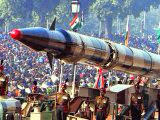
To unravel this mystery, it is important to note the context. Singh was addressing a conference at the Institute for Defense Studies and Analyses (IDSA) titled “A Nuclear Weapon-Free World: From Conception to Reality.” The IDSA is supported by the Indian Ministry of Defense and has been a favored venue for India’s leadership to make important policy declarations on national security. The Indian bureaucracies that deal with foreign policy and security issues often use this forum to articulate their preferences on arms control, nonproliferation, and disarmament issues. It would be natural if these bureaucracies wished to commend the virtues of continuity in policy to the new Indian government headed by Prime Minister Narendra Modi, who took office in May 2014.

Following Singh’s remarks, the then opposition Bharatiya Janata Party (BJP) instantly issued a rejoinder in its election manifesto, stating that the party “believes that the strategic gains acquired by India during the [earlier BJP-led] Atal Behari Vajpayee regime on the nuclear programme have been frittered away by [Singh’s] Congress.” Hence, the BJP pledged to “study in detail India’s nuclear doctrine, and revise and update it, to make it relevant to [the] challenges of current times.”

BJP spokespeople clarified that a review of India’s no-first-use policy would be accorded priority if the party came to power. This evoked great concern in some quarters that the BJP would abandon no first use, which has been a central feature of India’s nuclear doctrine since the country conducted a series of nuclear tests in 1998 and established itself as a nuclear weapons state. The BJP’s Modi, campaigning for the 2014 election, subsequently declared that there would be “no compromise” on no first use, which reflected India’s “cultural inheritance” (whatever that means). But as the respected Economic and Political Weekly commented in an editorial: “Given the BJP’s naturally aggressive posture, such clarifications must be viewed with some scepticism and it is legitimate to explore what may be on the agenda.”

All this rhetoric is par for the course in the heated atmosphere of the Indian electoral process. Disconcertingly, both the Congress party and the BJP have forgotten the historical record. India’s no-first-use policy was originally declared by the BJP and the National Democratic Alliance government after it conducted the May 1998 nuclear tests. The prime minister at the time, Atal Behari Vajpayee, stated thereafter that India would pursue a policy of no first use of nuclear weapons vis-à-vis other nuclear-armed states and would not use these weapons against nonnuclear countries. This restraint was also embedded in the BJP’s draft nuclear doctrine , declared in August 1999, which took several years to be finalized. It was finally endorsed by the Cabinet Committee on Security and officially promulgated in January 2003.

Consequently, India’s no-first-use policy and its nuclear doctrine are BJP formulations. The Congress party adopted them and, with Singh’s April speech, simply sought to extend no first use globally. This makes the BJP’s concern with its own no-first-use policy and nuclear doctrine part of the mystery of Singh’s proposal.

The Limitations of Nuclear Deterrence

There are valid grounds to revisit India’s nuclear doctrine, as much has happened over the intervening years that challenges the assumptions made by the BJP. On the conceptual front, the limitations of nuclear deterrence have become apparent. In important ways, India’s acquisition of nuclear weapons has not increased its security.

While nuclear weapons have obvious relevance for the external dimensions of national security, they cannot ameliorate threats to India’s territorial integrity that arise from domestic discontent or from crossborder militancy and terrorism emanating from Pakistan. In other words, nuclear weapons cannot provide any defense against the subconventional threats to India’s national security from extremist elements within its own territory or, especially, against those who receive moral and material assistance from across the border. As Singh repeatedly warned, the internal threats to India’s national security are critical to its overall national security challenges. Nuclear weapons provide no defense against these dangers.

The evidence in this regard is overwhelming and discernible from continuing unrest in the state of Jammu and Kashmir and in northeast India and from Maoist violence in central and east India. Further, after Pakistan followed suit with its own nuclear tests in 1998, India’s superiority in conventional forces was conspicuously eroded. This can be seen in India’s fitful responses to incidents of crossborder terrorism from Pakistan and its thus far confused approach to the concept of Cold Start and delay in establishing the forces required to operationalize it. [1]

Nuclear deterrence can only provide security against the use of nuclear weapons or a major conventional attack. This ineluctable reality evades India’s strategic elites and its armed forces establishment. They find it hard to accept that nuclear weapons, unlike other weapon systems, are not designed for use and cannot achieve strategic objectives like gaining territory or dominating populations. Moreover, these weapons’ immense destructive potential within very short time frames and their ability to cause genetic mutations over generations ensure that they are essentially meant to deter their use by an adversary. In other words, nuclear deterrence cannot accomplish any vital national security goals other than preventing an adversary from using nuclear weapons.

In a larger sense, no doubt, nuclear deterrence permits peaceful conditions to be established, a situation that is conducive to economic progress and the stimulation of regional trade and commerce. However, an entire spectrum of security threats also arises, ranging from border incursions to subconventional warfare and crossborder terrorism and militancy. Nuclear weapons provide no security against this range of existential security threats.

These fuller implications of the nuclear tests were not thought through before the tests were conducted in 1998. Perhaps these limitations surrounding nuclear deterrence were not knowable in advance. But this belief is questionable. It was known, for instance, that India would be subjected to punitive economic and technological sanctions that would affect its growth and poverty alleviation programs in response to the nuclear tests. Indeed, India’s earlier experience after its so-called “peaceful nuclear explosion” in May 1974 was a forewarning that further nuclear tests would not enable India’s entry into the Nuclear Non-Proliferation Treaty as a nuclear weapons state and that the imposition of more stringent sanctions was certain.

According to available evidence, the decision to conduct the nuclear tests in May 1998 was made by a very small coterie around Vajpayee. He and his advisers believed that India needed to go nuclear to meet the nuclear threats from Pakistan and China, elevate India in the comity of nations, and fulfill the pledge in the BJP’s 1996 election manifesto to conduct nuclear tests if the party came to power. The rest is history: sanctions on India’s civilian nuclear program were reinforced, severely impeding its progress—despite tall claims that the restrictions provided a fillip to indigenous research and development.

India’s Atomic Energy Commission has traditionally argued that sanctions on importing nuclear technology, equipment, and materials from abroad did not hurt, since the commission could harness the human and technical resources available in the country to meet its requirements. This bravado was first expressed after India conducted its 1974 nuclear test. It is clear, however, that despite some limited success, India remained dependent on foreign assistance to establish its nuclear infrastructure. This fact was reflected in the United Progressive Alliance government’s rationale for entering into the Indo-U.S. nuclear deal in 2008, namely to rescue India from its “ nuclear pariah” status and open the way for imports of nuclear materials and technology.

The establishment of nuclear deterrence vis-à-vis Pakistan had only limited value for India’s overall national security. It did not deter Pakistan’s crossborder incursions in winter 1998 and spring 1999 into the Kargil sector of Jammu and Kashmir, which led to a short but intense conflict ending in the ouster of Pakistan’s regular and irregular forces. Pakistan had the advantage of surprise, but its intruders were no match for India’s superior conventional forces, which were brought into the Kargil and neighboring sectors of the Line of Control. Yet despite India’s overwhelming superiority in conventional arms, the effects of nuclear deterrence inhibited it from attacking Pakistan’s lines of communications across the border or from enlarging the theater of conflict along the border to relieve pressure on the beleaguered Kargil sector. Pakistan was disadvantaged by its need to maintain the fiction that militants had conducted these intrusions, and therefore it could not openly deploy its regular forces to defend them. Significantly, these operations revealed that a nuclearized Pakistan had constrained New Delhi from launching a counteroffensive elsewhere along the Line of Control or into Pakistan to relieve pressure on Indian forces in Kargil. New Delhi decided that it would exhibit restraint and not expand the theater of conflict. Political considerations were said to be at play, as India wished to establish that it was a responsible nuclear power by not escalating the conflict.

There was also a subliminal desire among Indian leaders to paint Pakistan into a corner by highlighting its irresponsible conduct in attacking across recognized borders without any provocation. In pursuance of this policy of restraint, the Indian Air Force was given strict orders not to attack Pakistani territory across the Line of Control or enter Pakistan’s airspace. The ground forces were similarly prohibited from expanding the area of conflict along the Line of Control to relieve pressure on the Kargil sector. There is little doubt, however, that this restraint was also informed by New Delhi’s awareness that an escalation of this border conflict could become uncontrollable and lead inexorably toward the nuclear threshold.

Pakistan Ups the Ante

A similar sequence of events inhibited India during its border confrontation crisis with Pakistan after an attack by Pakistan-based militants on the Indian parliament in mid-December 2001. India moved large elements of its armed forces to the India-Pakistan border, where they remained for almost one year. Unable to mount an attack into Pakistan, they returned without achieving anything worthwhile. Again, in November 2008, New Delhi found itself constrained in retaliating against brazen attacks by Pakistan-sponsored militants on several high-profile targets in Mumbai.

More generally, it would seem that Pakistan has acquired virtual impunity in launching terrorist attacks at will into India through organizations that enjoy its patronage, like Lashkar-e-Taiba and Jamaat-ud-Dawa. Admittedly, these groups operate in collaboration with local militants like the Indian Mujahideen, but leadership, funding, training, and sanctuary are provided by Pakistan. Despite grave provocation by these groups, India has been unable to undertake any punitive counterstrike but has sought redress by painting Pakistan into an ideological corner within the international system.

A more general argument against nuclear deterrence was made by the four horsemen, George Shultz, Henry Kissinger, Sam Nunn, and William Perry, in 2007 in theWall Street Journal. “Nuclear weapons were essential to maintaining international security during the Cold War because they were a means of deterrence. The end of the Cold War made the doctrine . . . obsolete. Deterrence continues to be a relevant consideration for many states. . . . But reliance on nuclear weapons for this purpose is becoming increasingly hazardous and decreasingly effective.”

Pakistan’s decision to deploy tactical nuclear weapons in a battlefield mode along the India-Pakistan border can be surmised from a report by Hans M. Kristensen and Robert Norris of the Federation of American Scientists that identified Pakistan and China as either having or developing nonstrategic nuclear weapons. Pakistan had made clear, Kristensen told the Times of India , that it was developing its nuclear-capable Nasr (or Hatf IX) missile “for use against invading Indian troop formations that Pakistan doesn’t have the conventional capabilities to defeat.” These weapons, according to Indian experts, are meant to be used along the border in case of any skirmish with the Indian Army. The Nasr is described as “a 60-kilometer [37-mile] ballistic missile launched from a mobile twin-canister launcher.” According to Pakistan’s Inter Services Public Relations, the Nasr also has “shoot and scoot attributes” to serve as a quick response system to “add deterrence value” to Pakistan’s strategic weapons development program “at shorter ranges . . . to deter evolving threats.”

These developments have highlighted the insufficiency of India’s no-first-use policy to deter Pakistan’s destabilizing strategy. For one thing, this policy articulation frees Pakistan of the uncertainty and angst that India might contemplate the preemptive use of nuclear weapons to deal with terrorist attacks or limited conventional strikes by Pakistan. Pakistan could also go to the extent of deploying its short-range Nasr missile without being concerned that India would target it with its own nuclear missiles. For another, the determinism inherent in India’s nuclear doctrine that any level of nuclear attack will invite massive retaliation is too extreme to gain much credibility. It defies logic to threaten an adversary with nuclear annihilation to deter or defend against a tactical nuclear strike on an advancing military formation.

Moreover, in an adversarial situation between two nuclear powers, recourse to massive retaliation by one side would surely trigger a similar counterattack. How would the mutual annihilation that would undoubtedly ensue serve the ends of national security? This is a question that must induce greater reflection on how to devise a more appropriate strategy to meet Pakistan’s threat of using tactical nuclear weapons in crises along the India-Pakistan border.

Pakistan, for its part, has not countenanced a no-first-use policy on the grounds that the weaker conventionally armed power has to rely on nuclear weapons to ensure its security. However, conventional wisdom warns that deployment of nuclear weapons along the border makes these arms vulnerable to attack, which, in turn, could generate a “use or lose” mentality on the part of their possessor. A related danger that has not been sufficiently articulated is that nuclear missiles situated near the border could become vulnerable to targeting by long-range artillery, apart from special forces operations, highlighting the hair-trigger nature of such deployments. Pakistan argues that locating tactical nuclear weapons along the India-Pakistan border in a state of battle-readiness enables it to counter India’s Cold Start strategy, which envisages positioning offensive, battle-ready forces along the India-Pakistan border to deter any crossborder attack.

In this fashion, according to one nuclear expert, “Pakistan has upped the nuclear ante in South Asia by choosing to adopt tactical nuclear weapons . . . because they lower the nuclear threshold, the point at which nuclear weapons are brought into use. As such, they are straining South Asia’s deterrence stability, the idea that roughly equivalent nuclear capabilities will deter adversaries from using these weapons.” Pakistan claims that deploying its tactical nuclear weapons would provide it with “full spectrum deterrence” against India. Rawalpindi would also be enabled to counter any offensive operations India might contemplate against Pakistan in response to another Mumbai-style terrorist attack.

The particular danger of this deployment pattern is that it creates pressures to delegate to field commanders the authority to use these missiles in a crisis situation. Pakistani authorities insist that no such delegation would be necessary. In the end, and especially with the fog of war intervening, whatever arrangements were thought to control such weapons could never be foolproof. The possibility of human error would have to be accepted. But, with nuclear weapons entering the calculus, such errors could have horrific consequences.

Adding to these uncertainties is the fact that the internal situation in Pakistan has been rapidly deteriorating over the last few years, with extremist and religious fundamentalist groups exercising control over growing areas in the country. Political differences between the military and civilian leaderships in Pakistan are also increasing, with the judiciary functioning not as an umpire but as a third leg in an unstable relationship between elements of the country’s ruling elite. How this increasingly dysfunctional system can implement a responsible nuclear strategy is an open question.

An impasse has now been reached that threatens the stability of India-Pakistan relations. It is arguable that India’s commitment to a no-first-use posture has encouraged Pakistan to adopt its present adventurist strategy, secure in the belief that it could undertake provocative actions without the angst that India might contemplate a nuclear riposte. Its provocative actions would include promoting crossborder militancy and terrorism into India and even brazen actions like the attack on the Indian parliament in 2001 or the Mumbai attacks in 2008. Arguably, the adoption of a deliberately vague policy in regard to nuclear retaliation by India, instead of the certitude of a no-first-use declaration, might have better served India’s overall strategic ends.

Apart from that, the no-first-use policy, which has been incorporated into India’s nuclear doctrine, has several other infirmities.

An Inadequate Doctrine

The decision by the Cabinet Committee on Security to endorse India’s nuclear doctrine makes clear that India will use nuclear weapons only to retaliate against a nuclear attack on its territories or on Indian forces anywhere; that nuclear weapons will not be used against nonnuclear states; but that, in the event of a major attack by biological or chemical weapons, India retains the option of retaliating with nuclear weapons. This enumeration of India’s qualified no-first-use policy doctrine is flawed on several counts.

First, it does not address the possibility of an attack by nonstate actors, which is the present and imminent danger. Would the country hosting those nonstate actors be targeted following such an attack? And how would India address an attack by an international organization like al-Qaeda that is situated in several countries in the proximity of India?

Second, how would a “major attack” with biological or chemical weapons be identified? What is “major” and what is “minor” is debatable. This issue is significant since biological and chemical weapons are not truly weapons of mass destruction, but they are certainly weapons of mass disruption. Nonstate actors might favor these weapons due to the comparative ease of their manufacture, concealment, and transportation.

Third, serious difficulties arise in any attempt to identify the perpetrator of a biological or chemical weapons attack that could be undertaken by state or nonstate actors or, not inconceivably, by a nonstate actor assisted by a state actor. This issue is ultimately a question of reliable forensics, which is at a rudimentary stage of development. The difficulty in identifying those guilty of chemical weapon attacks in Syria is instructive here.

India’s no-first-use declaration cannot be separated from the country’s overall nuclear doctrine as it has been articulated since 1999. Inadequate as it is, this doctrine deserves to be reviewed in the light of changes over the past fifteen years.

The current nuclear doctrine dictates that nuclear retaliation against a first strike would be “massive” and designed to inflict “unacceptable damage” upon the attacker. This is an unrealistic certitude because, ethically, punishing large numbers of noncombatants contravenes the laws of war. Besides, threatening massive retaliation against any level of nuclear attack, which would inevitably trigger assured nuclear annihilation in a binary adversarial situation, is hardly a credible option. No doubt, it raises a ticklish question: Would India then favor a counterforce or countercity strategy? India’s stated adherence to an assured and massive second strike suggests the latter.

However, in addition to the other infirmities of a massive retaliation response, the uncomfortable reality is that the trade winds in May–September associated with the southwest monsoon blow from Pakistan into northern India. Consequently, secondary and tertiary radiation from a nuclear attack launched by India against Pakistan in these months would blow back into India’s agriculturally rich Punjab and Haryana states and, indeed, into New Delhi. India therefore faces a huge time constraint to mount a massive nuclear attack into Pakistan. Operationally, too, destroying the territory in dispute is feckless.

In a nuclear adversarial situation, moreover, the inevitability of mutual destruction must also be considered. Is a counterforce attack on the adversary’s military formations and assets the answer? The issue of uncontrollable escalation then arises, for which there is no reassuring answer. Leaving the problem of how India should retaliate to a nuclear first strike to the discretion of the prime minister would provide greater flexibility to mount the counterattack instead of threatening assured nuclear annihilation, which is just not credible.

India’s present chain of command with respect to nuclear weapons functions under the rubric of a Nuclear Command Authority and a Strategic Forces Command. The prime minister has been designated as the “release authority.” He has the unequivocal authority to decide whether, when, and how to use nuclear weapons. A Political Council headed by the prime minister constitutes the apex of this command structure. An Executive Council headed by the national security adviser serves the Political Council. Its composition includes the service chiefs and relevant government secretaries, including the scientific adviser to the prime minister.

The Strategic Forces Command is headed by a commander-in-chief; the incumbent comes from one of the three services of the Indian Armed Forces, on a rotating basis. The Strategic Forces Command is located within the Integrated Defense Headquarters in the Ministry of Defense. But it also functions under the Chiefs of Staff Committee. Its chairman is the most senior service chief, which ensures that the post rotates among the three services, without any fixed tenure. A conscious effort is evident, however, to assert the primacy of civilian control over the military at all levels of the nuclear command structure.

The element of doubt arising in this arrangement is that a tri-service command like the Strategic Forces Command should, logically, function under a single line of authority representing the three services, like a chief of defense staff, who would be a single-point adviser to the government on sensitive security issues. The proposal to establish a chief of defense staff, incidentally, is of ancient vintage and can be traced back to the Sino-Indian border conflict of 1962. The option of a chief of defense staff has been recommended by numerous inquiry committees, notably theArun Singh Committee on defense expenditure (in 1990) and, most recently, theNaresh Chandra Committee on national security. [2]

But this proposal to appoint a chief of defense staff who could provide a unified service view to the government on sensitive issues continues to languish since it has been resolutely opposed by the Indian Navy and Air Force. The attitude of the Ministry of Defense and the Government of India, which could force through a decision, can at best be described as studied insouciance. It remains unclear in these circumstances whether, in a crisis situation, the strategic forces commander would report to the chairman of the Chiefs of Staff Committee, which would be an unsatisfactory arrangement as far as civilian control is concerned, or whether he would report directly to the national security adviser and the Executive Council, which is equally unsatisfactory from an interservice coordination perspective.

It is for these reasons that it makes more sense for the decision about whether, when, and how to retaliate against a nuclear attack to remain the prime minister’s. Moreover, time would clearly be at a premium in a crisis situation. A committee system of decisionmaking is hardly suited to handle a fast-developing situation. Providing the “release authority” the greatest flexibility to decide how to mount the counterattack, according to the exigencies of the situation, provides a more workable solution to this problem.

The present doctrine fetishizes acquisition of a “credible minimum deterrent.” But India is seeking a force structure that is no different from that established by the United States or the former Soviet Union. India seeks a strategic triad comprising land-based, airborne, and underwater nuclear weapon systems that will require increasing resources.

It is arguable whether India’s strategic circumstances require a naval component for its deterrent or whether the country requires only a submarine-based deterrent, on the assumption that the nuclear deterrent posture ultimately rests on the survivability of the nuclear arsenal. Land- and air-based systems are more vulnerable to counterattack and destruction than submarine-based missiles are. That leads to the argument that taking the deterrent out to sea would ensure the acquisition of an invulnerable second strike capability. This question has not been seriously discussed in India, resulting in vociferous demands from the three services that the government concede some component of the nuclear deterrent to each of them.

Criticism is widespread that there is little transparency about the size and structure of India’s nuclear forces and what its credible minimum deterrent comprises in terms of weapons systems. Instead of debating this issue, official spokesmen have argued that it is impossible to define what a credible minimum deterrent requires since there can be no “fixity” in this regard, which suggests that the contours of the credible minimum deterrent are a moving target. Incidentally, India’s armed forces have been kept out of the nuclear decisionmaking process; hence, there is a touch of unreality about these declarations on nuclear force structures.

The survival of the chain of command also needs to be credibly ensured and made more transparent to provide leadership continuity in all eventualities. To achieve this objective, the Strategic Forces Command should be enjoined to maintain survivable, dispersed, and sheltered communications with multiple redundancies. Appropriate measures must be taken to ensure the safety and security of the nuclear stockpile at all times.

Conclusion

It should be emphasized that neither former Indian prime minister Manmohan Singh’s last-ditch attempt to universalize India’s qualified no-first-use policy nor the confusions created by BJP protagonists regarding their commitment to this policy are to be commended. A detailed study of India’s nuclear doctrine is required to address all the relevant issues in their totality.

Clearly, none of the underlying issues that bedevil the nuclear doctrine allows for easy answers. For instance, the question of whether the retaliatory nuclear counterattack should pursue a counterforce or countercity strategy can be argued interminably.

However, a reasoned debate on this and other controversial issues is overdue. India’s nuclear doctrine is not cast in tablets of stone. Circumstances change, making periodical reviews of the nuclear doctrine essential. India’s nuclear doctrine has not been revisited for over a decade. The issues that suggest themselves for review are India’s command-and-control arrangements, which require greater clarity; the threat held out of assured massive retaliation, which forebodes self-annihilation; imparting greater content to the objective of credible minimum deterrence; and revisiting or abandoning the no-first-use policy in light of its numerous deficiencies.

It would also be realistic to appreciate that India’s major nuclear security problems arise not from the postulates of its nuclear doctrine but from the complexities of its geostrategic situation. India confronts two nuclear adversaries—Pakistan and China—that enjoy close relations with each other. It is clear that Pakistan’s nuclear weapons are unequivocally directed against India and are under the command and control of the Pakistan Army. But the negotiation of nuclear issues and confidence-building measures has been left to Pakistan’s civilian bureaucracy, which clearly lacks authority and functions under the close supervision of the army. How, then, should India negotiate?

There is a global consensus that the real danger from Pakistan’s nuclear weapons emanates from militants gaining control over them. The impunity with which militants have attacked military installations and headquarters in Pakistan reveals the inability of the country’s armed forces to defend themselves, as well as the likely existence of insider collusion with nonstate actors. Still, the Pakistani establishment chooses to externalize its difficulties by undertaking dangerous maneuvers like developing its short-range Nasr missile for a tactical role, which is universally condemned as highly destabilizing.

The recent debate in India on reviewing the country’s no-first-use policy and its nuclear doctrine might only signify preelection rhetoric. But the essential problem that remains and will tax the government of Narendra Modi is how India plans to credibly engage Pakistan in the interests of nuclear stability in South Asia. More