Showing posts with label Asia. Show all posts

Thursday, May 17, 2018

Water shortages to be key environmental challenge of the century, Nasa warns


Water shortages to be key environmental challenge of the century, Nasa warns | Environment | The Guardian

Water shortages are likely to be the key environmental challenge of this century, scientists from Nasa have warned, as new data has revealed a drying-out of swaths of the globe between the tropics and the high latitudes, with 19 hotspots where water depletion has been dramatic.

Areas in northern and eastern India, the Middle East, California and Australia are among the hotspots where overuse of water resources has caused a serious decline in the availability of freshwater that is already causing problems. Without strong action by governments to preserve water the situation in these areas is likely to worsen


(https://www.theguardian.com/environment/2018/may/16/water-shortages-to-be-key-environmental-challenge-of-the-century-nasa-warns

Tuesday, June 6, 2017

South Asia's Turn: Policies to Boost Competitiveness and Create the Next Export Powerhouse


South Asia is undergoing a rapid economic transformation and has the potential to become the next major middle-income region of the world. More than a million young people are reaching working age every month, and the population of the region’s mega agglomerations and sprawling cities is expanding at roughly the same pace. By 2030 more than a quarter of the world’s working adults will live in South Asia. But the region has not been particularly successful in integrating within itself and with the global economy. The demographic transition and urbanization on the one hand, and poor competitiveness on the other, are South Asia’s greatest opportunity and greatest challenge. View PDF

Saturday, October 27, 2012

Inside Story Americas : Are US drone strikes a war crime?

Inside Story Americas : Are US drone strikes a war crime?

Published onOct 27, 2012byAlJazeeraEnglish

301 views


21 likes, 2 dislikes
A special unit is being set up to investigate the legality of US drone strikes but the White House appears unapologetic. Is the White House trying to buffer and widen its scope of targeted killings with controversial new legislations? Shihab Rattansi speaks to Greg Miller, and Hina Shamsi.

Friday, August 17, 2012

Cover-Up of Civilian Drone Deaths Revealed by New Evidence

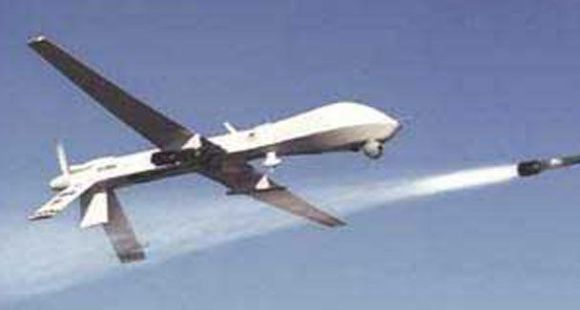
An aerial drone launches from the guided-missile frigate USS Thach. (Photo: U.S. Navy / Flickr)Detailed information from the families of those killed in drone strikes in Pakistan and from local sources on strikes that have targeted mourners and rescue workers provides credible new evidence that the majority of the deaths in the drone war in Pakistan have been civilian noncombatants - not “militants,” as the Obama administration has claimed.

The new evidence also shows that the statistical tally of casualties from drone attacks in Pakistan published on the web site of the New America Foundation (NAF) has been systematically understating the deaths of large numbers of civilians by using a methodology that methodically counts them as “militants.”

The sharply revised picture of drone casualties conveyed by the two new primary sources is further bolstered by the recent revelation that the Obama administration adopted a new practice in 2009 of automatically considering any military-age male killed in a drone strike as a “militant” unless intelligence proves otherwise.

The detailed data from the two unrelated sources covering a total 24 drone strikes from 2008 through 2011 show that civilian casualties accounted for 74 percent of the death toll, whereas the NAF tally for the same 24 strikes showed civilian casualties accounted for only 30 percent of the total.

Drone launches from the frigate USS Thach
The data on 11 drone strikes from 2008 through 2011 were collected in 2010 and 2011 from families of victims of the strikes by Pakistani lawyer Mirza Shahzad Akbar. Those 11 cases represent only a fraction of the total number on which Akbar has obtained data from victim’s relatives.

Although relatives of drone strike victims could have a personal interest in declaring the innocence of their relatives, the details provided by relatives in legal affidavits, such as the age, employment and other characteristics of the victims, appear in almost every case to support their claims that those killed were not actively involved with al-Qaeda or other military organizations.

The data on 13 drone strikes targeting rescuers and mourners from 2009 through 2011 were gathered by the London-based Bureau of Investigative Journalism (BIJ) in a three-month investigation in late 2010 and early 2011 involving interviews with eyewitnesses and others with direct knowledge of the strikes. More


Monday, January 23, 2012

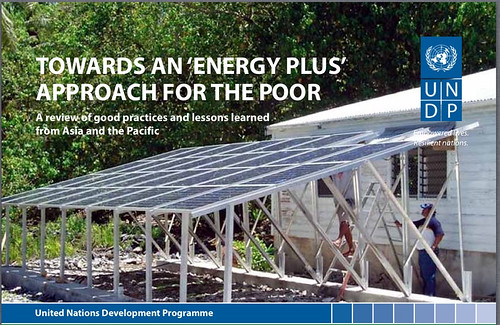
UNDP Calls for “Energy Plus” Approach to Reduce Poverty in Asia and the Pacific

 19 January 2012: A report by the UN Development Programme (UNDP) calls for an “energy plus” approach to sustainably reduce poverty by combining access to modern energy for heating, cooking and electricity with measures for income generation and improvement of health and education services.
 
The report, “Towards an ‘Energy Plus’ Approach for the Poor,” is based of a review of 17 energy access projects implemented by governments, development agencies and the private sector in Asia-Pacific  
The report further explains that energy access projects and programmes that combined the delivery of energy services with income-generating measures – such as business development, information support, access to capital and market linkages measures – had higher potential to reduce poverty sustainably. The report considered projects in the following countries: the Philippines, China, Nepal, Fiji, India, Sri Lanka, Bhutan, Lao People's Democratic Republic, Timor-Leste, and Vanuatu. [Publication: Towards an 'Energy Plus' Approach for the Poor: A Review of Good Practices and Lessons Learned from Asia and the Pacific] [UN Press Release]