Showing posts with label food. Show all posts

Sunday, September 16, 2018

For Whom the Climate Bell Tolls

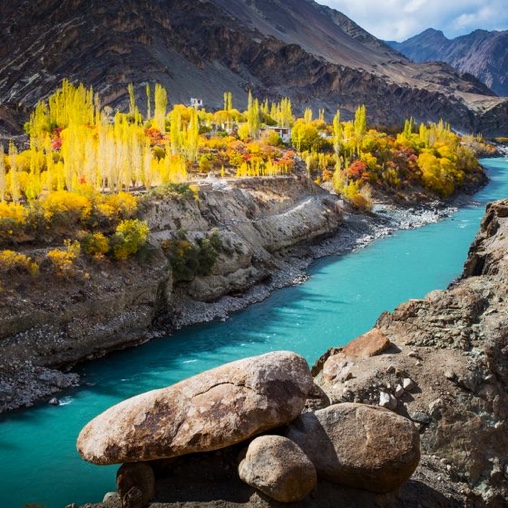
Indus River


...the problems associated with climate change will be neither mere inconveniences, nor as far off as we would like to think. There are currently two billion near-subsistence farmers living in the six great river valleys of Asia, from the Yellow all the way around to the Indus. These farmers have limited means and few non-agricultural skills. It would not be easy for them to pick up and relocate, let alone earn their livelihood doing something else.
Asia’s six great river valleys have supported most of human civilization for the past 5,000 years. During that time, the snow melt from the region’s high plateaus has always arrived at precisely the right moment, and in precisely the right volume, to support the crops upon which the region’s people rely. Read More

Thursday, May 17, 2018

Water shortages to be key environmental challenge of the century, Nasa warns


Water shortages to be key environmental challenge of the century, Nasa warns | Environment | The Guardian

Water shortages are likely to be the key environmental challenge of this century, scientists from Nasa have warned, as new data has revealed a drying-out of swaths of the globe between the tropics and the high latitudes, with 19 hotspots where water depletion has been dramatic.

Areas in northern and eastern India, the Middle East, California and Australia are among the hotspots where overuse of water resources has caused a serious decline in the availability of freshwater that is already causing problems. Without strong action by governments to preserve water the situation in these areas is likely to worsen


(https://www.theguardian.com/environment/2018/may/16/water-shortages-to-be-key-environmental-challenge-of-the-century-nasa-warns

Thursday, April 17, 2014

Food shortages could be most critical world issue by mid-century

The world is less than 40 years away from a food shortage that will have serious implications for people and governments, according to a top scientist at the U.S. Agency for International Development.

Dr. Fred Davies

"For the first time in , food production will be limited on a global scale by the availability of land, water and energy," said Dr. Fred Davies, senior science advisor for the agency's bureau of food security. "Food issues could become as politically destabilizing by 2050 as are today."

Davies, who also is a Texas A&M AgriLife Regents Professor of Horticultural Sciences, addressed the North American Agricultural Journalists meeting in Washington, D.C. on the "monumental challenge of feeding the world."

He said the world population will increase 30 percent to 9 billion people by mid-century. That would call for a 70 percent increase in food to meet demand.

"But resource limitations will constrain global food systems," Davies added. "The increases currently projected for crop production from biotechnology, genetics, agronomics and horticulture will not be sufficient to meet food demand." Davies said the ability to discover ways to keep pace with food demand have been curtailed by cutbacks in spending on research.

"The U.S. agricultural productivity has averaged less than 1.2 percent per year between 1990 and 2007," he said. "More efficient technologies and crops will need to be developed—and equally important, better ways for applying these technologies locally for farmers—to address this challenge." Davies said when new technologies are developed, they often do not reach the small-scale farmer worldwide.

"A greater emphasis is needed in high-value horticultural crops," he said. "Those create jobs and economic opportunities for rural communities and enable more profitable, intense farming." Horticultural crops, Davies noted, are 50 percent of the farm-gate value of all crops produced in the U.S.

He also made the connection between the consumption of fruits and vegetables and chronic disease prevention and pointed to research centers in the U.S. that are making links between farmers, biologists and chemists, grocers, health care practitioners and consumers. That connection, he suggested, also will be vital in the push to grow enough food to feed people in coming years.

"Agricultural productivity, , safety, the environment, health, nutrition and obesity—they are all interconnected," Davies said. One in eight people worldwide, he added, already suffers from chronic undernourishment, and 75 percent of the world's chronically poor are in the mid-income nations such as China, India, Brazil and the Philippines.

"The perfect storm for horticulture and agriculture is also an opportunity," Davies said. "Consumer trends such as views on quality, nutrition, production origin and safety impact what foods we consume. Also, urban agriculture favors horticulture." For example, he said, the fastest growing segment of new farmers in California, are female, non-Anglos who are "intensively growing horticultural crops on small acreages," he said. More


Wednesday, April 2, 2014

Geoff Lawton's Permaculture Design Course (Online)

For Those Who May Be Interested
If you are interested in growing your own food and if you have a farm this course is excellent.

Last year saw the launch Geoff Lawton's first online Permaculture Design Certificate (PDC) course, with the hope of exponentially increasing our educational reach. It was a 'scary' undertaking, in that, being the first course, we were not sure what to expect.


But we are proud to share that the course brought an overwhelmingly positive response. I've been looking around the inner 'halls' of the course system and reading comment after positive comment, and I've seen many of the amazing designs the students submitted at the end of their training. The best news is that this course is reaching people who would otherwise never get to take a PDC course, due to remote locations, family and work commitments, health constraints, cost, etc. Doctors, lawyers, housewives, politicians, activists, nurses, rural farmers, urbanites, pilots, industrialists, even experienced Permaculture teachers - the list goes on - all are coming together in the same system to learn, share, network and cause ripples of influence we may never be able to measure.


This last weekend Geoff's second online PDC was opened for registrations - for the new and even more expansive 2014 course (we keep adding material!). This course is run only once per year, and the door for registrations closes this Sunday, April 6th, 2014. If you want to get onto this course, or if you know someone who should, there's only three days left before the door shuts until next year, and the course begins. More


If you're unsure of the value of this life-altering course, please take a few minutes to scan the many comments below this post: http://permaculturenews.org/2013/10/28/geoff-lawtons-online-permaculture-design-course-worth/


Wednesday, March 19, 2014

Future heat waves pose threat to global food supply, study says

Heat waves could significantly reduce crop yields and threaten global food supply if climate change is not tackled and reversed.

This is according to a new study led by researchers at the University of East Anglia and published today, 20 March, in IOP Publishing's journal Environmental Research Letters, which has, for the first time, estimated the global effects of extreme temperatures and elevated levels of carbon dioxide (CO2) on the production of maize, wheat and soybean.

Earlier studies have found that climate change is projected to reduce globally by the end of the century under a "business as usual" scenario for future emissions of greenhouse gases; however, this new study shows that the inclusion of the effects of , which have not been accounted for in previous modelling calculations, could double the losses of the crop.

Lead author of the study Delphine Deryng, from the Tyndall Centre for Climate Change Research at the University of East Anglia, said: "Instances of extreme temperatures, brought about by a large increase in global mean temperature, can be detrimental to crops at any stage of their development, but in particular around anthesis—the flowering period of the plant.

"At this stage, extreme temperatures can lead to reduced pollen sterility and reduced seed set, greatly reducing the crop yield."

The impacts on wheat and soybean are likely to be less profound, primarily because of the fertilisation effects that elevated levels of CO2 can have on these crops.

In plants, CO2 is central to the process of photosynthesis—the mechanism by which they create food from sunlight, CO2 and water. When there is more CO2 in the atmosphere, the leaves of plants can capture more of it, resulting in an overall increase in the biomass of the plant.

In addition, plants are able to manage their water use much more efficiently in these conditions, resulting in better tolerance to drought episodes. However, it is not clear whether these CO2 fertilisation effects will actually occur in the field owing to interactions with other factors.

If the CO2 fertilisation effects do occur, the researchers found that the yields of wheat and soybean are expected to increase throughout the 21st century under a "business-as-usual" scenario; however, the increases are projected to be significantly offset by the effects of heat waves, as these plants are still vulnerable to the effects of .

The positive impacts on soybean yield will be offset by 25 per cent and the positive impacts on wheat will be offset by 52 per cent.

The researchers, from the Tyndall Centre for Climate Change Research (University of East Anglia, Norwich), Grantham Research Institute on Climate Change and the Environment (London School of Economics and Political Science, London), and Global Environmental and Climate Change Centre (McGill University, Montreal), arrived at their results using the global crop model PEGASUS to simulate crop yield responses to 72 spanning the 21st century.

The study also identified particular areas where heat waves are expected to have the largest negative effects on . Some of the largest affected areas are key for crop production, for example the North American corn belt for maize. When the CO2 fertilisation effects are not taken into account, the researchers found a net decrease in yields in all three crops, intensified by extreme , for the top-five producing countries of each crop.

"Our results show that maize yields are expected to be negatively affected by , while the impacts on wheat and soybean are generally positive, unless CO2 fertilisation effects have been overestimated," continued Deryng.

"However, stress reinforced by 'business-as-usual' reduces the beneficial effects considerably in these two crops. Climate mitigation policy would help reduce risks of serious negative impacts on maize worldwide and reduce risks of extreme heat stress that threaten global crop production."

Explore further: Climate change will reduce crop yields sooner than we thought

More information: 'Global crop yield response to extreme heat stress under multiple climate change futures' Delphine Deryng, Declan Conway, Navin Ramankutty, Jeff Price and Rachel Warren 2014 Environ. Res. Lett. 9 034011. iopscience.iop.org/1748-9326/9/3/034011/article

Wednesday, October 2, 2013

Oxfam takes aim at big food and beverage companies over sugar-linked land grabs

BANGKOK (Thomson Reuters Foundation) - Ever wonder where the sugar in a can of Coke or Pepsi or a mug of Ovaltine came from?

It may have come from land previously owned by indigenous and rural communities who are now landless and destitute after sugar companies forcibly evicted them, according to a new report from Oxfam.

Based on cases of land conflicts in Brazil and Cambodia, “Nothing sweet about it: How sugar fuels land grabs” faults some of the world’s biggest food and beverage companies - in particular Coca-Cola, PepsiCo and Associated British Foods (ABF) - for failing to ensure their sugar suppliers are not involved in land grabs.

“While our increasing appetite for sugar has health advocates ringing alarm bells… it has largely gone unnoticed that the sugar trade is also helping to fuel the problem of land grabs and disputes,” the report said.

It pointed to instances in which companies supplying sugar to these multinationals used political clout and threats to force local communities off their land, destroy their homes and pay inadequate compensation.

Coca-Cola and PepsiCo are two of the largest purchasers of sugar and ABF is the world’s second-largest sugar producer, Oxfam said. All use sugar in a wide range of processed foods, from soft drinks and yogurt to frozen meals and sauces.

“These companies continue to preside over supply chains within which the risks have increased of land grabs and land conflicts. Yet they are doing little if anything to prevent land grabs in their own supply chains,” the report said.

SUPPLY CHAINS UNDER SCRUTINY

The charity is asking the three companies to disclose their sources of sugar, palm oil, and soy commodities, to commit to zero tolerance for land grabbing and to publicly advocate that governments and traders invest in agriculture responsibly.

The report is the latest salvo in Oxfam’s Behind The Brands campaign, which aims to bring the 10 biggest food and drink brands - ABF, Coca-Cola, Danone, General Mills, Kellogg’s, Mars, Mondelez, Nestle, PepsiCo and Unilever - to account for what happens in their supply chains.

As a result of food companies relying on long chains of production, the biggest sugar buyers and producers “have failed to keep tabs on their industry’s insatiable demand for land, and the lengths to which the third party companies they work with will go to acquire it,” the report said.

In Cambodia’s Sre Ambel district in Koh Khong province, Thai company Khon Kaen Sugar (KSL) seized land from some 450 families in 2006. Demolition workers with bulldozers and excavators, accompanied by armed police, arrived without warning, activists say.

Six months after the company opened a sugar-processing factory in the district, Cambodia’s first shipment of sugar in four decades, 10,000 tonnes valued at roughly $3.31 million, was delivered to U.K. sugar giant Tate & Lyle, according to activists.

Oxfam says Coca-Cola and PepsiCo bottlers buy sugar from Tate & Lyle, who has said it has no plans to buy more from KSL. Activist say Tate & Lyle has already received 48,000 tons of sugar from Cambodia, estimated at €24 million.

LAND INTENSIVE

While soy and palm oil are also linked to land grabs, sugar is the most land-intensive, according to Oxfam.

Sugar is grown on 31million hectares of land globally - an area the size of Italy - and much of it is in the developing world, the report said.

The global sugar trade is worth around $47 billion, and the food and drinks industry accounts for more than half of the 176 million tonnes of sugar produced last year, it said. More


Thursday, September 26, 2013

September 25, 2013, 2:54 p.m. ET Italy Calls for Food Security to Be U.N. Priority

ROME--Italy wants to shepherd efforts to make food security a priority for global policy makers, Prime Minister Enrico Letta said in his debut speech at the United Nations General Assembly Wednesday.

"We should address the root causes of the ills afflicting our world rather than limit ourselves to the side effects," Mr. Letta said. "The time has come to launch a new global consensus on food," he said.

In 2008, Italy, with limited financial firepower due to chronic fiscal problems, tried to make food security a signature theme at the Group of Eight summit in L'Aquila, Italy, prodding the largest economies to pledge as much as $15 billion for the cause. The global financial crisis then commanded vast public resources and attention, even though the serious spike in basic food prices that helped trigger the so-called Arab Spring sparked fear that easy monetary policies in developed economies would trigger runaway inflation in basic staples.

Commodity prices have since stabilized, according to a price-monitoring index set up by the UN's Food and Agricultural Organization in Rome.

Mr. Letta said that the 2015 Expo, or world's fair, in Milan should be a springboard for global initiatives, floating the idea that a multilateral pact might be reached there.

The Milan Expo, whose slogan is "Feeding the Planet, Energy for Life," aims to draw 20 million visitors interested in issues linked to sustainability. The event should be seized upon to create a Milan Protocol, modelled on the Kyoto Protocol of the late 1990s that covers environmental issues, with nutritional education, sustainable farming practices and food waste as its cardinal points, according to the Barilla Center for Food and Nutrition, a think tank backed by Barilla SpA, the pasta maker.

"Italy, with its rich food culture and heritage, is well-placed to show leadership in tackling the world's global food issues," said Danielle Nierenberg, an advisory board member at the Center.

Italy is also home to the U.N.'s main food-related agencies, the World Food Program, the International Fund for Agricultural Development, and the FAO, which after decades of advising farmers on how to boost yields is beginning to try to influence retail supply chains in an effort to reduce what it says is the waste of one-third of global food production. More


Thursday, August 22, 2013

Heat Wave In China

For the entire month of July and the first half of August, eastern China baked in a record-breaking heat wave. Nineteen provinces endured above-normal temperatures.

Shanghai broke its all-time record high three times in as many weeks. The current record—40.8 degrees Celsius (105.4°F)—was set on August 7, 2013. At least 40 people have died during the heat wave, including ten in Shanghai, according to the Xinhua news service.

During a heat wave, ground temperatures soar, particularly in urban areas where there are fewer plants to cool the ground with shade and evapotranspiration. Paved or metallic surfaces can become warm enough to cook food. These images show land surface temperatures as measured by two different satellites.

The image above shows temperature anomalies across China between August 5 and August 12, 2013, as observed by the Moderate Resolution Imaging Spectroradiometer (MODIS) on NASA’s Terra satellite. Red areas are warmer than the long-term average for the week, while cooler-than-average temperatures are blue. While much of China was warm during this period, the worst of the heat wave was concentrated near the coast and in Tibet. This weather pattern is tied to a subtropical high-pressure system parked over southern China, according to the China Meteorological Administration.

Though miserable everywhere, the heat wave was likely worst in China’s cities, where manmade surfaces absorb heat during the day and cool slowly at night. As a result, cities are warmer during the day and slower to cool at night, making an extended heat wave more uncomfortable, and more deadly, in a city. The image below shows this “urban heat island” effect in Shanghai.

The image was made with measurements taken on August 13, 2013 by the Thermal Infrared Sensor on the Landsat 8 satellite. The warmest surfaces are yellow, while cooler surfaces are pink. The image shows pockets of very warm areas, particularly downtown, surrounded by cooler suburban areas. The dark purple dots are cold clouds.

Chinese officials have declared a weather emergency, warning residents to limit time outdoors. It is the first time the country has issued a weather warning for heat. China’s National Meteorological Center expected the heat to break sometime after August 15.


Monday, June 10, 2013

2013 Environment and Security Discussion Series Natural Resources and International Conflicts

For those who may be in Washington tomorrow this discussion should be well worth attending

The Stimson Center presents:

2013 Environment and Security Discussion Series

Natural Resources and International Conflicts

Tuesday, June 11, 2013
1:30 - 3:30 p.m.

The Stimson Center
1111 19th Street, NW, 12th Floor
Washington, D.C.

RSVP HERE

The Stimson Center cordially invites you to join our 2013 Environment and Security Discussion Series. The series brings together the Washington, D.C. area’s leading thinkers for an open exchange of ideas and views on the deepening links between environmental and security concerns, and a discussion of the growing relevance of the environment-security nexus to national and international policy.

Speakers:
Jeffrey Colgan, Assistant Professor, School of International Service, American University

David Michel, Director, Environmental Security Program, Stimson Center

Moderator:
Ellen Laipson, president and CEO, Stimson Center

Colgan is an expert on oil geopolitics and author of the newly published "Petro-Aggression: When Oil Causes War" (Cambridge University Press, 2013). Michel is the co-author/editor of several recent reports on natural resource challenges in the Middle East, South Asia, and the Indian Ocean. The event’s discussion will center on how states’ development of natural resources impacts their foreign policy, human security, and political and social stability. What are the geopolitical and environmental implications of growing demands for the world’s natural resources – energy, water, food? We hope you will join us for what promises to be an engaging conversation on current resource development trends, international security, and environmental sustainability.


For more information about the June 11th event or the Stimson Environment and Security Discussion Series, please contact Russell Sticklor at rsticklor@stimson.org or (202) 464-2667.


If you no longer wish to receive these emails, please reply to this message with "Unsubscribe" in the subject line or simply click on the following link: Unsubscribe

The Stimson Center
1111 19th Street, NW, 12th Floor
Washington, District of Columbia 20036
US

Read the VerticalResponse marketing policy.

Try Email Marketing with VerticalResponse!


Sunday, April 28, 2013

Entering a resource-shock world

Brace yourself. You may not be able to tell yet, but according to global experts and the US intelligence community, the earth is already shifting under you. Whether you know it or not, you are on a new planet, a resource-shock world of a sort humanity has never before experienced.

Two nightmare scenarios - a global scarcity of vital resources and the onset of extreme climate change - are already beginning to converge and in the coming decades are likely to produce a tidal wave of unrest, rebellion, competition and conflict. Just what this tsunami of disaster will look like may, as yet, be hard to discern, but experts warn of “water wars” over contested river systems, global food riots sparked by soaring prices for life’s basics, mass migrations of climate refugees (with resulting anti-migrant violence) and the breakdown of social order or the collapse of states. At first, such mayhem is likely to arise largely in Africa, Central Asia and other areas of the underdeveloped South, but in time all regions of the planet will be affected.

To appreciate the power of this encroaching catastrophe, it’s necessary to examine each of the forces that are combining to produce this future cataclysm.

Resource shortages

Start with one simple given: the prospect of future scarcities of vital natural resources, including energy, water, land, food and critical minerals. This in itself would guarantee social unrest, geopolitical friction and war.

It is important to note that absolute scarcity does not have to be on the horizon in any given resource category for this scenario to kick in. A lack of adequate supplies to meet the needs of a growing, ever more urbanised and industrialised global population is enough. Given the wave of extinctions that scientists are recording, some resources - particular species of fish, animals and trees, for example - will become less abundant in the decades to come, and may even disappear altogether. But key materials for modern civilisation like oil, uranium and copper will simply prove harder and more costly to acquire, leading to supply bottlenecks and periodic shortages.

Oil - the single most important commodity in the international economy - provides an apt example. Although global oil supplies may actually grow in the coming decades, many experts doubt that they can be expanded sufficiently to meet the needs of a rising global middle class that is, for instance, expected to buy millions of new cars in the near future. In its 2011 World Energy Outlook, the International Energy Agency claimed that an anticipated global oil demand of 104 million barrels per day in 2035 will be satisfied. This, the report suggested, would be thanks in large part to additional supplies of “unconventional oil” (Canadian tar sands, shale oil and so on), as well as 55 million barrels of new oil from fields “yet to be found” and “yet to be developed”.

However, many analysts scoff at this optimistic assessment, arguing that rising production costs (for energy that will be ever more difficult and costly to extract), environmental opposition, warfare, corruption and other impediments will make it extremely difficult to achieve increases of this magnitude. In other words, even if production manages for a time to top the 2010 level of 87 million barrels per day, the goal of 104 million barrels will never be reached and the world’s major consumers will face virtual, if not absolute, scarcity.

Water provides another potent example. On an annual basis, the supply of drinking water provided by natural precipitation remains more or less constant: about 40,000 cubic kilometres. But much of this precipitation lands on Greenland, Antarctica, Siberia and inner Amazonia where there are very few people, so the supply available to major concentrations of humanity is often surprisingly limited. In many regions with high population levels, water supplies are already relatively sparse. This is especially true of North Africa, Central Asia and the Middle East, where the demand for water continues to grow as a result of rising populations, urbanisation and the emergence of new water-intensive industries. The result, even when the supply remains constant, is an environment of increasing scarcity.

Wherever you look, the picture is roughly the same: supplies of critical resources may be rising or falling, but rarely do they appear to be outpacing demand, producing a sense of widespread and systemic scarcity. However generated, a perception of scarcity - or imminent scarcity - regularly leads to anxiety, resentment, hostility and contentiousness. This pattern is very well understood and has been evident throughout human history.

In his book Constant Battles, for example, Steven LeBlanc, director of collections for Harvard’s Peabody Museum of Archaeology and Ethnology, notes that many ancient civilisations experienced higher levels of warfare when faced with resource shortages brought about by population growth, crop failures, or persistent drought. Jared Diamond, author of the bestseller Collapse, has detected a similar pattern in Mayan civilisation and the Anasazi culture of New Mexico’s Chaco Canyon. More recently, concern over adequate food for the home population was a significant factor in Japan’s invasion of Manchuria in 1931 and Germany’s invasions of Poland in 1939 and the Soviet Union in 1941, according to Lizzie Collingham, author of The Taste of War.

Resource-related conflict

Although the global supply of most basic commodities has grown enormously since the end of World War II, analysts see the persistence of resource-related conflict in areas where materials remain scarce or there is anxiety about the future reliability of supplies. Many experts believe, for example, that the fighting in Darfur and other war-ravaged areas of North Africa has been driven, at least in part, by competition among desert tribes for access to scarce water supplies, exacerbated in some cases by rising population levels.

“In Darfur,” says a 2009 report from the UN Environment Programme on the role of natural resources in the conflict, “recurrent drought, increasing demographic pressures, and political marginalisation are among the forces that have pushed the region into a spiral of lawlessness and violence that has led to 300,000 deaths and the displacement of more than two million people since 2003.”

Anxiety over future supplies is often also a factor in conflicts that break out over access to oil or control of contested undersea reserves of oil and natural gas. In 1979, for instance, when the Islamic revolution in Iran overthrew the Shah and the Soviets invaded Afghanistan, Washington began to fear that someday it might be denied access to Persian Gulf oil. At that point, President Jimmy Carter promptly announced what came to be called the Carter Doctrine. In his 1980 State of the Union Address, Carter affirmed that any move to impede the flow of oil from the Gulf would be viewed as a threat to America’s “vital interests” and would be repelled by “any means necessary, including military force”.

In 1990, this principle was invoked by President George HW Bush to justify intervention in the first Persian Gulf War, just as his son would use it, in part, to justify the 2003 invasion of Iraq. Today, it remains the basis for US plans to employ force to stop the Iranians from closing the Strait of Hormuz, the strategic waterway connecting the Persian Gulf to the Indian Ocean through which about 35 percent of the world’s seaborne oil commerce passes.

Recently, a set of resource conflicts have been rising toward the boiling point between China and its neighbours in Southeast Asia when it comes to control of offshore oil and gas reserves in the South China Sea. Although the resulting naval clashes have yet to result in a loss of life, a strong possibility of military escalation exists. A similar situation has also arisen in the East China Sea, where China and Japan are jousting for control over similarly valuable undersea reserves. Meanwhile, in the South Atlantic Ocean, Argentina and Britain are once again squabbling over the Falkland Islands (called Las Malvinas by the Argentinians) because oil has been discovered in surrounding waters. More
 

Wednesday, March 27, 2013

Neonicotinoid pesticides 'damage brains of bees'

Commonly used pesticides are damaging honey bee brains, studies suggest.

Scientists have found that two types of chemicals called neonicotinoids and coumaphos are interfering with the insect's ability to learn and remember.

Experiments revealed that exposure was also lowering brain activity, especially when the two pesticides were used in combination.

The research is detailed in two papers in Nature Communications and the Journal of Experimental Biology.

But a company that makes the substances said laboratory-based studies did not always apply to bees in the wild.

And another report, published by the Defra's Food and Environment Research Agency (Fera), concluded that there was no link between bee health and exposure to neonicotinoids.

The government agency carried out a study looking at bumblebees living on the edges of fields treated with the chemicals.

Falling numbers

Honey bees around the world are facing an uncertain future.

They have been hit with a host of diseases, losses of habitat, and in the US the mysterious Colony Collapse Disorder has caused numbers to plummet.

Start Quote

It would imply that the bees are able to forage less effectively”

Dr Sally WilliamsonNewcastle University

Now researchers are asking whether pesticides are also playing a role in their decline.

To investigate, scientists looked at two common pesticides: neonicotinoids, which are used to control pests on oil seed rape and other crops, and a group of organophosphate chemicals called coumaphos, which are used to kill the Varroa mite, a parasite that attacks the honey bee.

Neonicotinoids are used more commonly in Europe, while coumaphos are more often employed in the United States.

Work carried out by the University of Dundee, in Scotland, revealed that if the pesticides were applied directly to the brains of the pollinators, they caused a loss of brain activity.

Dr Christopher Connolly said: "We found neonicotinoids cause an immediate hyper-activation - so an epileptic type activity - this was proceeded by neuronal inactivation, where the brain goes quiet and cannot communicate any more. The same effects occur when we used organophosphates.

"And if we used them together, the effect was additive, so they added to the toxicity: the effect was greater when both were present."

Another series of laboratory-based experiments, carried out at Newcastle University, examined the behaviour of the bees.

The researchers there found that bees exposed to both pesticides were unable to learn and then remember floral smells associated with a sweet nectar reward - a skill that is essential for bees in search of food.

Dr Sally Williamson said: "It would imply that the bees are able to forage less effectively, they are less able to find and learn and remember and then communicate to their hive mates what the good sources of pollen and nectar are."

'No threat'

She said that companies that are manufacturing the pesticides should take these findings into account when considering the safety of the chemicals.

Start Quote

Decisions on the use of neonicotinoids must be based on sound scientific evidence”

Ian BoydDefra

She explained: "At the moment, the initial tests for bee toxicity are giving the bees an acute dose and then watching them to see if they die.

"But because bees do these complex learning tasks, they are very social animals and they have a complex behavioural repertoire, they don't need to be killed outright in order not to be affected."

The European Commission recently called for a temporary moratorium on the use of neonicotinoids after a report by the European Food Safety Authority concluded that they posed a high acute risk to pollinators.

But 14 out of the 27 EU nations - including the UK and Germany - opposed the ban, and the proposal has now been delayed.

Ian Boyd, chief scientist at Defra, said: "Decisions on the use of neonicotinoids must be based on sound scientific evidence." More


Tuesday, March 19, 2013

Undercover sting exposes Malaysia land-grab

Allegations of corruption get louder following secret tapes showing plunder of resource-rich Sarawak province.

Mountains of Borneo Island

Long Napir, Malaysia - Plantations and logging are ravaging Malaysia's majestic Borneo region and indigenous people who have lived for centuries here say they are increasingly being uprooted from their once-pristine lands.

But as the timber and palm oil companies swarm over the rugged landscape of resplendent rivers and ancient rainforests, villagers in Long Napir in the country's biggest state Sarawak have vowed to thwart any further land-grabs.

The village is a settlement of longhouses, the traditional communal housing favoured by indigenous people in eastern Malaysia's Borneo island.

Under the Sarawak Land Law, indigenous people have rights over areas as long as they can prove they have lived in or used the lands prior to January 1, 1958.

"We have no land to farm, our rivers have become muddy, there's hardly any fish left anymore."

- Tamin Sepuluh Ribu, villager

But the surrounding ancient rainforests that are so essential to their traditional way of life is under threat because of logging and plantation companies. Over the past 30 years, Sarawak - one of the richest Malaysian states - has become one of the largest exporters of tropical timber.

Despite its wealth, profits have failed to trickle down, and the people here are some of the poorest in the country.

Long Napir villagers lay the blame for their plight squarely on one man: the state's powerful chief minister, Abdul Mahmud Taib, who is in charge of all land classification and the allocation of lucrative forestry and plantation licenses.

"He lives, the rest of us suffer," Tamin Sepuluh Ribu, a former village headman, told Al Jazeera. "We have no land to farm, our rivers have become muddy, there's hardly any fish left anymore."

'Coterie of cronies'

Global Witness, a non-governmental organisation working against environmental exploitation, has investigated and exposed the situation in remote eastern Malaysia.

An undercover Global Witness investigator posing as an investor was offered several opportunities to purchase land in Sarawak by company officials linked to Chief Minister Taib. In each instance, the land in question was occupied by indigenous communities, who have valid claims to ownership rights under Malaysian law.

Global Witness said the indigenous areas were being sold by companies with close personal or political ties to the chief minister.

Taib has held the post since 1981, and has been repeatedly accused of corruption during his nearly 32-year rule.

The US Embassy in Kuala Lumpur noted in one cable released by WikiLeaks: "Chief Minister Taib Mahmud … doles out timber-cutting permits while patrolling the underdeveloped state using 14 helicopters, and his family's companies control much of the economy."

The American cable added that, "All major contracts and a significant portion of land to be converted to palm oil plantations [including on indigenous 'customary land rights' that the state government has refused to recognize] are given to these three companies."

People in Sarawak are "fed up" with Taib's administration, "seen as only enriching his family and a small coterie of cronies", it said.

A Penan girl deep in the Borneo rainforests [EPA]

Under investigation

Global Witness released a November 2012 report titled, "In the future, there will be no forests."

"Taib's powerful executive position and personal responsibility for the issuance of lucrative logging and plantation licences has enabled him to systematically extract 'unofficial payments' from the state's timber tycoons for the enrichment of himself and his family," the report said.

Taib, meanwhile, denied the corruption allegations as "wholly untrue and malicious", said the report.

In 2011, the Malaysian Anti-Corruption Commission launched an official investigation into Taib, which continues at present.

In secretly taped negotiations provided to Al Jazeera, the Global Witness investigator discussed buying land with company shareholders Fatimah Abdul Rahman and Norlia Abdul Rahman - Taib's first cousins. Fatimah admitted the parcel of land under discussion had been transferred to them by Chief Minister Taib.

"Yeah, he's the one who gave us the land. He's my cousin," Fatimah said, laughing.

In 2011, Taib gave his cousins 5,000 hectares of land for about $300,000 dollars, according to leaked land registry documents. Having secured agriculture and timber licences, they were trying to sell it a year later for more than $16mn.

Later, discussing the ease of receiving a forestry license, Fatimah told the Global Witness investigator: "The Land and Survey Department, they are the ones that issue this licence. Of course, this is from the CM's [Chief Minister's] directive, but I can speak to the CM very easily." More


World Water Day 2012 official video

World Water Day 2012 official video, focusing on the theme of the campaign "Water and Food Security".

Produced by kf@kantfish.com and featuring a soundtrack by DDG Project. Animations by antiestatico.com
Download your animation on: http://www.unwater.org/worldwaterday