Showing posts with label farming. Show all posts

Sunday, September 16, 2018

For Whom the Climate Bell Tolls

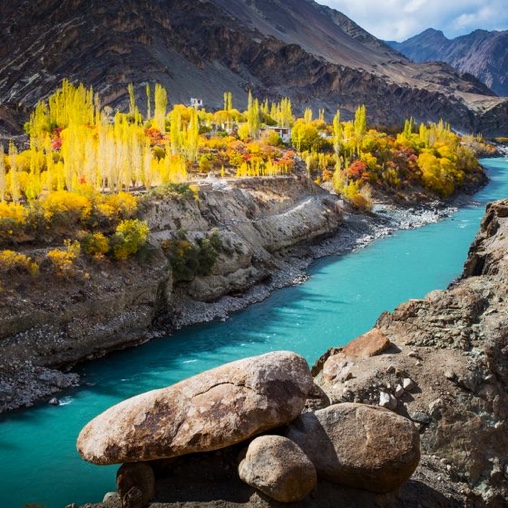
Indus River


...the problems associated with climate change will be neither mere inconveniences, nor as far off as we would like to think. There are currently two billion near-subsistence farmers living in the six great river valleys of Asia, from the Yellow all the way around to the Indus. These farmers have limited means and few non-agricultural skills. It would not be easy for them to pick up and relocate, let alone earn their livelihood doing something else.
Asia’s six great river valleys have supported most of human civilization for the past 5,000 years. During that time, the snow melt from the region’s high plateaus has always arrived at precisely the right moment, and in precisely the right volume, to support the crops upon which the region’s people rely. Read More

Thursday, June 26, 2014

Is the UN turning its back on the human right to water?

One of the biggest threats to economic and social development is that the world's freshwater supplies are rapidly becoming scarce and polluted. A new set of actors are now engaging in the global development arena to define and write the rules ofaccess to water to ensure people's needs are protected.

It is alarming to see that the human right to water and sanitation continues to be marginalised in UN policy discussions. The exclusion of this right to water in the most recent draft of the sustainable development goals reveals policy more conducive to promoting water security for economic growth than ensuring the preservation of watersheds and the equitable distribution of scarce water supplies.

When the UN general assembly passed a resolution in 2010 affirming water and sanitation as a human right, it was celebrated as a victory for communities dealing with the health impacts of polluted water, the indignity of not having access to clean drinking water and sanitation or the inability to produce food owing to water shortages. Social movements saw the human right to water and sanitation as a tool in the fight against a global water crisis produced by inequality, social exclusion and abuse of the water commons.

The global water crisis is also a big concern for industries seeking secure access to water supplies to sustain and expand operations in a never-ending quest for economic growth. The extractive industries, large drinks companies, big banks investing in water stocks, and companies involved in providing water and sanitation services have positioned themselves as stakeholders within global water policy discussions and as being able to provide solutions to the crisis.

The latest trend in global and national water policy is for corporations to participate in decision-making bodies and promote corporate-driven solutions through public-private partnerships. Over the past decade or so, the efforts of corporations such as Nestlé and Unilever to engage in global water policy discussions has shifted the debate from one of injustice and inequality to a depoliticised discussion of scarcity solved by technological fixes. These are offered by multinational corporations and market mechanisms that further deregulate water resource allocation.

When global policymakers – including the working group on sustainable development goals (SDGs) – focus simply on improving "water efficiency" for these ever-expanding industries without anchoring discussions of access to water as a right, they are ignoring communities that are challenging the very presence of the industries that are destroying watersheds.

The human right to water and sanitation holds promise for these communities. It has been invoked in Plachimada, in south India, to challenge Coca Cola's accessto aquifers; by anti-mining activists throughout Latin America; and, more recently, by the Kalahari Bushmen in a struggle to access traditional water sources on land coveted by industries such as tourism, diamond mining and fracking.

It has also been used to democratise water and sanitation services. In Uruguay, recognition of the human right to water led to the ban of private water services. When a recent ruling by a top Greek court blocked the privatisation of the country's largest water utility, in Athens, it was a victory for activists across Europe who had condemned forced privatisation through loan conditions in bailout packages for Greece, Portugal and Italy.

So it is deeply troubling that the human right to water continues to be contested at the UN. For those living without access to adequate drinking water and sanitation, the SDG on water focuses on universal access. As special rapporteur on the human right to safe drinking water and sanitation, Catarina de Albuquerque arguesthat an emphasis on universality alone fails to eliminate inequality.

At the very minimum, the human right to water calls for the elimination of discrimination and the adoption of special measures for marginalised communities. Social movements pursuing public control over water supplies, and democratic and participatory governance models, are also drawn to the elements of public participation in decision-making, accountability and access to justice underscored by the human right to water.

While this right is hardly the silver bullet for all global water woes, it goes a long way towards balancing unequal power relationships. More


Saturday, May 31, 2014

Monsoon Disrupted By El Nino + Climate Change as India Suffers Deaths, Crop Losses from Extreme Heat.

May is the month when the massive rainstorm that is the Asian Monsoon begins to gather and advance. This year, as in many other years, the monsoon gradually formed along the coast of Myanmar early in the month. It sprang forward with gusto reaching the Bay of Bengal by last week.

And there it has stalled ever since.

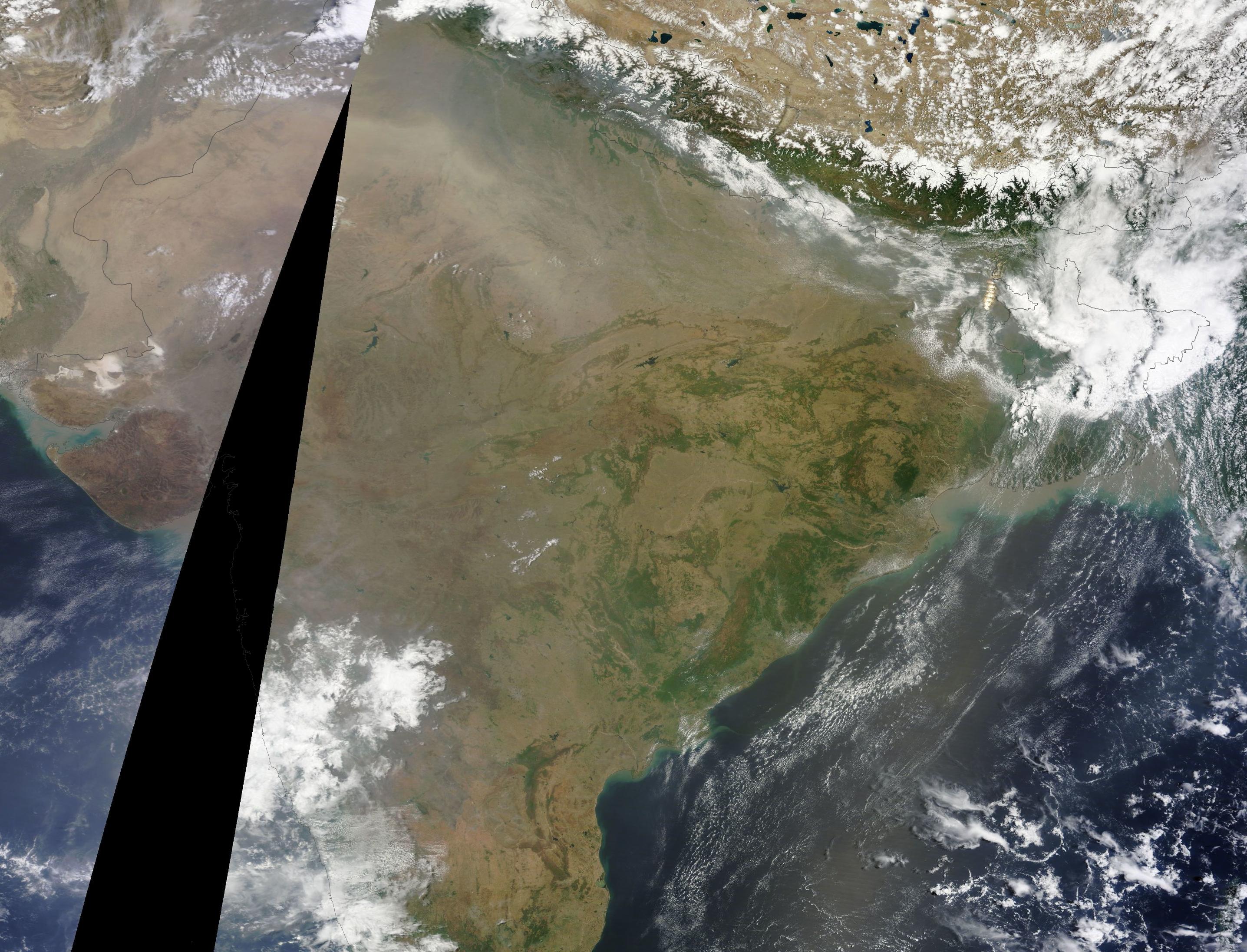
On May 25-27, an outburst of moisture from this stalled monsoonal flow splashed over the coasts of India. But by the 29th and 30th, these coastal storms and even the ones gathering over the Bengali waters had all been snuffed out. The most prominent feature in the MODIS shot of India today isn’t the rainfall that should be now arriving along the southeast coast, but the thick and steely-gray pallor of coal-ash smog trapped under a persistent and oppressive dome of intense heat.

(MODIS shot of India on May 30th. See the open stretch of blue water in the lower right frame? That’s the Bay of Bengal which borders coastal India. During a normal year at this time, that entire ocean zone should be filled with the storm clouds of a building monsoon that is already encroaching on coastal India. Today, there is nothing but a smattering of small and dispersed cloud through a mostly clear sky. Image source: LANCE-MODIS.)

Monsoon Described as Feeble

Official forecasts had already announced as of May 27th that the annual monsoon was likely to be delayed by at least a week for southeast regions of India. Meanwhile, expected monsoonal rainfall for western and northern sections of India for 2014 fell increasingly into doubt.

From The Times of India:

The monsoon is likely to be delayed by 10 days, according to scientists at the Indian Institute of Tropical Meteorology (IITM) here. The IITM’s third experimental real-time forecast says that a feeble monsoon will reach central India after June 20 as against the usual June 15. Last year, the monsoon had covered the entire country by June 15.

The annual monsoon is key to India’s agriculture. The substantial rains nurture crops even as they tamp down a powerful heating that typically builds throughout the sub-continent into early summer. Without these rains, both heat and drought tend to run rampant, bringing down crop yields and resulting in severe human losses due to excessive heat.

But, this year, heat and drought are already at extreme levels.

Major Heatwave Already Results in Loss of Life for 2014

As early as late March, the heatwave began to build over the Indian subcontinent. The heat surged throughout the state, setting off fires, resulting in a growing list of heat casualties, shutting down the power grid and spurring unrest. Meanwhile, impacts to India’s agriculture were already growing as the Lychee fruit crop was reported to have suffered a 40% loss.

By late May, temperatures across a broad region had surged above 105 degrees shattering records as the oppressive and deadly heat continued to tighten its grip.

In a country surrounded on three sides by oceans, it is a combination of heat, humidity and persistently high night-time temperatures that can be a killer. Wet bulb temperatures surge into a high-risk range for human mortality during the day even as night-time provides little respite for already stressed human bodies. Such extreme and long-duration heat doesn’t come without a sad toll. As of today, early reports indicated a loss of more than 56 lives due to heat stroke (In 2012 and 2013, total Indian heat deaths were near 1,000 each year). That said, final figures on heat losses are still pending awaiting complete reports from all of India’s provinces.

"Climatologically, we know that heatwaves are increasing in frequency and the number of days exceeding 45ºC temperatures is increasing. The frequency will increase further with global warming, hence this is a good example of a situation where science and disaster management can come together and avert damage," a spokesman for India’s National Disaster Management Authority noted on Friday.

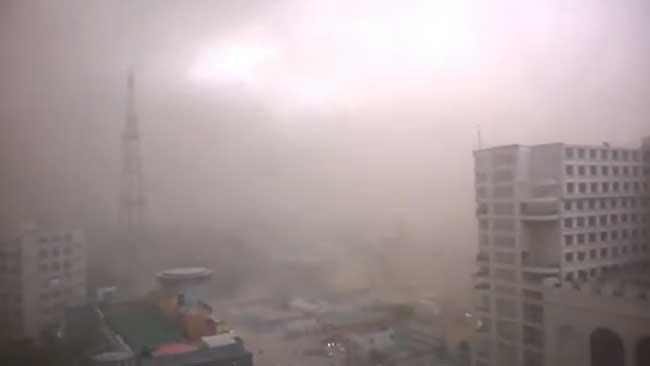
(Hot Dust. A dust storm rolls through New Delhi on Friday amidst furnace-like 113 degree heat snarling traffic and resulting in the tragic loss of 9 more lives. Image source: Gaurav Karoliwal/YouTube Screenshot.)

Today the heatwave continued to gain ground, with Kota and Rajasthan reaching an all-time record of 116 degree F (46.5 C) as New Delhi’s mercury hit 113 degrees F in the midst of a drought-induced dust storm. Dust shrouding the city spurred traffic chaos and in the heat, darkness, and confusion nine more souls were lost.

After two months of growing disruption due to heat and drought, the lands and peoples of India cry out for a Monsoon that is running later and later with each new weather report.

Climate Change + El Nino: Adding Heat and Beating Back the Monsoon

As systems approach tipping points, they are more likely to tilt toward the extremes.

For India this year, its seasonally warmest period from April to May found severe heat amplification from a number of global factors. First, climate change seeded the ground for the current Indian heatwave by adding general heat and evaporation to already hot conditions. With global average heating of +0.8 C above 1880s levels amplifying in the hot zones, early moisture loss due to higher-than-normal temperatures produces a kind of snowball effect for still more warming. Essentially, the cooling effect of water evaporation is baked out early allowing for heat to hit harder just as typical seasonal maximums are reached. More

Originally published by robertscribbler.wordpress.com/


Monday, April 14, 2014

Quenching Kenya: Can New Water Discoveries Save East Africa?

Water scarcity is becoming the defining international crisis of the twenty-first century. Water conflicts rage across the world as communities struggle to secure a clean, reliable supply.

One of the world’s most water-stressed regions is East Africa. Overexploitation of water resources there has been compounded by declining snowpacks on Mount Kilimanjaro and Mount Kenya, which have shrunk since the late 1980s due to global warming. Meanwhile, Lake Turkana -- the world’s largest perennial desert lake -- has largely disappeared from Ethiopian territory, retreating south into Kenya.

In this light, the discovery of two significant aquifers in mostly arid Kenya by a Japanese-financed UNESCO project has been hailed as a potential game changer. The first, the Lotikipi Basin Aquifer, is situated just west of Lake Turkana. The second, the smaller Lodwar Basin Aquifer, is near Lodwar, the capital of Turkana county. The aquifers were discovered by a French firm, Radar Technologies International (RTI), using a space-based exploration technology called WATEX that was originally designed to reveal mineral deposits. The company blended satellite and radar imagery with geographical surveys and seismic data to detect moisture. Subsequent drilling by UNESCO confirmed the presence of aquifers. Three other suspected aquifers in the region have yet to be verified through drilling.

For parched and economically backward Turkana, more than one-third of whose residents are malnourished, the discovery of major groundwater reserves is a godsend. Not only will the reserves provide lifesaving water, they will also spur the development of agricultural and hydrocarbon sectors and improve the lives of the impoverished residents in this conflict-ridden region, which extends from Kenya into the borderlands of Ethiopia and South Sudan. More [Subscription]


Wednesday, April 2, 2014

Geoff Lawton's Permaculture Design Course (Online)

For Those Who May Be Interested
If you are interested in growing your own food and if you have a farm this course is excellent.

Last year saw the launch Geoff Lawton's first online Permaculture Design Certificate (PDC) course, with the hope of exponentially increasing our educational reach. It was a 'scary' undertaking, in that, being the first course, we were not sure what to expect.


But we are proud to share that the course brought an overwhelmingly positive response. I've been looking around the inner 'halls' of the course system and reading comment after positive comment, and I've seen many of the amazing designs the students submitted at the end of their training. The best news is that this course is reaching people who would otherwise never get to take a PDC course, due to remote locations, family and work commitments, health constraints, cost, etc. Doctors, lawyers, housewives, politicians, activists, nurses, rural farmers, urbanites, pilots, industrialists, even experienced Permaculture teachers - the list goes on - all are coming together in the same system to learn, share, network and cause ripples of influence we may never be able to measure.


This last weekend Geoff's second online PDC was opened for registrations - for the new and even more expansive 2014 course (we keep adding material!). This course is run only once per year, and the door for registrations closes this Sunday, April 6th, 2014. If you want to get onto this course, or if you know someone who should, there's only three days left before the door shuts until next year, and the course begins. More


If you're unsure of the value of this life-altering course, please take a few minutes to scan the many comments below this post: http://permaculturenews.org/2013/10/28/geoff-lawtons-online-permaculture-design-course-worth/


Monday, September 23, 2013

North African Countries Commit to Cooperative Management of Nubian Aquifer read more: http://land-l.iisd.org/news/north-african-countries-commit-to-cooperative-management-of-nubian-aquifer/

18 September 2013: Chad, Egypt, Libya and Sudan signed a Strategic Action Programme to establish a long-term framework for managing the Nubian Sandstone Aquifer System (NSAS), the world's largest known fossil water aquifer system.


The agreement establishes a Joint Authority for the NSAS, with the aim of strengthening regional coordination and optimizing equitable use among the four arid North African countries.


The Aquifer is the main water resource for humans, livestock, irrigation and industry in this region, and is under pressure from increasing populations, agricultural expansion and decreasing water availability from other sources. The agreement seeks to strengthen transboundary water cooperation among the four countries to ensure water removal does not threaten water quality, harm the surrounding desert ecosystem and its biodiversity, or accelerate land degradation. The agreement is based on an ecosystem-based management approach (EBMA) and integrated water resources management (IWRM), and includes transboundary actions and targets that individual countries are expected to translate into national actions.


The agreement resulted from a technical cooperation project among the International Atomic Energy Agency (IAEA), the UN Development Programme (UNDP), the Global Environment Facility (GEF) and the UN Educational, Scientific and Cultural Organization (UNESCO). The project, which began in 2006, created an aquifer model to assist the countries in optimizing the aquifer's use for human needs and ecosystem protection. The project also improved understanding of the transboundary ecosystem threats and improved data sharing. The Programme will build upon this project by continuing to strengthen the countries' capacity to monitor groundwater quantity and quality, and providing a framework for transboundary cooperation.


UNDP Administrator Helen Clark congratulated the African countries on the agreement, saying cooperative management of their shared sub-surface waters “will help to ensure maintenance of livelihoods and ecosystems dependent upon the aquifer." The agreement was signed at IAEA headquarters in Vienna, Austria. [UN Press Release] [UNDP Press Release] [GEF Press Release] [Strategic Action Programme Agreement]


More:


Wednesday, March 27, 2013

Neonicotinoid pesticides 'damage brains of bees'

Commonly used pesticides are damaging honey bee brains, studies suggest.

Scientists have found that two types of chemicals called neonicotinoids and coumaphos are interfering with the insect's ability to learn and remember.

Experiments revealed that exposure was also lowering brain activity, especially when the two pesticides were used in combination.

The research is detailed in two papers in Nature Communications and the Journal of Experimental Biology.

But a company that makes the substances said laboratory-based studies did not always apply to bees in the wild.

And another report, published by the Defra's Food and Environment Research Agency (Fera), concluded that there was no link between bee health and exposure to neonicotinoids.

The government agency carried out a study looking at bumblebees living on the edges of fields treated with the chemicals.

Falling numbers

Honey bees around the world are facing an uncertain future.

They have been hit with a host of diseases, losses of habitat, and in the US the mysterious Colony Collapse Disorder has caused numbers to plummet.

Start Quote

It would imply that the bees are able to forage less effectively”

Dr Sally WilliamsonNewcastle University

Now researchers are asking whether pesticides are also playing a role in their decline.

To investigate, scientists looked at two common pesticides: neonicotinoids, which are used to control pests on oil seed rape and other crops, and a group of organophosphate chemicals called coumaphos, which are used to kill the Varroa mite, a parasite that attacks the honey bee.

Neonicotinoids are used more commonly in Europe, while coumaphos are more often employed in the United States.

Work carried out by the University of Dundee, in Scotland, revealed that if the pesticides were applied directly to the brains of the pollinators, they caused a loss of brain activity.

Dr Christopher Connolly said: "We found neonicotinoids cause an immediate hyper-activation - so an epileptic type activity - this was proceeded by neuronal inactivation, where the brain goes quiet and cannot communicate any more. The same effects occur when we used organophosphates.

"And if we used them together, the effect was additive, so they added to the toxicity: the effect was greater when both were present."

Another series of laboratory-based experiments, carried out at Newcastle University, examined the behaviour of the bees.

The researchers there found that bees exposed to both pesticides were unable to learn and then remember floral smells associated with a sweet nectar reward - a skill that is essential for bees in search of food.

Dr Sally Williamson said: "It would imply that the bees are able to forage less effectively, they are less able to find and learn and remember and then communicate to their hive mates what the good sources of pollen and nectar are."

'No threat'

She said that companies that are manufacturing the pesticides should take these findings into account when considering the safety of the chemicals.

Start Quote

Decisions on the use of neonicotinoids must be based on sound scientific evidence”

Ian BoydDefra

She explained: "At the moment, the initial tests for bee toxicity are giving the bees an acute dose and then watching them to see if they die.

"But because bees do these complex learning tasks, they are very social animals and they have a complex behavioural repertoire, they don't need to be killed outright in order not to be affected."

The European Commission recently called for a temporary moratorium on the use of neonicotinoids after a report by the European Food Safety Authority concluded that they posed a high acute risk to pollinators.

But 14 out of the 27 EU nations - including the UK and Germany - opposed the ban, and the proposal has now been delayed.

Ian Boyd, chief scientist at Defra, said: "Decisions on the use of neonicotinoids must be based on sound scientific evidence." More
 

Tuesday, March 19, 2013

World Water Day 2012 official video

World Water Day 2012 official video, focusing on the theme of the campaign "Water and Food Security".

Produced by kf@kantfish.com and featuring a soundtrack by DDG Project. Animations by antiestatico.com
Download your animation on: http://www.unwater.org/worldwaterday

Wednesday, March 13, 2013

India, Bangladesh very short of water, among Asia's worst - report

NEW DELHI (AlertNet) - Three out of four countries in Asia and the Pacific are facing a serious lack of water, and some are in danger of a crisis unless steps are taken to improve water management, a report by the Asian Development Bank and the Asia-Pacific Water Forum has said.

A private vehicle crosses a bridge as excavators work at the dam site of Kishanganga power project in Gurez, 160 km north of Srinagar, Indian-administered Kashmir. Picture June 21, 2012, REUTERS/Fayaz Kabli

The Asian Water Development Outlook 2013 , the first study of the degree of water security of every country in the region, found that 37 out of 49 nations do not have enough water, the worst being India, Afghanistan, Bangladesh, Pakistan, Cambodia, Kiribati, Nauru and Tuvalu.

"South Asia and parts of Central and West Asia are faring the worst with rivers under immense strain, while many Pacific islands suffer from a lack of access to safe piped water and decent sanitation and are highly vulnerable to increasingly severe water disasters," said an ADB statement.

"By contrast East Asia, which has the highest frequency of hazards in the region, is relatively better off due to higher levels of investment in disaster defences, but urban water security remains poor in many cities and towns."

Water security has become an increasing concern across the world in recent years.

More frequent floods and droughts caused by climate change, pollution of rivers and lakes, urbanisation, over-extraction of ground water and expanding populations mean that many Asia-Pacific nations face serious water shortages.

In addition, the demand for more power by countries like India to fuel their economic growth has resulted in a need to harness more water for hydropower dams.

The study examined water security in countries at five different levels, including access to clean drinking water and sanitation, water availability for industry and agriculture, and water supply systems in urban areas.

"Much progress has been made in terms of providing drinking water, but when we look at the number of households that have piped water, it is much less," said Wouter T. Lincklaen, lead water resources specialist at the ADB.

Only 35 percent of the region's population have a secure water supply. Even worse, only 23 percent of South Asians and 21 percent of those living in the Pacific have piped water, he said.

ADB experts cited China as a good example of improved water management, in which the government not only promised to double annual investment in the water sector to $608 billion by 2020, but also set performance targets for industry, irrigation and water quality. More


Tuesday, March 12, 2013

Land Grabs Spread Throughout Developing World

Food Justice advocates have always argued that trade agreements need to respect and promote human rights, not drive a process of globalization that privileges commercial interests and tramples on public interests. In my new paper on land grabs from the Institute for Agriculture and Trade Policy, that position is affirmed.

“Land grabs” are large-scale purchases or leases of agricultural or forested land on terms that violate the rights of the people who live on or near that land. The problem has commanded enormous public policy and media attention for the last few years. In our paper, IATP sets some context for the land grabs phenomenon. We focus on two forces that have contributed significantly to the problem:

Globalization, or the deregulation of trade and foreign investment laws, which has greatly eased cross-border capital flows; relaxed the limits on foreign land ownership; and, opened markets to agricultural imports.

The food price crisis of 2007-08, which highlighted how fragile food systems in many parts of the world have become, and which shattered the confidence of net-food importing countries in international markets as a source of food security.

The situation is compounded by climate change and the resulting destabilization of weather patterns, which in turn has made agricultural production less predictable. Climate change has made domestic food supplies less certain and exports, too. In 2012, The United States, still a huge source of grains for international markets, lost 40 percent of a record large number of acres planted with corn to drought.

The sense of food insecurity has driven some of the richer net-food importers—countries such as Saudi Arabia and Kuwait—to invest in growing food abroad for import to their domestic markets. That is one driver of land grabs.

The sense that our food systems are fragile and that supplies are scarce, where for decades they have been abundant, is another driver—companies such as South Korea’s Daewoo are looking to source raw materials directly, rather than buying them on the market.

It’s not that investment in agriculture is a bad thing. Indeed, it’s sorely needed. But unless we have the conversation about what kind of investment, in what kind of agriculture, and in whose interests, then the investment does more harm than good.

Land grabs, as the label implies, have been overwhelmingly negative. They are associated with weak institutional capacity (and sometimes corruption) in the recipient country governments, as well as authoritarian governments in the investors’ home countries, making it hard to bring pressure there for better practices. The communities whose land is leased or bought are not adequately protected.

IATP proposes four linked policy shifts to create a more stable and transparent international food system:

1) Reformed trade rules that ensure export restrictions in times of crisis are subject to transparency and predictability requirements and that allow all countries policy space for food security policies;

2) Publicly-managed grain reserves to dampen the effects of supply shocks;

3) Readily accessible funding for the poorest food importers, which would be triggered automatically when prices increase sharply in international markets; and

4) The development of strong national and international laws to govern investment in land, respecting the principles and guidelines set out in the Voluntary Guidelines on Land Tenure. Tanzania’s recently announced limits on how much land foreign and domestic investors can lease is a hopeful example of a national government taking the initiative to get serious about regulation. More


Thursday, September 13, 2012

Himalaya's Losing Ice

Himalayan Glaciers Retreating at Accelerated Rate in Some Regions: Consequences for Water Supply Remain Unclear.

Everest and Lhotse mountain peaks
ScienceDaily (Sep. 12, 2012) — Glaciers in the eastern and central regions of the Himalayas appear to be retreating at accelerating rates, similar to those in other areas of the world, while glaciers in the western Himalayas are more stable and could be growing, says a new report from the National Research Council.

The report examines how changes to glaciers in the Hindu Kush-Himalayan region, which covers eight countries across Asia, could affect the area's river systems, water supplies, and the South Asian population. The mountains in the region form the headwaters of several major river systems -- including the Ganges, Mekong, Yangtze, and Yellow rivers -- which serve as sources of drinking water and irrigation supplies for roughly 1.5 billion people.

The entire Himalayan climate is changing, but how climate change will impact specific places remains unclear, said the committee that wrote the report. The eastern Himalayas and Tibetan Plateau are warming, and the trend is more pronounced at higher elevations. Models suggest that desert dust and black carbon, a component of soot, could contribute to the rapid atmospheric warming, accelerated snowpack melting, and glacier retreat.

While glacier melt contributes water to the region's rivers and streams, retreating glaciers over the next several decades are unlikely to cause significant change in water availability at lower elevations, which depend primarily on monsoon precipitation and snowmelt, the committee said. Variations in water supplies in those areas are more likely to come from extensive extraction of groundwater resources, population growth, and shifts in water-use patterns. However, if the current rate of retreat continues, high elevation areas could have altered seasonal and temporal water flow in some river basins. The effects of glacier retreat would become evident during the dry season, particularly in the west where glacial melt is more important to the river systems. Nevertheless, shifts in the location, intensity, and variability of both rain and snow will likely have a greater impact on regional water supplies than glacier retreat will.

Melting of glacial ice could play an important role in maintaining water security during times of drought or similar climate extremes, the committee noted. During the 2003 European drought, glacial melt contributions to the Danube River in August were about three times greater than the 100-year average. Water stored as glacial ice could serve as the Himalayan region's hydrologic "insurance," adding to streams and rivers when it is most needed. Although retreating glaciers would provide more meltwater in the short term, the loss of glacier "insurance" could become problematic over the long term.

Water resources management and provision of clean water and sanitation are already a challenge in the region, and the changes in climate and water availability warrant small-scale adaptations with effective, flexible management that can adjust to the conditions, the committee concluded. Current efforts that focus on natural hazard and disaster reduction in the region could offer useful lessons when considering and addressing the potential for impacts resulting from glacial retreat and changes in snowmelt processes in the region. More


Thursday, August 23, 2012

Our Oversized Groundwater Footprint

We don’t see it, smell it or hear it, but the tragedy unfolding underground is nonetheless real – and it spells big trouble.

A dried up well

I’m talking about the depletion of groundwater, the stores of H2O contained in geologic formations called aquifers, which billions of people depend upon to supply their drinking water and grow their food.

For a long time, we had only a vague sense of the scale of this depletion, mostly through anecdotal evidence and selected country studies. While researching my 1999 book Pillar of Sand, I gathered the best data I could find at the time, and with all the necessary caveats, estimated that about 8-10 percent of the world’s food supply depended upon the draining of underground aquifers.

About a decade later, modeling work by Marc Bierkens of Utrecht University in the Netherlands and his colleagues arrived at a global depletion estimate that produced a similar figure: their estimated 283 billion cubic meters of groundwater depleted in 2000 is sufficient to produce 188.6 million tons of grain, equal to 10 percent of that year’s global grain production. While not all groundwater pumped from the earth is used to produce grain, the vast majority of it is.

In recent years a number of other studies, along with NASA’s GRACE (Gravity Recovery and Climate Experiment) mission, have corroborated the dangerous trend. From the Arabian deserts to the North China Plain, and from the breadbasket of India to the fruit and vegetable bowl of the United States, we are increasingly dependent on the unsustainable use of groundwater.

In effect, we’re robbing the Peters of the future to feed the Pauls of today.

Now a new study, led by Tom Gleeson of McGill University in Montreal and published last week in the journal Nature, provides perhaps the most compelling and informative assessment to date of what’s happening with groundwater globally.

Gleeson and his team build upon the concept of our “ecological footprint,” which expresses humanity’s consumption as the area of biomass needed to support that consumption sustainably. Today, according to the Global Footprint Network, humanity uses the equivalent of 1.5 planet Earths. In other words, we’ve overshot sustainable levels by half an Earth.

In a creative adaptation, Gleeson’s team applied a similar approach to assessing humanity’s groundwater footprint. They estimate that the size of the global groundwater footprint – defined as the area required to sustain groundwater use and groundwater-dependent ecosystem services — is about 3.5 times the actual area of aquifers tapped for water supplies. More