Showing posts with label change. Show all posts

Sunday, September 16, 2018

For Whom the Climate Bell Tolls

Indus River


...the problems associated with climate change will be neither mere inconveniences, nor as far off as we would like to think. There are currently two billion near-subsistence farmers living in the six great river valleys of Asia, from the Yellow all the way around to the Indus. These farmers have limited means and few non-agricultural skills. It would not be easy for them to pick up and relocate, let alone earn their livelihood doing something else.
Asia’s six great river valleys have supported most of human civilization for the past 5,000 years. During that time, the snow melt from the region’s high plateaus has always arrived at precisely the right moment, and in precisely the right volume, to support the crops upon which the region’s people rely. Read More

Saturday, August 31, 2013

Introduction to a Green Economy: Concepts and Applications

Introduction to a Green Economy:


Concepts and Applications

E-Learning Course, 4th Edition

21 October – 13 December 2013

In order to provide interested stakeholders from government, business, civil society and academia with an introduction to the green economy concept UNITAR in partnership with UNEP, ILO and UNIDO is delivering the e-learning course“Introduction to a Green Economy: Concepts and Applications”, 21 October - 13 December 2013. Participants will learn about different concepts and facets of the green economy, including its contribution to addressing climate change. Special attention is given to global, national and sector-specific challenges and opportunities to advance sustainable, low-carbon and socially inclusive development. Additionally, participants will begin to acquire basic skills for applying the green economy concept in an economic, policy-making and personal context.

The ability of national actors to act on the green economy is key for effective policy making and achieving tangible results. To address this challenge UNITAR is working closely with UNEP, ILO and UNIDO in a new Partnership for Action on Green Economy (PAGE), focusing on national capacity development.

Comprehensive information and registration details are availablehttps://www.unitar.org/event/introduction-green-economy-concepts-and-applications-4th-edition.

Registration is open until 13 October 2013.

Please feel free to disseminate information about this course through your networks, and don’t hesitate to contact us (envgov@unitar.org) should you need any further information.

Yours,

The UNITAR Environmental Governance Programme Team

-----------------------------------------------

BACKGROUND

The concept of a green economy is receiving increasing international attention, as countries explore new patterns of development that take into account economic, social and environmental sustainability considerations. The ability of national actors to act on the green economy is key for effective policy making and achieving tangible results. To address this challenge, United Nations Institute for Training and Research (UNITAR) is working closely with UNEP, ILO and UNIDO in a new Partnership for Action on Green Economy (PAGE), with a focus on national capacity development.

In order to provide interested stakeholders from government, business, civil society and academia with an introduction to the green economy concept UNITAR, together with PAGE partners, is delivering an interactive e-learning course from 21 October to 13 December 2013.

TARGET GROUPS

The course targets groups and individuals that are interested in obtaining a general understanding about the green economy concept and latest developments. They include:

• Civil servants in national Ministries, provincial departments and local authorities

• Diplomats from Permanent Missions and Ministries of Foreign Affairs

• Environmental managers in private sector and civil society organizations

• Faculty, researchers and students

• Interested citizens

LEARNING OBJECTIVES

Participants will learn about different concepts and facets of the green economy, as well as global, national and sector-specific challenges and opportunities to advance low-carbon, resource efficient and socially inclusive development. Additionally, participants will begin to develop basic skills for applying the green economy concept in a real world economic, policy and/or personal context.

After completing the course, participants will be able to:

  • Define the concept of a green economy and explain its value
  • Identify enabling conditions for greening national economies
  • Identify principal challenges and opportunities for greening key economic sectors
  • Describe national planning processes in support of a green transformation
  • Recognize international and regional initiatives and support services to foster green development
  • Apply the green economy concept to a real world economic, policy and/or personal context

METHODOLOGY

The course pedagogy is adapted to professionals in full-time work. Participants are provided with the opportunity to learn through various experiences: absorb (read); do (activity); interact (socialize); and reflect (relate to one’s own reality). The total number of learning hours is 40 over an 8 week period. During weeks 1-5 the reading of an e-book is complemented by a range of learning activities and experiences that include interactive exercises, discussion forums, and an applied case study. Weeks 6-8 are reserved for wrap-up and completing course assignments.

cid:image001.png@01CEA415.9B144B30

COURSE FEE AND REGISTRATION

The course participation fee is 600 USD.

A number of full/partial fellowships are available for participants from developing countries working in the public sector, academia or non-profit organizations. Priority for fellowships will be given to applicants from Least Developed Countries (LDCs). For details please contact the UNITAR Environmental Governance Programme atenvgov@unitar.org

Register at:

https://www.unitar.org/event/introduction-green-economy-concepts-and-applications-4th-edition

Registration deadline: 13 October 2013.

The UNITAR e-Learning Team

Geneva, Switzerland

Website: www.unitar.org

UNITAR-logo for email3

-----------------------------------------------

pc30 video30 facebook30 twitter-green30

UNITAR is making concrete contributions to developing

the capacities of tens of thousands of people, and institutions

around the world. Check out UNITAR’s online catalogue.

 

Tuesday, July 24, 2012

The world is closer to a food crisis than most people realise

Unless we move quickly to adopt new population, energy, and water policies, the goal of eradicating hunger will remain just that.

Food riots in Algeria in 2008. Photograph: Fayez Nureldine/AFP/Getty Images
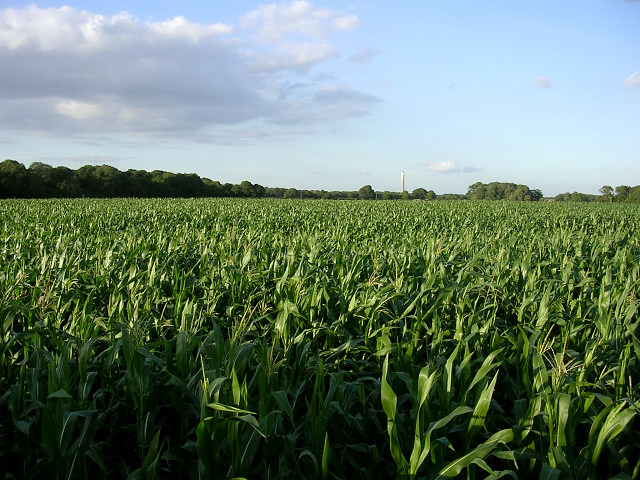
In the early spring this year, US farmers were on their way to planting some 96m acres in corn, the most in 75 years. A warm early spring got the crop off to a great start. Analysts were predicting the largest corn harvest on record.

The United States is the leading producer and exporter of corn, the world's feedgrain. At home, corn accounts for four-fifths of the US grain harvest. Internationally, the US corn crop exceeds China's rice and wheat harvests combined. Among the big three grains – corn, wheat, and rice – corn is now the leader, with production well above that of wheat and nearly double that of rice.

The corn plant is as sensitive as it is productive. Thirsty and fast-growing, it is vulnerable to both extreme heat and drought. At elevated temperatures, the corn plant, which is normally so productive, goes into thermal shock.

Time is running out. The world may be much closer to an unmanageable food shortage – replete with soaring food prices, spreading food unrest, and ultimately political instability– than most people realise.

As spring turned into summer, the thermometer began to rise across the corn belt. In St Louis, Missouri, in the southern corn belt, the temperature in late June and early July climbed to 100F or higher 10 days in a row. For the past several weeks, the corn belt has been blanketed with dehydrating heat.

Weekly drought maps published by the University of Nebraska show the drought-stricken area spreading across more and more of the country until, by mid-July, it engulfed virtually the entire corn belt. Soil moisture readings in the corn belt are now among the lowest ever recorded.

While temperature, rainfall, and drought serve as indirect indicators of crop growing conditions, each week the US Department of Agriculture releases a report on the actual state of the corn crop. This year the early reports were promising. On 21 May, 77% of the US corn crop was rated as good to excellent. The following week the share of the crop in this category dropped to 72%. Over the next eight weeks, it dropped to 26%, one of the lowest ratings on record. The other 74% is rated very poor to fair. And the crop is still deteriorating.

Over a span of weeks, we have seen how the more extreme weather events that come with climate change can affect food security. Since the beginning of June, corn prices have increased by nearly one half, reaching an all-time high on 19 July. More


Monday, May 7, 2012

Warming and the Water Cycle: More than Just a Faster Wetter Wet and Drier Dry

One of the most serious consequences of global warming is its predicted impact on the water cycle. A new study, described below, presents evidence that the global water cycle is changing even faster than predicted. A further concern is that future rainfall patterns may be extremely variable in both space and time.

Since the 1950s, parts of the world's ocean became saltier (red) and parts became fresher (blue) as the global water cycle intensified. The color scale refers to the observed change in salinity. The numbers on the scale correspond approximately to grams of salt per kilogram of seawater.

As the atmosphere warms, its capacity to hold water vapor increases. This is quantified by the Clausius-Clapeyron relationship, which explains that the atmosphere will hold about about 7% more moisture for every degree Celsius of warming. That means more evaporation in areas that are already dry and increased precipitation in regions that already receive high rainfall. Thus we can expect increasing droughts in dry areas and more floods in regions now prone to flooding.

In the 27 April 2012 issue of SCIENCE, Paul Durack of the Lawrence Livermore National Laboratory in California and coworkers explored a historical database of the saltiness of the surface ocean waters, or salinity, and found evidence that the global water cycle has intensified over the past half-century. The observed shifts in ocean salinity are consistent with the Clausius-Clapeyron relationship and with the observed warming of the surface ocean by about 0.5°C.

Noting difficulties in obtaining accurate estimates of rainfall over land, Durack and coworkers used ocean salinity as a natural rain gauge. Just as the long-term average evaporation and precipitation leave their imprint on land in terms of characteristic landscapes, they are recorded in the ocean by the saltiness of surface waters. The saltiest ocean waters are found in the subtropics, where the dry descending air of the Hadley cell causes evaporation to exceed precipitation. By contrast, surface waters at high latitudes tend to be less salty as precipitation is greater than evaporation. This pattern has existed for much of Earth’s history. More


Tuesday, February 21, 2012

Say No To War


The Vetiver System (Vetiver Grass) Ground Water Recharge System


This movie shows how the management of Ano Farm (Western Ethiopia) has used The Vetiver System to reduce erosion and improve groundwater recharge. The results are higher crop yields and increased groundwater and regenerated water flow from springs. This technology has great potential for offsetting some of the problems associated with climate change?


'Perpetual Growth Myth' Leading World to Meltdown: Experts

UN-Sponsored Papers Predict Sustained Ecological and Social Meltdown.

The current system is broken," says Bob Watson, the UK’s chief scientific advisor on environmental issues and a winner of the prestigious Blue Planet prize in 2010. "It is driving humanity to a future that is 3-5°C warmer than our species has ever known, and is eliminating the ecology that we depend on for our health, wealth and senses of self."

Smoke billows from burned trees. A collective of scientists and development thinkers have warned that civilisation faces an 'unprecedented emergency'. (Photograph: CRISTINA QUICKLER/AFP/Getty Images)"We cannot assume that technological fixes will come fast enough. Instead we need human solutions. The good news is that they exist but decision makers must be bold and forward thinking to seize them."

Watson's comments accompanied a new paper released today by 20 past winners of the Blue Planet Prize - often called the Nobel Prize for the environment, and comes ahead of the 20th anniversary of the Rio+20 conference – which takes place in June this year – where world leaders will (it is hoped) seize the opportunity to set human development on a new, more sustainable path.

Civilization Faces 'Perfect Storm of Ecological and Social Problems'

The Guardian's John Vidal reports:

In the face of an "absolutely unprecedented emergency", say the [...] past winners of the Blue Planet prize – the unofficial Nobel for the environment – society has "no choice but to take dramatic action to avert a collapse of civilization. Either we will change our ways and build an entirely new kind of global society, or they will be changed for us".

The stark assessment of the current global outlook by the group, who include [Watson]... US climate scientist James Hansen, Prof José Goldemberg, Brazil's secretary of environment during the Rio Earth summit in 1992, and Stanford University Prof Paul Ehrlich. [...] More


Monday, February 20, 2012

Models Underestimate Future Temperature Variability: Food Security at Risk

ScienceDaily (Feb. 17, 2012) — Climate warming caused by greenhouse gases is very likely to increase the variability of summertime temperatures around the world by the end of this century, a University of Washington climate scientist said Friday. The findings have major implications for food production.

Current climate models do not adequately reflect feedbacks from the relationship between the atmosphere and soil, which causes them to underestimate the increase of variability in summertime temperatures, said David Battisti, a UW professor of atmospheric sciences.

While warmer temperatures already have implications for food production in the tropics, the new findings suggest the increase in the volatility of summertime temperatures will have serious effects in grain-growing regions of Europe and North and South America, Battisti said.

"If there's greater variability, the odds of the temperature being so high that you can't grow a crop are greater," he said. "In terms of regional and global food security, it's not good news."

Battisti presented his findings at the American Association for the Advancement of Science meeting in Vancouver, Canada. His discussion was part of a panel on climate and global food security that included Rosamond Naylor of Stanford University and Daniel Vimont of the University of Wisconsin, with whom he has collaborated on previous food security research. More


Wednesday, July 15, 2009

The planet's future: Climate change 'will cause civilisation to collapse'


14 July, 2009 - An effort on the scale of the Apollo mission that sent men to the Moon is needed if humanity is to have a fighting chance of surviving the ravages of climate change. The stakes are high, as, without sustainable growth, "billions of people will be condemned to poverty and much of civilization will collapse".

This is the stark warning from the biggest single report to look at the future of the planet - obtained by The Independent on Sunday ahead of its official publication next month. Backed by a diverse range of leading organizations such as UNESCO, the World Bank, the US army and the Rockefeller Foundation, the 2009 State of the Future report runs to 6,700 pages and draws on contributions from 2,700 experts around the globe. Its findings are described by Ban Ki-moon, Secretary-General of the UN, as providing "invaluable insights into the future for the United Nations, its member states, and civil society". More >>>
,

Thursday, May 14, 2009

Global warming may make monsoons harder to predict, say researchers


May 14, 2009 Monsoons will be more difficult to predict in the future because of global warming, researchers have warned.

Scientists will need improved weather prediction models, conclude researchers from the Indian Institute of Tropical Meteorology (IITM), in a report published in Geophysical Research Letters last month (23 April). Reliable prediction of monsoon rains five to seven days in advance is crucial for farmers, for managing water resources and for disaster management, they say.

The researchers say that weather in tropical regions is inherently more difficult to predict than in regions further north. One reason is that daily changes in temperature and wind are small in the tropics and the signals are difficult to pick up with recording instruments. Another is the way wind systems are driven in the tropics, which makes the tropical atmosphere more unstable.

The increased frequency and intensity of rainfall due to global warming will make the tropical atmosphere even more unstable and prediction more difficult in the future, they say. More >>>

Saturday, May 2, 2009

Wealthy nations must lead on climate change: Economist


The citizens and leaders of rich countries who aren't willing to ditch their SUVs and embrace other facets of a low-carbon lifestyle will sabotage attempts at reaching a global deal for tackling climate change, prominent British economist Lord Nicholas Stern is warning.

"This has to be the biggest international collaboration in history if we are to tackle this challenge," Stern told an audience of Toronto's business elite during a speech today at the Economic Club of Canada.

If we're not prepared to show developing countries such as China and India that we're serious about doing our part, he said, "then get a hat, some suntan lotion and write an apology letter to your grandchildren." More >>>