Showing posts with label Africa. Show all posts

Tuesday, October 1, 2013

Professor Paul Jackson: The unintended consequences of foreign intervention

After the horrors of the Westgate Mall attack in Nairobi, there will be inevitable questions about the nature of Islamic terrorism in East Africa. However, the attack itself is part of an on-going conflict in Kenya that in turn is part of a bigger regional conflagration based on Somalia. In fact the attack on the mall can be traced back to an international intervention that produced a number of unintended consequences, one of which has been the transformation of the group that perpetrated the attack, Al-Shabaab.

Kenyan troops at Westgate Mall

In fact the continued fighting in Somalia and the relative success of the African Union forces against Al-Shabaab fighters may have made the situation less stable and more dangerous for a number of reasons, not least because the movement may have splintered in to a number of cells capable of perpetrating terrorist atrocities rather than holding territory.

What of Al-Shabaab itself? A rather shady organisation that grew out of the youth wing (‘shabaab’ means ‘youth’) of a wider organisation, al-Ittihad al-Islami, one of the Somali extremist groups that existed in the 1980s and 90s, al-Shabaab itself remained relatively unimportant until 2007 following the invasion of Somalia by Ethiopian troops. At that time, al-Shabaab was serving as the military wing of a group known as the Islamic Courts Union (ICU), which established a form of governance within Mogadishu and in parts of the countryside. Following the Ethiopian invasion, the ICU collapsed and al-Shabaab took up arms against the Ethiopian forces, retreating in to a swampy area in the South.

At this point, the movement runs a very conventional guerrilla war against the Ethiopians, at various times supported by the Eritreans in a proxy war against her Ethiopian rival. However, the growing prominence of al-Shabaab and its Islamic roots make it fertile ground for the growth of Al-Qaeda links, as part of a regional spread of Islamic radicalism from Yemen, into the Horn and down the East coast. The increased links are attended by a change in philosophy of violence and a move to the use of suicide bombing as a means of spreading terror at the same time as continuing its conventional warfare against international forces.

In 2008 al-Shabaab mounts a series of suicide bombings against government offices and international agencies as well as the Ethiopian consulate, stating that the attacks are retaliation against the international community for the invasion of Somalia. With the advent of AMISOM in Somalia and African Union troops from Uganda and Burundi, al-Shabaab widened its terrorist campaign and in 2010 mounted its first international attack against an Ethiopian restaurant and rugby club in Uganda.

The AMISOM forces have been very successful on the ground in Somalia and al-Shabaab does not control the same level of territory as they did in 2008. The Kenyan military incursion that started in 2011 has been particularly successful, with the effective Kenyan military pushing back the fighters significantly, including capturing one of al-Shabaab’s last strongholds, Kismayo, a key source of revenue. It was this that led al-Shabaab to call the Westgate attack revenge for Kenyan involvement in Somalia.

The horrific attack can therefore be traced right back to an international intervention in a regional conflict. Not only does this point to a close link between terrorism and more conventional warfare, but also to the transnational nature of much conflict within Africa. The purpose of the attack itself was clearly to send a signal to the Kenyans that they should not send troops to Somalia, and yet it was also a signal that the African Union Somali offensive was being successful.

Losing territory and increasingly unable to hold territory against troops, al-Shabaab has been forced to rethink its strategy. Unfortunately the most logical model for a new strategy is localised cells of terrorists, usually connected to the Somali diaspora, which is very developed following twenty years of conflict. There are approximately 250,000 Somalis in Nairobi alone, which could provide a fertile breeding ground for radicalism, let alone other groups in Uganda and Tanzania.

The blueprint for this type of incident was the Mumbai hotel attack of 2008, which showed the weakness of many public areas frequented by westerners and wealthy locals and was capable of provoking an over-reaction by security forces that could lead to further radicalisation. More


Monday, September 23, 2013

North African Countries Commit to Cooperative Management of Nubian Aquifer read more: http://land-l.iisd.org/news/north-african-countries-commit-to-cooperative-management-of-nubian-aquifer/

18 September 2013: Chad, Egypt, Libya and Sudan signed a Strategic Action Programme to establish a long-term framework for managing the Nubian Sandstone Aquifer System (NSAS), the world's largest known fossil water aquifer system.


The agreement establishes a Joint Authority for the NSAS, with the aim of strengthening regional coordination and optimizing equitable use among the four arid North African countries.


The Aquifer is the main water resource for humans, livestock, irrigation and industry in this region, and is under pressure from increasing populations, agricultural expansion and decreasing water availability from other sources. The agreement seeks to strengthen transboundary water cooperation among the four countries to ensure water removal does not threaten water quality, harm the surrounding desert ecosystem and its biodiversity, or accelerate land degradation. The agreement is based on an ecosystem-based management approach (EBMA) and integrated water resources management (IWRM), and includes transboundary actions and targets that individual countries are expected to translate into national actions.


The agreement resulted from a technical cooperation project among the International Atomic Energy Agency (IAEA), the UN Development Programme (UNDP), the Global Environment Facility (GEF) and the UN Educational, Scientific and Cultural Organization (UNESCO). The project, which began in 2006, created an aquifer model to assist the countries in optimizing the aquifer's use for human needs and ecosystem protection. The project also improved understanding of the transboundary ecosystem threats and improved data sharing. The Programme will build upon this project by continuing to strengthen the countries' capacity to monitor groundwater quantity and quality, and providing a framework for transboundary cooperation.


UNDP Administrator Helen Clark congratulated the African countries on the agreement, saying cooperative management of their shared sub-surface waters “will help to ensure maintenance of livelihoods and ecosystems dependent upon the aquifer." The agreement was signed at IAEA headquarters in Vienna, Austria. [UN Press Release] [UNDP Press Release] [GEF Press Release] [Strategic Action Programme Agreement]


More:


Wednesday, June 5, 2013

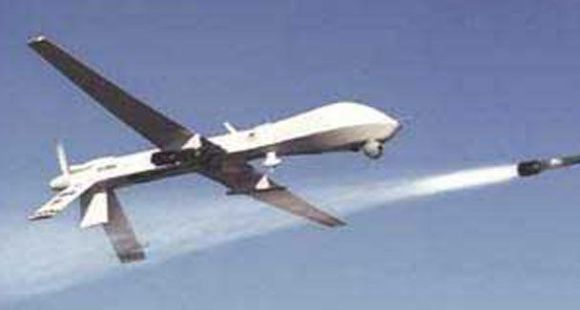
U.S. Dominance in Drone Technology

Stratfor Military Analyst Paul Floyd examines drone proliferation around the globe and explains the technology's constraints and potential.
For more analysis, visit: http://www.Stratfor.com

Tuesday, March 12, 2013

Land Grabs Spread Throughout Developing World

Food Justice advocates have always argued that trade agreements need to respect and promote human rights, not drive a process of globalization that privileges commercial interests and tramples on public interests. In my new paper on land grabs from the Institute for Agriculture and Trade Policy, that position is affirmed.

“Land grabs” are large-scale purchases or leases of agricultural or forested land on terms that violate the rights of the people who live on or near that land. The problem has commanded enormous public policy and media attention for the last few years. In our paper, IATP sets some context for the land grabs phenomenon. We focus on two forces that have contributed significantly to the problem:

Globalization, or the deregulation of trade and foreign investment laws, which has greatly eased cross-border capital flows; relaxed the limits on foreign land ownership; and, opened markets to agricultural imports.

The food price crisis of 2007-08, which highlighted how fragile food systems in many parts of the world have become, and which shattered the confidence of net-food importing countries in international markets as a source of food security.

The situation is compounded by climate change and the resulting destabilization of weather patterns, which in turn has made agricultural production less predictable. Climate change has made domestic food supplies less certain and exports, too. In 2012, The United States, still a huge source of grains for international markets, lost 40 percent of a record large number of acres planted with corn to drought.

The sense of food insecurity has driven some of the richer net-food importers—countries such as Saudi Arabia and Kuwait—to invest in growing food abroad for import to their domestic markets. That is one driver of land grabs.

The sense that our food systems are fragile and that supplies are scarce, where for decades they have been abundant, is another driver—companies such as South Korea’s Daewoo are looking to source raw materials directly, rather than buying them on the market.

It’s not that investment in agriculture is a bad thing. Indeed, it’s sorely needed. But unless we have the conversation about what kind of investment, in what kind of agriculture, and in whose interests, then the investment does more harm than good.

Land grabs, as the label implies, have been overwhelmingly negative. They are associated with weak institutional capacity (and sometimes corruption) in the recipient country governments, as well as authoritarian governments in the investors’ home countries, making it hard to bring pressure there for better practices. The communities whose land is leased or bought are not adequately protected.

IATP proposes four linked policy shifts to create a more stable and transparent international food system:

1) Reformed trade rules that ensure export restrictions in times of crisis are subject to transparency and predictability requirements and that allow all countries policy space for food security policies;

2) Publicly-managed grain reserves to dampen the effects of supply shocks;

3) Readily accessible funding for the poorest food importers, which would be triggered automatically when prices increase sharply in international markets; and

4) The development of strong national and international laws to govern investment in land, respecting the principles and guidelines set out in the Voluntary Guidelines on Land Tenure. Tanzania’s recently announced limits on how much land foreign and domestic investors can lease is a hopeful example of a national government taking the initiative to get serious about regulation. More


Friday, March 8, 2013

US Drone Strikes Putting 'Global Order At Risk', Warn European Politicians

The United States is putting "global stability and international order at risk" by pursuing a policy of targeted extrajudicial drone strikes against suspected terrorists, European politicians have warned.

At least to 3,000 people, including a large number of civilians, are said to have been killed by controversial CIA drone strikes in Pakistan, Somalia and Yemen since 2004.

This week members of the European Parliament said they were "deeply concerned about the legal basis, as well as the moral, ethical and human rights implications" of the drone attacks and urged European Union member states to "contest the US attempt to pervert international law".

In a statement the MEPs said: "We cannot remain silent. The European Union and its Member States must speak up against a practice that will set a dangerous and unwelcome precedent for International Law."

British MEP Baroness Sarah Ludford, the Liberal Democrat European justice and human rights spokeswoman, said on Friday: "US drone killings operate in disregard of the long-established international legal framework about when it is lawful to kill people. This sets an extremely dangerous precedent and risks a destabilising effect on international relations. It could even furnish Al-Qaida with a licence to kill in return."

"European complicity in the ‘War on Terror’ after 9/11, in defiance of legal norms whereby terrorist criminals must be brought to justice through due process, still haunts Europe as well as the US. It is incredible that the US is making renewed and reckless attempts to rewrite the international legal code, and we could get hurt again too."

"Without agreed law the international community cannot hope to justify military action and prevent human rights abuses. As leaders of that community along with the US, the EU and its Member States must boldly state their opposition to this programme, which disregards our common international legal heritage. Silence will be taken as European acquiescence, with potentially disastrous results."

The condemnation came after a briefing in Brussels from United Nations Special Rapporteur for Counter Terrorism and Human Rights, Ben Emmerson QC, who is conducting a UN investigation into the UK and US policy of targeted killings.

Senior British parliamentarians have also raised concerns in Westminster over president Obama's use of drones in Pakistan. Former British Foreign Office minister Baroness Kinnock of Holyhead has warned "action must be taken to ensure that there is accountability and reparations when a drone attack goes wrong".

And Lord West of Spithead, the former head of the Royal Navy and a security minister in the last Labour government, told the House of Lords last month: "War is horrible. Death is horrible. Being involved in the risk is horrible. When one does this remotely from a leafy suburb in your own country and killing people that does make it remote and that does have huge implications and is very worrying and needs a lot of control."

The House of Commons defence committee announced it would conduct an investigation into the British military's use of drones after the RAF decided to expand its use and number of Unmanned Ariel Vehicles.

Pressed by MPs and peers, the UK government has insisted it has only used its own drones inside Afghanistan as the British military's presence there is at the request of the Afghan government. However British intelligence agencies have been accused of passing information to the CIA to help the Americans carry out strikes in Pakistan.

And last month it was reported the UK had a policy of stripping British citizens of their passports on national security grounds - two of who were then killed by US drones.

President Obama's use of drones has recently climbed up the American news agenda following the controversial confirmation of John Brennan as head of the Central Intelligence Agency and Republican senator Rand Paul's thirteen hour senate filibuster against extrajudicial drone killings.

Brennan has previously claimed that no civilians have been killed by drones, based on the Obama administration's decision to designate every military-age male in the target area as a combatant.

On Thursday the White House tried to shut down the debate over whether, as had been initially suggested, Obama had the power to order a drone strike on US soil.

A series of HuffPost/YouGov surveys showed that while a majority of Americans support their use to kill people suspected of being "high-level members of al Qaeda", this is reversed if they are told civilians are at risk of being killed. More


Tuesday, February 26, 2013

Climate change and water mismanagement parch Egypt

Climate change, a fast growing population, ill-designed infrastructure, high levels of pollution and lack of law enforcement have made Egypt a country thirsty for water — both in terms of quantity and quality.

The River Nile, which is considered poor by many experts and hydrologists, lies at lower altitude than the rest of the country. Massive electric pumps extract the water from the river’s bed and canals and direct it to industry, agriculture and for individual water use.

A significant portion of the water contained in Lake Nasser’s 5,000 square kilometer basin is lost to evaporation, while old networks of leaking pipes also deprive the country of satisfactory access to its most important resource: water.

In order to debate water scarcity in Egypt, its causes, and how climate change makes the issue more pressing than ever, as well as looking to solutions, a panel of experts were invited to participate in the 13th Cairo Climate Talk last week entitled “Growing Thirst: Sustainable Water Solutions for Egypt.”

Tarek Kotb, the First Assistant Minister in the Ministry of Water Resources and Irrigation, and a member of the panel discussion, talked about the dwindling water share per capita with a sense of urgency. “Every year, the Egyptian population grows by 1.8 million, while the annual quota of Nile water allocated to Egypt, 55 billion cubic meters, has remained unchanged since the 1959 Nile Water Agreement,” he says.

While Egyptians in the 1960s could enjoy a water share per capita of 2800 cubic meters for all purposes, the current share has dropped to 660 cubic meters today—below the international standard defining water poverty of 1000 cubic meters.

Kotb estimates that Egypt is gradually going to leave the stage of water scarcity and enter a phase of drastic water stress in the next 40 years, if no sustainable water management is put in place.

“By 2050, there will be about 160 million Egyptians and only 370 cubic meters of water per capita,” he says. While Egypt has other options for its water needs, such as tapping into groundwater basins and desalinating sea-water, the bulk of water is still extracted from the Nile, leading to longstanding tensions with the other Nile basin countries.

The treaty signed under colonial rule in 1959 granted Egypt and Sudan most of the Nile water share, while upstream countries were given access to a very small allocation of water. Lama al-Hatow, a hydrologist and one of the founders of the Water Institute for the Nile (WIN) condemns Egypt’s historical and ongoing hydro hegemony, by which the country claims its entitlement to benefit from most of the Nile water.

“A lot of science has been published on how not to lose water if the Ethiopian Millennium Dam is built, but it is not given much attention by the politicians,” Hatow says. “The upstream countries have the right to develop,” she says, “and there are ways to make it happen without Egypt losing water.”

She adds that preventing water evaporation in Lake Nasser could even increase Egypt’s water share.

Kotb responding to her remarks, saying that Egypt is investing millions of dollars in Sudan, South Sudan and Ethiopia to overcome losses due to evaporation in marshes and basins. “We don’t deny these countries’ right to development; actually, we help them,” he said.

Claudia Bürkin, the Water Sector Coordinator for the German Development Cooperation and Senior Programme Manager at KfW Development Bank, explains that Egypt’s water resources face two main challenges: water loss and bad quality.

“Egypt loses about 50% of its freshwater through poor maintenance of supplies and distribution problems, and the water is polluted,” she says, stressing that a significant number of diseases are water borne. Polluted water also affects the ecosystems’ balance, the soil quality, and seeps into the aquifers. “Egypt needs to set up strong standards for water quality and control the drainage nutrients, pesticides and waste found in the water.”

Kotb admits that while most of the issues and potential solutions have been identified by the government, much needs to be done in terms of implementation of existing laws and stronger cooperation between ministries.

“Water management is not the mandate of the Ministry of Water Resources and Irrigation exclusively, which makes the implementation process so much harder,” he says.

A National Water Resource Plan was established a few years ago, Kotb says, to curb the amount of pollution in the Nile emanating from cruise boats, factories, industries and villagers deprived of a waste management system. As part of this, he explains, factories located close to the Nile or the canals have been moved further away from the water streams, and new industries will be prevented from setting up a plant within 20km from the water.

“Law 48 on pollution has been reviewed and the penalties will be tougher,” he says. Meanwhile, Hatow argues that enforcing stronger penalties is not the solution to prevent farmers from polluting.

“Instead of punishing them, we should give farmers incentives to make better use of water, and provide them with premium crops,” she says.

The conversation then shifted to the effects of climate change, which can already be felt in the Northern part of the Delta and in the Mediterranean coastal cities of Damietta and Rosetta. The gradual rise in sea levels taking place turns fields into barren land unfit for agriculture, and the sea water that infiltrates the Nile is reaching further and further away from the coast.

“In order to keep a good yield and maintain agricultural production,” says Kotb, “we need to use more fresh water to combat rising temperatures.”

Lama’s take on how to combat climate change is quite different from this. “We need to study community based resilience techniques to figure out how local and indigenous knowledge can provide answers and climate resilience.”

- See more at: http://www.egyptindependent.com/news/climate-change-and-water-mismanagement-parch-egypt#sthash.NavKkkxR.dpuf


Thursday, February 21, 2013

'Sand dams' bank water for dry season in semi-arid Kenya

MAKUENI, Kenya (AlertNet) – Barely a month after heavy rains pounded Kenya, many seasonal rivers in the country’s semi-arid east are already drying up, and residents are preparing for the months-long dry season.

But some, like Paul Masila and other members of the Woni Wa Mbee self-help group, are not worried about the looming dry spell. Instead, they are preparing to plant crops or are harvesting fields they planted before the rains.

The group – the name means “progressive vision” in Kamba, the local langage – have revolutionised the region’s fortunes by finding a way to store millions of litres of water under the bed of the Kaiti River, providing the once-parched community with water for domestic use and irrigation throughout the year.

“Drought will never again be a problem, particularly for future generations,” said Titus Mwendo, a 31-year-old farmer in Miambwani, in the Eastern region’s Makueni County.

The Kaiti, like other seasonal rivers in the region, fills with water only during the rainy season, which usually arrives in December.

“The rest of the year is characterised by scorching sun, dry rivers, dusty roads – only those who are fit can survive,” said Masila, a member of Woni Wa Mbee.

But Woni Wa Mbee and other self-help groups in the area, aided by local non-governmental organisations, have found a way to trap and store the Kaiti’s water in its own sandy riverbed, keeping water available for months after the river has disappeared.

“The water reservoirs are called sand dams,” said Kevin Muneene, chief executive officer of the Utooni Development Organisation, one of the supporting NGOs. Over the past two years, the organisation has helped 80 self-help groups construct 1,528 sand dams in arid and semi-arid areas of Kenya’s Rift Valley and Eastern region.

CONSTRUCTION DETAILS

To make a dam, he said, a high concrete barrier is constructed across a seasonal river. When it rains, the water carries sand downstream, depositing it up to the level of the barrier. When the rains finish, water remains trapped in the piled-up sand for up to a kilometre upstream of the dam, depending on the dam’s height.

“A well-constructed sand dam has 60 percent of its volume as sand, while the remaining 40 percent is always water,” said Muneene, an expert in sand dam construction.

In terms of volume, it is estimated that an average sand dam in a relatively wide stream such as the Kaiti River can hold up to 5,000 cubic metres of water, equivalent to 5 million litres. To boost the volume of water stored, several sand dams can be built along one river.

Those numbers suggest that the 1,528 sand dams already built as part of the project will be able to store up to 7.7 billion litres of water, which can be used to irrigate thousands of hectares of land and supply thousands of households for months after the rains stop.

To use the water, community members scoop out sand from the river bed to expose it. It can then be pumped out for irrigation or other uses.

Over 3,000 households are now using water from the dams to grow vegetables, tomatoes, drought-resistant legumes, fruit trees such as grafted mangoes and oranges, and other crops.

“For the first time, we have had water throughout two years. This is not a common phenomenon in this area,” said Florence Munyoki, the treasurer of Woni Wa Mbee and a smallholder farmer in Utaati village. More

The top of the dam is I believe, supposed to be level or just below the the normal river bed. Pictures and drawings that I have seen in other areas in Africa are built in the way I describe. Built in this manner they will not act in a way that may obstruct the run of the river. Editor

Monday, September 17, 2012

Al-Qa'ida Cashes In 'If you feed a scorpion, it will bite you'

September 17, 2012 "The Independent" -- A Damascus friend of mine called this weekend and was pretty chipper. "You know, we're all sorry about Christopher Stevens. This kind of thing is terrible and he was a good friend to Syria – he understood the Arabs." I let him get away with this, though I knew what was coming. "But we have an expression in Syria: 'If you feed a scorpion, it will bite you'." His message couldn't have been clearer.


Libya
The United States supported the opposition against Libya's Colonel Gaddafi, helped Saudi Arabia and Qatar pour cash and weapons to the militias and had now reaped the whirlwind. America's Libyan "friends" had turned against them, murdered US ambassador Stevens and his colleagues in Benghazi and started an al-Qa'ida-led anti-American protest movement that had consumed the Muslim world.

The US had fed the al-Qa'ida scorpion and now it had bitten America. And so Washington now supports the opposition against Syrian President Bashar al-Assad, was helping Saudi Arabia and Qatar pour cash and weapons to the militias (including Salafists and al-Qa'ida) and would, inevitably, be bitten by the same "scorpion" if Assad was overthrown.

My friend's sermon was not quite in line with Syrian government policy. Assad's argument is that Syria is not Libya, and that Syrians, with their history, culture, love of Arabism, etc, did not want a revolution. But the Arab fury at Hollywood's obscene little anti-prophet video has occasioned almost as much rewriting of history in the West.

The US media has already invented a new story in which America supported the Arab Spring saved the city of Benghazi when its people were about to be destroyed by Gaddafi's monstrous thugs – and has now been stabbed in the back by those treacherous Arabs in the very city rescued by the US.

The real narrative, however, is different. Washington propped up and armed Arab dictatorships for decades, Saddam being one of our favourites. We loved Mubarak of Egypt, we adored Ben Ali of Tunisia, we are still passionately in love with the autocratic Gulf states, the gas stations now bankrolling the revolutions we choose to support – and we did, for at least two decades, smile upon Hafez al-Assad; even, briefly, his son Bashar.

So we saved Benghazi with our air power and expected the Arab world to love us. We ignored the composition of the Libyan militias we supported – just as Clinton and Hague don't dwell on the make-up of the Free Syrian Army today. We pay no attention to Assad's warnings of "foreign fighters", just as we largely ignored the Salafists who were moving among the brave men who fought Gaddafi.

Go back further, and we did pretty much the same in Afghanistan after 1980. We backed the mujahedin against the Soviets without paying attention to their theology and we used Pakistan to funnel weapons to these men. And when some of them transmogrified into the Taliban and nurtured Osama bin Laden and the scorpion bit on 9/11, we cried "terrorism" and wondered why the Afghans "betrayed" us. Same story yesterday, when four US Special Forces were murdered by their ungrateful Afghan police "trainees". More


Friday, August 17, 2012

Cover-Up of Civilian Drone Deaths Revealed by New Evidence

An aerial drone launches from the guided-missile frigate USS Thach. (Photo: U.S. Navy / Flickr)Detailed information from the families of those killed in drone strikes in Pakistan and from local sources on strikes that have targeted mourners and rescue workers provides credible new evidence that the majority of the deaths in the drone war in Pakistan have been civilian noncombatants - not “militants,” as the Obama administration has claimed.

The new evidence also shows that the statistical tally of casualties from drone attacks in Pakistan published on the web site of the New America Foundation (NAF) has been systematically understating the deaths of large numbers of civilians by using a methodology that methodically counts them as “militants.”

The sharply revised picture of drone casualties conveyed by the two new primary sources is further bolstered by the recent revelation that the Obama administration adopted a new practice in 2009 of automatically considering any military-age male killed in a drone strike as a “militant” unless intelligence proves otherwise.

The detailed data from the two unrelated sources covering a total 24 drone strikes from 2008 through 2011 show that civilian casualties accounted for 74 percent of the death toll, whereas the NAF tally for the same 24 strikes showed civilian casualties accounted for only 30 percent of the total.

Drone launches from the frigate USS Thach
The data on 11 drone strikes from 2008 through 2011 were collected in 2010 and 2011 from families of victims of the strikes by Pakistani lawyer Mirza Shahzad Akbar. Those 11 cases represent only a fraction of the total number on which Akbar has obtained data from victim’s relatives.

Although relatives of drone strike victims could have a personal interest in declaring the innocence of their relatives, the details provided by relatives in legal affidavits, such as the age, employment and other characteristics of the victims, appear in almost every case to support their claims that those killed were not actively involved with al-Qaeda or other military organizations.

The data on 13 drone strikes targeting rescuers and mourners from 2009 through 2011 were gathered by the London-based Bureau of Investigative Journalism (BIJ) in a three-month investigation in late 2010 and early 2011 involving interviews with eyewitnesses and others with direct knowledge of the strikes. More


Saturday, July 28, 2012

U.S. Africa Command Debates

On July 12th, TomDispatch posted the latest piece in Nick Turse’s “changing face of empire" series: “Obama’s Scramble for Africa.” It laid out in some detail the way in which the U.S. Africa Command (AFRICOM) has, in recent years, spread its influence across that continent, establishing bases and outposts, sending in special operations forces and drones, funding proxy forces on the continent, and so on. As last week ended, TomDispatch received a “letter to the editor” from Colonel Tom Davis, director of the U.S. Africa Command Office of Public Affairs, disputing in some detail a number of Turse’s points. (Colonel Davis also sent a copy of the letter to the Nation Institute, which supports this website.)

As readers know, it’s quite possible to write this editor. I read everything that arrives at TomDispatch with appreciation and answer when I can. There is, however, no “comments” section, nor a place for letters to the editor at TD. In this case, however, I found the obvious time and effort AFRICOM took to respond to the Turse piece of interest and so, today, we’re posting Colonel Davis’s full letter, and a response from Turse. After all, whatever highlights the changing U.S. military position in Africa, about which Americans know remarkably little, seems well worth the time and space.

Two things remain to be said: first, beneath the detailed critique and response that follows lies an obvious difference of opinion that seems worth highlighting. Like a number of other TomDispatch writers, I believe that the U.S. military should not be responsible for Planet Earth; that it is not in our interest for the Pentagon to be dividing the globe, like a giant pie, into six “slices” covering almost every inch of the planet: U.S. European Command, or EUCOM (for Europe and Russia), the U.S. Pacific Command, or PACOM (Asia), CENTCOM (the Greater Middle East and a touch of North Africa), NORTHCOM (North America), SOUTHCOM (South America and most of the Caribbean), and AFRICOM (almost all of Africa). Nor should the U.S. military be garrisoning the planet in the historically unprecedented way it does. This imperial role of ours has little or nothing to do with “defense” and creates many possibilities for future blowback. Instead, it seems far more sensible to begin to shut down or cut back radically on our vast array of global bases and outposts (rather than, as in Africa, expanding them), and downsize our global mission in a major way. AFRICOM would obviously disagree, as would the Pentagon and the Obama administration, and the results of that basic disagreement about the role of the U.S. military in the world can be seen in what follows. More


Tuesday, July 24, 2012

Washington's Newest Tool for Global Domination

Unknown to most Americans, Washington's garrisoning of the planet is on the rise, thanks to a new generation of bases the military calls "lily pads."

The first thing I saw last month when I walked into the belly of the dark grey C-17 Air Force cargo plane was a void -- something missing. A missing left arm, to be exact, severed at the shoulder, temporarily patched and held together. Thick, pale flesh, flecked with bright red at the edges. It looked like meat sliced open. The face and what remained of the rest of the man were

The first thing I saw last month when I walked into the belly of the dark grey C-17 Air Force cargo plane was a void -- something missing. A missing left arm, to be exact, severed at the shoulder, temporarily patched and held together. Thick, pale flesh, flecked with bright red at the edges. It looked like meat sliced open. The face and what remained of the rest of the man were obscured by blankets, an American flag quilt, and a jumble of tubes and tape, wires, drip bags, and medical monitors.


That man and two other critically wounded soldiers -- one with two stumps where legs had been, the other missing a leg below the thigh -- were intubated, unconscious, and lying on stretchers hooked to the walls of the plane that had just landed at Ramstein Air Base in Germany. A tattoo on the soldier’s remaining arm read, “DEATH BEFORE DISHONOR.”

I asked a member of the Air Force medical team about the casualties they see like these. Many, as with this flight, were coming from Afghanistan, he told me. “A lot from the Horn of Africa,” he added. “You don’t really hear about that in the media.”

“Where in Africa?” I asked. He said he didn’t know exactly, but generally from the Horn, often with critical injuries. “A lot out of Djibouti,” he added, referring to Camp Lemonnier, the main U.S. military base in Africa, but from “elsewhere” in the region, too. More


Monday, July 2, 2012

UN talks could finally rein in lawless trade in killing

At first glance they look like any other bullet. A 54mm slither of brass built for one purpose – to kill another human being. But bullets tell a story.

The markings around the circular primer at the base of the casings reveal they were manufactured in Iran – a country supposedly under an international arms embargo.

Since 2010, these cartridges have flooded into west and central Africa. Some are bought on the black market, peddled by soldiers looking to make some cash on the side. Others have been illegally smuggled in shipping containers to countries where they fill the magazines of soldiers known for gross human rights abuses.

Iranian-manufactured bullets have appeared in the hands of both rebel and government forces in the Ivory Coast, a country that is supposedly banned from importing new weaponry. And when 157 demonstrators were killed in a Guinea stadium in 2009, Iranian casings were among the thousands of spent shells.

Virtually every major commodity – from oil to bananas – is regulated by international agreement. Yet there are no global conventions or treaties prohibiting the arms trade, which was valued at $411bn (£262bn) in 2010.

Shortly after the First World War attempts were made to lay down some rules. But ultimately individual states have been left to decide who they should sell to. Even when arms embargoes are in place, dealers find loopholes to smuggle their way into supposedly closed markets – as the conviction of Russian arms dealer Viktor Bout illustrated this year. Only 52 countries have laws regulating arms brokers – and fewer than half of those have criminal or monetary penalties for illegal brokering.

But that could change. Starting today, delegates from around the world will gather in New York for a month of negotiations at the United Nations in an attempt to agree a global Arms Trade Treaty. The product of more than a decade of lobbying by human rights groups, it is the best chance the world has had to bring an oversight to an industry that lives on death. Countries such as Britain, Mexico, France and Germany are pushing for a "bullet proof" treaty that would cover almost every aspect of the arms trade. Campaign groups hope to see a clause that would ban the sale of any weapons to states where they are likely to be used for human rights abuses. More

Given that the next hundred years may well be overshadowed by resource shorthges, water, food, petroleum, metal and rare earths it may well be a time to reduce the global arms trade. This is a long overdue initiative, and one that to a great extent is carried out by States Party to the United Nations. Editor

Saturday, January 23, 2010

Nuclear power plans in Africa, Middle East


Dec 29 (Reuters) - Many countries in Africa and the Middle East have said they want to develop civilian nuclear programmes to meet rising power demand.

Nuclear is seen by many as a long-term solution to high fuel costs and an effective way to cut carbon emissions from the electricity generation sector.
A fall in fossil fuel prices since summer 2008 has made nuclear power less attractive than it was when oil CLc1 was above $147 a barrel in July 2008. South Africa is the only country in the region with an operational nuclear power plant.
Below are the nuclear aspirations of countries across Africa and the Middle East. More >>>