Showing posts with label IAEA. Show all posts

Friday, June 20, 2014

India's Nuclear Doctrine: Stirrings of Change

In the beginning of April 2014, at a conference initiated by the Indian government, Manmohan Singh casually urged the creation of a global convention to forswear the first use of nuclear weapons. Why the Indian prime minister chose to make this major policy declaration in the last hours of his term in office is a mystery.
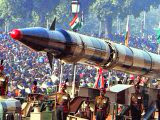
To unravel this mystery, it is important to note the context. Singh was addressing a conference at the Institute for Defense Studies and Analyses (IDSA) titled “A Nuclear Weapon-Free World: From Conception to Reality.” The IDSA is supported by the Indian Ministry of Defense and has been a favored venue for India’s leadership to make important policy declarations on national security. The Indian bureaucracies that deal with foreign policy and security issues often use this forum to articulate their preferences on arms control, nonproliferation, and disarmament issues. It would be natural if these bureaucracies wished to commend the virtues of continuity in policy to the new Indian government headed by Prime Minister Narendra Modi, who took office in May 2014.

Following Singh’s remarks, the then opposition Bharatiya Janata Party (BJP) instantly issued a rejoinder in its election manifesto, stating that the party “believes that the strategic gains acquired by India during the [earlier BJP-led] Atal Behari Vajpayee regime on the nuclear programme have been frittered away by [Singh’s] Congress.” Hence, the BJP pledged to “study in detail India’s nuclear doctrine, and revise and update it, to make it relevant to [the] challenges of current times.”

BJP spokespeople clarified that a review of India’s no-first-use policy would be accorded priority if the party came to power. This evoked great concern in some quarters that the BJP would abandon no first use, which has been a central feature of India’s nuclear doctrine since the country conducted a series of nuclear tests in 1998 and established itself as a nuclear weapons state. The BJP’s Modi, campaigning for the 2014 election, subsequently declared that there would be “no compromise” on no first use, which reflected India’s “cultural inheritance” (whatever that means). But as the respected Economic and Political Weekly commented in an editorial: “Given the BJP’s naturally aggressive posture, such clarifications must be viewed with some scepticism and it is legitimate to explore what may be on the agenda.”

All this rhetoric is par for the course in the heated atmosphere of the Indian electoral process. Disconcertingly, both the Congress party and the BJP have forgotten the historical record. India’s no-first-use policy was originally declared by the BJP and the National Democratic Alliance government after it conducted the May 1998 nuclear tests. The prime minister at the time, Atal Behari Vajpayee, stated thereafter that India would pursue a policy of no first use of nuclear weapons vis-à-vis other nuclear-armed states and would not use these weapons against nonnuclear countries. This restraint was also embedded in the BJP’s draft nuclear doctrine , declared in August 1999, which took several years to be finalized. It was finally endorsed by the Cabinet Committee on Security and officially promulgated in January 2003.

Consequently, India’s no-first-use policy and its nuclear doctrine are BJP formulations. The Congress party adopted them and, with Singh’s April speech, simply sought to extend no first use globally. This makes the BJP’s concern with its own no-first-use policy and nuclear doctrine part of the mystery of Singh’s proposal.

The Limitations of Nuclear Deterrence

There are valid grounds to revisit India’s nuclear doctrine, as much has happened over the intervening years that challenges the assumptions made by the BJP. On the conceptual front, the limitations of nuclear deterrence have become apparent. In important ways, India’s acquisition of nuclear weapons has not increased its security.

While nuclear weapons have obvious relevance for the external dimensions of national security, they cannot ameliorate threats to India’s territorial integrity that arise from domestic discontent or from crossborder militancy and terrorism emanating from Pakistan. In other words, nuclear weapons cannot provide any defense against the subconventional threats to India’s national security from extremist elements within its own territory or, especially, against those who receive moral and material assistance from across the border. As Singh repeatedly warned, the internal threats to India’s national security are critical to its overall national security challenges. Nuclear weapons provide no defense against these dangers.

The evidence in this regard is overwhelming and discernible from continuing unrest in the state of Jammu and Kashmir and in northeast India and from Maoist violence in central and east India. Further, after Pakistan followed suit with its own nuclear tests in 1998, India’s superiority in conventional forces was conspicuously eroded. This can be seen in India’s fitful responses to incidents of crossborder terrorism from Pakistan and its thus far confused approach to the concept of Cold Start and delay in establishing the forces required to operationalize it. [1]

Nuclear deterrence can only provide security against the use of nuclear weapons or a major conventional attack. This ineluctable reality evades India’s strategic elites and its armed forces establishment. They find it hard to accept that nuclear weapons, unlike other weapon systems, are not designed for use and cannot achieve strategic objectives like gaining territory or dominating populations. Moreover, these weapons’ immense destructive potential within very short time frames and their ability to cause genetic mutations over generations ensure that they are essentially meant to deter their use by an adversary. In other words, nuclear deterrence cannot accomplish any vital national security goals other than preventing an adversary from using nuclear weapons.

In a larger sense, no doubt, nuclear deterrence permits peaceful conditions to be established, a situation that is conducive to economic progress and the stimulation of regional trade and commerce. However, an entire spectrum of security threats also arises, ranging from border incursions to subconventional warfare and crossborder terrorism and militancy. Nuclear weapons provide no security against this range of existential security threats.

These fuller implications of the nuclear tests were not thought through before the tests were conducted in 1998. Perhaps these limitations surrounding nuclear deterrence were not knowable in advance. But this belief is questionable. It was known, for instance, that India would be subjected to punitive economic and technological sanctions that would affect its growth and poverty alleviation programs in response to the nuclear tests. Indeed, India’s earlier experience after its so-called “peaceful nuclear explosion” in May 1974 was a forewarning that further nuclear tests would not enable India’s entry into the Nuclear Non-Proliferation Treaty as a nuclear weapons state and that the imposition of more stringent sanctions was certain.

According to available evidence, the decision to conduct the nuclear tests in May 1998 was made by a very small coterie around Vajpayee. He and his advisers believed that India needed to go nuclear to meet the nuclear threats from Pakistan and China, elevate India in the comity of nations, and fulfill the pledge in the BJP’s 1996 election manifesto to conduct nuclear tests if the party came to power. The rest is history: sanctions on India’s civilian nuclear program were reinforced, severely impeding its progress—despite tall claims that the restrictions provided a fillip to indigenous research and development.

India’s Atomic Energy Commission has traditionally argued that sanctions on importing nuclear technology, equipment, and materials from abroad did not hurt, since the commission could harness the human and technical resources available in the country to meet its requirements. This bravado was first expressed after India conducted its 1974 nuclear test. It is clear, however, that despite some limited success, India remained dependent on foreign assistance to establish its nuclear infrastructure. This fact was reflected in the United Progressive Alliance government’s rationale for entering into the Indo-U.S. nuclear deal in 2008, namely to rescue India from its “ nuclear pariah” status and open the way for imports of nuclear materials and technology.

The establishment of nuclear deterrence vis-à-vis Pakistan had only limited value for India’s overall national security. It did not deter Pakistan’s crossborder incursions in winter 1998 and spring 1999 into the Kargil sector of Jammu and Kashmir, which led to a short but intense conflict ending in the ouster of Pakistan’s regular and irregular forces. Pakistan had the advantage of surprise, but its intruders were no match for India’s superior conventional forces, which were brought into the Kargil and neighboring sectors of the Line of Control. Yet despite India’s overwhelming superiority in conventional arms, the effects of nuclear deterrence inhibited it from attacking Pakistan’s lines of communications across the border or from enlarging the theater of conflict along the border to relieve pressure on the beleaguered Kargil sector. Pakistan was disadvantaged by its need to maintain the fiction that militants had conducted these intrusions, and therefore it could not openly deploy its regular forces to defend them. Significantly, these operations revealed that a nuclearized Pakistan had constrained New Delhi from launching a counteroffensive elsewhere along the Line of Control or into Pakistan to relieve pressure on Indian forces in Kargil. New Delhi decided that it would exhibit restraint and not expand the theater of conflict. Political considerations were said to be at play, as India wished to establish that it was a responsible nuclear power by not escalating the conflict.

There was also a subliminal desire among Indian leaders to paint Pakistan into a corner by highlighting its irresponsible conduct in attacking across recognized borders without any provocation. In pursuance of this policy of restraint, the Indian Air Force was given strict orders not to attack Pakistani territory across the Line of Control or enter Pakistan’s airspace. The ground forces were similarly prohibited from expanding the area of conflict along the Line of Control to relieve pressure on the Kargil sector. There is little doubt, however, that this restraint was also informed by New Delhi’s awareness that an escalation of this border conflict could become uncontrollable and lead inexorably toward the nuclear threshold.

Pakistan Ups the Ante

A similar sequence of events inhibited India during its border confrontation crisis with Pakistan after an attack by Pakistan-based militants on the Indian parliament in mid-December 2001. India moved large elements of its armed forces to the India-Pakistan border, where they remained for almost one year. Unable to mount an attack into Pakistan, they returned without achieving anything worthwhile. Again, in November 2008, New Delhi found itself constrained in retaliating against brazen attacks by Pakistan-sponsored militants on several high-profile targets in Mumbai.

More generally, it would seem that Pakistan has acquired virtual impunity in launching terrorist attacks at will into India through organizations that enjoy its patronage, like Lashkar-e-Taiba and Jamaat-ud-Dawa. Admittedly, these groups operate in collaboration with local militants like the Indian Mujahideen, but leadership, funding, training, and sanctuary are provided by Pakistan. Despite grave provocation by these groups, India has been unable to undertake any punitive counterstrike but has sought redress by painting Pakistan into an ideological corner within the international system.

A more general argument against nuclear deterrence was made by the four horsemen, George Shultz, Henry Kissinger, Sam Nunn, and William Perry, in 2007 in theWall Street Journal. “Nuclear weapons were essential to maintaining international security during the Cold War because they were a means of deterrence. The end of the Cold War made the doctrine . . . obsolete. Deterrence continues to be a relevant consideration for many states. . . . But reliance on nuclear weapons for this purpose is becoming increasingly hazardous and decreasingly effective.”

Pakistan’s decision to deploy tactical nuclear weapons in a battlefield mode along the India-Pakistan border can be surmised from a report by Hans M. Kristensen and Robert Norris of the Federation of American Scientists that identified Pakistan and China as either having or developing nonstrategic nuclear weapons. Pakistan had made clear, Kristensen told the Times of India , that it was developing its nuclear-capable Nasr (or Hatf IX) missile “for use against invading Indian troop formations that Pakistan doesn’t have the conventional capabilities to defeat.” These weapons, according to Indian experts, are meant to be used along the border in case of any skirmish with the Indian Army. The Nasr is described as “a 60-kilometer [37-mile] ballistic missile launched from a mobile twin-canister launcher.” According to Pakistan’s Inter Services Public Relations, the Nasr also has “shoot and scoot attributes” to serve as a quick response system to “add deterrence value” to Pakistan’s strategic weapons development program “at shorter ranges . . . to deter evolving threats.”

These developments have highlighted the insufficiency of India’s no-first-use policy to deter Pakistan’s destabilizing strategy. For one thing, this policy articulation frees Pakistan of the uncertainty and angst that India might contemplate the preemptive use of nuclear weapons to deal with terrorist attacks or limited conventional strikes by Pakistan. Pakistan could also go to the extent of deploying its short-range Nasr missile without being concerned that India would target it with its own nuclear missiles. For another, the determinism inherent in India’s nuclear doctrine that any level of nuclear attack will invite massive retaliation is too extreme to gain much credibility. It defies logic to threaten an adversary with nuclear annihilation to deter or defend against a tactical nuclear strike on an advancing military formation.

Moreover, in an adversarial situation between two nuclear powers, recourse to massive retaliation by one side would surely trigger a similar counterattack. How would the mutual annihilation that would undoubtedly ensue serve the ends of national security? This is a question that must induce greater reflection on how to devise a more appropriate strategy to meet Pakistan’s threat of using tactical nuclear weapons in crises along the India-Pakistan border.

Pakistan, for its part, has not countenanced a no-first-use policy on the grounds that the weaker conventionally armed power has to rely on nuclear weapons to ensure its security. However, conventional wisdom warns that deployment of nuclear weapons along the border makes these arms vulnerable to attack, which, in turn, could generate a “use or lose” mentality on the part of their possessor. A related danger that has not been sufficiently articulated is that nuclear missiles situated near the border could become vulnerable to targeting by long-range artillery, apart from special forces operations, highlighting the hair-trigger nature of such deployments. Pakistan argues that locating tactical nuclear weapons along the India-Pakistan border in a state of battle-readiness enables it to counter India’s Cold Start strategy, which envisages positioning offensive, battle-ready forces along the India-Pakistan border to deter any crossborder attack.

In this fashion, according to one nuclear expert, “Pakistan has upped the nuclear ante in South Asia by choosing to adopt tactical nuclear weapons . . . because they lower the nuclear threshold, the point at which nuclear weapons are brought into use. As such, they are straining South Asia’s deterrence stability, the idea that roughly equivalent nuclear capabilities will deter adversaries from using these weapons.” Pakistan claims that deploying its tactical nuclear weapons would provide it with “full spectrum deterrence” against India. Rawalpindi would also be enabled to counter any offensive operations India might contemplate against Pakistan in response to another Mumbai-style terrorist attack.

The particular danger of this deployment pattern is that it creates pressures to delegate to field commanders the authority to use these missiles in a crisis situation. Pakistani authorities insist that no such delegation would be necessary. In the end, and especially with the fog of war intervening, whatever arrangements were thought to control such weapons could never be foolproof. The possibility of human error would have to be accepted. But, with nuclear weapons entering the calculus, such errors could have horrific consequences.

Adding to these uncertainties is the fact that the internal situation in Pakistan has been rapidly deteriorating over the last few years, with extremist and religious fundamentalist groups exercising control over growing areas in the country. Political differences between the military and civilian leaderships in Pakistan are also increasing, with the judiciary functioning not as an umpire but as a third leg in an unstable relationship between elements of the country’s ruling elite. How this increasingly dysfunctional system can implement a responsible nuclear strategy is an open question.

An impasse has now been reached that threatens the stability of India-Pakistan relations. It is arguable that India’s commitment to a no-first-use posture has encouraged Pakistan to adopt its present adventurist strategy, secure in the belief that it could undertake provocative actions without the angst that India might contemplate a nuclear riposte. Its provocative actions would include promoting crossborder militancy and terrorism into India and even brazen actions like the attack on the Indian parliament in 2001 or the Mumbai attacks in 2008. Arguably, the adoption of a deliberately vague policy in regard to nuclear retaliation by India, instead of the certitude of a no-first-use declaration, might have better served India’s overall strategic ends.

Apart from that, the no-first-use policy, which has been incorporated into India’s nuclear doctrine, has several other infirmities.

An Inadequate Doctrine

The decision by the Cabinet Committee on Security to endorse India’s nuclear doctrine makes clear that India will use nuclear weapons only to retaliate against a nuclear attack on its territories or on Indian forces anywhere; that nuclear weapons will not be used against nonnuclear states; but that, in the event of a major attack by biological or chemical weapons, India retains the option of retaliating with nuclear weapons. This enumeration of India’s qualified no-first-use policy doctrine is flawed on several counts.

First, it does not address the possibility of an attack by nonstate actors, which is the present and imminent danger. Would the country hosting those nonstate actors be targeted following such an attack? And how would India address an attack by an international organization like al-Qaeda that is situated in several countries in the proximity of India?

Second, how would a “major attack” with biological or chemical weapons be identified? What is “major” and what is “minor” is debatable. This issue is significant since biological and chemical weapons are not truly weapons of mass destruction, but they are certainly weapons of mass disruption. Nonstate actors might favor these weapons due to the comparative ease of their manufacture, concealment, and transportation.

Third, serious difficulties arise in any attempt to identify the perpetrator of a biological or chemical weapons attack that could be undertaken by state or nonstate actors or, not inconceivably, by a nonstate actor assisted by a state actor. This issue is ultimately a question of reliable forensics, which is at a rudimentary stage of development. The difficulty in identifying those guilty of chemical weapon attacks in Syria is instructive here.

India’s no-first-use declaration cannot be separated from the country’s overall nuclear doctrine as it has been articulated since 1999. Inadequate as it is, this doctrine deserves to be reviewed in the light of changes over the past fifteen years.

The current nuclear doctrine dictates that nuclear retaliation against a first strike would be “massive” and designed to inflict “unacceptable damage” upon the attacker. This is an unrealistic certitude because, ethically, punishing large numbers of noncombatants contravenes the laws of war. Besides, threatening massive retaliation against any level of nuclear attack, which would inevitably trigger assured nuclear annihilation in a binary adversarial situation, is hardly a credible option. No doubt, it raises a ticklish question: Would India then favor a counterforce or countercity strategy? India’s stated adherence to an assured and massive second strike suggests the latter.

However, in addition to the other infirmities of a massive retaliation response, the uncomfortable reality is that the trade winds in May–September associated with the southwest monsoon blow from Pakistan into northern India. Consequently, secondary and tertiary radiation from a nuclear attack launched by India against Pakistan in these months would blow back into India’s agriculturally rich Punjab and Haryana states and, indeed, into New Delhi. India therefore faces a huge time constraint to mount a massive nuclear attack into Pakistan. Operationally, too, destroying the territory in dispute is feckless.

In a nuclear adversarial situation, moreover, the inevitability of mutual destruction must also be considered. Is a counterforce attack on the adversary’s military formations and assets the answer? The issue of uncontrollable escalation then arises, for which there is no reassuring answer. Leaving the problem of how India should retaliate to a nuclear first strike to the discretion of the prime minister would provide greater flexibility to mount the counterattack instead of threatening assured nuclear annihilation, which is just not credible.

India’s present chain of command with respect to nuclear weapons functions under the rubric of a Nuclear Command Authority and a Strategic Forces Command. The prime minister has been designated as the “release authority.” He has the unequivocal authority to decide whether, when, and how to use nuclear weapons. A Political Council headed by the prime minister constitutes the apex of this command structure. An Executive Council headed by the national security adviser serves the Political Council. Its composition includes the service chiefs and relevant government secretaries, including the scientific adviser to the prime minister.

The Strategic Forces Command is headed by a commander-in-chief; the incumbent comes from one of the three services of the Indian Armed Forces, on a rotating basis. The Strategic Forces Command is located within the Integrated Defense Headquarters in the Ministry of Defense. But it also functions under the Chiefs of Staff Committee. Its chairman is the most senior service chief, which ensures that the post rotates among the three services, without any fixed tenure. A conscious effort is evident, however, to assert the primacy of civilian control over the military at all levels of the nuclear command structure.

The element of doubt arising in this arrangement is that a tri-service command like the Strategic Forces Command should, logically, function under a single line of authority representing the three services, like a chief of defense staff, who would be a single-point adviser to the government on sensitive security issues. The proposal to establish a chief of defense staff, incidentally, is of ancient vintage and can be traced back to the Sino-Indian border conflict of 1962. The option of a chief of defense staff has been recommended by numerous inquiry committees, notably theArun Singh Committee on defense expenditure (in 1990) and, most recently, theNaresh Chandra Committee on national security. [2]

But this proposal to appoint a chief of defense staff who could provide a unified service view to the government on sensitive issues continues to languish since it has been resolutely opposed by the Indian Navy and Air Force. The attitude of the Ministry of Defense and the Government of India, which could force through a decision, can at best be described as studied insouciance. It remains unclear in these circumstances whether, in a crisis situation, the strategic forces commander would report to the chairman of the Chiefs of Staff Committee, which would be an unsatisfactory arrangement as far as civilian control is concerned, or whether he would report directly to the national security adviser and the Executive Council, which is equally unsatisfactory from an interservice coordination perspective.

It is for these reasons that it makes more sense for the decision about whether, when, and how to retaliate against a nuclear attack to remain the prime minister’s. Moreover, time would clearly be at a premium in a crisis situation. A committee system of decisionmaking is hardly suited to handle a fast-developing situation. Providing the “release authority” the greatest flexibility to decide how to mount the counterattack, according to the exigencies of the situation, provides a more workable solution to this problem.

The present doctrine fetishizes acquisition of a “credible minimum deterrent.” But India is seeking a force structure that is no different from that established by the United States or the former Soviet Union. India seeks a strategic triad comprising land-based, airborne, and underwater nuclear weapon systems that will require increasing resources.

It is arguable whether India’s strategic circumstances require a naval component for its deterrent or whether the country requires only a submarine-based deterrent, on the assumption that the nuclear deterrent posture ultimately rests on the survivability of the nuclear arsenal. Land- and air-based systems are more vulnerable to counterattack and destruction than submarine-based missiles are. That leads to the argument that taking the deterrent out to sea would ensure the acquisition of an invulnerable second strike capability. This question has not been seriously discussed in India, resulting in vociferous demands from the three services that the government concede some component of the nuclear deterrent to each of them.

Criticism is widespread that there is little transparency about the size and structure of India’s nuclear forces and what its credible minimum deterrent comprises in terms of weapons systems. Instead of debating this issue, official spokesmen have argued that it is impossible to define what a credible minimum deterrent requires since there can be no “fixity” in this regard, which suggests that the contours of the credible minimum deterrent are a moving target. Incidentally, India’s armed forces have been kept out of the nuclear decisionmaking process; hence, there is a touch of unreality about these declarations on nuclear force structures.

The survival of the chain of command also needs to be credibly ensured and made more transparent to provide leadership continuity in all eventualities. To achieve this objective, the Strategic Forces Command should be enjoined to maintain survivable, dispersed, and sheltered communications with multiple redundancies. Appropriate measures must be taken to ensure the safety and security of the nuclear stockpile at all times.

Conclusion

It should be emphasized that neither former Indian prime minister Manmohan Singh’s last-ditch attempt to universalize India’s qualified no-first-use policy nor the confusions created by BJP protagonists regarding their commitment to this policy are to be commended. A detailed study of India’s nuclear doctrine is required to address all the relevant issues in their totality.

Clearly, none of the underlying issues that bedevil the nuclear doctrine allows for easy answers. For instance, the question of whether the retaliatory nuclear counterattack should pursue a counterforce or countercity strategy can be argued interminably.

However, a reasoned debate on this and other controversial issues is overdue. India’s nuclear doctrine is not cast in tablets of stone. Circumstances change, making periodical reviews of the nuclear doctrine essential. India’s nuclear doctrine has not been revisited for over a decade. The issues that suggest themselves for review are India’s command-and-control arrangements, which require greater clarity; the threat held out of assured massive retaliation, which forebodes self-annihilation; imparting greater content to the objective of credible minimum deterrence; and revisiting or abandoning the no-first-use policy in light of its numerous deficiencies.

It would also be realistic to appreciate that India’s major nuclear security problems arise not from the postulates of its nuclear doctrine but from the complexities of its geostrategic situation. India confronts two nuclear adversaries—Pakistan and China—that enjoy close relations with each other. It is clear that Pakistan’s nuclear weapons are unequivocally directed against India and are under the command and control of the Pakistan Army. But the negotiation of nuclear issues and confidence-building measures has been left to Pakistan’s civilian bureaucracy, which clearly lacks authority and functions under the close supervision of the army. How, then, should India negotiate?

There is a global consensus that the real danger from Pakistan’s nuclear weapons emanates from militants gaining control over them. The impunity with which militants have attacked military installations and headquarters in Pakistan reveals the inability of the country’s armed forces to defend themselves, as well as the likely existence of insider collusion with nonstate actors. Still, the Pakistani establishment chooses to externalize its difficulties by undertaking dangerous maneuvers like developing its short-range Nasr missile for a tactical role, which is universally condemned as highly destabilizing.

The recent debate in India on reviewing the country’s no-first-use policy and its nuclear doctrine might only signify preelection rhetoric. But the essential problem that remains and will tax the government of Narendra Modi is how India plans to credibly engage Pakistan in the interests of nuclear stability in South Asia. More


Wednesday, April 23, 2014

A race to the top in nuclear security strategy by Kenneth Loungo

The possibility of a nuclear terrorist attack has been called a black swan occurrence, an unlikely but possible event that is the national security nightmare that keeps President Obama— and other world leaders—up at night.

It Is 5 minutes to midnight

At a closed-door session of the Nuclear Security Summit in The Hague last month, the assembled leaders were challenged to respond to terrorist nuclear attack scenarios. The goal was to focus them on the serious security and financial consequences that would affect all nations if poorly secured nuclear materials fell into the wrong hands.

They defeated the virtual dangers through collective action. After three summits and six years, however, it is clear that real-world international cooperation and consensus on nuclear security remains weak. And focusing on the threat alone has proven insufficient motivation for significantly improving global defenses against nuclear terrorism.

In advance of the likely final summit in 2016, the fear of nuclear terrorism should be redirected into a global nuclear security “race to the top.” The concept of a race to the top would flip the incentives in favor of showcasing nuclear security improvement and raise the overall expectation of what can and should be done. Posing this challenge could eradicate the lowest-common-denominator approach of past summits, and help eliminate the significant security vulnerabilities that now exist. A “race to the top” should change the narrative from risk to responsibility, and incorporate regional cooperation and competition, incentives for action, and rewards for superior performance. The rewards for demonstrating maximally effective nuclear security can include a special acknowledgment at the next summit, a certification for those nations that confirm their improved performance, and an opportunity to address their peers and the media on why and how they chose to improve.

A good place to start this race to the top is among the 35 nations that signed on to a new agreement in The Hague to strengthen nuclear security implementation, known as the Trilateral Initiative. Sponsored by the three Nuclear Security Summit hosts—the Netherlands, South Korea, and the United States—the initiative’s signatories agreed to implement the major recommendations of the International Atomic Energy Agency (IAEA) for nuclear and radiological source security. But the initiative goes further by underscoring that nuclear security is an international responsibility as well as a national one, and encouraging the signatories to “assess new ideas to improve the nuclear security regimes.” In addition, a new section of the summit communiqué on “voluntary measures” identified actions that countries can take to show that they are implementing effective security.

While the full implementation of the IAEA recommendations will be valuable, that alone will not eliminate all the weak links in the global nuclear security system. The current architecture does not include any binding standards for security performance; any mandatory, regularized and objective assessment of security effectiveness on a global basis; or any requirement that nations take steps to build international confidence in their security systems by providing non-sensitive information on their planning and practices. In addition, some major nuclear states—including Russia, China, India and Pakistan—did not sign the initiative, thereby exempting the world’s largest fissile material stockpile and the fastest-growing ones from its scope. Also left unclear is how the signatories will demonstrate implementation of their commitments.

To address these shortcomings and succeed in the race to the top, the Trilateral Initiative signatories should take five steps leading up to the 2016 summit.

First, nations must be willing to share non-sensitive security information to help build higher levels of international confidence in global nuclear security. The details on facility vulnerabilities, the specific threat spectrum to be defended against, and how precisely that is done is not information that can or should be openly shared. But other information is less sensitive. For example: How are countries fully implementing the IAEA’s physical protection recommendations beyond their previous actions? If they are participating in a peer review process with the IAEA or others, how have they implemented the resulting recommendations? Have they completed a comprehensive threat analysis? Can they demonstrate the independence of their regulatory apparatus? Do they “red team” the security at their facilities to independently assess its adequacy?

Second, the signatories should create a peer review process on a regional basis or among politically likeminded nations that can supplement the IAEA’s efforts. The Agency offers to assess nuclear security if it is invited by a member state. But it has a limited capacity to do these assessments, and their results remain confidential unless a country agrees to release the information. This is a very different peer-review system than the multilateral approach under the nuclear-reactor safety regime, where nations are mandated to produce periodic reports, and other governments review them and make recommendations. The nuclear-reactor safety model is one that should be emulated by the new initiative’s adherents. .

Third, states should determine what best security practices are most suitable for their needs and culture. Nuclear security approaches are not one-size-fits-all. There should be common performance standards, but the implementation of those objectives can be individually determined by each nation. For example, some nations in Asia do not have armed guards at facilities and perform only minimal background checks on employees. It probably is not realistic to expect significant changes in a nation’s gun laws, but off-site guards with weapons should be trained to quickly respond.

Fourth, by fully implementing the IAEA’s recommendations and acceding to the few binding treaties that exist, the initiative’s supporters can de facto begin the process of creating common international standards for nuclear security. These voluntary actions can avoid the need for unpopular new mandates in the near term, but lead to new norms of international behavior that then can ultimately result in universalized global security standards. The lack of any binding, common criteria for nuclear security is one of the most significant obstacles when attempting to measure concrete progress on a global basis.

Finally, as part of the commitment to assess new ideas for nuclear security improvement under the Trilateral Initiative, serious consideration must be given to establishing a legally binding framework convention on nuclear security that will complement the current regime. The convention will have two important substantive objectives—to eliminate gaps in the current regime so that the resulting architecture is harmonized, strengthened, and made adaptable and sustainable, and to standardize security performance requirements so that progress can be measured. A convention would also have significant political value by maintaining high-level attention to nuclear security and supporting the process of continuous improvement after the summits’ end.

At the end of the summit in The Hague, Obama called upon his colleagues to “finish strong” by marshaling the political will to take necessary actions leading up to the 2016 summit. Engaging in a nuclear security race to the top over the next two years will demonstrate that countries understand that radiation from a terrorist attack or sabotage will not respect any nation’s borders. There needs to be a much more aggressive global effort to prevent it. And the summit at The Hague has provided a vehicle to do it. More


Tuesday, March 11, 2014

Onagawa: The Japanese nuclear power plant that didn’t melt down on 3/11

Three years ago, the biggest recorded earthquake in Japanese history hit Tohoku prefecture, leaving more than 20,000 people dead or missing. On the heels of the destructive magnitude 9.0 earthquake came a tsunami that reached a run-up height of 30 meters in some areas, sweeping entire towns away in seconds.


Within the affected area were three nuclear power plants: the Fukushima Daiichi and Daini nuclear power plants operated by the Tokyo Electric Power Company (Tepco), and the Onagawa Nuclear Power Station operated by the Tohoku Electric Power Company. While the three power stations shared similar disaster conditions, nuclear reactor types, dates of operation, and an identical regulatory regime, their fates were very different. The Fukushima Daiichi plant experienced fatal meltdowns and radiation releases. Fukushima Daini was damaged by the earthquake and tsunami, but the heroic efforts and improvisations of its operators resulted in the cold shutdown of all four operating reactors. Onagawa managed to remain generally intact, despite its proximity to the epicenter of the enormous earthquake.

“The earthquake and tsunami of March 11, 2011, were natural disasters of a magnitude that shocked the entire world. Although triggered by these cataclysmic events, the subsequent accident at the Fukushima Daiichi Nuclear Power Plant cannot be regarded as a natural disaster. It was a profoundly manmade disaster—that could and should have been foreseen and prevented.” - Kiyoshi Kurokawa, “Message from the Chairman,” The Official Report of The Fukushima Nuclear Accident Independent Investigation Commission


Everyone knows the name Fukushima, but few people, even in Japan, are familiar with the Onagawa power station. Fewer still know how Onagawa managed to avoid disaster. According to a report by the International Atomic Energy Agency mission that visited Onagawa and evaluated its performance, “the plant experienced very high levels of ground motion—the strongest shaking that any nuclear plant has ever experienced from an earthquake,” but it “shut down safely” and was “remarkably undamaged.”


Most people believe that Fukushima Daiichi’s meltdowns were predominantly due to the earthquake and tsunami. The survival of Onagawa, however, suggests otherwise. Onagawa was only 123 kilometers away from the epicenter—60 kilometers closer than Fukushima Daiichi—and the difference in seismic intensity at the two plants was negligible. Furthermore, the tsunami was bigger at Onagawa, reaching a height of 14.3 meters, compared with 13.1 meters at Fukushima Daiichi. The difference in outcomes at the two plants reveals the root cause of Fukushima Daiichi’s failures: the utility’s corporate “safety culture.”


Higher ground. While the Fukushima Daiichi and Onagawa plants are similar in many ways, the most obvious difference is that Tohoku Electric constructed Onagawa’s reactor buildings at a higher elevation than Tepco’s Fukushima reactor buildings. Before beginning construction, Tohoku Electric conducted surveys and simulations aimed at predicting tsunami levels. The initial predictions showed that tsunamis in the region historically had an average height of about 3 meters. Based on that, the company constructed its plant at 14.7 meters above sea level, almost five times that height. As more research was done, the estimated tsunami levels climbed higher, and Tohoku Electric conducted periodic checkups based on the new estimates.


Tepco, on the other hand, to make it easier to transport equipment and to save construction costs, in 1967 removed 25 meters from the 35-meter natural seawall of the Daiichi plant site and built the reactor buildings at a much lower elevation of 10 meters. According to the National Diet of Japan’s Fukushima Nuclear Accident Independent Investigation Commission (NAIIC), the initial construction was based on existing seismological information, but later research showed that tsunami levels had been underestimated. While Tohoku Electric learned from past earthquakes and tsunamis—including one in Chile on February 28, 2010—and continuously improved its countermeasures, Tepco overlooked these warnings. According to the NAIIC report, Tepco “resorted to delaying tactics, such as presenting alternative scientific studies and lobbying.”


Tepco’s tsunami risk characterization and assessment was, in the judgment of one the world’s renowned tsunami experts, Costas Synolakis, director of the Tsunami Research Center at the University of Southern California, a “cascade of stupid errors that led to the disaster.”


Emergency response. Tohoku Electric also took a different approach to emergency response—one that was more organized, collaborative, and controlled than Tepco’s. Tohoku Electric established an emergency response center at the Onagawa plant, as well as at company headquarters, immediately after the earthquake. Throughout the disaster, headquarters supported the plant operators minute by minute. Supervisors and chief engineers were dispatched to the main control rooms of the damaged reactors to make decisions, and information was sent in a timely manner to all levels of the response team.


Why did the Tohoku Electric team remain more poised and unified than their counterparts at Tepco? According to the Nippon Telegraph and Telephone Facilities Research Institute, Yanosuke Hirai, vice president of Tohoku Electric from 1960 to 1975—a time period that preceded the 1980 groundbreaking at Onagawa—was adamant about safety protocols and became a member of the Coastal Institution Research Association in 1963 because of his concern about the importance of protecting against natural disasters. With a senior employee in upper management advocating forcefully for safety, a strong safety culture formed within the company. Representatives of Tohoku Electric participated in seminars and panel discussions about earthquake and tsunami disaster prevention held by the Japan Nuclear Energy Safety Organization. The company implemented strict protocols for disaster response, and all workers were familiar with the steps to be taken when a tsunami was approaching.


These initiatives were not part of Tepco’s culture. The company had a mindset that its domination in the electricity industry was an indication of flawlessness. After the disaster, Hasuike Tooru, the former president of Tepco, described how management decided to lengthen the expected lifetime of power plants, even if there were severe safety consequences.


Safety culture. Government investigations of the Fukushima accident, as well as a statement by US Nuclear Regulatory Commission (NRC) chairwoman Allison MacFarlane, have explicitly acknowledged the vital role of safety culture, which the NRC has defined as “the core values and behaviors resulting from a collective commitment by leaders and individuals to emphasize safety over competing goals to ensure protection of people and the environment.”


The NAIIC report described the Fukushima accident as “made in Japan,” because Japan’s nuclear industry failed to absorb the lessons learned from Three Mile Island and Chernobyl. In the words of NAIIC chairman Kiyoshi Kurokawa, “It was this mindset that led to the disaster.” Safety culture has also been implicated as a primary root cause of the Chernobyl accident.


The Fukushima Daiichi Nuclear Power Station’s meltdowns were not due to the natural disaster, but rather to a series of decisions by Tepco not to be proactive with safety, dating back to when the reactors were being constructed. With most other factors being similar, it was Tokohu Electric’s overall organizational practices and safety culture that saved the day for Onagawa. If safety and disaster response had been properly recognized, addressed, and implemented at Fukushima Daiichi—as they were within Tohoku Electric’s corporate safety culture—perhaps the disastrous meltdowns would have been prevented.


Editor's note: This article is adapted from a research paper based on material available in the public domain in Japan and the United States; the full version of the paper can be found here.


Friday, January 3, 2014

AREVA, EDF sign accords for Saudi nuclear program

RIYADH - EDF and AREVA signed two sets of agreements aimed at supporting the Saudi nuclear energy program on Monday, coinciding with the visit of French President François Hollande's to Riyadh. The two companies have signed Memorandums of Understanding (MoUs) with 5 Saudi industrial partners - Zamil Steel, Bahra Cables, Riyadh Cables, Saudi Pumps, Descon Olayan.

The agreements aim to develop the industrial and technical skills of local companies. They reflect AREVA and EDF's desire to build an extended network of Saudi suppliers for future nuclear projects in the country.

A second series of agreements signed with 4 Saudi universities - King Saud University in Riyadh, Dar Al Hekma College and Effat University in Jeddah and finally Prince Mohammed bin Fahd University in Al-Khobar - are intended to contribute to the development of nuclear expertise in the Kingdom.

These agreements follow on from the previous operations organized by EDF and AREVA, through their joint office in Riyadh. These include the "Suppliers' Days" in March and October 2013, the visit to France by Saudi industrial companies in November, the agreement signed with the local professional training institute (NIT) in July 2013, the visits to French nuclear facilities organized for Saudi university faculty members in June 2013 and internship offers made to Saudi students since the summer.

EDF CEO Henri Proglio said: "These new agreements underline EDF and AREVA's commitment alongside the Kingdom of Saudi Arabia to enable it to successfully implement its national energy strategy and in particular to develop its future nuclear program by contributing to the development of a local network of manufacturers and by training qualified engineers."

Luc Oursel, President and CEO of AREVA, added: "These agreements demonstrate the common will of EDF and AREVA to establish a true long-term partnership with the Kingdom of Saudi Arabia. They will enable the country to build a strong industrial base and a robust skills management program."

The EDF group, one of the leaders in the European energy market, is an integrated energy company active in all areas of the business: generation, transmission, distribution, energy supply and trading. The Group is the leading electricity producer in Europe. In France, it has mainly nuclear and hydropower generation facilities where 95.9 percent of the electricity output is CO2-free.

AREVA supplies advanced technology solutions for power generation with less carbon. Its expertise and unwavering insistence on safety, security, transparency and ethics are setting the standard, and its responsible development is anchored in a process of continuous improvement. Ranked first in the global nuclear power industry, AREVA's unique integrated offering to utilities covers every stage of the fuel cycle, nuclear reactor design and construction, and operating services. The group is actively developing its activities in renewable energies - wind, bioenergy, solar and energy storage - to become a European leader in this sector. More


Monday, December 30, 2013

Why Saudi Arabia and the U.S. don’t see eye to eye in the Middle East

Give credit to Vladimir Putin and his New York Times op-ed on Syria for sparking a new tactic for foreign leaders hoping to influence American public opinion. In recent weeks, Saudi Arabian political elites have followed Putin’s lead, using American outlets to express their distaste with the West’s foreign policy, particularly with regard to Syria and Iran.

In comments to the Wall Street Journal, prominent Saudi Prince Turki al-Faisal decried the United States for cutting a preliminary deal with Iran on its nuclear program without giving the Saudis a seat at the table, and for Washington’s unwillingness to oppose Assad in the wake of the atrocities he’s committed. Saudi Arabia’s ambassador to Britain followed with an op-ed in the New York Times entitled “Saudi Arabia Will Go It Alone.” The Saudis are clearly upholding the vow made by intelligence chief Bandar bin Sultan back in October to undergo a “major shift” away from the United States.

In light of the recent actions of the Obama administration, many allies are also frustrated and confused, and even hedging their bets in reaction to the United States’ increasingly unpredictable foreign policy. But of all the disappointed countries, none is more so than Saudi Arabia — and with good reason. That’s because the two countries have shared interests historically — but not core values — and those interests have recently diverged.

First, America’s track record in the Middle East in recent years has sowed distrust. The relationship began to deteriorate with the United States’ initial response to the Arab Spring, where its perceived pro-democratic stance stood at odds with the Saudi ruling elite. After Washington stood behind the elections that installed a Muslim Brotherhood government in Egypt and then spoke out against the Egyptian army’s attempt to remove President Mohammad Morsi, the Saudi royals were left to wonder where Washington would stand if similar unrest broke out on their soil.

Ian Bremmer

Second, while the oil trade has historically aligned U.S.-Saudi interests, the unconventional energy breakthrough in North America is calling this into question. The United States and Canada are utilizing hydraulic fracturing and horizontal drilling techniques, leading to a surge in domestic energy production. That development leaves America significantly less dependent on oil from the Middle East, and contributes to the U.S.’ shifting interests and increasing disengagement in the region. Not only does Saudi Arabia lose influence in Washington — many of the top American executives in the oil industry were their best conduits — but it also puts the Saudis on the wrong end of this long-term trend toward increasing global energy supply.

To say that oil is an integral part of Saudi Arabia’s economy is a gross understatement. Oil still accounts for 45 percent of Saudi GDP, 80 percent of budget revenue, and 90 percent of exports. In the months ahead, new oil supply is expected to outstrip new demand, largely on the back of improvements in output in Iraq and Libya. By the end of the first quarter of 2014, Saudi Arabia will likely have to reduce production to keep prices stable. And the trend toward more supply doesn’t take into account the potential for a comprehensive Iranian nuclear deal that would begin to ease sanctions and allow more Iranian crude to reach global markets.

It is this ongoing nuclear negotiation with Iran that poses the principal threat to an aligned United States and Saudi Arabia. An Iranian deal would undercut Saudi Arabia’s leadership over fellow Gulf States, as other Gulf Cooperation Council (GCC) members like Kuwait and the UAE would welcome resurgent trade with Iran. At the same time, Iran would emerge over the longer term as the chief competitor for influence across the broader region, serving as the nexus of Shi’ite power. The Saudis would find themselves most directly threatened by this Shi’ite resurgence within neighboring Bahrain, a majority Shi’ite state ruled by a Sunni regime that is backstopped by the Saudi royals.

The bottom line: the Saudis are actively competing with Iran for influence throughout the Middle East. That’s why the Saudis have the most at stake from any easing of sanctions on Iran, any normalization of relations with the West, or any nuclear breakthrough that gives Iran the ultimate security bargaining chip. The Saudis have reaped the benefits of an economically weak Iran — and they are not prepared to relinquish that advantage. Ultimately, any deal that exchanges Iranian economic security for delays in Iran’s nuclear program is a fundamental problem for Saudi Arabia — as is any failed deal that allows sanctions to unravel.

For all of these reasons, even though the United States will be buying Saudi oil for years to come and will still sell the Saudis weapons, American policy in the Middle East has now made the United States more hostile to Saudi interests than any other major country outside the region. That’s why the Saudis have been so vocal about the United States’ perceived policy failures.

But to say Obama has messed up the Middle East is a serious overstatement. What he has tried to do is avoid getting too involved in a messed up Middle East. Obama ended the war in Iraq. In Libya, he did everything possible to remain on the sidelines, not engaging until the GCC and Arab League beseeched him to — and even then, only in a role of “leading from behind” the French and the British.

Call the Obama policy “engaging to disengage.” In Syria, Obama did everything possible to stay out despite the damage to his international credibility. When the prospect for a chemical weapons agreement arose, he leapt at the chance to point to a tangible achievement that could justify the U.S. remaining a spectator to the broader civil war. In Iran, a key goal of Obama’s diplomatic engagement will be to avoid the use of military force down the road. It hasn’t always been pretty, but Obama has at least been trying to act in the best interests of the United States — interests that are diverging from Saudi Arabia’s. More


Monday, September 23, 2013

North African Countries Commit to Cooperative Management of Nubian Aquifer read more: http://land-l.iisd.org/news/north-african-countries-commit-to-cooperative-management-of-nubian-aquifer/

18 September 2013: Chad, Egypt, Libya and Sudan signed a Strategic Action Programme to establish a long-term framework for managing the Nubian Sandstone Aquifer System (NSAS), the world's largest known fossil water aquifer system.


The agreement establishes a Joint Authority for the NSAS, with the aim of strengthening regional coordination and optimizing equitable use among the four arid North African countries.


The Aquifer is the main water resource for humans, livestock, irrigation and industry in this region, and is under pressure from increasing populations, agricultural expansion and decreasing water availability from other sources. The agreement seeks to strengthen transboundary water cooperation among the four countries to ensure water removal does not threaten water quality, harm the surrounding desert ecosystem and its biodiversity, or accelerate land degradation. The agreement is based on an ecosystem-based management approach (EBMA) and integrated water resources management (IWRM), and includes transboundary actions and targets that individual countries are expected to translate into national actions.


The agreement resulted from a technical cooperation project among the International Atomic Energy Agency (IAEA), the UN Development Programme (UNDP), the Global Environment Facility (GEF) and the UN Educational, Scientific and Cultural Organization (UNESCO). The project, which began in 2006, created an aquifer model to assist the countries in optimizing the aquifer's use for human needs and ecosystem protection. The project also improved understanding of the transboundary ecosystem threats and improved data sharing. The Programme will build upon this project by continuing to strengthen the countries' capacity to monitor groundwater quantity and quality, and providing a framework for transboundary cooperation.


UNDP Administrator Helen Clark congratulated the African countries on the agreement, saying cooperative management of their shared sub-surface waters “will help to ensure maintenance of livelihoods and ecosystems dependent upon the aquifer." The agreement was signed at IAEA headquarters in Vienna, Austria. [UN Press Release] [UNDP Press Release] [GEF Press Release] [Strategic Action Programme Agreement]


More:


Friday, June 7, 2013

San Onofre California nuclear plant to shut

A California nuclear power plant will close permanently amid doubts it could operate safely, 18 months after a small radiation leak was discovered.

The San Onofre plant near Los Angeles halted operations in January 2012 after radioactive water tubes were damaged.

Operator Southern California Edison has faced a series of regulatory inquiries.

San Onofre powered 1.4 million homes but regulators say they can supply sufficient electricity through the summer barring threats to other plants.

"[The plant] has served this region for over 40 years," Chief Executive Ted Craver of parent company Edison International said in a statement.

"But we have concluded that the continuing uncertainty about when or if [the plant] might return to service was not good for our customers, our investors, or the need to plan for our region's long-term electricity needs."

With the plant off-line, officials have warned the wildfires that regularly scorch Southern California during the dry summer months could cause power shortages.

Over the last eight months Southern California Edison had sought permission from the federal Nuclear Regulatory Commission (NRC) to restart one reactor and run it at reduced power for five months, in hopes of stopping the vibrations that had damaged the tubing. More


Monday, March 18, 2013

Yesterday: Iraq. Tomorrow: Iran?

It was 10 years ago this week that George Bush launched his ill-fated war of choice in Iraq. The anniversary comes as politicians in Washington and Israel continue to discuss the option of military action against Iran.

The parallels with a decade ago are striking.

Once again, we hear claims of a grave threat from weapons of mass destruction in the Middle East and the possibility of military action. Vice President Joe Biden recently told the convention of the American Israeli Political Action Committee (AIPAC) that “all options, including military force, are on the table.”

Then as now we are warned of the need to take action before it’s too late. Israeli Prime Minister Netanyahu sent a video message to the AIPAC convention claiming that Iran will soon cross a nuclear “red line.”

We’ve heard this story before.

Who can forget Secretary of State Condoleezza Rice’s infamous line “we can’t wait for the smoking gun to be a nuclear mushroom cloud”? Or Defense Secretary Donald Rumsfeld’s ludicrous attempt to explain the whereabouts of Iraq’s WMD: “They’re in the area around Tikrit and Baghdad and east, west, south and north somewhat.”

Some of us reported at the time that no evidence existed of Iraqi WMD, and that UN inspections during the 1990s had dismantled Saddam Hussein’s nuclear, ballistic missile and chemical weapons threat, but our voices were ignored in the march to war. Official investigations during the occupation confirmed the complete absence of any WMD threat.

Some politicians apparently never learn.

Today, prominent Democratic and Republican senators are lining up behind Senate Resolution 65, which declares that “if the Government of Israel is compelled to take military action in self-defense, the United States Government should stand with Israel and provide diplomatic, military, and economic support.” The resolution is in effect a backdoor authorization for war. It sets the stage for the United States being dragged into a future Israeli attack on Iran.

One of the authors of the resolution is Democratic New York Senator Charles Schumer. The senator was sharply critical of George Bush’s handling of the Iraq war, but now he is resorting to Bush-style misrepresentation to justify a potential attack on Iran. According to Jamal Abdi of the National Iranian American Council, Schumer is telling constituents that Iran “continues to enrich uranium into weapons-grade nuclear materials” and that the resulting fuel is “sufficient to arm a nuclear warhead.”

Not true.

The International Atomic Energy Agency reports regularly on Iran and has no evidence of uranium enrichment to weapons-grade level. This past week the Director of National Intelligence James Clapper was on Capitol Hill to repeat what U.S. intelligence agencies have reported consistently for years: Iran is not enriching uranium to weapons grade and has not made a decision to build a bomb. Of course, real concerns exist about Tehran’s nuclear program, but there is no imminent nuclear threat from Iran or justification for threatening military attack. More