Showing posts with label poverty. Show all posts

Sunday, May 3, 2015

Building Climate Resilience in Conflict-Affected States: A Neglected Agenda

Climate change adaptation and mitigation efforts face many obstacles in fragile and conflict-affected societies. Instead of writing off these situations, however, International Alert’s Janani Vivekananda, Janpeter Schilling, and Dan Smith suggest approaching aid and development differently to proactively build resilience and simultaneously advance climate, development, and peacebuilding goals.

The interlinked challenges of climate change, poverty, and conflict legacies are recognized by academic and practitioner communities. But too often the focus has been limited to unpacking causal connections between climate change and the outbreak of violent conflict. While this emphasis garners significant attention (and much academic infighting), it largely fails to engage on the practical questions of how to respond effectively to climate change and poverty in conflict-affected states.

The concept of resilience, Vivekananda et al. write, is critically important in this context, as it connects disparate government and development efforts in service of society as a whole. Understanding the “intermediate” factors that already make a society vulnerable to conflict – poor governance, geopolitics, poverty, inequality – is vital to creating positive development, adaptation, and peacebuilding policies.

Context Is Everything

Understanding the local variation of societies, the “contextual complexities,” should be the first step for any resilience-building operation, the authors write. Local and national-level dynamics need to be considered in tandem to understand how changes in one place might affect elsewhere.

Experience in Nepal provides useful lessons. Nepal is one of the most vulnerable states to climate change and environmental risks in the world. An International Alert case study explores how aid designed to combat food insecurity there ended up undermining adaptive capacity. Rice paddies were created in communities that previously relied on other forms of agriculture, consequently creating a dependency and expectation for more due to the positive social implications that come with having rice in the diet. The shift to rice farming also increased the demand for water.

The study highlights how this change combined with climate-induced changes to rainfall has resulted in water shortages. The reduction of a specific resource in a setting already undergoing environmental change affected community resilience in a negative way. Greater contextual awareness of the implications of such a fundamental change to agriculture might have enabled the government and local communities to avoid such a “backdraft” effect.

Cross-Discipline Analysis

Climate change brings with it a new degree of uncertainty and unpredictability. Informal or formal institutions that embrace the complexities and flux will help societies do the same.

To adjust, Vivekananda and colleagues suggest better collaboration to break down existing institutional barriers and stovepipes between institutions. Multidisciplinary and integrated development efforts increase the likelihood of coherent climate and conflict-sensitive approaches to development, peacebuilding, and humanitarian actions. In turn, collaborative efforts are more likely to build long-term resilience, as communities rarely face a single risk in isolation, as highlighted in the Nepal case.

Academic fields, they suggest, should work towards common risk analyses. This integration entails the identification of possible negative outcomes, such as conflict; the determination of origins of said negative outcomes, such as political instability or environmental change; and shared evaluation amongst disciplines about how to fix the problem.

Vivekananda et al. work through the negative cycle that can emerge when climate change leads to conflict. Existing fragility can increase vulnerability and human insecurity, potentially leading to conflict. Identifying what makes a society fragile in the first place will provide more transparency regarding what will improve resilience.

For example, they cite a report produced by the humanitarian NGO Mercy Corps on conflict and severe drought in Ethiopia. Southern Ethiopia is home to some of the most vulnerable people to climate change: pastoralists. The report found that access to resources was one of these groups’ fundamental challenges. “Improving social cohesion and local institutions for conflict mitigation enhances access to natural resources,” they wrote, and “pastoralist groups with greater access recover more quickly from drought.”

The importance of integrated responses was also highlighted in A New Climate for Peace, a new report produced on behalf of the G7 by adelphi, the European Union Institute for Security Studies, International Alert, and the Wilson Center. The report says that by integrating efforts to address climate change, the international community will be better equipped to mitigate its interconnected risks while realizing important co-benefits. Recommendations include making climate change a foreign policy priority for all G7 members and using their clout to create a global resilience agenda.

Redundancy and Lack of Action

The literature on climate change mitigation, adaptation, and resilience frequently places great importance on the need to bridge the gap between academic disciplines and research communities, but relatively little action has been taken. Vivekananda et al. suggest this shortcoming could be because of the heavy focus on quantitative literature in examining the implications of climate change for conflict. Calling for more collaboration and increased multidisciplinary research is easier than doing it in practice with sufficient funds and willing partners.

So how do we incentivize more cross-sectoral work? Finding answers should be a priority. As more at-risk countries consider resilience programs, the potential for negative unintended consequences increases. Ambiguity surrounding important factors such as incentives can discourage local communities and governments from even attempting multisectoral approaches.

Vivekananda et al. suggest that incentives could be derived from better resourcing, political support, and increased transparency and clarity around what the concept of resilience building actually means. The G7 report and 2014 5th Assessment of the Intergovernmental Panel on Climate Change largely agree. The IPCC’s Working Group II dedicates an entire section to “trade-offs, synergies, and integration” in its assessment. And the G7 report says integration may become more enticing as different parties realize the benefits that it can bring.

These discussions about climate change in fragile and conflict-affected areas are important resources for policymakers. Government, the academy, and non-government organizations should act in earnest on their main message: dissolve ambiguity around key concepts, integrate responses, and build up the capacity of fragile states to make simultaneous progress on climate change, development, and peacebuilding goals. More

Saturday, August 17, 2013

Murdering The Wretched Of The Earth - By Chris Hedges

Radical Islam is the last refuge of the Muslim poor. The mandated five prayers a day give the only real structure to the lives of impoverished believers. The careful rituals of washing before prayers in the mosque, the strict moral code, along with the understanding that life has an ultimate purpose and meaning, keep hundreds of millions of destitute Muslims from despair.

The fundamentalist ideology that rises from oppression is rigid and unforgiving. It radically splits the world into black and white, good and evil, apostates and believers. It is bigoted and cruel to women, Jews, Christians and secularists, along with gays and lesbians. But at the same time it offers to those on the very bottom of society a final refuge and hope. The massacres of hundreds of believers in the streets of Cairo signal not only an assault against a religious ideology, not only a return to the brutal police state of Hosni Mubarak, but the start of a holy war that will turn Egypt and other poor regions of the globe into a caldron of blood and suffering.

The only way to break the hold of radical Islam is to give its followers a stake in the wider economy, the possibility of a life where the future is not dominated by grinding poverty, repression and hopelessness. If you live in the sprawling slums of Cairo or the refugee camps in Gaza or the concrete hovels in New Delhi, every avenue of escape is closed. You cannot get an education. You cannot get a job. You do not have the resources to marry. You cannot challenge the domination of the economy by the oligarchs and the generals. The only way left for you to affirm yourself is to become a martyr, or shahid. Then you will get what you cannot get in life—a brief moment of fame and glory. And while what will take place in Egypt will be defined as a religious war, and the acts of violence by the insurgents who will rise from the bloodied squares of Cairo will be defined as terrorism, the engine for this chaos is not religion but the collapsing economy of a world where the wretched of the earth are to be subjugated and starved or shot. The lines of battle are being drawn in Egypt and across the globe. Adli Mansour, the titular president appointed by the military dictator of Egypt, Gen. Abdul-Fattah el-Sisi, has imposed a military-led government, a curfew and a state of emergency. They will not be lifted soon.

The lifeblood of radical movements is martyrdom. The Egyptian military has provided an ample supply. The faces and the names of the sanctified dead will be used by enraged clerics to call for holy vengeance. And as violence grows and the lists of martyrs expand, a war will be ignited that will tear Egypt apart. Police, Coptic Christians, secularists, Westerners, businesses, banks, the tourism industry and the military will become targets. Those radical Islamists who were persuaded by the Muslim Brotherhood that electoral politics could work and brought into the system will go back underground, and many of the rank and file of the Muslim Brotherhood will join them. Crude bombs will be set off. Random attacks and assassinations by gunmen will puncture daily life in Egypt as they did in the 1990s when I was in Cairo for The New York Times, although this time the attacks will be wider and more fierce, far harder to control or ultimately crush.

What is happening in Egypt is a precursor to a wider global war between the world’s elites and the world’s poor, a war caused by diminishing resources, chronic unemployment and underemployment, overpopulation, declining crop yields caused by climate change, and rising food prices. Thirty-three percent of Egypt’s 80 million people are 14 or younger, and millions live under or just above the poverty line, which the World Bank sets at a daily income of $2 in that nation. The poor in Egypt spend more than half their income on food—often food that has little nutritional value. An estimated 13.7 million Egyptians, or 17 percent of the population, suffered from food insecurity in 2011, compared with 14 percent in 2009, according to a report by the U.N. World Food Program and the Egyptian Central Agency for Public Mobilization and Statistics (CAPMAS). Malnutrition is endemic among poor children, with 31 percent under 5 years old stunted in growth. Illiteracy runs at more than 70 percent. More


Saturday, May 19, 2012

New UN-backed guidelines aim to protect rights to land, fisheries and forests

11 May 2012 – A United Nations-backed committee today endorsed a set of far-reaching global guidelines to help governments protect the rights of people, especially the poor, to own or access land, forests and fisheries.

“Giving poor and vulnerable people secure and equitable rights to access land and other natural resources is a key condition in the fight against hunger and poverty,”said the Director-General of the UN Food and Agriculture Organization (FAO), José Graziano da Silva.

“It is a historic breakthrough that countries have agreed on these first-ever global land tenure guidelines,” he added. “We now have a shared vision. It’s a starting point that will help improve the often dire situation of the hungry and poor.”

The new Voluntary Guidelines on the Responsible Governance of Tenure of Land, Fisheries and Forests in the Context of National Food Security was adopted by the Committee on World Food Security (CFS) – the leading global platform for discussions on food security issues – in Rome earlier on Friday.

Among the issues dealt with in the guidelines is the so-called ‘land-grabbing’ phenomenon, according to a news release issued by FAO. It recommends that safeguards be put in place to protect tenure rights of local people from risks that could arise from large-scale land acquisitions, and also to protect human rights, livelihoods, food security and the environment.

The guidelines also address a wide range of other issues such as recognition and protection of legitimate tenure rights, even under informal systems; best practices for registration and transfer of tenure rights; making sure that tenure administrative systems are accessible and affordable; managing expropriations and restitution of land to people who were forcibly evicted in the past; and the rights of indigenous communities. More


Sunday, February 19, 2012

The Winter War

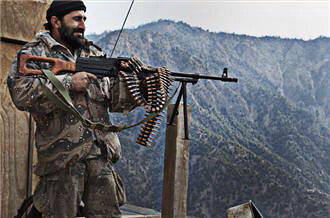
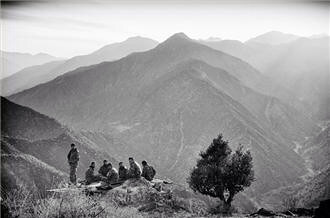
In the frozen peaks of Afghanistan's Kunar province, a ferocious clash for supremacy rages amid the mountaintops.

Barack Obama, the US president, has pledged to withdraw American forces from Afghanistan by 2014, with other NATO nations set to pull out their troops before that date and overall responsibility for security gradually being handed to the Afghan National Army and police.

Following the announcement last month from the Taliban that they are prepared to open a political office in Qatar - a step which may facilitate a move towards negotiations and a peaceful settlement - many people hope that the end of Afghanistan's long and brutal war may just be in sight.

But there is a long way to go yet and many ways in which any deal could be upset by events. General John Allen, the senior American commander on the ground, has publicly expressed doubts that a full military withdrawal by 2014 is feasible and, as many experts point out, fighting in parts of Afghanistan is just as fierce as it has always been.

This is especially so in two strategically vital provinces, Kunar and Nuristan, which sit on Afghanistan's mountainous north-eastern border with Pakistan. Since US troops arrived in the country 11 years ago, the area has seen sustained and intense violence. In 2009, with casualties rising, the Americans withdrew entirely from Nuristan. The following year northern Kunar was also handed over to Afghan control. But within a few months, the Taliban had retaken the area, infiltrating through vital border crossings and completely undermining attempts by Afghan forces to maintain security across the region.

So now US forces have returned to the area, this time to the frozen peaks as well as the valleys, determined to re-establish their military dominance and win over the local population before they go. The Taliban are just as keen to see them defeated and the result is an intermittent but occasionally ferocious clash for supremacy amid the mountain tops. Both sides know that what happens here may yet decide the success or failure of NATO's war and indeed the future of Afghanistan itself. More


Monday, January 23, 2012

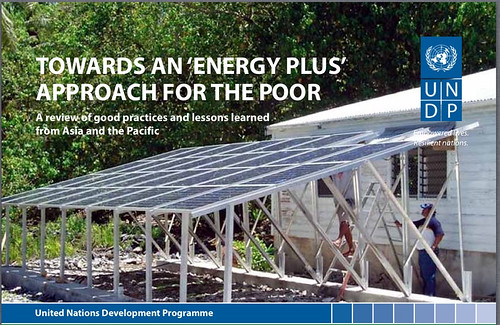
UNDP Calls for “Energy Plus” Approach to Reduce Poverty in Asia and the Pacific

 19 January 2012: A report by the UN Development Programme (UNDP) calls for an “energy plus” approach to sustainably reduce poverty by combining access to modern energy for heating, cooking and electricity with measures for income generation and improvement of health and education services.
 
The report, “Towards an ‘Energy Plus’ Approach for the Poor,” is based of a review of 17 energy access projects implemented by governments, development agencies and the private sector in Asia-Pacific  
The report further explains that energy access projects and programmes that combined the delivery of energy services with income-generating measures – such as business development, information support, access to capital and market linkages measures – had higher potential to reduce poverty sustainably. The report considered projects in the following countries: the Philippines, China, Nepal, Fiji, India, Sri Lanka, Bhutan, Lao People's Democratic Republic, Timor-Leste, and Vanuatu. [Publication: Towards an 'Energy Plus' Approach for the Poor: A Review of Good Practices and Lessons Learned from Asia and the Pacific] [UN Press Release]