Showing posts with label alternative energy. Show all posts

Sunday, January 4, 2015

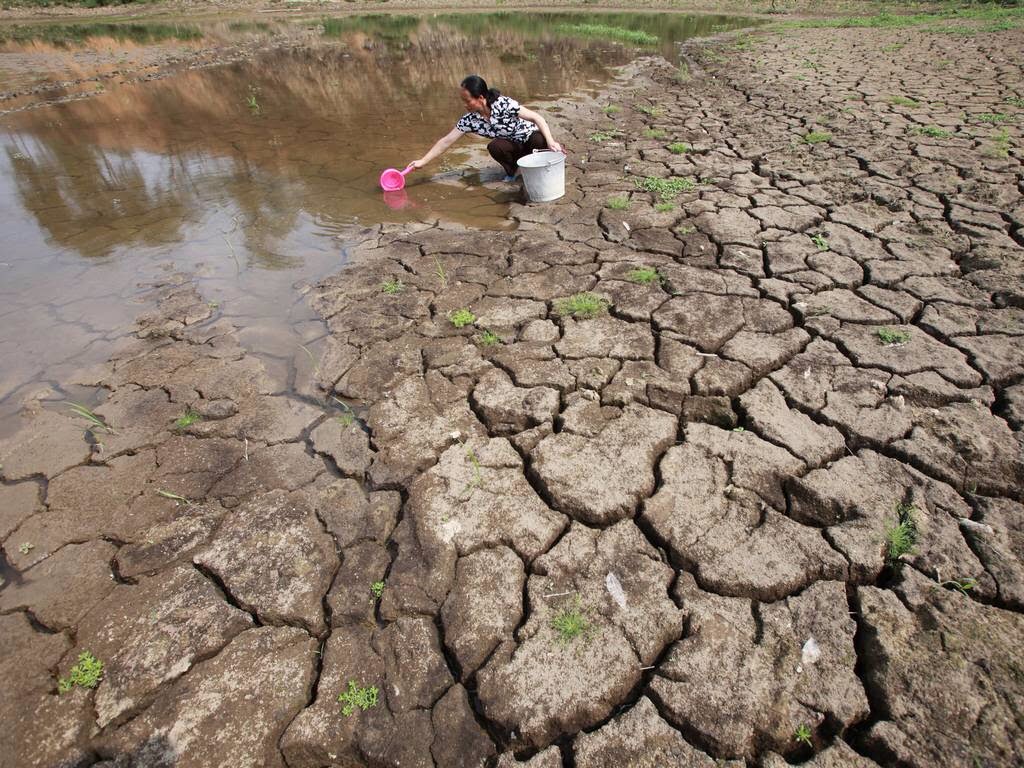
Abu Dhabi summit to discuss water security challenges

More than 32,000 global leaders from 170 countries representing government, industry, investment and research to Abu Dhabi, will provide an upfront look at affordable technologies to enable sustainable water resource management to help meet the Middle East’s rising demand for water.

Hosted by Masdar, Abu Dhabi’s renewable energy company, ADSW is a yearly platform that addresses the interconnected challenges of energy and water security, climate risk and sustainable development.

Running from January 17 to 24, ADSW includes the World Future Energy Summit (WFES), the world’s foremost event dedicated to the advancement of renewable energy, energy efficiency and clean technology; and the International Water Summit (IWS), which provides a business approach to addressing water scarcity, sustainable growth and economic development in arid regions.

“The Mena region is in a truly unique position to solve the challenge of water security,” remarked Raed Bkayrat, vice president of development for Saudi Arabia at First Solar, which is participating in WFES.

“While the region is quite arid, it also has one of the highest solar irradiances of any region in the world, and much of the population has ready access to seawater. Accordingly, solar photovoltaic projects are proving to be sustainable means of powering water desalination in the region, ensuring that the supply of clean water will keep up with the region’s increasing demand for it,” he noted.

Masdar took a major step by launching a pilot project to test energy-efficient desalination technologies – such as reverse osmosis and forward osmosis – powered by renewable energy.

The company awarded contracts to Abengoa, Degremont, Sidem/Veolia and Trevi Systems to build the desalination plants, which are expected to enable the implementation of cost-competitive desalination plants powered by renewable energy in the UAE and abroad.

“Engaging different sectors of the industry is really crucial to bring forward innovative solutions, as well as pilot projects that demonstrate to governments the value of new integrated systems,” Bkayrat added.

Both WFES and IWS will offer numerous keynote addresses, panel discussions and workshops as well as exhibitors introducing affordable technologies to enable sustainable water resource management.

Along with WFES and IWS, ADSW will include the second EcoWaste and the seventh Zayed Future Energy Prize Award Ceremony; it also coincides with the Fifth General Assembly of the International Renewable Energy Agency.-TradeArabia News Service More


Saturday, December 20, 2014

Pakistan's growing need for Energy: options of coal, gas & nuclear energy

Pakistan's growing need for Energy: options of coal, gas & nuclear energy and renewables by Dr Maria Sultan, Director General, South Asian Strategic Stability Institute, Pakistan. Published on Dec 19, 2014

www.sassi.org


Friday, August 22, 2014

Global Climate Inaction Will Mean Economic Turmoil for South Asia, Warns Bank

The first comprehensive study ever issued on the economic costs that uncontrolled climate change would inflict on South Asia predicts a staggering burden that would hit the region's poorest the hardest.

Rice Farmer in Punjab, India

"The impacts of climate change are likely to result in huge economic, social and environmental damage to South Asian countries, compromising their growth potential and poverty reduction efforts," said the study, published by the Asian Development Bank.

The cuts in regional GDP are so deep that they might ripple around the world, as six developing countries with 1.4 billion people—a third of them living in poverty—pay the price of the world's continuing reliance on fossil fuels.

Projections like this feed into the urgency for action as world leaders prepare to meet at the United Nations next month to discuss the climate crisis. Recent warnings show that the steps nations seem willing to take will fall well short of what is needed.

Action now, the study shows, would pay immediate and lasting dividends to the countries it examined: Bangladesh, Bhutan, India, the Maldives, Nepal and Sri Lanka.

The study, published as a new 160-page book, says that if the world cuts fossil fuel consumption enough to keep warming within 2 degrees Celsius—the goal of UN negotiations—the costs to South Asian countries of adapting to rising seas and temperatures in the decades ahead might be cut almost in half.

But if business-as-usual continues, leading to a world that is 4 or 5 degrees warmer by 2100 than at the start of the industrial age, the outlook looks grim.

"Climate change will slash up to 9 percent off the South Asian economy every year by the end of this century if the world continues on its current fossil-fuel intensive path," the bank said. "The human and financial toll could be even higher if the damage from floods, droughts, and other extreme weather events is included."

Because this kind of estimate is inherently imprecise, the bank warned that the real damage could be much worse than expected. Under business-as-usual trends, there is a one in 20 chance that South Asia will lose 24 percent of its annual GDP by the end of the century, the study found.

Paying to stave off those damages will cost these nations dearly, the study said.

To avoid the damage that is expected if the world takes no action on climate change, South Asia would have to spend nearly $40 billion per year by 2050 on adaptation measures, or nearly half a percentage point of average annual GDP. By 2100, the costs would have to increase to $73 billion per year, or roughly nine-tenths of a point of GDP.

If the world were to achieve the 2-degree warming goal established by UN negotiators at climate treaty talks in Copenhagen in 2009—a goal also at the heart of culminating talks set for Paris in 2015—annual adaptation costs for South Asia would be considerably less: $31 billion a year at mid-century, and $41 billion at century's end.

And instead of losing nearly 9 percent of annual GDP by the end of the century, the study found, South Asia would lose about 2.5 percent by 2100 if the world lives up to the goals of Copenhagen. More


Thursday, July 17, 2014

The Peak Oil Crisis: Better Than Fire

In addition to following the twists and turn of the world’s energy situation, I have been tracking the reporting on developments concerning several “exotic” and therefore controversial energy sources whose proponents say would be far more cost-effective than current alternatives to fossil fuels such as wind, solar and nuclear.

The reason for this interest is that if one believes global warming is caused by carbon emissions, then it certainly looks like there will not be much left of human civilization in a century or so. While the use of “conventional” alternatives is growing, the demand for energy to fuel economic growth is so great that it seems likely that, unless some outside force intervenes, mankind is going to burn fossil fuels until it is no longer economically possible to do so.

What is clearly necessary is some source of energy that is so cheap and easy to produce and so environmentally clean that everyone on earth will want to use the new energy source as soon as possible.

Fortunately, there are a handful of people out there who really are a few steps ahead of academia, government officials, and the mainstream media in the effort to save mankind from what is shaping up to be a many millennia-long disaster. In the past I have written about cold fusion or in the current jargon, low energy nuclear reactions (LENR). This technology is still alive, well, and seems destined to produce some commercially viable prototypes in the near future.

However, last week a company up in New Jersey call BlackLight Power and its founder announced a breakthrough which could be just what the world sorely needs in addition to touching off a new era in the history of mankind. I stress could for all the evidence is not in yet and useful prototypes have yet to be built, but BlackLight’s founder and inventor of the technology, Randall Mills, seems unusually forthright in his claims that there has indeed been a breakthrough on the exotic energy front. For those of the “its too good to be true” bent, keep in mind that discoveries do happen from time to time – electricity, internal combustion, and smart phones to name a few.

About 20 years ago Randall Mills announced that a more compact form of the hydrogen atom existed in the universe which he termed a hydrino. This form of hydrogen had its electron circling its proton at about 1/4th the distance from the nucleus as in a conventional hydrogen atom and therefore had much less energy. Mills went on to say he believed that the dark matter which makes up the bulk of the universe was composed of these compact hydrogen atoms which neither absorb nor emit light making them very difficult to detect. At the cosmological scale dark matter is only known to exist because of its gravitational pull on other mass. As most of the visible universe is composed of hydrogen, it seems to make sense that the invisible part is hydrogen too.

When Mills announced his hypothesis in 1991, it was, of course, denounced by the scientific establishment as ridiculous for if another form of hydrogen existed, we surely would have discovered it decades ago. To make the ensuing controversy still worse, Mills claimed that the accepted version of quantum mechanics had it wrong in its description of just what an electron is and that the classical physics of Newton and Maxwell works at the atomic as well as the cosmic scale. Such a claim is heresy of the first order in the land of the scientists so Mills and his hydrinos were quickly forgotten.

From mankind’s perspective, however, the interesting feature about the existence of two forms of hydrogen is that in converting the conventional hydrogen atom to a hydrino a spectacular amount of energy is released – on the order of 200 times as much as when hydrogen is joined with oxygen to form H2O. Thus began the 20-year search for the Holy Grail of our civilization – a way to transform hydrogen into hydrinos and release lots of energy.

As with the Wright brothers, all Mills had to do was to build a machine that took in water and send commerical amounts of energy out, then his thesis would have to be accepted. It took 20+ years to develop the theoretical basis for such a machine, but for the last six months Mills has been demonstrating crude prototypes to selected audiences. Fortunately for the rest of us, these demonstrations and considerable information on what is taking place have been appearing regularly on the internet. Although some remain skeptical, the length of time Mills has been working on this project, the size of his organization, the scale of his financial backing and the verification of his science by external laboratories strongly suggests that his claims are valid.

Mills’ machines are remarkably simple. After 20 years of research he has developed a metallic powder that will also absorb moisture (hydrogen) from the humidity in the air. A tiny amount of this damp powder is subjected to a low voltage, high amperage current and the hydrogen in the powder is zapped, for want of a better word, into hydrinos with a blinding flash of light. The hydrogen-depleted powder can then absorb more moisture from the atmosphere and be reused indefinitely.

While the mini-explosions that take place in Mills’ device are spectacular, they certainly were a long ways from a technology that might save the world until two weeks ago when he announced that the energy emitted from these “explosions” is mostly white light. The white light emitted is at least 50,000 times brighter than that of sunlight as it reaches the earth’s surface and given the latest in solar cell technology, can easily be converted into prodigious amounts of electricity using only the humidity in the air as the fuel. One design is anticipating that a one-foot cubic device will be able to produce 10 million watts of electric power.

To quote Mills, “nature has just given us the best gift that we have ever had, this is better than fire.” More


Tuesday, June 10, 2014

Years of Living Dangerously - Premiere Full Episode

Years of Living Dangerously Premiere Full Episode


Published on Apr 6, 2014 • Hollywood celebrities and respected journalists span the globe to explore the issues of climate change and cover intimate stories of human triumph and tragedy. Watch new episodes Mondays at 8PM ET/ PT, only on SHOWTIME.

Subscribe to the Years of Living Dangerously channel for more: http://s.sho.com/YearsYouTube

Official site: http://www.sho.com/yearsoflivingdangerously

The Years Project: http://yearsoflivingdangerously.com/

Follow: https://twitter.com/YEARSofLIVING

Like: https://www.facebook.com/YearsOfLiving

Watch on Showtime Anytime: http://s.sho.com/1 hoirn4

Don't Have Showtime? Order Now: http://s.sho.com/PODCVU

It's the biggest story of our time. Hollywood's brightest stars and today's most respected journalists explore the issues of climate change and bring you intimate accounts of triumph and tragedy. YEARS OF LIVING DANGEROUSLY takes you directly to the heart of the matter in this awe-inspiring and cinematic documentary series event from Executive

Producers James Cameron, Jerry Weintraub and Arnold Schwarzenegger.

Monday, April 28, 2014

Japan's 25-year plan to have space solar power

Solar energy experts have long known that the best place to collect the sun's rays is in space. A solar farm in orbit could collect energy all the time, whereas ground-based arrays sit idle during the night.

And huge chunks of real estate are easier to come by in space, where solar collectors can be as enormous as they need to be. But the problems with turning solar energy in space into useable energy on Earth have kept space solar stuck in the land of science fiction since the 1960s.

Yet Japan's version of NASA, the Japan Aerospace Exploration Agency, is optimistic. JAXA recently unveiled a technology roadmap that says it can make solar arrays in orbit a reality by the 2030s, and that plant could supply 1 gigawatt of energy, the equivalent of one of the country's nuclear plants. Susumu Sasaki reports for IEEE Spectrum.

Microwaves are key to JAXA's plans. Some space solar concepts have proposed using lasers to beam the energy in orbit down to collectors on the surface, but the water molecules in the clouds can scatter laser light. That means you'd lose some of the energy on anything less than a perfectly clear day. Microwaves don't have that problem. So JAXA has designed multiple concepts in which the DC (direct current) power generated in orbit would be transformed into microwaves and then beamed to Earth's surface, where a farm of antennas would collect the microwaves and transform them back into DC electricity. JAXA says it can now perform these transformations with at least 80 percent efficiency on each end.

Another major hurdle for space solar is keeping the collectors pointed at the sun at all times so they can collect energy continuously. JAXA released one design that features a square panel measuring 2 kilometers (1.2 miles) on each side. But the panel's orientation is fixed, meaning the amount of energy it can produce varies. Another JAXA design solves this problem by incorporating two enormous mirrors that reflect sunlight onto photovoltaic panels positioned between them.

More hurdles: If a space solar array had to burn fuel to adjust its position, for example, that would add millions of dollars to the cost. So Japan is trying to design its components in such a way that they naturally counterbalance Earth's gravity and stay in position without adjustment. In the case of the two-mirror design, all those pieces would need to fly in careful, precise formation, something that has not been tried on so grand a scale.

In the transmission phase, more than a billion tiny antennas affixed to moveable panels would be required to receive the microwave energy coming from space. Those panels must constantly adjust their orientation to maximize how much energy they receive. JAXA plans to help them by sending a pilot signal from the ground to the satellite that would tell the satellite how to adjust the beam.

Despite these and more challenges, JAXA has rolled out an ambitious timeline: It plans to unveil a ground-based demonstration this year, then reveal progressively larger experimental satellites in 2017, 2021, and 2024. The major goal would come to fruition in the following decade: A 1-GW power station in 2031, and then one power station launched per year by the late 2030s.

Within a quarter-century, then, perhaps Japan's energy will come not from nuclear plants -- which are vulnerable to earthquakes, tsunamis, and planetary outbursts -- but from solar arrays that aren't even on the planet. More


Monday, March 17, 2014

Climate change: Leaked draft of UN IPCC report predicts global warming will cause violent conflict, displace millions of people and wipe trillions of dollars off the global economy

Climate change will displace hundreds of millions of people by the end of this century, increasing the risk of violent conflict and wiping trillions of dollars off the global economy, a forthcoming UN report will warn.

The second of three publications by the UN’s Intergovernmental Panel on Climate Change, due to be made public at the end of this month, is the most comprehensive investigation into the impact of climate change ever undertaken. A draft of the final version seen by The Independent says the warming climate will place the world under enormous strain, forcing mass migration, especially in Asia, and increasing the risk of violent conflict.

Based on thousands of peer-reviewed studies and put together by hundreds of respected scientists, the report predicts that climate change will reduce median crop yields by 2 per cent per decade for the rest of the century – at a time of rapidly growing demand for food. This will in turn push up malnutrition in children by about a fifth, it predicts.

Climate change


The report also forecasts that the warming climate will take its toll on human health, pushing up the number of intense heatwaves and fires and increasing the risk from food and water-borne diseases.

While the impact on the UK will be relatively small, global issues such as rising food prices will pose serious problems. Britain’s health and environmental “cultural heritage” is also likely to be hurt, the report warns.

According to the draft report, a rare grassy coastal habitat unique to Scotland and Ireland is set to suffer, as are grouse moors in the UK and peatlands in Ireland. The UK’s already elevated air pollution is likely to worsen as burning fossil fuels increase ozone levels, while warmer weather will increase the incidence of asthma and hay fever.

Coastal systems and low-lying areas

The report predicts that by the end of the century “hundreds of millions of people will be affected by coastal flooding and displaced due to land loss”. The majority affected will be in East Asia, South-east Asia and South Asia. Rising sea levels mean coastal systems and low-lying areas will increasingly experience submergence, coastal flooding and coastal erosion.

Food security

Relatively low local temperature increases of 1C or more above pre-industralised levels are projected to “negatively impact” yields of major crops such as wheat, rice and maize in tropical and temperate regions. The report forecasts that climate change will reduce median yields by up to 2 per cent per decade for the rest of the century – against a backdrop of rising demand that is set to increase by 14 per cent per decade until 2050.

The global economy

A global mean temperature increase of 2.5C above pre-industrial levels may lead to global aggregate economic losses of between 0.2 and 2.0 per cent, the report warns. Global GDP was $71.8trn (£43.1trn) in 2012, meaning a 2 per cent reduction would wipe $1.4trn off the world’s economic output that year.

Human health

Until mid-century, climate change will impact human health mainly by exacerbating problems that already exist, the report says. Climate change will lead to increases in ill-health in many regions, with examples including a greater likelihood of injury, disease and death due to more intense heatwaves and fires; increased likelihood of under-nutrition; and increased risks from food and water-borne diseases. Without accelerated investment in planned adaptations, climate change by 2050 would increase the number of undernourished children under the age of five by 20-25 million globally, or by 17-22 per cent, it says.

Human security

Climate change over the 21st century will have a significant impact on forms of migration that compromise human security, the report states. For example, it indirectly increases the risks from violent conflict in the form of civil war, inter-group violence and violent protests by exacerbating well-established drivers of these conflicts such as poverty and economic shocks.

Small-island states and other places highly vulnerable to sea-level rise face major challenges to their territorial integrity. Some “transboundary” impacts of climate change, such as changes in sea ice, shared water resources and migration of fish stocks have the potential to increase rivalry among states.

Freshwater resources

The draft of the report says “freshwater-related risks of climate change increase significantly with increasing greenhouse gas emissions”. It finds that climate change will “reduce renewable surface water and groundwater resources significantly in most dry subtropical regions”, exacerbating the competition for water. Terrestrial and freshwater species will also face an increased extinction risk under projected climate change during and beyond the 21st century.

Unique landscapes

Machair, a grassy coastal habitat found only in north-west Scotland and the west coast of Ireland, is one of the several elements of the UK’s “cultural heritage” that is at risk from climate change, the report says. Machair is found only on west-facing shores and is rich in calcium carbonate derived from crushed seashells. It is so rare and special, that a recent assessment by the European Forum on Nature Conservation and Pastoralism described it as an “unknown jewel”.

The IPCC also warns of climate threats to Irish peatlands and UK grousemoors and notes an increasing risk to health across Europe from rising air pollution – in which the polluted UK is already in serial breach of EU regulations. More


Wednesday, January 1, 2014

Climate Change Worse Than We Thought, Likely To Be 'Catastrophic Rather Than Simply Dangerous'

Climate change may be far worse than scientists thought, causing global temperatures to rise by at least 4 degrees Celsius by 2100, or about 7.2 degrees Fahrenheit, according to a new study.

The study, published in the journal Nature, takes a fresh look at clouds' effect on the planet, according to a report by The Guardian. The research found that as the planet heats, fewer sunlight-reflecting clouds form, causing temperatures to rise further in an upward spiral.

That number is double what many governments agree is the threshold for dangerous warming. Aside from dramatic environmental shifts like melting sea ice, many of the ills of the modern world -- starvation, poverty, war and disease -- are likely to get worse as the planet warms.

"4C would likely be catastrophic rather than simply dangerous," lead researcher Steven Sherwood told the Guardian. "For example, it would make life difficult, if not impossible, in much of the tropics, and would guarantee the eventual melting of the Greenland ice sheet and some of the Antarctic ice sheet."

Another report released earlier this month said the abrupt changes caused by rapid warming should be cause for concern, as many of climate change's biggest threats are those we aren't ready for.

In September, the Intergovernmental Panel on Climate Change said it was "extremely likely" that human activity was the dominant cause of global warming, or about 95 percent certain -- often the gold standard in scientific accuracy.

"If this isn't an alarm bell, then I don't know what one is. If ever there were an issue that demanded greater cooperation, partnership, and committed diplomacy, this is it," U.S. Secretary of State John Kerry said after the IPCC report was released. More


Tuesday, August 6, 2013

OPEC Nations Seek Cash For Solar Shift

Two of the largest oil producers are readying the Middle East's first big push into renewable energy, planning solar-power plants that will need more than $1.5 billion in financing by the end of 2014.

Saudi Arabia, the biggest member of the Organization of Petroleum Exporting Countries, and the United Arab Emirates, fourth-biggest in the group, are seeking to add 1,000 megawatts of solar capacity, enough to electrify 200,000 homes. The forecast expansion, which includes Jordan, will require loans and export credits, said Vahid Fotuhi, president of the Dubai-based Emirates Solar Industry Association.

Governments across the Middle East and North Africa consider sun and wind energy as crucial for meeting the needs of growing populations and economies, with Saudi Arabia leading the way. Oil-producers want to develop renewables to conserve more crude for export, while countries relying on imported fuel see local green power as a cheaper alternative.

State support for utilities and a growth in regional power demand of about 5 percent a year mean companies such as Abu Dhabi National Energy Co. (TAQA) can borrow at rates that are 100 basis points, or 1 percentage point, lower than Spain's Abengoa Solar SA.

Risk Profile

"If you see a rising population and rising energy demand, that really helps the risk profile," Amol Shitole, a credit analyst with SJS Markets Ltd. in Bangalore, India, said by telephone July 25. Projects that can pair local companies with international power-plant developers already known to lenders will have "strong support from banks," he said.

Renewables investment in the Middle East and North Africa rose 40 percent last year to $2.9 billion, according to the International Renewable Energy Agency. Spending on more than 100 projects under development, including those for solar, wind and geothermal power, could surge to about $13 billion in a few years, Abu Dhabi-based IRENA said yesterday in a report released jointly with U.A.E. government and a research group called the Renewable Energy Policy Network.

Saudi Arabia, the world's largest oil exporter, plans to invest more than $100 billion to generate about 41,000 megawatts from solar energy, or a third of its total power output, by 2032. That compares with about 16 megawatts of solar capacity today, a level that places the kingdom behind Egypt, Morocco, Algeria and the U.A.E., according to Bloomberg New Energy Finance.

Revolving Credits

Abu Dhabi National Energy, a conventional energy-producer known as Taqa, raised about $4 billion in loans this year and in 2012. The $2.5 billion in revolving credits it arranged in December include a three-year credit priced at 75 basis points more than the London interbank offered rate, and a five-year component priced at 100 basis points more than the Libor benchmark, data compiled by Bloomberg show.

Abengoa Solar, a partner in an Abu Dhabi sun-power plant, borrowed $142 million at 175 basis points more than Libor, according to data compiled by Bloomberg. Costs are even higher for First Solar Inc. (FSLR), the largest U.S. solar manufacturer and builder of Dubai's first solar electricity plant, which arranged a $431 million secured letter of credit at 225 basis points more than Libor, data gathered by Bloomberg show.

Backing from the Abu Dhabi government helped Taqa achieve an A rating, the sixth-highest investment grade, at Standard and Poor's. Abengoa SA (ABG), Abengoa Solar's Spanish parent, is rated B, six levels below investment grade. First Solar isn't rated. 'Green Sukuk'

"Bank loans will be the way to go for financing," rather than bond sales, said Shitole of SJS. Startup renewables projects would borrow more cheaply using loans and could issue bonds later to refinance their bank debt once the plants are earning steady income necessary to make regular interest payments, he said.

Lenders may hesitate to continue funding the massive expansion foreseen by Saudi Arabia as commercial banks seek to limit exposure to renewables projects, said Steve Mercieca, the Dubai-based chief executive officer of the Clean Energy Business Council. Governments should encourage the availability of Islamic bonds, or green sukuk, to help finance solar facilities under construction, he said.

"The Saudi market already has an attractive framework for building and funding traditional power plants, and liquidity is ample in local banks," Mercieca said. "Appetite is going to be substantial" for the funding of such projects, he said. Masdar Project

Taqa and its partners in the Ruwais Power Co. last week became the region's second company to sell a project bond, with repayment of interest linked to the utility's profit. The S2 power plant raised $825 million in bonds due in 2036 at a 6 percent margin, improving on the 6.2 percent margin on $1.5 billion of bonds Bahrain's government sold last week.

Masdar, Abu Dhabi's government-owned renewable energy company, opened the $750 million, 100 megawatt Shams 1 solar power plant, the region's largest, in March. Together with partners Abengoa Solar and French oil producer Total SA (FP), it borrowed a $612 million secured loan in March 2011, without disclosing terms on the debt that matures in 2033. More

Tuesday, April 30, 2013

Business as usual could result in sea level rise of up to seven metres - Club of Rome

Only a complete overhaul of our economic growth and international negotiations can prevent sea level rises that will destroy coastal cities like New York and London experts warn

New York, USA, 28 April: Energy expert Ian Dunlop and policy-planner and scholar Tapio Kanninen delivered a stark message in New York at the end of April that even limiting global warming to 2°C could eventually produce sea level rises of up to 6 to 7 metres (23 feet), wiping out coastal cities like New York, London, Shanghai and Tokyo. They told shocked audiences at the United Nations that if we continue with current policies, temperatures could rise 4°C or more, leading to sea level rises of up to 70 metres (230 feet).

Kanninen and Dunlop were in New York to address a series of packed meetings and panel discussions, organised by the Finnish Mission to the United Nations,Friedrich-Ebert-Stiftung, the Club of Rome, the Temple of Understanding and the UN Department of Economic and Social Affairs.

They presented new evidence demonstrating the severity of the crisis of global sustainability and global survivability and discussed with diplomats, political decisionmakers, sustainable development experts and NGOs how to persuade the UN and other international institutions to take immediate emergency action.

Commenting on recent scientific findings, Ian Dunlop - with over 30 years experience at the Royal Shell Group as engineer and senior executive and a former leader of Australia's Emissions trading panel said: “Today’s leadersrefuse to accept that climate change science and the concept of peak oil condemns the international community to a catastrophic future. Why are we stillexploring for fossil fuels, since we can only burn of 20-30% of reserves if we wish to keep climate change to the 2 °C limit, while current policies will result in warming of4-6 °C?” he asked.

This level of temperature rise means that the globe can only carry 0.5-1 billion people, not the present 7 billion, leading experts evaluate.

Tapio Kanninen, a former long time UN staff member and policy-planner, said that scientists have determined a number of "tipping points" that exponentially and dramatically accelerate global warming trends. As they begin to kick in, in a matter of years not decades, we must take action before it is too late to avert a catastrophe.

The severity of the global crisis goes unrecognised: we need a global emergency response and newpolicy models

Dr Kanninen said current international and nationalinstitutional and political systems are incapable of preventing the increasing severe global crises; it requires a change in the entire system plus an emergency response. If runaway climate change leads to rising sea levels the next move has to be to urgently overhaul the UN and our global governance system so it is capable of dealing with rapidly changing global and regional conditions.

Ian Dunlop said that many scientists and practitioners are wrongly dubbed ‘alarmist’, but diplomats, politicians and the whole intergovernmental system have failed to grasp the severity of the crisis. If we fail to act we could find ourselves like a ‘ship of fools’ floating on rising sea levels.

Failing to institute a major global policy change will inevitably lead to the gradual implosion of the economic, ecological and social structures on which we depend, andthey called for “An urgent joint effort by member states, NGOs and scholars to improve the quality of global negotiations on climate change and sustainable development”.

The Club of Rome raised similar issues 40 years ago and recent research has confirmed that its projections ofindustrial collapse in the early 21st century aresurprisingly close to actually data gathered. In his recent book Crisis of Global Sustainability Dr Kanninen evaluates the Club's history and impact, as well as describing the future global crisis if no action is taken.

Setting up new structures

Faced with the reality gap between what scientists predict and what politicians are prepared to do, part of the solution to global inertia lies in creating an independent Global Crisis Network of regional, national and local centres with a global coordination unit that will interact with a revamped UN. Eventually, the UN Charter has to be totally rewritten to correspond to thenew global reality.

The Club of Rome is an international think-tank, based in Switzerland, with 1500 members and over 30 National Associations. Its mission is to undertake forward-looking analysis and assessment on measures for a happier, more resilient, sustainable planet. www.clubofrome.org

The Limits to Growth, a 1972 report to the Club of Rome was written by Denis Meadows, Donella Meadows, Jorgen Randers and William Behrens III. It used computer models to project possible future scenarios with different assumptions of how humans would react to earth’s physical limitations.

Dr Tapio Kanninen is Senior Fellow at the Graduate Center of the City University of New York and a Co-Director of the Project on Sustainable Global Governance. He was Chief of the Policy Planning Unit in the Department of Political Affairs (1998–2005) at the United Nations and worked earlier to set up a global environmental statistical framework in a UNEP-funded project in the UN Statistical Division. He is a member of the Club of Rome.

Ian Dunlop is an Australian Energy Expert, a fellow to the Centre of Policy Development and a former senior executive at the Royal Dutch Shell Group. He is Chair of Safe Climate Australia, Deputy Convenor of the Australian Association for the Study of Peak Oil and a Club of Rome member.

Friedrich-Ebert-Stiftung is a German political foundation with over 100 offices around the world, including an active UN office. It is the Germany's oldest organisation to promote democracy, political education, and promote students of outstanding intellectual abilities.

The Temple of Understanding is an interfaith NGO working to promote global survivability, and an active member of the NGO community working on the inside of the United Nations to advance social justice.

Crisis of Global Sustainability is published by Routledge. Paperback: £18.99, $29.95
978-0-415-69417-9; Master eBook ISBN10 : 0203071867. Master eBook ISBN13 : 978-0-203-07186-1. To order copies go to: http://www.routledge.com/books/details/9780415694179/

For more information about the ideas behind the book: www.crisisofglobalsustainability.com

Ian Dunlop's presentation on same issues as he spoke at the UN can be seen here:http://vimeo.com/53540204