Showing posts with label carbon-dioxide. Show all posts

Monday, September 29, 2014

Explaining Extreme Events of 2013

A report released today investigates the causes of a wide variety of extreme weather and climate events from around the world in 2013. Published by the Bulletin of the American Meteorological Society, "Explaining Extreme Events of 2013 from a Climate Perspective (link is external)" addresses the causes of 16 individual extreme events that occurred on four continents in 2013. NOAA scientists served as three of the four lead editors on the report.

Of the five heat waves studied in the report, human-caused climate change was found to have clearly increased the severity and likelihood of those events. On the other hand, for other events examined like droughts, heavy rain events, and storms, fingerprinting the influence of human activity was more challenging. Human influence on these kinds of events—primarily through the burning of fossil fuels—was sometimes evident, but often less clear, suggesting natural factors played a far more dominant role.

"This annual report contributes to a growing field of science which helps communities, businesses and nations alike understand the impacts of natural and human-caused climate change," said Thomas R. Karl, L.H.D., director of NOAA’s National Climatic Data Center. "The science remains challenging, but the environmental intelligence it yields to decision makers is invaluable and the demand is ever-growing."

Confidence in the role of climate change about any one event is increased when multiple groups using independent methods come to similar conclusions. For example, in this report, five independent research teams looked at specific factors related to the record heat in Australia in 2013. Each consistently found that human-caused climate change increased the likelihood and severity of that event. However, for the California drought, which was investigated by three teams from the United States, human factors were found not to have influenced the lack of rainfall. One team found evidence that atmospheric pressure patterns increased due to human causes, but the influence on the California drought remains uncertain.

When human influence for an event cannot be conclusively identified with the scientific tools available today, this means that if there is a human contribution, it cannot be distinguished from natural climate variability.

"There is great scientific value in having multiple studies analyze the same extreme event to determine the underlying factors that may have influenced it," said Stephanie C. Herring, PhD, lead editor for the report at NOAA’s National Climatic Data Center. "Results from this report not only add to our body of knowledge about what drives extreme events, but what the odds are of these events happening again—and to what severity."

The report was edited by Herring, along with Martin P. Hoerling, NOAA’s Earth System Research Laboratory; Thomas Peterson, NOAA’s National Climatic Data Center, and Peter A. Stott, UK Met Office Hadley Centre and written by 92 scientists from 14 countries. View the full report online (link is external).

Also, view the slides for the media briefing on the "Explaining Extreme Events of 2013 from a Climate Perspective" report. More


Friday, August 22, 2014

Global Climate Inaction Will Mean Economic Turmoil for South Asia, Warns Bank

The first comprehensive study ever issued on the economic costs that uncontrolled climate change would inflict on South Asia predicts a staggering burden that would hit the region's poorest the hardest.

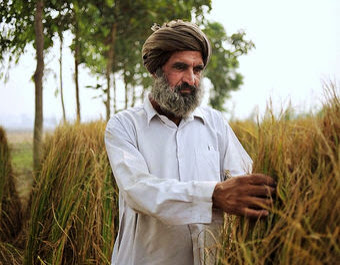
Rice Farmer in Punjab, India

"The impacts of climate change are likely to result in huge economic, social and environmental damage to South Asian countries, compromising their growth potential and poverty reduction efforts," said the study, published by the Asian Development Bank.

The cuts in regional GDP are so deep that they might ripple around the world, as six developing countries with 1.4 billion people—a third of them living in poverty—pay the price of the world's continuing reliance on fossil fuels.

Projections like this feed into the urgency for action as world leaders prepare to meet at the United Nations next month to discuss the climate crisis. Recent warnings show that the steps nations seem willing to take will fall well short of what is needed.

Action now, the study shows, would pay immediate and lasting dividends to the countries it examined: Bangladesh, Bhutan, India, the Maldives, Nepal and Sri Lanka.

The study, published as a new 160-page book, says that if the world cuts fossil fuel consumption enough to keep warming within 2 degrees Celsius—the goal of UN negotiations—the costs to South Asian countries of adapting to rising seas and temperatures in the decades ahead might be cut almost in half.

But if business-as-usual continues, leading to a world that is 4 or 5 degrees warmer by 2100 than at the start of the industrial age, the outlook looks grim.

"Climate change will slash up to 9 percent off the South Asian economy every year by the end of this century if the world continues on its current fossil-fuel intensive path," the bank said. "The human and financial toll could be even higher if the damage from floods, droughts, and other extreme weather events is included."

Because this kind of estimate is inherently imprecise, the bank warned that the real damage could be much worse than expected. Under business-as-usual trends, there is a one in 20 chance that South Asia will lose 24 percent of its annual GDP by the end of the century, the study found.

Paying to stave off those damages will cost these nations dearly, the study said.

To avoid the damage that is expected if the world takes no action on climate change, South Asia would have to spend nearly $40 billion per year by 2050 on adaptation measures, or nearly half a percentage point of average annual GDP. By 2100, the costs would have to increase to $73 billion per year, or roughly nine-tenths of a point of GDP.

If the world were to achieve the 2-degree warming goal established by UN negotiators at climate treaty talks in Copenhagen in 2009—a goal also at the heart of culminating talks set for Paris in 2015—annual adaptation costs for South Asia would be considerably less: $31 billion a year at mid-century, and $41 billion at century's end.

And instead of losing nearly 9 percent of annual GDP by the end of the century, the study found, South Asia would lose about 2.5 percent by 2100 if the world lives up to the goals of Copenhagen. More


Monday, May 5, 2014

Noam Chomsky: The Anthropocene Period and its Challenges


(2014) "Noam Chomsky": The Anthropocene Period and its Challenges

Uploaded on 29 Apr 2014©2014 Leigha Cohen Video Production http://www.leighacohenvideo.com/

For Noam Chomsky the edge is literal and deadly as he looks into the present and predicted future consequences of how humans in industrial society "Anthropocene Period" are impacting our environment and ecosystems which is increasingly having more extensive and rapid effects to our world. We as always have a choice, as a commons to let this continue or we can we can be the forces of change.

Noam Chomsky who was on of several speakers who spoke at the 10th. Annual Pen World of Voices Festival held April 28, 2014 http://worldvoices.pen.org/event/2014/03/11/opening-night-edge.
Filmed in The Great Hall, The Cooper Union 7 East 7th Street, New York, NY 10003 on April 28, 2014 at the 2014 PEN World Voices Festival. Some of the globe's most prominent thinkers each, in turn, brought their enthusiasm for societal improvement to the stage for a short oration http://worldvoices.pen.org/event/2014/03/11/opening-night-edge

Unless otherwise indicated, all materials on in this video are copyrighted to Leigha Cohen Video, All rights reserved. No part of this video may be used for any purpose other than educational use and any monetary gain from this video is prohibited without prior permission from me. Therefore, reproduction, modification, storage in a retrieval system is prohibited. Standard linking of this video is allowed and encouraged.


Wednesday, January 1, 2014

Climate Change Worse Than We Thought, Likely To Be 'Catastrophic Rather Than Simply Dangerous'

Climate change may be far worse than scientists thought, causing global temperatures to rise by at least 4 degrees Celsius by 2100, or about 7.2 degrees Fahrenheit, according to a new study.

The study, published in the journal Nature, takes a fresh look at clouds' effect on the planet, according to a report by The Guardian. The research found that as the planet heats, fewer sunlight-reflecting clouds form, causing temperatures to rise further in an upward spiral.

That number is double what many governments agree is the threshold for dangerous warming. Aside from dramatic environmental shifts like melting sea ice, many of the ills of the modern world -- starvation, poverty, war and disease -- are likely to get worse as the planet warms.

"4C would likely be catastrophic rather than simply dangerous," lead researcher Steven Sherwood told the Guardian. "For example, it would make life difficult, if not impossible, in much of the tropics, and would guarantee the eventual melting of the Greenland ice sheet and some of the Antarctic ice sheet."

Another report released earlier this month said the abrupt changes caused by rapid warming should be cause for concern, as many of climate change's biggest threats are those we aren't ready for.

In September, the Intergovernmental Panel on Climate Change said it was "extremely likely" that human activity was the dominant cause of global warming, or about 95 percent certain -- often the gold standard in scientific accuracy.

"If this isn't an alarm bell, then I don't know what one is. If ever there were an issue that demanded greater cooperation, partnership, and committed diplomacy, this is it," U.S. Secretary of State John Kerry said after the IPCC report was released. More


Thursday, October 25, 2012

The Great Transition, Part I: From Fossil Fuels to Renewable Energy

The great energy transition from fossil fuels to renewable sources of energy is under way. As fossil fuel prices rise, as oil insecurity deepens, and as concerns about pollution and climate instability cast a shadow over the future of coal, a new world energy economy is emerging.

The old energy economy, fueled by oil, coal, and natural gas, is being replaced with an economy powered by wind, solar, and geothermal energy. The Earth’s renewable energy resources are vast and available to be tapped through visionary initiatives. Our civilization needs to embrace renewable energy on a scale and at a pace we’ve never seen before.

We inherited our current fossil fuel based world energy economy from another era. The 19th century was the century of coal, and oil took the lead during the 20th century. Today, global emissions of carbon dioxide (CO2)—the principal climate-altering greenhouse gas—come largely from burning coal, oil, and natural gas. Coal, mainly used for electricity generation, accounts for 44 percent of global fossil-fuel CO2 emissions. Oil, used primarily for transportation, accounts for 36 percent. Natural gas, used for electricity and heating, accounts for the remaining 20 percent. It is time to design a carbon- and pollution-free energy economy for the 21st century.

Some trends are already moving in the right direction. The burning of coal, for example, is declining in many countries. In the United States, the number two coal consumer after China, coal use dropped 14 percent from 2007 to 2011 as dozens of coal plants were closed. This trend is expected to continue, due in part to widespread opposition to coal now being organized by the Sierra Club’s Beyond Coal campaign.

Oil is used to produce just 5 percent of the world’s electricity generation and is becoming ever more costly. Because oil is used mainly for transport, we can phase it out by electrifying the transport system. Plug-in hybrid and all-electric cars can run largely on clean electricity. Wind-generated electricity to operate cars could cost the equivalent of 80-cent-per gallon gasoline.

As oil reserves are being depleted, the world has been turning its attention to plant-based energy sources. Their potential use is limited, though, because plants typically convert less than 1 percent of solar energy into biomass.

Crops can be used to produce automotive fuels, such as ethanol and biodiesel. Investments in U.S. corn-based ethanol distilleries became hugely profitable when oil prices jumped above $60 a barrel following Hurricane Katrina in 2005. The investment frenzy that followed was also fueled by government mandates and subsidies. In 2011, the world produced 23 billion gallons of fuel ethanol and nearly 6 billion gallons of biodiesel.

But the more research that’s done on liquid biofuels, the less attractive they become. Every acre planted in corn for ethanol means pressure for another acre to be cleared elsewhere for crop production. Clearing land in the tropics for biofuel crops can increase greenhouse gas emissions instead of reducing them. Energy crops cannot compete with land-efficient wind power. More