
In a memo to President Obama, former National Security Agency insiders William Binney, Thomas Drake, Edward Loomis and J. Kirk Wiebe explain how NSA leaders botched intelligence collection and analysis before 9/11, covered up the mistakes, and violated the constitutional rights of the American people, all while wasting billions of dollars and misleading the public.

January 7, 2014
MEMORANDUM FOR: The President
FROM: Former NSA Senior Executives/Veteran Intelligence Professionals for Sanity (VIPS)
SUBJECT: Input for Your Decisions on NSA
EXECUTIVE SUMMARY
Official Washington – from Senate Intelligence Committee chair Dianne Feinstein to NSA Director Keith Alexander to former Vice President Dick Cheney to former FBI Director Robert Mueller – has been speaking from the same set of NSA talking points acquired recently via a Freedom of Information request. It is an artful list, much of it designed to mislead. Take this one, for example:
– NSA AND ITS PARTNERS MUST MAKE SURE WE CONNECT THE DOTS SO THAT THE NATION IS NEVER ATTACKED AGAIN LIKE I WAS ON 9/11
At a hearing of the Senate Judiciary Committee on October 2, Senator Feinstein showed her hand when she said: “I will do everything I can to prevent this [NSA’s bulk] program from being canceled.” Declaring that 9/11 “can never be allowed to happen in the United States of America again,” Feinstein claimed that intelligence officials did not have enough information to prevent the terrorist attacks.
Mr. President, we trust you are aware that the lack-of-enough-intelligence argument is dead wrong. Feinstein’s next dubious premise – that bulk collection is needed to prevent another 9/11 – is unproven and highly unlikely (not to mention its implications for the privacy protections of the Fourth Amendment).
Given the closed circle surrounding you, we are allowing for the possibility that the smell from these rotting red herrings has not yet reached you – even though your own Review Group has found, for example, that NSA’s bulk collection has thwarted exactly zero terrorist plots.
The sadder reality, Mr. President, is that NSA itself had enough information to prevent 9/11, but chose to sit on it rather than share it with the FBI or CIA. We know; we were there. We were witness to the many bureaucratic indignities that made NSA at least as culpable for pre-9/11 failures as are other U.S. intelligence agencies.
We prepared this Memorandum in an effort to ensure that you have a fuller picture as you grapple with what to do about NSA. What follows is just the tip of an iceberg of essential background information – much of it hidden until now – that goes to the core of serious issues now front and center.
The drafting process sparked lively discussion of the relative merits of your Review Group’s recommendations. We have developed very specific comments on those recommendations. We look forward to an opportunity to bring them to your attention.
_________
Introduction
We write you with a sense of urgency looking toward your upcoming decisions regarding the activities of the National Security Agency. We the undersigned (William Binney, Thomas Drake, Edward Loomis, and Kirk Wiebe) worked with NSA for a total of 144 years, most of them at senior levels. Our mission required the highest technical skills to keep the country safe from foreign enemies, while protecting the privacy rights of U.S. citizens under the Fourth Amendment to the U.S. Constitution.
For us, the 21st Century arrived with serious management and technical shortcomings at NSA in meeting the huge challenges posed by the digital and Internet age and the huge problems accompanying the transition from a Cold War footing over 40 years to an increasingly complex world with many asymmetric threats.
NSA management’s reaction in this environment not only opened the door to the attacks of 9/11 but led to violation of what had been the “First Commandment” at NSA; namely, “Thou Shalt Not Eavesdrop on Americans Without a Court Warrant.” Under the circumstances, three of us (Binney, Loomis, and Wiebe) left; Drake had just come on board in hopes of playing a constructive role in addressing the challenges at NSA.
We all share an acute sense of regret for NSA’s demonstrable culpability for what happened on 9/11, and – for those of us working there before the terrorist attacks – a remorse for not having been able to stop them. We tried; but it is hard to escape a nagging regret that, somehow, we should have tried harder.
We were there; we know what happened. And we know how what happened has been successfully covered up – until now. Calamities like this tend to happen again if there is no accountability for what happened before. You need the unvarnished truth. The flood of revelations now in the public domain frees us to address facts and events formerly hidden behind a convenient, cover-up classification regime. We feel bound by the solemn oath we took to support and defend the Constitution of the United States against all enemies, foreign and domestic, to make truths known to you that you may find as unconscionable as we do.
Why do we still care? Because we have consciences; because the oath we took has no expiration date; because we know – as few others do – how critically important it is for our country to have a well functioning, Constitution-abiding National Security Agency; and because we know how that ship can be steered back on course at that important place of work by improving its ability to find terrorists and other criminals in massive amounts of data, while protecting the right to privacy and citizen sovereignty.
Getting in the Door
It comes to us as no surprise that there is strong resistance on the part of the Establishment when it comes to giving us a hearing – a shunning of the very people who know what happened and how to take steps to prevent it from happening again.
Our predicament calls to mind that of our colleague veteran intelligence professionals, who were ignored by Official Washington and an obsequious media, when we knew that fraudulent (not mistaken) intelligence was being used to “justify” the launching of an aggressive war on Iraq 11 years ago. Establishment Washington barred the doors in 2002-2003. Just five years later our own clearances were taken away.
Now, once again the voices of seasoned intelligence professionals are being muted, in favor of a closed group of officials with huge incentive to cover up their failure to keep America safe and their playing fast and loose with the Fourth Amendment.
Mr. President, we have given up hope that your palace guard will let us in. Our chances of reaching you seem far better via this Memorandum, the 28th of its kind issued since early 2003, prepared at the behest of the Steering Group of our Veteran Intelligence Professionals for Sanity (VIPS). If this gets past your in-box protectors, we encourage you to pay more heed to it than your predecessor did to VIPS’ warnings in the months before the attack on Iraq.
In one limited sense, we are better off than our colleagues 11 years ago. This time, mainstream media have been unable to ignore the documentary evidence of rank dishonesty on the part of senior NSA and other intelligence officials. This time the media has come to us, seeking our views. This time we can comment rather freely on matters that until now were hidden under TOP SECRET stamps.
On December 26, for example, The Wall Street Journal published a lengthy front-page article, quoting NSA’s former Senior Technical Director William Binney (undersigned) and former chief of NSA’s SIGINT Automation Research Center Edward Loomis (undersigned) warning that NSA is drowning in useless data lacking adequate privacy provisions, to the point where it cannot conduct effective terrorist-related surveillance and analysis.
A recently disclosed internal NSA briefing document corroborates the drowning, with the embarrassing admission, in bureaucratize, that NSA collection has been “outpacing” NSA’s ability to ingest, process, and store data – let alone analyze the take.
54 Now Down to Zero ‘Thwarts’
It is not difficult to connect NSA’s collect-everything approach with one principal finding of the Review Group you appointed to look into NSA programs; namely, that exactly zero terrorist plots have been prevented by NSA’s bulk trawling for telephone call records. One Review Group member, your former Chicago law professor colleague, Geoffrey Stone, has confessed to being “absolutely” surprised at the group’s finding of zero. Clearly, the statements of top NSA officials left Stone wholly unprepared for the truth. More


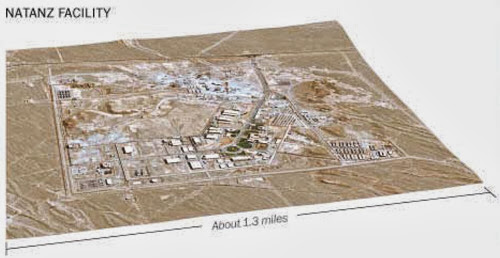 |
| Natanz Facility |
Underground Facilities: Intelligence and Targeting Issues (New Documents)
U.S. Intelligence: Hiding of Military Assets by "Rogue Nations" and Other States a Major Security Challenge for 21st Century
U.S. Documents Describe Monitoring Effort Going Back to Early Cold War Years
National Security Archive Electronic Briefing Book No. 439
UPDATE -- September 23, 2013
Originally Posted -- March 23, 2012
For more information contact:
Jeffrey T. Richelson - 202/994-7000
nsarchiv@gwu.edu
Washington, D.C., September 23, 2013 -- While the focus on Syria's chemical weapons use, and the possibility of military action against Syrian government targets pushed aside, for a while, the issue of how to deal with Iran's nuclear program, the two situations have one thing in common -- their reported reliance on underground facilities to shield the production and storage of weapons of mass destruction.
Documents posted today by the National Security Archive show that such sites in Syria are only the latest in a long line of alleged and real underground facilities that have posed a high priority challenge for U.S. and allied intelligence collection and analysis efforts, as well as for military planners. There may be more than 10,000 such facilities worldwide, many of them in hostile territory, and many presumably intended to hide or protect lethal military equipment and activities, including weapons of mass destruction, that could threaten U.S. or allied interests.
Today's posting features 21 new documents, in addition to the 41 records from the Archive's initial March 23, 2012, posting on this subject. The new materials include several concerning a key topic of Cold War intelligence collection and analysis -- hardened and underground communications facilities. Also included for the first time are draft charters for the National Reconnaissance Office (NRO) working group on hardened and buried targets. The majority of the new materials consist of reports from the Asian Studies Detachment (ASD) of the 500th Military Group of the Army Intelligence and Security Command. The ASD reports, based on open source intelligence, focus on various aspects of hardened and buried facilities in North Korea and China.
The 21 new items, with one exception, were acquired via Freedom of Information Act requests or research in the National Archives. The original posting described in detail the agencies and programs the U.S. government has brought to the task of identifying and assessing underground structures in foreign countries since World War II.
Check out today's posting at the National Security Archive website -http://www.gwu.edu/~nsarchiv/NSAEBB/NSAEBB439/
Find us on Facebook - http://www.facebook.com/NSArchive
Unredacted, the Archive blog - http://nsarchive.wordpress.com/
________________________________________________________
THE NATIONAL SECURITY ARCHIVE is an independent non-governmental research institute and library located at The George Washington University in Washington, D.C. The Archive collects and publishes declassified documents acquired through the Freedom of Information Act (FOIA). A tax-exempt public charity, the Archive receives no U.S. government funding; its budget is supported by publication royalties and donations from foundations and individuals.
Senators Mark Udall (D-Colo.) and Ron Wyden (D-Ore.), members of the Senate Select Committee on Intelligence, issued a joint statement this week regarding admissions by senior intelligence officials that they did not fully understand the entirety of the NSA’s bulk collection programs.
 |
| NSA HQ |
The Foreign Intelligence Surveillance (FISA) court released a previously classified opinion this week asserting the constitutionality of the National Security Agency’s (NSA) controversial bulk phone log collection program. The 29-page opinion, written by Judge Claire V. Eagan, is the most extensive explanation yet for the massive program, defending the practice on the grounds that it is sanctioned by a provision of the Patriot Act, and that it does not violate the Fourth Amendment since it does not eavesdrop on contents of phone calls. Judge Eagan, a 2001 George W. Bush appointee assigned to the FISA court this year by Chief Justice Roberts, wrote that “any decision about whether to keep it was a political question, not a legal one.” Jameel Jaffer, a senior attorney at the American Civil Liberties Union (ACLU), was unconvinced by the court’s opinion, saying the opinion “only confirms the folly of entrusting privacy rights to a court that hears argument only from the government.”
The ACLU isn’t the only one not reassured by Judge Eagan’s opinion on the program’s legality.Senators Mark Udall (D-Colo.) and Ron Wyden (D-Ore.), members of the Senate Select Committee on Intelligence, issued a joint statement this week regarding admissions by senior intelligence officials that they did not fully understand the entirety of the NSA’s bulk collection programs. After revelations that intelligence officials routinely mislead the FISA court and consistently violated the court’s orders, the Senators argue that, “[i]f the assertion that ineptitude and not malice was the cause of these ongoing violations is taken at face value, it is perfectly reasonable for Congress and the American people to question whether a program that no one fully understood was an effective defense of American security at all. The fact that this program was allowed to operate this way raises serious concerns about the potential for blind spots in the NSA’s surveillance programs. It also supports our position that bulk collection ought to be ended.”
Judge Eagan’s opinion also revealed that no telecommunications company has ever challenged the legality of an NSA surveillance request. While technology companies like Yahoo, Google, and Microsoft have all filed petitions with the FISA court to disclose records proving their objection to the programs, the NSA pays AT&T, Sprint, and Verizon hundreds of millions of dollars for their willing compliance. Matthew Aid argues this means that these private companies “now actually do much of NSA’s SIGINT collection work, for which NSA pays them tens of millions of dollars every year. And the irony is that we American taxpayers pay for this through a series of surcharges, fees and taxes tacked on to our AT&T, Verizon and Sprint long-distance telephone bills.” A Verizon executive went so far as to say tech companies were “grandstanding” in public about their aversion to cooperating with the NSA. However, despite the controversy surrounding the NSA’s surveillance practices, President Obama’s review panel created specifically to reform the NSA’s programs did not discuss making any substantive changes during the panel’s first meeting.
In non-NSA news, while the NSA has the budget to pay telecommunications companies $278 million for user data, the FBI is facing serious government spending cuts. The agency has long agonized over the anticipated budget cuts, and recently decided that the bureau will be forced to shut down their headquarters and nation-wide offices for 10 days over the course of the next year. “Besides the short-term effect on morale, response time and focus on the mission, this will degrade the capabilities of the bureau in the long term as well,” according to former FBI deputy director Tim Murphy. “I think the long-term impact is not being considered by those having this budget debate in Congress. Mistakes will be made down the road because of these cuts, and they will be able to be traced back to these cuts.”
The ACLU is challenging the CIA’s refusal to release any documents on its use of drones in targeted killings. Since the ACLU submitted a FOIA request to the CIA for use of drones for such practices, the CIA has continually refused to list or describe any documents in its possession –in direct opposition to a federal court’s orders. The CIA is not only ignoring the federal courts on the basis that releasing any information would endanger national security, it is continuing to engage in what an appeals courts calls a “pattern of strategic and selective leaks at very high levels of the Government,” prompting the ACLU to state in its brief, “[i]ndeed, the CIA’s response is so obviously deficient that one can only assume that the CIA’s goal is not to prevail on this motion but simply to delay as long as possible the day on which the agency will finally be required to explain what documents it is withholding and why.” More
Newly published recollections by the former French ambassador to Iran suggest that Iran was not running a covert nuclear weapons programme that it then decided to halt in late 2003, as concluded by U.S. intelligence in 2007.
 |
| Tehran, Iran |
Ambassador Francois Nicoullaud recounted conversations with high-ranking Iranian officials indicating that Tehran’s then nuclear policy chief – and now president-elect – Hassan Rouhani did not know what research projects relating to nuclear weapons had been carried out over the years.
The conversations described by Nicoullaud in a Jul. 26 New York Times op-ed also portray Rouhani as having difficulty getting individual researchers to comply with an order to halt all research related to nuclear weapons.
The picture of Iranian nuclear policy in 2003 drawn by Nicoullaud is different from the one in the 2007 National Intelligence Estimate, which concluded that Iran had halted “its nuclear weapons program”. That conclusion implied that Iranian government leadership had organised a programme of research and development aimed at producing a nuclear weapon.
Nicoullaud recalled that a high-ranking Iranian official confided to him in late October 2003 that Rouhani had just “issued a general circular asking all Iranian departments and agencies, civilian and military, to report in detail about their past and ongoing nuclear activities.”
The conversation came immediately after Rouhani had concluded an agreement with the foreign ministers of the UK, France and Germany on Oct. 21, 2003, Nicoullaud recalled.
The same official explained that “the main difficulty Rouhani and his team were encountering was learning exactly what was happening in a system as secretive as Iran’s,” wrote Nicoullaud.
A few weeks after, the French ambassador learned from a second official, whom he described as “a close friend of Rouhani”, that Rouhani’s nuclear policy team had issued instructions to halt projects relating to nuclear weapons.
The Iranian official said the team was “having a hard time”, because, “[p]eople resist their instructions,” according to Nicoullaud. The official remarked that it was difficult to “convince researchers to abruptly terminate projects they had been conducting for years”.
In an e-mail to IPS, Nicoullaud said he did not believe the Iranian government had ever approved a nuclear weapons programme. “The first challenge for Rouhani when he took hold of the nuclear,” said Nicoullaud, “must have been to get a clear picture of what was going on in Iran in the nuclear field.”
Rouhani had been the secretary of the Supreme National Security Council (SNSC) since 1989 and would not only have known about but would have been involved in any government decision to establish a nuclear weapons programme.
“I guess that most people, [Supreme Leader Ali] Khamenei included, were surprised by the extent of the activities,” Nicoullaud told IPS.
Nicoullaud’s recollections are consistent with published evidence that nuclear weapons-related research projects had begun without any government authorisation.
Despite an Iranian policy that ruled out nuclear weapons, many Iranian officials believed that a nuclear weapons “capability” would confer benefits on Iran without actually having nuclear weapons.
But the meaning of such a capability was the subject of ongoing debate. Nasser Hadian, a well-connected Tehran University political scientist, wrote in late 2003 about two schools of thought on the option of having a “nuclear weapons capability” but not the weapons themselves. One definition of that option was that Iran should have only the capability to produce fuel for nuclear reactors, Hadian explained, while the other called for Iran to have “all the necessary elements and capabilities for producing weapons”.
That debate had evidently not been officially resolved by a government decision before Rouhani’s appointment. And in the absence of a clear statement of policy, figures associated with research centres with military and defence ministry ties began in the latter of the 1990s to create their own nuclear weapons-related research projects without the knowledge of the Supreme National Security Council (SNSC).
Such projects were apparently begun during a period when the Supreme National Security Council was not exercising tight control over the Atomic Energy Organisation of Iran (AEOI), the Ministry of Defence or the military industrial complex controlled by Defence Industries Organisation related to nuclear weapons.
By the mid-1990s, AEOI was already taking advantage of the lax supervision of its operations to take actions that had significant policy implications without authorisation from the SNSC.
Seyed Hossein Mousavian, then the spokesman for Iran’s nuclear negotiating team, recalls in his memoirs that in January 2004, Rouhani revealed to him that AEOI had not informed the SNSC about a policy-relevant matter as important as the purchase of the P2 centrifuge designs from the A. Q. Khan network in 1995. AEOI officials had misled him, Rohani said, by claiming that “they had found some information about P2 centrifuges on the Internet and are studying it!”
When Rouhani was named to take over as nuclear policy coordinator in early October 2003, the International Atomic Energy Agency (IAEA) was demanding a full accounting by Iran of all of its nuclear activities. Rouhani’s circular to all civilian and military offices about nuclear work came soon after he had promised the IAEA that Iran would change its policy to one of full cooperation with the IAEA.
At the same time, Rouhani moved to tighten up the policy loophole that had allowed various entities to start weapons-related nuclear research.
Rouhani anticipated resistance from the bureaucratic entities that had nuclear weapons-related research projects from the beginning. He recalled in a later interview that he had told President Mohammad Khatami that he expected that there would be problems in carrying out the new nuclear policy, including “sabotage”.
The sequence of events surrounding Rouhani’s new nuclear policy indicates that he used Khamenei’s public posture that nuclear weapons were forbidden according to Islamic law to ensure compliance with the ban on such research projects.
Around the same time that Rouhani ordered the bureaucracy to report on its nuclear-related activities and to stop any research on military applications of nuclear power in late October, Khamenei gave a speech in which he said, “In contrast to the propaganda of our enemies, fundamentally we are against any production of weapons of mass destruction in any form.”
Three days later, Rouhani told students at Shahrud Industrial University that Khamenei considered nuclear weapons as religiously illegal.
That same week, in an interview with San Francisco Chronicle correspondent Robert Collier, Hossein Shariatmadari, the editor of the conservative newspaper Kayhan and an adviser to Khamenei, alluded to tensions between the Rouhani team and those researchers who were not responding to or resisting the Rouhani circular.
Khamenei was forcing those working on such projects to “admit that it is forbidden under Islam”, Shariatmadari said. He also suggested that the researchers resisting the ban had been working “clandestinely”.
After the U.S. intelligence community concluded in November 2007 estimate that Iran had halted a “nuclear weapons program”, a U.S. intelligence official said key pieces of evidence were intercepted communications from at least one senior military officer and others expressing dismay in 2007 that nuclear weapons-related work had been shut down in 2003. More
The burly American was escorted by Pakistani policemen into a crowded interrogation room. Amid a clatter of ringing mobile phones and cross talk among the cops speaking a mishmash of Urdu, Punjabi and English, the investigator tried to decipher the facts of the case.

“America, you from America?”
“Yes.”
“You’re from America, and you belong to the American Embassy?”
“Yes,” the American voice said loudly above the chatter. “My passport — at the site I showed the police officer. . . . It’s somewhere. It’s lost.”
On the jumpy video footage of the interrogation, he reached beneath his checkered flannel shirt and produced a jumble of identification badges hanging around his neck. “This is an old badge. This is Islamabad.” He showed the badge to the man across the desk and then flipped to a more recent one proving his employment in the American Consulate in Lahore.
“You are working at the consulate general in Lahore?” the policeman asked.
“Yes.”
“As a . . . ?”
“I, I just work as a consultant there.”
“Consultant?” The man behind the desk paused for a moment and then shot a question in Urdu to another policeman. “And what’s the name?”
“Raymond Davis,” the officer responded.
“Raymond Davis,” the American confirmed. “Can I sit down?”
“Please do. Give you water?” the officer asked.
“Do you have a bottle? A bottle of water?” Davis asked.
Another officer in the room laughed. “You want water?” he asked. “No money, no water.”
Another policeman walked into the room and asked for an update. “Is he understanding everything? And he just killed two men?”
Hours earlier, Davis had been navigating dense traffic in Lahore, his thick frame wedged into the driver’s seat of a white Honda Civic. A city once ruled by Mughals, Sikhs and the British, Lahore is Pakistan’s cultural and intellectual capital, and for nearly a decade it had been on the fringes of America’s secret war in Pakistan. But the map of Islamic militancy inside Pakistan had been redrawn in recent years, and factions that once had little contact with one another had cemented new alliances in response to the C.I.A.’s drone campaign in the western mountains. Groups that had focused most of their energies dreaming up bloody attacks against India were now aligning themselves closer to Al Qaeda and other organizations with a thirst for global jihad. Some of these groups had deep roots in Lahore, which was why Davis and a C.I.A. team set up operations from a safe house in the city.
But now Davis was sitting in a Lahore police station, having shot two young men who approached his car on a black motorcycle, their guns drawn, at an intersection congested with cars, bicycles and rickshaws. Davis took his semiautomatic Glock pistol and shot through the windshield, shattering the glass and hitting one of the men numerous times. As the other man fled, Davis got out of his car and shot several rounds into his back.
He radioed the American Consulate for help, and within minutes a Toyota Land Cruiser was in sight, careering in the wrong direction down a one-way street. But the S.U.V. struck and killed a young Pakistani motorcyclist and then drove away. An assortment of bizarre paraphernalia was found, including a black mask, approximately 100 bullets and a piece of cloth bearing an American flag. The camera inside Davis’s car contained photos of Pakistani military installations, taken surreptitiously.
More than two years later, the Raymond Davis episode has been largely forgotten in the United States. It was immediately overshadowed by the dramatic raid months later that killed Osama bin Laden — consigned to a footnote in the doleful narrative of America’s relationship with Pakistan. But dozens of interviews conducted over several months, with government officials and intelligence officers in Pakistan and in the United States, tell a different story: that the real unraveling of the relationship was set off by the flurry of bullets Davis unleashed on the afternoon of Jan. 27, 2011, and exacerbated by a series of misguided decisions in the days and weeks that followed. In Pakistan, it is the Davis affair, more than the Bin Laden raid, that is still discussed in the country’s crowded bazaars and corridors of power.
Davis was taken to Kot Lakhpat prison, on the industrial fringes of Lahore, a jail with a reputation for inmates dying under murky circumstances. He was separated from the rest of the prisoners and held in a section of the decaying facility where the guards didn’t carry weapons, a concession for his safety that American officials managed to extract from the prison staff. The United States Consulate in Lahore had negotiated another safeguard: A small team of dogs was tasting Davis’s food, checking that it had not been laced with poison.
For many senior Pakistani spies, the man sitting in the jail cell represented solid proof of their suspicions that the C.I.A. had sent a vast secret army to Pakistan, men who sowed chaos and violence as part of the covert American war in the country. For the C.I.A., the eventual disclosure of Davis’s role with the agency shed an unflattering light on a post–Sept. 11 reality: that the C.I.A. had farmed out some of its most sensitive jobs to outside contractors — many of them with neither the experience nor the temperament to work in the war zones of the Islamic world.
The third child of a bricklayer and a cook, Davis grew up in a small clapboard house outside Big Stone Gap, a town of nearly 6,000 people in Virginia coal country. He became a football and wrestling star at the local high school, and after graduating in 1993, Davis enlisted in the Army and did a tour in Macedonia in 1994 as a United Nations peacekeeper. When his five-year hitch in the infantry was up, he re-enlisted, this time in the Army’s Third Special Forces Group based at Fort Bragg, N.C. He left the Army in 2003 and, like hundreds of other retired Navy SEALs and Green Berets, was hired by the private security firm Blackwater and soon found himself in Iraq working security for the C.I.A.
Little is known about his work for Blackwater, but by 2006, Davis had left the firm and, together with his wife, founded a security company in Las Vegas. Soon he was hired by the C.I.A. as a private contractor, what the agency calls a “Green Badge,” for the color of the identification cards that contractors show to enter C.I.A. headquarters at Langley. Like Davis, many of the contractors were hired to fill out the C.I.A.’s Global Response Staff — bodyguards who traveled to war zones to protect case officers, assess the security of potential meeting spots, even make initial contact with sources to ensure that case officers wouldn’t be walking into an ambush. Officers from the C.I.A.’s security branch came under withering fire on the roof of the agency’s base in Benghazi, Libya, last September. The demands of the wars in Iraq and Afghanistan had so stretched the C.I.A.’s own cadre of security officers that the agency was forced to pay inflated sums to private contractors to do the security jobs. When Davis first deployed with the C.I.A. to Pakistan in 2008, he worked from the agency’s base in Peshawar, earning upward of $200,000 a year.
By mid-February 2011, with Davis still sitting in prison, anti-American passions were fully inflamed, and daily street protests and newspaper editorials demanded that the government not cave to Washington’s demands for Davis’s release but instead sentence him to death. The evidence at the time indicated that the men Davis killed had carried out a string of petty thefts that day, but there was an added problem: the third man killed by the unmarked American S.U.V. fleeing the scene. Making matters even worse for Davis was the fact that he was imprisoned in Lahore, where the family of Nawaz Sharif dominated the political culture. The former leader of the country made no secret about his intentions to once again run Pakistan, making him the chief antagonist to President Asif Ali Zardari and his political machine in Islamabad, a four-hour drive away. As the American Embassy in Islamabad leaned on Zardari’s government to get Davis released from jail, the diplomats soon realized that Zardari had little influence over the police officers and judges in the city of the president’s bitter rival.
But the most significant factor ensuring that Davis would languish in jail was that the Obama administration had yet to tell Pakistan’s government what the Pakistanis already suspected, and what Raymond Davis’s marksmanship made clear: He wasn’t just another paper-shuffling American diplomat. Davis’s work in Pakistan was much darker, and it involved probing an exposed nerve in the already-hypersensitive relationship between the C.I.A. and Pakistan’s military intelligence service, the Directorate for Inter-Services Intelligence, or I.S.I. More

WASHINGTON — At the nation’s top spy agency, the ghosts of Iraq are never far away.

One C.I.A. analyst who had helped develop some of the intelligence about Saddam Hussein’s supposed weapons of mass destruction had a breakdown months after the Iraq war began; he had participated in the post-invasion hunt there that found the weapons did not exist. When he eventually was given a new assignment assessing Iran’s nuclear program, he confided a fear to colleagues: that the intelligence community might get it wrong again.
“He felt enormous guilt that he had gotten us into the war,” said one former official who worked with the analyst. “He was afraid it was going to be déjà vu all over again.”
Today, analysts and others at the C.I.A. who are struggling to understand the nuclear ambitions of Iran are keenly aware that the agency’s credibility is again on the line, amid threats of new military interventions. The intelligence debacle on Iraq has deeply influenced the way they do their work, with new safeguards intended to force analysts to be more skeptical in evaluating evidence and more cautious in drawing conclusions.
Former intelligence officials say that this shows appropriate vigilance in dealing with often murky information, while some detractors argue that the agency is not just careful but also overly skittish on Iran, reluctant to be blamed for any findings that might lead the United States to bloodshed.
“For a lot of people in the intelligence community, there is a feeling that they don’t want to repeat the same mistake,” said Greg Thielmann, a former State Department intelligence analyst who resigned to protest what he considered the Bush administration’s politicization of the prewar Iraq intelligence. “The intelligence community as a whole has better practices now partly because of the scar tissue they still have from Iraq,” added Mr. Thielmann, now a senior fellow at the Arms Control Association in Washington.
Paul Pillar, a former senior C.I.A. analyst on the Middle East, says he believes that analysts are guided by the facts in making their assessments about Iran, but that they almost certainly have Iraq weighing on them. More

 © 2014