Showing posts with label underground. Show all posts

Monday, September 23, 2013

National Security Archive

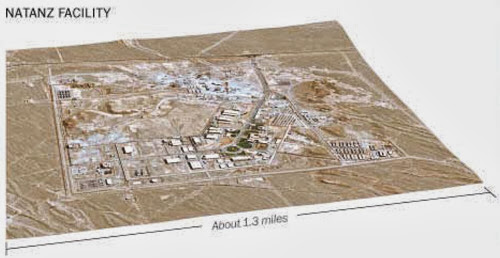
Natanz Facility

Underground Facilities: Intelligence and Targeting Issues (New Documents)

U.S. Intelligence: Hiding of Military Assets by "Rogue Nations" and Other States a Major Security Challenge for 21st Century

U.S. Documents Describe Monitoring Effort Going Back to Early Cold War Years

National Security Archive Electronic Briefing Book No. 439

UPDATE -- September 23, 2013

Originally Posted -- March 23, 2012

For more information contact:
Jeffrey T. Richelson - 202/994-7000
nsarchiv@gwu.edu


Washington, D.C., September 23, 2013 -- While the focus on Syria's chemical weapons use, and the possibility of military action against Syrian government targets pushed aside, for a while, the issue of how to deal with Iran's nuclear program, the two situations have one thing in common -- their reported reliance on underground facilities to shield the production and storage of weapons of mass destruction.

Documents posted today by the National Security Archive show that such sites in Syria are only the latest in a long line of alleged and real underground facilities that have posed a high priority challenge for U.S. and allied intelligence collection and analysis efforts, as well as for military planners. There may be more than 10,000 such facilities worldwide, many of them in hostile territory, and many presumably intended to hide or protect lethal military equipment and activities, including weapons of mass destruction, that could threaten U.S. or allied interests.

Today's posting features 21 new documents, in addition to the 41 records from the Archive's initial March 23, 2012, posting on this subject. The new materials include several concerning a key topic of Cold War intelligence collection and analysis -- hardened and underground communications facilities. Also included for the first time are draft charters for the National Reconnaissance Office (NRO) working group on hardened and buried targets. The majority of the new materials consist of reports from the Asian Studies Detachment (ASD) of the 500th Military Group of the Army Intelligence and Security Command. The ASD reports, based on open source intelligence, focus on various aspects of hardened and buried facilities in North Korea and China.

The 21 new items, with one exception, were acquired via Freedom of Information Act requests or research in the National Archives. The original posting described in detail the agencies and programs the U.S. government has brought to the task of identifying and assessing underground structures in foreign countries since World War II.


Check out today's posting at the National Security Archive website -http://www.gwu.edu/~nsarchiv/NSAEBB/NSAEBB439/

Find us on Facebook - http://www.facebook.com/NSArchive

Unredacted, the Archive blog - http://nsarchive.wordpress.com/


________________________________________________________
THE NATIONAL SECURITY ARCHIVE is an independent non-governmental research institute and library located at The George Washington University in Washington, D.C. The Archive collects and publishes declassified documents acquired through the Freedom of Information Act (FOIA). A tax-exempt public charity, the Archive receives no U.S. government funding; its budget is supported by publication royalties and donations from foundations and individuals.


Thursday, August 16, 2012

Saudi Arabia & Iran Are Overexploiting Their Groundwater Supplies

In the Middle East, water shortages are a widely accepted reality which many countries are trying to fight head on. Worldwide, however, the issue is not so pressing with environmental issues such as energy and emissions taking centre stage. Despite this, new research from McGill University in Montreal and Utrecht University in the Netherlands indicates that the world is increasingly dependent on an unsustainable supply of groundwater. They estimate that the world’s ‘water footprint’, which is defined as the area above ground required to sustain groundwater use, is about 3.5 times the actual area of the available aquifers. And this has huge implications not only on water supplies but for food and political security too.


Combining data from around the world, the research team has been able to measure the amount of water available and the water usage. The result which Tom Gleeson from McGill called ‘sobering’ indicate global overexploitation of groundwater in a number of regions across Asia and North America. The study suggests that around 1.7 billion people – mostly in Asia – are living in areas where underground water reserves are under threat. That means that we humans as well as the vast ecosystems that water supports, are blindly walking into crisis.

The areas that the research showed were under most stress include Saudi Arabia, Iran, northern India and parts of northern China. In the US, the areas included western Mexico, the High Plains and California’s Central Valley. The overexploitation of groundwater supplies in countries such as China, the US and India is linked to their global scale production of food.

“The relatively few aquifers that are being heavily exploited are unfortunately critical to agriculture in a number of different countries,” Tom Gleeson told Reuters. “So even though the number is relatively small, these are critical resources that need better management.”

The study found that Saudi Arabia had substantially depleted its own aquifers (as has Iran), which is why the country is buying up land in Africa to help ensure food security. However, it is not all bad news. According to the data gathered, groundwater depletion isn’t a worldwide problem and 80 percent of aquifers around the world aren’t being depleted. For example, some of the largest reserves of groundwater are under North African countries like Libya, Algeria, Egypt and Sudan and these haven’t been over-exploited yet.

The biggest scheme to get to this water was Libya’s $25 billion Great Manmade River project, built by the dictator Muammar Gaddafi to supply cities including Tripoli, Benghazi and Sirte with an estimated 6.5 million cubic meters of water a day. The problem is that once this water is taken out of these aquifers, it is not replenished and so the need to control our consumption of water is still a pressing issue.

Authors of the study suggest that limits on water extraction, more efficient irrigation and the promotion of diets with less meat (or no meat at all) could make water resources more sustainable. More