Showing posts with label wahabi. Show all posts

Friday, August 22, 2014

Tomgram: Patrick Cockburn, How to Ensure a Thriving Caliphate

Think of the new “caliphate” of the Islamic State, formerly the Islamic State in Iraq and Syria (ISIS), as George W. Bush and Dick Cheney's gift to the world (with a helping hand from the Saudis and other financiers of extremism in the Persian Gulf). How strange that they get so little credit for its rise, for the fact that the outlines of the Middle East, as set up by Europe’s colonial powers in the wake of World War I, are being swept aside in a tide of blood.
Had George and Dick not decided on their “cakewalk” in Iraq, had they not raised the specter of nuclear destruction and claimed that Saddam Hussein’s regime was somehow linked to al-Qaeda and so to the 9/11 attacks, had they not sent tens of thousands of American troops into a burning, looted Baghdad (“stuff happens”), disbanded the Iraqi army, built military bases all over that country, and generally indulged their geopolitical fantasies about dominating the oil heartlands of the planet for eternity, ISIS would have been an unlikely possibility, no matter the ethnic and religious tensions in the region. They essentially launched the drive that broke state power there and created the kind of vacuum that a movement like ISIS was so horrifically well suited to fill.

All in all, it’s a remarkable accomplishment to look back on. In September 2001, when George and Dick launched their “Global War on Terror” to wipe out -- so they then claimed -- “terrorist networks” in up to 60 countries, or as they preferred to put it, “drain the swamp,” there were scattered bands of jihadis globally, while al-Qaeda had a couple of camps in Afghanistan and a sprinkling of supporters elsewhere. Today, in the wake of the invasions of Afghanistan and Iraq and an air power intervention in Libya, after years of drone (and non-drone) bombing campaigns across the Greater Middle East, jihadist groups are thriving in Yemen and Pakistan, spreading through Africa (along with the U.S. military), and ISIS has taken significant parts of Iraq and Syria right up to the Lebanese border for its own bailiwick and is still expanding murderously, despite a renewed American bombing campaign that may only strengthen that movement in the long run.

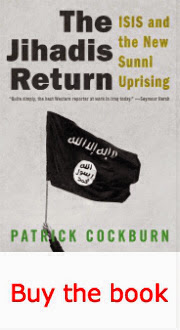
Has anyone covered this nightmare better than the world’s least embedded reporter, Patrick Cockburn of the British Independent? Not for my money. He’s had the canniest, clearest-eyed view of developments in the region for years now. As it happens, when he publishes a new book on the Middle East (the last time was 2008), he makes one of his rare appearances at TomDispatch. This month, his latest must-read work, The Jihadis Return: ISIS and the New Sunni Uprising, is out. Today, this website has an excerpt from its first chapter on why the war on terror was such a failure (and why, if Washington was insistent on invading someplace, it probably should have chosen Saudi Arabia). It includes a special introductory section written just for TomDispatch. Thanks go to his publisher, OR Books. Tom

Why Washington’s War on Terror Failed

The Underrated Saudi Connection

By Patrick Cockburn

[This essay is excerpted from the first chapter of Patrick Cockburn’s new book, The Jihadis Return: ISIS and the New Sunni Uprising, with special thanks to his publisher, OR Books. The first section is a new introduction written for TomDispatch.]

There are extraordinary elements in the present U.S. policy in Iraq and Syria that are attracting surprisingly little attention. In Iraq, the U.S. is carrying out air strikes and sending in advisers and trainers to help beat back the advance of the Islamic State of Iraq and the Levant (better known as ISIS) on the Kurdish capital, Erbil. The U.S. would presumably do the same if ISIS surrounds or attacks Baghdad. But in Syria, Washington’s policy is the exact opposite: there the main opponent of ISIS is the Syrian government and the Syrian Kurds in their northern enclaves. Both are under attack from ISIS, which has taken about a third of the country, including most of its oil and gas production facilities.

But U.S., Western European, Saudi, and Arab Gulf policy is to overthrow President Bashar al-Assad, which happens to be the policy of ISIS and other jihadis in Syria. If Assad goes, then ISIS will be the beneficiary, since it is either defeating or absorbing the rest of the Syrian armed opposition. There is a pretense in Washington and elsewhere that there exists a “moderate” Syrian opposition being helped by the U.S., Qatar, Turkey, and the Saudis. It is, however, weak and getting more so by the day. Soon the new caliphate may stretch from the Iranian border to the Mediterranean and the only force that can possibly stop this from happening is the Syrian army.

The reality of U.S. policy is to support the government of Iraq, but not Syria, against ISIS. But one reason that group has been able to grow so strong in Iraq is that it can draw on its resources and fighters in Syria. Not everything that went wrong in Iraq was the fault of Prime Minister Nouri al-Maliki, as has now become the political and media consensus in the West. Iraqi politicians have been telling me for the last two years that foreign backing for the Sunni revolt in Syria would inevitably destabilize their country as well. This has now happened.

By continuing these contradictory policies in two countries, the U.S. has ensured that ISIS can reinforce its fighters in Iraq from Syria and vice versa. So far, Washington has been successful in escaping blame for the rise of ISIS by putting all the blame on the Iraqi government. In fact, it has created a situation in which ISIS can survive and may well flourish.

Using the al-Qa'ida Label

The sharp increase in the strength and reach of jihadist organizations in Syria and Iraq has generally been unacknowledged until recently by politicians and media in the West. A primary reason for this is that Western governments and their security forces narrowly define the jihadist threat as those forces directly controlled by al-Qa‘ida central or “core” al-Qa‘ida. This enables them to present a much more cheerful picture of their successes in the so-called war on terror than the situation on the ground warrants.

In fact, the idea that the only jihadis to be worried about are those with the official blessing of al-Qa‘ida is naïve and self-deceiving. It ignores the fact, for instance, that ISIS has been criticized by the al-Qa‘ida leader Ayman al-Zawahiri for its excessive violence and sectarianism. After talking to a range of Syrian jihadi rebels not directly affiliated with al-Qa‘ida in southeast Turkey earlier this year, a source told me that “without exception they all expressed enthusiasm for the 9/11 attacks and hoped the same thing would happen in Europe as well as the U.S.”

Jihadi groups ideologically close to al-Qa‘ida have been relabeled as moderate if their actions are deemed supportive of U.S. policy aims. In Syria, the Americans backed a plan by Saudi Arabia to build up a “Southern Front” based in Jordan that would be hostile to the Assad government in Damascus, and simultaneously hostile to al-Qa‘ida-type rebels in the north and east. The powerful but supposedly moderate Yarmouk Brigade, reportedly the planned recipient of anti-aircraft missiles from Saudi Arabia, was intended to be the leading element in this new formation. But numerous videos show that the Yarmouk Brigade has frequently fought in collaboration with JAN, the official al-Qa‘ida affiliate. Since it was likely that, in the midst of battle, these two groups would share their munitions, Washington was effectively allowing advanced weaponry to be handed over to its deadliest enemy. Iraqi officials confirm that they have captured sophisticated arms from ISIS fighters in Iraq that were originally supplied by outside powers to forces considered to be anti-al-Qa‘ida in Syria. More


Wednesday, July 16, 2014

How Saudi Arabia Helped Isis Take Over the North of Iraq

How far is Saudi Arabia complicit in the Isis takeover of much of northern Iraq, and is it stoking an escalating Sunni-Shia conflict across the Islamic world?

Some time before 9/11, Prince Bandar bin Sultan, once the powerful Saudi ambassador in Washington and head of Saudi intelligence until a few months ago, had a revealing and ominous conversation with the head of the British Secret Intelligence Service, MI6, Sir Richard Dearlove. Prince Bandar told him: “The time is not far off in the Middle East, Richard, when it will be literally ‘God help the Shia’. More than a billion Sunnis have simply had enough of them.”

The fatal moment predicted by Prince Bandar may now have come for many Shia, with Saudi Arabia playing an important role in bringing it about by supporting the anti-Shia jihad in Iraq and Syria. Since the capture of Mosul by the Islamic State of Iraq and the Levant (Isis) on 10 June, Shia women and children have been killed in villages south of Kirkuk, and Shia air force cadets machine-gunned and buried in mass graves near Tikrit.

In Mosul, Shia shrines and mosques have been blown up, and in the nearby Shia Turkoman city of Tal Afar 4,000 houses have been taken over by Isis fighters as “spoils of war”. Simply to be identified as Shia or a related sect, such as the Alawites, in Sunni rebel-held parts of Iraq and Syria today, has become as dangerous as being a Jew was in Nazi-controlled parts of Europe in 1940.

There is no doubt about the accuracy of the quote by Prince Bandar, secretary-general of the Saudi National Security Council from 2005 and head of General Intelligence between 2012 and 2014, the crucial two years when al-Qa’ida-type jihadis took over the Sunni-armed opposition in Iraq and Syria. Speaking at the Royal United Services Institute last week, Dearlove, who headed MI6 from 1999 to 2004, emphasised the significance of Prince Bandar’s words, saying that they constituted “a chilling comment that I remember very well indeed”.

He does not doubt that substantial and sustained funding from private donors in Saudi Arabia and Qatar, to which the authorities may have turned a blind eye, has played a central role in the Isis surge into Sunni areas of Iraq. He said: “Such things simply do not happen spontaneously.” This sounds realistic since the tribal and communal leadership in Sunni majority provinces is much beholden to Saudi and Gulf paymasters, and would be unlikely to cooperate with Isis without their consent.

Dearlove’s explosive revelation about the prediction of a day of reckoning for the Shia by Prince Bandar, and the former head of MI6′s view that Saudi Arabia is involved in the Isis-led Sunni rebellion, has attracted surprisingly little attention. Coverage of Dearlove’s speech focused instead on his main theme that the threat from Isis to the West is being exaggerated because, unlike Bin Laden’s al-Qa’ida, it is absorbed in a new conflict that “is essentially Muslim on Muslim”. Unfortunately, Christians in areas captured by Isis are finding this is not true, as their churches are desecrated and they are forced to flee. A difference between al-Qa’ida and Isis is that the latter is much better organised; if it does attack Western targets the results are likely to be devastating.

The forecast by Prince Bandar, who was at the heart of Saudi security policy for more than three decades, that the 100 million Shia in the Middle East face disaster at the hands of the Sunni majority, will convince many Shia that they are the victims of a Saudi-led campaign to crush them. “The Shia in general are getting very frightened after what happened in northern Iraq,” said an Iraqi commentator, who did not want his name published. Shia see the threat as not only military but stemming from the expanded influence over mainstream Sunni Islam of Wahhabism, the puritanical and intolerant version of Islam espoused by Saudi Arabia that condemns Shia and other Islamic sects as non-Muslim apostates and polytheists.

Dearlove says that he has no inside knowledge obtained since he retired as head of MI6 10 years ago to become Master of Pembroke College in Cambridge. But, drawing on past experience, he sees Saudi strategic thinking as being shaped by two deep-seated beliefs or attitudes. First, they are convinced that there “can be no legitimate or admissible challenge to the Islamic purity of their Wahhabi credentials as guardians of Islam’s holiest shrines”. But, perhaps more significantly given the deepening Sunni-Shia confrontation, the Saudi belief that they possess a monopoly of Islamic truth leads them to be “deeply attracted towards any militancy which can effectively challenge Shia-dom”.

Western governments traditionally play down the connection between Saudi Arabia and its Wahhabist faith, on the one hand, and jihadism, whether of the variety espoused by Osama bin Laden and al-Qa’ida or by Abu Bakr al-Baghdadi’s Isis. There is nothing conspiratorial or secret about these links: 15 out of 19 of the 9/11 hijackers were Saudis, as was Bin Laden and most of the private donors who funded the operation.

The difference between al-Qa’ida and Isis can be overstated: when Bin Laden was killed by United States forces in 2011, al-Baghdadi released a statement eulogising him, and Isis pledged to launch 100 attacks in revenge for his death.

But there has always been a second theme to Saudi policy towards al-Qa’ida type jihadis, contradicting Prince Bandar’s approach and seeing jihadis as a mortal threat to the Kingdom. Dearlove illustrates this attitude by relating how, soon after 9/11, he visited the Saudi capital Riyadh with Tony Blair.

He remembers the then head of Saudi General Intelligence “literally shouting at me across his office: ’9/11 is a mere pinprick on the West. In the medium term, it is nothing more than a series of personal tragedies. What these terrorists want is to destroy the House of Saud and remake the Middle East.’” In the event, Saudi Arabia adopted both policies, encouraging the jihadis as a useful tool of Saudi anti-Shia influence abroad but suppressing them at home as a threat to the status quo. It is this dual policy that has fallen apart over the last year.

Saudi sympathy for anti-Shia “militancy” is identified in leaked US official documents. The then US Secretary of State Hillary Clinton wrote in December 2009 in a cable released by Wikileaks that “Saudi Arabia remains a critical financial support base for al-Qa’ida, the Taliban, LeT [Lashkar-e-Taiba in Pakistan] and other terrorist groups.” She said that, in so far as Saudi Arabia did act against al-Qa’ida, it was as a domestic threat and not because of its activities abroad. This policy may now be changing with the dismissal of Prince Bandar as head of intelligence this year. But the change is very recent, still ambivalent and may be too late: it was only last week that a Saudi prince said he would no longer fund a satellite television station notorious for its anti-Shia bias based in Egypt.

The problem for the Saudis is that their attempts since Bandar lost his job to create an anti-Maliki and anti-Assad Sunni constituency which is simultaneously against al-Qa’ida and its clones have failed.

By seeking to weaken Maliki and Assad in the interest of a more moderate Sunni faction, Saudi Arabia and its allies are in practice playing into the hands of Isis which is swiftly gaining full control of the Sunni opposition in Syria and Iraq. In Mosul, as happened previously in its Syrian capital Raqqa, potential critics and opponents are disarmed, forced to swear allegiance to the new caliphate and killed if they resist.

The West may have to pay a price for its alliance with Saudi Arabia and the Gulf monarchies, which have always found Sunni jihadism more attractive than democracy. A striking example of double standards by the western powers was the Saudi-backed suppression of peaceful democratic protests by the Shia majority in Bahrain in March 2011. Some 1,500 Saudi troops were sent across the causeway to the island kingdom as the demonstrations were ended with great brutality and Shia mosques and shrines were destroyed.

An alibi used by the US and Britain is that the Sunni al-Khalifa royal family in Bahrain is pursuing dialogue and reform. But this excuse looked thin last week as Bahrain expelled a top US diplomat, the assistant secretary of state for human rights Tom Malinowksi, for meeting leaders of the main Shia opposition party al-Wifaq. Mr Malinowski tweeted that the Bahrain government’s action was “not about me but about undermining dialogue”.

Western powers and their regional allies have largely escaped criticism for their role in reigniting the war in Iraq. Publicly and privately, they have blamed the Iraqi Prime Minister Nouri al-Maliki for persecuting and marginalising the Sunni minority, so provoking them into supporting the Isis-led revolt. There is much truth in this, but it is by no means the whole story. Maliki did enough to enrage the Sunni, partly because he wanted to frighten Shia voters into supporting him in the 30 April election by claiming to be the Shia community’s protector against Sunni counter-revolution.

But for all his gargantuan mistakes, Maliki’s failings are not the reason why the Iraqi state is disintegrating. What destabilised Iraq from 2011 on was the revolt of the Sunni in Syria and the takeover of that revolt by jihadis, who were often sponsored by donors in Saudi Arabia, Qatar, Kuwait and United Arab Emirates. Again and again Iraqi politicians warned that by not seeking to close down the civil war in Syria, Western leaders were making it inevitable that the conflict in Iraq would restart. “I guess they just didn’t believe us and were fixated on getting rid of [President Bashar al-] Assad,” said an Iraqi leader in Baghdad last week.

Of course, US and British politicians and diplomats would argue that they were in no position to bring an end to the Syrian conflict. But this is misleading. By insisting that peace negotiations must be about the departure of Assad from power, something that was never going to happen since Assad held most of the cities in the country and his troops were advancing, the US and Britain made sure the war would continue.

The chief beneficiary is Isis which over the last two weeks has been mopping up the last opposition to its rule in eastern Syria. The Kurds in the north and the official al-Qa’ida representative, Jabhat al-Nusra, are faltering under the impact of Isis forces high in morale and using tanks and artillery captured from the Iraqi army. It is also, without the rest of the world taking notice, taking over many of the Syrian oil wells that it did not already control.

Saudi Arabia has created a Frankenstein’s monster over which it is rapidly losing control. The same is true of its allies such as Turkey which has been a vital back-base for Isis and Jabhat al-Nusra by keeping the 510-mile-long Turkish-Syrian border open. As Kurdish-held border crossings fall to Isis, Turkey will find it has a new neighbour of extraordinary violence, and one deeply ungrateful for past favours from the Turkish intelligence service.

As for Saudi Arabia, it may come to regret its support for the Sunni revolts in Syria and Iraq as jihadi social media begins to speak of the House of Saud as its next target. It is the unnamed head of Saudi General Intelligence quoted by Dearlove after 9/11 who is turning out to have analysed the potential threat to Saudi Arabia correctly and not Prince Bandar, which may explain why the latter was sacked earlier this year.

Nor is this the only point on which Prince Bandar was dangerously mistaken. The rise of Isis is bad news for the Shia of Iraq but it is worse news for the Sunni whose leadership has been ceded to a pathologically bloodthirsty and intolerant movement, a sort of Islamic Khmer Rouge, which has no aim but war without end.

The Sunni caliphate rules a large, impoverished and isolated area from which people are fleeing. Several million Sunni in and around Baghdad are vulnerable to attack and 255 Sunni prisoners have already been massacred. In the long term, Isis cannot win, but its mix of fanaticism and good organisation makes it difficult to dislodge.

“God help the Shia,” said Prince Bandar, but, partly thanks to him, the shattered Sunni communities of Iraq and Syria may need divine help even more than the Shia. More