Saturday, September 20, 2014

No nuclear waste: Fuel of future produced at Russia's high-tech underground plant

Russia’s ‘Breakthrough’ energy project enables closed a nuclear fuel cycle and a future without radioactive waste. The first batch of MOX nuclear fuel has been manufactured for the world’s only NPP industrially power generating breeder reactors.

The first ten kilograms of the mixed-oxide fuel (MOX) - a mixture of plutonium and uranium dioxides (UO2 and PuO2), have been industrially produced by Russia’s nuclear monopoly, Rosatom, at the Mining & Chemical Combine (GKhK) in the Krasnoyarsk region.

Mixed-oxide fuel (MOX

A world first, tablets of the fuel of the future have been put on serial production and are destined for Russia’s next generation BN-800 breeder reactor (880 megawatts), currently undergoing tests at the Beloyarskaya nuclear power plant.

The production line, now undergoing start-up and adjustment, was assembled in a mine 200 meters underground and will become fully operational by the end of 2014.

Fast fission reactors solve the problem of depleted uranium nuclear fuel on the planet. They can ‘burn’ not only ‘classic’ uranium-235, (scarce and already coming to an end), but also uranium-238, which is abundant, and expands the world’s nuclear fuel capacity by an estimated 50 times.

Fuel for breeder reactors could even be made from nuclear waste, which from an ecological point of view is a priceless advantage.

The GKhK facility will be equipped with a unique dissolvent reactor that will break down nuclear waste containing plutonium and extract plutonium dioxide to be used in MOX-fuel production.

Also, while producing electric energy, breeder reactors actually generate more fissile material, and that one also can be used as nuclear fuel.

The GKhK plant is Russia’s leading full nuclear fuel cycle complex, processing nuclear waste from power generating nuclear reactors to establish future nuclear fuel ring closure.

MOX-fuel for previous versions of fast breeder reactors in the USSR and Russia had limited production at Russia’s oldest Mayak nuclear processing facility.

Starting from 2016, industrial-level MOX-fuel production in Russia will run at full capacity.

"Produced MOX-fuel tablets fully conform to the technical specifications," Rosatom’s statement said, adding that the fuel will now be thoroughly tested.

Energy from here to eternity

Humankind has already produced so much nuclear waste that it would take decades, if not hundreds of years to process and recycle it. As of now, the only light at the end of the tunnel is fast-neutron reactor technology.

The fast-neutron nuclear – or breeder - reactors use technology that enables the use of a wider range of radioactive elements as fuel, thus considerably enlarging the potential stock of nuclear fuel for electric power generation.
Russia is the only country that operates fast neutron reactors industrially.

After decades of research, practically all breeder reactor projects around the world, including in the US, France, Japan and several other countries possessing nuclear energy technologies, were closed down. The only country that currently has operating breeder reactor power generation is Russia.

Over the last 50 years the USSR, then Russia, introduced a number of industrial and research fast neutron reactors. One of them, the BN-600 (600 megawatt), running at the Beloyarskaya nuclear power plant since 1980, is the only fast neutron reactor in the world that generates electricity on an industrial scale. The BN-600 is also the most powerful operable fast neutron reactor in the world.

The Beloyarskaya nuclear power plant is in Zarechny, some 45 kilometers from the regional center of Yekaterinburg, in the Urals region.

This year a new BN-800 breeder reactor will become operable at the Beloyarskaya plant.

The service life of the BN-800 breeder reactor is expected to be 45 years. Every month it will produce 475 million kilowatt hours of electricity, enough to ensure constant supply to 3.15 million families (the average monthly consumption of a family of three is 150 kilowatt hours).

The BN-800 uses liquid metal sodium (Na) as a coolant heat transfer agent. Commercial operation of the new reactor is planned to start in early 2015.

Russian physicists have already elaborated the next step for the revolutionary technology: a BN-1200 breeder reactor that is set to be assembled at the same Beloyarskaya nuclear power plant by 2020.

Overall, eight BN-1200 breeder reactors are expected to be constructed by 2030, which means that Russia is the only nation that is entering a new era of nuclear energy power generation – the closed nuclear fuel cycle, in other words truly clean and practically unlimited nuclear power generation. More


Tuesday, September 16, 2014

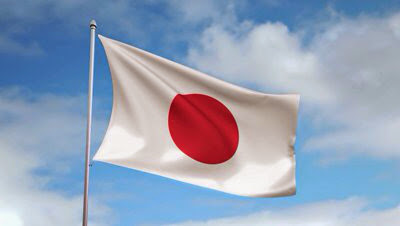
India-Japan proliferation: delinquency or a crime? By Mobeen Tariq

The ongoing India-Japan negotiations on a civil nuclear agreement were the hallmark of Indian Premier Modi’s recent visit to Japan.


Modi could not achieve the breakthrough on the much sought after civil nuclear deal. There are issues in the prospective Japan-India Nuclear Cooperation Agreement that can have multiple, deplorable implications. India possesses nuclear weapons and has tested these several times. It is not a signatory of the Nuclear Nonproliferation Treaty (NPT). If nonproliferation norms and Japanese traditional championing of these were to be followed, Tokyo cannot enter into nuclear trade with New Delhi.

Nuclear technology is the key to Japan’s energy sector and affects its industrial output. Overblown safety fears after the Fukushima nuclear power plant accident in 2011 affected the public’s sentiment against nuclear energy but the economic realities have changed the government’s and public’s behaviour. Japan is one of the major traders of nuclear technology for peaceful purposes and a member of the Nuclear Suppliers Group (NSG) that was founded in 1975 after India tested a nuclear weapons device using fissile material diverted from fuel provided for nuclear power generation.

India claims to have a huge energy deficit and not having enough uranium to fuel its existing and upcoming nuclear power plants that will add millions of volts to its impoverished energy mix. New Delhi boasts a fat purse and exerts sufficient political influence to woo some nuclear supplier states in foregoing their domestic and international nonproliferation commitments to trade with India. That is why the US arm-twisted the members of the NSG in giving India an exceptional waiver to trade with that country. Japan was also part of that Faustian bargain but Tokyo could not be charmed into becoming the 12th capital with which India could trade in nuclear materials. Giving a NSG waiver was delinquency but nuclear trading or allowing New Delhi to become a member of the group would be a crime. That is perhaps why Japan has demurred from signing a nuclear deal with India.

For its own sake, Japan is gearing up to start a massive nuclear fuel reprocessing plant that can produce nine tonnes of weapons usable plutonium annually, enough for 2,000 atomic bombs!

For its own sake, Japan is gearing up to start a massive nuclear fuel reprocessing plant that can produce nine tonnes of weapons usable plutonium annually, enough for 2,000 atomic bombs! This is in spite of the fact that 150,000 of its people remain homeless and that the nuclear disaster has cost almost $ 100 billion. Japan is a rational state and has reverted to nuclear energy because it is considered a safe and inexhaustible source of energy and a panacea against its dependence on hydrocarbon imports from the Middle East and elsewhere. The South China Sea is gradually becoming a powder keg due to US and Chinese competition, forcing Japan to hedge its bets on safer energy production alternatives to fossil fuels.

Indian negotiations for a civil nuclear deal with Japan started in Tokyo in June 2010. Two consecutive rounds followed in October 2010 and November 2010 in New Delhi and Tokyo. However, India slowed the pace of negotiations in the wake of the Fukushima disaster in March 2011. The last round of talks was held in November 2013. Japanese companies such as specialist reactor vessel manufacturer JSW are keen on signing a nuclear deal but the government has insisted that India agree to more stringent inspections than those required under nuclear cooperation pacts with other countries. In the longer run, Japan will have to make a choice between its trade and geopolitical interests against non-proliferation commitments.

Another hold up in the nuclear deal has been India’s refusal to accept limited liability for commercial operators who supply equipment. The Indian Civil Liability for Nuclear Damage Act of 2010 is only acceptable to states where their governments provide a financial cushion to the nuclear industry in taking the huge liability enforced by India. The prospective Japan-India Nuclear Cooperation Agreement would be a de facto legitimisation of India’s nuclear weapons status. Every gram of nuclear fuel that India would import from Japan would allow its indigenous uranium to be used for nuclear weapons production. If Japan enters a deal with India it joins a dozen others in effectively participating in New Delhi’s burgeoning nuclear weapons production.

India has invested heavily in nuclear technology for prestige and power. In his recent book The Power of Promise: Examining Nuclear Energy in India, Ramana explains how India’s Department of Aatomic Energy first acquired its present political clout, and how the Atomic Energy Commission, which reports directly to the Prime Minister, achieved its immunity to public scrutiny despite repeated failures to meet India’s nuclear energy needs. This domestic dynamic complements Indian global power ambition and some states happily let this happen for their short-term economic and geopolitical interests. It is just a matter of time that Faust will do what he is best at: having bought souls, he will ultimately challenge his hosts.

The writer is a freelance columnist


Saturday, September 6, 2014

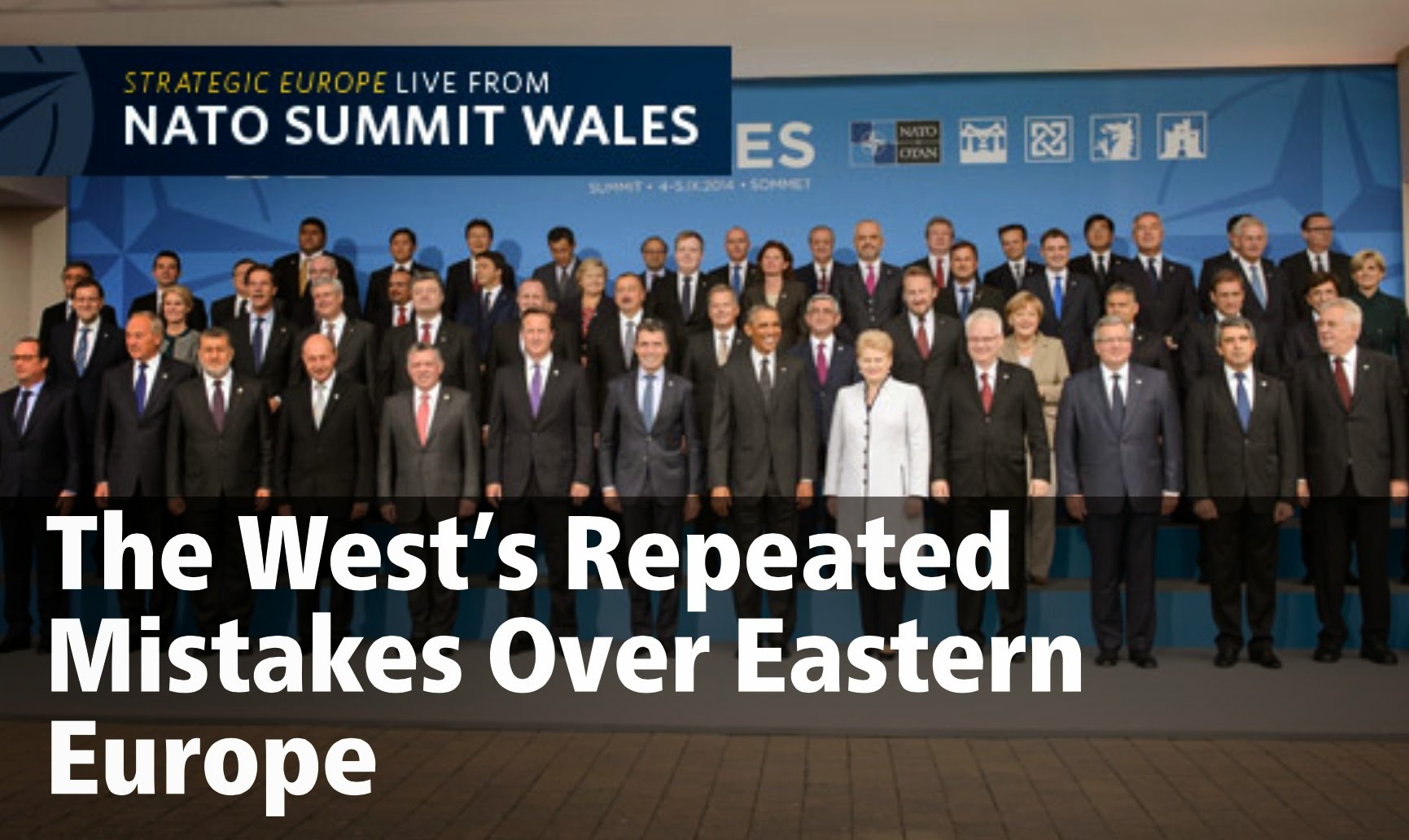
The West’s Repeated Mistakes Over Eastern Europe

Something very similar is happening now in the countries east of the European Union and west of Russia. As the people of Ukraine’s Euromaidan protest movement showed in January 2014 on Kiev’s Independence Square, they were not going to accept a post–Cold War status quo in which Russia sets the agenda. They wanted to choose their own political path.

It seems that history is repeating itself. This time round, NATO is not prepared to help the countries in Europe’s East, while the EU is divided and weak over how to deal with Russian President Vladimir Putin’s invasion of eastern Ukraine and illegal annexation of Crimea in March.

During a press conference with Ukrainian President Petro Poroshenko on September 4 at the NATO summit in Wales, the alliance’s Secretary General Anders Fogh Rasmussen tried to put the best spin on NATO help to Ukraine. Since NATO is not prepared even to consider the idea of Ukraine one day becoming a member of the organization, Rasmussen—and indeed Poroshenko—didn’t mention the “m-word.”

“It is for the Ukrainian people to decide . . . [their] future relationship with NATO,” the secretary general said—as if Putin will allow that to happen.

Rasmussen did say that NATO allies had pledged to provide support to help Ukraine improve its own security. “Our support is concrete and tangible. . . . Ukraine has stood by NATO. Now in these difficult times, NATO stands by Ukraine.”

Rasmussen explained how the allies had established “a comprehensive and tailored package of measures” to help Ukraine. The focus of NATO support would be on four areas: rehabilitation for injured troops, cyberdefense, logistics, and command and control and communications. “And allies will assist Ukraine with around €15 million [$19 million] through NATO,” Rasmussen added. NATO would not be supplying weapons. But that won’t stop individual countries from doing so.

Above all, the NATO chief insisted that an independent, sovereign, and stable Ukraine firmly committed to democracy and the rule of law was key to Euro-Atlantic security. “We stand united in our support of Ukraine’s sovereignty and territorial integrity,” he said.

Actually, the West is only rhetorically united over Ukraine’s sovereignty and territorial integrity. Western nations have no real intentions of matching that statement with deeds to allow Ukraine to regain territory in eastern Ukraine that has been taken over by rebels backed by Russian troops and tanks—let alone Crimea.

As for the EU, it is prepared to impose more sanctions on Russia—but with many misgivings and criticisms from several member states, especially Hungary, Slovakia, and the Czech Republic. That is despite the fact that until twenty-five years ago, these countries were under the Soviet yoke.

The measures undertaken by NATO and the EU are insufficient because they perpetuate the new rules of the game that Putin is writing across Eastern Europe. And because the West’s responses give him no reason to desist, at least for the moment, Western countries are repeating the mistakes they made when Eastern European civil society reared its head during the Communist era. The West is not prepared to stand up to Putin’s Russia.

Instead, willy-nilly, the West is allowing a new cordon sanitaire of countries to take hold between Russia and the EU. But if Putin and European leaders believe that this buffer zone is going to represent a new, stable “post-post–Cold War” status quo, they are seriously mistaken.

The reason is that civil society across these countries, from Belarus to Armenia, will not accept these new demarcation lines on a permanent basis. Just as Poles challenged their country’s Communist regime in 1980, the same will happen across the states in Europe’s East.

That has already happened in Ukraine. And despite the war in eastern Ukraine and the continuing influence of the country’s oligarchs, the supporters of the Euromaidan are not prepared to let this revolution fail. They are not naive enough to believe that the EU and NATO will come to their rescue. Instead, against all the odds, they will continue to struggle for their freedom to choose their own political path. More


Friday, September 5, 2014

I'd Dump the Israelis Tomorrow -Ex-CIA Michael Scheuer Tells Congress

I'd Dump the Israelis Tomorrow -Ex-CIA Michael Scheuer Tells Congress House Homeland Security Committee on October 9, 2013

Iran-Contra Revisited

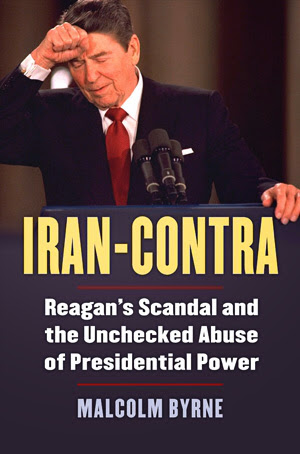
Iran-Contra Revisited: New Book Places Reagan at Center of 1980s Scandal

Lack of Legal or Legislative Closure to Affair Opened Path to Future Presidential Abuses

Narrative Spotlights Iranian, Israeli, Nicaraguan Perspectives

National Security Archive Electronic Briefing Book No. 483 - Posted September 5, 2014

For more information contact: +1 202/994-7000 or nsarchiv@gwu.edu

Washington, D.C., September 5, 2014 -- A new book on the Iran-Contra affair shows that President Ronald Reagan stood at the epicenter of the scandal both in terms of his willingness to break the law in order to free American hostages in Lebanon and his failure to take account of the costs and consequences of his decisions, including the illicit conduct of numerous aides.

Advance praise for "Iran-Contra: Reagan's Scandal and the Unchecked Abuse of Presidential Power" by Malcolm Byrne (University Press of Kansas, September 15, 2014), includes this from Seymour Hersh: "At last, the Reagan administration's Iran-Contra affair finally has a comprehensive history worthy of the scandal ... Malcolm Byrne has told the complex story in brilliant fashion."

"Iran-Contra" details the historical, political, and institutional background against which the affair played out. Utilizing tens of thousands of pages of previously classified materials, the narrative describes in detail all the administration's decisions and actions, and discusses the rationales invoked at the time as well as after the fact (explanations that sometimes differed widely).

Looking beyond the U.S. side, the volume explores -- through documents and interviews -- the views and actions of Iranians, Israelis, Nicaraguans, and others who played parts in the affair. Many of these insights are published here for the first time.

"Iran-Contra" is the first full-length account of the affair to study and assess the various official investigations that were convened -- the Tower Commission, the joint congressional hearings, and the independent counsel's inquiry. The limitations of each helped lead to an inconclusive end to the affair, which has had implications for the unchecked conduct of future presidents and their administrations.

While the scandal had many contributors -- including Congress, which failed to avert either element of the affair or to pass meaningful legislation in its wake -- the role of the president and his top aides stands out.

Today's posting includes a revealing series of recently declassified high-level records that explore the president's thinking and actions during the affair.


Check out today's posting at the National Security Archive's Website -http://www2.gwu.edu/~nsarchiv/NSAEBB/NSAEBB483/

Find us on Facebook - http://www.facebook.com/NSArchive

Unredacted, the Archive blog - http://nsarchive.wordpress.com/

________________________________________________________
THE NATIONAL SECURITY ARCHIVE is an independent non-governmental research institute and library located at The George Washington University in Washington, D.C. The Archive collects and publishes declassified documents acquired through the Freedom of Information Act (FOIA). A tax-exempt public charity, the Archive receives no U.S. government funding; its budget is supported by publication royalties and donations from foundations and individuals.
_________________________________________________________


Thursday, September 4, 2014

ADB Spotlights Pakistan’s Water Assessment and Management Plan


News: ADB Spotlights Pakistan’s Water Assessment and Management Plan

ADBSeptember 2014: The Asian Development Bank (ADB) has published a report titled ‘Water Balance: Achieving Sustainable Development through a Water Assessment and Management Plan – The Case of Federally Administered Tribal Areas (FATA), Pakistan.' The report presents the case of the development of the FATA Water Assessment and Management Plan, outlining elements necessary in such assessment, and emphasizing that inefficient and unsustainable management of development initiatives result from lack of information about water availability and cause watershed degradation.


Integrated water resources management (IWRM) was used as a core approach in the development of possible activities to promote the sustainable use of water resources in the FATA region. While noting much of the data used is historical, the report emphasizes that climate change is likely to alter current water availability patterns, and calls for integrating hydrological forecasting and climate change models into the assessment.


The report includes sections on: background; project area; assessing surface water availability; assessing groundwater; assessing water consumption; water balance model; water management plan; and conclusions. [Publication: Water Balance: Achieving Sustainable Development through a Water Assessment and Management Plan – The Case of Federally Administered Tribal Areas (FATA), Pakistan]


Read more: http://water-l.iisd.org/news/adb-spotlights-pakistans-water-assessment-and-management-plan/


Tuesday, September 2, 2014

Ned Breslin: thinking big about water supply

Jordan Levy on Ned Breslin

Ned Breslin believes that too many organisations who are providing clean water and sanitation are chasing numbers. He wants to see them be bold enough to operate towards a long-term vision for clean water for everyone. This may seem simple, but he says this is not the way most in the sector operate. He believes these short-term achievements do not always contribute towards solving the systematic issues. I am inspired by Ned and his organisation because they don’t rely on short-term outputs to build legitimacy regardless of outside pressure to do so. They are not afraid to say that real solutions take time.

Ned Breslin on Water for People

The problem is clear. Three decades of support for water projects from NGOs, governments and large and small donors alike have not transformed people’s lives and country’s economic trajectories as such massive investments should.

Few celebrate the report from the World Health Organisation and Unicef (pdf) that shows progress on water supply worldwide – as contradictory evidence paints a much more unfortunate story. The European Union’s scathing audit of water aid investments and the Dutch government’s brave evaluation of their own work (pdf) offer sobering insight into water-sector history and challenges moving forward.

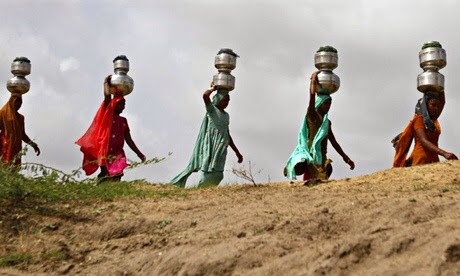
The impact of such failure is also sadly clear. Girls continue to fetch polluted water from muddy puddles and rivers, walking past broken hand-pumps and schools they would be attending if they had the time. To break this cycle, Water For People, the IRC, Water and Sanitation for the Urban Poor, One Drop, and some members of the Millennium Water Alliance are partnering with governments and the local private sector to change the water sector narrative.

We are testing this initiative – called Everyone Forever (EF) – across Africa, Asia and Latin America. The concept is that districts maintain water services for everyone without the need for further philanthropic aid or support.

EF takes a page from polio and smallpox eradication efforts that saturated entire districts, consisting of millions of people and hundreds and thousands of villages. “Everyone” is only achieved when every family, school and clinic in a target district has access to water services, that includes the hardest to reach, the poorest, the disabled, the politically marginalised and the socially ostracised. The poorest in those areas are receiving water services because other residents are covering their tariffs. “Forever” is only achieved when districts show they can sustain these investments over time as populations grow, water resources are threatened, economies change and infrastructure ages.

EF works with governments and insists that their financial support is essential for success. We have seen a 39% increase in government investments towards EF in the past year, with examples like the district of Rulindo in Rwanda now spending over $1m a year on water infrastructure.

Two districts – Chinda, Honduras and Cuchumuela, Bolivia – have reached full coverage verified by the national government. Another five areas are close, including an island in the Ganges in India where half a million pilgrims use the local sanitation system every year (pdf).

One mayor in Bolivia now brags about his district achieving “everyone” status. As a result, other mayors across the country are replicating EF, channeling their investments towards full district coverage. Similar spread is happening in India, Rwanda, Ghana, Uganda and Honduras.

Momentum is now building scaled work that excludes nobody, transcends individual communities and is focused on sustainability. Everyone Forever offers a model that is hard to argue against by politicians and development agencies. The alternative – more projects and hollow slogans of coverage delinked from investments – is simply not good enough anymore. More

Ned Breslin is the CEO of Water for the People. Follow @NedBreslin on Twitter.