Monday, October 15, 2012

Reclaiming Pakistan By Michael Krepon

NewBanner-SouthAsia 2

Reclaiming Pakistan

By Michael Krepon


A hyphenated word has hung like a shroud over Pakistan ever since its founding father, Muhammad Ali Jinnah, vocalized what Great Britain produced in its hasty retreat from empire: a moth-eaten state. In 1947, a British barrister, new to the subcontinent, drew artificial lines on a map that carved up the Punjab, Bengal and Kashmir, producing a hopelessly divided independent state of Pakistan. Pakistan remains a moth-eaten country, only now, the spaces beyond the writ of the state are home to extremist groups. They can be found in Pakistan’s heartland as well as on its periphery. Pakistan’s military and intelligence services nurtured them with the expectation of gaining leverage against India and within Afghanistan. Now, these quasi-independent fiefdoms fill the spaces vacated by poor governance, economic stagnation, corruption, flimsy social services, and a deteriorating educational system.

Among these groups, the Lashkar-e-Taiba has focused primarily on Indian targets – so far. The Afghan Taliban fire primarily at US and NATO forces – so far. Currently, the biggest threat to Pakistan’s military and intelligence services is the Tehrik-e-Taliban Pakistan, an umbrella group of tribal fighters mobilized after President Pervez Musharraf ordered commando units to seize control of the “Red Mosque” in Islamabad, whose clerics were openly defying the state. A ten-day siege resulted in approximately 100 deaths, prompting a war of vengeance.

This war regularly takes a toll of innocent bystanders in shops and bazaars. Music shops and girls’ school are regular targets. The latest targeted victim of violence, a 14-year old school girl riding in a bus -- has generated a moment of national introspection. Malala Yousufzai gained global attention as a champion of education for girls, which is considered a crime by obscurantists with guns in Pakistan. She wanted to be a doctor. Now she is in a hospital bed in Rawalpindi, fighting to recover from bullet wound to her head.

The TTP’s home base is in the tribal lands of Waziristan, but its reach extends all over Pakistan. Whenever Pakistan’s military forces turn up the heat, the TTP reacts by carrying out mass-casualty acts of violence. No city in Pakistan is exempt. Prosecutions and judicial findings are hard to come by in Pakistan, but the TTP may have been behind the December, 2007 assassination of Benazir in Rawalpindi, the September, 2008 truck bombing of the Marriott Hotel in Islamabad, and the failed New York City Times Square bombing in May 2010.

The TTP has also been implicated in brazen suicide missions directed at Pakistani military installations. Three are of particular note: the October, 2009 attack on Army headquarters in Rawalpindi, the May 2010 Mehran Navy base attack in Karachi, soon after the Osama bin Laden raid, and the August 2012 Kamra Air Force base attack in the Punjab. Local security forces, reinforced by commando units, repulsed these attacks. Additional strikes have been directed at soft targets, such as buses outside defense production compounds and military facilities. Regional ISI offices have also been hit.

More attacks are likely, especially if Pakistan’s armed forces ratchet up their operations against the TTP in North Waziristan. Those who demand that the Pakistan Army confront without further delay the LeT, the Afghan Taliban, as well as the TTP, might bear this in mind. The process of reclaiming Pakistan’s moth-eaten spaces will be painfully slow, and the results will be uncertain. Malala was shot in Swat, where the Pakistan Army is very much present, after carrying out a campaign to push back the Taliban. Even if Pakistan’s military carry out intensified campaigns to reclaim territory, they are unlikely to succeed if governance and economics remain hamstrung.

Pakistan’s plight has been magnified by misconceived regional ambitions, especially efforts to place India on the back foot in Kashmir and to limit Indian inroads into Afghanistan. Rawalpindi’s calculation that every addition to Indian strength would make Pakistan weaker has become true – less by Indian design than by Pakistani missteps. To become whole again, Pakistan requires many remedies, one of which is normal relations with its neighbors. Movement in this direction, however, is likely to spark new explosions.

There is no quick or easy way out of this vicious circle. Every explosion that originates in Pakistan’s moth-eaten parts works at cross-purposes with Pakistan’s interests – regardless of where it occurs and who is victimized. Because of prior links to the perpetrators by Pakistan’s intelligence services, complicity is assumed whenever attacks occur in India or Afghanistan – even when this conclusion is unjustified. With each mass-casualty attack, Pakistan’s standing and its economy are further damaged. Pakistan loses without a single shot being fired in retaliation. If these realizations take hold, Pakistan and India will eventually have fewer explosions to deal with. In the meantime, Pakistan has no choice but to methodically reclaim its moth-eaten parts, one step at a time.

The only way out of this morass is to keep moving forward. Pakistan cannot repair its economy, international standing, and sovereignty until its military and intelligence services change their posture toward India and Afghanistan. Intelligence cooperation is one way to help repair ties, but this requires trust where it is most lacking. And even if progress can be made, it won’t stop the explosions, at least in the near term. Direct cross-border trade between Pakistan and India also won’t prevent explosions, but it could be a harbinger of Rawalpindi’s revised security calculus. Is this a tactical or a strategic move? Time will tell. In the meantime, New Delhi has a choice to make: whether to reciprocate Pakistan’s trade initiatives haltingly, or in full measure.


Michael Krepon is the co-founder of Stimson. A version of this essay appeared in the October 13th issue of The Tribune.


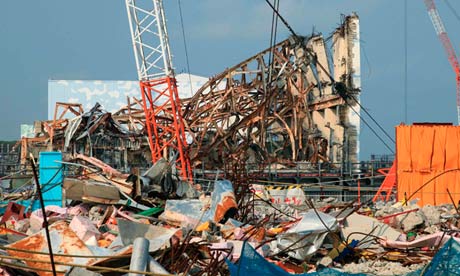
Fukushima disaster could have been avoided, nuclear plant operator admits

Tepco, which previously insisted nothing could have protected plant, now says it failed to implement safety improvements


The company at the centre of Japan's worst-ever nuclear crisis has acknowledged for the first time it could have avoided the disaster that crippled the Fukushima Daiichi power plant last year.

In a dramatic reversal of its insistence that nothing could have protected the plant against the earthquake and tsunami that killed almost 20,000 people on 11 March 2011, Tokyo Electric Power (Tepco) said it had known safety improvements were needed before the disaster, but had failed to implement them.

"When looking back on the accident, the problem was that preparations were not made in advance," Tepco's internal reform taskforce, led by the firm's president, Naomi Hirose, said in a statement on Monday.

The company could have taken steps to prevent a catastrophic accident by adopting more extensive safety measures, the statement added.

Tepco's about-turn came after an independent panel of experts challenged the company's claim that it could not have foreseen the waves, which reached up to 14m high, that swept through the plant, knocking out its backup power supply and causing three of its six reactors to melt down.

In a damning report released in July, a parliament-appointed panel criticised years of "collusion" between Tepco, industry regulators and politicians, and described the disaster as "manmade". More


Stepping Back From The Brink

STEPPING BACK FROM THE BRINK - By General (Rtd) Vinod Saighal


Earlier reports from Washington well before the television debates between the presidential contenders were generally indicative of President Obama's reluctance to move forward on the issue of military strikes against Iran. Hence, Mr. Netanyahu may have been upping the ante for his own political ends or indulging in brinkmanship. It is amazing, however, that the rest of the world seem to be mere spectators in a potential crisis that could engulf the entire region in flames of one type or another, if not the whole world - almost entirely because of one individual and his obsession. The consequences of an Israeli strike and certain Iranian retaliation, in whatever form or in several forms (because they would have taken the Netanyahu threats seriously) would be felt most severely by the Arab countries, the Indian subcontinent and the European Union. The Saudis are equally at fault for their tacit encouragement for this mad enterprise.


Before the situation gets out of hand owing to the actions of a single obsessed individual it is absolutely essential to put an end to such adventurism. There should be no question of an East-West, North-South or any other divide on this issue. The EU, being the closest to the US, especially France and Germany in the EU, must issue a stern warning to the Israeli leader of dire consequences, including trade sanctions should Israel proceed with unilateral action. Similarly, Russia could issue a warning keeping their options open for some form of retaliatory action against Israel should it carry out its threat. Countries like India and other friends of Israel have an equally important role to play by making clear to Israel that Israel could jeopardize its close relations with many friendly countries unless it stands down on its unilateralism. Should the Israeli government do so, it would strengthen the rest of the countries pressing Iran to curb its nuclear weapons potential and to move in far more decisively to obtain the desired results.


Well-wishers of Israel in the US would be doing an enormous disservice to Israel should they continue to goad the US president to strike Iran in a joint action with Israel or as a backer of Israel, obliged to follow up on unilateral strikes by Israel in its attempt to take out Iran's nuclear capability. Those advocating military action do not realize that Osirak simply cannot be replicated today. The precision with which Iraq's nuclear reactor was disabled over 30years ago without any retaliation from Iraq is a thing of the past. Replicating it in Iran is not only going to be highly problematic, it could end up by Israel paying an unacceptably heavy price for its actions. Reportedly, the military leaders of both the US and Israel have conveyed their reservations against military strikes to their respective leaders. In spite of these the pressures of a presidential election and beyond it to the overwhelming pressure from the Jewish lobbies and Israel's supporters in Washington may make it difficult for the incumbent in the White House to hold back.


Israel and the US and for that matter much of the world seem to have forgotten about the Iraq-Iran war of the 1980s that continued for many years. Both sides suffered enormously, more so Iran. It would be recalled that Saddam Hussein who launched the attack had the backing of the Arab countries and the US and the West. Compared to the resources available to Iran the support in financial backing and weapons supplied by its backers gave Iraq overwhelming preponderance, especially in the early stages of the war. In spite of heavy initial reverses and scant outside support compared to its adversary Iraq, the Iranians fought back fiercely. They were able to take a heavy toll of the Iraqis. On more than one occasion they nearly turned the tide. Iraq survived because of the enormity of support from its backers. Since it immediately followed the Khomeini Revolution Iraq's initial success was largely due to the surprise achieved by the attacker and the disarray in the Iranian armed forces due to the heavy decapitation of the heads of the services considered loyal to the ousted Shah. Notwithstanding the very heavy odds the Iranians fought back tenaciously, surprising the attacker and the world by the ferocity of their resistance.


The Israeli leader, seemingly hell-bent on a military strike against Iran, should know that as opposed to the earlier occasion when they were attacked by Saddam Hussein without warning, when in an enfeebled state, the Iranians this time around have been preparing day and night for years on end for a possible Israeli-US military action against their country. It would be foolhardy in the extreme for the US or the Israelis to believe that they would get away lightly after their military strikes on Iran. In one way or other both these countries will be made to pay a heavy price. In the case of Israel that price might turn out to be unaffordable. In worst case scenarios it might even pose an existential threat to the continued viability of Israel as a strong, independent nation.


That Iran's retaliatory capability could be life-threatening for Israel should have become evident to most Israelis by now. A simple comparison between the attacker (Israel - even backed by the US) and the retaliator (Iran) would indicate Israel's acute vulnerability compared to Iran. Iran is a very large country with a population size possibly twenty times that of the Jewish population of Israel. No matter how massive the damage to Iran's nuclear capability, Iran has the geographical spread and the demographic mass to recover fully from the military action against it, whether the recovery takes a few years or much longer. In the case of Israel the geographic size and population base being miniscule compared to Iran, the latter would have devised several ways of severely penalizing Israel. Doubtless Israel too would have prepared for Iran striking back in some form or the other. No amount of anticipatory defensive measures can exclude severe retaliatory damage from Iran and its allies. Prudence would demand that Israel does not flirt with existential danger. If the Israeli leader is past restraining, it is imperative for the US and all well-wishers of Israel - and for its continued viability perched on the edge of the Arab world - to call an immediate halt to a potentially mad escapade.


The writer was based in Iran in 1973-74.


New Delhi


October 13, 2012


Friday, October 12, 2012

Soviet invasion Of Afghanistan a case Of mission creep, according to mew book and original Soviet documents

THE DEAD END PUBLISHED IN ENGLISH FOR THE FIRST TIME

Washington, DC, October 13, 2012 – Contrary to U.S. myths of a strategic Soviet offensive towards warm water ports on the Persian Gulf or Indian Ocean, it was "mission creep" that led the Soviet Union into its ill-fated invasion of Afghanistan in 1979, according to a new, richly documented account of early Soviet engagement in Afghanistan, published in English and in Russian today by the National Security Archive at www.nsarchive.org.

The groundbreaking book by two Russian authors - the historian and journalist Vladimir Snegirev and the veteran of Soviet foreign intelligence Valery Samunin - appears today in English under the title The Dead End: The Road to Afghanistan, together with 21 key documents from the National Security Archive's collection of Soviet and U.S. secret files on the Soviet war in Afghanistan and seven historic photographs from the period immediately before the invasion.

May 1 demonstration in Kabul, Babrak Karmal is in the center
The Archive's posting of the Russian original, Virus A: How We Got Infected by the Invasion of Afghanistan, appears on our Russian Page. It includes more than 150 original Russian-language documents from Soviet-era files gathered by the Archive - most of which are not available in Moscow archives today - and 42 photographs from the period that were obtained by the authors. This book, defined by the authors as a "political investigation," traces the process of the gradual Soviet engagement in the Afghan revolutionary process over the years 1978 and 1979, eventually culminating in the invasion of December 1979. The authors reconstruct the history of Soviet involvement on the basis of archival documents and extensive interviews with key participants ranging from top Afghan Communists to the late Ahmad Shah Masood to former KGB chief Vladimir Kryuchkov and Soviet ambassador A.M. Puzanov.

During the glasnost years of the late 1980s, Vladimir Snegirev wrote the first investigative stories published in the Soviet Union (in Komsomolskaya Pravda and Rossiyskaya Gazeta) about the invasion of Afghanistan, and has been pursuing this hidden history for the past 25 years. Retired KGB colonel Valery Samunin served in Afghanistan for more than seven years as a foreign intelligence officer, and applied his knowledge and contacts to develop Snegirev's investigation into a panoramic history of the decisionmaking that led to the disastrous Soviet intervention in 1979. More


Global powers launch new push to end Iran nuclear crisis

Revamped package will offer limited relief from sanctions and other incentives for Iran to limit enrichment of uranium


Six global powers will launch a diplomatic drive after the US elections aimed at defusing the Iranian nuclear crisis in the next few months and avoiding the eruption of a new Middle East conflict next year.

A "reformulated" proposal will offer limited relief from existing sanctions and other incentives for Iran to limit the level of enrichment of its uranium stockpile. An attempt will be made to sequence the steps required to reach a deal to overcome the mutual distrust that helped sink previous rounds of negotiations, where each side appeared to wait for the other to make the first major concession.

"We recognise that the Iranians need something more with which they can sell a deal at home, and we will expect real change on the other side. It is about getting the sequencing right. That is what this next round will be about," a European official said.

"If Iran is prepared to do enough, sanctions will be on the table," another western diplomat said. "It shouldn't expect [the six-power group] to blink first – but if it's ready to take genuine steps we're ready to respond. This could include sanctions relief – but only for the right moves by Iran. Sanctions are biting in Tehran and we're not going to lift them without making solid progress on our concerns."

If the step-by-step approach fails there could be an attempt to "go big" with an ambitious, comprehensive settlement that would allow Iran to continue producing uranium at low levels (under 5%) of enrichment but under stricter international monitoring and controls.

"Currently we are stalled because Iran is asking too much and offering nothing in return. One way forward might be for Iran to offer much more and make an accordingly bigger demand at the same time," the western diplomat said. Officials involved in the nuclear talks believe there is a window of opportunity for diplomacy between the US elections on 6 November and next spring, with a resumption of high level talks between the group of six powers (the US, UK, France, Germany, Russia and China) with the Iranian chief negotiator, Saeed Jalili, in late November or December.

"Elections obviously mean there's a great deal of uncertainty, but there will be more clarity after November and clearly that's an opportunity," one western diplomat said. Britain will be represented at the talks by Mark Sedwill, formerly the UK's special envoy to Afghanistan and Pakistan, who has been named the new political director of the Foreign Office. More


U.S.-Iran: Lessons from an Earlier War

U.S.-Iran: Lessons from an Earlier War

New Book—Becoming Enemies—Explores Roots of the Current Crisis with Iran

Ex-Officials' Candid Accounts & Declassified Documents Provide Fresh Details, Illuminate Ongoing Hostility

Available on Amazon
Washington, D.C., October 12, 2012 – As the crisis between the United States and Iran continues to spiral upwards, it becomes increasingly important to understand how the roots of the two governments' unrelenting mutual animosity may be driving Washington and Tehran toward conflict. A new book featuring remarkably candid recollections by former U.S. officials, along with selected declassified documents, provides an original perspective on the current state of tensions by exploring one of the periods of highest friction—that included direct military clashes—between the two countries since the 1979 Islamic revolution.The Iran-Iraq War of 1980-1988 was a pivotal episode in the modern Middle East, in addition to being one of the bloodiest conflicts in recent memory. For various reasons, the United States tilted toward Baghdad. Over the course of the war, Washington provided extensive diplomatic, economic and even military backing to the Iraqis, including tacit support (despite public expressions of opposition) for Baghdad's use of chemical weapons against Iran. These actions, punctuated by direct firefights and the accidental shoot-down of a civilian Iranian airliner, placed Washington and Tehran in direct, bitter opposition.Becoming Enemies presents new angles with which to view those events—as well as today's unfolding crisis. It consists of the results of an unusual conference of former U.S. officials, primarily from the State Department and Central Intelligence Agency, along with a key U.N. diplomat. The meeting was designed to get beyond the available historical record by eliciting first-person accounts, from those directly involved, of how events developed, why U.S. policy took the path that it did, and what the outcomes—intended or otherwise—were.The participants (and their posts at the time of the war) included:

  • Charles Cogan, Chief of Near East and South Asia operations at CIA
  • Richard Murphy, Assistant Secretary of State
  • David Newton, U.S. Ambassador to Baghdad
  • Giandomenico Picco, U.N. Assistant Secretary General for political affairs
  • Tom Pickering, Assistant Secretary of State, Ambassador to Israel and to the U.N.
  • Bruce Riedel, Middle East expert at CIA
  • Thomas Twetten, Deputy Chief, then Chief, Near East and South Asia operations at CIA
Along the way, the discussion touched on a number of sensitive issues, providing new disclosures and details about:
  • The Carter administration's decision to admit the Shah into the U.S. for medical treatment and its impact on Iranian attitudes. More
Amazon e-Book


CUBAN MISSILE CRISIS REVELATIONS: KENNEDY'S SECRET APPROACH TO CASTRO

DECLASSIFIED RFK DOCUMENTS YIELD NEW INFORMATION ON BACK-CHANNEL TO FIDEL CASTRO TO AVOID NUCLEAR WAR

National Security Archive Electronic Briefing Book No. 395

Washington, DC, October 12, 2012 – On the 50thanniversary of the Cuban Missile Crisis, new documents from the Robert Kennedy papers declassified yesterdayand posted today by the National Security Archive reveal previously unknown details of the Kennedy administration's secret effort to find an accord with Cuba that would remove the Soviet missiles in return for a modus vivendi between Washington and Havana.

The 2700 pages of RFK papers opened yesterday include the first proposed letter to "Mr. F.C.," evaluated by the Executive Committee of advisors to Kennedy on October 17th--just one day after the president learned of the existence of the Soviet missiles in Cuba. The draft letter, available to historians for the first time, initiated a chain of events that led to a complicated back-channel diplomacy between Washington and Havana at the height of what Kennedy aide Arthur Schlesinger called "the most dangerous moment in human history."

The Archive's Cuba analyst, Peter Kornbluh, who was the first person to review the RFK papers at the Kennedy Library, noted that the documents "reinforce the key historical lesson of the missile crisis: the need and role for creative diplomacy to avoid the threat of nuclear Armageddon." Kornbluh noted that the State Department's own official historians, referring to the initial letter to Castro, had admitted that "none of these drafts have been found." The fact that the Robert Kennedy papers have yielded new information previously undiscovered by the government's own researchers, Kornbluh said, "underscores the historical importance of this declassification on the 50th anniversary of the crisis."

The Archive also posted two diagrams Robert Kennedy drew on his notepad during the crisis deliberations, including his initial tally of the "hawks" and the "doves" as Kennedy's advisors took positions on diplomacy vs. the use of force against Cuba.

The draft letter warned Castro that by deploying the ballistic missiles the Soviets had "raised grave issues for Cuba. To serve their interests they have justified the Western Hemisphere countries in making an attack on Cuba which would lead to the immediate overthrow of your regime." Moreover, according to this proposed communication, Nikita Khrushchev was quietly hinting that he would betray Cuba by trading concessions on Berlin for "Soviet abandonment of Cuba." Warning that failure to remove the missiles would lead to U.S. "measures of vital significance for the future of Cuba," the message offered an oblique carrot of negotiations for better relations once the Soviets and their weapons of mass destruction were gone.

During the early deliberations of how to respond to the missiles in Cuba Kennedy's top advisors pressed him to reject this message to Cuba because it would undermine the option of a surprise U.S. air attack on the island. After Kennedy decided on an interim option of a naval quarantine of Cuba to buy time for diplomacy to convince the Soviets to withdraw the missiles, he ordered the State Department to come up with diplomatic alternatives to attacking Cuba.

In an October 25 memorandum, titled "Political Path," the State Department submitted a series of creative options for resolving the crisis peacefully, including allowing the United Nations to take control of both the Soviet missile bases in Cuba and the U.S. missile bases in Turkey. The document also provided an outline for an "approach to Castro" through Brazil, with a message to Castro underscoring his options: "the overthrow of his regime, if not its physical destruction," or "assurances, regardless of whether we intended to carry them out, that we would not ourselves undertake to overthrow the regime" if he expelled both the missiles and the Russians. More