Showing posts with label Waziristan. Show all posts

Tuesday, October 22, 2013

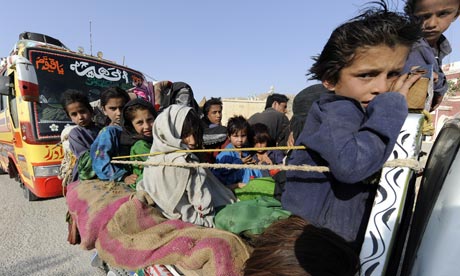
Will I Be Next?

US may be guilty of war crimes over drone use – Amnesty Intl

US officials responsible for carrying out drone strikes may have to stand trial for war crimes, according to a report by Amnesty International, which lists civilian casualties in the attacks in Pakistan.

The report is based on the investigation of the nine out of 45 drone strikes reported between January 2012 and August 2013 in North Waziristan, the area where the US drone campaign is most intensive. The research is centered on one particular case – that of 68-year-old Mamana Bibi, who was killed by a US drone last October while she was picking vegetables with her grandchildren.

The report is entitled ‘Will I be next?’ citing the woman’s eight-year-old granddaughter Nabeela, who was near when the attack occurred, but miraculously survived.

"First it whistled then I heard a "dhummm". The first hit us and the second my cousin,” Nabeela recalls.

The report also recounts an incident from July 2012, when 18 laborers, including a 14-year-old, were killed in the village of Zowi Sidgi. The men gathered after work in a tent to have a rest when the first missile hit. The second struck those who tried to help the injured.

Amnesty International is seriously concerned that these and other strikes have resulted in unlawful killings that may constitute extrajudicial executions or war crimes,” the report reads.

Amnesty’s main point is the need for transparency and accountability, something the US has so far been reluctant to offer.

The US must explain why these people have been killed - people who are clearly civilians. It must provide justice to these people, compensation and it must investigate those responsible for those killings,” Mustafa Qadri, the Amnesty researcher who wrote the report, says.

The report comes at a time when the US is facing growing international pressure over its drone program.

Nawaz Sharif, the Pakistani prime minister, is currently in Washington, where he is expected to talk drones with Barack Obama. And on Friday the UN General Assembly will be debating the use of remotely-piloted aircraft.

In a separate report, a UN investigation revealed some 33 drone strikes around the world - not just in Pakistan - that violated international humanitarian law and resulted in hundreds of civilian casualties. That report is also calling for more transparency and accountability from the United States. More

What the world lacks is Statesman, real leaders, leaders who, because of their record of standing up for doing the right thing, are respected. Who respects leaders today? They carryout extra-judicial killings, murder, invasions of Iraq, Afghanistan, perhaps Syria next, cause millions of deaths, so who could respect them?

We must all fight to uphold the Rule of Law. The United States has set a precedent for international extra-jucicial killings. Which will be the next country, because they feel threatened by the United States, sends drones to attack them?

Extra-judicial killings are illegal and must be stopped. The planet has enough problems facing it from climate change, energy security and food and water security without illegal killings which may be a conflict trigger.

Leaders need the vision to see the bigger, long-term issues and realize that unless we all work together for the survival of the planet we shall in all likelihood perish. Editor

Thursday, June 20, 2013

Drone 'Signature Strike' Witness Responds To Obama Speech: 'I Don't Trust A Single Word'

Jalal Manzar Khail was at home on March 17, 2011 as dozens of men from two bickering tribal groups met a couple miles away to settle a dispute.

Jalal Manzar Khail

All day long, American drones loomed in the sky above. "It's very normal," Khail said, speaking in Urdu through a translator with the United Kingdom legal charity Reprieve. "You see them during the day, you see them during the night -- they're always hovering."

In Waziristan, the restive region of Pakistan where Khail lives, such drones have become commonplace over the past several years, always holding the possibility of near-instant death. Increasingly, Central Intelligence Agency drones have killed men without knowing their names, simply because from the perspective of a Predator drone's video feed they look and act like members of the Taliban or al Qaeda or some other group considered associated with them.

Such so-called "signature strikes" are one of the most controversial practices in the drone war. When first elected, President Barack Obama was highly skeptical of such attacks, begun under former President George W. Bush in 2008. With time in the Oval Office and advice from military leaders, however, Obama came to accept their use as a vital part of the fight against terrorism.

Those signature strikes and their anonymous victims fall under Obama's definition of targeted killings. Unnamed U.S. officials have told The New York Times the signature strikes will continue in Pakistan. In a major national security speech in May, Obama acknowledged that drones sometimes make mistakes, but said their work must carry on.

"The conflict with al Qaeda, like all armed conflict, invites tragedy," he said. "But by narrowly targeting our action against those who want to kill us, and not the people they hide among, we are choosing the course of action least likely to result in the loss of innocent life."

On that day in March some two years before, a signature strike was apparently used against Khail's friends and family.

The men who met in the town of Datta Khel told the local military commander about their jirga, or assembly of tribal elders. But the message apparently did not get to the Americans, or if it did, it was ignored.

Two Hellfire missiles shot to the ground and exploded. As Khail looked up to the sky, he remembered, he saw two more streak down. His walkie talkie crackling with a cry for help, he raced to the site.

When Khail arrived at the location of the assembly, it was filled with the dying, who were rushed to hospitals, and the dead. For them, Khail had to perform a more macabre task.

"Putting body parts in different boxes," he said. "(Using) boxes as coffins."

The president said in his May speech that "before any strike is taken, there must be near-certainty that no civilians will be killed or injured -- the highest standard we can set." Still, he added, "There is a wide gap between U.S. assessments of such casualties, and non-governmental reports."

That includes the strike at Datta Khel. The nonprofit United Kingdom-based Bureau of Investigative Journalism, which tracks drone deaths based on published news accounts, estimates that between 26 and 42 people were killed.

Some accounts of the wounded and killed included several Taliban members who were present as mediators because of their hold on the surrounding area. But they seem to have been a minority, four out of the 42 killed in total, according to an Associated Press investigation.

In rare public statements, Pakistan's president, prime minister and army chief all spoke out to condemn the attack, as the Bureau of Investigative Journalism documented.

United States officials, meanwhile, had a completely different account of the meeting. Speaking under conditions of anonymity, one told The New York Times in August 2011 that "a large group of heavily armed men, some of whom were clearly connected to Al Qaeda and all of whom acted in a manner consistent with A.Q.-linked militants, were killed."

"A manner consistent with A.Q.-linked militants" is the most revealing phrase: the attack was a signature strike. As it later emerged, the U.S. Ambassador to Pakistan Cameron Munter had tried to stop the attack, only to be outmaneuvered by the CIA in internal administration debates. Two years later, The New York Times reported in April, many officials within the government now believe the strike was "botched."

Today, Obama shows signs of relying less on signature strikes. The overall number of drone attacks is down in Pakistan, and in his recent speech the president indicated that the U.S. will rely on them less and less.

Filmmaker Robert Greenwald, who is making a documentary about the drone war in Pakistan, told HuffPost the impact of the strikes will linger on, no matter what happens next. His Brave New Foundation and a coalition of progressive groups are partnering with MoveOn.org to petition Congress to end signature strikes.

"When I was in Pakistan, the fury and rage of people about the CIA, about the killing of large numbers of tribal leaders, was profoundly troubling," Greenwald wrote in an email. "Imagine a town hall in the United States bombed, and all the councilmen/women of a city wiped out."

Khail does not have to imagine. Among the men killed at Datta Khel were four of his cousins: Muzammal Khan, Sher Hayat Khan, Nek Bahadur Khan, and Belal Khan.

The drone strikes may be less frequent in Pakistan, but Khail's 6-year-old son still fears them. On one recent night, he remembers, three or four drones were hovering over his home. He took his terrified son outside of the house because he thought it was a target. The son was saying, he recounted, "We cannot go home. We have to spend the night in the tree."

In his speech, Obama acknowledged that "(a)ny U.S. military action in foreign lands risks creating more enemies, and impacts public opinion overseas." But he said strong oversight, and a high threshold for taking action, should allay concerns about drone strikes.

Khail has heard of the speech, and his concerns are not allayed.

"I do not trust him, I don't trust a single word from him," he said. "Osama bin Laden has been killed, so what does he want more?"

"Convey my message to Americans," he said. "The CIA and America have to stop ... they're just creating more enemies and this will last for hundreds of years." More


Saturday, June 8, 2013

US drone strike draws angry Pakistan protest

The government of Pakistan has summoned an American envoy to lodge an official protest over the latest drone attacks that killed at least nine people in the country's northwest region, officials said.

Nawaz Sharif

US charge d'affaires Richard Hoagland was summoned to the foreign ministry on Saturday as Pakistan lodged a formal protest over the Friday night strikes, ministry spokesman Aizaz Chaudhry said.

"It was conveyed to the US charge d'affaires that Pakistan strongly condemns the drone strikes, which are a violation of Pakistan's sovereignty and territorial integrity," said Chaudhry.

"The importance of bringing an immediate end to drone strikes was emphasised," he added.

Pakistan also said that the strikes were "counter-productive, entail loss of innocent civilian lives and have human rights and humanitarian implications".

About six missiles were fired at a compound suspected to belong to a Taliban commander in the Shawal area of North Waziristan, one of seven tribal districts near the border with Afghanistan, a security official said.

"Nine militants were killed in the strike," the official said on condition of anonymity. "Those killed were from the local Bakka Khel tribe and they have been identified".

It was first attack since the government of Prime Minister Nawaz Sharif was sworn in on Wednesday.

The attack also came 10 days after a similar US strike killed the Pakistani Taliban's second-in-command, Wali-ur-Rehman, and six others in a major blow to the rebel group.

President Barack Obama said last month the United States would scale back drone strikes, only using them when a threat was "continuing and imminent".

But Sharif declared in his first speech as premier that the "chapter of drone attacks" should come to an end. More


Saturday, June 1, 2013

Deal or no deal? - Negotiating with insurgents

April 19, 2009 marked a watershed in the Pakistani military establishment's unrealistic view of Islamist militant groups. The then general officer commanding, Major General Ejaz Awan, and his troops had convinced the aging Maulana Sufi Muhammad to denounce suicide bombings at a public rally in the heart of Mingora, the administrative headquarter of Swat valley.


Live on private TV channels, and facing thousands of people at the Grassy Ground, Sufi did not condemned violence, but declared Western-style democracy, the Pakistani parliament, the Supreme Court and the state un-Islamic, and thus turned the tables on the army. It was an utter shock to the military establishment which had hoped to take the sting out of Mullah Fazlullah's terror campaign by having his father-in-law speak against violence by Tehrik-e-Taliban Pakistan (TTP) in the valley.


All this happened in the context of the second peace deal in the area on February 19, 2009, which had taken place with mutual agreement between the Awami National Party and the General Headquarters, as yet another attempt to wrest Swat back from the TTP. But between February 19 and April 19, the TTP had ambushed or robbed dozens of military convoys, snatched government vehicles, practically run or occupied government offices, and sat in courts. The TTP had also ruthlessly executed three Pakistan Army commandos caught from the mountains between Swat and Buner.


This prompted a meeting at the GHQ on April 25, wherein the alarmed top brass decided to go for the kill. "When you raise a puppy, it becomes a member of the family, but when it develops rabies, it becomes an enemy, and that is the time to cull it," Gen Awan had remarked when reminded of the unholy nexus that had existed between some Taliban factions and the security apparatus.


The army seemed to have learned its first lesson the hard way. The eventual May 7 invasion of TTP strongholds in the Swat valley practically ended the peace deal and gradually took Swat to where it is today.


Similarly, the September 5, 2006 agreement in North Waziristan town had apparently ended hostilities between the Pakistani military and TTP rebels linked to the Afghan Taliban and Al Qaeda in the region. But the killing of about 50 soldiers and paramilitary men in an ambush in North Waziristan practically broke that truce.


Signed by representatives of all the tribes and the representatives of the Haqqanis, the 16-point agreement obligated the government to stop air and ground attacks against militants in Waziristan. In return, the militants agreed to cease cross-border movement into and out of Afghanistan, and to expel foreigners from North Waziristan, but "those who cannot leave will be allowed to live peacefully, respecting the law of the land and the agreement".


But until the suspension of the agreement in September 2007, following the ambush of a Pakistan Army convoy (as well as several other attacks), militants kept crossing the border, facilitating the passage of foreign fighters to Afghanistan via Waziristan, and hardly stopped the terrorist training camps being run in the mountainous Shawaal, Ladha and Makeen regions.


Whether a peace agreement with a non-state actor - whose rationale for rebelling against the state lies across the border or rests in a trans-national militant ideology - is worth pursuing requires a critical look at three such deals - in Shakai (South Waziristan), Miranshah (North Waziristan) and Swat.


Firstly, without a doubt, the TTP and its associates used the peace deals in Swat and North Waziristan as a cover to exploit the porous and compromised governance and security structures and continue their terrorist activities on both sides of the border. At least another four major peace deals between 2004 and 2009 had also fallen flat because of an inherent message of weakness from the panicked state and its institutions.


Secondly, the May 2004 Shakai Agreement - signed under a blitz of cameras by Naik Mohammad Wazir and General Safdar Hussein, filled up non-state actors with a sense of power, a larger-than-life stature. Under the FCR, a low-ranking official would simply summon a wayward tribesman and discuss with him the issue. In this case, a major general went to Naik Mohammad's home to sign the deal. The general, in fact, violated the "rules" that govern life in FATA, and ended up glorifying what the likes of Naik Mohammad did or do to the state.


Thirdly, almost all of the dozen or so peace deals or arrangements resulted in the release of scores of alleged fighters, and mobilized tens of millions in compensation given to people identified by the militants as the "victims of conflict." The insurgents succeeded in projecting the state as an aggressor, although the state institutions were only doing their duty under the constitution.


Lessons from the insurgencies currently raging in India, or those in Sri Lanka and Ireland, are very instructive in this regard. Most Indian and Sri Lankan security experts advise against approaching talks with non-state rebels from a position of weakness. A military solution is a must before going for any political solution, and that policy should be based on the understanding of the root cause of insurgencies. This is what a group of experts recommended after a debate on the "Counter Insurgency Operations in North East India: Operations without a policy", held at The Terrorism and Internal Security Cluster of the Institute for Defence Studies and Analyses (IDSA) on March 21, 2011. They also recommended that security forces fighting at the ground level should be given independence for taking decisions to curb the insurgency.


Writing for Strategic Studies Institute of the US Army War College (SSI), Durga Madhab (John) Mitra argues that careful consideration should be given to the likely outcome of governmental efforts, particularly in the areas already dominated by insurgents and in the areas inhabited by relatively isolated tribes. Outside influences inciting the insurgency should be denied access to vulnerable areas by construction of physical barriers, Mitra says.


Speaking of the lessons learned from the conflict in Ireland, Jonathan Powell, the author of Great Hatred, Little Room: Making Peace in Northern Ireland, and former chief of staff to premier Tony Blair, considers talks with "insurgents" as an absolutely essentials means for peace but also underlines the need for military pressure. If there is a political problem at the root of the conflict, then there has to be a political solution. That is not to say that security measures have no place. On the contrary, they are essential. Without security pressure downwards, insurgents will find life comfortable and have no incentive to make the tough decisions necessary for peace. But security pressure by itself without offering a political way out will simply cause the insurgents to fight to the last man. Powell also advises (probably the publicity-hungry Pakistani leadership) to maintain absolute secrecy while talking - directly or indirectly - to groups challenging the state. He cautions not to project breakthrough agreements as peace deals (the way Pakistani leadership touted all deals as the end, though they were only means to the end). More

Negotiating with insurgents can only be successful if both parties understand that they are negotiating from a level surface, and that has to be The Rule of Law. If the home territory of the insurgents is governed by some other rule of law (i.e. Tribal law or Sharia), then the negotiations will suffer. It is also necessary for both parties to know, at the start, the consequences under the law.

Sun Tzu stated in The Art of War

"The smartest strategy in war is the one that allows you to achieve your objectives without having to fight."

Sun Tzu believed that to win a battle by actually fighting is not the most desirable method. Avoiding war and achieving what one needs is clearly superior to a battle. The most desirable form of generalship is to get the enemy to surrender and incorporate the enemy forces into ones own.

To achieve ones own objectives in a conflict situation one has to communicate with the opponent. Communication may take different forms; it may be involve deception, show of force, involve other parties or involve negotiations with the opponent. The goal of such negotiations is to present the opponent with alternatives that are inferior to the opponent's surrender and the terms of surrender that the opponent would accept. Editor


Thursday, October 11, 2012

Pakistan's almost-suicide-bombers

In recent personal interviews with three would-be suicide bombers aged 15-19, who were caught in April 2010 by security forces in Pakistan, I was told a strikingly different story than one might expect of a Pakistani youth's journey towards militancy.

These young men from North Waziristan were not religious, nor motivated by supposedly Islamic ideas, and had no substantial animosity toward the United States or the Pakistan Army - in fact they knew very little about the world outside their small tribe. How, then, were they recruited to carry out something as violent and psychologically traumatic as suicide bombing?

The common thread between the lives of these youths was their complete isolation from rest of the Pakistan and from the world at large.

When one of my students at Quaid-e-Azam University, where I am a professor, mentioned that his cousin had been in a militant rehabilitation facility in the Swat valley, I contacted the Pakistan Army's Inter-Services Public Relations (ISPR) to find out if I could interview some of the young men from this rehab center. I was put in touch with three boys who had been released from custody, but were still under surveillance by the loose network of informants the Army's intelligence division maintains in the rugged tribal regions. I interviewed each one of the teenagers separately on June 23, 2012, and had a follow-up group meeting with them on September 10, 2012. No security official was present during our meetings, and the boys seemed comfortable enough to speak freely. They did all request complete anonymity, though, because of the small communities they come from, before describing to me the way they grew up in the tiny villages of Machikhel and Dande Darpa Khel, which some may recognize as the sites of frequent U.S. drone attacks.

The common thread between the lives of these youths was their complete isolation from rest of the Pakistan and from the world at large. The lack of access to TV, Internet, and formal education meant they were almost completely oblivious to such massive events as 9/11, and as such they were unaware of where and what exactly the United States was. One of the boys mentioned that there was only one TV in their entire neighborhood, and even that one didn't work half of the time. Their only access to information was the radio, which has for years been dominated by the jihadists who were using the name of Islam to mobilize the people. They would also listen to the views of their parents, who were concerned about a possible war in Pakistan due to the influx of militants into the local tribes bordering Afghanistan.

The absence of formal, state-run schools in the tribal areas forced the three boys to enroll at local madrassah just as the United States was in the early phases of waging war in Afghanistan. They learned about the war from their teacher, who said that America wanted to destroy Islam and Pakhtun culture. What was more dangerous than hearing such rhetoric was that children were all trained in the madrassah to submit and not question the elders - something that would have serious repercussions later when they were being recruited to be suicide bombers. Despite the propaganda against the United States, one boy recalled, "The anti-American rhetoric didn't bother us too much, since we still hadn't felt the war".

But that all changed when the United States stepped up its drone strikes across the borders inside Pakistan's tribal areas. "My parents' fears became a reality as our areas became unsafe, and we started getting frustrated with the jihadis in the nearby areas. The militants had brought the war to Pakistan, and the tribal people of Pakistan were forced to be a part of it. Those who opposed the militants were murdered, and everyone else was forced to support them by providing either their children to be militants, or by paying for the cause of jihad." After several years of being under the brutal militant rule nobody in the tribal areas, no one wanted their children to be militants fighting an unknown enemy, one of the boys said, so the militants had to find a new strategy of recruiting - by instilling fear in the youth. As one of the boys recalled, "We were taken for a short trip to a wrecked house by a kind man who had been living in our village peacefully for a few months. We were told that the wreckage was caused by a drone strike from the United States that killed women and children. We were taken to several such wreckages every time the drone strike would happen. The sight frightened all of us." More


Friday, October 5, 2012

What the drones protest march in Waziristan aims to achieve

Sports star turned politician Imran Khan and civil rights lawyer Clive Stafford Smith will highlight US drones' innocent victims


The British civil rights lawyer Clive Stafford Smith and international cricketer turned politician Imran Khan will begin a peace march on 7 October into Pakistan's Waziristan region. Their aim is to highlight the plight of innocent people killed or injured by US drones.

Smith took the precautionary measure of writing to President Obama and his CIA director, David Petraeus, informing them about the march. In the letter, he requested that the president ensure the names of him and the other marchers would not be on the weekly kill list the president reviews, along with security officials, in the White House situation room. Smith wrote:

"Please remember that you and I are both lawyers from the same tradition, and it would be unseemly (as well as being both illegal and upsetting for my family) if you were to authorize my assassination."

Like the sealed corridors in which the top secret kill list nomination process occurs – an account of which was reportedly leaked by theObama administration to the New York Times – Waziristan has, until now, remained in the shadows, a place about which very little is known or reported. It is hoped the march will help open the area to public scrutiny by taking media there to gather independent information.

Smith's letter also highlighted problems with the president's drone strategy, such as using the same intelligence that populated Guantánamo Bay. I think it's fair to assume intelligence-gathering has improved – one certainly hopes so, considering 88% of Guantánamo's 779 detainees were cleared for release. But of greater note is how Obama campaigned against President Bush by criticising his policy of imprisoning without trial – yet has chosen to kill individuals without trial.

There's no evidence those in Waziristan deemed America's enemies have either the will or ability to threaten America from thousands of miles away, Smith wrote. The region's threat extends, at most, to Pakistan, which should be allowed to resolve its own problems – as those such as Imran Khan argue that it is capable of doing. But on this point, I sympathise with Obama, since the Pakistan government has mastered the art of emitting mixed signals and behaves as an unreliable ally. Eyebrows that were raised over Osama bin Laden being found next to the Pakistan military academy in Abbottabad have yet to find reason to be lowered.

Stanley Kubrick's film Dr Strangelove doesn't come close to matching that logic for war room farce.

US concern over a nuclear-armed Pakistan is also understandable, and Smith's letter acknowledged that further radicalization of Waziristan is a threat to Pakistan and global security. But the US's chosen course of action undermines its objective, resulting in damage to its reputation, a failure to win hearts and minds – evidenced by research showing 97% of Pakistanis opposed to US action within their territory – and culminating in what Smith calls the "desperate failure of US policy". Wailing Iraqi mothers and maimed Afghan children whom I saw during operational tours with the British army vouch for that. More


Wednesday, August 15, 2012

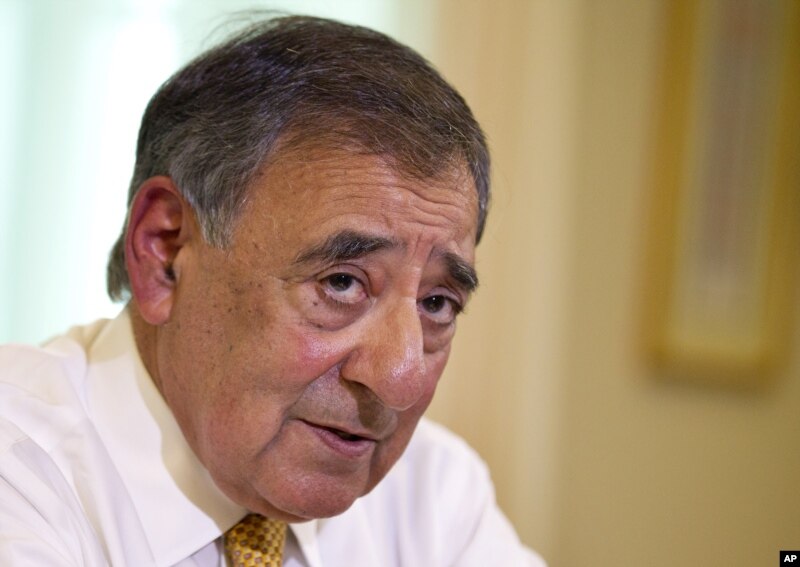
Panetta: Pakistan to Launch Long-Awaited Offensive Against Militants in North Waziristan

ISLAMABAD — U.S. Defense Secretary Leon Panetta says Pakistan’s military will soon be ready to begin a long-awaited offensive in its North Waziristan border region, where the al-Qaida-affiliated Haqqani network is reportedly based. Military officials in Pakistan have nothing to say about Panetta's claim, and Pakistan's political leaders say it would be premature to speculate on whether an operation is being planned.

Pakistan has long resisted pressure to mobilize troops against the Haqqani network who are said to be entrenched in North Waziristan. The United States says the militants are involved in cross-border attacks on NATO forces to fuel the Taliban insurgency in Afghanistan.

The proposed Waziristan operation was said to be high on the agenda when the chief of the Pakistani spy agency, Lieutenant-General Zaheerul Islam, visited Washington earlier this month for counterterrorism talks.

No details of those discussions were made public, but leaks to both Pakistani and U.S. media have led to speculation that the two sides are closer to an agreement on the issue. Military officials in Islamabad are dismissing the reports.

U.S. Defense Secretary Leon Panetta's revelation that Pakistan is readying itself for the long-awaited offensive in North Waziristan has again revived the controversy. He told The Associated Press that army chief General Ashfaq Parvez Kayani discussed the Pakistani plan in recent talks with the U.S. commander of NATO forces in Afghanistan General John Allen.

"General Kayani did indicate that they had developed plans to go into Waziristan," said Panetta. "Our understanding is that, hopefully, they're going to take that step in the near future. I can't tell you when, but the indication we have is that they are prepared to conduct that operation soon."

Panetta says the Pakistani Taliban, not the Haqqani network, might be the target of a government offensive in North Waziristan.

The political administrator of Pakistan's northwestern province bordering the tribal belt says it is too soon to say whether a military offensive in North Waziristan is in the making.

Khyber Pakhtunkhwa's Chief Minister Amir Haider Khan Hoti told reporters in Peshawar that “whenever a decision is taken to launch the operation, the nation will come to know about it.”

Tribal sources and local officials say they have seen no signs of an imminent military operation in North Waziristan.

Analysts say the situation on the ground is more complicated.

Maria Sultan, a defense analyst, and the director of the private South Asian Strategic Stability Institute in Islamabad, says the Haqqani network has a very strong presence in Afghanistan’s border regions adjacent to Pakistan’s North Waziristan agency.

“The area occupied by the Haqqani network, it is a cross-border area, so a military operation could only be successful from either side if both sides had agreed to it," she says. "Will Pakistan go ahead with it? Yes, we will go ahead with it, if there is collective decision making on it. And it will require a major military operation. So this means that all countries of NATO, America and Pakistan have to be on board if this operation is to succeed.” More


Thursday, January 28, 2010

Attack of the Drones


I’ve been waiting for some media outlet to run a story on a seemingly ignored policy shift concerning the Predator Drone attacks in Pakistan by the CIA.
I’m still waiting. So, rather than continue to wait, I decided to put this out there.

We all heard about the CIA deaths in Afghanistan on December 30, 2009, along with the Xe (Blackwater) contractors, after a Jordanian double-agent blew himself up inside a gym at a US installation — because security measures weren’t followed. But what I found most interesting about this story was the comments immediately after the attack. This was widely reported at the time. According to CNN International:

“An American intelligence official vowed Thursday (December 31, 2009) that the United States would avenge a suspected terrorist attack on a U.S. base in Afghanistan that resulted in the deaths of seven CIA officers.”

So, REVENGE is now the purpose of launching Predator Drone strikes in Pakistan? Is that supposed to be the motive of our intelligence agencies in fighting counter-terrorism? More >>>