Tuesday, July 28, 2015

CIA Confirms Role in 1953 Iran Coup

The CIA has publicly admitted for the first time that it was behind the notorious 1953 coup against Iran’s democratically elected prime minister Mohammad Mosaddeq, in documents that also show how the British government tried to block the release of information about its own involvement in his overthrow.

On the 60th anniversary of an event often invoked by Iranians as evidence of western meddling, the US national security archive at George Washington University published a series of declassified CIA documents.

“The military coup that overthrew Mosaddeq and his National Front cabinet was carried out under CIA direction as an act of US foreign policy, conceived and approved at the highest levels of government,” reads a previously excised section of an internal CIA history titled The Battle for Iran.

The documents, published on the archive’s website under freedom of information laws, describe in detail how the US – with British help – engineered the coup, codenamed TPAJAX by the CIA and Operation Boot by Britain’s MI6.

Britain, and in particular Sir Anthony Eden, the foreign secretary, regarded Mosaddeq as a serious threat to its strategic and economic interests after the Iranian leader nationalised the British Anglo-Iranian Oil Company, latterly known as BP. But the UK needed US support. The Eisenhower administration in Washington was easily persuaded.

Mohammad Mosaddeq

British documents show how senior officials in the 1970s tried to stop Washington from releasing documents that would be “very embarrassing” to the UK.

Official papers in the UK remain secret, even though accounts of Britain’s role in the coup are widespread. In 2009 the former foreign secretary Jack Straw publicly referred to many British “interferences” in 20th-century Iranian affairs. On Monday the Foreign Office said it could neither confirm nor deny Britain’s involvement in the coup.

The previously classified US documents include telegrams from Kermit Roosevelt, the senior CIA officer on the ground in Iran during the coup. Others, including a draft in-house CIA history by Scott Kock titled Zendebad, Shah! (Viva, Shah!), say that according to Monty Woodhouse, MI6’s station chief in Tehran at the time, Britain needed US support for a coup. Eden agreed. “Woodhouse took his words as tantamount to permission to pursue the idea” with the US, Kock wrote.

Mosaddeq’s overthrow, still given as a reason for the Iranian mistrust of British and American politicians, consolidated the Shah’s rule for the next 26 years until the 1979 Islamic revolution. It was aimed at making sure the Iranian monarchy would safeguard the west’s oil interests in the country.

The archived CIA documents include a draft internal history of the coup titled “Campaign to install a pro-western government in Iran”, which defines the objective of the campaign as “through legal, or quasi-legal, methods to effect the fall of the Mosaddeq government; and to replace it with a pro-western government under the Shah’s leadership with Zahedi as its prime minister”.

Kermit Roosevelt

One document describes Mosaddeq as one of the “most mercurial, maddening, adroit and provocative leaders with whom they [the US and Britain] had ever dealt”. The document says Mosaddeq “found the British evil, not incomprehensible” and “he and millions of Iranians believed that for centuries Britain had manipulated their country for British ends”. Another document refers to conducting a “war of nerves” against Mossadeq.

The Iranian-Armenian historian Ervand Abrahamian, author of The Coup: 1953, the CIA and the Roots of Modern US-Iranian Relations, said in a recent interview that the coup was designed “to get rid of a nationalist figure who insisted that oil should be nationalised”.

Unlike other nationalist leaders, including Egypt’s Gamal Abdel Nasser, Mosaddeq epitomised a unique “anti-colonial” figure who was also committed to democratic values and human rights, Abrahamian argued.

Some analysts argue that Mosaddeq failed to compromise with the west and the coup took place against the backdrop of communism fears in Iran. “My study of the documents proves to me that there was never really a fair compromise offered to Mosaddeq, what they wanted Mosaddeq to do is to give up oil nationalisation and if he’d given that of course then the national movement would have been meaningless,” he told the Iranian online publication, Tableau magazine.

“My argument is that there was never really a realistic threat of communism … discourse and the way justifying any act was to talk about communist danger, so it was something used for the public, especially the American and the British public.”

Despite the latest releases, a significant number of documents about the coup remain secret. Malcolm Byrne, deputy director of the national security archive, has called on the US intelligence authorities to release the remaining records and documents.

“There is no longer good reason to keep secrets about such a critical episode in our recent past. The basic facts are widely known to every school child in Iran,” he said. “Suppressing the details only distorts the history, and feeds into myth-making on all sides.”

In recent years Iranian politicians have sought to compare the dispute over the country’s nuclear activities to that of the oil nationalisation under Mosaddeq: supporters of the former president Mahmoud Ahmadinejad often invoke the coup.

US officials have previously expressed regret about the coup but have fallen short of issuing an official apology. The British government has never acknowledged its role. More


Friday, July 24, 2015

Is the Iran deal about staving off the coming oil shock - By Nafeez Ahmed

The Iran nuclear deal signals a major shift in the geopolitics of the Middle East. Integral to the equation is oil, economics, terror – and US hegemony.

The Bush administration had initiated a long-term covert strategy to undermine Iranian influence in the Middle East and Central Asia, combined with overt pressure through diplomatic initiatives and economic sanctions.

Under Obama, this strategy accelerated, largely in concert with other Gulf powers like Saudi Arabia, Qatar and the UAE, who have long sought to roll-back Iranian influence.

Yet even as the strategy accelerated, unlike its predecessors which openly declared their warmongering hostility to Iran, the Obama administration had used the pressure to forge an unprecedented deal with the country.

Averting regional war

The reasons for the shift are, of course, pragmatic. For years, US intelligence agencies have told the White House that there is simply no evidence Iran is trying to build a nuclear bomb.

And the International Atomic Energy Agency (IAEA) has repeatedly certified that uranium is not being enriched to levels necessary for weaponisation, nor is it being diverted to a secret weapons programme.

Meanwhile, senior US military officials have long warned that the sort of US-Iran military confrontation which frothing neoconservatives have been pining for would likely fail and destabilise the entire region.

What about an Israel-Iran confrontation? A classified Pentagon war simulation held in 2012 found that an Israeli attack on Iran would also lead to a wider regional war.

Unlike the neocons, for the military pragmatists in successive US administrations, war with Iran could never be a preferred option.

The added bonus is that Iran might notch down its involvement in Iraq and Syria.

Earlier this year, the US assured its allies at the Camp David summit that under the nuclear deal, Iran’s growing geopolitical influence in the region would be curtailed. Simultaneously, the US gave Saudi Arabia, Qatar, the UAE and others the green light to accelerate support to the Islamist militants of their choice in Syria.

George Friedman, founder and CEO of private US intelligence firm Stratfor – which operates closely with the Pentagon and State Department – forecasted the US-Iran détente four years ago.

His prescient assessment of its strategic rationale is worth noting. Friedman explained that by reaching “a temporary understanding with Iran,” the US would give itself room to withdraw while playing off Iran against the Sunni regimes, limiting Iran’s “direct controls” in the region, “while putting the Saudis, among others, at an enormous disadvantage”.

“This strategy would confront the reality of Iranian power and try to shape it,” wrote Friedman.

Ultimately, though, the US is betting on the rise of Turkey – hence the latter’s pivotal role in the new anti-IS rebel training strategy, despite Turkey’s military and financial sponsorship of IS. More


Wednesday, July 15, 2015

Pakistan, Bangladesh face ‘state failure’ as globe heats up

Study compiled by experts from US, UK, China and India underlines migration potential from warming world

India will face a huge influx of refugees from Afghanistan, Pakistan and Bangladesh should high degrees of climate change develop, according to one of the country’s senior military officials.

Drought and flooding linked to sea level rise would place the governments of those countries under "severe stress" and lead to large-scale migration, said Vice Admiral Pradeep Chauhan, head of the Indian Naval Academy.

"In India, this would combine with an internal population shift from rural to urban areas, further increasing demographic pressure in cities," he wrote in a climate risk study backed by the UK Foreign Office.

A significant influx of migrants could further destabilise what is known as India’s "Red Corridor", a belt of land running through east India where Marxist rebels are fighting the state.

"The temptation to solve this problem through military intervention could become overwhelming," he added.

Current greenhouse gas emissions will "likely as not" mean temperature increases of 4C above pre-industrial levels by 2150 said the study, with severe implications for human health and crop yields.

A N M Muniruzzaman, a retired Bangladeshi major general, said millions of people in his country could be displaced as a result of sea level rise.

"Flooding is projected to increase in many regions, but it could be a particular problem in South Asia due to the contribution of melting glaciers," he said.

Planning battle

Chauhan’s and Muniruzzaman’s comments were based on a war gaming exercise held in Delhi in March, hosted by the Council on Energy, Environment and Water.

Former military officials from India, China, the US, the UK, Bangladesh, Germany, the Netherlands, and Finland took part, along with scientists and diplomats.

"In the game, it was notable that increasing numbers of refugees contributed to several large countries becoming more isolationist in their foreign policies," says the study.

"Participants in our exercise considered it extremely likely that climate change would exacerbate humanitarian crises over the coming decades."

Long term water stress in South Asia could become so severe previous agreements over resource sharing between India, Pakistan, China and Bangladesh "could be broken", the study warns.

"At the high degrees of climate change possible in the long-term future, participants in our scenarios exercise considered that there could even be risks to the political integrity of states that are currently considered developed and stable."

Alex Randall from the UK-based Climate Change and Migration Coalition said the document presented a "one sided view of migration" seeing it only as a security threat.

"While there is growing evidence linking climate change to changing patterns of migration, there is little evidence suggesting that migrants and refugee present the kind of security threat suggested in the report," he said.

"There is also strong evidence indicating that migration could become a key way for some people to adapt to climate change." More


Thursday, June 25, 2015

The World’s Most Hostile International Water Basins

At the launch of A New Climate for Peace, a new report on climate-fragility risks produced for the G7 by a consortium of international partners including the Wilson Center, USAID Deputy Assistant Administrator Christian Holmes called water a common denominator for climate risk.

“How you manage your water programs…has a huge amount to do with how you mitigate the prospect for increased fragility,” he said. “Sometimes it’s the obvious that’s so easy to miss, and I think that the obvious on water as it relates to economic development is, essentially, the question of sustainable water supply.”

One of the most striking infographics from A New Climate for Peace touches on that question of supply. Using data from Oregon State University’s Transboundary Freshwater Dispute Database and adapted from a graphic that originally appeared in Popular Sciencelast year, the map shows the world’s most active – and tension-filled – international water basins.

Water is a common denominator for climate risk

The Transboundary Freshwater Dispute Database measures not only the frequency of hostile events in a basin, but cooperative ones as well, each on a sliding scale. Hostile events range from declarations of war (zero recorded from 1990 to 2008, the period of time encompassed by the graphic) to leaders using “language of discord.” Cooperative events range from “mild verbal support” to “voluntary unification into a single country.”

The total number of events is indicated by shades of blue – the darker the blue, the more transboundary events, both positive and negative. This is essentially the “hot list” of international water basins – which regions have the most official and unofficial chatter over water.

Circles superimposed on the basins represent the total number of hostile events. As the description text points out, however, “circle size does not automatically translate into conflict danger.” In some places, transboundary institutions and diplomatic frameworks allow different actors to work through their differences. Cooperative hostility, if you will. In the Danube River Basin, for example, the high number of “hostile” events is mitigated by strong cooperative incentives associated with European integration. Likewise in North America, where Canada, the United States, and Mexico share several basins with a high number of hostile events, there is little chance of violent conflict.

Water basins in South Asia, the Middle East, and East Africa are major hotspots with a high number of hostile events and weaker institutional frameworks to mitigate them. The Indus, Ganges-Brahmaputra-Meghna, Salween, Tigris-Euphrates, and Jordan basins witness a very high number of interactions, suggesting at least that continued dialogue could be a way forward to mitigate the risk of violent conflict or fragility. The Nile Basin has less activity reflecting the stalled negotiations between the basin’s 10 member states to replace colonial-era water agreements. The Mekong Basin, where the largest member, China, does not participate as a full member of the Mekong River Commission, shows less activity as well.

The map does a great job illustrating why it can be difficult to answer the question, where is the highest risk of water-related violence? Tensions between states and other freshwater basin actors isn’t necessarily a sign of impending violence if there’s a framework to resolve them. Likewise, lack of communication over a major natural resource can be a bad sign for cooperation when the resource in question is the Nile. More

More infographics from ‘A New Climate for Peace: Taking Action on Climate and Fragility Risks’ are available on NewClimateforPeace.org.


Wednesday, May 27, 2015

Al Jazeera journalist responds to U.S, labeling him Al Qaeda

Earlier this month, The Intercept reported that the U.S. government secretly labeled a prominent Al Jazeera journalist a member of Al Qaeda and placed him on a terror watch list.

The basis for the designation was unclear, but the reporter, Islamabad bureau chief Ahmad Zaidan, denies ever having been a member of the group. Reached last week in Doha, Qatar — where the state-funded Al Jazeera network is based — Zaidan spoke to The Intercept about the reaction to his work and the implications of being tracked by the U.S. government. “To monitor and bug journalists is absolutely immoral and unethical,” he said.

Zaidan was known for interviewing senior Al Qaeda figures, including Osama bin Laden, and he covered the wedding of bin Laden’s son in 2001. If it was those contacts that caused U.S. suspicions, Zaidan says, that runs counter to the purpose of journalism.

“Our job as journalists is to reach out to everybody. We are some sort of go-between in cases where the two parties are not talking to each other,” Zaidan said. “I was thinking that when I was interviewing bin Laden and interviewing these militants, that maybe at least [they can] hear each other, and maybe it can help humanity to reach some sort of middle way.”

Zaidan also sees discrimination behind the surveillance. “If Peter Bergen is meeting Osama bin Laden, or Robert Fisk is meeting Osama bin Laden, no problem,” he said. “But if a non-Westerner is meeting some wanted people, he should be doubted?”

Zaidan’s picture and watch list number appear in a 2012 National Security Agency presentation, which shows that analysts tracked his cell phone contacts and location data — or metadata — as part of a program that looked for people who moved like Al Qaeda couriers. The presentation and other NSA documents revealed that the U.S. was obtaining bulk call data records from Pakistani telecoms, and analyzing the metadata of tens of millions of Pakistani cell phones.

“Faisalabad, Lahore — these main cities are the residence of millions and millions of people,” Zaidan said. “They are following and surveilling every one of us. Who has made them the god of this globe?”

Zaidan says he has had good relations with the U.S. ambassador to Pakistan and has not had run-ins with U.S. authorities.

“I did not hide myself. Whenever I made an interview, I published it. If you have any objection to me, I am living in Islamabad, you can come ask for me anytime,” he said.

He noted that the United States is not the only country to have labeled him as Al Qaeda. Zaidan, who is Syrian, returned to his country for the first time in almost 35 years in early 2012, after the uprising began against President Bashar al-Assad. Zaidan reported from inside a stronghold of the Free Syrian Army, and soon after, he says Syrian state television aired a report claiming that he was a member of Al Qaeda and had been sent to Syria by the group’s leader, Ayman al-Zawahiri.

The allegations make him fear for his security. “If you are Al Qaeda, it means they can eliminate you. And I am afraid if somebody else might do something against me and he will put the blame on America now,” Zaidan said.

But when I asked if he regretted The Intercept publishing the story, Zaidan said: “My take, as a journalist, is that you have done your job. I can’t say, ‘Ok, if I have some information about Osama bin Laden, I have to publish it, but if you have something against Ahmad Zaidan or Al Jazeera, you should not publish it.’”

“This is the right of our audience,” he said. “We should not keep our audience in the dark otherwise we are like, in fact, the National Security Agency.” More


Monday, May 25, 2015

Deciphering clues to prehistoric climate changes locked in cave deposits

It turns out that the steady dripping of water deep underground can reveal a surprising amount of information about the constantly changing cycles of heat and cold, precipitation and drought in the turbulent atmosphere above. The analysis of a stalagmite from a cave in north east India can detect the link between El Nino conditions in the Pacific Ocean and the Indian monsoon, a new study has found.

When the conversation turns to the weather and the climate, most people’s thoughts naturally drift upward toward the clouds, but Jessica Oster’s sink down into the subterranean world of stalactites and stalagmites.

That is because the assistant professor of earth and environmental sciences at Vanderbilt University is a member of a small group of earth scientists who are pioneering in the use of mineral cave deposits, collectively known as speleothems, as proxies for the prehistoric climate.

It turns out that the steady dripping of water deep underground can reveal a surprising amount of information about the constantly changing cycles of heat and cold, precipitation and drought in the turbulent atmosphere above.

As water seeps down through the ground it picks up minerals, most commonly calcium carbonate. When this mineral-rich water drips into caves, it leaves mineral deposits behind that form layers which grow during wet periods and form dusty skins when the water dries up.

Today, scientists can date these layers with extreme precision based on the radioactive decay of uranium into its daughter product thorium. Variations in the thickness of the layers is determined by a combination of the amount of water seeping into the cave and the concentration of carbon dioxide in the cave’s atmosphere so, when conditions are right, they can provide a measure of how the amount of precipitation above the cave varies over time. By analyzing the ratios of heavy to light isotopes of oxygen present in the layers, the researchers can track changes in the temperature at which the water originally condensed into droplets in the atmosphere changes and whether the rainfall’s point of origin was local or if traveled a long way before falling to the ground.

The value of this information is illustrated by the results of a study published May 19 in the journal Geophysical Research Letters by Oster’s group, working with colleagues from the Berkeley Geochronology Center, the Smithsonian Institution National Museum of Natural History and the University of Cambridge titled “Northeast Indian stalagmite records Pacific decadal climate change: Implications for moisture transport and drought in India.”

In the study, Oster and her team made a detailed record of the last 50 years of growth of a stalagmite that formed in Mawmluh Cave in the East Khasi Hills district in the northeastern Indian state of Meghalaya, an area credited as the rainiest place on Earth.

Studies of historical records in India suggest that reduced monsoon rainfall in central India has occurred when the sea surface temperatures in specific regions of the Pacific Ocean were warmer than normal. These naturally recurring sea surface temperature “anomalies” are known as the El Niño Modoki, which occurs in the central Pacific, and the Pacific Decadal Oscillation, which takes place in the northern Pacific. (By contrast, the historical record indicates that the traditional El Niño, which occurs in the eastern Pacific, has little effect on rainfall levels in the subcontinent.)

When the researchers analyzed the Mawmluh stalagmite record, the results were consistent with the historical record. Specifically, they found that during El Niño Modoki events, when drought was occurring in central India, the mineral chemistry suggested more localized storm events occurred above the cave, while during the non-El Niño periods, the water that seeped into the cave had traveled much farther before it fell, which is the typical monsoon pattern.

“Now that we have shown that the Mawmluh cave record agrees with the instrumental record for the last 50 years, we hope to use it to investigate relationships between the Indian monsoon and El Niño during prehistoric times such as the Holocene,” said Oster.

The Holocene Climate Optimum was a period of global climate warming that occurred between six to nine thousand years ago. At that time, the global average temperatures were somewhere between four to six degrees Celsius higher than they are today. That is the range of warming that climatologists are predicting due to the build-up of greenhouse gases in the atmosphere from human activity. So information about the behavior of the monsoon during the Holocene could provide clues to how it is likely to behave in the future. This knowledge could be very important for the 600 million people living on the Indian subcontinent who rely on the monsoon, which provides the area with 75 percent of its annual rainfall.

“The study actually grew out of an accidental discovery,” said Oster. Vanderbilt graduate student Chris Myers visited the cave, which co-author Sebastian Breitenbach from Cambridge has been studying for several years, to see if it contained enough broken speleothems so they could use them to date major prehistoric earthquakes in the area.

Myers found a number of columns that appear to have broken off in the magnitude 8.6 earthquake that hit Assam, Tibet in 1950. But he also discovered a number of new stalagmites that had begun growing on the broken bases. When he examined these in detail he found that they had very thick layers and high concentrates of uranium, which made them perfect for analysis.

Because of the large amount of water running into the cave, the stalagmite they choose to analyze had grown about 2.5 centimeters in 50 years. (If that seems slow, compare it with growth rates of a few millimeters in a thousand years found in caves in arid regions like the Sierra Nevada.) As a result, the annual layers averaged about 0.4 millimeters thick — wide enough for the researchers to get seven to eight samples per layer, which is slightly better than one measurement every two months. The amount of information about the climate that scientists can extract from the stalagmites and stalactites in a cave is amazing. But the value of this approach increases substantially as the number of caves that can act as climate proxies increases.

It is not a simple task. Because each cave is unique, the scientists have to study it for several years before they understand it well enough to use it as a proxy. For example, they must establish how long it takes water to move from the surface down to the cave, a factor that can vary from days to months.

Efforts to use the mineral deposits in caves as climate proxies began in the 1990’s. Currently, there are only a few dozen scientists who are pursuing this line of research and they have analyzed the mineral deposits from 100 to 200 caves in this fashion.

Story Source:

The above story is based on materials provided by Vanderbilt University. The original article was written by David Salisbury. Note: Materials may be edited for content and length.

Journal Reference:

  1. Christopher G. Myers, Jessica L. Oster, Warren D. Sharp, Ralf Bennartz, Neil P. Kelley, Aaron K. Covey, Sebastian F.M. Breitenbach. Northeast Indian stalagmite records Pacific decadal climate change: Implications for moisture transport and drought in India. Geophysical Research Letters, 2015; DOI: 10.1002/2015GL063826


Friday, May 22, 2015

Book Review "The Path To Zero: Dialogues On Nuclear Dangers" By Richard Falk And David Krieger

This book ought to be required reading for college students everywhere in the world, and also for decision-makers.
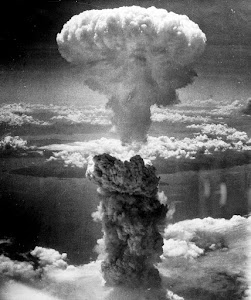
Mushroom cloud from the atomic bombing of Nagasaki on August 9, 1945

It shakes us out of our complacency and makes us realize that widespread, immediate and dedicated public action is urgently needed if we are to save human civilization and the biosphere from a thermonuclear catastrophe. The book is published by Paradigm Publishers, 2845 Wilderness Place, Boulder, CO 80301, USA. (www.paradigmpublishers.com) On the back cover there are endorsements, with which I entirely agree, by Archbishop Desmond Tutu and David Ellsberg.

“We are greatly privileged, like flies on the wall, to join this conversation between two remarkable stalwarts. Richard Falk and David Krieger, in the campaign for a nuclear-free world. It is unconscionable that so many of us seem to accept the prospect of our 'mutually assured destruction', the immoral massacre of millions of civilians, and to view with equanimity such a gross violation of international law. Falk and Krieger discuss persuasively and cogently the folly of reliance on nuclear weapons that can cause apocalyptic devastation. If we want to survive in a habitable world, then we have no choice: we must heed, and do so urgently, these lovers of mankind.” Archbishop Desmond Tutu, Nobel Peace Laureate

“In 'The Path to Zero', Falk and Krieger engage in a stunningly eloquent dialogue on a range of nuclear dangers, and our common responsibility to put an end to them. This is urgent reading for citizens, scientists, policy-makers and political leaders, actually for anyone who cares about the future of civilization and life on earth”, Daniel Ellsberg, Whistleblower

Other enthusiastic endorsements come from Jonathan Schell, Commander Robert Green and Maude Barlow.

The book has ten chapters: 1 The Nuclear Age; 2 Nuclear Deterrence; 3 Nuclear Proliferation; 4 Nuclear Arms Control and Nuclear Disarmament; 5 Nuclear Weapons and Militarism; 6 Nuclear Weapons and Nuclear Energy; 7 Nuclear Weapons and International Law; 8 Nuclear Weapons, Culture and Morality; 9 Nuclear Weapons and Democracy; 10 The Path to Zero.

The two authors

Richard Falk is Albert G. Milbank Professor of International Law and Practice Emeritus at Princeton, where he was a member of the faculty for 40 years. Since 2002 he has been a research professor at the University of California-Santa Barbara. He has been Special Rapporteur on Occupied Palestine for the UN Human Rights Council since 2008, and served on a panel of experts appointed by the President of the UN General Assembly, 2008-2009. He is the author or editor of numerous books, including “Legality and Legitimacy in Global Affairs” (Oxford 2012).

David Krieger is a Founder of the Nuclear Age Peace Foundation, and has served as President of the Foundation since 1982. Under his leadership, the Foundation has initiated many innovative projects for building peace, strengthening international law, abolishing nuclear weapons, and empowering peace leaders. Among other leadership positions, he is one of 50 Councilors from around the world on the World Future Council. He is the author and editor of numerous books and articles related to achieving peace in the Nuclear Age. A graduate of Occidental College, he holds MA and PhD degrees in political science from the University of Hawaii.

Flaws in the concept of nuclear deterrence

In discussing the concept of nuclear deterrence, the two authors emphasize the fact that it violates the fundamental ethical principles of every major religion. Dr. Krieger comments:

Krieger: “Who are we? What kind of culture would be content to base its security on threatening to murder hundreds of millions of innocent people? ”

The two authors also point out that the idea of deterrence is an unproved theory, based on the assumption that accidents will not happen, and that leaders are always rational. In fact, we know historically that the world has come extremely near to accidental nuclear war on very numerous occasions, and there are also many historical instances of irrational behavior by leaders. This cannot continue indefinitely without a catastrophe. See:http://www.cadmusjournal.org/article/issue-4/flaws-concept-nuclear-deterrance

The illegality of nuclear weapons

As Dr. Krieger and Prof. Falk point out, the threat or use of nuclear weapons violates international law. The fact that planning an aggressive war or conducting one is a crime according to the Nuremberg Principles is discussed. The two authors also review in detail the 1996 Advisory Opinion of the International Court of Justice, which was asked by the UN General Assembly and the World Health Organization to rule on the legality of the threat or use of nuclear weapons. The ICJ ruled that under almost all circumstances, the threat or use of nuclear weapons would be illegal. The only possible exception was the case where a country might be under attack and its very survival threatened. The Court gave no ruling on this extreme case. Finally, the ICJ ruled unanimously that states possessing nuclear weapons have an obligation to get rid of them within a short time-frame.

Falk: “It may be time for the General Assembly to put this question to the ICJ: What legal consequences arise from the persistent failure of the nuclear weapon states to fulfill their obligations under Article VI of the NPT. In my view, the nonnuclear states have also been irresponsible in not insisting on on mutuality of respect in the nonproliferation setting. It may be up to civil society actors to bring wider attention to this disrespect for the vital norms of international law...”

http://www.icj-cij.org/docket/files/93/7407.pdfhttp://www.currentconcerns.ch/index.php?id=711https://www.wagingpeace.org/author/john-avery/http://human-wrongs-watch.net/2015/03/27/tactical-nuclear-weapons-in-europe-the-dangers-are-very-great-today/http://www.countercurrents.org/avery250514.htm

Colonialism and exceptionalism

Falk: “We need to remember that the expansion of Europe at the expense of the non-Western world rested on violence and the superiority of European weaponry and strategic logistics, including naval power. This link between Western militarism and historical ascendancy is, in my view, one of the deep reasons why there is such an irrational attachment to nuclear weaponry, making it very diffiicult to renounce as the supreme expression of political violence.”

Krieger: “I would like to add that there is a general orientation in much of Western society to subordinate international law to geopolitical desire, in other words, not to allow international law to be a limiting factor in seeking geopolitical advantage. International law is thus applied when useful and ignored when self-interest and convenience dictate. This is a striking manifestation of the double standards that have served the interests of the powerful in both the colonial and postcolonial worlds.”

http://www.informationclearinghouse.info/article41866.htmhttp://www.informationclearinghouse.info/article36494.htm

The Nuclear Non-Proliferation Treaty

In discussing the Nuclear Non-Proliferation Treaty, Prof. Falk and Dr. Krieger point out that that it has several serious flaws: It is unsymmetrical, giving a special status to the nuclear weapons states, and forbidding all others to possess these weapons. The treaty encourages the “peaceful” use of nuclear energy, which in practice opens the door to acquisition of nuclear weapons by many nations and which exposes the world to radioactive fallout from accidents like Chernobyl and Fukushima, and very long-term dangers from radioactive wastes. Finally, membership in the NPT is not universal. Here are some comments by the two authors:

Falk: “In my view, the failure of the nuclear weapon states to pursue nuclear disarmament over a period of more than forty years, despite the injunction to do so by the International Court of Justice, is a material breach of the NPT that would give any party the option of pronouncing the treaty void.”

Krieger: “It would be wonderful to see a strong and concerted effort by non-nuclear-weapon states to challenge the nuclear weapons club. I think that the most effective thing that such states could do would be to start the process of negotiating a nuclear weapons convention and, if necessary, to do it without the nuclear weapon states.”

Falk: “My proposal is a two-year ultimatum by as many nonnuclear states as possible, threatening to withdraw from the NPT unless serious nuclear disarmament negotiations get underway.”

Dr. Krieger is not in complete agreement with Prof. Falk regarding such an ultimatum. He feels that even though it is flawed in many ways, it is still so valuable that its continuation ought not to be threatened.

Krieger: “One of the great problems with the NPT is that it encourages the peaceful use of nuclear energy, which actually opens the door to nuclear weapons proliferation. It ends up making the treaty work against itself. Of course, Israel is not a party to the treaty, nor are India and Pakistan. This demonstrates a fundamental weakness of international law, that is, the exemption of nations that do not sign a treaty from the law. This would be unworkable in domestic law, and it is equally so in international law.”

Krieger: “The nuclear plant operators are willing to downplay for short-term gain the catastrophic risks that are involved in the use of nuclear reactors to boil water. They are wiling to generate wastes that will adversely affect the health and well-being of of untold generations to follow us on the planet. ¡K The tragedy is that governments embrace and support this industry, demonstrating that they also do not place the interests of their people and the future at the forefront of their planning and decision making.”

http://www.baselpeaceoffice.org/article/global-wave-2015-and-peace-planet-un-nuclear-non-proliferation-conference

No first use; no hair-trigger alerted missiles

In their concluding chapter, the two authors agree that a No First Use declaration could be a useful first step. Prof. Falk comments:

Falk: “What conceivable justification, consistent with a deterrence rationale for the retention of nuclear weapons, is there for not assuring other governments that the United States will only use such weaponry in retaliation a prior attack with nuclear weaponry? It is rather clear that such a declaration, especially if backed up by non-nuclear deployments, would both give the United States some new claim to leadership with respect to the weaponry and exert enormous psychological pressure on other nuclear weapon states to follow the American lead.”

This, of course, could be linked to taking all nuclear weapons systems off hair-trigger alert, which is probably the most important first step towards avoiding the catastrophe of an accidental nuclear war. Dr Krieger comments:

Krieger: “Those responsible for maintaining nuclear arsenals on hair-trigger alert are delusional if they think that it can be maintained indefinitely without dire consequences.”

Developments since the publication of the book

Since the publication of Prof. Falk and Dr. Krieger's book in 2012, several events have taken place which the authors probably would have discussed if they had occurred earlier. For example, on 2 April, 2013, the Arms Trade Treaty was passed by a massive majority by a direct vote in the UN General Assembly. The ATT had remained blocked for more than 10 years in the consensus-bound Conference on Disarmament in Geneva. Its passage gives us hope that a Nuclear Weapons Convention can similarly be passed by a direct vote in the UN General Assembly, where the vast majority of nations are in favor of the complete abolition of nuclear weapons. Even if bitterly opposed by the nuclear weapons states, a Nuclear Weapons Convention would have great normative value.http://www.cadmusjournal.org/article/issue-6/arms-trade-treaty-opens-new-possibilities-un

Another development which Prof. Falk and Dr. Krieger would certainly have discussed, had it occurred earlier, is an heroic law suit by the Republic of the Marshall Islands, suing the nuclear weapons states for violation of Article VI of the Nuclear Non-Proliferation Treaty. In fact Dr. Krieger and his organization, the Nuclear Age Peace Foundation, are actively supporting the Marshall Islands in this David-versus-Goliath-like law suit. http://www.wagingpeace.org/tag/marshall-islands/

Finally, the two authors would probably have discussed the hubris of Washington's power-holders in threatening war with both Russia and China. The effect of this colossally misguided US action has been to firmly unite China and Russia. In fact the BRICS countries, with their vast resources, are now moving away from using the dollar as a reserve currency for international trade. The probable effect will be the collapse of the already-strained US economy, and as a consequence, the fall of the US Empire. Prof. Falk and Dr. Krieger both wonder whether they have been too America-centric in their discussions of nuclear abolition. The probable fall of the United States from its present position of global hegemony may mean that US leadership will not, in the future, be the key to nuclear abolition.http://www.countercurrents.org/roberts110515.htmhttp://www.truth-out.org/opinion/item/19734-hubris-versus-wisdomhttp://beforeitsnews.com/alternative/2014/04/wolfowitz-doctrine-us-plans-for-russia-2945824.html

Some conclusions

When the Cold War ended in 1991, many people heaved a sigh of relief and concluded that they no longer had to worry about the threat of a nuclear Armageddon. Prof. Falk and Dr. Krieger show us that this comforting belief is entirely false, that the dangers are greater than ever before, and that it is vital to bring this fact to the urgent attention of today's young people, who were born long after the tragic nuclear destruction of Hiroshima and Nagasaki, or perhaps even born after the end of the Cold War.

Ultimately, the complete abolition of nuclear weapons is linked with a change of heart, the replacement of narrow nationalism by loyalty to humanity as a whole, and the replacement of militarism by a just and enforcible system of international law.

John Avery received a B.Sc. in theoretical physics from MIT and an M.Sc. from the University of Chicago. He later studied theoretical chemistry at the University of London, and was awarded a Ph.D. there in 1965. He is now Lektor Emeritus, Associate Professor, at the Department of Chemistry, University of Copenhagen. Fellowships, memberships in societies: Since 1990 he has been the Contact Person in Denmark for Pugwash Conferences on Science and World Affairs. In 1995, this group received the Nobel Peace Prize for their efforts. He was the Member of the Danish Peace Commission of 1998. Technical Advisor, World Health Organization, Regional Office for Europe (1988- 1997). Chairman of the Danish Peace Academy, April 2004. http://www.fredsakademiet.dk/ordbog/aord/a220.htm. He can be reached at avery.john.s@gmail.com

Suggestions for further reading:

Ban Ki-moon. “The United Nations and security in a nuclear-weapon-free world.” Address to the East-West Institute, October 24, 2008. http://www.un.org/apps/news/infocus/sgspeeches/search_full.asp?statID=351

Green, Robert, “Breaking Free from Nuclear Deterrence.” Santa Barbara: Nuclear Age Peace Foundation, 10th Annual Frank K. Kelly Lecture on Humanity's Future, 2011, http://www.wagingpeace.org/wp-content/uploads/2013/06/2011_kelly_lecture.pdf

“Legality of the Threat or Use of Nuclear Weapons.” Advisory Opinion of the International Court of Justice, The Hague, July 8, 1996. http://www.icj-cij.org/docket/files/93/7407.pdf

McCloy-Zorin Accords. “Joint Statement of Agreed Principles for Disarmament Negotiations,” signed on September 20, 1961, unanimously adopted by the United Nations General Assembly on December 20, 1961. http://www.nuclearfiles.org/menu/key-issues/nuclear-weapons/issues/arms-control-disarmament/mccloy-zorin-accords_1961-09-20.htm

Model Nuclear Weapons Convention. “Convention on the Prohibition of the Development, Testing, Production, Stockpiling, Transfer, Use and Threat of Use of Nuclear Weapons and their Elimination, April 2007.” http://www.inesap.org/publications/nuclear-weapons-convention

Obama, Barak, Remarks of President Barak Obama, Hradcany Square, Prague, Czech Republic, April 5, 2009. http://prague.usembassy.gov/obama.html

Rotblat, Joseph, “Remember Your Humanity”, Nobel Lecture, Oslo, Norway, December 10, 1995, http://www.nobelprize.org/nobel_prizes/peace/laureates/1995/rotblat-lecture.html

Russell-Einstein Manifesto, issued in London, July 9, 1955, http://www.pugwash.org/about/manifesto.htm

Santa Barbara Declaration, “Reject Nuclear Deterrence: An Urgent Call to Action,” http://www.wagingpeace.org/santa-barbara-declaration-reject-nuclear-deterrence-an-urgent-call-to-action/

Treaty on the Non-Proliferation of Nuclear Weapons, entered into force on March 5, 1970.http://www.state.gov/www/global/arms/treaties/npt1.html

Vancouver Declaration. “Law's Imperative for the Urgent Achievement of a Nuclear-Weapon-Free World,” Vancouver, Canada, March 21, 2011. http://www.lcnp.org/wcourt/Feb2011VancouverConference/vancouverdeclaration.pdf