Wednesday, January 8, 2014

Conflict over water in cross-border river basins – the need for peaceful cooperation by Peter Brabeck-Letmathe

In January 2005, I organised the first discussion on water at the World Economic Forum in Davos. Avishay Braverman, a leading Israeli politician, and then President of Ben Gurion University of the Negev, was one of the invited panelists. He spoke about the battle over water – some were even seeing the risks of war over water – in the Middle East and elsewhere.

But he made it very clear: “Water is not the reason for war; it is only an excuse for war." Another quote from Malidoma Somé, an initiated Elder into the Dagara Tribe of West Central Africa and holder of a Ph.D. in Political Science from the Sorbonne: “The Dagara tribe of West Central Africa successfully categorize their people into five different categories: fire, water, mineral, earth and nature. The "water" people are usually considered the peacemakers. They are the ones with the ability to reconcile differences, both differences within the self and differences with one another.”

Recently the rivalries between Egypt and Ethiopia have drawn worldwide attention. The two nations’ dispute over the construction of the Ethiopian giant dam is escalating.

Ethiopia announced its Ethiopian Grand Renaissance Dam project in 2011. The project is located in the Benishangul-Gumuz Region of Ethiopia, about 40km east of the border with Sudan. When completed, it will be one of the largest dams in Africa, with a capacity of 63 billion cubic meters, and since it was announced the project has caused a battle between Egypt and Ethiopia over water resources.

Ethiopian officials claim that the project is “win-win”, whereas Egyptians disagree, and some Egyptian politicians were even reported as saying that “it might be better to bomb the dam or to arm Ethiopian guerrillas to pressure the government in Addis Ababa” (Financial Times article, ‘Water: Battle of the Nile’).

The Nile, as one of the longest rivers in the world, passes through 11 countries: Democratic Republic of Congo, Burundi, Rwanda, Tanzania, Kenya, Uganda, Eritrea, Ethiopia, Sudan, South Sudan and Egypt. Two main tributaries, the White Nile and the Blue Nile, meet at Khartoum and flow northwards through the Sahara desert. Between 80-90%of the Nile’s flow comes from the Blue Nile and the other rivers (such as Atbara) which originate in the Ethiopian Highlands, while the White Nile contributes 10-20 % of the annual Nile discharge (State of the Nile Basin 2012).

In the northern part of the Nile basin, where Egypt, Sudan and South Sudan lie, there is virtually no rainfall in the summer. In contrast, the southern portion, which encompasses the Ethiopian Highlands, has heavy rains during the summer months. Evaporation is averagely high in the basin, but also varies from country to country. In the desert area, evaporation is low, as there is little available water despite higher temperatures. In contrast, the Ethiopian Highlands experience lower temperatures. Therefore, less rainfall is evaporated and more appears as run off. This link, to the Food and Agriculture Organization of the United Nations, highlights the natural water balance across each country around the Nile Basin. (See Table 1.)

Up to now, most of the water withdrawal from the Nile River has been used for irrigation in Egypt, Sudan and South Sudan, while upstream countries such as Ethiopia were barely using Nile waters. The latter are increasingly looking into the potential of Nile as a source of water and power supply, in order to develop their domestic economy including agricultural activities.

Fighting for water resources in the shared river basin is not something new. As a typical example, the uneven distribution of water resources in the Nile Basin, due to geological, historical, economic and political reasons, has caused tension between downstream countries (Egypt, Sudan and South Sudan) and those sitting upstream. In recent decades, rivalry between nations and threat for political security in the basin has escalated, with increasing water resource scarcity under the pressure of fast growing populations, economic development, and climate change.

A consensus among all involved stakeholders is key to settling the issue in the long term, and it should be based on a holistic understanding of the challenges and with a focus on sustainable development across the whole basin. This has technical, economic and political aspects. One is the loss of water from the river due to evaporation: for instance, less than half of the water entering the Sudd region, a vast swamp in South Sudan, flows out of it into the White Nile. The rest disappears through evaporation and evapotranspiration. More water is lost between Sudd and Assuan, and then, in particular, in Lake Assuan. Research therefore suggests that from a water economy view it would be better to withdraw water for irrigation upstream than downstream before large parts of it are lost through evaporation (Whittington et al., 2004). Goods with the water embedded in food grown further upstream could then be traded to supply downstream consumers (see my previous post on virtual water trade).

Another aspect to be considered is irrigation efficiencies. Let me illustrate this with FAO data on irrigation water requirement and agricultural water withdrawal between 1993 and 2007 in the countries in the basin. The country with the highest irrigation efficiency among these 11 countries is Egypt, at 76.5%, following by Uganda at 52.2%. The irrigation efficiency in the rest of the countries is only around 20%. Agricultural water withdrawal accounts for 93.6% of total water withdrawal. That makes 3.7 billion cubic meters of water loss from irrigation every year in the nation, accounting for 6% of the capacity of the reservoir under construction. Given the large percentage that agricultural water withdrawal represents of total water withdrawal - 73.4% on average in all of these countries - we know that a total of nearly 42 billion cubic meters of water withdrawn for irrigation every year from the river basin is lost.

Just by looking at this data, it is clear that establishing effective common cross-border water strategies and management schemes, and adopting tools such as the water cost curve strategy proposed by 2030 Water Resource Group to improve the efficiency in local water use (especially irrigation), are essential for relieving water shortage stress in the Basin and ultimately, avoid conflict.

A consensus, involving technical, economic, and political measures, will be the way out of the current situation that threatens peace and development in this region.

No doubt, the issue requires further discussion; I would welcome any thoughts and comments. More

How the NSA Threatens National Security

Our choice isn't between a digital world where the agency can eavesdrop and one where it cannot; our choice is between a digital world that is vulnerable to any attacker and one that is secure for all users.

A scene from the McCarthy hearings

Secret NSA eavesdropping is still in the news. Details about once secret programscontinue to leak. The Director of National Intelligence has recently declassifiedadditional information, and the President's Review Group has just released its report and recommendations.

With all this going on, it's easy to become inured to the breadth and depth of the NSA's activities. But through the disclosures, we've learned an enormous amount about the agency's capabilities, how it is failing to protect us, and what we need to do to regain security in the Information Age.

First and foremost, the surveillance state is robust. It is robust politically, legally, and technically. I can name three different NSA programs to collect Gmail user data. These programs are based on three different technical eavesdropping capabilities. They rely on three different legal authorities. They involve collaborations with three different companies. And this is just Gmail. The same is true for cell phone call records, Internet chats, cell-phone location data.

Second, the NSA continues to lie about its capabilities. It hides behind tortured interpretations of words like "collect," "incidentally," "target," and "directed." It cloaks programs in multiple code names to obscure their full extent and capabilities. Officials testify that a particular surveillance activity is not done under one particular program or authority, conveniently omitting that it is done under some other program or authority.

Third, U.S. government surveillance is not just about the NSA. The Snowden documents have given us extraordinary details about the NSA's activities, but we now know that the CIA, NRO, FBI, DEA, and local police all engage in ubiquitous surveillance using the same sorts of eavesdropping tools, and that they regularlyshare information with each other.

The NSA's collect-everything mentality is largely a hold-over from the Cold War, when a voyeuristic interest in the Soviet Union was the norm. Still, it is unclear how effective targeted surveillance against "enemy" countries really is. Even when we learn actual secrets, as we did regarding Syria's use of chemical weapons earlier this year, we often can't do anything with the information.

Ubiquitous surveillance should have died with the fall of Communism, but it got a new—and even more dangerous—life with the intelligence community's post-9/11 "never again" terrorism mission. This quixotic goal of preventing something from happening forces us to try to know everything that does happen. This pushes the NSA to eavesdrop on online gaming worlds and on every cell phone in the world. But it's a fool's errand; there are simply too many ways to communicate.

We have no evidence that any of this surveillance makes us safer. NSA Director General Keith Alexander responded to these stories in June by claiming that he disrupted 54 terrorist plots. In October, he revised that number downward to 13, and then to "one or two." At this point, the only "plot" prevented was that of a San Diego man sending $8,500 to support a Somali militant group. We have beenrepeatedly told that these surveillance programs would have been able to stop 9/11, yet the NSA didn't detect the Boston bombings—even though one of the two terrorists was on the watch list and the other had a sloppy social media trail. Bulk collection of data and metadata is an ineffective counterterrorism tool.

NSA-level surveillance is like the Maginot Line was in the years before World War II: ineffective and wasteful.

Not only is ubiquitous surveillance ineffective, it is extraordinarily costly. I don't mean just the budgets, which will continue to skyrocket. Or the diplomatic costs, as country after country learns of our surveillance programs against their citizens. I'm also talking about the cost to our society. It breaks so much of what our society has built. It breaks our political systems, as Congress is unable to provide anymeaningful oversight and citizens are kept in the dark about what government does. It breaks our legal systems, as laws are ignored or reinterpreted, and people are unable to challenge government actions in court. It breaks our commercial systems, as U.S. computer products and services are no longer trusted worldwide. It breaks our technical systems, as the very protocols of the Internet become untrusted. And it breaks our social systems; the loss of privacy, freedom, and liberty is much more damaging to our society than the occasional act of random violence.

And finally, these systems are susceptible to abuse. This is not just a hypothetical problem. Recent history illustrates many episodes where this information was, or would have been, abused: Hoover and his FBI spying, McCarthy, Martin Luther King Jr. and the civil rights movement, anti-war Vietnam protesters, and—more recently—the Occupy movement. Outside the U.S., there are even more extreme examples. Building the surveillance state makes it too easy for people and organizations to slip over the line into abuse.

It's not just domestic abuse we have to worry about; it's the rest of the world, too. The more we choose to eavesdrop on the Internet and other communications technologies, the less we are secure from eavesdropping by others. Our choice isn't between a digital world where the NSA can eavesdrop and one where the NSA is prevented from eavesdropping; it's between a digital world that is vulnerable to all attackers, and one that is secure for all users.

Fixing this problem is going to be hard. We are long past the point where simple legal interventions can help. The bill in Congress to limit NSA surveillance won't actually do much to limit NSA surveillance. Maybe the NSA will figure out an interpretation of the law that will allow it to do what it wants anyway. Maybe it'll do it another way, using another justification. Maybe the FBI will do it and give it a copy. And when asked, it'll lie about it.

NSA-level surveillance is like the Maginot Line was in the years before World War II: ineffective and wasteful. We need to openly disclose what surveillance we have been doing, and the known insecurities that make it possible. We need to work toward security, even if other countries like China continue to use the Internet as a giant surveillance platform. We need to build a coalition of free-world nations dedicated to a secure global Internet, and we need to continually push back against bad actors—both state and non-state—that work against that goal.

Securing the Internet requires both laws and technology. It requires Internet technology that secures data wherever it is and however it travels. It requires broad laws that put security ahead of both domestic and international surveillance. It requires additional technology to enforce those laws, and a worldwide enforcement regime to deal with bad actors. It's not easy, and has all the problems that other international issues have: nuclear, chemical, and biological weapon non-proliferation; small arms trafficking; human trafficking; money laundering; intellectual property. Global information security and anti-surveillance needs to join those difficult global problems, so we can start making progress. More


Sunday, January 5, 2014

The Nile River and who’s giving a “dam” over its future

Egypt has been in danger of losing a part of its water lifeline the Nile River. Ethiopia is dead set on constructing a giant dam over their part of the mighty river. And both parties still don’t see eye to eye.

Renaissance Dam

This project, which was planned for the Blue Nile by Ethiopia, is just a part the water problems of population dense Egypt; which also loses a significant part of Nile River water from other sources: evaporation, leaky water pipe infrastructure, and from vegetation growing on the banks of the Nile and on river islands.

Talks between water resource ministers of three of the countries that share the Nile’s water resources, Egypt, Ethiopia and Sudan, ended inconclusively this week in Khartoum, with the participants agreeing to meet meet again next month.

The ‘successful’ Egypt-Ethiopia talks failed to end differences over Nile water. A number of unresolved issues still remain to be solved. They revolve around Ethiopia’s Grand Renaissance Dam project on Ethipia’s upstream portion of the Nile, called the Blue Nile. Many water experts say this project could ”damn Egypt’s development future”. Bur Ethiopia feels that this water is their energy right.

Ethiopia is an energy-poor country that is also plagued by drought and famine. Constructing the massive dam will provide it with both increased water supplies and with hydro-electric power. According to Middle East Online, Ethiopia began diverting the Blue Nile in May to build the 6,000 MW dam, which will be the largest dam built in Africa when completed in 2017.

Although Ethiopian water experts claim that Egypt’s water loss from the project will be “minimal”, Egypt claims that it has ‘historic rights’ to the use of Nile water. These rights stem from two treaties made in 1929 and 1959 that allow it 87 percent of the Nile’s flow and gives it veto power over upstream water projects.

Egypt itself constructed a large dam on the Nile at Aswan (see above photo), which was completed in 1970 during the presidency of Gamal Abdel Nasser.

This ten-year project caused much controversy and resulted in many historic archeological sites having to be relocated due to subsequent flooding by what is now known as Lake Nasser.

A dam on the Blue Nile by Ethiopia would obviously have an affect on both neighboring Sudan and Egypt.

Sudan, which like Egypt has still not signed Nile water use treaties with Ethiopia, has said that it will not be so much affected by the Renaissance Dam project. Sudan, Egypt’s long time ally, has apparently switched sides in favor of Ethiopia in regards to this project.

The unresolved issues dealing with the project will be further discussed when the water ministers meet again on January 4. After being weakened following the political turmoil of the Arab Spring uprisings, Egypt appears to be less able to exert its influence over Ethiopia on this important issue. More


All states need to resolve their riverine / water sharing issues in a equitable manner via treaty as soon as possible. This needs to be acomplished in the near term, before climate change progresses any further. Water is, unfortunatly, the new oil and as we all realise oil has caused conflicts, and water, given its necessity to sustaining life has a much higher potential to trigger conflict. Editor


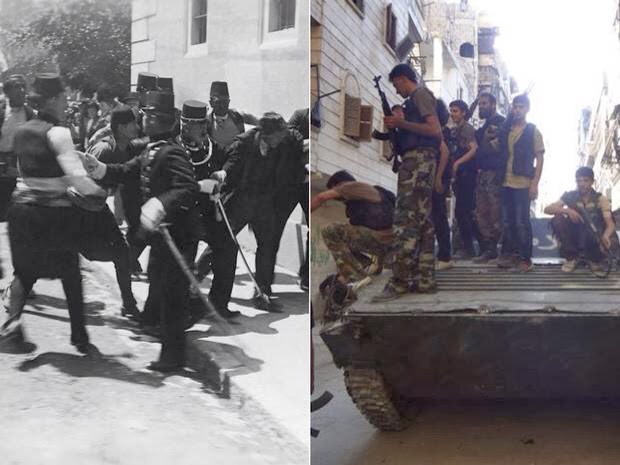
Is it 1914 all over again? We are in danger of repeating the mistakes that started WWI, says a leading historian

History never repeats itself, but it sure does rhyme, it has been said. Now an internationally respected historian is warning that today's world bears a number of striking similarities with the build-up to the First World War.

The newly mechanised armies of the early 20th century produced unprecedented slaughter on the battlefields of the "war to end all wars" after a spark lit in the Balkans with the assassination of the Austro-Hungarian Empire's Archduke Franz Ferdinand.

Professor Margaret MacMillan, of the University of Cambridge, argues that the Middle East could be viewed as the modern-day equivalent of this turbulent region. A nuclear arms race that would be likely to start if Iran developed a bomb "would make for a very dangerous world indeed, which could lead to a recreation of the kind of tinderbox that exploded in the Balkans 100 years ago – only this time with mushroom clouds," she writes in an essay for the Brookings Institution, a leading US think-tank.

"While history does not repeat itself precisely, the Middle East today bears a worrying resemblance to the Balkans then," she says. "A similar mix of toxic nationalisms threatens to draw in outside powers as the US, Turkey, Russia, and Iran look to protect their interests and clients."

Professor MacMillan highlights a string of other parallels between today and a century ago. Modern-day Islamist terrorists mirror the revolutionary communists and anarchists who carried out a string of assassinations in the name of a philosophy that sanctioned murder to achieve their vision of a better world. And in 1914, Germany was a rising force that sought to challenge the pre-eminent power of the time, the UK. Today, the growing power of China is perceived as a threat by some in the US.

Transitions from one world power to another are always seen as dangerous times. In the late 1920s, the US drew up plans for a war with the British Empire that would have seen the invasion of Canada, partly because it was assumed conflict would break out as America took over as the world's main superpower.

Professor MacMillan, whose book The War That Ended Peace was published last year, said right-wing and nationalist sentiments were rising across the world and had also been a factor before the First World War

In China and Japan, patriotic passions have been inflamed by the dispute over a string of islands in the East China Sea, known as the Senkakus in Japan and Diaoyus in China. "Increased Chinese military spending and the build-up of its naval capacity suggest to many American strategists that China intends to challenge the US as a Pacific power, and we are now seeing an arms race between the two countries in that region," she writes in her essay. "The Wall Street Journal has authoritative reports that the Pentagon is preparing war plans against China – just in case."

The US has a mutual self-defence treaty with Japan and in 2012 it specifically confirmed that this covered the Senkaku Islands. In November, China set up an "air defence" zone over the islands and a few days later two American B-52 bombers flew over the islands in defiance of Beijing.

"It is tempting – and sobering –to compare today's relationship between China and the US with that between Germany and England a century ago," Professor MacMillan writes. She points to the growing disquiet in the US over Chinese investment in America while "the Chinese complain that the US treats them as a second-rate power".

Another similarity highlighted by the historian is the belief that a full-scale war between the major powers is unthinkable after such a prolonged period of peace. "Now, as then, the march of globalisation has lulled us into a false sense of safety," she says. "The 100th anniversary of 1914 should make us reflect anew on our vulnerability to human error, sudden catastrophes, and sheer accident.

"Instead of muddling along from one crisis to another, now is the time to think again about those dreadful lessons of a century ago in the hope that our leaders, with our encouragement, will think about how they can work together to build a stable international order." More


Saturday, January 4, 2014

Biggest Threat to World Peace: The United States

Over 12 years into the so-called "Global War on Terror," the United States appears to be striking terror into the hearts of the rest of the world.

US Troops in Kandahar, Afghanistan

In their annual End of Year survey, Win/Gallup International found that the United States is considered the number one "greatest threat to peace in the world today" by people across the globe.

The poll of 67,806 respondents from 65 countries found that the U.S. won this dubious distinction by a landslide, as revealed in the chart below.

The BBC explains that the U.S. was deemed a threat by geopolitical allies as well as foes, including a significant portion of U.S. society.

Predictable in some areas (the Middle East and North Africa) but less so in others. Eastern Europe's 32% figure may be heavily influenced by Russia and Ukraine, but across most of Western Europe there are also lots of figures in the high teens.

In the Americas themselves, decades of US meddling have left an awkward legacy. Its neighbours, Mexico (37%) and Canada (17%), clearly have issues. Even 13% of Americans see their own country as a danger. More


Friday, January 3, 2014

AREVA, EDF sign accords for Saudi nuclear program

RIYADH - EDF and AREVA signed two sets of agreements aimed at supporting the Saudi nuclear energy program on Monday, coinciding with the visit of French President François Hollande's to Riyadh. The two companies have signed Memorandums of Understanding (MoUs) with 5 Saudi industrial partners - Zamil Steel, Bahra Cables, Riyadh Cables, Saudi Pumps, Descon Olayan.

The agreements aim to develop the industrial and technical skills of local companies. They reflect AREVA and EDF's desire to build an extended network of Saudi suppliers for future nuclear projects in the country.

A second series of agreements signed with 4 Saudi universities - King Saud University in Riyadh, Dar Al Hekma College and Effat University in Jeddah and finally Prince Mohammed bin Fahd University in Al-Khobar - are intended to contribute to the development of nuclear expertise in the Kingdom.

These agreements follow on from the previous operations organized by EDF and AREVA, through their joint office in Riyadh. These include the "Suppliers' Days" in March and October 2013, the visit to France by Saudi industrial companies in November, the agreement signed with the local professional training institute (NIT) in July 2013, the visits to French nuclear facilities organized for Saudi university faculty members in June 2013 and internship offers made to Saudi students since the summer.

EDF CEO Henri Proglio said: "These new agreements underline EDF and AREVA's commitment alongside the Kingdom of Saudi Arabia to enable it to successfully implement its national energy strategy and in particular to develop its future nuclear program by contributing to the development of a local network of manufacturers and by training qualified engineers."

Luc Oursel, President and CEO of AREVA, added: "These agreements demonstrate the common will of EDF and AREVA to establish a true long-term partnership with the Kingdom of Saudi Arabia. They will enable the country to build a strong industrial base and a robust skills management program."

The EDF group, one of the leaders in the European energy market, is an integrated energy company active in all areas of the business: generation, transmission, distribution, energy supply and trading. The Group is the leading electricity producer in Europe. In France, it has mainly nuclear and hydropower generation facilities where 95.9 percent of the electricity output is CO2-free.

AREVA supplies advanced technology solutions for power generation with less carbon. Its expertise and unwavering insistence on safety, security, transparency and ethics are setting the standard, and its responsible development is anchored in a process of continuous improvement. Ranked first in the global nuclear power industry, AREVA's unique integrated offering to utilities covers every stage of the fuel cycle, nuclear reactor design and construction, and operating services. The group is actively developing its activities in renewable energies - wind, bioenergy, solar and energy storage - to become a European leader in this sector. More


Wednesday, January 1, 2014

Climate Change Worse Than We Thought, Likely To Be 'Catastrophic Rather Than Simply Dangerous'

Climate change may be far worse than scientists thought, causing global temperatures to rise by at least 4 degrees Celsius by 2100, or about 7.2 degrees Fahrenheit, according to a new study.

The study, published in the journal Nature, takes a fresh look at clouds' effect on the planet, according to a report by The Guardian. The research found that as the planet heats, fewer sunlight-reflecting clouds form, causing temperatures to rise further in an upward spiral.

That number is double what many governments agree is the threshold for dangerous warming. Aside from dramatic environmental shifts like melting sea ice, many of the ills of the modern world -- starvation, poverty, war and disease -- are likely to get worse as the planet warms.

"4C would likely be catastrophic rather than simply dangerous," lead researcher Steven Sherwood told the Guardian. "For example, it would make life difficult, if not impossible, in much of the tropics, and would guarantee the eventual melting of the Greenland ice sheet and some of the Antarctic ice sheet."

Another report released earlier this month said the abrupt changes caused by rapid warming should be cause for concern, as many of climate change's biggest threats are those we aren't ready for.

In September, the Intergovernmental Panel on Climate Change said it was "extremely likely" that human activity was the dominant cause of global warming, or about 95 percent certain -- often the gold standard in scientific accuracy.

"If this isn't an alarm bell, then I don't know what one is. If ever there were an issue that demanded greater cooperation, partnership, and committed diplomacy, this is it," U.S. Secretary of State John Kerry said after the IPCC report was released. More