Whereas once the Indus Waters Treaty could correctly be described as a beacon of light in an otherwise gloomy relationship between India and Pakistan, this is no longer so.
The odds now are that the crumbling IWT will be a cause for further tension and conflict between India and Pakistan. It is also true that with far-sighted political leadership, especially in India but also in Pakistan, a bridge could be built over these troubled waters and the Indus could, again, become a catalyst for cooperation.
Preamble
t has been one of the great privileges of my life to work for almost 40 years on the challenges of water management in the south Asian subcontinent. Starting with a Harvard University/Government of India collaborative programme on planning of the Ganga and Narmada rivers in the early 1970s. I lived in Bangladesh (in the 1970s) and Delhi (from 2002 to 2005 when I was senior water advisor at the World Bank). In 2006 I published, with Indian colleagues a book titled India’s Water Economy: Facing a Turbulent Future and with Pakistani col- leagues, one titled Pakistan’s Water Economy: Running Dry.
Writing on a subject as fraught with mis- trust as the Indus requires a level of “personal declaration” that is not necessary in most other contexts. So whose views do I represent? America? No, I am not American but South African. The World Bank? No, but this requires a bit more explanation. I worked for 20 years for the World Bank, the last 10 as Senior Water Advisor and then as the country director for Brazil until the end of 2008 when I accepted a faculty position at Harvard University.
Institutions like the World Bank necessarily have to craft institutional positions on complex issues. Healthy institutions ensure that there is space for the expression of a wide variety of views in coming to decisions. As is described in detail in Chapter 13 of Sebastian Mallaby’s (2005) landmark history of the World Bank, my views were frequently different from the views of management of the Bank. Furthermore, I have not been involved in any internal discussion in the World Bank on Indian and Pakistan water issues since 2005. The interpretations in this article do not depend on any confidential information but are based entirely on my own reading of documents and reports that are in the public domain. So this paper represents the personal views of a mere university professor, who speaks in the name of no one else or no other institution. Over these 40 years I have acquired a deep affection for the people of both India and Pakistan, and am dismayed by what I see as a looming trainwreck on the Indus, with potentially disastrous consequences for both countries. Whereas once the Indus Waters Treaty (IWT) could correctly be described as a beacon of light in an other- wise gloomy relationship, the situation has changed: because of the growing invest- ment in hydropower in Indian-held Kashmir; because of the declining water availability in Pakistan; because the Baglihar verdict of the Neutral Expert has gutted the IWT of its essential balance, because the World Bank has withdrawn from its once-heroic en- gagement with the Indus and because of the appropriation of the water dialogue by extremists on both sides. The purpose of this article is to delve into some of these questions, and to suggest how to find a way out before it is too late.
The Indus Waters Treaty
In the 19th century, the British constructed most of what is today the world’s largest contiguous irrigation system in the Indus Basin. However, the boundaries between the two states drawn in 1947 paid no attention to hydrology. Eighty per cent of the irrigated area was in Pakistan, but after Partition a large portion of the headwaters for the rivers which serviced most of this immense area were in Indian-held Kashmir.
Seeing that India and Pakistan were un- able to resolve this issue, the World Bank offered its help. After 10 years of intense negotiation, in 1960 the IWT was signed by then Indian Prime Minister Jawaharlal Nehru, Pakistani President Ayub Khan and the World Bank.
There are four essential elements to the treaty. The first relates to the division of the waters. The waters of the three western rivers (the Indus, the Jhelum and the Chenab) were allocated to Pakistan, and the waters of the three eastern rivers (the Ravi, the Beas and the Sutlej) were allocated to India. More
SASSI is an independent think tank dedicated to promoting peace and stability in South Asia. We are headquartered in Islamabad, Pakistan and we aim to make a leading contribution to regional and international academic and policy-orientated research discourses about South Asian security.
Sunday, August 19, 2012
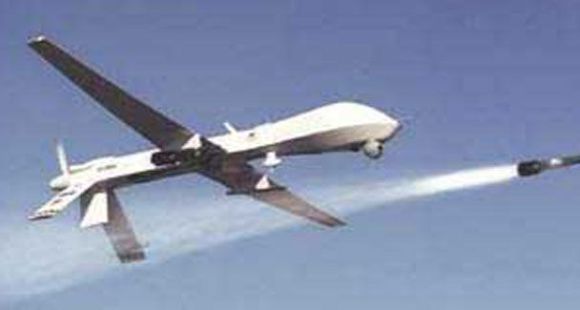
US assassination drones strikes violate international law, UN charter: Analyst
A political analyst has slammed the use of deadly drones by the United States, questioning the legality of such attacks that have claimed the lives of scores of civilians in Pakistan, Press TV reports.
“…it [the use of assassination drones] is a violation of the [UN] charter and the provisions of the charter which prohibit nation states attacking each other in this sort of violence … it’s a violation of the Geneva conventions and protocols which very specifically preclude the killing of civilians,” former UN assistant Secretary General Denis Halliday said in an interview with Press TV on Sunday.
He further described the US drone attacks in Pakistan’s tribal areas as “total violation of the sovereignty of Pakistan by the United States.”
The comments came while according to reports US assassination drone strikes have left at least 21 people dead in Pakistan’s northwestern tribal region near border with Afghanistan during the past 48 hours.
Despite Pakistani government’s repeated calls on Washington to end the drone attacks, the US government continues its strikes on the tribal regions of the country.
Washington claims its drone strikes target militants, although casualty figures clearly indicate that Pakistani civilians are the main victims of the assaults.
The UN has also slammed the American terror drone attacks as targeted killing and says they pose a challenge to international law.
Referring to the UN condemnation of the strikes, the analyst added that “it seems that the United States has absolutely no respect for the United Nations and its charter and its membership or international law.”
He further called on the American people to take action against Washington’s warmongering policies in order to change the government which is committed to “aggression” and “ jingoistic patriotism.” More
Fukushima Daiichi NPS Reactor 4 in July 2012
This aerial view shows the damaged No. 4 reactor building at Tokyo Electric Power Co.'s Fukushima Dai-ichi nuclear power plant in Okuma town, Fukushima prefecture, northeastern Japan, Wednesday, July 18, 2012. A giant crane removed two rods packed with nuclear fuel from the reactor building on Wednesday, the beginning of a delicate and long process to deal with a remaining risk of more radiation escaping from the disaster-struck plant. AP More
Labels:
disaster,
disaster preparedness,
earthquake,
fukushima,
Japan,
nuclear,
nuclear energy,
tepco,
tsunami
Friday, August 17, 2012
In Paper, Chief of Egypt’s Army Criticized U.S.
As a student at the United States Army War College in Pennsylvania, the chief of staff of Egypt’s armed forces argued in a paper that the American military presence in the Middle East and its “one sided” support of Israel were fueling hatred toward the United States and miring it in an unwinnable global war with Islamist militants.
The paper, written seven years ago by the new chief of staff, Gen. Sedky Sobhi, offers an early and expansive look into the thinking of one member of the new generation of military officers stepping into power as part of a leadership shake-up under Egypt’s newly elected president, Mohamed Morsi of the Muslim Brotherhood.
General Sobhi’s sharp rebuke of American policy is especially striking because he now oversees the military institution that has been the closest United States ally in the Arab world, relied on by American officials as a critical bulwark in support of Israeli security and against Iranian influence. Despite decades of military collaboration, he urged a full pullout of American forces from the region.
Scholars say his paper is even more significant in part because many of its themes reflect opinions widely held by Egyptians, their new president and people throughout the region — an increasingly potent factor in regional foreign policy, as Egypt and other countries struggle toward democracy.
American officials said their confidence in Egypt was unshaken, while analysts argued that despite the changes in the nation’s military and civilian leadership, any realignment in relations with Washington could be slow — in part because of Egypt’s urgent need for assistance from the United States and the West.
“For sure there are going to be big changes in Egypt’s relationship with Washington,” said Shibley Telhami, a political scientist at the University of Maryland and a scholar at the Brookings Institution who has studied Arab and Egyptian public opinion.
In surveys across the Arab world for more than a decade, he said, about 70 percent of the public has named the United States as the second-greatest threat to regional security, after Israel — even in Egypt, where Washington provides $1.3 billion in annual military aid, and in Saudi Arabia, another close American ally.
As General Sobhi argued, Professor Telhami said, “there were always two central issues driving Arab and Egyptian anger with the U.S., the Palestinian question — the prism of pain through which Arabs see the West — and the U.S. military presence.”
General Sobhi’s paper, first reported by an independent journalist in Cairo, Issandr El Amrani, offers a rare look into the foreign policy thinking of a military institution often considered all but impenetrable to outsiders.
For decades under President Hosni Mubarak, the Egyptian military, and the nation’s foreign policy, had been closely allied with the United States and its regional interests. There was concern in Washington after Mr. Mubarak’s ouster that the relationship might not survive — an anxiety that was revived when Mr. Morsi was elected president.
But Washington knew that the longtime defense minister, Field Marshal Mohamed Hussein Tantawi, and his chief of staff, Sami Hafez Anan, still wielded considerable power and were reliable allies.
Then, after an embarrassing terrorist attack in northern Sinai this month, Mr. Morsi appeared to consolidate his power by announcing their replacement, while keeping them on as presidential advisers. The shake-up raised for the first time the possibility that Mr. Morsi might begin to exert some real sway over Egyptian foreign policy, and General Sobhi’s paper suggested that at least some of the younger cadre of generals might share an interest in more independence from Washington. More
![]() |
| Gen. Sedky Sobhi |
General Sobhi’s sharp rebuke of American policy is especially striking because he now oversees the military institution that has been the closest United States ally in the Arab world, relied on by American officials as a critical bulwark in support of Israeli security and against Iranian influence. Despite decades of military collaboration, he urged a full pullout of American forces from the region.
Scholars say his paper is even more significant in part because many of its themes reflect opinions widely held by Egyptians, their new president and people throughout the region — an increasingly potent factor in regional foreign policy, as Egypt and other countries struggle toward democracy.
American officials said their confidence in Egypt was unshaken, while analysts argued that despite the changes in the nation’s military and civilian leadership, any realignment in relations with Washington could be slow — in part because of Egypt’s urgent need for assistance from the United States and the West.
“For sure there are going to be big changes in Egypt’s relationship with Washington,” said Shibley Telhami, a political scientist at the University of Maryland and a scholar at the Brookings Institution who has studied Arab and Egyptian public opinion.
In surveys across the Arab world for more than a decade, he said, about 70 percent of the public has named the United States as the second-greatest threat to regional security, after Israel — even in Egypt, where Washington provides $1.3 billion in annual military aid, and in Saudi Arabia, another close American ally.
As General Sobhi argued, Professor Telhami said, “there were always two central issues driving Arab and Egyptian anger with the U.S., the Palestinian question — the prism of pain through which Arabs see the West — and the U.S. military presence.”
General Sobhi’s paper, first reported by an independent journalist in Cairo, Issandr El Amrani, offers a rare look into the foreign policy thinking of a military institution often considered all but impenetrable to outsiders.
For decades under President Hosni Mubarak, the Egyptian military, and the nation’s foreign policy, had been closely allied with the United States and its regional interests. There was concern in Washington after Mr. Mubarak’s ouster that the relationship might not survive — an anxiety that was revived when Mr. Morsi was elected president.
But Washington knew that the longtime defense minister, Field Marshal Mohamed Hussein Tantawi, and his chief of staff, Sami Hafez Anan, still wielded considerable power and were reliable allies.
Then, after an embarrassing terrorist attack in northern Sinai this month, Mr. Morsi appeared to consolidate his power by announcing their replacement, while keeping them on as presidential advisers. The shake-up raised for the first time the possibility that Mr. Morsi might begin to exert some real sway over Egyptian foreign policy, and General Sobhi’s paper suggested that at least some of the younger cadre of generals might share an interest in more independence from Washington. More
Labels:
egy,
egypt,
Gaza,
Gen Sedky Sobhi,
muslim brotherhood,
palestine,
United States
India’s Prospects in the Area of Ballistic Missile Defense: A Regional Security Perspective
“‘In 2012, the unequal relationship between India and Pakistan is spinning sharply out of control. Terrorists attack the Indian parliament and kill two ministers and 12 MPs. There is no doubt that Pakistan had a hand in this, and in a month India goes to war.
Pakistan threatens to use nuclear weapons if India does not stop the invasion. Indian troops close in on Lahore, and Pakistan launches Ghauri missiles with nuclear warheads aimed at Delhi... A long-range radar for missile defense detects the Ghauri missiles 30 seconds after their launch. Five minutes later... the missile defense system launches interceptor missiles. Four Pakistani Ghauri missiles explode in the sky and fall harmlessly to the ground in pieces... The city of Delhi is saved. India carries out a nuclear counterattack that, in the words of one military officer, ‘will put an end to Pakistan once and for all.’ Science fiction? Not entirely.” This text was published by Raj Chengappa, a columnist for the Indian magazine India Today, in the official publication of the Indian Embassy in Moscow in 2008.
Setting aside for the moment an analysis of India’s possible use of a missile defense system, it is necessary to note that the initial stage of the author’s fictitious conflict repeats the course of many Pakistani-Indian conflicts. Among the most serious of these were the crises of 2001-2002 and 2008, which were characterized by a common development: an act of terrorism in India, followed by a reciprocal show of strength and a growth of mutual tensions in India and Pakistan. Further escalation has so far been avoided, in no small measure thanks to active steps taken by other states.
Raj Chengappa’s text demonstrates the consequences that could result from further escalation, including large-scale military operations with the use of conventional—and possibly nuclear—forces. For many specialists in India and Pakistan, it is clear that in the event of nuclear war between two powers of such territorial proximity, there cannot be a winner. Significant areas of the South Asian region would be rendered uninhabitable. The entire ecological system of the region would change. The consequences of a nuclear exchange would be felt far beyond South Asia. More
Pakistan threatens to use nuclear weapons if India does not stop the invasion. Indian troops close in on Lahore, and Pakistan launches Ghauri missiles with nuclear warheads aimed at Delhi... A long-range radar for missile defense detects the Ghauri missiles 30 seconds after their launch. Five minutes later... the missile defense system launches interceptor missiles. Four Pakistani Ghauri missiles explode in the sky and fall harmlessly to the ground in pieces... The city of Delhi is saved. India carries out a nuclear counterattack that, in the words of one military officer, ‘will put an end to Pakistan once and for all.’ Science fiction? Not entirely.” This text was published by Raj Chengappa, a columnist for the Indian magazine India Today, in the official publication of the Indian Embassy in Moscow in 2008.
Setting aside for the moment an analysis of India’s possible use of a missile defense system, it is necessary to note that the initial stage of the author’s fictitious conflict repeats the course of many Pakistani-Indian conflicts. Among the most serious of these were the crises of 2001-2002 and 2008, which were characterized by a common development: an act of terrorism in India, followed by a reciprocal show of strength and a growth of mutual tensions in India and Pakistan. Further escalation has so far been avoided, in no small measure thanks to active steps taken by other states.
![]() |
| Peter Topychkanov |
Shamoon virus targets energy sector infrastructure
A new threat targeting infrastructure in the energy industry has been uncovered by security specialists.
The attack, known as Shamoon, is said to have hit “at least one organisation” in the sector.
Shamoon is capable of wiping files and rendering several computers on a network unusable.
On Wednesday, Saudi Arabia’s national oil company said an attack had led to its own network being taken offline.
Although Saudi Aramco did not link the issue to the Shamoon threat, it did confirm that the company had suffered a “sudden disruption”.
In a statement, the company said it had now isolated its computer networks as a precautionary measure.
The disruptions were “suspected to be the result of a virus that had infected personal workstations without affecting the primary components of the network”, a statement read.
It said the attack had had “no impact whatsoever” on production operations.
Rendered unusable
On Thursday, security firms released the first detailed information about Shamoon.
Experts said the threat was known to have had hit “at least one organisation” in the energy sector.
“It is a destructive malware that corrupts files on a compromised computer and overwrites the MBR (Master Boot Record) in an effort to render a computer unusable,” wrote security firm Symantec.
The attack was designed to penetrate a computer through the internet, before targeting other machines on the same network that were not directly connected to the internet.
Once infected, the machines’ data is wiped. A list of the wiped files then sent back to the initially infected computer, and in turn passed on to the attacker’s command-and-control centre.
During this process, the attack replaces the deleted files with JPEG images - obstructing any potential file recovery by the victim. More
Labels:
computer,
energy,
energy security,
infrastructure,
national security,
saudi aramco,
shamoon,
virus
Cover-Up of Civilian Drone Deaths Revealed by New Evidence
An aerial drone launches from the guided-missile frigate USS Thach. (Photo: U.S. Navy / Flickr)Detailed information from the families of those killed in drone strikes in Pakistan and from local sources on strikes that have targeted mourners and rescue workers provides credible new evidence that the majority of the deaths in the drone war in Pakistan have been civilian noncombatants - not “militants,” as the Obama administration has claimed.
The new evidence also shows that the statistical tally of casualties from drone attacks in Pakistan published on the web site of the New America Foundation (NAF) has been systematically understating the deaths of large numbers of civilians by using a methodology that methodically counts them as “militants.”
The sharply revised picture of drone casualties conveyed by the two new primary sources is further bolstered by the recent revelation that the Obama administration adopted a new practice in 2009 of automatically considering any military-age male killed in a drone strike as a “militant” unless intelligence proves otherwise.
The detailed data from the two unrelated sources covering a total 24 drone strikes from 2008 through 2011 show that civilian casualties accounted for 74 percent of the death toll, whereas the NAF tally for the same 24 strikes showed civilian casualties accounted for only 30 percent of the total.
The data on 11 drone strikes from 2008 through 2011 were collected in 2010 and 2011 from families of victims of the strikes by Pakistani lawyer Mirza Shahzad Akbar. Those 11 cases represent only a fraction of the total number on which Akbar has obtained data from victim’s relatives.
Although relatives of drone strike victims could have a personal interest in declaring the innocence of their relatives, the details provided by relatives in legal affidavits, such as the age, employment and other characteristics of the victims, appear in almost every case to support their claims that those killed were not actively involved with al-Qaeda or other military organizations.
The data on 13 drone strikes targeting rescuers and mourners from 2009 through 2011 were gathered by the London-based Bureau of Investigative Journalism (BIJ) in a three-month investigation in late 2010 and early 2011 involving interviews with eyewitnesses and others with direct knowledge of the strikes. More
The new evidence also shows that the statistical tally of casualties from drone attacks in Pakistan published on the web site of the New America Foundation (NAF) has been systematically understating the deaths of large numbers of civilians by using a methodology that methodically counts them as “militants.”
The sharply revised picture of drone casualties conveyed by the two new primary sources is further bolstered by the recent revelation that the Obama administration adopted a new practice in 2009 of automatically considering any military-age male killed in a drone strike as a “militant” unless intelligence proves otherwise.
The detailed data from the two unrelated sources covering a total 24 drone strikes from 2008 through 2011 show that civilian casualties accounted for 74 percent of the death toll, whereas the NAF tally for the same 24 strikes showed civilian casualties accounted for only 30 percent of the total.
| Drone launches from the frigate USS Thach |
Although relatives of drone strike victims could have a personal interest in declaring the innocence of their relatives, the details provided by relatives in legal affidavits, such as the age, employment and other characteristics of the victims, appear in almost every case to support their claims that those killed were not actively involved with al-Qaeda or other military organizations.
The data on 13 drone strikes targeting rescuers and mourners from 2009 through 2011 were gathered by the London-based Bureau of Investigative Journalism (BIJ) in a three-month investigation in late 2010 and early 2011 involving interviews with eyewitnesses and others with direct knowledge of the strikes. More
Labels:
Afghanistan,
Africa,
Asia,
Drones,
extra-judicial,
human rights,
international law,
killing,
obama,
Pakistan,
somalia,
United States,
yemen
Subscribe to:
Posts (Atom)